September 14, 2020
An Epiphany
I had an epiphany back in the summer when I watched in a man sitting on an ATV on the side of a rural road taking a moment to smoke a cigarette, and it was that he is allowed to like the things he likes as much as I am allowed to like the things I like, even if I think the things he likes are really stupid. Things like ATVs, and cigarettes, and ugly shirts, which sounds harmless enough, but, I guess, what if he also likes guns and conspiracy theories and racist stand-up comedians, and even in drawing these inferences, I’m revealing that I am kind of an asshole who deals in stereotypes? Possible the guy on the ATV was a pansexual vegan who’d just spent last week on Twitter railing against gender reveal parties and forest fires? And oh my goodness, as much as I hate gender reveal parties (with all my heart, I promise), I must confess that people hating on gender reveal parties is just as annoying. Possibly I am a bit sensitive about this because I once got a bit miffed at someone on social media who claimed that parents who referred to their children as sons or daughters were being abusive, and I guess I just feel like the whole problem is that imposing your own notions of gender onto other people is totally annoying (oh, HELLO, that lady who wrote those books about the boy wizard) even if you know you’re right, but everybody knows they’re right, which is the problem, and maybe what we all need to be interrogating right now, even though all these ideas might cause my poor brain to explode, but we need to figure out how to live together amidst all that tension—and also solve climate change.
September 10, 2020
Songs for the End of the World, by Saleema Nawaz

When Saleema Nawaz’s Songs for the End of the World was published as an e-book in May, I wasn’t ready for it. I couldn’t do it. A book about a novel coronavirus that sweeps across the world in 2020, beginning in China, and then exploding in New York City. Fiction as uncanny as all-get-out (the novel was written between 2013 and 2019—um, and it includes in its cast of characters a novelist whose book about a pandemic is proving eerily similar to real life events—I KNOW!) but I was having enough trouble facing such things in the world. Plus I don’t have an e-reader…
It was with great hope that I was planning to read the book when it came out in print in August. Hoping the world might seem more recognizable then, Nawaz’s story of a pandemic not quite so close to home, or perhaps that I would be able to put some distance between it and my own situation. And I am so glad that all this transpired, because I liked this novel so much, found it utterly absorbing, and rich.
I suppose it’s not so uncanny how prescient the book seems (it’s Nawaz’s third, following short story collection Mother Superior and the novel Bone and Bread) considering Nawaz based her own pandemic on disease models and intervention strategies. (She was also able to intuit that after a handful of days of quarantine, a person would inevitably order a treadmill.) In a Q&A at the end of the book, she goes into interesting detail about her process, and also writes about how while she didn’t necessarily set out to counter typical disaster narratives, she wanted to “explore…how the stories we tell can influence our behaviour in the real world, for better or for worse.”
(This reminded me of my favourite line from Ali Smith’s Autumn: “…whoever makes up the story makes up the world.” )
What’s most absorbing about the novel is not the pandemic plot, however. First, it is the sentences. “Calamity began, as usual, on an ordinary day. The city roiled with the amplified impatience of a million insomniacs, sleeping children breathed polluted air, low-level exploitation crept across neighbourhoods with insectile persistence, and a thousand everyday kindnesses failed to rise to the surface of consciousness.” How is that for an opener?
And second is the characters, beginning with Elliott, the first responder in Manhattan; Owen, a novelist whose novel appears belatedly on bestseller lists when the pandemic starts; Stu, an indie rockstar whose bandmate and wife, Emma, is pregnant; Sarah, a single mother, who contemplates her future with her child; Keelan, a philosopher whose on work on disasters has resonance for an audience that’s desperate for hope. Moving back and forth between the contemporary moment and pivotal events from the characters’ pasts (young Emma aboard a years-long sea voyage with her eccentric family as her mother freaks out about Y2K), Nawaz has each character singularly navigating the pandemic crisis, but also shows the ways in which these characters’ lives are intertwined in an intricate web, sometimes in ways the characters themselves aren’t even aware of.
She conjures the world in this book, perhaps more specifically than she ever intended, and therein lies the novel’s power. That it’s not the end of the world too—such a lazy cliche. Life and love continue on.
September 9, 2020
Field Notes From An Unintentional Birder, by Julia Zarankin

There are book reviews, and then there are those reviews of books a reader has been waiting a decade for, ever since the first time the reviewer met the book’s author and was presented with an essay collection by Anne Fadiman as a hostess gift. My friendship with Julia Zarankin was forged over the essay form—though she also introduced me to Wallace Stegner. We contain multitudes. And I’ve been wanted to read a book by her since our very first conversation—she was so smart, kind and hilarious. She was working on a collection of essays at the time about being multilingual. Had not long ago abandoned academia for a different kind of life, and she’d recently taken up…birding? It still seemed unlikely then, not yet a fundamental part of her identity. And a couple of years after we became friends, I had the privilege of her contributing a beautiful piece to my anthology The M Word, the final essay in the book.
As Julia’s passion for birding grew and grew, and she began to disappear every spring for migration season.
But now her book is here, Field Notes From An Unintentional Birder, which I loved as much as I loved any of Anne Fadiman’s essay collections, which is saying everything. And I began to think, as I was reading this book, that in her field notes on birding, Zarankin had also written field notes on blogging—all about paying attention, being patient and persistent, not fearing making mistakes, feeling the exhilaration of unbridled passion—and then I realized that what the book was was a field guide to life.
What a terrifically woven collection this so, so much more than the sum of its parts, each of which is wholly impressive. Through the lens of birding, Zarankin writes gorgeously about finding herself in her mid-thirties, divorced and having left her career. So what now? And it’s through birding that she finds the answers, to this, and to other questions, including how to stay in love, how to be brave, how to be comfortable in her own skin, to understand her own history as a migratory creature, how to live in the moment, and how to have purpose. How to be.
Those answers, of course, are not straightforward. Seeing birds does not lead to satisfaction, but instead a yearning for more of them. It means reconciling herself to the birds she’s missed, or those she might never see. But she learns too the pleasures of living in the moment, of being instead of always striving (though an urge to birdsplain is one that’s hard to shake).
The book has general appeal because birding, like blogging, is life—but I also love the details for birding life that Zarankin shares with such exuberance. She shows the peculiarities of the avian world, and the people who are part of it, in perfect, vivid detail.
September 9, 2020
Seven, by Farzana Doctor
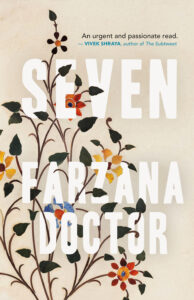
A remarkable balance is required to create a novel about Female Genital Mutilation (FGM) that is also a pleasure to read, but Farzana Doctor pulls it off with Seven, a book that is also about marriage, family, motherhood, sexuality, and rediscovering one’s self and purpose at mid-life.
Sharifa has left her job as a teacher in New York City, and travels with her husband and daughter to India, her birthplace, where her husband will be working during his sabbatical. Other than homeschooling her daughter, however, Sharifa isn’t sure how she will spend her time in India, until she decides to partake in a research project to learn the story of her great-great-grandfather, a wealthy philanthropist who was married three times—and in his second marriage was possibly divorced?
Her marriage has just gone through a rocky patch, and so restoring that relationship is also in the forefront of Sharifa’s mind, as she becomes reacquainted with her aunts and cousins, and then realizes that her cousin’s online activism against FGM practices in their Muslim community (“khatna”) strikes much closer to home than she’d ever imagined. Turns out this archaic practice might not be talked about, but it still takes place today.
The different threads of this novel are woven powerfully. and culminate in a terrifically moving story, in particular a scene where Sharifa and other members of their community (including Sharifa’s excellent husband) gather together to publicly protest khatna, disrupting a long-held taboo. There are moments where this novel of ideas becomes much more driven by those ideas than the story itself, but I forgave these , because the book was so enveloping, and Sharifa’s awakening as to her own history was poignant and absorbing, ultimately hopeful and galvanizing. I loved having her voice in my head.
I also loved the historical thread of Sharifa’s great-great-grandfather, and its resonance in the contemporary story line, and how it all comes together so satisfying in the end.
But then the very end, oh my gosh, it destroyed me. The hardest, bravest literary choice, considering the world we live in, and how tidy endings make us too comfortable. I liked this book a lot throughout, but the leap Doctor takes in her book’s epilogue is so awesome and necessary, underlining the urgency of her message—and about how the pleasure we might take in reading this book (while we do) is actually far from the point.
September 8, 2020
Gleanings
- Hold on to this moment, I remind myself. And I do.
- Dearest book lovers, we are in great peril.
- My point is that both books are solid and substantive. They require attention and care. I’m grateful that the writers shared their extensive knowledge with me.
- how necessary it is to have these two books situated cheek by jowl on the shelf
- I know I’ve said this before, but I think it’s worth repeating that keeping up with other people’s blogs has been a great source of intellectual stimulation and comfort for me over the past few months, so thanks as always to everyone whose bookish thoughts help make the internet a better place.
- I swam and thought of my grandchildren in this damaged beautiful world and when I came out to dry myself off, my face was wet with what might have been the lake and might have been tears.
- Did I clean out the tupperware cupboard like I was going to? No. Did I throw out all my day planners from when I was a stage manager in the 1980s? Yes, but it took a lot of energy. Did I write some words? FUCK YES.
- Making myself read (or otherwise experience) all of Shakespeare in a year was a way of getting myself out of a reading comfort zone.
- Historically significant times are not exactly the most restful to be living in.
- This ability to acknowledge that we hold multiple truths simultaneously, it’s learned through life experience and growing up, and time spent as a human being.
- Every time I blow the fluff off a dandelion I think of grateful bees.
- I am so glad I still keep a blog / website / or whatever the heck you prefer to call my little space here on the Internet. Do I have a heartwarming story for you today…
- I would never have become a writer if it had ever depended on my prowess typing.
- Living in Northumberland County, so very rich in agricultural lands, finding abundance is dead-easy.
- But of course, really, we all need to slowly, carefully, gently, humbly, grandly, and with great compassion, care for our own dear little crumbly old souls.
Do you like reading good things online and want to make sure you don’t miss a “Gleanings” post? Then sign up to receive “Gleanings” delivered to your inbox each week(ish). And if you’ve read something excellent that you think we ought to check out, share the link in a comment below.
September 7, 2020
Goodbye, Mildew. It’s Been Nice…
Everything sort of fell apart last week as the job of replacing our bathrooms tiles was undertaken, and then they realized the walls themselves would need to be rebuilt, and then after that the ceiling started collapsing, and it was six days before we were able to shower.
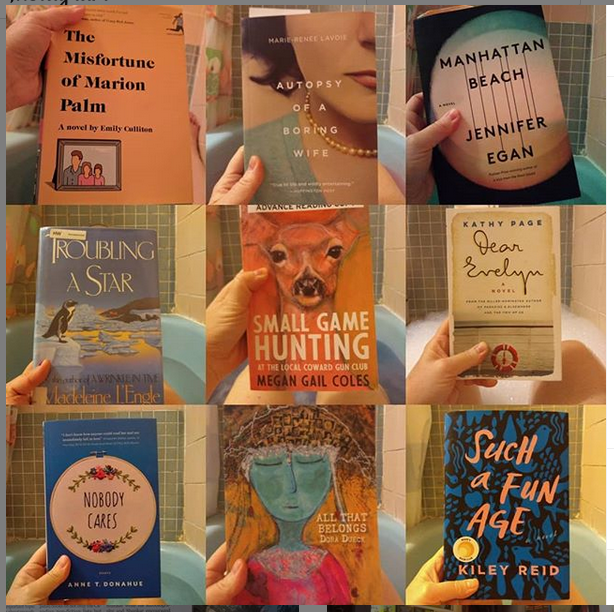
And now we have a gorgeous new bath area, with white tiles and grout that isn’t mouldy. Our previous tiles were so gross, and when you tried to scrub the grout, it fell off, which isn’t a good thing. At one point, the most substandard contractor of all time had rebuilt the tiles around the faucet in a blue tile that was completely different than the rest of the tub AND actually not the kind of tile you’d use in a bathtub anyway. It was legit the most hideous bathroom of all time, and so naturally, I took lots of photos of it and posted them on Instagram.
Reading in the tub is one of my chief delights. Because I am very spontaneous and wild, I take a bath almost every Sunday evening when the weather isn’t hot. It’s my favourite way to close out a weekend, to get ready for a week, to be submerged in a small body of water (ideal!) and having nothing to do except read.
It’s amazing to me how many beautiful book covers perfectly matched my hideous bathroom. It was like my bathroom as the palette, unlikely, the match uncanny. Check out Manhattan Beach, by Jennifer Egan, on which I was a bit meh, but still—that same blue, that same pinky orange. What are the actual odds?
I won’t have to spend as much time strategically placing my book to cover up the most shameful spots of mildew and mould now, but must confess to being slightly disappointed that the new background to my #BooksintheBath posts are going to be so bland.
Don’t worry, my bathtub is still blue, so you’ll know that it’s me.
But clean white tiles?
Very civilized, but it’s just not my brand.
September 4, 2020
Why I am Still Not Freaking Out About School
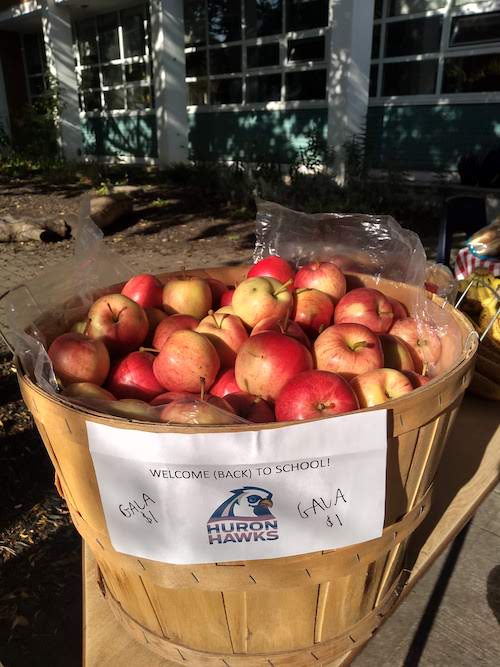
I am still not freaking out about school. There are a lot of reasons why not, and some of them include denial, but mostly it’s that me freaking out about school isn’t going to make anything better. It will be as futile as all-caps screaming at the Education Minister on Twitter, and I don’t do that anymore. (Most of the time.)
This is not to say that I have done nothing. (There is a wonderful plot of land in that space between “freaking out” and “doing nothing,” and I’ll meet you there.) A bunch of parents with smarts and agency put together an advocacy group calling on the government to put caps on class sizes, which would go far in actually applying the advice of medical experts that keeping groups small lowers risk of disease transmission.
I have sent the letter, I have encouraged other people to get involved. I have also emailed the Minister on my own behalf. I have thought about the importance of public education, for my own family, and also across the board. (Have you listened to Nice White Parents yet? It was fantastic and challenging in the very best way. I learned so much in ways I wasn’t expecting…)
I have also not really engaged with other parents about their own thoughts on sending their kids back to school, because in general, I just don’t care. Quite magnanimous of me, because usually I am judgey as all get-out, but the best thing about there being no perfect choice is that there is no terrible one either. Usually the idea of “choice” is totally sanctimonious (and I should know—I cloth diapered) and kind of gross, not remotely as neutral as it would like to be (don’t get me started on “school choice”) but this is a different kind of situation, or maybe I’ve just evolved since the spring (I doubt it).
You will make your choice based on your own childcare needs, and your own child’s social needs, and the health of the people who live in your home, and the size of your school, and your comfort with school and teachers in general based on previous experiences, and your child’s personality, and how well virtual schooling went in the spring, and your own level of anxiety, and infection rates in your area, and whether it’s really worth it to have the people in your family start wearing pants again.
I am sending my kids to school because local infection rates are really low; because I want to demonstrate my trust and support in the public school system which I fervently believe in as much as I believe in any system, because the government is telling us that it’s safe to do so and I also believe in trusting the government (because the government is more than just the ding dongs and because not trusting the government can turn a person into a lunatic); because public schools are the only choice that is financially possible for me; because my kids are old enough that I trust them to follow processes and direction, and be smart; because when I think about sending millions of kids into schools my head explodes BUT when I think about the fact that my children will be under the supervision of two specific teachers (I don’t know who they are, but it’s always easier to break a thing down into parts) I feel better because I know how seriously teachers take their responsibilities; because the risk of serious harm to ourselves or others is statistically lower than in many activities we partake in regularly; and because if things go wrong and we’re not comfortable/it’s not working, I can take them out of school again, as we’re flexible enough with two parents working from home that this is not a big deal—and the last six months has taught me that missing school does not mean missing education. Even if they miss that remote learning transfer window, or whatever, it will be fine. Kids are resilient. I think we parents should strive to be more so.
By which I mean we should not be freaking out, I mean. Whether you are sending your children to school or not. We all have our reasons. And other people’s reasons really shouldn’t even apply to you
There is also a plot of land I’d like to meet you in between the space where you might shrug off the pandemic as a hoax and regard mandated mask wearing as a government conspiracy and where you constantly share articles from CNN about outbreaks at Georgia high schools and wake up with night terrors at the premise of a second wave (which in news headlines always gets calls a “DREADED second wave). Another plot of land between the pandemic being a hoax AND an awareness of the fact that news outlets want you clicking on their stories all the time and keeping you anxious works to their benefit. Stories about Georgia are not necessary applicable to my situation.
In March and April, children hung rainbows in their windows with signs that said “Everything is going to be okay.” In March, for a week or so, I was convinced that we were all going to die in the coming days, and it turns out the children were more correct than I was. I have been working hard to channel their optimism ever since, and in many ways, it’s been the right path. And no, “everything” is not going to be okay, but when was it ever? In general, we have been and we will continue to find a way for ourselves through all this, and working hard to keep our responses calm and measured goes a really long way.
September 1, 2020
Gleanings

- Throughout my youth, my community remained a mystery to me. As an adult, I’ve been trying to decode its realities through writing fiction
- Without his hold to drape around my shoulders, to shore me up, I sank into hot, wordless grief.
- While “cynical spreaders” are in the minority,their reaction to public-health advice and rules is far from original.
- There’s nothing quite as satisfying as opening my notebook to a clean, blank page and, with little thought, letting the words pour out – no editing, no spell-check, just spontaneous expression.
- I swear it was my lemon pudding that induced a marriage proposal by my now-husband.
- Music is magnificent. What it stirs in us, the people and places it connects us to, it’s ability to lift us up, inspire us, teach us and transport us to another space and time.
- It’s very likely your prologue, beautifully written though it might be, is unnecessary.
- As I swam at 9 a.m., I realized that all summer the cedars have been my guides
- Is there anything more fun, as a reader, than recognizing as you read how much fun the author was having?
- But this summer in particular, as plant-based diets are on evermore agendas, I’ve seen so many creative uses of corn…
- I think that even defiantly placing a vase of flowers in the room in which you work at this time is not nothing.
- We’re weathering the same storm, but our boats are very different.
- In bookish terms, our “new normal” is a hybrid of online and offline opportunities to continue to boost and share our collective love of reading … something that has helped, in no small part, to navigate the many “new normals” with which we’re all contending.
- Late summer is the best time for baked fruit desserts like cobblers and crisps, but one of my favourites is the lesser-known pandowdy
- It’s funny how a book reveals itself to you when you least expect it, when you’re searching for a particular kind of read and something else, something nearly the exact opposite of what you think you want ends up being perfect.
Do you like reading good things online and want to make sure you don’t miss a “Gleanings” post? Then sign up to receive “Gleanings” delivered to your inbox each week(ish). And if you’ve read something excellent that you think we ought to check out, share the link in a comment below.
August 31, 2020
Look for the Light

Everything I know about uncertainty I have learned from being a writer, and being a blogger. And I have never really had to use this knowledge in a practical sense until the last few months, and there have been days and weeks when I’ve done a very bad job of it, but in general I am keeping an even keel, and here is the stuff that is helping me with that.
1) Nobody knows what is going to happen next. This is a promise as much as it’s also a curse. But we keep going/reading/writing to discover, and it takes faith, stamina, courage. We all possess these things, and can cultivate them too.
2) If magic is real, it lies in the process, where one thing turns into another. And process is never a straight line. There will be setbacks and failures. Some drafts will be garbage. And it’s easy to be mired in the process, to despair at all the road ahead, if it will ever end, if that road is a road at all.
But then, please revisit my first point.
3) Take breaks. Take walks. Step away from your screen sometimes and often.
4) We move forward one word/post/page/day at a time. Breaking a thing down into manageable pieces is essential. The big picture is so overwhelming—a whole book, a whole blog, a global pandemic. But if you just focus on the challenges and tasks immediately before you, you can do it.
We can do this!
As we move into a new season, I look forward to discovering new ways to rise to the occasion, to finding new solutions to the problems that arise, to realizing our own strength and resilience as we do.
Our species has travelled to the moon, guys.
So surely we’re up to the task of autumn.
Even in 2020.
Keep going. Look for the light.
August 27, 2020
Want, by Lynn Steger Strong
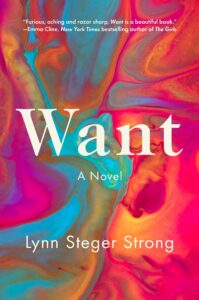
Lynn Steger Strong’s novel Want is packed with the same narrative tension that propelled one of my favourite books of last year, Helen Phillips’s The Need. Both of them, as is apparent from their titles, about desperate yearnings, longings, cravings, desires. For an escape hatch, for example, from the demands of motherhood, the feeding, rocking, soothing, waiting. For a way out of the trap of anxiety, a detour away from the trappings of modern life.
Want is less overtly weird, however. There is no sci-fi element, intruder in antlers, no parallel world. Or rather, the parallel world is the one that Elisabeth was promised, a child of affluent parents growing up on the 1980s and 1990s, pursuing her goals in academia, her husband leaving his job in the financial sector after the crash in 2008 to find more meaningful work in carpentry. They build a life in New York, underpinned by dreams and ideals, but it all falls to pieces. As the novel begins, they’re declaring bankruptcy, a process that began with medical and dental bills. She teaches one class at the university, and works 9-5 at a high school, one of those private academies of nightmares. She and her husband sleep in a closet in their Brooklyn apartment, and still can barely afford the rent. She awakes every morning at 4:30 to get the run in that’s so essential to her mental health, and in her downtime, she scrolls social media feeds for clues about the life of her former best friend, Sasha.
It’s not a conventional narrative. It builds and builds, but it also doesn’t, it just goes, the way a life does when you have to wake up at 4:30 every morning in a closet, when you work all day, and are up nursing most of the night. When you’re just barely hanging on, the way that Elisabeth and her husband are, and she keeps thinking back on her history with Sasha, the various ways they both betrayed each other. A story line also builds about allegations against another professor at the university, about Elisabeth’s somewhat agonizing relationship with her own mother, how the effects of a mental health breakdown years before linger still. Unremarked upon are her feelings towards her husband and children, and perhaps these are the only sure things she’s got going here. Everything else is shifting, tricky, impossible to navigate.
There is a sinister banality to Elisabeth’s experiences, one that touches on experiences of race, class and privilege, and there is also a murder, one most unconventional plot-wise, and how all the pieces of the story fit together in the end is the question. They kind of don’t—but also this is the point. Why this puzzle? Why these pieces? And what is the way out of the state that we’re in?
I loved this book.






