September 29, 2020
Gleanings
- I’m not calibrating my movements to the chattering and growling of rancid beasts anymore.
- I wonder how long it will be before two strangers sit side by side at the cinema sharing in the experience of being alone.
- “We, as a society, don’t value the process of activities, we just value the outputs. Maybe it’s the process that is the crossover between writing and craft,” Dr Burns suggests.
- It is kind of difficult to be a woman sharing a poem about reproductive rights, which are evidently important to me and many people that have uteruses in this city and in this province and to be shut down and told it’s too political, which is often the case when you’re discussing issues like this — it’s really difficult.
- Socks, knitting, Buffy. Fall is here as far as my family is concerned.
- The satisfaction of painted particulars.
- The consequences of our choices, deeds, words are unpredictable, outcomes uncomfortably beyond even our best guesses.
- So much of [the] satire depends on shaming its victims; the author appears frustrated when his method encounters a subject that is incapable of shame on any level.
- The bears remember and return. They’ve been doing this forever.
- I shall be a tree tourist in Alberta
- I have always been extraordinarily lucky. I am shy but have managed to surround myself with the most extraordinarily wonderful friends for my entire life.
- But what about those books that you eagerly anticipate? When you wait patiently for them to appear as “ready for pickup” in your library holds, and you hurry home with them and then you are not nearly as enthralled with them as you’d thought you’d be? There has to be a German word for that kind of let down.
- Brittney Cooper is indeed eloquent, and lets the rage fly. I learned so much.
- Well, it’s that time of year again. The time when I reread Sylvia Townsend Warner’s Lolly Willowes.
- Every day that I was waiting for change, budding of leaves, longer light, I was also aware of a beauty that I had never noticed.
- Wait, what? All this time, and I still haven’t shared the history of the #wyrdshed? No better time than in the midst of isolation….
- It got me thinking: what else about myself (or the world–but let’s start small) could I wonder about?
- My hands shook, big deal, on good days I could just imagine it away and for decades I pretty much did.
- I love how the city has been everybody’s playground this summer, inviting us all outside to walk or talk or read or pray.
- A millimetre to the right and it might never have happened.
- We’d navigate the front steps (not easy with a giant pram, but you quickly sort it out and manage it quickly) and then roll into the shop, hearts pitter-pattering with excited anticipation.
- I am honoured to be with someone who sees me in a way that I can look back at who I was. I recognize myself.
- Documenting our lives, through whatever medium you chose, ought to bring us closer to our lived experiences, our loved ones, and ourselves instead of creating tension, anxiety and competition.
September 28, 2020
The Book Auction to Support Prisoners
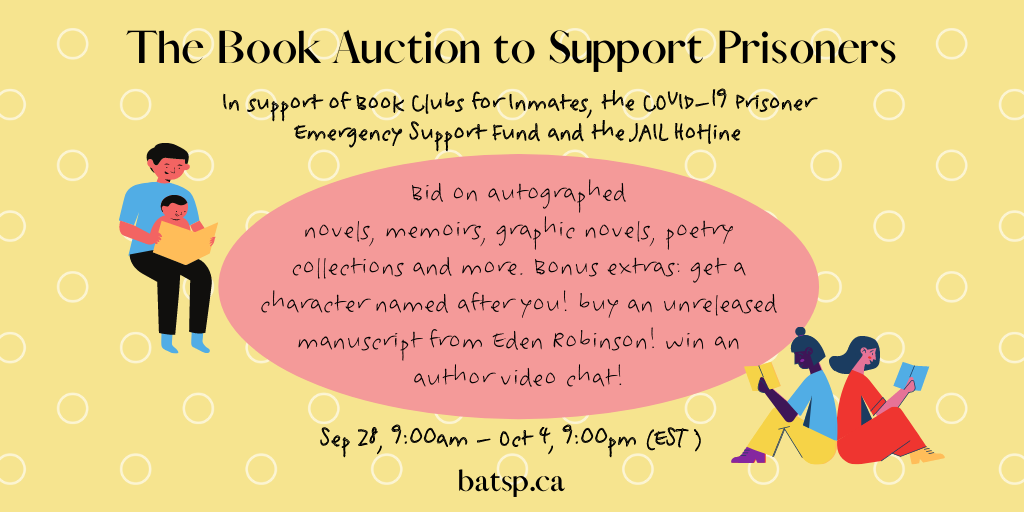
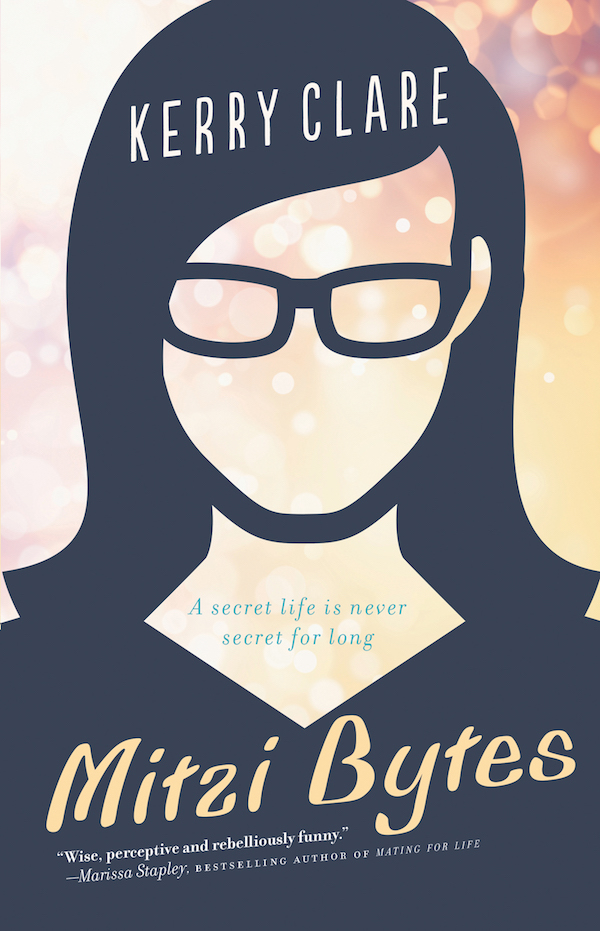
The excellent Thea Lim has organized the Book Auction to Support Prisoners (in support of Book Clubs for Inmates, the COVID-19 Prisoner Emergency Support Fund & the Jail Hotline) which kicks off today. There’s an amazing list of signed books and other special offers up for grabs, including my novel Mitzi Bytes. Good books for a great cause!
September 25, 2020
Hope
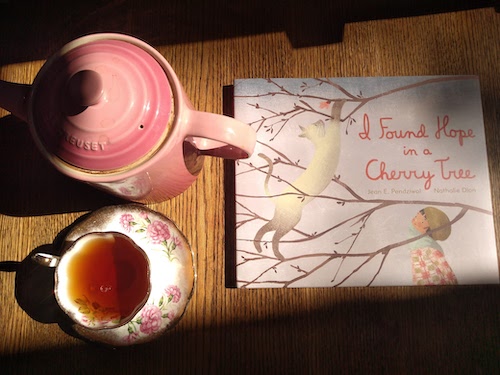
It’s #CupandSaucerFriday, the “light in the darkness” edition. Jean E. Pendziwol has written a dream of a book with I Found Hope in a Cherry Tree, illustrated by Nathalie Dion, a book whose message underlines my belief (which I stole from Ali Smith’s Autumn) that the stories we tell become what the world is, for better or for worse. And the distinction is up to you, because your actions matter. And hope matters, wherever you find it.
September 25, 2020
How to Be a Champion, and Not a Sycophant
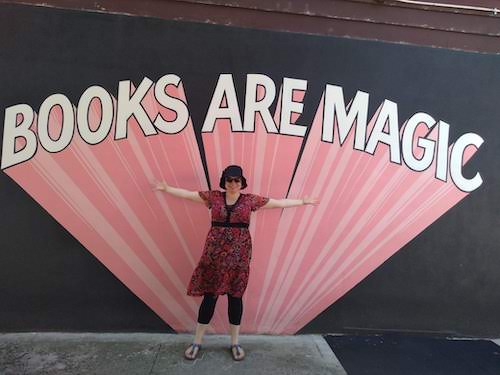
Some of my most important mentors have been the people who said no to me, the people who couldn’t accommodate my request, who didn’t want to help, who had better things to do than answer my email. From these people, I have learned that I too can set my own boundaries and limits, that none of us are required to be everything to everyone.
And so similarly was I impressed last spring when I approached a fellow author-friend for a blurb for my forthcoming novel, and she responded with a caveat—she would agree to read my book, but not necessarily to endorse it. Because how could she know if she hadn’t read it yet, and as a person who aspires for everything to mean what it means, this was a particularly powerful moment.
This story has a happy ending too, because this person really liked my book. And how much more her endorsement meant to me because it wasn’t granted automatically, because it meant something. But even if she hadn’t endorsed it, I would have admired that too. A sign that honesty and integrity are not as rare as one might think. And yes, my ego would have taken a bit of a bruising, but every public-facing person benefits from such an exercise from time to time.
Last week I wrote about the importance of making space for promoting books and reading, but this doesn’t require one to have to love everything. “The standards we raise and the judgments we pass…” Virginia Woolf refers to in “How Should One Read a Book,” and those standards and judgments are important. Not because they are the law, because they aren’t, and different readers and critics will have different standards and judgments, which is just the way it should be (and this is the great thing about making space—there can be enough of it to go around).
If you are making space and not adhering to your standards and judgments—raving about books you thought were terrible, blurbing books you’ve never read, recommending titles about which your take was mostly “meh,” holding your nose to post about a title your favourite publicist has sent you which is not your cup of tea, writing about a book that was rubbish but the author is super nice—then the space you are creating is not going to be very meaningful. And sometimes these kinds of situations are difficult to avoid, particularly if you are new to a community or less sure of your taste or less confident as a critic. But I would advise you to find yourself in these situations as little as possible to preserve your own literary reputation, your sense of self, and on behalf of the cause of better books, which is a cause we all can believe in.
Here’s how you can do it.
- If you can’t say no outright to review/blurb requests (it takes courage to be that bold) then you can make excuses. A lack of time is something nobody is going to argue with. Be vague. Don’t reply to emails. They’ll get the point. (There are people who will claim I am being unfair here, and that you owe it to authors to be honest and upfront. I have tried this. It has never gone well, and I will never do it again.)
- Build your wheelhouse. Most historical fiction, books about young men coming of age, novels with child narrators and fiction about philosophers I’ve never heard of are outside mine, which makes it easy for me to ignore these books without compunction.
- If that author on Instagram is super nice (even if she is me, although I am not that nice) and her book just didn’t jive with you, you don’t need to post about it. Even if she put it in her mailbox with her own two hands. The favour you did her was trying out the book at all. It’s not your fault if it didn’t work. And perhaps you can write a critical post that highlights the book’s redeeming features, but if none of those features can be found, just let it go.
- Be as brave as my friend and don’t agree to blurb a book you haven’t read yet. If you do agree to blurb a book that turns out to be terrible, fail to meet the deadline.
- Understand that a book may not be to your taste, but someone else might enjoy it. And that is terrific. Because you got to be honest with yourself and your audience and the book still got love. There is enough to go around without you bending over backwards.
- Know that it is not your job to take care of everybody
- And understand that your word is only ever going to mean anything if you mean the things you say. Your platforms matter. Use them wisely, smartly, and don’t water them down. And yes, we could be all throwing up our hands about declining ways to get the word out about books (and we do! And we are!) but that makes it all the more important to preserve the integrity in the places/platforms that are still available.
September 23, 2020
If Sylvie Had Nine Lives, by Leona Theis
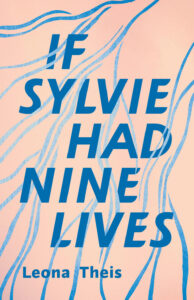
Okay, imagine the craft and form of Caroline Adderson’s Ellen in Pieces, a premise and scope like Kate Atkinson’s Life After Life, and an attention to the details of ordinary life that recalls the work of Carol Shields? (There’s also a Bronwen Wallace People You’d Trust Your Life To vibe that I can’t quite put my finger on…)
If Sylvie Had Nine Lives, by Leona Theis, is SO GOOD, a novel-in-stories (for real. It works.) that begins in 1974 as nineteen-year-old Sylvie is just three days away from marrying Jack, for better or for worse…
And the book that follows explores the many outcomes and possibilities created by Sylvie’s choices, several forks in the road, and why they matter, or why they don’t. What if life is not a river, the novel’s brief intro suggests; what if it were a delta instead?
Sylvie leaves Jack, and moves in with a roommate whose violent boyfriend’s advances she manages to refuse. Or Sylvie marries Jack and saves his life when he falls into the lake. Or she leaves Jack a few years down the line, pregnant. She marries her best friend from high school has two kids. She marries nobody and starts her own business. She and Jack spend their twentieth wedding anniversary watching the OJ Simpson Bronco chase. Sylvie remains single and becomes a university professor. And so on, these stories showing very different outcomes of Sylvie moving through the decades, getting older, the very same character (one with a propensity for terrible choices) contending with different circumstances.
This premise could be considered a gimmick, but the writing is just so excellent that the whole book shines, and the stories culminate the same way they might in a more traditional narrative. Perhaps some readers could become frustrated with each new story destabilizing what came before, but I just found it really interesting—and it works on a meta level too with Sylvie considering several times the different roads and doors she might have chosen. It is interesting also that the reader would mind at all if the “truth” of a fictional person’s story was undermined—if you’ve read the last page of Kate Atkinson’s A God in Ruins, you’ll know what I’m talking about. Isn’t is amazing that it matters so much? And it’s a sign that the author has achieved something that it does matter.
I’ve not read anything by Leona Theis before, but she’s been shortlisted for the CBC Literary Award, appeared in The Journey Prize Stories, and had the amazing Elizabeth McCracken select her story “How Sylvie Failed to Become a Better Person Through Yoga” as winner of the American Short Fiction contest in 2016, which is the coolest honour I can think of. And this novel lives up to the anticipation of such a biography—the book is wonderful. Definitely my first favourite book of the fall season.
September 22, 2020
Gleanings
- There’s safety in a bowl of spaghetti
- A mistake-free performance could only happen if it were so unambitious as to be, frankly, boring.
- Now that we know how precious cheese is, don’t let it go to waste!
- Christmas, Halloween, birthdays galore, our house was that home where you knew you could bring your best friend’s cousin to and she’d just fit in.
- A message from the past to the present: be careful how you move between the cedars and firs.
- I aspire to read more books that I actually end up reading.
- Even knowing all of this, it wasn’t until I read Fangirl that I realized that I could tell the world how much I loved fanfiction
- I’m not against protesting, not one whit. I am opposed to perversity and spite.
- I do not need a pandemic to let me know I’m mortal.
- My grandmother wasn’t even born a Zorn, but a Wolf. She came by her name too.
- Somewhere along the line, I internalized the messages that I was broken and in need of fixing at the same time as not being able to rely on anyone but myself to meet my needs.
- Because I do a lot of my seeing with a camera, I often see things at least twice.
- Knowing what to remove, what to take down, what to edit out is as essential to completion as invention itself.
- That sense of accomplishment follows me throughout the day, which is important when so much of regular life is temporary.
Do you like reading good things online and want to make sure you don’t miss a “Gleanings” post? Then sign up to receive “Gleanings” delivered to your inbox each week(ish). And if you’ve read something excellent that you think we ought to check out, share the link in a comment below.
September 21, 2020
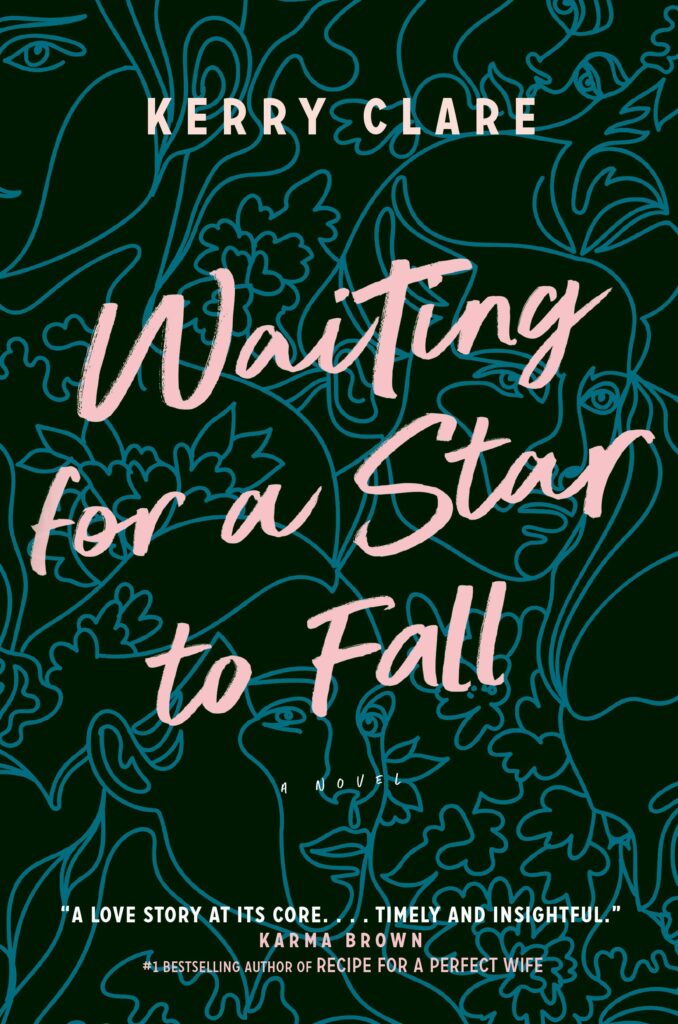
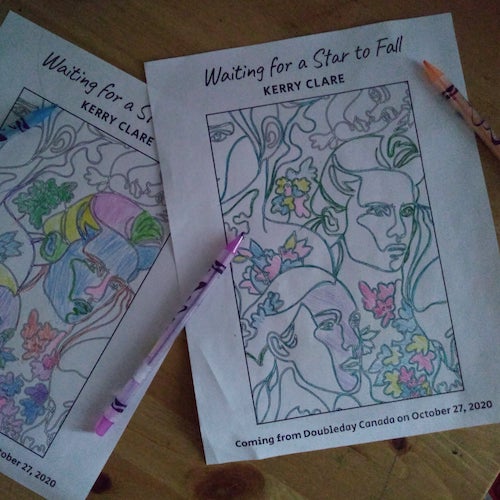
Looking forward to Waiting for a Star to Fall
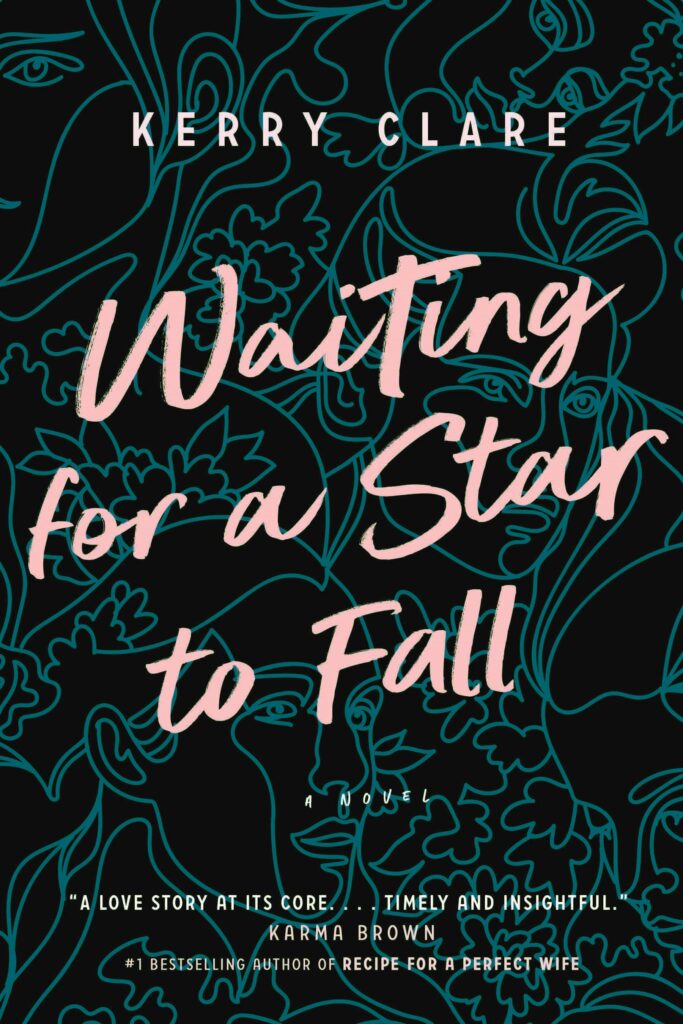
36 days until Waiting for a Star to Fall arrives on bookstore shelves!
I’m very happy that the novel has appeared on Fall book previews at CBC Books, the Toronto Star, and this weekend at the Globe & Mail.
I’ve been looking forward to this book for a very long time now, and it’s nice to know that I’m not the only one.
September 18, 2020
How to Do Self-Promotion
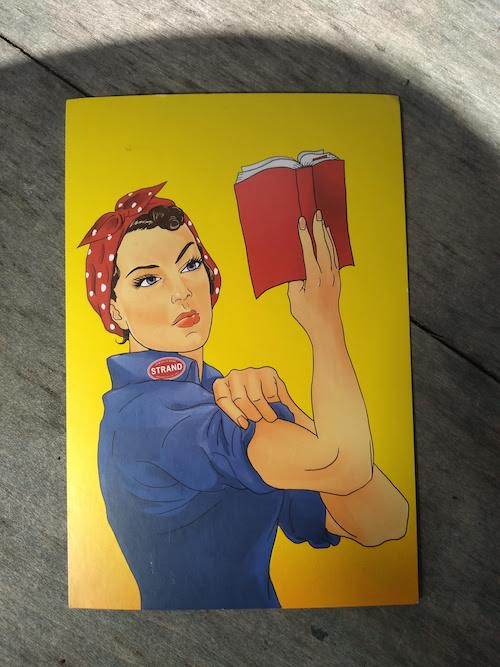
“There is nothing wrong with self-promotion!” someone tweeted at me a few weeks ago, an attempt at encouragement that demonstrated that they don’t know me very well, because clearly, I already know this . If I could afford to buy billboards for my selfies, I probably would. I really do hope that you will pre-order my new book (coming October 27 from Doubleday Canada!), is what I’m saying, but also that all self-promotion is not good self-promotion. There is a certain kind of grace required.
This all started because I have the best part time job ever, and I work with the best people , who fill my life with goodness and have been so supportive of my work for the past nearly-ten years. And my job involves getting excited about Canadian books, which is the greatest pleasure, and comes pretty naturally to me. But I am careful not to use this particular platform to promote my own work. I have other platforms after all, and it would be more than a little gauche. For me to include my book on the site’s Fiction Preview, for example, a project I care very much about and work hard on compiling.
So I didn’t, and my friend/colleague Kiley didn’t notice (it was a very busy summer!) until my book ended up on the Toronto Star and CBC Books’ Fall Previews the other weekend. And then she tweeted from the 49thShelf account about my forthcoming book, and how I hadn’t included it on our list. I replied that it’s kind of tacky to put your own book on your own list, and that it is to be hoped instead that somebody else might be anticipating my book, someone who isn’t even me—a gamble that had paid off (phew!) because at least two media outlets were.
Um, and yes, props to my fantastic publicist at PRH, of course. I suppose it’s easier to be kind of laissez faire when you have such people in your corner. It’s not all karma, is what I’m saying. But some of it actually is.
And what I mean by this is that the best way I know to do self-promotion is to create the space, instead of focusing on my own book specifically. This is a long-term goal, of course. You don’t start this six weeks before your pub date. Instead, you use whatever platforms you have—both digitally and in the actual world—with the intention of creating meaningful conversation, in my case about books and reading in general. Supporting a culture of literature in the places I hang out in, connecting with others who do so. And this culture matters. As Virginia Woolf wrote 95 years ago of the importance of readers in her essay “How Should One Read a Book?”—“The standards we raise and the judgments we pass steal into the air and become part of the atmosphere which writers breathe as they work.”
So how to create this space? Maybe you have a book blog. Maybe you interview writers on Youtube. Maybe you started an online literary magazine. Maybe you post about the books you love on Facebook. Maybe you run a reading series. Maybe you post photos of your library haul on Instagram. Maybe you talk about books exuberantly to the people you encounter in your everyday life. Maybe you support independent bookstores/ Maybe you read conspicuously in public. Maybe you do things to support the spaces that were created by other people, attending literary events, buying books, reading book reviews. Maybe you listen to books podcasts, and then tell other people about the books podcasts. Maybe you write Goodreads reviews, and leave reviews on Amazon—although even typing this makes me nauseous because nothing associated with Amazon is good for anybody, so if these are your tactics, perhaps think of one more.
The point of this space you’re creating is still not to promote your own book. Forget about your own book, for now. This is not about you. The point of this space you’re creating is to make more room in the world for books and readers, and even just a little tiny bit more space means something significant. And you’re benefiting from this space, because you are a reader, and you live in the world, and you’ve done your part to make the world a little closer to the kind of world you want to see—where books and reading matter.
And then, yes, because there is more space, there will also be more room for you and your book. Because you’re steeped in the atmosphere of books and reading, it will not seem so awkward to make your own book a part of the conversation. And because you’ve cultivated connections and built relationships, you won’t be the only person talking about your book either, which is the kind of promotion that really matters, which is really just living the dream.
But first, you have to make that space. Talk about and share the books you really love. You are not in competition with other writers—a world where people love and value books is good for everyone, even if the books they’re loving and valuing aren’t yours. There is room enough for everyone, especially if you’re making space. The success of any writer can be a success for all writers.
Of course, feel free to take all this with a grain of salt because modest success is all I’ve ever known anyway. I’m a blogger after all, inherently on the margins. But still.
When you hear someone asking for a book recommendation, resist the urge to suggest your own book (because of course you’re going to suggest your own book). Not because there is anything wrong with self-promotion, but because it’s just too easy and obvious to create any meaningful connection. You really do have to go the long way around, but it’s worth it. Because it’s real.
September 16, 2020
The Smallest Lights in the Universe, by Sara Seager
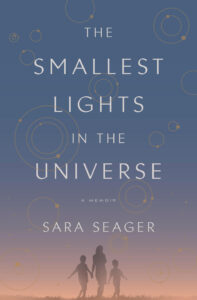
Space made news this week with the discovery of possible life on Venus, and what was most exciting for me about this development was that on the team of researchers who’d made this discovery was Dr. Sara Seager, MIT Astrophysicist and author of Smallest Lights in the Universe, which I was reading last week. Can you imagine discovering alien lifeforms and releasing an emotionally powerful memoir all in the same season?
But then Sara Seager doesn’t do anything in an ordinary fashion, as the reader discovers. She write about her unconventional childhood growing up in Toronto, how her passion for astronomy grew, how she found her way to marriage and family, and how she endured the loss of her husband, who had kept their domestic life afloat while Seager had her head in the outer-reaches of space, developing theories of exoplanets that had seemed like fiction when she began her work in the 1990s. She writes too about her recent diagnosis on the autism spectrum, and her singular point of view in this regard is what makes her memoir so fascinating. When her first husband was interested in her, she writes, she initially rejected his advances, because she just wasn’t that into people, and her strongest feeling toward her fellow humans was “tolerance. I also loved the straightforwardness with which she writes about motherhood, which she was never ambivalent about, but which was hard to balance with a busy career, and even moreso after she became a solo parent. These kinds of ideas have been expressed so many times, but Seager manages to do so devoid of the usual cliches and with a fresh and interesting perspective. Further, her quest to learn what can be discovered in the outer reaches of the universe, her belief in other possibilities, in different worlds, is the kind of perspective than seems urgently necessary now, when we need curiosity and imagination more than ever.
September 15, 2020
Gleanings
- It’s been one, very small, dull-silver lining of the pandemic: My children have been roaming the neighbourhood, without me.
- There is something bewitching about keeping a record of the little details in life, those things that probably culminate in patterns, and may otherwise go unnoticed.
- Most everyone I know is tired of hearing that I am a librarian’s daughter. Especially the non-readers. What can I say? I’m lucky.
- These are the people on whose doorstep I can arrive with no notice. These are the texts I’ll reply to as soon as I see them, and the phone calls I’ll answer even if I’m in tears and letting other calls go straight to message.
- Ever since I got my fancy-pants bundt pan, I have been making one cake with more frequency than any other.
- With hints of autumn in the air and tickling the leaves, it felt like this might be our last chance to meet in the park.
- And that all these lessons take at least two decades to absorb.
- Imagine not knowing what hummus is, it seems impossible!
- The world needs a lot of things right now, but it also needs places for us to exercise that muscle of infinite reception. Libraries, for example. Schools. Art galleries.
- Despite the obvious challenges ahead, sitting in Daddy’s chair I found myself in the cradle of his infinite love, which is perfect, non?
- How to revise your novel: part 5
- A quiet novella is a kiss of death if you think of literary ambition as a living thing.
- You know, I prefer the kitchen to the living room, really. The kitchen is all about the promise of cooking something up … and the living room? It’s about winding down.
- Begin with endlessly sorting your bookshelves. Keep, donate, keep, donate….
- it’s not a photograph until it’s printed
Do you like reading good things online and want to make sure you don’t miss a “Gleanings” post? Then sign up to receive “Gleanings” delivered to your inbox each week(ish). And if you’ve read something excellent that you think we ought to check out, share the link in a comment below.