October 12, 2022
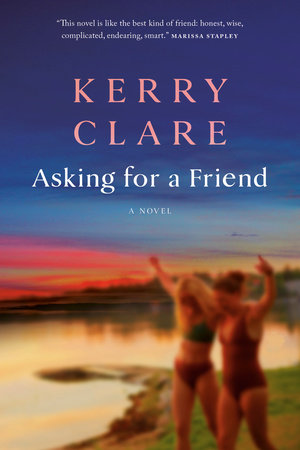
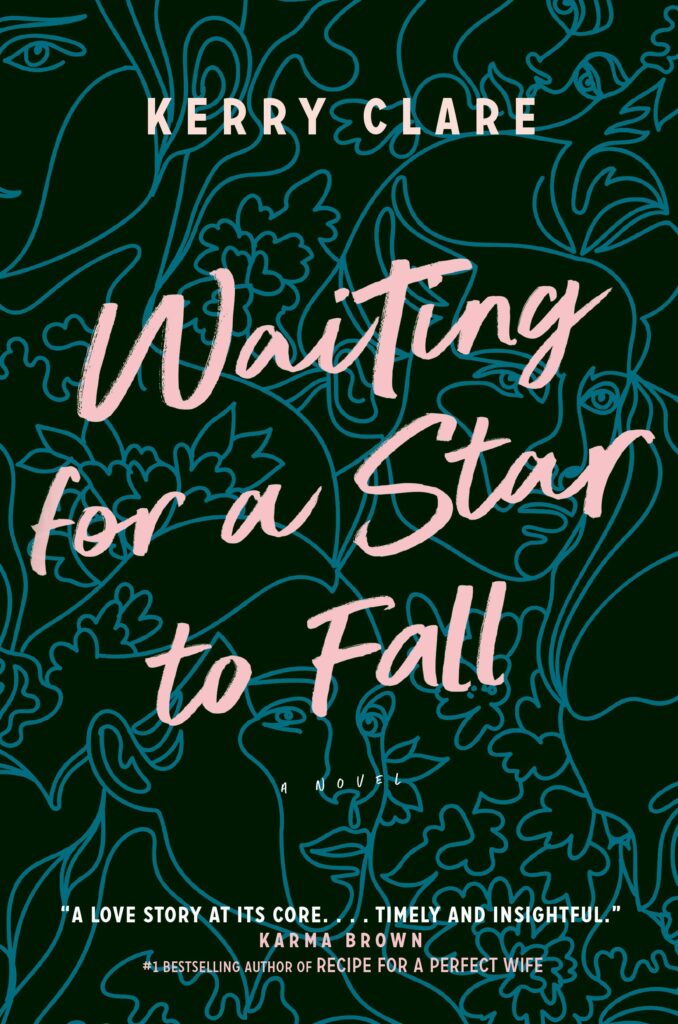
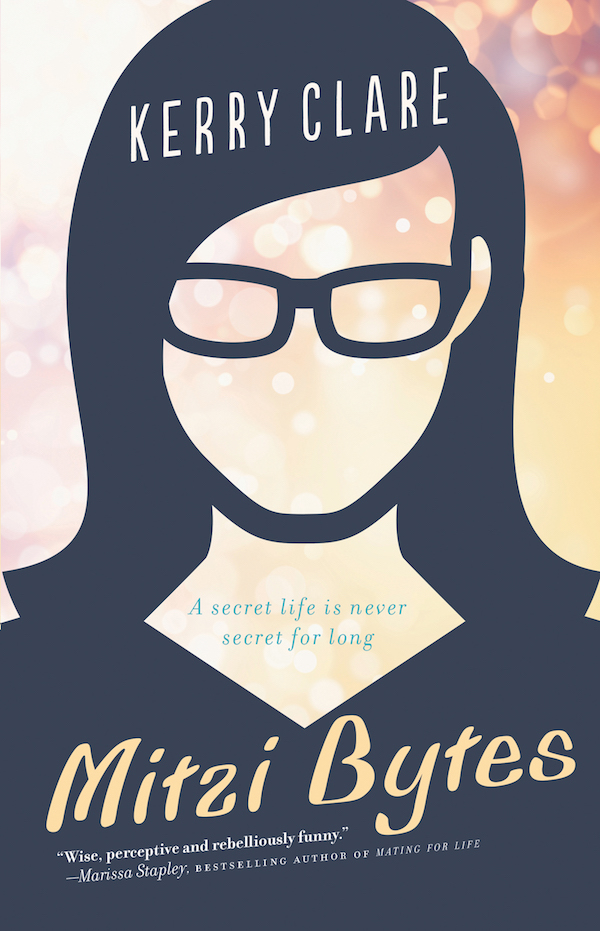
Looks! Looks! It’s my books!
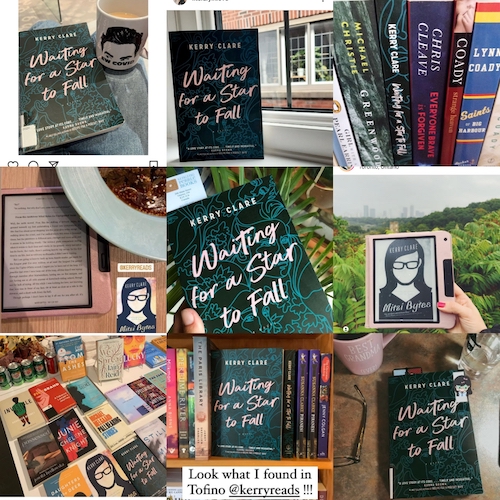
If you need me for the next month, I’m going to hard at work on the final round of revisions to my novel before it goes for copy editing (it comes out September 5 2023, which is less than a year away) but, in the meantime, how wonderful that my first two novels are still out there in the world, going places and being read! Thanks to everybody who’s reading and sharing.
October 6, 2022
Shrines of Gaiety, by Kate Atkinson
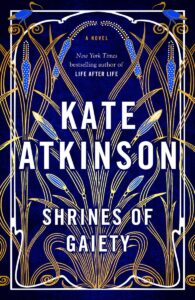
In Shrines of Gaiety, Kate Atkinson’s thirteenth book—which is truly an amalgam of her divergent literary preoccupations over the last twenty five years—there are secret exits, disorienting corridors, narrow staircases, and a bar that swings out of sight at the push of a button, and so too are there tricks in her prose, although they’re not cheap ones, and the prose itself is truly luminous (and also had me reaching for my dictionary several times—”testudinal”…who knew?).
Like all of Atkinson’s books, this one plays tricks with time—albeit less overtly than Life After Life, just say—the entire book taking place over the course of a few weeks, but its chronology including small jumps back in time to show readers what we think we already know from a different angle—and perhaps also suggesting that moving forward in time in 1926 was an uneasy prospect, the traumas of WW1 still unbearably present, no matter how nobody wanted to talk about it.
The novel opens with the release from prison of Nellie Coker, the notorious owner of several clubs in London’s Soho district, who’d been put away for a few months for her defiance of licensing laws. She’s the mother of two sons and a handful of daughters, plus the possessor of shady origins and dealings just as dodgy, which is why John Frobisher is on her tail, a police inspector relocated to the local precinct to look into corruption and possible alliances between Nellie and the force.
On top of that, women’s bodies keep turning up, and it’s two missing girls who’ve brought Gwendolen Kelling from York, a librarian who’s recently experienced her own change of fortune and who has volunteered to come to the city to seek her friend’s runaway half-sister and her companion, two young teens starry-eyed and looking for fame on the London stage and who are therefore ripe for exploitation…
It’s a seedy underbelly for a world that, on its surface, is so sparkling and fun, and it’s this juxtaposition that Atkinson explores, as well as the cheapness of that shiny veneer and what lies beneath it, which is trauma, addiction, violence, and longing. An exploration that feels quite resonant a century after the story is set—as well as ominous, because 1926 would be as good as it got for a very long time.
John Frobisher is no Jackson Brodie, and it becomes clear that Atkinson is not launching a detective fiction series here, the novel remarkably self-contained, all its ends tied up neatly—though perhaps with a bit too much fizzle after more than three hundred pages of sizzle. (So what, is the question I expect my favourite critic Rohan Maitzen will be asking, and I can’t wait to read her review, because I’m always just dazzled by Atkinson, while Maitzen holds her to the rigorous literary standard I think her work deserves…)
In the four days since I finished reading Shrines of Gaiety, however, the story has very much stayed on my mind, suggesting the novel is not mere frippery, but instead a work of literature that—like the best of Atkinson’s works—asks vital questions about the terrible sublimity of human experience and the real meaning of the stories we tell.
October 4, 2022
Gleanings
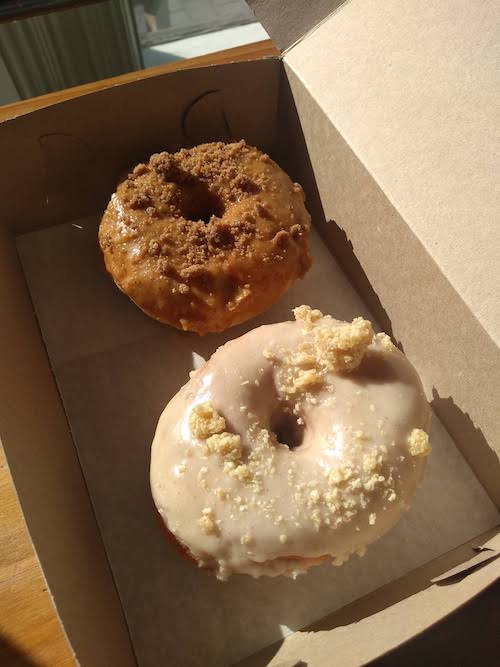
- We stopped at Pakan Church, beautiful in the grey light, and then continued back to Smoky Lake where our family was arriving to eat pierogies, visit the museum, watch a crane drop a giant pumpkin onto an old car, followed by a scrabble for seeds for next year’s garden.
- When it all is confusing and uncertain. When it’s murky and unclear. When the once clear why of every little thing becomes a challenge to see a why in anything. What does it look like to paddle to deeper darker depths instead of exhaustedly attempt to tread water towards the light?
- I really want to find my sense of humour again. It’s probably among my top three goals at the moment.
- When I began writing this blog post, I thought I would write about the attributes common to women with whom I feel a connection. I found that difficult to pin down. I reflected on Kasl’s words that we can only connect with people when we see them as distinct from us. I realized we share as many differences as we do similarities. You are not me, and I am not you.
- One thing that is very apparent is that there is a band wagon out there that a whole lot of people are jumping or climbing onto and it’s called ‘the ordinary.’ I’m pleased so many are also discovering the beauty and serenity in the ordinary.
- Stories are what is getting me through these unwell days. Disappearing into other times and places, especially when they are fairly gentle is just the tonic for me.
- This week, I find myself thinking about mothers and the stuff they leave behind. And how we decide what to save or toss. Like my mother before me, I’m not a big saver of things, but this silver and china and linens . . . I can’t let it go. But what will I do with it when it’s time for me to downsize?
- There is nothing quite so nice as a drive through the countryside. With my sunroof and windows open, the sights, sounds and smells aroused deep gratitude for this pretty fall day, and the beauty of the Essex paysage where there truly is good in everything.
- I could not help wanting more and more…of the experience, the food, the joie de vivre (okay that’s French).
October 3, 2022
Prismatic Thinking
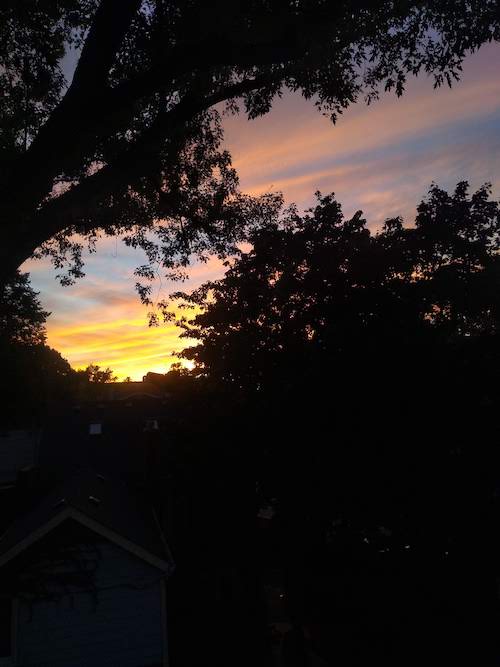
I have a problem with proportion, with understanding proportion. I have a problem understanding just how big the world is and what words mean, and I have anxiety that causes me to leap to extremes, which I think is a more recent development, since everything became so extreme, but I’m not completely sure.
“The town is destroyed,” someone DM’d me last May after a tornado blew through a small town not far from where I live, and I still don’t know what they meant by that, exactly, and I thought about it again while obsessively following the news of hurricanes over the last week and a bit, clicking on headlines with words like “catastrophic” and “devastation”—see my previous point, I have anxiety—and trying to parse the scale.
Everyone I know who lives in places impacted by these storms came through them okay, relatively speaking, some with trees down, one lost a barn roof, another now on Day 9 without power, but still. Everyone I talked to remarked on how lucky they were, which is a human tic I’ve been picking up on since March 2020. Not on social media, where complaints run amok, of course, the common discourse, but in real conversations, these comments immediately followed by empathy for everyone who’d been less fortunate, and it’s patterns like that this make me despair a little less. That make me almost fond of people as a species.
But I still don’t understand what counts as catastrophe, what it means to be devastated, and I think a big part of this is a longing for everything to be okay, for me to find signs of that okayness, to look for the helpers, to quote a cloying phrase. Silver linings. There must be hope, and so there is, and there is, absolutely, because look how much was not destroyed, look at the persistent shoot taking root in a crack in the pavement. There is life, there is promise, but there also comes a point where this becomes denial of reality, a refusal to look upon how high are the stakes of climate change.
All these storms. And there have always been storms. And yet.
But I still don’t know.
I’m bothered by people who flippantly use terms like “the world’s on fire…” Partly because it scares me. I feel like that if the world’s on fire, than it’s not really the time for being glib. And partly because there have always been fires. (I’m doing it again, I know.) But mostly because the world is far too large for it ever to have been one thing, on fire, or otherwise, to be reduced to a single state, and this is what has been racking my brain about these last few months, or possibly forever. How to connect the infinitude all of these dots, this data, especially the parts that don’t connect at all.
I feel like the beginning of possibility for making sense of any of this might lie in the following passage, by Willow Defebaugh, Editor-in-Chief of climate/culture journal Atmos:
“I suppose that’s what it means to see the world through a prismatic lens. It requires us to embrace contradiction and multiplicity, to never be afraid of letting New perspectives read pattern our own. It’s about accepting that life is a kaleidoscope of every human imaginable, in shades of both light and dark, at once disarmingly fragmented and breathtakingly whole. And in those dazzling shards, we find our humanity reflected back at us—jagged, brilliant, and gleaming with possibility.” (Found here.)
September 29, 2022
Woman, Watching, by Merilyn Simonds
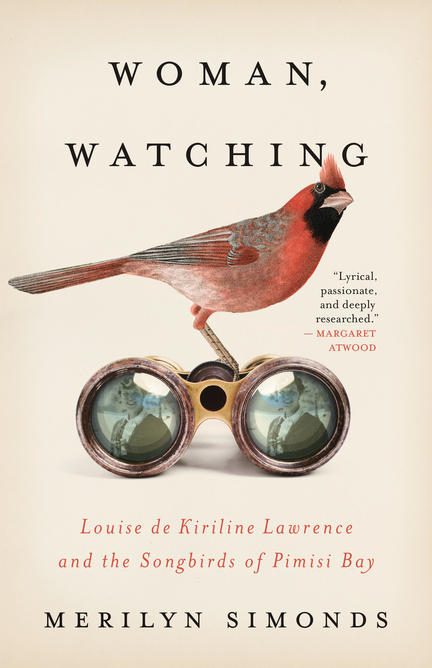
I LOVED this book! Louise de Kiriline Lawrence is the most fascinating woman I’d never heard of, born to Swedish aristocracy, goddaughter of the Queen of Denmark, trained as a Red Cross nurse in WW1, which is how she met her Russian husband, whom she followed into a post-revolutionary Soviet Union beset by civil war, and then he was eventually killed by the Bolsheviks, and in the aftermath of that loss, she emigrates to Canada to begin nursing in Northern Ontario, where she becomes the nurse to the Dionne Quintuplets during their first year of life…all this taking up just 64 pages in a book that runs for 300 more.
Because after those extraordinary formative experiences, according to Merilyn Simonds in biography Woman, Watching: Louise de Kiriline Lawrence and the Songbirds of Pimisi Bay, is where the real story begins, Lawrence buying a rural property where she builds a log cabin (without plumbing or electricity) and becoming one of the foremost ornithologists of her time, thanks to her own powers of observation and correspondence with other bird experts who informed her ideas. She’s able to note effects of habitat loss and other human interference before Rachel Carson became well known or celebrated, build support and information networks with other women birders, and write six books, many articles and magazine stories, and a foundational monograph on woodpeckers.
Born into affluence, Lawrence’s early years of hardship would have primed her to be resourceful and grateful for small pleasures, but even still, her strength and stoicism were remarkable—there is a part where she ventures into the bush to find moss with which to insulate her windows for her unheated cabin, and then she falls and dislocates her shoulder, but (as she reports cheerfully to her correspondent—she was also a prolific letter writer, fortunately for her biographer!) she was able to push the joint back into place AND ended up getting some of the best moss she’d ever gathered.
In some ways, this story of Lawrence’s cabin near North Bay reminded me of Virginia Lee Burton’s The Little House, with the city ever encroaching, growing closer. It’s also a story of the North American Conservation movement (some parts of this mapping beautifully with Michelle Nijhuis’s Beloved Beasts, another book I loved), of discrimination against women in science, of changes to science so that amateur observers have less to contribute, of the struggles in the career of a writer, and the perils of growing old, but most of all, it’s a story about birds, and what we might see if pay attention to the world around us, of the wonders and miracles of the natural world.
September 27, 2022
Gleanings
- On a hot August morning in 2008, I titled the blog on a whim, and began sending out posts to the universe.
- An optimist at heart, I loathe to be maudlin, but realistically, even if I live to be 102 years-old like my Grandma Princess, I am well over half way there.
- Instead, and for many happy years now, I’ve been striving to enjoy every moment exactly as it is: The chores—cooking, cleaning, laundry and gardening. And the activities—watching the Jays, hiking, paddling, swimming, cycling, and, of course, photography. Living each moment as it arises, unadorned or improved, has given me a much fuller feeling of contentment.
- It’s also a bit like this blog post: I’m just trying to make the excellent link between still life and poetry. But I think it’s there without me nattering on about it. Or maybe it’s something I need to write more about, longer, elsewhere. And probably will.
- Fast forward several years, and I have still never hosted a holiday dinner. The china only gets used twice a year, on my daughter’s birthdays, when I serve boxed macaroni and hot dog coins off of it. Instead, it is the place we eat super together every night, often shoving aside an avalanche of paper or Lego to make room for our plates.
- A commitment to be with the sunset every day of this, my 37th year.
- In that intoxicating conversational flow from book to book, from book experience to book experience, from insight to insight, here are some of the flashes that glinted off the waves.
- Bring in the sheets, soft yellow (your favourites), bring in the towels, fold them, the scent of sunlight and early fall air (on the mountain trail the other day, you both noticed the change), bring in your bathing suit for this afternoon’s swim, pack it damp for a road trip tomorrow, when you will drive up Highway 5A, stopping at Nicola Lake to enter its cold familiar waters, stopping by the pine as you return to your towel, crushing its familiar needles in your hand.
- I’m experiencing a lot of thrill lately, and I just wanted you to know. There is a beautifully flowering tropical tree INSIDE MY HOUSE.
- Once, maybe as recently as pre-Covid, I would have referred to those as “simple joys.” This summer they were everything.
- It seems many of us recognize autumn as our favourite season, and the reason is partly attributed to nostalgia. Nostalgia is typically derived from positive past experiences, and at 64, I have a lifetime of memories – no wonder I feel nostalgic!
September 26, 2022
Return Stroke, by Dora Dueck
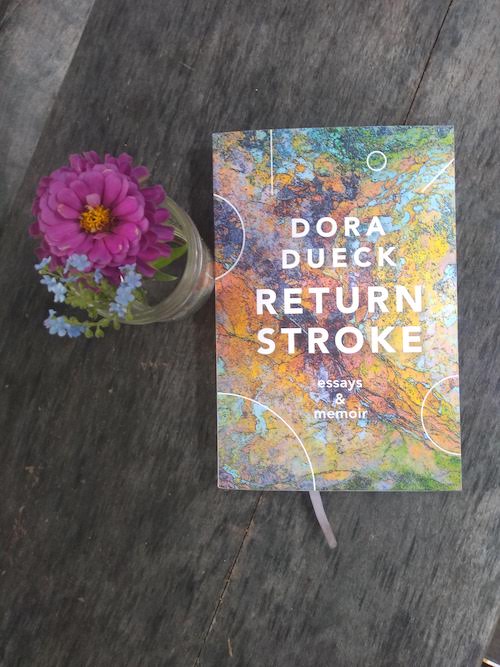
In 2019, I founded a pretty sweet boutique bookselling operation called BRINY BOOKS, and Dora Dueck’s most recent novel, ALL THAT BELONGS, was part of our second lineup of titles, a novel I loved, just as I’d loved her previous book, the story collection WHAT YOU GET AT HOME, and I’ve also enjoyed her nonfiction over the years, at her blog and in literary journals, and so I’ve been looking forward to her most recent release, RETURN STROKE: ESSAYS AND MEMOIR, published by Canadian Mennonite University Press, and it’s everything I was hoping it would be. Dueck reflecting back from her 70s on her girlhood growing up in Alberta, her marriage and years of intensive motherhood, which included a stint living in her husband’s native Paraguay, and all the wonder and culture shock that experience entailed, and then her own evolving thinking about feminism, and faith, and her relationship to her church after her daughter comes out as queer, and she writes about getting older, the lightness of aging, and the heaviness too in an essay about the final days before her husband’s death, a gorgeous evocation. This is a book that brought me to tears more than once or twice.
What I love so much about Dueck’s writing and her thinking is that nothing is fixed, and she is eternally curious, taking notes and learning, about the past and the presence, much of her work concerned with memory and history, but in such a vital, living way, not as an affirmation but a process of discovery. The first half of the book is a series of essays, and the second (roughly the same length) is a work of memoir about her time in Paraguay in the early 1980s, and she writes about the revelation, as she returns to the letters and diaries that are her primary sources, “I’d been thirty-two…, which was, I suddenly noted, the current age of our youngest child, and that child seemed—well, young!” An entire page about how relative are the ideas of old and young—which was a mirror image to the revelations of Emma Straub’s protagonist in her latest novel This Time Tomorrow—and then this beautiful paragraph:
“That I was young is the truth, and yet, in the memoir-writing-effort of existing out of time, my youthfulness at thirties-young seemed an invention. And having coaxed this fiction/truth into text, I found myself suddenly standing next to my thirty-something children and in the flashes—swift and jaggedly stunning as lightning strokes—of knowing myself then and my children now, we seemed to meet as age-equals. As if we’d bumped into each other on some magnificent high bridge. The meeting amazed me, made me dizzy too. I was proud of these children, of who they were at the moment, and it pleased me more than I can express that the Me of the Chaco could, in this moment of meeting, be compared to them.”
Though I’m pretty sure the pleasure is entirely mutual, seeing what a privilege and a most illuminating delight it is to bump into Dueck in these pages.
September 23, 2022
My Hilary Mantel
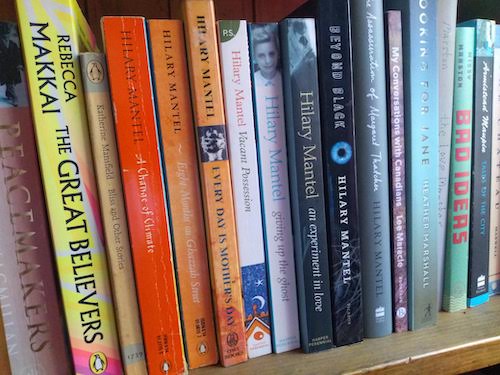
I arrived at Hilary Mantel during what turned out to be the most impressionable and formative parts of my reading life (so far!), during the years after my undergraduate degree when I was living abroad, first in England and then in Japan where my favourite occupation was buying Penguin paperbacks from Wantage Books in Kobe. This was the period where I first started reading favourites like Margaret Drabble, and Joan Didion, and yes, Hilary Mantel, whose own expatriate novels, EIGHT MONTHS ON GHAZZAH STREET and A CHANGE OF CLIMATE inspired the novel I’d write for my Masters thesis a few years later. It was her dark comic novels I loved best though, EVERY DAY IS MOTHER’S DAY and it’s sequel VACANT POSSESSION are horrifying and hilarious (and based on Mantel’s experience as a social worker; I’d also worked for social services while I lived in England and deeply recognized the disturbing realism in these works). You will notice I don’t have her historical works on my shelf—I read WOLF HALL, but (forgive me!) it just didn’t do it for me, which was FINE, because it certainly had enough other readers to go around. I think what I love about Mantel is how wide ranging were her passions and preoccupations over the years, which means there’s a Mantel shelf for every kind of reader and I am so grateful this is mine.
September 20, 2022
Gleanings
- And here’s the sticking point, at least for me: While I did hold the late Queen in high regard, and felt sincere affection for her as an individual, I also have profound ethical misgivings about the system of government she represented, namely an inherited constitutional monarchy that is rooted in a legacy of profoundly corrosive inequity. Many of its conventions are, to my mind, risible and frankly indefensible.
- Due to a lack of “going out,” we haven’t cleared out and reorganized the front coat closet in a few years. This is going to require music. And wine, maybe.
- Nope. I’ve had enough. It’s partly a me thing – the amount and intensity of therapy I’ve had over the last few years has helped me accept and understand things about myself and the end result is…I’m too awesome to deal with your bullshit.
- Oh Adi, how I wish I could just give you the danged blue horse. Somehow make it all okay. But the truth is that it wouldn’t help. Wouldn’t teach. Wouldn’t prepare you for all the inescapable blue horses to come.
- For them (and for us all) each fresh start offers new lessons, new discoveries and new experiences. Children have an unfettered joy in the new and unfamiliar and can quickly make a game out of anything thrown at them. They love to explore and are constantly and easily amazed at their findings. That’s the spirit I’m trying to foster within myself and for myself.
- What I’ve found uplifting is that libraries persist.
- Blogging can be a vulnerable thing (as is any form of writing and expressing yourself), in that you allow others a glimpse into your interior life. And that interior may be messy and chaotic, sometimes unpredictable, sometimes rich and meandering. You are allowing others to form opinions and judgements on that interior life. Writing is a solitary pursuit. But once you launch your words into the yonder, not knowing where they may land, you expose yourself. You throw out thoughts and words, reach out a hand, inviting people to simply read, or read and engage, not knowing what may return to you.
- I don’t know how to write poetry, but I do know how to stop and notice all of the ordinary moments in a day. And this in itself has become my poetry. For I no longer wish or live for what’s next, but find myself fully grounded in the now, and this too, I pause to notice.
- In terms of books that made a mark, The Westing Game is one of the most perfect novels I know.
- I am trying—to read, to write, to be—but it’s hard and uncomfortable and often I would rather not. Turning away is easier.
- I’ve been swimming daily since the middle of May and I don’t want to let the lake go, my relationship to it, with it. The way it’s held me buoyant for months, even when I didn’t feel particularly light.
- Maybe the greatest lesson of all is that I have no control, and any illusion that I do is what lands me in the hole to begin with.
- I know it’s hyperbole but when Cardi B. says “I gotta stay outta Gucci/I’m going to run outta hangers” I always think well you can BUY MORE HANGERS.
September 19, 2022
One More Time
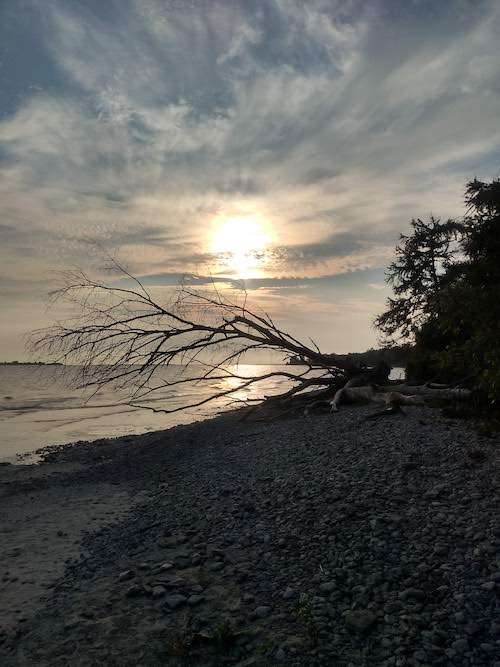
For the second year in a row, we went camping in September, the kids taking a day off school before they’re even just two weeks in, just to prove to ourselves that we can, that we’re not fixed in place, that summer doesn’t end with Labour Day, or that it’s even the only season in which freedom is possible. Cozy in warm pants and sweaters, the campfire necessary because it’s cold, and dark by 8pm, so we sit around it, attuned to something primal, the rest of the world gone, and it’s only us, which is also everything.