October 28, 2022
The Change, by Kirsten Miller
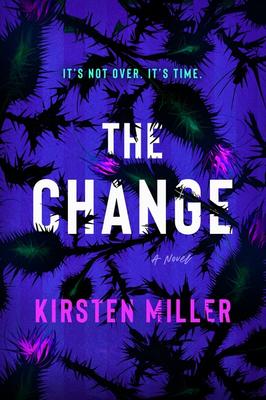
I bought Kirsten Miller’s The Change after reading a review in The Guardian, which coined a new literary genre called “hot flush noir,” and I’ve got to tell you that I’ve been burned before by enticing-sounding thrillers with gorgeous covers like this one and in the end it all fell flat. But The Change was fantastic, as tangled and sprawling as the vines that have taken shape ever since Harriett Osborne got divorced and let herself go, but just as powerful and under control.
This is a witchy story of three women who reach menopause and realize they’re now in possession of formidable powers. Former ad-exec Harriett is a full-on witch, with tinctures and potions, and no fucks left to give about what anybody thinks of her. Mess with her, and you’ll like end up with some invasive hogweed on your lawn.
She in joined by Jo, who has left her job in hotel management to run a gym where menopausal women can work out their fury, the heat from her flashes leaving any men who dares to touch her with blistering burn, and by Nessa, a retired nurse, who has inherited a gift from her grandmother of being able to see and hear ghosts of dead women who are lost and can’t find their way home.
When they come upon a body wrapped in a garbage bag near the shore in their homes in Mattauk, NY, they have reason to believe that more bodies are out there, and a serial killer may be on the lose. When the usual channels of justice fail to get results, these three women decide to take matters into their own vengeful hands.
I loved this book! Smart, brutal, and engrossing, it’s a story that—like the truth—might set you free, but first—in the words of Gloria Steinem—it’s going really to piss you off.
October 27, 2022
Serving Elizabeth, by Marcia Johnson
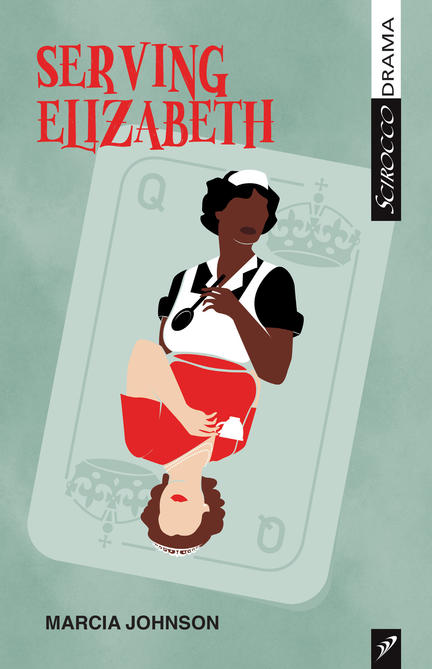
Serving Elizabeth is a play by Marcia Johnson, which I bought after seeking Canadian stories about the Queen following her death last month, and it turned out to be even better than I was hoping, a really interesting complement to The Gown, by Jennifer Robson, both stories imagining the lives of the working class people behind iconic moments in the history of the royal family.
Inspired by the episode of The Crown set in Kenya, in which not a single Black actor had a speaking role, Johnson’s play tells the story of two women who cook for and serve the then-Princess Elizabeth on that pivotal tour during which Elizabeth’s father dies, she becomes Queen, and her life is transformed forever.
Mercy is working hard to run her restaurant to pay for care for her ailing husband, butting heads with her forthright daughter Faith who longs to leave her family and study at university. When the women receive the opportunity to work serving the royal couple on their tour, Mercy refuses, but Faith forges her signature on the contract.
Meanwhile in London on the eve of Brexit, Tia, a Black Canadian film student interning in an English production, learns that her own romantic ideas about the British monarchy might be more complicated than she thinks, this story line and the other woven together cleverly to become a meditation on colonialism, representation, and British history, a big picture view that made me feel as excited as I did when I encountered my favourite play—Tom Stoppard’s Arcadia—for the very first time.
October 26, 2022
Gleanings
- “Humility is about being the right size in a given situation.”
- Friends!! Here it is – the Nanaimo Bar Cake.
- My agent just compared the emotional aftermath of publishing a book to the postpartum experience, and the accuracy blew my mind.
- My friends all believe that I have an irresistible urge, bordering on an obsession, to renovate each of the houses we’ve owned. ‘Though I’d vigorously deny that accusation, there may be a grain of truth to it.
- and I felt so wildly happy running across the grass to get some water for the flowers, thinking of the miserable muddy February of his funeral and how far we’ve come. When I got back, I announced to the stone monument, “J is getting married today,” because I knew he would have been happy to hear it, and then promptly felt the sting of tears. How strange it is to be so old, and not live in that town anymore, and not to have my father alive. I don’t think I will ever stop being surprised.
- One of the best feelings in the world is that moment when you open a new book to the first page and begin reading. It’s exhilarating—like setting out on a new adventure.
- What folds? Time does. It wrinkles, it turns on itself, it collapses, it takes us forward and back in the same moment.
October 24, 2022
Today I Voted
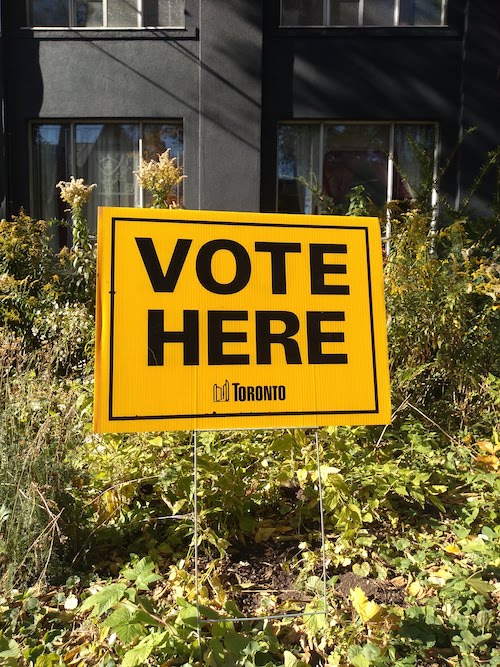
Today I voted in our city’s municipal election, casting my ballot, which is the best available tool I know to underline my support for the messy business that is democracy. And this support is more important than its ever been, at a moment in history where too many bad actors are unabashed about using democracy to their own nefarious (and undemocratic) ends.
But those bad actors aren’t the whole of the problem.
They’re the worst part of the problem, for sure, and a clear and urgent threat to values most of us hold dear, but—upon reflection—too many times I’ve reacted to that threat in ways that only stoked those same tensions, deepened divisions, possibly even made the problem worse. And I think that if we’re ever going to find a way to get ourselves out of this even messier-than-usual mess, those of us who care about democracy need to take responsibility for being part of the problem and pledge to do things differently going forward.
So here’s what I’m going to do:
I’m going to respect election results, even if I don’t like them, even if I think they might do damage to our communities. I’m going to allow that I’m not always right and that I might not always have the answers, or that other people might have different ones. I’m not going to demonize my neighbours who voted for these results, even if it seems like their values are different than mine. I’m not going to suppose the election or this leadership is illegitimate just because I don’t like how it all turned out. I will not underline divisions by insisting that we’re different than they are, that we care and they don’t, that we’re human and they’re heartless. I will try to understand others’ points of view, even if I don’t agree with them. I will not write these neighbours off. I will insist that we have common ground, which is not just a pipe dream, but a necessity, because we all have to find a way to live here together. Literally, common ground is the one issue here that’s not debatable.
At a moment of such extreme reaction, I am voting to turn my own dial down a notch, to not necessarily see my opponent as my enemy. I have noticed over the past few years that people have a knack for living up to your worst expectations of them, that when we insist on othering, too many people follow in kind, so I’m going to expect better of these neighbours, and not give up on persuading them to be part of a system that goes to work for the many. I will see it as my challenge to tell a better story, a truer story, even, instead of deciding the problem is everyone else. (And not just because if the problem is everyone else, I am simply powerless.)
We’re here at a moment of true absurdity, it’s true, with elected officials spouting conspiracy theories, making laws based on quackery, and rolling progress back decades—while this is not the case in the election I voted in today, it was the case in the Mayoral race four years ago and continues to be in general. It’s been horrifying to watch this whole thing unfold.
But fighting fundamentalism with fundamentalism will only make the moment worse, and so I’m leaning in hard to democracy instead, placing faith in the process, the people, my neighbours.
Of course that’s all a bit easier in a municipal election where the stakes aren’t so high, where the neighbours are my actual neighbours, where party politics haven’t skewed the mix as much, and I have a slate of exciting and promising candidates for city councillor to choose from.
But it’s practice for democracy going forward, when the stakes matter more than ever.
I’m not going to let bad guys turn me into a monster.
October 19, 2022
On Being Wrong About the Pandemic
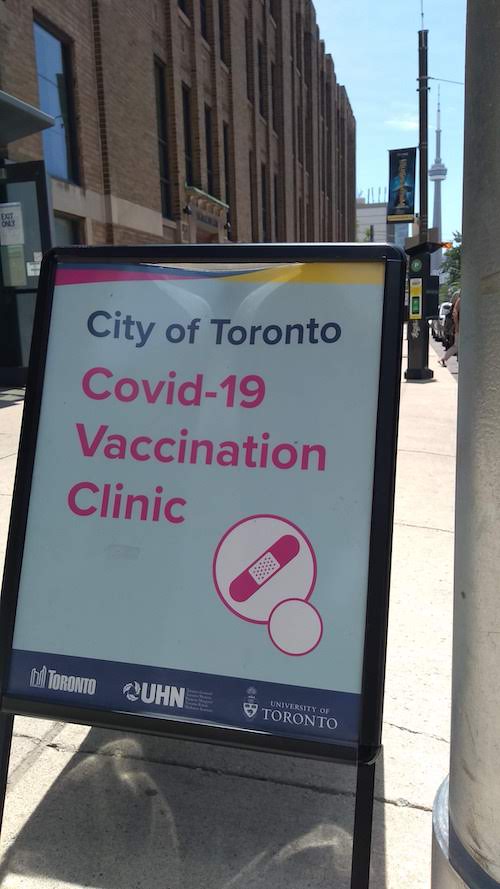
For a while now I’ve been obsessed with the idea of what we’ve, collectively and otherwise, got wrong during the pandemic, an obsession that has manifested in conversation, direct messages, ideas about some sort of a Q&A project with political types (what a [n impossible] thing it would be to receive honest answers to the question of, “What did the pandemic teach you about the limits of your ideology?”), and thoughts towards a blog post that would definitely outline the numerous times I took things far too seriously, including the weight of my own actions, and that we probably could have spent Thanksgiving 2020 with my mom.
Last year Vivek Shraya published a short book (it was originally a talk) called Next Time There’s a Pandemic, a book I enjoyed, though it wasn’t enough “You’re Wrong About…” for me. (It was also conceived with the idea that two and a half years in, there wouldn’t STILL be a pandemic, so that was not the book’s fault, exactly…) But once the book was read, I wanted more interrogation, more reflection. In general, Shraya’s book aside, I wanted a whole lot less of, “Well, we did the best we could with the information we had in the moment,” partly because, while this is true, I think too many people have spent the pandemic being wrong over and over again.
Also because it’s been impossible for any one of us to get this exactly right, which has been one of the hardest things about the pandemic, the absence of concrete guidelines, rules to follow to the letter, because the mark of Covid-19 has been how it doesn’t follow rules at all, is as inconsistent as all get-out. It’s mild and it’s deadly, and in your gut and your respiratory system, and it doesn’t affect kids much and it makes kids really sick, and the vaccines are effective and they’re not, and it’s airborne/very contagious and you never got it, and it killed that healthy 32 year old but that asthmatic woman who is 106 was fine.
So anyone who thinks they got it right every time is wrong about that, which is only just the beginning…
And what I’m wondering about now is why all this means so much to me, why I need other people to join me in admitting when we’ve been wrong, where our judgment has fallen short, even when we were doing our best.
Partly because I think it’s really interesting…
And of course, I also think it’s important to celebrate what we got right—I’m so proud of my community in all kinds of ways [see “About Last Spring: The Vaccine Narrative I’m Holding Onto”] but this celebration is only part of the picture, which seems important after a long time in which neighbours have felt so divided. And while the fact that more than 80% of Canadians stepped up to be vaccinated absolutely means there is far less division than all the noise would suggest (truck horns are very loud, this is true!), I think that making space for everyone to reflect on what they got wrong (without shame or judgment) creates space for reflection for those people who might benefit most from a bit of that thoughtfulness.
I think too, if we’re getting pathological, this means so much to me because of control issues, a strange compulsion to be certain about uncertainty…
But mostly, I think that acknowledging where we were wrong is to acknowledge our capacity to learn, to grow, to adapt and be flexible, traits that will prove to be our greatest assets in societal challenges that lie ahead of us.
October 18, 2022
Gleanings
- Who are we when we set out to challenge ourselves and what happens when we don’t understand or respect the land we’re on? What is the outcome worth, if it comes at a cost to others?
- That me taking care of and asking for, and going after what I need, is in turn, a gift that is given to you … and vice versa. Even, especially, if that need is time … space … for doing nothing.
- Old buildings attract me. Old doors and latches enchant me. Looking in and looking through unmasked windows satisfy my curiosity.
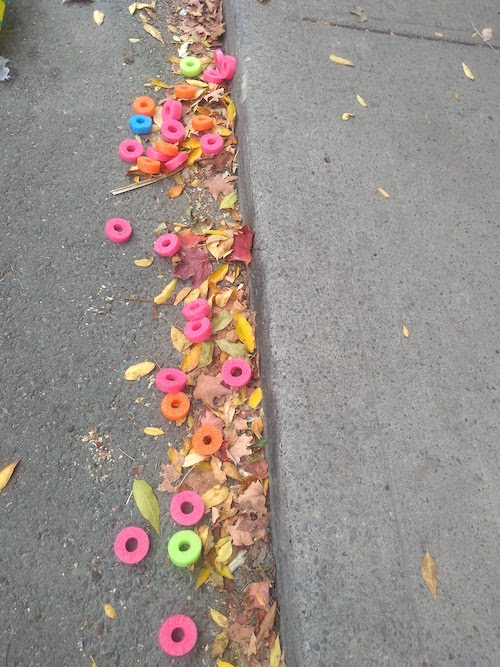
- What’s beautiful about this slither of Autumn is that the no matter how many leaves land on your doorstep, there are still just as many on the trees.
- He reminds me a lot of my dad. And my dad’s death. And my dad dying was part of why i knew i’d need to change my marriage, or leave it, and try and look for more than what I had. The sadnesses of this season are many. And I am getting better each year, and have been getting better for many years.
- I seem to revise a lot, which is fine — it’s one of the most useful, beautiful, and unpracticed parts of writing, in my opinion.
- Next weekend will be Thanksgiving, and three weeks from today the third anniversary of Doug’s first day in Long Term Care. In my dissertation I argued that “care homes for the elderly are transitional areas, home yet not home, often a last place to live before death.” The transitory, liminal nature of a care home. For the “elderly.” Ha. What did I know? (Yes, Ms Munro, who did I think I was, indeed?!)
- Unsurprisingly I quoted then the line that means a lot to me now. (It’s almost like we need to keep learning the same thing over and over 🙂 ). She says, “Wholeheartedness is a precious gift, but no one can actually give it to you. You have to find the path that has heart and then walk it impeccably.”
- As I shared each test result, treatment, and surgery–including my physical and emotional response–it’s like I felt obligated to add humor and lightness. I wonder a little about that. Was that for me or for my readers?
- What happened to the blog is that I got really into posting on Facebook during the pandemic.
- Sometimes, experiencing something familiar through fresh eyes is every bit as intriguing as a brand new experience. That was my goal for this walk through our splendid Carolinian Forest. Me? I’m usually looking down for wildflowers or up for birds. On all my forest hikes I’ve spent precious little time actually looking at the trees. But not this time.
October 17, 2022
Nine Dash Line, by Emily Saso
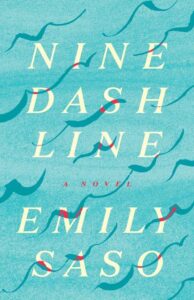
The most fascinating, original, well crafted novel I’ve read in a long time is Nine Dash Line, by Emily Saso, a novel whose premise—I will admit—didn’t grab me immediately, because it’s about a guy who’s stranded alone on an atoll in the South China sea, exiled by the Chinese communist government. All the things I tend to like best about novels are impossible in novels about people stranded in the middle of the sea—family drama, elaborate dinner scenes, bookshop settings, etc.—even if the guy on a atoll shares parallel chapters with a female US Navy officer who—for reasons as convoluted as the first character’s exile—has found herself marooned in an inflatable life boat, the sea around her rife with sharks and mines, about to wash up aboard a rusted out vessel belonging to the Philippines.
So how is this author going to pull this one off, you might ask?
To which I’ll reply with one single word: MASTERFULLY.
The book itself, it grabbed me at once, because oh my gosh, this is such a good one, built on the kind of premise that has to be pitch perfect to work at all, but it really is. By the end of the first chapter, I was absolutely hooked, riveted, Saso’s plotting and prose casting an incredible spell that held to the final page, resulting in such a strange and expansive novel, a story of geopolitics, about espionage, war, and ideology, and pain, and longing, and the necessity of living by one’s wits to survive impossible situations, about the impossible becoming possible, for better and for worse.
I’ve got no THIS BOOK MEETS THAT BOOK comparison here, because I’ve never read another quite like this one, a book so deftly imagined that I’m in awe of Saso’s talent, mind-blown by the creative skills required to even begin to imagine a book like this, let alone the technique required to execute it.
All I can tell you is that you’ve got to read it.
October 15, 2022
Two Spots Left!
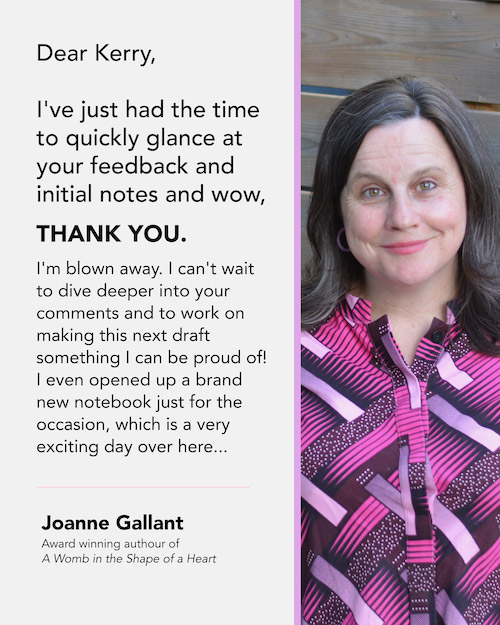
I’ve got TWO MORE spaces for manuscript consultations in December before I close up shop to spend the next few months on on my own writing, so if you want to work together, this is your chance!
Here’s how it works: I charge $1000 CDN plus tax for fiction manuscripts 80,000 or less. I will receive your draft by December 1 and get back to you mid-month with a detailed letter outlining my responses and a draft of your ms with my annotations, and then we’ll have a one hour online meeting to talk about how great your book is and what its possibilities are.
My approach is big picture, plot and plausibility, character development, narrative style, and I’ve worked with everything from first drafts to manuscripts already contracted for publication. My job is to make you excited to tackle the challenges of your next draft, and to use what I’ve learned from my experience as an expert reader, book reviewer, anthology editor, and author of three novels to help you take your work to the next level.
I love this work SO MUCH, and that’s partly because of the confidence with which I can say I’m really good at it.
And I’d love to work with you! Email me to claim your spot.
October 14, 2022
Finding Edward, by Sheila Murray
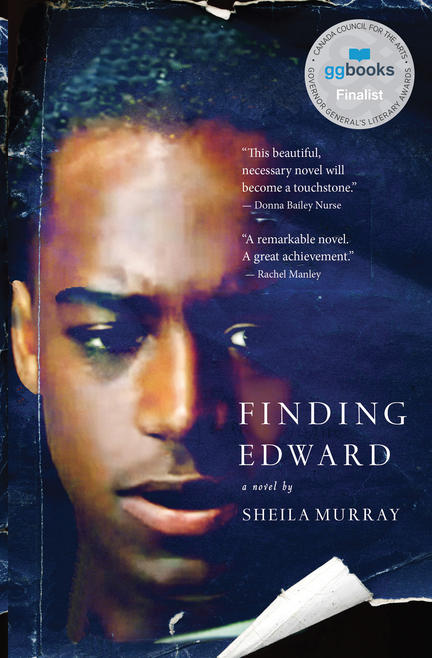
After hearing great things about Sheila Murray’s novel Finding Edward, I finally picked it up last weekend to discover it lives up to the praise of critics like Donna Bailey Nurse (who’s written, “This beautiful necessary novel will become a touchstone.”)
And then this week, it was nominated for the Governor General’s Literary Award!
Though it took a bit of time for all its pieces to come together for me, a book that starts off kind of quiet, which is fitting seeing as its protagonist, Cyril, is quiet, understated, someone you might not even notice if you passed him on the street.
Cyril, just 21, raised by his mother in Jamaica after his white English father leaves their family, is left alone after his mother dies, but he has an inheritance from a benefactor, his mother’s former employer, who’d encouraged him to pursue an education, and Cyril decides to finally take this advice and travels to Canada to enroll at then-Ryerson University (the novel is set in 2012), but being in Canada, and being Black in Canada, turns out to be far more complicated and fraught than he’d expected. His understanding of situation is deepened after he finds photographs and documents from the 1920s pertaining to a mixed race child called Edward, and begins archival research to determine Edward’s identity, thereby weaving in key (and under-celebrated) elements of Canadian Black history including Thornton Blackburn, who started Toronto’s first taxi company in the 1850s; Mary-Ann Shadd, the first Black newspaper publisher in Canada; the story of Nova Scotia’s Africville community; the experiences of Black railway porters (which is also portrayed in the Giller-nominated novel The Sleeping Car Porter, by Suzette Mayr); and more.
At the same time, Cyril’s violent encounters with police and precarious situation with work, housing, school and finances (he’s helping to support his two siblings back in Jamaica) are reflective how little has changed over the years, all this bringing him into contact with local Black activists who help him to imagine possibilities for a different kind of Black future.
Just a satisfying literary experience, plus a rich portrayal of Black experience in Toronto and beyond.
October 12, 2022
“Learning and Growing Through Our Entire Lives”: A Conversation with Ann Douglas
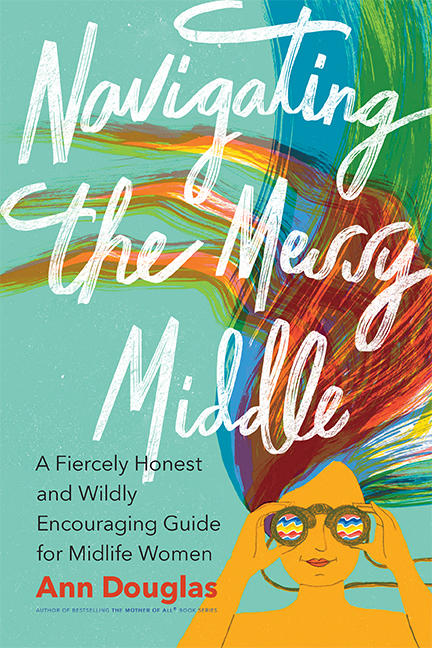
In 2013, when the anthology The M Word: Conversations About Motherhood was published, I was so thrilled to receive a blurb from parenting writer Ann Douglas, and so it felt like things had come full circle when I was able to provide an endorsement for her latest book, Navigating the Messy Middle, a book that marks a shift in Douglas’s own professional journey. “The best thing about Ann Douglas’s perspective, as always,” I wrote, “is her understanding that one-size-fits-all advice fits no one. Instead, in Navigating the Messy Middle, readers will discover an empowering guide to finding one’s own way through the ups and downs of midlife, a time when seeking strength in connection, embracing the changeability of the physical self, and focusing on one’s real values and priorities can create a powerful moment of (finally!) becoming.”
Thank you to Ann Douglas for agreeing to answer some of my questions about her book, which I enjoyed so much, and which you can pick up right now from your favourite bookseller.
What more can we ask of ourselves but that we remain open to the opportunity to learn and grow as humans, both individually and together?
Ann Douglas
Kerry: This book was born out of a midlife shift for you after years of writing about parenting. How did it feel to make this pivot (scary? exciting?), how did you decide on where to land, and in what ways did your experience tie into themes and ideas explored in the book?
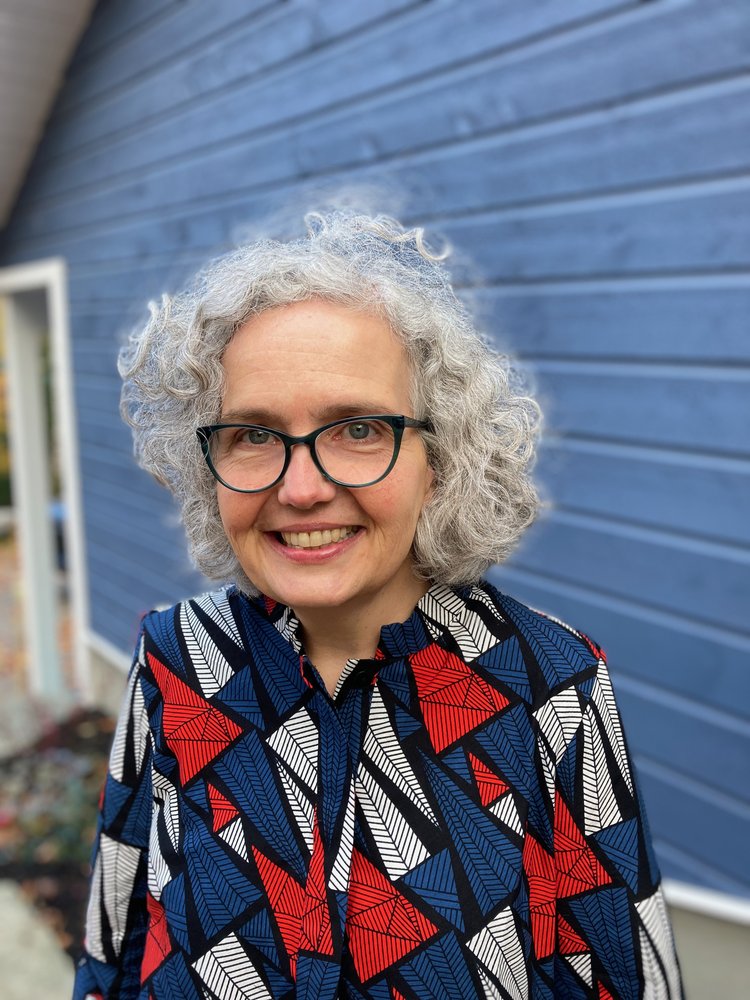
Ann Douglas: I had been feeling, for the past couple of years, that I was aging out of the parenting books category. (It’s hard not to feel this way when your youngest child is 25!) Now don’t get me wrong. I will always care passionately about parents and kids, and I will continue to advocate on issues affecting them. But in terms of being immersed in the really hands-on years of parenting? I am well past that stage, and so it seems like the right time to pass the baton to the up-and-coming generation of parenting writers. And there are a lot of them doing really amazing work.
In terms of deciding what would come next for me as a writer and a person, that was more exciting than scary. I’ve always been the kind of person who has a million ideas for creative projects, so it was simply a matter of seizing the opportunity to write about something else. In terms of landing on which “something else” that might be, there was a bit of serendipity involved. I’d had a rollercoaster ride of a journey through midlife, so midlife growth development was very much top of mind for me. And then, out of the blue, I received an email from my literary agent, telling me that she was dying to talk to me because she knew what my next book needed to be about. She needed a book about midlife and she needed that book to be written by me! We started brainstorming the possibilities and developing a book proposal. That casual conversation (in September 2019) resulted in a book deal (in February 2020, right as we were heading into the pandemic).
I guess the common thread in terms of my career as an author is my life-long fascination with human development: how we continue to learn and grow throughout our entire lives. Midlife has been a deeply challenging time for me, but also an opportunity for tremendous learning and growth. In fact, I can honestly say that it has been my favourite life stage so far.
I guess the common thread in terms of my career as an author is my life-long fascination with human development: how we continue to learn and grow throughout our entire lives.
Ann Douglas
I wanted to capture that sense of possibility in this book, while also endeavouring to keep it real. Because no one wants to read a faux positive guide to anything in 2022—not after everything we’ve been through over the past two-and-a-half-years. That’s what I tried to do in this book: to be both “fiercely honest and wildly encouraging,” as the subtitle of Navigating The Messy Middle indicates.
Kerry: Fercely honest AND wildly encouraging? IN THIS ECONOMY, ANN??? How is that possible?
Ann: If there’s one thing I’ve figured out at this point in my life it’s that you don’t have to settle for a single emotion. It’s possible to feel anxious, hopeful, discouraged, grateful, and frustrated all at the same time. Heaven knows I feel all those things simultaneously myself—and I do so on a regular basis.
So honest and encouraging? It’s definitely possible to have both those things at the same time. In fact, I feel like I’ve been focused on those two experiences for my entire career as an author: trying to write with honesty while at the same time offering encouragement. (Over the years, countless readers have told me that they really trust me and I think that’s why: that blend of honesty and encouragement.)
If there’s one thing I’ve figured out at this point in my life it’s that you don’t have to settle for a single emotion. It’s possible to feel anxious, hopeful, discouraged, grateful, and frustrated all at the same time.
Ann Douglas
Kerry: As the shape of the book emerged, what parts surprised you the most?
Ann: This book ended up being much more political than the book I had intended to write—and that my book publisher had intended to acquire. As I note in the opening pages of my book, “My agent negotiated the deal for this book in February 2020, just as the pandemic was beginning to be felt here in North America. The days and months that followed ended up changing everything, including me. I found myself launched into an eighteen-month journey into rethinking pretty much everything about my life. And judging by the depth of the conversations I was having with other women, I know I’m not the only one who was profoundly affected by this multi-layered experience of pause—the pandemic pause layered on top of the self-reflective pause that is so characteristic of midlife.” So that was definitely the biggest surprise for me: the approach I ended up taking in writing about midlife—that mix of personal and political. I have to give my publisher a lot of credit, for allowing me to write the book that demanded to be written (as opposed to the one I had planned to write). So, kudos to Douglas & McIntyre.
Kerry: Almost every argument I have about anything these days (with myself or others!) comes back to the fact that the answer or reality lies not in anything definitive or black or white, but instead somewhere in a grey area in between. The middle, as your book shows on a variety of levels, is a magical place rich with wisdom and opportunity, but yes, it’s going to be messy. How do you try to reconcile that and be comfortable in that uncertain and variable space?
Ann: I feel like the pandemic has been a masterclass in learning to live with uncertainty. It’s become pretty clear that nothing is entirely predictable and that there’s no simple solution to anything right now. Life is messy. Life is complicated. And yet, as humans, we have brains that are capable of sorting through that that messiness in a way that allows us to spot patterns and land on solutions. Maybe not perfect solutions. (Is any solution ever perfect?) But the kinds of solutions that allows you to steer clear of endless second-guessing, and regrets. The kind where you can say to yourself, “I made the best decision I could with the information I had at the time—and I reserve the right to rethink this decision next week. Or maybe even tomorrow?” What more can we ask of ourselves but that we remain open to the opportunity to learn and grow as humans, both individually and together?
It’s become pretty clear that nothing is entirely predictable and that there’s no simple solution to anything right now. Life is messy. Life is complicated. And yet, as humans, we have brains that are capable of sorting through that that messiness in a way that allows us to spot patterns and land on solutions.
Ann Douglas
About Navigating the Messy Middle:
Roughly 68 million North American women currently grapple with the challenges of midlife, faced with a culture that tells them their “best-before date” has long passed. In Navigating the Messy Middle, Ann Douglas pushes back against this toxic narrative, providing a fierce and unapologetic book for and about midlife women.
In this deeply validating and encouraging book, Douglas interviews well over one hundred women of different backgrounds and identities, sharing their diverse conversations about the complex and intertwined issues that women must grapple with at midlife: from family responsibilities to career pivots, health concerns to building community. Readers will find a book that offers practical, evidence-based strategies for thriving at midlife, coupled with compelling first-person stories.
Offering purpose and meaning in a life stage that can otherwise feel out of control, Douglas pushes back against the message that women at midlife are no longer relevant and needed, highlighting the far-reaching economic, political and social impacts of these messages and providing a refreshing counter-narrative that maps out a path forward for women at midlife.
Both a midlife love letter and a lament, Navigating the Messy Middle both celebrates the beauty and rages at the many injustices of this life stage and provides readers with the tools to chart their own course.