January 7, 2020
MAKE THE LEAP with Blog School!
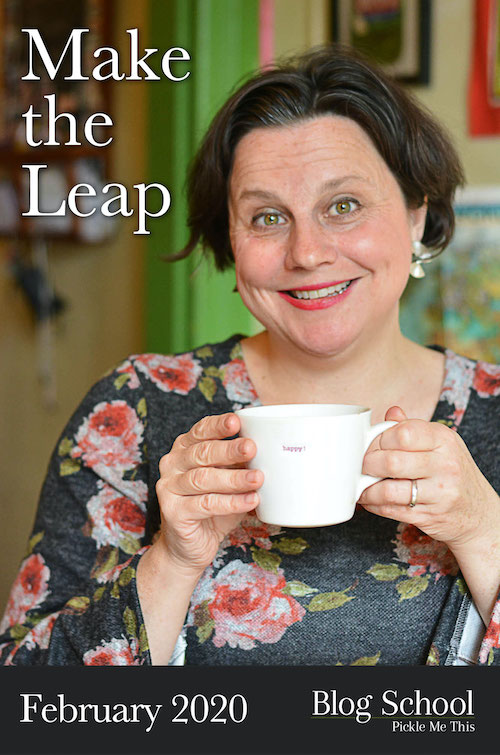
In September, I launched BLOG SCHOOL: PICKLE ME THIS, and my first offering was a self-directed blogging course called FIND YOUR BLOGGING SPARK.
Self-directed, I thought, because self-direction permits bloggers to work at their own pace and convenience. A self-directed course, I figured, meets a writer where she’s at.
And it does!
But there are some people looking for a little more direction than the self can provide, who thrive on goals and deadlines, plus the community support essential in getting ‘er done.
And these people have been asking me for a different version of the FIND YOUR BLOGGING SPARK course, an intensive, community-based, guided and interactive version where students can ask questions, get feedback, work to goals, and benefit from community support.
And now MAKE YOUR LEAP in February 2020 is here!
What You Need to Know:
- Course is online (via private website) so that you can study at Blog School from wherever you are
- Course is interactive, so you can ask creative and technical questions via email and receive feedback on your work
- Community components will take place on a private Instagram page, so that it’s easy and straightforward to take part
- Course enrollment is capped at 10 people so that the group is neither too big or too small, but just right
- Modules themselves are self-directed so you can take part (with two modules with be completed per week) according to your own schedule
- Course takes place throughout February 2020 so that you can stay focussed and excited about your project, which you’ll complete with momentum to build on
- Each module includes a writing exercise to generate ideas for future blog posts
- Each module features a writing assignment so that you will complete the course having 7 new blog posts published
- Modules are structured as blog posts so you can get comfortable engaging with the blog format within the course itself
- Each module comes with optional further reading to inspire you with the work of other bloggers and creative people.
Cost: $300.00 CDN
*Three spaces will be available for $80 for students who are already enrolled in the Find Your Blogging Spark Program.
January 6, 2020
New Year Reflections
Nobody got sick. I think it’s safe to say it now, with the holiday over and the children back to school, though I felt uncomfortable even thinking it during the break, a jinx. Which is just one of the reasons that our holiday was so exceptional, the other being that Stuart took two full weeks off work and therefore so did I. A low-key affair—we didn’t travel far. But it was all of it such a pleasure, and has me thinking—as we return to routine—not about new year’s resolutions, necessarily, but instead about what elements of our holiday I’d like to carry with me into the months ahead.
- Less Time on the Internet : I took a full seven day break from the internet and it was amazing. This is the most important answer to the question of how I got so much reading done (see below). It did wonders for my stress levels. It was so nice to be reminded that if I do something beautiful and it doesn’t get instagrammed that it still happened. When I finally went back online in the second week, I did a lot less posting and scrolling, and I want to keep this up (or down). That said, I do now have a backlog of blogs to catch up on, but that is not a bad thing.
- Board Games: I like board games for the same reason I like reading with my kids—it allows us to connect on a common level and I want to work on nurturing these connections as my kids get older. I have many aversions when it comes to games (Stuart calls it my “board game face,” and knows as soon as he sees it that I’ll be asking, “Like, what’s the point of this?) but there are many I do enjoy, and we spent a lot of time this holiday playing these, which was good fun for everyone.
- Reading: “I’m going to try to get into reading in 2020,” was the hilarious joke I kept telling over the break, and because I’m better at reading than I am at humour, I came away with 14 books read, a splendid and eclectic mix of titles that I’ll be writing about in a further post this week.
- People: My favourite parts of the holiday were times spent with family and friends, and I want to continue to nurture these connections in the coming months. Especially in the winter, it’s sometimes easy to retreat from the world, and sometimes asking to make plans seems like a risky endeavour (what if they say no! Schedules are tricky to accommodate!) but I am so glad we made the plans we did over the holiday. Speaking of which…
- Cheese boards: Did I by Lisa Dawn Bolton’s book On Boards because we were entertaining a few times over the break, or did I make plans to entertain because I needed an excuse to buy a copy of On Boards? Who knows, but I am sure glad it all worked out the way it did. I learned so much from this book, our guests were seriously impressed (and at least twice ended up purchasing the book themselves!), and the Christmas Day cheese board we made in lieu of a roast dinner has changed my life. I might never roast turkey again.
- Letting things slide: I don’t know if you could say I was easygoing over the holiday, because this is me, and the fact that I’m writing about this at all defeats the argument, but I feel like I was a little less ridiculous. The one example I can point to is that we started the Globe Holiday Crossword, had fun with it until we didn’t, and then stopped doing it. I would like to be more okay with not finishing things in the new year, or maybe what I mean is not insisting on doing things for the sake of doing them. We also woke up more than once on a day with no plans, and I want to keep that kind of openness and possibility going too.
- Chocolate: I want to keep eating chocolate. I probably don’t need more of an explanation than just that.
December 20, 2019
Gleanings
- The only legacy that feels right to leave them is a literary legacy. A shared love of books that we have read together. I like to think this would have happened even without a terminal diagnosis but with it the pressure is on to make every moment -—even moments spent reading—count.
- “Why is my stocking cold?” my mother asked nervously on Christmas morning in 1992.
- Create what you like, create what you want to eat (so to speak).
- Our urge to mark midwinter and celebrate the days growing longer precedes Christianity by thousands of years
- The magic of Christmas prevails regardless of such details. It’s in the anticipation.
- What Maeve and Danny are really contemplating when they park across the street from it all those times is their past, their family, their story, and in a way, isn’t that what we all do when we return, mentally or literally, to the places we used to live and the people we used to be?
- I’m simply just not good at Christmas.
- Did anything change when I learned it was actually a gun rack?
Happy Holidays! I am taking a holiday from the internet and will see you in the new year.
December 17, 2019
2019 Books of the Year
I am officially over Books of the Year lists. Part of this is because last year I was charged with writing three of them, which kind of underlined the arbitrary nature of the exercise, and also because seeing the same titles listed over and over is decidedly boring, and undermines the value these lists might possibly have. And finally because I have so many different kinds of connections to the books I’ve read this year, and it’s these connections that matter to me more than any hierarchical ranking. (Also: what about all the Best Books I haven’t read yet?)
So it’s the connections that I’m celebrating in my year-end books list for 2019, not THE best books, as much as MY best books, which also function as a record of how I spent my year, literary and otherwise. It was a good one.
The Coven Books
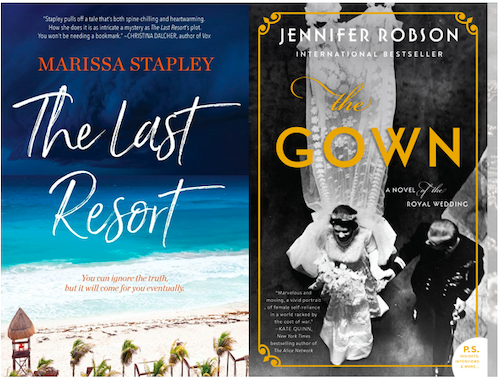
My friend Jennifer Robson’s smash hit The Gown was the first book I read in 2019, and it set the standard high for my literary year. I was also happy to celebrate the June arrival of our pal Marissa Stapley’s latest, The Last Resort, and had the great pleasure of interviewing both authors at events this year.
The January Books
January is hard. These were the books that delivered some light in the darkest time of year.
The Big Book
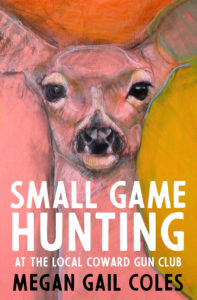
Small Game Hunting at the Local Coward Gun Club, was big, bold and brave, like nothing I’d ever read before (except for Megan Gail Coles’ 2014 short story collection, which I loved). That it ended up on the Giller Shortlist was one of my favourite literary stories of the year. Maybe not a book for everybody, but what a better world we’d live in if it was. I loved this book (and Coles on CBC Q was radio gold.)
The Madeleine L’Engle Reading Project
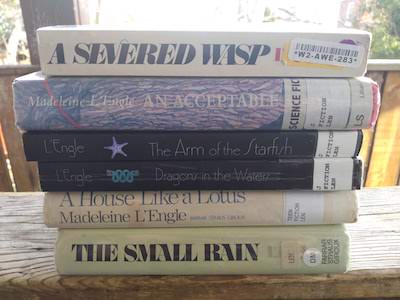
The most significant part of my literary year was a deep dive into Madeleine L’Engle’s non-Wrinkle bibliography. In February, I stumbled upon attractive new editions of her Austins series, which I’d read without focus when I was young, but encountering them again was such a revelation. I read all the Austin books (which are realism, in comparison to her Wrinkle series) and the O’Keefe series (which bridges the other two), and then The Small Rain, L’Engle’s first novel, because decades later she’d written a sequel to it, A Severed Wasp, whose characters include Suzy Austin as a grownup. (I also took A Severed Wasp tour of New York City in May.)
It was the best.
Read my blog posts about the reading project here.
The Blew-My-Mind Book
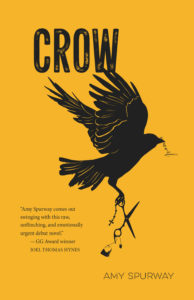
This book would come to mean a lot to me, my most recommended title of the year, I think. I’d already chosen three titles for Briny Books before I read Crow, but knew as soon as I finished it that Crow would have to be part of the mix.
If you haven’t read this book yet, you’re missing out. I loved it. Oh, that epilogue. Still not over it.
The Briny Books
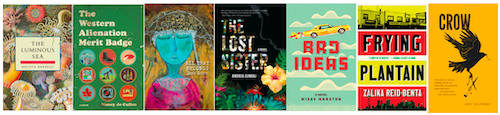
For the first half of the year, Briny Books was my TOP SECRET PROJECT. I wanted to find a way to take my book reviews and recommendations further, to put excellent fiction directly into the hands of readers. Featuring these titles has been an absolute pleasure, and such a joy too to have such a fantastic reader response, that other people love these books as much as I do.
The Lived-Up-To-All-The-Hype Book
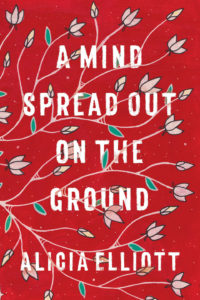
Alicia Elliott is a treasure, and her debut essay collection is as generous as it is brilliant. I loved this collection for its craft, its analysis, and wide-ranging ideas, as well as its honesty and candour. Essay at their finest, and deserving of all its praise and acclaim.
The Opposed-to-Boxes Book

You’ve never read a novel like Bina, even if you’ve read Malarky and Martin John, all part of Anakana Schofield’s literary universe. A novel whose structure is a series of warnings scrawled on the backs of envelopes, warnings which must be considered in their specificity. Schofield’s work is proof that fiction can innovate without alienating its readers.
The Book that Changed How I Live in the World
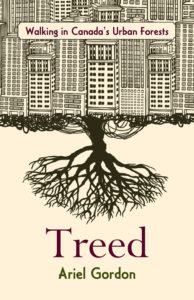
I’ve never looked at a tree the same way since reading Treed, by Ariel Gordon, and I look at trees all the time. A book that dares to make sense of complicated ideas—what it means that death and decay are natural, forests in the city, loving nature at a moment of climate crisis. To me, this book was like a balm.
The Book I Spent My Birthday With
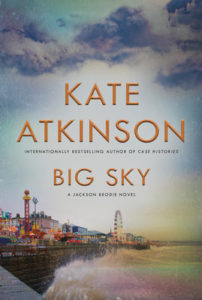
I turned 40 in June, and spent the weekend on the beach and in a hammock reading this terrific book by Atkinson, who I always love, from the series that awakened my love of detective fiction. I loved it so much.
The Cottage Reads
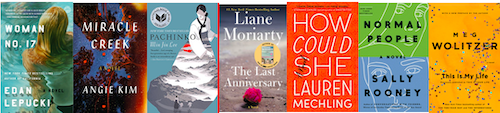
Does it even count as a holiday unless you’ve managed to read a book a day? I don’t think so. Luckily, my cottage week in July did not disappoint. I finally read Pachinko, became a Sally Rooney devotee after finding Conversation With Friends a bit meh, and indulged in some old school Meg Wolitzer. It was perfect.
You can read my round-up here.
The Stole-My-Heart Book
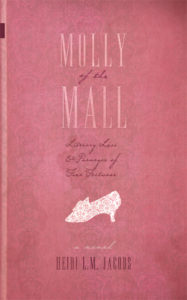
Honestly, she came out of nowhere, the novel about a woman who is obsessed with 19th century literature, set at the West Edmonton Mall. An obvious set-up? Right. Ha ha, no—but it was perfect. I loved this book, and while I think that it is meant for a more specific kind of readership instead of readers in general, I can count myself and some of the best people I know in that circle.
The Covered in Bugs Book
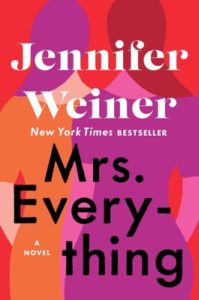
I took this novel camping in August and wasn’t sure about it at first, but then it grew on me—and did it ever—I couldn’t stop reading… Reading with my flashlight in the tent after everybody had gone to sleep, which attracted all the midges that got stuck between the pages. The book is now absolutely and disgustingly covered in bugs, but I loved it, and I am also really proud of the review I wrote about it, which begins, “I had an oddly optimistic revelation about the world the other day…” I KNOW.
The Perfect Summer Day Book
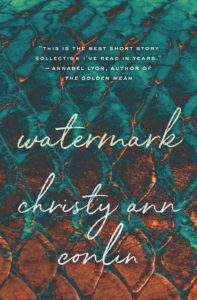
Watermark, by Christy Ann Conlin, was already pretty special to me even before I held an impromptu literary salon in my living room to celebrate it (which was definitely my favourite literary event of 2019!!). I read it over the course of a weekend in August, on the beach, at the playground, walking to the bakery to buy provisions for friends imminent arrival for dinner. I was compelled by its momentum, and enjoyed it start to finish. So yes, then it was such a pleasure to get to celebrate it IRL!!
The Freaked Me Out Book
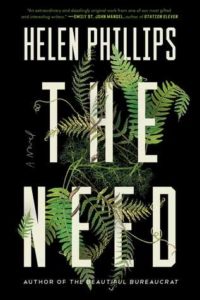
This was one of those books that kept creeping onto my radar—I think it was a recommendation by Mary Laura Philpott that finally did it, after seeing it mentioned elsewhere. A sci-fi book for those who don’t necessarily like sci-fi. Oh, and it was on a recommended summer reads shelf at Book City in the Beaches, which was where I finally bought it, and with the first few pages, I was gripped. One of the weirdest and best novels about parenthood I’ve ever read.
The Hard to Track Down Book
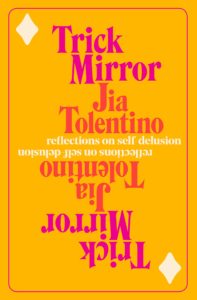
My second favourite thing (after waiting in long lines at the bookstore till) is when a book is sold out everywhere. It took me two weeks and multiple bookstores to finally track down a copy of Trick Mirror, and what a good thing then that the essay collection turned out to be everything I’d hoped it would be. So worth the trouble.
The Gripping Plot Book
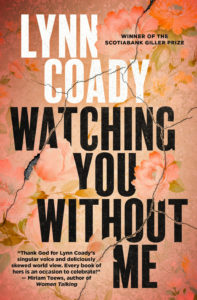
I adore Lynn Coady’s work, so it was no surprise that I ended up loving her latest novel so much. As always with Coady, the actual surprise was in the wonderfully strange and unexpected direction she pushes her work in, in the way she insists on writing unexplored corners and resisting expectations of what a woman should be writing about, or (at least) coming at these ideas from an innovative angle.
The So-Glad-I-Read-it-Twice Book
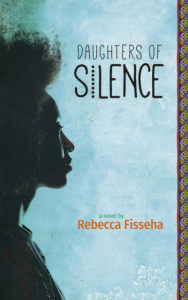
I had the opportunity to read Rebecca Fisseha’s debut novel as a manuscript last spring, and then to come back to it again in the fall in preparation for her book launch, where I interviewed her. And I am so grateful for a reason to read Daughters of Silence again—it’s such a puzzle of a novel, and to read it for a second time was a fascinating process of discovery.
The Read-A-Thon Winner
One of the highlights of this year for me as a reader was the opportunity to take part of the Turning the Page on Cancer read-a-thon. With generous support, I helped to raise more than $1500 and got to read for eight straight hours (!!!). Fortunately for me, quite a few of those hours were spent on Cherie Dimaline’s Empire of Wild, which I loved so much. I couldn’t put it down because I really couldn’t (and that was fine).
The As-Good-As-I’d-Hoped Book

“Should I buy The Dutch House?” was an honest-to-goodness dilemma for me—because I like Patchett well enough, but am not a devotee, and wondered if I wanted to buy the book just because everybody else was. Would I be disappointed? Mercifully, I wasn’t. The Dutch House was a delight, worth every single penny, and I loved it.
The Should-Be-On-Your-Radar Book
I’m honestly kind of sorry on behalf of Canadian readers coast-to-coast that we weren’t having Five Wives, by Joan Thomas forced in front of our faces all the time, especially after it was awarded the Governor General’s Literary Award for Fiction. Because it’s so great and I didn’t read it for ages—but Stephen Henighan on Twitter singing its praises and Thomas’s interview at 49thShelf made me finally pick it up. Good thing too. It’s terrific.
The More-Than-a-Feat-of-Endurance Book
What’s that quote by some guy about why he climbed a mountain? “Because it was there.” No, that is not the reason you ought to read Lucy Ellmann’s Everest of a novel, which for me was a three month project. No, you ought to read it because it’s fascinating, an exercise in blurring the line between fiction and reality (not just in the way the book gets into your head), and the preposterousness of modern life and the impossibility (or not?) for literature/fiction to contain it.
The Only Booker Winner We Need
There are a number of contenders for the title of BOOK I CAN’T SHUT UP ABOUT this year, but I think Evaristo’s Booker-winning novel takes the cake. Another book that, like Ducks, opens up wide to contain so many many stories—but I read this one in two days. It was DELIGHTFUL. If you put this title at the top of your holiday reading list, I promise you won’t be sorry.
Bonus Book
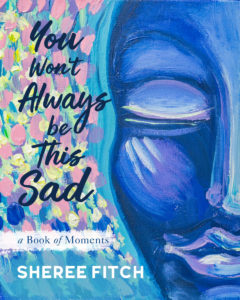
And one more—I haven’t had a chance to write about this book yet, but Sheree Fitch’s You Won’t Always Be This Sad is one of the most remarkable titles I’ve read this year. And yes, it is sad—poet Fitch is writing about the recent death of her adult son—but Fitch’s gift has always been to explore all sides of things, and she shares that with us here—there is so much love, and even joy. This book is a revelation.
December 11, 2019
Other Dives into Other Lives
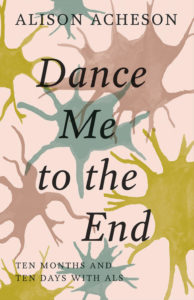
Dance Me To the End, by Alison Acheson
Alison Acheson’s memoir is all about narrative, narratives the defy the laws of narrative, or at least the commonly supposed one. After twenty-five years of marriage (and raising three sons), she discovers that she’s fallen in love with her spouse again, that they have reached that pivotal moment so many couples arrive at after years of living separately and taking the other granted—and then they decide to go on into the future together. But then the future would not stretch long, because not long afterwards, her husband is diagnosed with ALS. The decline is fast and brutal—he lives just ten months after that, and she has resolved that she will care for him at home until the end, but she didn’t really know what she is promising at the time. Told in fragments, some poems, Dance Me to the End is a memoir about marriage, aging, family illness, caregiving, and how to understand one’s own story, especially when it seems like you know the ending already (but, of course, you never do).
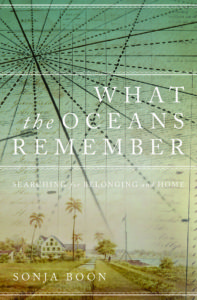
What the Oceans Remember, by Sonja Boon
So, before I read Sonja Boon’s memoir, I didn’t actually know where Suriname was. Beside Guyana, okay, but then I thought Guyana was somewhere in Africa, perhaps, but no. Geography is difficult—for some of us more than others, it seems—which is an underlying point to this book, with Boon attempting to understand her own personal geography and history, to connect the islands of her ancestry and experience. The memoir beginning in Newfoundland, where Boon now makes her home and raises her family, but she’d been born in the UK to parents who were Dutch and Surinamese, growing up with brown skin on the Canadian prairies, the product of Dutch colonialism, the Slave trade, with ancestors who’d come from India and Africa as indentured labourers and slave workers themselves. This memoir is an exploration of memory, archival documents, and the limits of both. It’s also about music, race, lineage, inheritance, and family, and I loved it. A truly extraordinary, entrancing work.
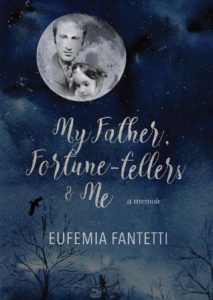
My Father, Fortune-Tellers & Me, by Eufemia Fantetti
A memoir that begins, “My father likes to say he was lucky that God held both his hands and stopped him from killing my mother.” Who wouldn’t be intrigued and want to read on? Fantetti is a fantastic writer (I loved her short story collection A Recipe for Disaster, way back when…), and structures her memoir with the use of Tarot cards to tell a story of her Italian parents’ arranged marriage, her mother’s mental illness, which contributes to Fantetti’s own traumatic childhood, and her complicated relationship with her beloved father, who has struggles of his own. Dark and funny, vulnerable, honest and full of love, this memoir is rich and entertaining.
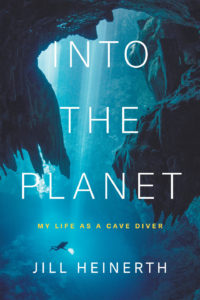
Into the Planet, by Jill Heinerth
I honestly thought I kind of knew about cave diving. Because I love swimming, see, and I loved the blue of the cover, the sense of adventure. However, nope, it turns out that cave diving is nothing like I’d ever imagined, and even reading about it made my heart race, the risks, the chances. But Heinerth writes about how it’s the risk and the chance that drives her, about using her fear instead of letting it rule her, about being a woman in a male-dominated occupation, and about the endless depths of her passion for exploration, for discovery, to find parts of the world that no one else has ever seen.
Falling for Myself, by Dorothy Ellen Palmer
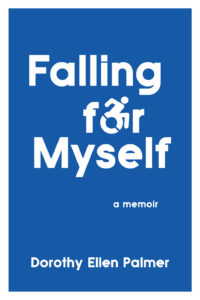
I’ve learned a lot from Dorothy Ellen Palmer over the years, about activism, and ableism, and how to write a novel with a twist. In her memoir, Falling for Myself, she puts the different pieces of identity together—adoptee, disabled, teacher, activist, parent, senior citizen, author— to tell the story of her life from A-Z, and she’s holding nothing back, fed up with being silent too long in a world that expects her (everyone) to conform to its impossible expectations. Palmer is fierce, and she is furious, justifiably so, but she is also witty, generous, a born storyteller, and she has created a fascinating and most compelling book.
December 10, 2019
Gleanings
- What do you think? Shall we keep creating? Keep writing? Or is there another way you’d like to walk through the world?
- Winter has taught me to love what I am right now.
- Raving about the power and politics of translation inspired by Emily Wilson’s mind-blowingly less-misogynist translation of The Odyssey into English.
- I decide that I will not beg the trees to heal me. I believe they have enough to do.
- The only way I know to smooth out the knots of futility and despair, of doubt and uncertainty, of chaos, is to write.
December 9, 2019
Girl, Woman, Other, by Bernardine Evaristo
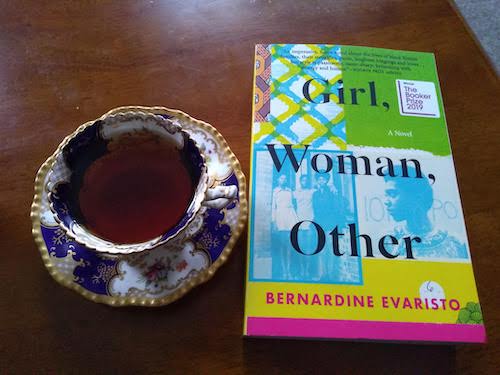
It’s so good. It’s that simple. Girl, Woman, Other is the first book by Black woman to ever win the Booker Prize (a long time coming, right?) and so you should read it, but you’ll also want to . You will start reading and not want to put this book down, and in the meantime you’ll be raving about it to strangers on the streetcar. That is, if your experience is anything like mine.
Evaristo has explained the style of the novel as “fusion fiction”: “that’s what it felt like, with the absence of full stops, the long sentences. The form is very free-flowing and it allowed me to be inside the characters’ heads and go all over the place – the past, the present.” Ostensibly about a single evening in London as a play by a Black lesbian playwright opens at the National Theatre, the novel spans the twentieth century, moves between communities in Britain, Africa and the Americas, and tells the story of twelve central characters from birth to death in a few cases, and in others to the present day. It’s a novel “about Black womanhood,” but what falls under that umbrella is wide-ranging, kaleidoscopic, diverse and disagreeing in the most fascinating way. This is a novel that’s rich with twists and connections, and surprises.
The characters include Amma, the aforementioned playwright, who recalls her radical days in contrast to now being considered establishment (or as much as a Black woman could ever be); her daughter who must find new ways to rebel against her counterculture parents; and her longtime friend and former collaborative partner, who fell in love and moved to a feminist commune in America where she becomes trapped in an abusive relationship.
The connections are not always clear at first—Carole, a superstar in the world of finance, is attending Amma’s play, but she’s part of the tapestry in other ways as well, and so is her mother, Bummi, who steers the following section, telling the story from her youth in Nigeria, her immigration to England, the death of her husband, and her determination to build a business and succeed—as well as her disappointment at how her own daughter’s success has put distance between them. And then we meet LaTisha, once upon a time Carole’s classmate, but her life took on a different kind of trajectory.
Amma’s childhood friend, Shirley, who teaches unruly youths at a London school, who started out teaching with big dreams and great ideals, which become ground into nothing after working through the Thatcherification and bureaucratization of teaching and society in general in the 1980s. And Shirley’s mother, Winsome, whose own story comes with a surprising twist, and Penelope, Shirley’s colleague, who’s got one of her own.
And then a non-binary social media influencer, Morgan, and their great-grandmother, Hattie, who lives on the family farm near Newcastle, and her own mother, Grace, which takes us to long before and far away from the opening night of Amma’s play, but everything is connected, in satisfying and illuminating ways.
That a single novel can hold so much is extraordinary —and that it can do it while being stylistically innovative and so joyful to behold is even more so. Girl, Woman, Other is magnificent, and honestly, it’s the only Booker winner you need.
December 6, 2019
The Shortest Day, by Susan Cooper and Carson Ellis
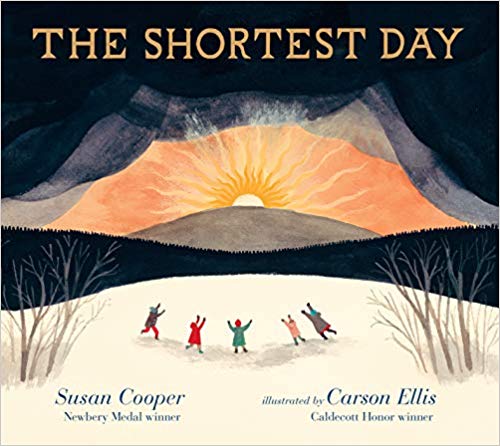
“So the shortest day came, and the year died…” begins The Shortest Day, an extraordinary picture book by Susan Cooper, with illustrations by Carson Ellis, a celebration of solstice, Yuletide, and rituals that light up the darkness. “And everywhere down the centuries/ of the snow-white world/ Came people singing, dancing,/ To drive the dark away.” In her illustrations, Ellis shows those centuries progressing in Northern European cultures, as people move from the Neolithic era, carrying spears, and then “down the centuries” to the contemporary moment, children revelling in a warm and cozy home decorated with an evergreen tree and boughs, candles and a menorah, traditions that connect us to our ancestors and to the earth. This is one of the loveliest “Christmas” books that I’ve ever come across, a book that celebrates what, to me, are the most sacred parts of the season.
December 4, 2019
Books of the Year on the Radio
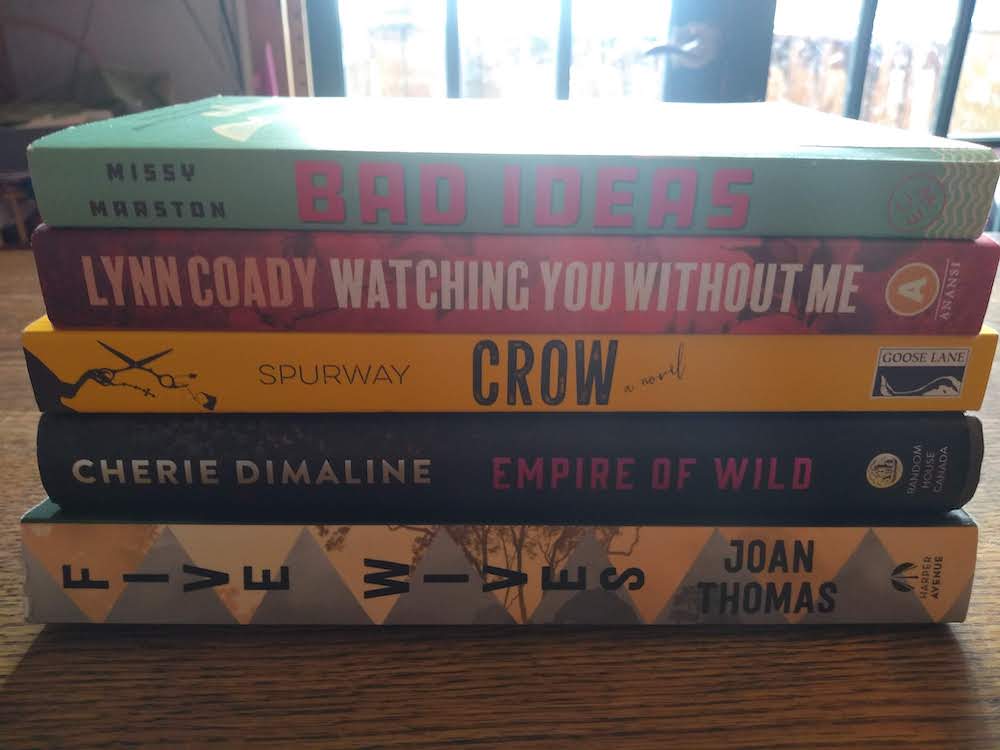
I’m putting together my 2019 Books of the Year Post now, and am so excited to share it with you—but it’s also long and I’ve got work to do, plus some reading I need to finish before the list can be as definitive as possible. (Which is not very, to be honest…) But I was very happy to select a handful of my picks for my column on CBC Ontario Morning today, a round-up of 2019 fiction that deserve so much love. You can listen here—although I am having trouble jumping ahead in the podcast and cannot tell you where I come on exactly. Hopefully any technical difficulties will be fixed soon!
December 3, 2019
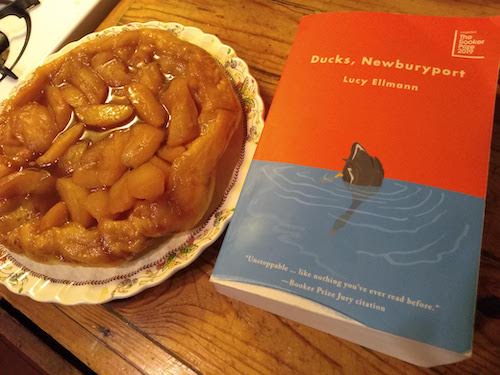
Ducks, Newburyport, by Lucy Ellmann
“Well, there’s a book I’m never going to read,” was my first thought upon hearing about Ducks, Newburyport, by Lucy Ellmann, the 1000 page book consisting of (mainly) a single sentence, shortlisted for the Man Booker and winner of the Goldsmiths’s Prize. Because you know how there are people who carry about tote-bags that say, “I like big books and I cannot lie?” I am not one of those people. I don’t like big books, not at all, not because of the heft necessarily (check out my own tote-bag, where I’m often carrying no less than three hardcovers at a time. I can lug book weight), but because for me so much of the pleasure of reading is thinking about what I’m going to be reading next, and the same book for weeks at a time slows me down, makes me feel like I’m standing still. Long books don’t fit easily into the pattern of my life. It’s also a huge demand to make of a reader as well, 1000 whole pages, and I’m usually irritated by anybody who’d dare to ask it.
You can keep Your Struggle, buddy. I’ve got enough of my own.
The shift began from Twitter commentary, however . (Yes, it turns out Twitter has a purpose after all.) Steven Beattie tweeted that it read up quick, and by the time Biblioasis Publisher Dan Wells had sent me an email promising that this would be a novel right up my street, I’d already started reading it.
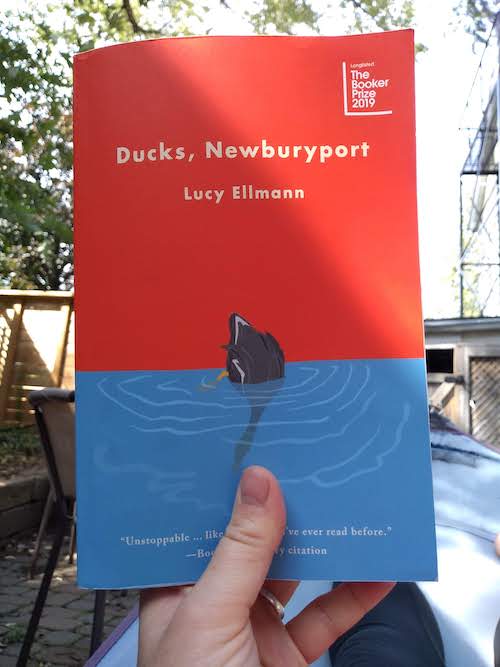
With Ducks, Newburyport, I did what I always do with huge and overwhelming challenges, which is that I broke it down into manageable pieces. Though I have heard others making a solid commitment to the novel, going in for the long haul, and they report enormous pay-offs, because it’s an amazing novel, and what a thing to give it one’s entire focus. But that’s not the reality of my reading life right now, where focus gets spread thin, and there are so many other books I have to read in the meantime, so instead of going all in for Ducks, I committed to reading 5 or 10 pages every night, and I liked that it was the kind of book that was easy to dive in and out of again. If I’m going to read 1000 pages, this is way I would like it to happen. It’s give and take.
And so it took me three months to read it, as opposed to binge-reading, and this has had a curious effect on my life. As though Ducks, Newburyport was like a plant with amorphous tendrils, and as I read, they crept their way into every facet of my life, until I was no longer sure where I ended, and Ducks, Newburyport began.
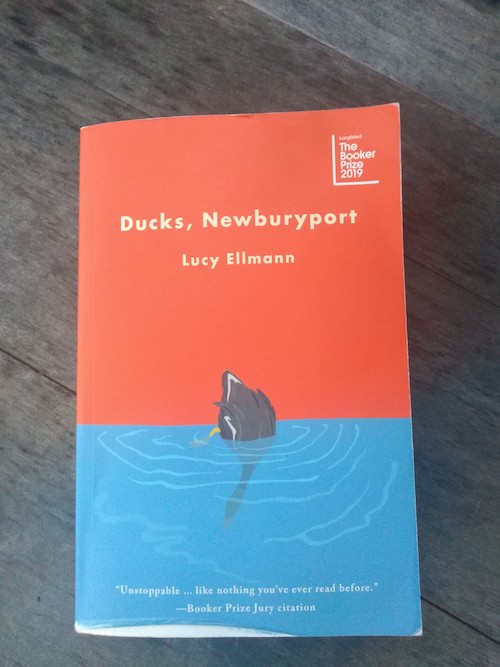
“That’s a lot like Ducks, Newburyport,” began to be the thing I said at parties, or on Twitter, no matter the topic, really, because everything is a bit like Ducks, Newburyport. Or perhaps what I mean is that Ducks, Newburyport is like life itself, which is the point of the exercise. Somebody talking about how they can never remember the word for nasturtiums, and maybe the unnamed narrator of Ducks, Newburyport had been talking about hydrangeas, but such distinctions mattered as much as the distinction between fiction and life. Everything was blurry.
It’s not accurate to say that this book is a single sentence, clauses conjoined by commas and the phrase “the fact that” to form the stream of consciousness of an Ohio woman baking pies and cookies in her kitchen, because to say this would be to forget about the parts of the novel that are written from the perspective of a cougar. Or a mountain lion, “the lioness.” What kind of novel is this anyway?
It’s the kind of novel that’s concerned with ordinary things, the mundane, the domestic. Except what does it mean that among these things ordinary and domestic are mass shootings and domestic homicides, a lunatic president and the rise of ethno-nationalism? These things melding in with the other, as our unnamed narrator caramelizes apples for tartes tatin, and fails to avoid painfully stepping on her son’s plastic toys, and worries about her distant teenage daughter, and thinks about the amazing fact of her love for her husband, never mind the sorry state of her libido, especially since her recovery from cancer not so long ago, rotting window frames and the guilt she feels for her failure to be a proper parent to her four children at the time, and she’s still not over the death of her own mother, and how their whole family fell apart during the years her mother was ill, and now her husband works so hard, is often travelling, and she adds to their income with her home baking business, because they’re broke after all her healthcare bills, supplying local shops and restaurants, her labour too blurs boundaries, both paid and domestic. And undervalued all of it.
Oh oh my gosh, the popular culture, classic films, and Meryl Streep and Dustin Hoffman (and how he was mean to her during Kramer Vs Kramer, when she’s a better actor than she’ll ever be), and the passages about Julie & Julia (“only we hate the Julie bits…”) and so much ruminating about Little House on the Prairie (as you do…), and bridge building (her husband, Leo, is an engineer), and musical theatre, and Harrison Ford and Witness, and the bee at Bread Loaf. Always, the bee at Bread Loaf, and we never actually learn anything about the fact of the bee at Bread Loaf, but other parts of the story we begin to be able to put together, puzzling out, like who is Abby, and her first marriage to Frank, and what happened to her mother, and the fact of the ducks at all. And Newburyport.
And oh, the angst of baking, her worries about sending these goods out into the world never sure that they’ve turned out successfully, because the proof is in the eating, and you can’t control it all. She’s got a freezer packed with failed experiments in lemon drizzle cake, not bad enough to be abject disasters, but not good enough to sell, and she feels guilty subjecting her children to it. Children are never enthusiastic about lemon drizzle cake anyway, the lack of frosting. Who’s actually enthusiastic about lemon drizzle cake anyway? Lemon drizzle cake existential angst, I mean. I’ve never felt so seen before. The kind of stuff that keeps me up at night.
There’s a chicken coop, and pets, and time passes, weeks and months, and in the breaks, the lioness wanders with her cubs, on overpasses and through thickets, across backyards and down into ravines, and she would like to keep her distance from humans, but she cant help it, and she becomes separated from the cubs, who are taken away in a truck to the Columbus Zoo.
Ohio is a funny place, not so different from the stories about the Florida men, really. Insane abortion laws and women kept captive in basements, and fact and fiction blurs too as our narrator recounts the stories she’s heard, news headlines. Some of them true, but it starts to feel like all of them are factual, because everything else in the novel is so familiar after all, that it becomes uncanny how much of it is not uncanny, when possibly it should be. What does it say about the world we live in (and all of us, in general) if it isn’t?
Against this backdrop of her stream-of-consciousness, a lot actually happens, although you could almost miss it, because the tone of the narrative never changes whether she’s concerned about puff pastry or is actually imperilled. She gets stranded in a snowstorm while out delivering pies, and takes her family to a mall whose parking lots entrance is washed away in a flash flood (which is the kind of thing that happens now, in Ohio and elsewhere), and then her daughter goes missing, seemingly every mother’s worst nightmare, save for another one which she comes face-to-face with by the novel’s end. But no spoilers…
Is there such thing as a pre-apocalyptic novel, was a thing I wondered as I read this book, an ordinary story with such ominousness at its margins, and creeping ever-closer, which is pretty close to how it feels sometimes to live in the world right now.
It was a commitment, this book, even if the smaller pieces I broke it into, and the other night as I finished it, I could not quite fathom what it would be like to not have this book sitting on my bedside. Three months is a long time, a quarter of a year, and as I read this novel, weeks went by, the season changed, we celebrated holidays and birthdays, had a federal election, I baked tens of dozens of muffins, and now the book itself feels indelibly connected with all of it.
This novel’s outsizedness, its audacity, is a statement on the curious proportions of life itself. What gets to be an epic? The fact that (as she’d put it) I might have spent more time ruminating on a disappointing drizzle cake than yesterday’s mass shooting; climate change and (not or) a teenage daughter’s petulance; saving the world and raising one’s children; a single person against the enormity of the human population—it’s all enough to make you go cross-eyed, to be honest. How do you understand it all, attempt to contain it all?
With this novel, however, Ellmann gets come close. A book that seems like a feat of endurance, at first, but turns out to be so much more than that.






