January 23, 2020
Ten Years
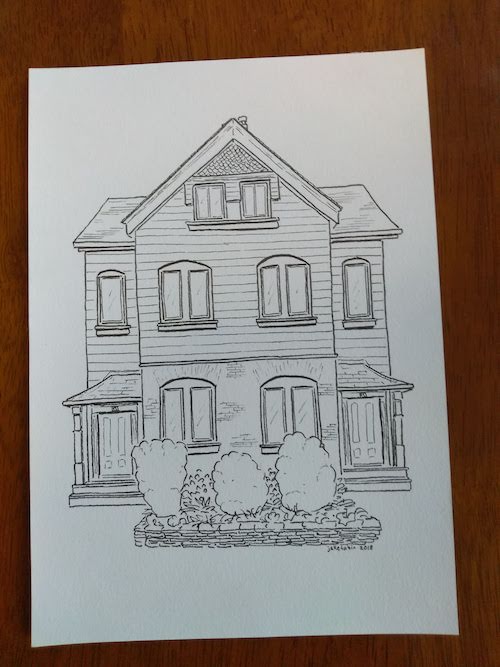
I had some strange feelings about reflecting on the 2010s, mostly because I didn’t. There was a meme going around Instagram stories on New Year’s Eve in which we were supposed to list a highlight from each year, and I even tried to post it, but couldn’t figure out how to get the text to fit, which maybe means that the 2010s were the decade in which I stopped being technologically savvy.
But also, the years all blend together, and so much stayed the same. The decade before was much more filled with upheaval and revolution (they were my 20s after all) but in the 2010s were where the pieces started to fit. I stopped having babies, I began to have something like a career, I finally started publishing books, I made some wonderful new friendships, and maintained old ones. It’s been good, but the decade itself, its distinction, just seems particularly arbitrary. Like—even more than a decade should.
Or do I only think that because when the decade started, I was sitting in the very same place that I’m sitting right now?
Okay. not the exact same place. (We finally bought a new couch, remember?) But the same address, our apartment, which we moved into twelve years ago this April, the longest I’ve ever lived anywhere. I moved in as half of a young married couple, and now I’ve got two kids and I’m forty, and have been married almost 15 years. The little kids who lived next door moved out and went to university, and then moved back in again, although it didn’t do me much good when they did, because now they’re too old to babysit. But, as the middle section of To the Lighthouse, so astutely put it: Time Passes.
Imagining our own story as told from the perspective of the house as Woolf does in her novel (except with less war and death). The people coming and going, coats and jackets hung up on hooks and taken down again, early morning alarm clocks and dinners, and house guests, and holidays, and the quiet weeks where we’ve all gone away, and coming home again, an explosion of luggage, and the babies arriving, and late nights with the lights on while the world sleeps, and the babies grow, and all the books that come in and those that go back out again (returned to the library, or left on the garden walls for any takers), and the birthday parties, play dates, first day of schools, pencilled lines in the door-frame measuring from small to tall, and boots and shoes and sandals in a pile at the door, and the triumphs and disappointments, throughout anxiety and contentment, and these walls have contained it all. Even as spare rooms turned into nurseries and cribs turned into bunk-beds, and empty space turned into clutter—Lego, puzzles, and play-doh—and that ring on the carpet from where I put down a teapot and it melted. How places seem to hold us, even more than time does, and how a single place can hold so much, and so can a life.
January 23, 2020
Such a Fun Age, by Kiley Reid
And my catch-up of reviews of popular American books that everyone else read months ago concludes with Kiley Reid’s debut novel, which only came out a couple of weeks ago, so I’m back on top of things. A novel that caught my attention with a stunning cover, so many readers raving about it on Instagram, and that title, Such a Fun Age, which is a phrase I find so cloying—but also such a perfect ironic statement upon the moment in which we live.
So here’s the story: after a late night emergency, Alix Chamberlain calls her babysitter to take her three-year-old daughter, Briar, out of the house for a while. The babysitter is Emira, who’s Black, a 25-year-old college grad who feels stuck in a rut while all her friends’ careers are beginning to ascend. But she loves Briar, and knows she’s good at caring for her, and feels protective of the child too, because she can sense how Briar’s quirks make her mother uncomfortable, the way they mess with Alix’s efforts toward a picture perfect veneer. With Emira, though, Briar can be her strange old self, and the pair are dancing in the aisle of the upscale supermarket in the Chamberlain’s neighbourhood, Emira with her friend and dressed for the night out that Alix’s urgent call had just summoned her from, and a shopper (that lady?) decides that something doesn’t look right with this situation. Calling on the store security guard, who tell Emira she’s not allowed to leave the store with the child, and the whole thing is caught on video by another shopper in the store.
If this were an issue-driven novel (“a book about race in America”) this episode would be the point on which everything turns, but instead it’s just the beginning. And Emira herself is not terribly rattled by what happened in the store that night, because she’s got other things on her plate, and the reality of being Black in America is hardly novel to her anyway after 25 years of it. But Alix, Emira’s boss, is obsessed with the incident, and comes to feel the same about Emira herself, determined to help her, to save her, thinking she knows her well (she checks the texts on Emira’s phone after all), the babysitter’s well-being becoming a project that fills her spare time, which has been considerably more ample since Alix she’d failing to write the book she signed a contract for. (Alix has cobbled together a curious kind of career, the kind of career only a white woman could have, in which she writes letters to companies and asks for things, and they send them to her, and then she reviews them on her blog. She gets speaking opportunities and talks about feminism and agency, and is hoping for an in with Hillary Clinton’s campaign as a kind of legitimizing force, because Alix’s isn’t dumb, and knows her brand is 90% shadow and illusion.)
Such a Fun Age was reviewed in the New York Times the other week, and the review was less than flattering, calling the book “soapy,” as though that were a bad thing. By soapy, the reviewer really means readable, and it is. And it’s true that there’s a plot twist in the form of a connection between Alix and Emira that’s just a little too tidy. But what the reviewer missed is how a novel that’s so eminently readable can also be so well crafted (bumpy plot aside). The dialogue in this book is incredible, and the group scenes (a disastrous Thanksgiving dinner in particular) are so excellently orchestrated that would-be novelists could use this novel as a handbook. It’s a soapy-ish novel that manages to surpass its subject matter, to be about so much more than what it’s purported to be about. A pleasure to read and so smart at once, and utterly, bewitchingly, unsettling.
January 22, 2020
The Topeka School, by Ben Lerner
My week of catch-up reviews of popular American novels everybody else read ages ago—I NEVER promised to be a blogger with her finger on the pulse—continues with Ben Lerner’s The Topeka School, a novel I had zero interest in until I heard him on the since dearly departed podcast, The Cut on Tuesday—with his mother, no less. His mother who is Harriet Lerner, author of the iconic 1980s self-help book, The Dance of Anger, and we learn that she is fictionalized in her son’s new book, with her own point of view, even. And that The Topeka School is connected to Ben Lerner’s two previous novels about Adam Gordon, who is a literary representation of Lerner himself, and this new novel takes him back to his roots, to 1997, as 18-year-old Adam makes his way through his final year of high school, aspires to the highest echelons of school debate championship, having grown up in the state that gave the world Bob Dole who’d gone up against the beleaguered Bill Clinton in 1996 and lost. This is not a straightforward narrative, moving back and forth in time and between perspectives—Adam’s, his father’s, his mother’s, and a troubled classmate whom Adam had grown up with but who socially and intellectually falls behind, a ticking time bomb. The novel a study of male rage and anger, drawing connections between debate and rap stylings, and also to the national discourse, whose divisiveness begins heating up at this point until it boils over into the mess we have today.
January 21, 2020
Fleishman Is in Trouble, by Taffy Brodesser-Akner

I was going to say that I don’t know how I missed out on the Fleishman Is In Trouble hype, except it occurs to me that I totally do. I didn’t know anything about its author, Taffy Brodesser-Akner, first of all, a seasoned magazine writer, so her name wouldn’t have led me to pick the book up (especially since her name is Taffy, which is the funniest name since Flossie). And besides, she’d written a novel about a man in the spiral of a midlife crisis and the only thing I’d care about less than that is the story of a young man coming of age (ugh), so I just didn’t bother.
But then people kept posting about the novel on Instagram, and all the posts had comments from other people who’d read the book and loved it, so I was curious. So curious that I eventually put the book on hold at the library, except that I was more than 500th on the holds list… Which came up in conversation when my daughter was sitting on my lap one Sunday morning and we were reading over the 2019 New York Times top 100 list together—she likes to practice her reading. My husband overheard me commenting about my interest in the book, and the library hold situation, and had a brilliant idea—so I got the book for Christmas.
And by Boxing Day, I’d read the whole thing.
The novel is like a roller coaster, powered by fury, and the reader is flying by the seat of their pants from the first few pages. Fleishman of the title is Toby Fleishman, a successful doctor whose success will never compare to his high-flying talent agent wife’s—they’re getting divorced anyway. And New York, in the decade and a half since Toby was last single, has become a city packed with women who are seemingly desperate to have sex with him, which is certainly novel. It’s almost enough to make him get over his long time body image issues and insecurity due to his (lack of) height—but not quite.
But when Toby’s ex-wife, Rachel, drops off his kids one night and disappears, it puts a cramp in his style, not to mention makes arranging childcare difficult at a pivotal moment at work—Toby is up for a promotion. And this is just one more crime to add to the list of unforgivable things that Rachel has done over the course of their life together. Rachel, it seems, is a heinous bitch.
Sounds straightforward enough, right? And this novel starts off in the tradition of legendary male authors whose smutty books about fragile egos, hissy fits, and emotionally tumultuous love affairs about got to be literature because their narrators had penises. But then something strange happens, which is the appearance of a first person narrator who has been telling the story of Toby Fleishman all along. Like a reporter, even, which is not so surprising when it emerges that the narrator is the most unobstrusive Libby, a friend who’d met Fleishman twenty years before on their year abroad in Israel. And now, after many years and post-break-up, Fleishman has reached out to his old pals to help absorb the shock of his new life. Libby is, in fact, a reporter who finally quit work after the birth of her second child and has settled down for stay-at-home momhood in the supports, a situation which she is, shall we say, conflicted about. But where exactly is Libby coming from?
And this, sneakily and strangely, becomes the central question of the novel, which also eventually comes to fill in the mystery of where Rachel has been in her weeks-long absence, after Libby runs into her in a bagel place looking strangely dishevelled. A novel whose furious narrator writes about the invisibility of women, and how nobody ever listens to women’s stories anyway, unless there’s a man at their centre.
Which is shocking and profound, and the reader is implicated in this in the most terrific way, and the resolution to all this is never going to be tidy. It’s not simply a matter of Rachel’s story setting the record straight, or Libby even being capable of being objective about the situations she’s been presented with, because she has her own agenda. The peculiarity of this novel, an odd three-headed beast, being that it’s not one person who is the victim here, or even everyone. Or maybe it’s that it’s everybody and no one, and that life is too complicated for such obvious designations, and journalism often doesn’t seem up to the task of addressing these matters these days, but maybe here is where fiction comes in.
January 20, 2020
Gleanings
- “It is worthwhile to point to the absences, the silences, the erasures in stories. But the questions should be an invitation to creation, not an end to conversation.”
- The book feels like listening to a friend tell the story of living eight years in a place she was initially only curious about but came to deeply love… including, and maybe especially because of, the tough moments.
- Telling stories helps. As necessary as bread.
- The character got a spark from the person once, but at this point the two flames burn entirely separately.
- What happens if you decide to just embrace something you love? Be a champion for that thing?
- Another good reason to double up our meetings, when and if we can, is simply because we love them and they’re an excuse to help us through the winter.
- Maybe, like Greek philosophy, parenting, too, can offer one model for holding the difficulties of the present moment in mind, but differently.
- Don’t you just love it when that happens, when you think… rum, again?? And it all begins to feel like a kind of reading serendipity is happening.
- I love going out for dinner with a friend. French fries. A Cabernet. Three, four hours of uninterrupted, juicy conversation. Equally, I love not going out for dinner. And not talking.
- Rather, time alone in the woods created a personal, quiet space in which I have always been able to find composure, contentment and serene happiness.
Do you like reading good things online and want to make sure you don’t miss a “Gleanings” post? Then sign up to receive “Gleanings” delivered to your inbox each week(ish). And if you’ve read something excellent that you think we ought to check out, share the link in a comment below.
January 16, 2020
Spring Books on the Radio
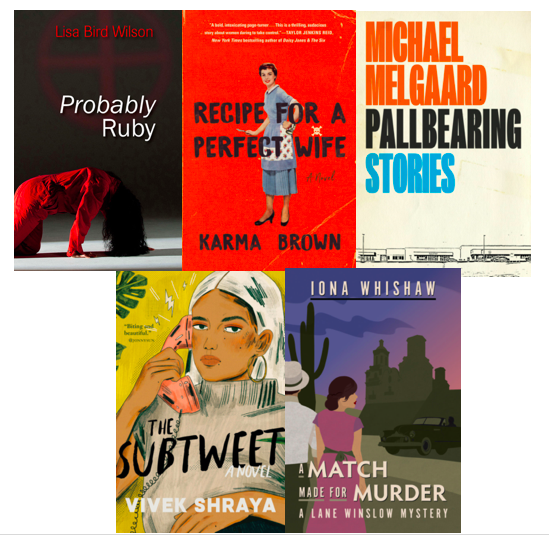
I was on the radio today (live, in-studio!) talking with Wei Chen on CBC Ontario Morning about a handful of Spring Books I’m looking forward to in 2020. You can listen online if you missed it live—I come on in Part 1 at 41.41 (though “Blinding Lights,” by The Weeknd, is on right before me, so you might want to listen to that too).
January 15, 2020
Marching

I don’t know that so much has really changed since that November night back in 2016 when I’d baked a Hillary Clinton victory cake in determined optimism. (“And if she loses,” I’d decided, “at least we’ll have cake.” But that cake tasted terrible.) The only really substantial change has been that I’ve since had my eyes opened to the realities of the world, to the fact that people in general are less kind, wise and curious than I used think we were, and it had been my privileged position to exist without having to know that.
But one more thing that’s different—these days I also keep a collection of broomsticks on my porch.

The broomsticks are fitting really, because most of us haven’t heard this much about witch hunts since the 17th century, although our family doesn’t use our broomsticks for flying. (At least, not yet.) Instead, our broomsticks are for marching, which was an altogether new experience for us as we joined tens of thousands of people at Queen’s Park on that mild January Day for the 2017 Women’s March. As we walked through our neighbourhood holding our signs (duct-taped to said broomsticks, and also a couple of dowels I’d picked up at the hardware store), it already felt like a parade, neighbours leaving their houses holding their own signs, passing cars honking their support.
I remember the ground softened by mild temperatures, my green rubber boots going squish in the mud on the lawn at Queen’s Park, and how it seemed like everyone we knew was there. And how everyone who wasn’t there was out on a similar march in cities all around the world. I remember feeling hopeful for the first time in months, and that maybe we weren’t so alone after all, and good things were possible. People spread out as far as I could see in all directions, an endless horizon of humanity who’d come out to stand up for social justice, and perhaps all was not necessarily defeat.

The Women’s March was originally cast as a failure, even before it had taken place. In the weeks before the event, as there were struggles about organization and inclusion, so many pundits and cynics declared it just so, but the march itself defied them. The march itself, of course, being the team of organizers on the ground that organized events in towns and cities all over the world, in Toronto, in my particular case. And I don’t know that I will ever be able to properly be able to express my gratitude to those organizers for what they gave all of us that day, for that light in the darkness. For rekindling some hope, and making us feel part of something bigger and stronger than tyranny or authoritarianism.
In spite of an event that broke all precedent (and almost broke the president!) and managed to set records and change the world, the narrative of the Women’s March being fraught would continue to be perpetuated. There was a breakdown between an administrative body and local grassroots organizers. There was controversy among those who’d been figureheads of the March in the US. Subsequent marches did not bring out the same numbers. In 2020, in Toronto, there would not be a march at all.
And yet.
Three years later, there is that collection of broomsticks on my porch. Since January 2017, when none of us had ever marched in the street before, or ventured outside with a political slogan on a button, let alone a placard, we’ve pulled out our signs and demonstrated to show support for refugees in Canada, and for International Women’s Day. I’ve joined small demonstrations of strangers to counter anti-choice protesters on the sidewalk. We’ve taken part in Fridays For Futures, strikes to stand up for climate change action, and I’ve even organized rallies against education cuts in our school community, and joined our neighbours back on Queen’s Park to stand with Ontario education workers. In the two years following January 2017, we all marched in the Women’s March again—last time in the midst of a blizzard.

I am not an activist. I say this not because I don’t respect activists, but because I do, and I don’t want to take credit for any of their work on account of a handful of broomsticks. Although what is an activist anyway, but an ordinary person who cares about things and is willing to make a stand for a better vision for the future—which is the kind of people we resolved to be in the aftermath of that terrible night, as we choked down the crumbs of that very sad cake.
I’ve been to enough demonstrations by now to be less delighted by old women who can’t believe they still have to protest this shit, or the ones who’d been buried but no one knew they were seeds. But I still believe in seeds—I do. And I know the seeds planted on that January day three years ago will continue to bloom in years to come. I know that the Women’s March, for so many of us, was a political awakening to our responsibilities as citizens and neighbours to help build the kind of world we want to see.
The Women’s March has ended—but it was only supposed to be the beginning anyway. And now the rest is up to us.
January 14, 2020
Back to the Blog: One Year Later
I’m certainly no Faith Popcorn, but I think I called it. Almost exactly a year ago, as part of my 2019 intention to conduct myself with more audacity, I declared The Back to the Blog Movement. Was I not blogging because the world no longer made any sense, or had the world stopped making sense because I wasn’t blogging? And as the near year began, I decided perhaps it was the latter, and embarked on a reset and rediscovery of the blog and its myriad possibilities.
And I wasn’t alone, because because my Back to the Blog post got tons of responses, brought new readers and blogs to my attention, and—in the true tradition of old-school blogging—inspired a handful of other writers’ blog posts, including Meli-Mello (my blogging friend of more than a decade!), Rebecca Rosenblum, Shawna Lemay, and my fave swimming blog.
As the year went on, the movement picked up steam, as CanLit blogging pioneer Bookninja returned to blogging, and Steven Beattie resurrected his blog That Shakespearean Rag, and (tongue in cheek, of course) we all know that it’s when men start doing things that people begin to pay attention. (I find blogging and gender fascinating. Of course, it’s impossible to talk about blogging in general terms, because blogs can be infinite different things, and a gendered lens only makes it more so. I once read an entire book about the history of blogging that didn’t have a single woman in it [nary a mommy blogger, nor a knitter, even!] save for the one woman founder of Blogger, who only appeared in the book while running out of a meeting in tears.)
It was good to have these book blogging stalwarts back, and to have connected with other bloggers too throughout the year so that my own blog-reader got longer. I also started a weekly series called Gleanings, in which I went back to the blog in an old-school round-up sense, posting links to the pieces (at blogs and elsewhere) that made the internet a worthwhile place for me to be a reader.
In March I wrote the post “Why Your Own Small Corner of the Internet is Going to Make the World a Better Place”, framing blogging as a way of taking back online spaces, countering the toxicity and meaninglessness of a lot of current internet discourse. “Blogs are important in 2019 because they aren’t underlined by corporate interests, because what parts of them we read aren’t determined by algorithms, because of their focus on language at a moment when politicians are making meaninglessness into an art form, because of their obscurity even and how they give us the freedom to explore off our own beaten track, because they’re not part of an industry that’s flailing, dying, desperate. There’s nothing desperate about a blog. ”
It was the spirit of blogging (and audacity!) that carried into my two big projects of last year, establishing the boutique bookseller Briny Books and my online blogging course Blog School. The idea that small things matter to real people, that little steps can take us somewhere, guided the same DIY ethos that has been inherent in blogging since the beginning. From 20 years (!) of blogging, I have learned that the path is meandering, but it takes us places, and that we get there by putting one good post in front of the other, by simply not stopping. Even when we’re tired. Even when it seems like nobody is reading. Even when the world doesn’t make any sense, but it’s when the world doesn’t make sense that we need blogging most of all.

MAKE THE LEAP is the guided and interactive version of my online course. It’s running throughout February, and it’s an ideal program for writers looking to make the leap to blogging with guidance, feedback, and community engagement. I’m looking forward to spending the month working with a great group of writers, having fun pushing the limits of what blogs can do, and reading and sharing inspiring posts. I hope you’ll join us. Spaces are still available, including one last discount space for students already enrolled in FIND YOUR BLOGGING SPARK.
January 9, 2020
Gleanings
- The one benefit of not being able to follow in our parents’ footsteps is that we are forced to make our own.
- When I’m standing on the shores at Middle Cove Beach, about ten minutes’ drive from our house in St. John’s, I’m thinking of other shores and other waters: the mudbanks in Suriname, the white sands in Vlissingen, the wind and waves around the Cape of Good Hope—and the lives and stories of the enslaved and indentured.
- Don’t call my experience a patient “story”
- I’m grateful for all of it, even the uneven stitches, the courses of squares that won’t align properly, the stars that often need to be picked out and begun again (measure twice, cut once)…
- Sticky toffee pudding is usually made with dates and almost every person I’ve ever told that to who has had it but doesn’t peruse recipes for fun and entertainment (crazy!) has found that baffling
- Recommended, even with Katharine’s bookish preferences, which are completely antithetical to blogging…
- The rising of Grace Paley’s feminist consciousness—its fits and starts, fears and regrets— may be traced in her stories.
- Reading is not a competitive sport, but that doesn’t stop me from challenging myself…
- It’s the time of year I make my annual resolution to be weirder, more eccentric.
- In the fog of my fever, I could see the finished chapbooks and they were lovely.
- THAT SAID … I may write more about books in 2020.
- This is an experiment in how one book calls to another …
- To get us in the mood for all things Meg, Jo, Beth, Amy, Marmee and Laurie, I’m sharing two poems from the novel and a recipe from the new Little Women Cookbook by Wini Moranville
- Something in me relished the thought of going up to people and saying, “Listen to me, something terrible is about to happen, and I can save you.”
January 8, 2020
A Delicious, Meandering Journey

‘Interestingly, I find myself leaping/flipping/scrolling past the “best of” lists and instead gravitating more and more to the reflections about reading as exploration, revelation, often deliciously meandering journey, shared experience, opportunity to bust out of staid categories and forge new ones … and more.’ —Vicki Ziegler
Sometimes I think I spend my whole year reading just go get to this point, when the best-of lists are compiled, required reads for book club or review assignments are completed, when the literary year is done and dusted…but there’s still at least a week of time for reading left.
Which is when I turn off my WiFi, take an internet break, out-of-office reply—”I’ll get back to you in the new year.” And I sit down to read.
I read differently in the holidays, when the working is all done. Instead of new releases (because I don’t want to miss a thing), I turn to yellowed paperbacks purchased at book sales, back-list titles by authors I love, strange books plucked from Little Free Libraries, and rescued from the streets. Books that are easy not to make a priority in my literary year, but on holiday, they take precedent—and my reading life is so much more interesting for it.
They weren’t all winners—after having now read two books by Ottessa Moshfegh, I think I can finally conclude that her work is just not to my taste, for example. But altogether, these books were part of why my holiday was so lovely—and I loved too their connections, how they spoke to one another, as though book after book was just one book, and the story flowed and almost made sense.
Of course, it wasn’t all obscure. Ben Lerner’s new novel, The Topeka School, is one of the top rated books of 2019, and I bought it after hearing Lerner and his mother Harriet Lerner (author of iconic book The Dance of Anger) on a podcast. Hot tip: if you want to me to buy a book by a man, make him fictionalize his feminist mother in that book and even give her a point of view. I’d already tried to read The Topeka School twice, but had been diverted, not because anything was wrong with it, but other books kept showing up before I got to page 12. Finally got past page 12 (third time’s charm) and really liked this one, and had my mind-scrambled by its meta-ness. It was such a curious and interesting book, which captures a cultural moment (1997) that was pivotal in my own experience (I turned 18 that year, and the memories are very vivid) and connects that moment in several ways to our present.
I also read Colson Whitehead’s The Nickel Boys, another top book of 2019, and am so glad I did—plus it reminded me of Jesmyn Ward’s 2018 Sing Unburied Sing, I loved the depiction of 1970s’ New York, and oh, the twist. The book is brutal, but there is more to the novel than just that.
The third 2019 book I read was Fleishman is in Trouble, by Taffy Brodesser-Akner, which I got for Christmas. I never get books for Christmas, because I’m very much a self-directed book buyer—but my husband heard me talking about how I was more than 500th on a wait-list for this book at the library, and bought it for me. And I loved it so much. Probably deserves a post of its own, but yes, it had everything and was so devourable—by Boxing Day, I’d got to the end.
Had very much a New York streak going on, especially between the Brooklyn of Lerner’s book and Darcey Steinke’s Flash Count Diary, and Fleishman and My Year of Rest and Relaxation.
And then I left town to finally finish Elizabeth McCracken’s Here’s Your Hat, What’s Your Hurry, her first book re-released along with her latest, the novel Bowlaway (a novel that was delicious and meandering itself, and also one of my favourite books of the year). The mingling humour and sadness—she’s such an incredible writer.
And then Woolf’s Night and Day, which I bought in the summer after I saw an ad on Instagram for a 1970s version of the novel whose cover I fell for. It’s always funny to be reading early Woolf, back when her narrative style was so conventional. The characters were a bit wooden, and the story more about ideas than its people actually being realized, but it was still really enjoyable, and Woolf after all.
And speaking of conventional, Penelope Fitzgerald is conventional never, but The Beginning of Spring (which I finished reading on the morning of New Year’s Eve) is perhaps the most straightforward of her novels that I have read. (As I’ve written before, learning to appreciate Penelope Fitzgerald is a project of mine.) I like to read a bit of Penelope Fitzgerald during the holidays out of nostalgia for the year I read her biography by Hermione Lee, which was one of the best reading extravaganzas I have ever had. Anyway, The Beginning of Spring is set in Moscow in 1913, and this reviewer calls it Fitzgerald’s masterpiece. I really loved it.
Before the year was out, I had also finished reading Jhumpa Lahiri’s In Other Words, a book she wrote in Italian about the experience of learning and then to committing to reading and writing in Italian. (Which would lead me to Natalia Ginzburg—but first!!)
First, I ended 2019 and started 2020 with At the Pond, a collection of essays (a gift from my friend Nathalie) about swimming at London’s Hampstead Ladies’ Pond, contributors including two of my favourite swimlit stars (Leanne Shapton and Jessica J. Lee) AND my very favourite everything, Margaret Drabble. Nice to be returned to the London of Night and Day, although Katharine Hilbery never went swimming.
(On New Year’s Eve, Stuart and I both had Taylor Swift’s “London Boy” in our head, which is a terrible song, the situation exacerbated by the London locations of our respective reads [Stuart is LOVING Girl Woman Other, which, incidentally, was the second book I broke up with Ben Lerner for] and every time anyone in my book mentioned Highgate, I’d start singing, “…And I love his best mate. All the rumours are true…”)
Two things I loved about At the Pond: cultural diversity of the authors made it such a more interesting collection than it might have been. And the essay by nonbinary writer So Mayer on their complicated relationship with the space “for women only”—which has long welcomed transwomen among them without fuss, save for the activists who showed up at a recent community meeting in furor about this.
Then I read The Secret Sisterhood, about women’s literary friendships, which I bought in March on a weekend in Niagara on the Lake with my two best friends of more than a quarter century. The Jane Austen chapter was a bit slight, but I enjoyed the book and nice to bring things around with the final section on Woolf and Katherine Mansfield—especially since it focussed at lot on Night and Day (which Mansfield wrote a scathing review of, which made their friendship at bit…awkward).
And finally, All Our Yesterdays, by Natalia Ginzburg, the kind of book that it might be possible to put off reading forever, because it’s old with an unappealing cover, and pages and pages of dense text. I’d bought it at a colleage book sale last year after reading Gizburg’s essay collection Little Virtues, but novel sat unread on my shelf. And then I gave it away to my local Little Free Library, which I regretted after running into an Italian-Canadian friend at the library who was returning a pile of Ginzburg’s novels in their original language. She extolled the authors virtues, so when I happened to walk by the Little Free Library and saw All Our Yesterdays up for grabs, I stole it back. Finally cracking it open now because Jhumpa Lahiri had also written about Ginzburg, and it seemed like a sign.
I loved this book. Sweeping, strange, curious and compelling, it’s the story of two families in Northern Italy and how they change as WW2 arrives and continues. The narrative is very matter-of-fact and understated, creating a sense of inevitability (it actually reminded me a but of Girl Woman Other, how a single story can contain so much and so broadly). The banality of living under Fascism, and then occupied Italy after the Germans arrive, and the casual brutality of war.
Now I really want to track down a copy of Ginzburg’s Family Sayings, which won the Strega Prize and which seems to be cited as her best work. (PS Just found out it’s in print with the title Family Lexicon. YAY!!)






