June 24, 2022
Take Back the Story
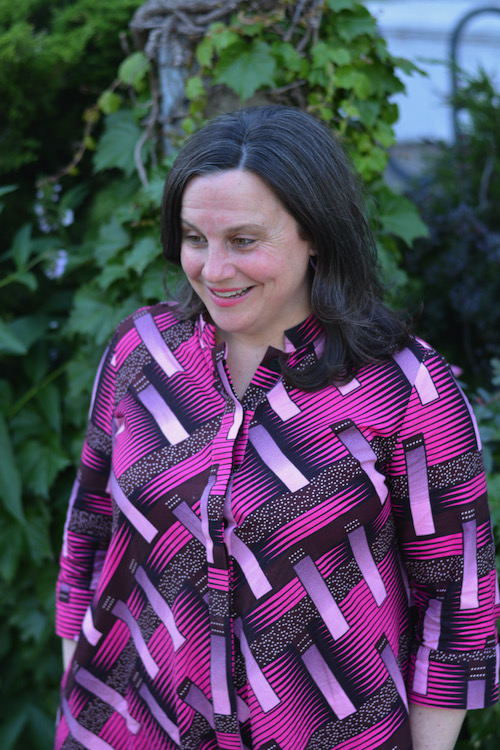
Good morning. Today is my birthday, and the US Supreme Court has overturned Roe Vs. Wade, which makes this birthday even *more* disheartening than the one I spent in 2016 on the day after the Brexit Vote, if such a thing is possible. But perhaps the Supreme Court timed it to coincide with the twentieth anniversary of the birthday when I was pregnant by accident, but didn’t know it yet. The birthday I spent imagining myself on the cusp of incredible new horizons as I’d just graduated from university and was set to venture out into the world with just a giant backpack, but then all those dreams were derailed by faulty birth control, and it was all such a nightmare, so stressful and unbelievably sad, and I don’t remember these emotions at all, but I happened to write them all down in a diary that I was flipping through last night, so there’s evidence. The list of things to do I’d scrawled down around that time included, “Stop crying all the time.” And I eventually did, because I was able to choose my own destiny, to own my own soul, my life. How fortunate was I to be pregnant at a moment some were still describing as “post-feminist,” when it literally never occurred to me that my right and access to an abortion was something that was up for debate. That my reproductive healthcare was anyone’s business except my own.
From my essay, Doubleness Clarifies: It is essential for my purposes that you be able to imagine the desperation of being pregnant when you don’t want to be, of what it is to be staring into that gaping black hole with everything you’ve ever worked and longed for lost inside it.
Here’s what you can do: If you have had an abortion, learn to talk about it so you can speak up and advocate for people like us, even quietly and privately. If your partner had an abortion, speak up and demonstrate that this matters to you. If your ex-partner had an abortion, speak up and demonstrate that this matters to you. Tell your story, and break the stigma that permits abortion stories to remain in the dark, obfuscating the reality that most adult women will have an abortion in their lifetimes. Obfuscating the reality that abortion is normal, and that so many of us have the lives we do because abortion was a gift.
If you’re Canadian, and you have an anti-choice representative in government at the Federal or Provincial level, write them a letter. Campaign for pro-choice candidates in these ridings. Support Abortion Rights organizations in Canada by donating funds. Learn more about why this isn’t just a fringe issue, and why it matters so much—start listening to @aborshpod because it’s wonderful.
If you think this story isn’t about you, your kidding yourself. If you’d like to learn how you might be brave enough to speak out (it took me more than a decade!), DM and I’d be happy to talk.
Don’t be quiet. Don’t be silent. As Ali Smith wrote, “Whoever makes up the story makes up the world.” It’s time for so many of us to take the story back because it belongs to us, and it’s a story that’s proud, and brave, and hard, and real. And I’m so grateful for it.
June 23, 2022
A June like all the other Junes
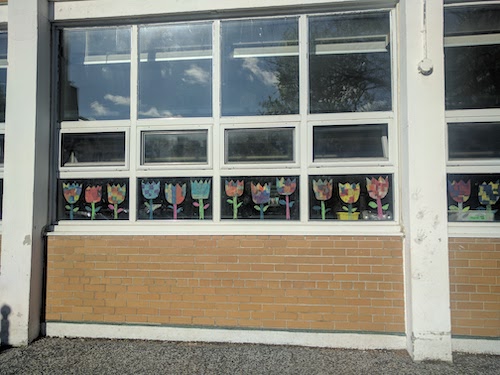
It’s been three years since we’ve had a June like this June, a June like all the other Junes before it. My kids walking to school in shorts and sandals, spring light shining through lush green trees into their classroom windows, and the calendar packed with dates for the school picnic, school dances, graduation, and end-of-the-year trips. If my email inbox is any indication—packed with calls for bake sale contributions, teacher gift collections, volunteers and chaperones—nature, as they say, is healing.
If all goes according to plan in the next week, the 2021-22 school will turn out to have been something close to normal, two weeks of virtual learning aside, albeit with two-thirds of it spent in cohorts, high schoolers in those ungainly “quadmesters,” the experiment that has been hybrid learning, and mask requirements. Some of these strategies for reducing infection have been more effective (and less disruptive) than others, but I’m grateful for those that worked, for the gift of vaccines, and for the incredible dedication of teachers and school staff which has meant our kids get to go to school every day, see their friends, learn in person, play at recess, and all the other normal things that all kids should get to do.
As a parent in Ontario, a province whose children have spent more time out of the classroom since March 2020 than anywhere else across the country, something close to a normal school year is a gift I will never take for granted.
But I also remain frustrated that too many voices—some of them prominent, loud, and speaking with real authority—have spent the last two years and more insisting that such success was unachievable. These failures of imagination have had real consequences for children and families across the province, and served to undermine progressive values, faith in public health, and the possibilities of our collective efforts.
In 2020, however, some of this seemed understandable. So much was still unknown about Covid-19, with limited medical treatments available, and vaccines far off on the horizon. And so, even as students across Europe began returning to school in the spring of 2020, students in many Canadian jurisdictions would finish up their school year online, in Ontario this setting a most unfortunate precedent.
It didn’t help that bad-faith actors came to hijack the conversation so that questioning restrictions like school closures started to seem like possible shorthand for not taking the Pandemic seriously. Or that our media was so US-centric that it was hard to see examples of Covid being managed any way but terribly. It didn’t help either that, in Ontario, the government was slow-moving on measures to improve school safety, and then rolled out a program for virtual learning that made parents feel like they were being forced to pick between two not-great choices. To complicate matters further, by September 2020, Ontario was coming out of a year of labour disruptions by teachers and school staff, which meant tensions were high and political rifts deeper than ever. In particular, I recall a tweet from exclusive private high school St. Michael’s College School, of which Ontario Education Minister Stephen Lecce was an alumnus, spotlighting gleaming new handwashing stations and plexiglass room dividers. Meanwhile public school students were being promised six feet of distance between desks in classrooms where there was literally not enough space to accommodate such dimensions—the disconnect was pretty staggering.
Sending my children back to school September 2020 was a nerve-wracking endeavour, but it was a choice whose risks we felt comfortable taking since no one in our household had a health condition that made them vulnerable, my husband and I both working from home meant our chances of spreading the virus were low, and—I think, most essentially—because we were already well connected to our local public school whose staff we trusted absolutely to help keep our children safe.
But we were still nervous, and I soon realized that I would have to quit Twitter in order to have my kids attend school without my mental health being compromised, because all the voices on that platform—from doctors, and people who thought they were doctors because they followed doctors, and activists, and politicians, and pundits—were just too much for me to handle.
I also ended up leaving the several parental advocacy groups I’d followed in previous years to show my support for public education, mostly because they too were piling on the Twitter hyperbole and using every opportunity to get a shot at our ding-dong government. (The thing about ding dong governments is that you’re always going to get a shot, so you actually have to be discriminating at going about it or else it stops having meaning.)
The low point, for me, came when I sent a DM to a representative from one of these groups, which was then keeping tabs on daily case counts of Covid cases reported in Ontario schools. (A number that was, in retrospect, so low that it almost seems quaint now.) And I inquired to the representative as to whether they were perhaps stoking fear and anxiety in sharing these numbers outside of the context of what a small proportion of students these cases actually represented, and—even more important—that school spread really didn’t seem to be a factor.
“Let’s engage with reality, rather than just trying to push your narrative, because that undermines your credibility,” was basically what I was saying, but this person was uninterested in that. Responding that the numbers were likely undercounted anyway, and that I was being ableist and racist in denying the impact of Covid, since it disproportionately affects the most vulnerable in our communities.
The latter point most certainly the case, but doesn’t that just underline the importance of dealing in facts and not engaging in inflammatory rhetoric? Because the stakes really are that high.
You’d think people might have learned something from September 2020, when schools reopened and everyone lost their minds, but we didn’t. In Ontario, schools closed again after the Christmas holidays, students returning to their classrooms for about six weeks, and then schools closed a second time after delayed spring break. I recall commenting on Facebook that it might be nice if schools could just reopen for a few weeks in June for just a bit of closure, so we didn’t just keep adding to the trauma of everything having ended so abruptly two years in a row, and other people shouted my point down. It just wasn’t worth the risk. It wasn’t possible, they reported with a glib kind of nihilism. People who lived in Twitter far more than they actually went out into the world telling me how it was, because they’d seen it in their timelines.
Children returned to school again in September 2021 with a virulent new strain on the rise, and again in January 2022, and each time I couldn’t help but think how advocates and experts had squandered so much of their capital by making something massive out of the challenges of September 2020. So that by the time spring 2022 rolled around and everything was so much worse, nobody was listening to them anymore. At a moment when advocacy was necessary, most normal people, altogether pandemic-weary, had tuned it all out. Because of the Public Health Twitter star whose open letter in January 2022 predicted “sudden mass infection” and effects that would be “catastrophic.” The people who’d decided that medical experts advocating for schools to reopen were in kahoots with Doug Ford and developers to destroy the green belt. The hysterical Instagram power-points warning when children returned to school after March Break, “STUDENTS ARE GOING TO DIE. TEACHERS ARE GOING TO DIE.” Until the messaging was just as uninformed and divorced from reality as that of anti-vaxxers.
It’s not that people were wrong that bothers me. Surely all of us are glad that the most dire predictions regarding Covid-19 often did not come to be. I understand too that this has often transpired because of urgent messaging which led members of the public to change their behaviour, changing trajectories for the better. It’s how public health is supposed to work.
But I am bothered by the lack of reflection by people with prominent platforms. I am angry that a curious combination of cowardice, defeatism and self-righteousness led to children in our province being out of school for months during periods where we were free to eat and drink in bars and restaurants. I am angry that the same people were wrong again and again, and that all those same people are still furiously tapping away at their Twitter feeds, never once displaying an ounce of humility or contemplating the remotest possibility that not everything is going to end in disaster.
All this matters because we live in a moment of enormous challenge on a variety of fronts, and our society is certainly never going to be able to meet these if how we grappled with Covid in schools is the precedent. If our most prominent voices continue to be steeped in cynicism, egotism, more adept at criticism than anything constructive, more concerned with amplifying their own voices, messages, and political agendas than actually listening, and learning, and figuring out how together we can make things work.
Because we can make things work—the success of 2021/22 is a testament to that. And I don’t know if it would be so unwise, when the next big crisis rolls around, if we just let school teachers and staff be the ones to tell us all how to solve it, and everybody else can be quiet for once.
June 21, 2022
Gleanings
- The practice asks: What’s drawing your attention? The practices reminds me: Follow the energy, write toward that. Trust this time, be in between. Feel, connect. Feel, connect. Be where you are.
- If we can get this right, what else can we get right?
- Walk by peony bushes, now flopped over and spent, their glorious beauty short-lived. Resist the temptation to make comparisons to life and nude seniors playing pickle ball. Some things are better left Uncompared.
- Vacation tastes like the memories of my fifty-five summers, plus the photographs that show fifteen summers prior to that.
- The pleasures of reading silently together as a group all came flooding back, as if the last two years have been some other kind of strange dream.
- I don’t have answers to these questions. I like living in them. I like the possibilities and challenges that the questions represent. I like having different inclinations on different days.
- But what you can’t see is the huge living body of water that holds you up, allows you its currents, its riffles, its history of trout, of kingfishers dipping their beaks, of mergansers and loons in the distance, of crayfish and sticklebacks, of freshwater clams, wild mint in the shallows, the shadows of swallows on the surface as they take insects in flight. Like a river or the ocean, it allows you a place in its living water, and now having entered again, my arms propelling me forward, hands meeting in front of me, then pushing out, a gesture of arrival, in sunlight and rain, I am home in my body within it.
- But the longer I look, the more I understand that he was trying to capture the way the light fell softly over love seat like warm liquid. The whole scene was an attempt to study contrast and light.
June 20, 2022
Susanna Hall: Her Book, by Jennifer Falkner

“July 11th, 1643: It is the summer of her 61st year. A year of turmoil up and down the country. The King has abandoned his seat in London and his army charges about fighting his own people. A year of exorbitant taxes. Poor harvests. Neighbours turning against each other. A year in which Susanna wonders how many years are left to her.”
For fans of Hamnet, by Maggie O’Farrell, I recommend Jennifer Falkner’s Susanna Hall: Her Book, a gorgeous and haunting novella inspired by another Shakespeare woman, this time the poet’s eldest daughter, Susanna. Physician’s widow and respected healer, the tensions of England’s civil war have arrived to roost within her home.
With historical fiction that reads as timeless and achingly relevant, Falkner manages to have 150 pages contain the broadest emotional spectrum, and lets just three days tell the story of one woman’s remarkable lifetime.
I loved this book, out now from Theresa Kishkan and Anik See’s Fish Gotta Swim Editions, indeed a pleasure to read and to hold. If you’re intrigued, check out the posts on Falkner’s Pinterest page!
June 16, 2022
No Second Chances: Women and Political Power in Canada, by Kate Graham

“Democracy is, I would say, so important in our collective lives, in our states, that you never question it even if goes against what you believe.” —Pauline Marois
If politics is messy, actually governing is even worse, the challenge arriving with realities and demands that most of us observing from the sidelines barely understand. And being a woman in government, as Kate Graham shows in her book No Second Chances, based on her 2020 podcast of the same name, makes the challenge even harder. As noted by Kim Campbell, Canada’s first and only female Prime Minister, “When you are not prototypical—when you are not like the others who have the done the job—it becomes very difficult for people to overcome their visceral sense that something is not quite right, so you never get the benefit for the doubt…”
In Canada—even where there was a moment a few years back where half of our First Ministers were women and it seemed like something like equality had finally been attained—not a single female First Ministers has never been re-elected.
Throughout the interviews in this book, Graham teases out a handful of reasons why this might be the case, and none of are that women are necessarily inferior at political leadership. The interviews take place with women across a wide range of the political spectrum too, whose experiences turn out to have far more in common than one might suppose.
These interviews are as fascinating and insightful as they are infuriating, which is sure saying something! Confirming a lot of what I’d already supposed, about how women are often given opportunities for leadership when everything’s about to collapse, about how they don’t receive the same benefit of the doubt as their male colleagues (and even from their male colleagues), about how the media still doesn’t know how to talk about women in leadership in constructive ways, and more.
The most surprising takeaway though, though it’s not explicit in the text, is that so many of us are also responsible for the problem. I think about how I know so many women in these interviews from hearing friends in other provinces express their grievances—Alison Redford, Kathy Dunderdale, Christy Clark, and even Rachel Notley (whose leadership in Alberta would bring with it compromise). I thought about the vitriol directed toward Kathleen Wynne in Ontario, like nothing I’ve ever witnessed before. There is just something visceral in the way these figures are disliked that doesn’t happen with men in similar situations. And while one exception to the rule might be Jason Kenney, I feel like this proves the point—he’s about seventeen times as terrible as any of the women I’ve just mentioned, and only now have things gone wrong for him.
I’m tired of blaming the problems of politics ONLY on the other guys, an idea I wrote about last fall, because this suggests that there’s nothing I can do personally to ameliorate the situation, and also because it just isn’t true. Across the board, I think we tend to have unrealistic expectations for what our governments can deliver—and parties/candidates don’t help the matter by drumming up simple messaging in campaign-mode belying the true complexity of solutions our current challenges require. The truth of the matter is that all this is hard, compromise is necessary, and that we all need each other—and faith in each other—for democracy to function.
June 15, 2022
Suddenly Barbara let out a cry, her umbrella was no longer on her arm.

“…Suddenly Barbara let out a cry, her umbrella was no longer on her arm. She distinctly remembered starting out with it, from the apartment, and she was fairly certain she had felt the weight of the umbrella on her arm as she stepped out of the taxi. She could not remember for sure but she thought she had laid it down in the china shop, in order to examine a piece of porcelain.
They left the steps of the Madeline, crossed through the traffic to the shop, and went in, The clerk Barbara spoke to was the not the one Harold had wanted her to ask. No umbrella had been found; also the clerk was not interested in lost umbrellas. As they left the shop, he said: “Don’t worry about it, You can buy another umbrella.”
“Not like this one,” she said The umbrella was for travelling, folded compactly into a third the usual length, and could be tucked away in a suitcase. “If only we’d gone to the Rodin Museum this afternoon, as we were intending to,” she said, “I’d never have lost it there.”
“He went back to the Madeleine and waited another quarter of an hour while she walked the length of the rue Royale, looking mournfully in shop windows and trying to remember a place, a moment, when she had put her umbrella down, meaning to pick it up right away….”
—William Maxwell, The Chateau
June 14, 2022
Gleanings
- To bring a child into this world has always been an act of hope. The past was its own parade of horrors. The best estimates we have suggest that across most of human history, 27 percent of infants didn’t survive their first year and 47 percent of people died before puberty. And life was hard, even if you were lucky enough to live it.
- When I write about Woolf myself, I feel the same anxieties Queyras expresses in their book, about taking Woolf as a subject and about adding to what’s already been written about her. It’s hard not to feel both inadequate and superfluous.
- Some times there are moments when everything hard falls away. You forget you’re tired because the sunlight falls just so across the table you’re sitting at
- the summer pushes me right out of my wrappings and out into the light. I hate it. I love it. (mostly I love it when its over, and I look back on what i have survived.)
- We may think we make ‘airy-fairy’ wishes, then forget all about them. But they remain deep inside us, percolating, finding ways to emerge and become real.
- As someone who has side-gigged at bookstores and libraries most of my adult life, I’ve always been fascinated by how we find books and authors, how sometimes the right book will find us at the right time.
- “I love for people to know more about books and reading, especially Black people,” Nurse says. “I want them to experience the power of their own imaginations. We are not entirely reliant on this crazy white world; we can go places in our heads and make things happen.”
June 9, 2022
I want to read your fiction!
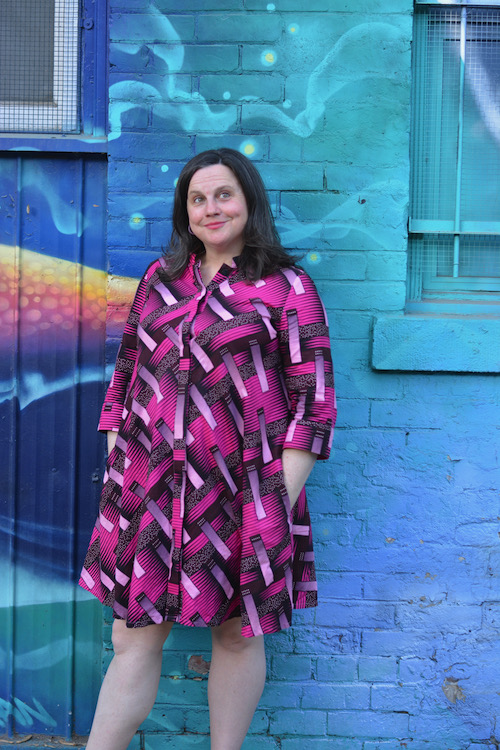
I’m just a woman…
standing in front of a mural…
…dreaming up ways to help you take your fiction W.I.P. to the next level!
I’ve got spaces available for manuscript evaluation this summer!
With decades of expert-reader experience (including as a book reviewer and anthology editor), along with everything I’ve learned (a lot!) as author of three novels, I know I can help you get your manuscript to where it needs to be.
Email me (kerryclare@gmail.com) if you’re interested! I charge $1000 CDN for a manuscript 100,000 words or less, and only accept projects where I know I can give you your money’s worth (ie for your novel about faeries, you may need to talk to someone else).
Looking forward to working with you!
June 8, 2022
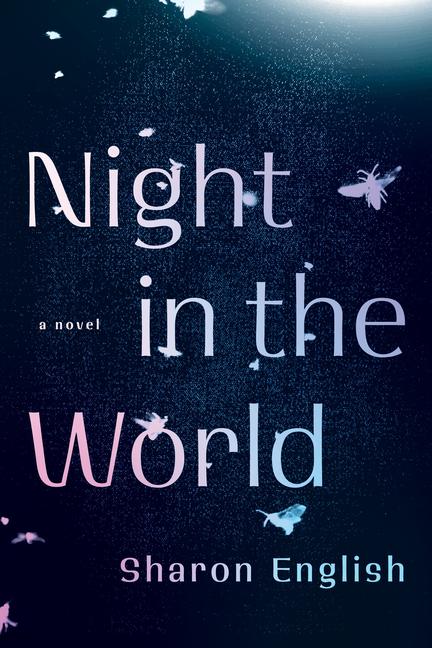
Night in the World, by Sharon English
“There’s so much to learn—and to unlearn. It’s urgent yet can’t be rushed. The world stands on the edge of losses so radical no one can fathom the consequences, while possibilities for reconnection and renewal wait to be discovered in the dark.”
I don’t want to read your climate change fiction, that novel you wrote about children afloat on a raft as the world is overwhelmed by sea. I don’t want to read about your desolate prairie wasteland, about drought, about despair, about the impossibility of a habitable future. And not because I don’t think that the climate crisis is pressing and real, but because I know that it is, and I know your post-apocalyptic fiction isn’t going to do anything to ameliorate that reality, or lessen my anxiety. Perhaps also because I don’t think I believe in apocalypse at all, but instead that in the midst of disaster, ordinary life goes on—babies are born, flowers grow, people do their best, and help one another. Reality is not so stark. The story, as always, is complicated.
And this is the kind of story that Sharon English—celebrated author of two acclaimed short story collections—has decided to tell in her debut novel Night in the World, a novel whose disaster setting feels a lot like now, and why shouldn’t it? Freak storms knock out power grids, water levels are rising, toxins are mucking up the waterways, and anyone who speaks out against the pervasiveness of, say, fluoride in drinking water is just dismissed as loony toons. Entire species are being eradicated as their habitats are destroyed in pursuit of profit and development, few people pushing back against the status quo, underlining its unsustainability.
Night in the World is the story of a pair of brothers, one a successful restaurant-owner who finds his middle years are drained of meaning, the other a former environmental journalist who’s thrown it all away for a job that seems less futile, helping to run a gym in East Toronto. And the third character at the centre this story is a late blooming grad student who lives in Peterborough, and is studying moth species around the shores of Rice Lake, and elsewhere, trying to find a way to do her research without damaging the fragile creatures she’s pursuing. Is a little harm excusable if it’s the name of a greater cause?
The novel traces the lines of Toronto’s waterways, the creeks and rivers underlying the modern city, stories that refuse to stay buried, as well as the ever-shifting shores of the Toronto Islands, formerly a peninsula until a storm cut them off from the city more than a 150 years ago, and Rice Lake, an important agricultural spot for Indigenous people…until the radical disruption of the Trent Severn Waterway, all of this conjuring moth’s more colourful cousins, and what can happen when one of them flaps its wings. The infinite ways in which every little thing is connected.
“This novel was over a decade in the making,” English writes in her acknowledgements, and I will admit that sometimes it reads as such, the story big and sprawling with many disparate parts that sometimes fit together awkwardly. In terms of plot, there’s nothing taut, and I wouldn’t say that it’s a great novel, but instead that it’s a very good and wholly worthwhile book, a book packed beautiful sentences and details so fascinating I kept reading facts aloud (the part about the cicadas!), bursting with research, and ideas, and questions, poetry and philosophy.