May 31, 2023
On Momfluence
I was still five years away from motherhood the first time I came under the spell of momfluence, but of course 2004 was a very different time. I was living in Japan then and a blogger I followed about expat life in Japan took part in some sort of exchange with another blogger who was an American mother of three who lived in Malawi where her partner ran educational programming, and I was hooked. On her blog, which was called “Lucky Beans,” she used to have a blog feature called “Corners of My Home” where she could give readers glimpses into her family’s private spaces, which were usually littered with stones and pebbles collected in her youngest child’s pockets. I think her approach was Montessori-based and I was impressed by her household’s toy organization, a bin for everything and everything in its bin. None of the toys in her home were plastic, I think for Montessori reasons, but indeed this also had a particular aesthetic, and I fell in love with it. “When I have a child,” was the thing I thought, “this is the kind of mother I want to be.”
And I kind of was! There is no twist to this story. The internet has always been useful to me for aspirational purposes, but not in an aspirational aspirational way, if that makes any sense. It was never about striving for something unattainable, but instead putting an idea in my mind of an approach to parenthood that would suit my circumstances. And my aesthetic—I still hate plastic toys. But it was also less about aesthetics than practicality—I live in a small apartment and have never had that much extra money. Having less stuff and organizing it neatly just made sense, and also for the planet, because I think of all the exer-saucers that are going to outlive us all.
It helped that she wasn’t trying to sell me anything (like I said, this was 2004; she didn’t even have an Etsy shop!) and even if she was, I wouldn’t have been able to buy it. And indeed there was definitely an element of performance to her online identity (my favourite was the time she went away for a couple of weeks, and her husband took over the blog, temporarily changed the name of “Lucky Beans” to “Tough Beans: Dad’s In Charge,” and showed us a much less idyllic view of their domestic life) and surely there is one too to the fact that I’m writing this at all, and letting you know that even when my children began to acquire My Little Ponys, they were secondhand.
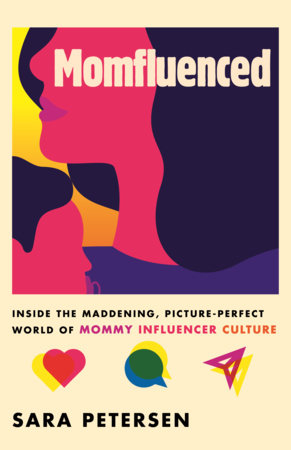
It’s complicated, which is the central thesis on Sara Peterson’s new book Momfluenced: Inside the Maddening, Picture-Perfect World of Mommy Influencer Culture. I have no idea how I would have been a parent before the internet starting throwing inspo my way, or how my own mom helped me figure out science projects, birthday party themes, or Halloween costumes without the help of Google (and to be fair, some of my Halloween costumes were pretty shitty). How performance is baked in to my experience of motherhood, as my blog documented my pregnancy, my bumpy intro to the mothering life, and then social media came along to help me track my children as they grew and grew and grew. Without online life, I would likely be less annoying in many ways, and I might even be less smug about my children’s wooden toys, and would they even have wooden toys at all if Lucky Beans hadn’t convinced me?
I think being an online creator, as opposed to a consumer, even as someone whose online platforms have a negligible following at best, has helped to keep my relationship to the mamasphere more positive and inspiring than soul-destroying; it’s broadened my world instead of depleting it. I wonder if it helped too that I didn’t join Instagram until 2016, by which time I’d found my feet as a parent, was not so lost in newbornland. And while I did recognize myself in some of Petersen’s profiles (I think we went apple picking twice and everybody hated it, and we don’t do that anymore; omg, I also just remembered the cookie bunting I tried to string at my daughter’s sixth birthday, which was definitely for the ‘gram, but I cut the holes wrong, and they fall fell together on a clump on the string before the whole thing fell on the floor) it has helped me that the ways I’ve been inspired by others’ online mothering has been alligned with my own inclinations anyway, that I’ve never been very interested in doing anything that I don’t want to do. (I don’t like crowds, for instance, so lining up for that iconic photo that everything else is doing is really not likely to happen.) I really do think that Instagram has inspired me to look for the spots of beauty in my life, and to try to cultivate more of that, which works to my benefit—it means there will be a bouquet of bright coloured tulips on table all summer long.
But I do wonder what the costs might be. What would my family photos look like if I hadn’t been influenced by other people’s poses? How would I be a different parent if I could be more focussed on the immediate, on the moment, rather than thinking about how it all might look from the outside, how best to capture the light. But see, would I even notice the light then? And I always notice the light. If a string of bunting hangs in the kitchen and no one is there to put it on instagram, does the bunting even bunting? (But it does! I see it every day! And oh, look at the light. Let’s take a photo. Let’s capture time for a moment, sunlight shining through the dregs of a jam jar like a Mary Pratt painting.)
May 30, 2023
Gleanings
- if you spend a lot of time imagining a person’s reaction to a present it’s probably a sign that the present is mostly about you, anyhow.
- And again and again I keep revelling in the reaction of people as I say, “I appreciate you.”
- If you’ve ever wondered what booksellers have in their beach bags, wonder no more!
- and though overall I am still disappointed in it as a revision of Dickens’s novel, as its own novel Demon Copperhead is, I think, actually pretty good.
- I want the names of everything. The bees in the first tomato flowers — Bombus vosnesenskii, the yellow-faced; the Swainson’s thrush I heard as I went out for my swim–whit, whit; the long roots of Rumex acetosella, sheep’s sorrel, I keep pulling from between the pavers in the greenhouse. The rough-skinned newt, the Pacific tree frog (sometimes the chorus frog, once Hyla regilla, now Pseudacris regilla, though nothing about the frog has changed), Rosa ‘Félicité Perpétue’ by the front door, where the tree frogs lie low in the damp earth.
- As my children and I stood at the intersection of Dupont and Davenport, it literally felt like it was raining petals. I resisted the urge to pull out my phone and video the whole wild scene. Some things are better experienced with the eyes.
- But the thing I ran into when my kids left me, once again, with a basket of overpriced strawberries on their last legs — fruit they’d asked me to buy but then mysteriously lost interest in eating when it was presented to them at breakfast — and I decided to instead turn strawberries into strawberry-ade, so to speak, was that every lemonade recipe I’ve already published contains steps I lacked inclination to do.
- But I am most intrigued by Radha’s question in the book, describe the scent of your mother.
- This, my friends, is a book that will pull back a curtain and show you something incomparably lovely, and then while you are gazing at it in awe, punch you in the stomach.
- Critique works when we’re playing together, when we like and admire each other’s unique gifts, when there is an equal exchange of energies.
- Although helmets have ruined that feeling in my hair, I felt the cool breeze on my face as I tooled around the quiet streets of Weston. There’s not much left of that farmgirl flying fearlessly over gravel. I’m a bit wobbly and weeks from feeling confident on roads with actual traffic but it felt terrific!
- It is a testimony to Donna Tartt’s brilliance as as a writer that when I was in the book I rarely thought “There is no reason for sane people to behave like this,” but later I would be mulling it over, or trying to describe it why I liked the book so much to Mark, and couldn’t string it together.
- The world is full of questions, but art doesn’t hand you the answers. It makes an offering.
- As ever, the only real secret to creativity, is to work, to be creative, to be obsessed, to look at art, to read. You never hear of any successful artist talk about their secret being to go to cocktail parties, or art shows or poetry readings. (Though those can all be lovely things).
- That’s the thing about wonders. They’re fleeting, ever changing. Nothing stays the same, especially me. But when I look, I can find one or two, or seven delights. Today’s wonders bring me joy or peace.
May 29, 2023
Books Round-Up
Some books I’ve been reading lately that you deserve to know about!
*
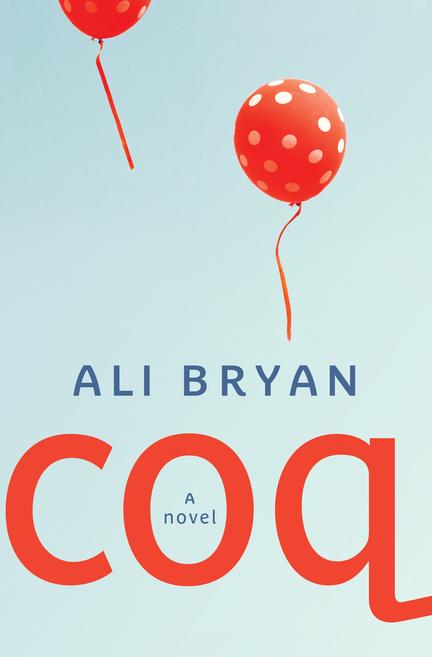
You can never have too much of a good thing, especially if the good thing in question is an extension of @alikbryan’s smart and hilarious debut novel ROOST. Its follow-up, COQ, is set a decade later as Claudia’s father has just remarried , now it’s her brother’s turn to have a marriage fall apart, Claudia’s ex husband is displaying peculiar symptoms of wanting to get back together, all of this against the backdrop of an epic family trip to Paris to remember Claudia’s late mother. COQ is a romp, deeply felt, a delight.
*
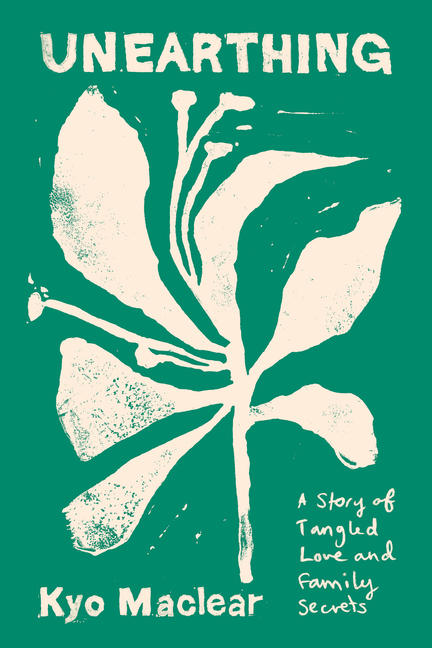
In her new memoir UNEARTHING, Kyo Maclear’s achinging personal experience—after the death of her father and a chance encounter with a DNA test, she discovers that her father was not her biological father after all, and any attempts to understand the true story of her origins are obscured by her complicated mother whose diagnosis of dementia only makes clarity harder to find; or does it?—turns out not only to be a fascinating mystery to unravel, but also a meditation on the possibilities of story and family itself, about what it means to relate to or be related to some people and not others. It’s also a story of seasons, and gardens, what can be found in the fog, and the importance of leaving room in your list for strange and unexpected things to happen. It’s so good.
*
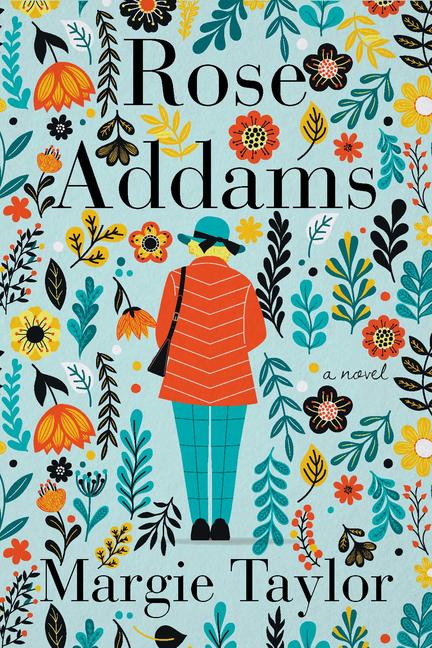
I loved this book, a novel that was everything it’s beautiful cover had led me to suppose it might be. A novel that author Margie Taylor wrote with a specific audience in mind, women over sixty who are imagining their lives are set, children are grown, marriage established, when along comes a series of new seismic shifts that change everything. For the eponymous Rose, it all begins with her husband’s abrupt announcement that he’s retired from university teaching, and then her daughter moves home, and then Rose invites a charismatic young man into the family fold who’s nothing like what she thought he was, and suddenly Rose Addams’ comfortable life is turned upside down. A novel about family and friendship and the limits of what a wife and mother can control, ROSE ADDAMS was smart and funny, a delight to encounter, and reminiscent of Carol Shields’ fiction.
*
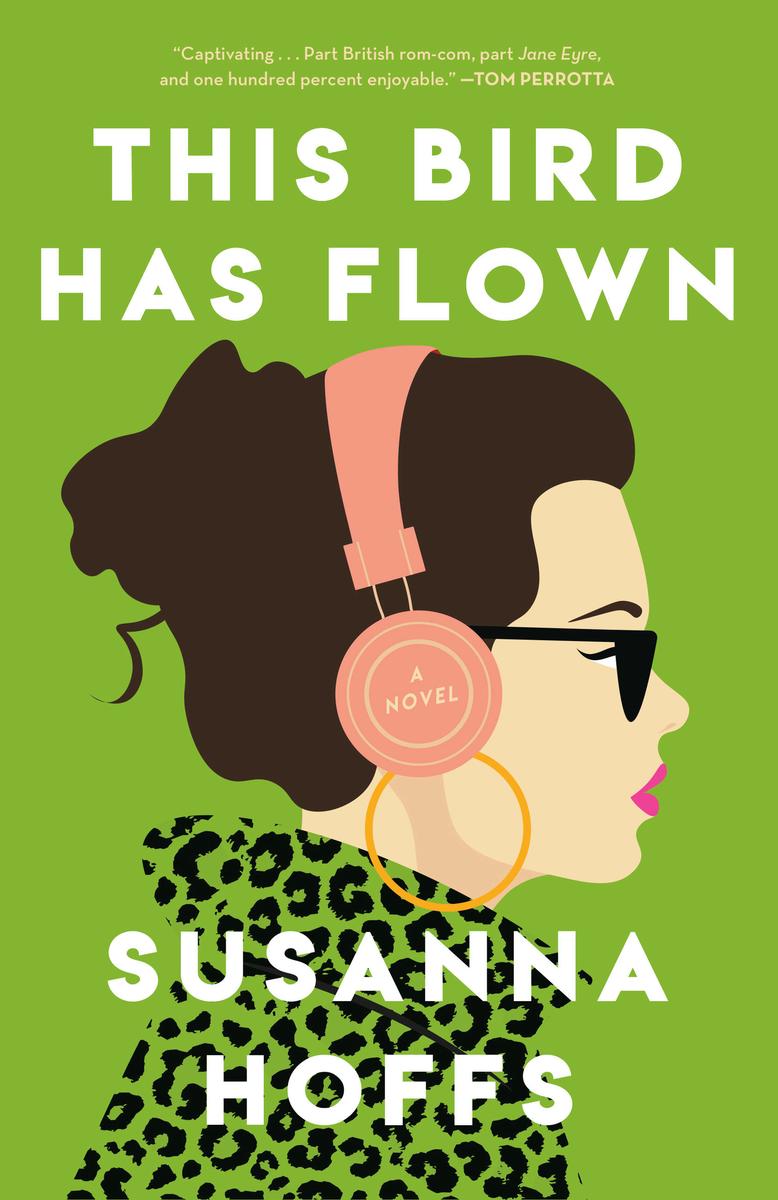
This Bird Has Flown, by Susanna Hoffs
Susanna Hoffs wrote a novel…and I love it? Which shouldn’t be so surprising, because Susanna Hoffs also wrote “Eternal Frame,” which is a work of art that’s moved me more times than most works of art I can think of. But you know what? I’ve been disappointed by fiction by ’80s superstars before, so I went into this novel carefully, cautiously. The story of a one-hit wonder 33 year-old-old singer whose failure to launch is getting her down…when she is seated next to an impossibly attractive Oxford English Professor on a flight to London, and sparks fly (and then some!). If you’ve got a thing (and I sure do!) for fiction with a lot of swearing and nearly as much masturbation, then this book is for you. It was funny, fresh, and surprising, managing to blend rom-com and Gothic tropes (JANE EYRE! REBECCA!) in bizarre and splendid ways. What smart, smart fun.
*
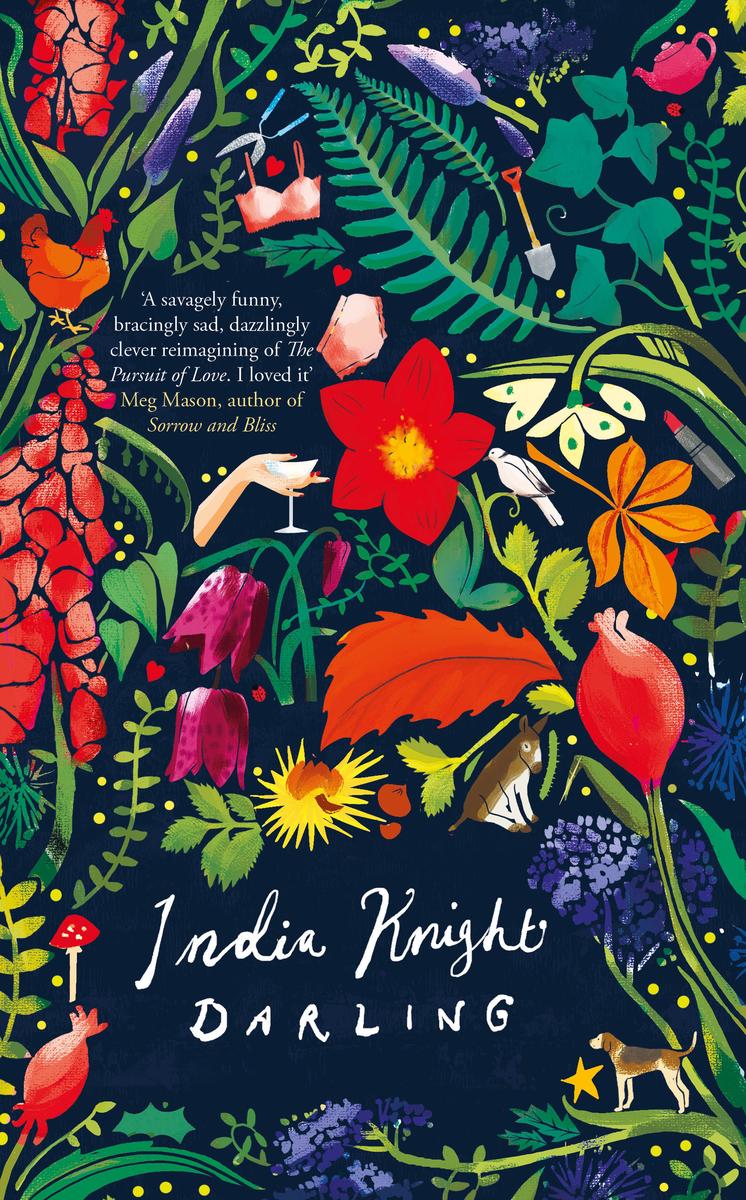
At first I wasn’t really sure I NEEDED to read an updated version of THE PURSUIT OF LOVE, by Nancy Mitford, but it turns out that India Knight’s modern day spin is very funny, perfectly delightful. As good as that cover.
*
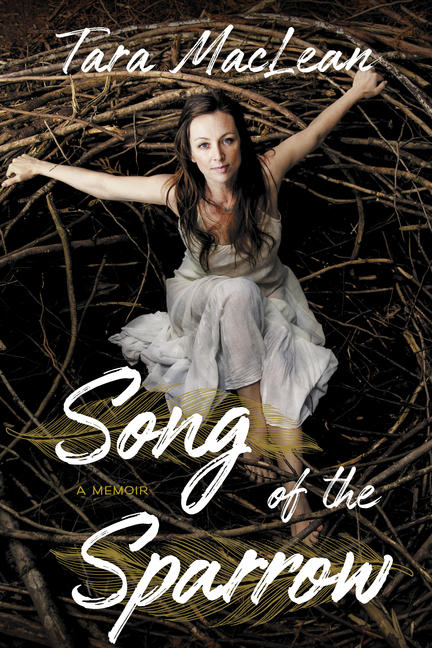
Song of the Sparrow, by Tara MacLean
I remember Tara Maclean’s “If I Fall” playing on the radio when I was 20 and full of angst, and I remember writing the lyric “It looks like a good place here/ so I think I’ll stay for a while” in the margins of my Norton Anthology while thinking about boys who I wished would love me. (And in my mind, that song on the radio would always be followed by “Love Song,” by Sky. Oh, how music is a time machine.)
I first heard about her new memoir, SONG OF THE SPARROW, from my friend @marissastapley who was blown away by MacLean’s story of her unconventional childhood on Prince Edward Island, born to practising Wiccans who’d become Evangelical Christians who filled her world with meaning and magic and music, but who also left her vulnerable to abuse and neglect. A devastating low point of her peripatetic childhood was when MacLean and her siblings were nearly lost in a house fire that made national headlines.
In a story that recalls the essays in Sarah Polley’s acclaimed memoir RUN TOWARD THE DANGER, Tara MacLean bravely faces down the darkest corners of her history and shows how trauma doesn’t have to be the end of a story. With exceptional grace, generosity, wisdom and faith in her own power, MacLean shows the possibilities of going beyond mere survival and creating a rich and vibrant life of one’s own.
Her stories in 1990s’ music success are also really wonderful to read, filled with familiar names, and perhaps the best kind of namedropping, because each one includes an anecdote or detail about what that person taught MacLean and just how generous or exceptional they are. (Special shout out to Tom Cochrane and his wife Kathy who invited MacLean to give birth in their house!).
A beautiful memoir about what it means to stay steady on ever-shifting ground and even rise above it to fly.
May 26, 2023
Just You Wait…
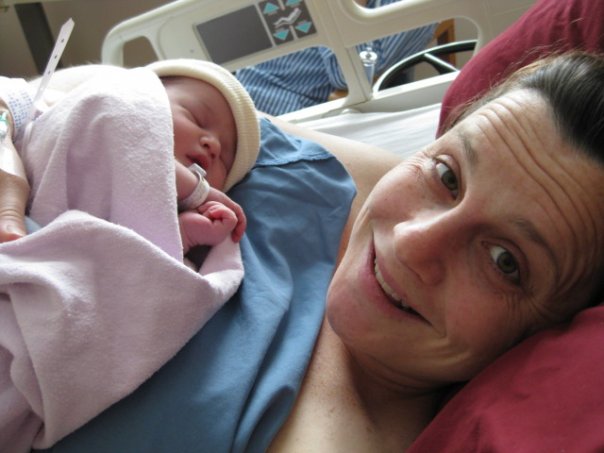
14 years ago this morning, my daughter was born, but I want to back up about 120 minutes before that when I was being prepped for a cesarean and a nurse was putting an IV into my arm. It was only us two in the room, and she asked me why I was having a scheduled c-section. I explained that our baby was transverse, lying on her side across the womb, instead of in the head-down position that would facilitate actually being born, and was absolutely unbudgeable.
And I still can’t believe that the next part really happened, with me so completely vulnerable and on the cusp of a life-changing experience, and in my mind that nurse was chain smoking as she said this, though that part really isn’t true. And what she told me was, “Kids—if they don’t screw you one way, they’ll find another.”
I said to her, “It’s all worth it though, right?”
And I absolutely swear that she answered, “No.”
*
I thought about that nurse a lot in the days and nights (especially the nights) to follow, as my life was swept up in a hurricane that would last for weeks and weeks. Only in the last couple of years, I’ve realized that I was suffering from postpartum depression through all that (and I was actually the last person on the planet to figure this out; when I confessed my realization to my husband, he rolled his eyes and said, “Um, yeah, we know.”).
The nurse with her IV, a malevolent force, somebody who haunted me, like the bad fairy who turns up at Sleeping Beauty’s christening with her own curse via a very sharp needle. (It was Emily Urquhart’s Ordinary Wonder Tales that made me think of her in this way—such a wonderful book!).
*
“Just you wait” was a line I heard a lot in those terrible early unsteady, ever-shifting early days of motherhood.
In another story that I really can’t believe actually happened (memory is mutable, especially when one is a storyteller; who knows?) I was pushing my stroller down the street when a car slowed down and somebody screamed out the window, “Just wait ’til they’re a teenager!”
*
Just wait…
Those words were always ominous, and I’d also be told to savour my child’s babyhood, a time during which I was often miserable, and usually unfulfilled. It was not the best of times. Caring for babies is demanding, unceasing, exhausting, debilitating, isolating, and generally unsupported by society at large, and worst of all, babies don’t talk.
But, thankfully, babies grow up.
Just wait…
*
“Just wait,” I tell parents now, those who are overwhelmed by the labour of it all, deep in the thick of it. “Because those days are going to go by so fast (hooray!) and one day you’re going to find yourself the parent of a 14-year-old, truly one of the most interesting, hilarious people you’ve ever met in your life. And she’s going to teach you things, and make you think, and she’s going to be taller than you when she has her shoes on and you don’t, so that when she puts her arms around you and you’re enveloped in her hug, you’re going to think, ‘Who is this amazing person and how did we get here?’
She’s going to love reading, and learning, and have very specific ideas about what channel the car radio should be tuned to, and she’ll have strong feelings about politics and JK Rowling (thumbs down, which is fine, because you never managed to get past Harry Potter Book Three), and have her bookshelves organized by genre (romance and murder mystery, obviously, as if there are other genres), and be obsessed with make up, and want to do your eyeliner, and have the best hair you’ve ever seen, and be heading to high school in the fall, and who has consented to have you play the “host” role at her Bridgerton-themed mystery birthday party tonight, which means you must not be too mortifying (yet) and you haven’t even promised not to speak out of turn (but you won’t, because this is a super important gig, the job of a lifetime, and you really want to get it right.)
Just you wait…
May 25, 2023
Snow Road Station, by Elizabeth Hay
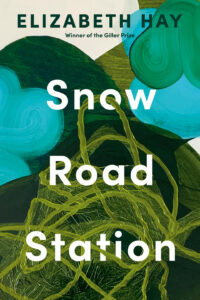
An essential part of my writing process is getting to the point where I know my characters well enough that that every bit of dialogue becomes essential to my story, no single line that’s incidental or something that anybody else would say to any other person on the planet. This is especially true with fictional people who’ve known each other for decades: there is no small talk, every sentence loaded with meaning, with freight. In Elizabeth Hay’s new novel SNOW ROAD STATION this can be disorienting for a reader, like walking into a room in the middle of a conversation, but this is also what fiction should be, I think.
I really liked this book, though its effect was more subtle than powerful, which is fine because it’s a slim read and I have time to pay attention.
I really liked this book, a story of late middle age and long friendship (“Theirs was a childhood friendship that had lasted, enduring long spells when it existed out of sight, but then there it was again, like strawberries in season.”) but it was not until its final paragraph, which hits with such a force, nothing subtle about it, that I began to really understand the project, what a complicated fascinating book this quiet story really is.
May 18, 2023
On Mess
A blog post is always self-referential, even when it isn’t. The nature of blogging is that the blogger is always writing about herself.
(I think one could argue that this is true with any literary form, but with blogging it’s essential.)
*
I never read Dooce, though I got very into reading blogs at the same time her blog blew up, and I’ve been writing mine as long as she was. But she was a few years older than me, and I was in a different place during those few years where she was writing raw from the trenches of motherhood, a place where her words wouldn’t have registered. And then by the time I had children of my own (and yes, to quote her memoir, it sucked and I cried), she had become slick and branded, and so I never got to see myself in her story, as so many other women did.
*
*
I once read an entire book about the history of blogging that only mentioned a woman once, and it was a co-founder of Blogger who runs out of a meeting in tears.
*
Heather Armstrong made me uncomfortable for all kinds of reasons. You’d think that as someone who has also tried to tell the truth about motherhood, embraced online platforms for self-expression, struggled with mental health, and supports women telling their stories that I would have more compassion and empathy for her experience, but I struggle with this. I struggle with messy people. I like to imagine there are rules to be followed and that things generally work out for people who do, which is my own problem. I note how coverage of Armstrong over the years has tried to fit her into a narrative with a tidy beginning, middle and end, but she kept escaping these confines, kept being too much. I think of how we praise people for daring to tell their truths but then they keep going and we’re all, “Oh, no, not that truth. I don’t like that one.”
*
Armstrong’s life and death have a lot to say about the limits of personal storytelling. Did it prolong her life, or might she have been healthier without it? Without a platform to perform on, would she have been less narcissistic? But aren’t people with such tendencies always going to find a platform somewhere anyway, online or otherwise? Did it turn her into a character, a caricature?
I think a lot about my fervent believe that personal storytelling was going to save the world, that blogging (and mommy blogs especially) were a radical act. But the world is decidedly not a kinder, friendlier or safer place for women, for mothers, than it was 20 years ago when blogs were new.
*
I wasn’t surprised when I heard that Heather Armstrong died. I’d checked out her social media from time to time, and it was clear that she was struggling. She kept posing for pictures on her porch looking terribly thin, and it bugged me. I’m not saying this was justified, but this is how it was. That this person who was famous for the hugeness of her truth telling, for her audacity and nerve, was literally skin and bones, withering down to nothing, and posing for these pictures to which people responded by telling her, OMG, you look amazing.
*
But when I say “I wasn’t surprised when I heard that Heather Armstrong died,” I’m doing it again, putting stock in those rules. That this is what happens, logical outcomes. She had it coming. That narrative is inevitable. I’m trying to control the mess, apply my own kind of sense to it.
*
“But when we paraded through the catcalls of men and when we chained ourselves to lampposts to try to get our equality– dear child, we didn’t foresee those female writers,” said Dorothy Parker.
*
Maybe this is the problem of making any one person an emblem—of womanhood, of motherhood—when it’s hard enough being one single human. Of how women are expected to faultless, never misstep. Can a blogger ever really stand for anything except her self?
*
Part of the tension too is that we see ourselves in these women, our real and most authentic selves, but then they also show us our worst selves too, even when we don’t pick up on it directly. And then they also reflect their own selves, the parts of them that are nothing like us at all, and the effect of all of this is uncanny, the familiar rendered strange. How we want everything to be relatable and the gap becomes a chasm when it isn’t.
*
I want to admire people for daring to unlikable. Part of that deal, of course, however, is that I’m not obligated to like them.
*
I personally have such a hard time with the notion that a person can be a mess and that this is just okay. That a person can fail to follow the rules and still be worthy of love and compassion, even if there isn’t a fix. And I want to fix, I want to fix. For me compassion is the desire to fix, and I’d like to train my mind to get to a more generous place, a place for grace.
May 17, 2023
Our Wives Under the Sea, by Julia Armfield
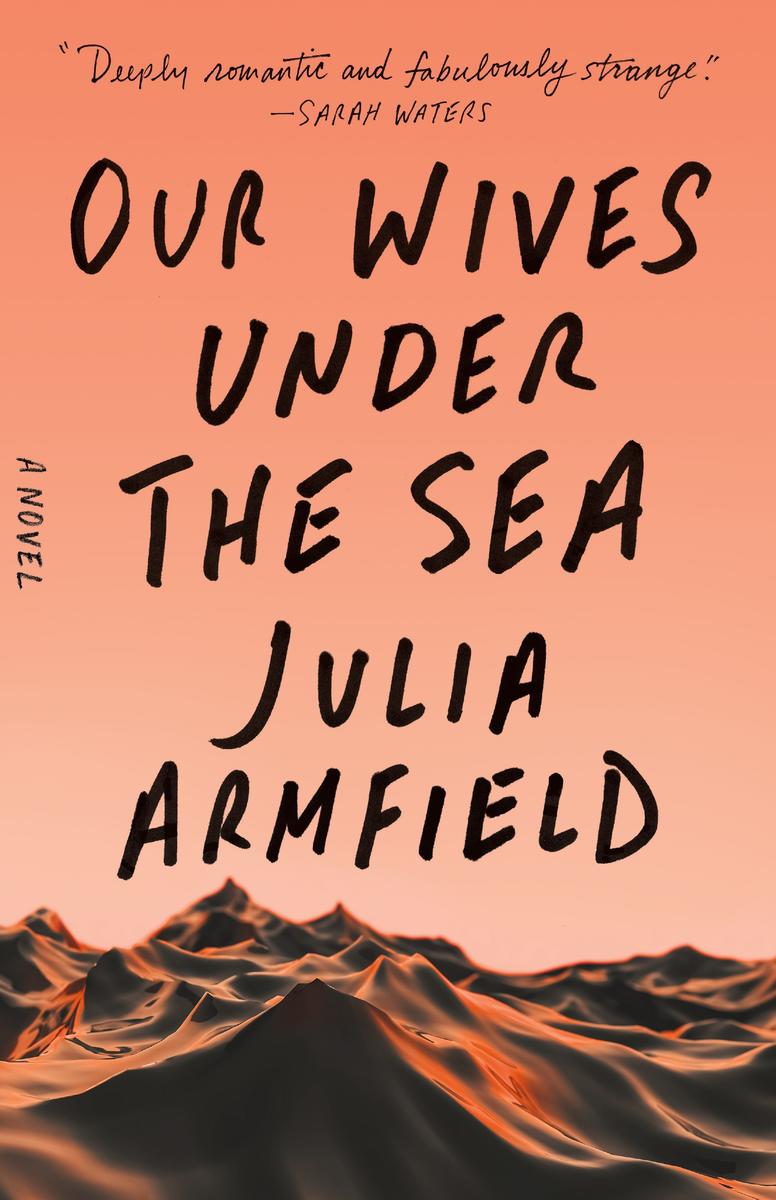
I am infinitely grateful to whoever it was who inspired me to put this on hold at the library. OUR WIVES UNDER THE SEA, by Julia Armfield, was incredible, blending literary elements with horror to create a spellbinding tale of love and loss. The point of view moves between Miri and her wife, Leah, a marine biologist whose routine research trip goes wrong when their submarine sinks and is lost to contact. Six months later, Leah comes home again, but something is very wrong and Miri is unable to reach her, or get answers about what happened in the deep, a story Leah tells piece by piece in her part of the narrative. This is a novel infatuated with the wonders of the world, oceans and love among them. Creepy and compelling at one, a strange inversion of THE SHAPE OF WATER, and definitely one for readers who loved Melissa Barbeau’s THE LUMINOUS SEA, or anyone into JAWS. What a story!
May 16, 2023
Gleanings
- Tranchese believes that the media’s frequent and unbalanced usage of alleged/allegedly since 2012 has subtly changed the way it’s interpreted.
- May is the month for memories and small moments, for topping up your joy tank.
- That’s a lot of energy to expend and baggage to unpack while I am just trying to eat my goddamned lunch in the one hour I have to myself in the workday.
- Fellowship Point is like a Barbara Taylor Bradford novel if it were written by Elizabeth Strout.
- Hers was a voice that made us want to do what she was doing.
- As I survey the landscape of my life, I can see that my fascination with symbols has deep roots. Tarot. Sigils. Witchcraft. Tattoos. Literary analysis and Coen Brothers movies.
- After such a long stretch working at my kitchen table, I’d forgotten what a commute can bring about, a shift in mindset, an unfurling of ideas, a transition.
- Up there, where someone has painted SCRIBE? That’s where I met the editors who published my first story in 1992.
- I don’t understand flight, I don’t know anything about velocity or lift or speed … but I do know there a is full moon on Friday and that it’s magical to look up and revel in the moon’s shining beauty while soaring high above the clouds, and that beauty is a worthwhile lens through which to view life.
- I think a lot about my boat of calm, and how I’ve had my moments where I was not calm. But I’ve also had a couple of deeply profound signs / interactions of late that tell me this might be one of the most important things I can do. And maybe a lot of appearing calm is acting? But because it’s a practice for me, a long one, I feel like my calm-acting has been worth something, too.
- The forest, it turns out, is an excellent teacher.
May 15, 2023
Places Like These, by Lauren Carter
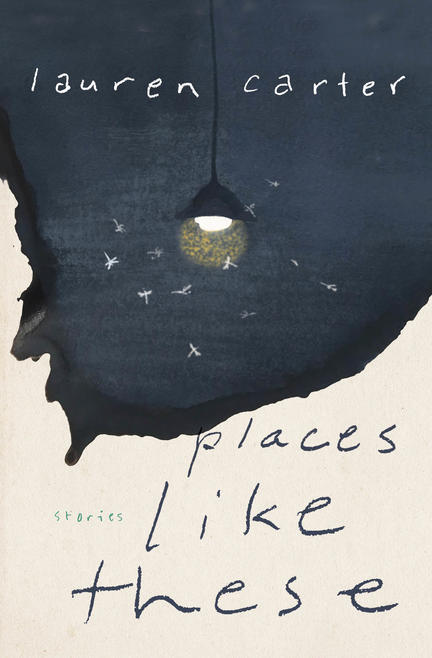
“I never though something like that would happen in a place like this,” is the thing people always say in local newscasts in the aftermath of tragedy, as though there were actually places in the world that immune to life itself, to its terrible, tragic unfairness, and inexplicability (and isn’t this part of the same reason people travel, to escape all that?) but, as Lauren Carter shows in her fantastic new collection Places Like This, life happens everywhere, on rural highways, far flung suburbs, northern towns, and abandoned homes in the middle of nowhere. In the New York state spiritualist community famous for its mediums, a stuccoed church in Argentina, in the shadows of San Francisco’s Tenderloin neighbourhood (“Carol did not tell her how she’d envisioned a slab of raw beef, glaring a wet red before purpling like an aged bruise. The expensive cut, one her mother would have rarely purchased at the downtown butcher shop with the creaking wood floor, the dusty cans of corn niblets and cherry pie filling.” ).
These are stories of sadness and longing, of wanting but not getting, but this—of course—is also life itself, and the collection is less bleak than it sounds, because these are stories of characters building a home and a finding a world within its realities, of finding love, spots of light, connection and meaning. Even in “places like these,” rich stories are possible, such as that of the couple whose dog is saved as the narrator’s struggling stepbrother begins to slip away; a widow keeps seeing her late husband; a woman glimpses the depths of her partner’s sadness when she goes home to meet his family; the couple together but emotionally worlds apart as they grieve a pregnancy loss, which is also the loss of so much love and so many dreams. I especially loved the three final stories in the collection, linked narratives about a group of women who’ve been friends since high school whose own ties are fraught, complicated, and irrevocable.
These are tough stories, rugged and hard, but there are also gorgeous moments of connection, of illumination—I keep thinking of a description of a drink in a character’s hand, “a bowl of light.” There are stories that shine.
May 9, 2023
Reading Good
I’ve been trying to solve the mystery of why my reading life has been especially rich and fruitful in 2023. Like, rich and fruitful beyond my own usual very high standards of what constitutes a rich and fruitful reading life. Partly it’s quantitative—I’m currently reading my 75th book of the year, which is the most books I’ve ever read by this time of year since I started keeping track in 2018. And this is partly because I got my first iPhone in November, which charges from my laptop downstairs, which means that my phone is far from bed and almost never the first thing I reach for in the morning. On many days, I read instead, and those half-hours definitely add up to something. But part of the quantity is qualitative too, because it’s the release of wonderful absorbing novels that have kept me going, big releases from Eleanor Catton and Rebecca Makkai that more than lived up to the hype, and books I only picked up because of all the hype (Tomorrow and Tomorrow and Tomorrow, and Lessons in Chemistry) and I was so glad I did. But it’s not all been hype—I’ve loved rereading Elizabeth Strout’s back catalogue on the coattails of Lucy Barton, and picking up a 1990 short story collection by Joan Clark, and continuing to discover William Maxwell. Part of it is that I’ve found my own personal influencers, readers like Lindsay Hobbes and Lauren LeBlanc whose recommendations tend to satisfy. I’ve also been using the library more than I have in years, partly to keep up with the influencers I just mentioned without going bankrupt, taking months to finally get a book into my hands…but then I have to read it right away once I do because there’s more holds behind me and it can’t be renewed (this is the situation with Aleksandar Hemon’s The World and All That It Holds, which I’m reading right now upon the recommendation of my friend Julia). I don’t feel overwhelmed by all that I still need to read, or all I’m never going to read, or all the books that other people are reading, because I feel confident in my own personal reading trajectory (and glad too that it’s not just made up of all the things that I’m being told to read, or that everybody else is reading so I’ve got to do it too.) I think part of the richness and fruitfulness is also that I, for the first time in a really, really long time—like maybe even a decade?—am feeling relatively steady on the ever-shifting ground of reality, and I’m not even afraid to say that for fear that reality is going to come now and knock me over, tempting fate. I’m feeling good, and so I’m reading good, which is a sentence I’m going to leave right there, never mind the grammatical atrocities being committed. But then, as I always wonder, could it be instead that I’m reading good so I’m feeling good? (Certainly, for me, a poor reading streak and feeling terribly have often coincided.) Which comes first? How does one ever know, or begin to untangle it all? This is one of those existential questions that, it’s likely, I will never understand.






