July 4, 2026
Summer Reading: Monkey Beach
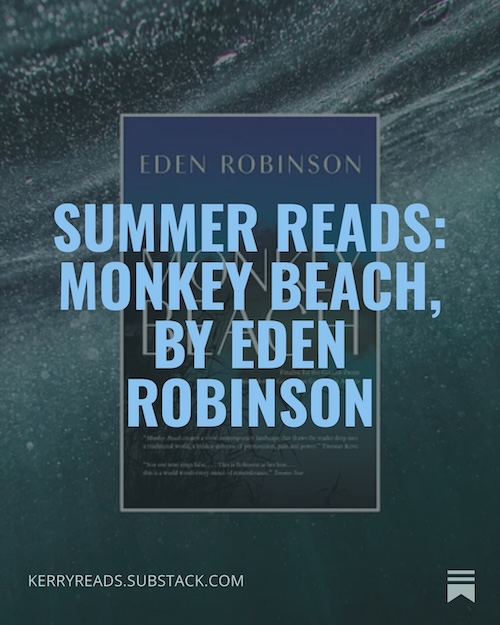
“The day promised to be a scorcher, but out on the ocean with the spray cooling my face and the wind drying it away, the heat was bearable. I wished summer would never end. I wished I could do this all year and never have to go back to school. I wished I could pick berries and go fishing with Ma-ma-oo and spend all my days wandering.” —Monkey Beach
For my first Summer Reading essay of the season—during a week in which all days were scorchers—I wrote about rereading Monkey Beach—such a fantastic novel. Paid subscribers can read it here!
July 2, 2026
The Seas, by Samantha Hunt
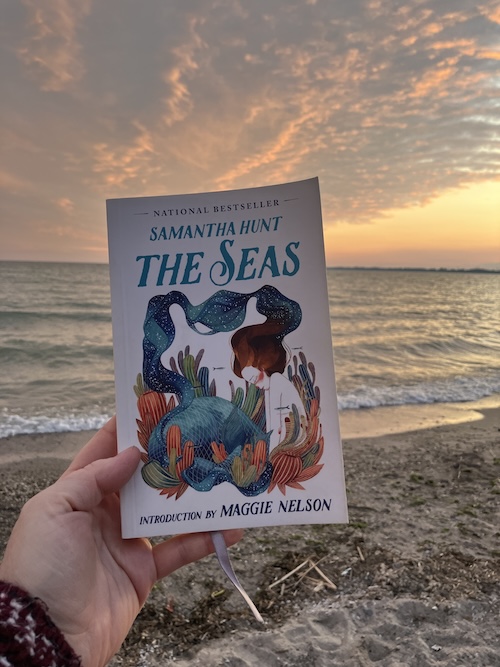
I’ve been waiting to read The Seas, by Samantha Hunt, ever since Mikka Jacobsen championed it on my podcast as book about a woman wildly wanting, longing. And feeling as I do about water and seas, albeit inland ones, I was drawn to this story of a woman who is sure she’s a mermaid, although her grasp on reality is dubious—or is it? A fairy tale, a fable, I read this short novel with Dar Williams’ song “The Ocean” in my head, a perfect complement, a song I used to listen to in the throes of unrequited love, which is where Hunt’s narrator finds herself too, infatuated with an Iraq war veteran who is only a little less too old for her now that she’s finally come of age. She lives in a seaside town so far north that all the highways run south, a place whose main claim to fame is its rates of alcoholism, and she and her mother are waiting for her father to return from the sea that took him years ago. Weird, wild and spellbinding, I really liked it.
July 2, 2026
Post Pub Aftermath
In February and March, I wrote a lot about trying to release a book in a way that didn’t wreck me, about doing a better job of staying sane and balanced through the whole experience, and for the most part, I think, I pulled it off. Which I was able to do partly because I felt terrifically boosted—my publisher was pushing my novel, they wanted the book to succeed as much as I did, there was a team of talented people working on the sales and marketing effort. I had fun, and got to have some fantastic adventures and events, living out author dreams (signing copies on display in New York City! Never mind that there were only two bookstores stocking my book in New York City! Because there were two bookstores stocking my book in New York City! And I was there for an actual book event. This is the the stuff they put on vision boards, so the caveats don’t count.)
The ridiculous thing about me is that every time I’ve released a book, I’ve been sure it will appear on the bestseller list. And I’m grateful to have been bestowed with a sense of underlying confidence, one that means I am often disappointed, but it’s not the worst way to move around in the world. And I will admit that as I was planning for my book to be a bestseller, I was grappling with how that would factor with my project of having this book launch be different. Like, OBVIOUSLY, if my book is a massive success, I’m not going to be able to take much credit for getting through the experience in a positive way, you know? (What a quandary!) So in a way (silver linings!) it was useful to not be a massive success. (Phew. Dodged a bullet there!) I don’t follow sales numbers avidly, but the book did well enough upon release. It was gratifying to see it appear slip onto the Canadian indie bestseller list. Sale have fallen off since then, which is to expected, and I think I’ve done a better job than in the past of riding this wave in a sensible way, though not sensible enough to have given up on my unrealistic expectations.
The last while has been a little tough though, as the novel fades from readers’ attention, but I was expecting that. The thing about lighter books is that they’re meant to be more ephemeral, for the moment instead of for all time, to borrow a notion from Carol Shields’ novel Unless, about a writer whose work was on the lighter side. As with the bestseller lists, I have high hopes for posterity (who is to say the Nobel Prize might not be calling!), but I keep all this tempered, which is easy when I remember how lucky I’ve been.
But still, the aftermath of publication is a weird time. In the New York “Book Gossip” newsletter, I could relate when Daniel Lavery explains, “As with anything, the reality comes up against the ideal. In the immediate aftermath of a book, there’s a growling unfitness to be around other people. Why are you not all putting me up on your shoulders? I’m aware that when something good happens, I will often slot quickly into rage if I’m not careful about maintaining a more useful mind-set. I’m aware that I will become a bad person for a few weeks. I will become grasping and desperate and vindictive and I will attempt to cover all of that up with an appearance of uncomplicated good cheer and ease. I know that it will pass.”
The one thing I was not remotely prepared for a bout of post-publication anxiety/shame. I went through it when my first novel came out, back when I didn’t understand my anxiety at all (which must have been really hard!), and I wasn’t prepared for it to happen again. I thought maybe this stage was a phase I’d aged out of, but I think I only skipped it with my second and third books by never having my novels receive much attention at all and drowning in the shame of that. This time, having made it through the publication period with my spirits in tact, I thought I’d get off scot-free, but no!
My anxiety has been running high on a general level anyway, and it’s definitely connected to my hormones, but a couple of weeks ago, it jumped into overdrive, and everything just felt terrible. I felt like everyone has made at me, that I’d disappointed everyone, that I’d messed up somehow. It relates, I think, to what Lavery’s question about feeling perpetually lifted up. It wasn’t happening now—why not? It was all on me, and I felt so terribly exposed, vulnerable, walking around like a human bruise, ugly and purple. Embarrassing,
I knew it would pass, but also it was awful and unexpected, both familiar and strange. And a reminder that completely smooth roads are a lot to ask of anything, but like with the darn bestseller list, I really do keep my expectations high. It’s accepting the reality of otherwise that is the trick, but I like to think I’m getting better at that somewhat.
June 29, 2026
Tilt, by Emma Pattee
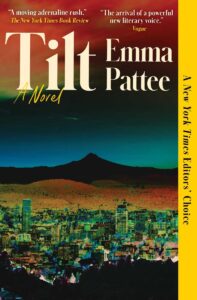
I don’t ask for much from a camping trip—just perfect weather, and an absolute banger of a read selected from a bookshop en-route to the campground. This time it was Beach Reads Bookshop in perfectly delightful Port Dover, where Robyn’s pick—Tilt, by Emma Pattee—totally made my weekend.
Set in Portland, Oregon, it’s the totally gripping story of Annie, nine months pregnant and shopping for a crib in Ikea—she’s left it too late, as usual—when an earthquake hits, when THE earthquake hits, the big one that’s long been expected but which no one wants to think about. And the novel is about Annie’s journey through the wreckage of the city as she tries to find her husband, the journey alternating with chapters that tell the story of how Annie got here, her dreams, disappointments and compromises, a life she’d never expected when she was young and fresh and being promised that she could accomplish anything she set her clever mind to.
There was a point around the campfire when I was reading Tilt and I was almost in pieces, and my husband said to our eldest, “If this is hitting her this hard, the book must REALLY be brutal.” Because both of them have had the experience of me foisting books upon them by exclaiming, “Read this. It’s GREAT!” and they come back having finished the book and are totally destroyed, asking, “Why did you do this to me?”
Which brings me to the line in Tilt book where Annie notes that there are two kinds of people: the kind who make lists of all the ways a baby might die, and everybody else. (Annie also notes she and her husband never got around to making an earthquake preparedness kit, which was relatable. I don’t like to ground my anxiety in the physical world, preferring to keep it squarely in my head, which makes me feel safer somehow.) I’m definitely among the former group of people, although I don’t think this is the kind of book that will necessarily destroy you—although what do I know? I’m still sorry to anyone who was upset after I told them to read A Heart that Works, by Rob Delaney. I thought it was gorgeous and funny. Sad, but also true and gorgeous and funny.
What I don’t tend to gravitate toward are books that anyone might compare to Cormac McCarthy’s The Road, however, and Tilt might be the one exception to that, mostly because Lydia Kiesling called it, “The Road meets Nightbitch meets What to Expect When You’re Expecting,” and how can you not be intrigued by that kind of mash-up?
I loved this book. I loved Annie’s voice, her compassion, its limits, her humour, her honesty. I love the way the narrative gripped me and didn’t let go. How the novel’s broad scope manages to contain such a massive spectrum of the human experience—the awesomeness of being alive, the terrible and terrific risk of falling in love and wanting, the devastation of realizing just how fragile all this, the very foundations on which we construct our measly existences, and the way we’d do so again and again. What a gift and what a burden it is to be human. How hard we can fight to survive.
June 25, 2026
On Witness and Respair, by Jesmyn Ward
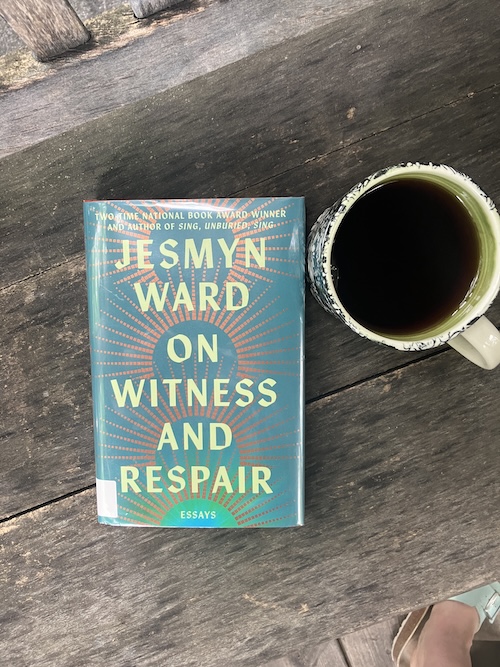
“Come take a ride with me, them Southern boys said, them bluesmen made new. For sure, we answered, we coming, and for a song, a poem, a line, this country and history and the universe rearranged itself, and we were outside of time and space in a different place, crafted and built, paint stroke by poem and prose line by song lyric by music note by shutter click, in another dimension, where we were safe and seen and heard, where our hearts beat wildly and surely with the rhythm, with the rush of the water, with our ancestors at the oars of the boat, their own vessel, cutting through the waters of time, navigating the universes as they would.”
In her latest book, a collection of essays and articles written and published over the last 20 years, Jesmyn Ward resists the simplicity of a single story—about Mississippi, America, Black culture and more—and manages to hold it all, the tragedy and the ecstasy, the devastation and the building, the sadness and the joy, the cruelty and injustice and the overwhelming love.
June 23, 2026
The Glorious Mess
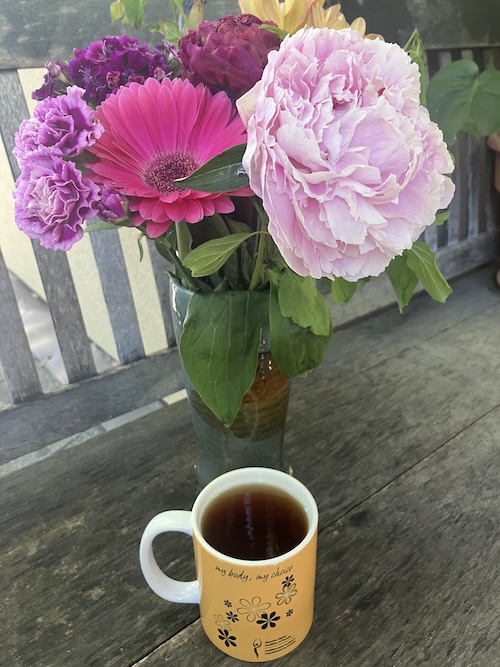
Tomorrow is my birthday. It also marks four years since the US Supreme Court overturned Roe vs. Wade, which meant women across America lost their federal right to abortion and reproductive healthcare. Further, it marks 24 years since the birthday when I was pregnant, but did not know it yet, a circumstance that could have derailed my life, but didn’t, because I was able to access the care I wanted and needed, and I was so naive at the time that it never even occurred to me not to take this access for granted, never mind the generations of activists who’d had to fight to make abortion legal in Canada. I had no idea what forces they’d had to push against, but now I do, because I’m a person in the world in 2026, who has seen what happened to abortion rights in America, and those forces today are as loud as they’ve ever been, in America and elsewhere.
At the same time that I know what the stakes are, however, I’ve also stopped yelling about my abortion on the internet all the time…mainly because I’ve learned that yelling on the internet is not very productive. And I’ve learned too that maybe we need to be more careful with our most tender stories, that women aren’t served by using our hearts as troll bait, and that it’s not actually as simple as me explaining what happened to me so that people understand. (I really thought it would be.) I got bored too of saying the same things over and over, repetition draining my words of meaning, turning me into a puppet, a prop, rather than the human creature that I am.
That I’m quieter about my abortion these days doesn’t mean the experience was any less important to me though, that it wasn’t one of the most defining experiences of my life so far, that it wasn’t the foundation for the beautiful existence I’ve built in the years since then, for the experience of motherhood when the time was right and I was ready. As I wrote in an essay in Today’s Parent almost ten years ago, “Abortion is part of the glorious mess, right there with the Instagram teacups, the sunshine on our kitchen table, the My Little Pony toys scattered on the floor.”
My kids have grown out of My Little Pony, but the rest is just the same.
June 22, 2026
Every Lie I Told, by Hilary Davidson
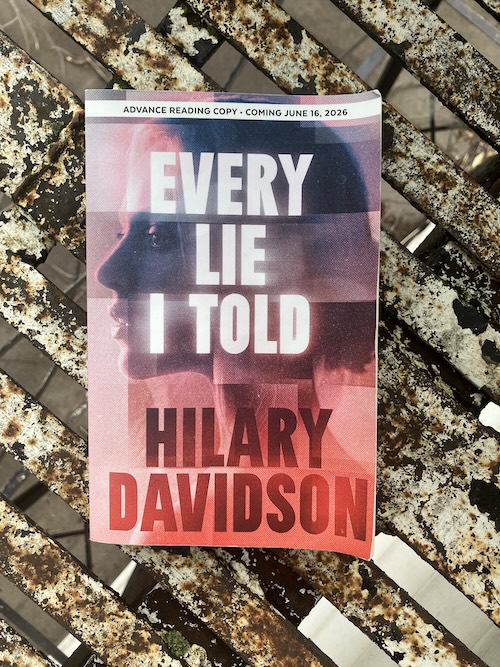
I’m looking forward to helping New York-based Canadian author Hilary Davidson welcome her latest novel into the world this Thursday June 25 at Ben McNally Books here in Toronto at 5pm. I’ll have the pleasure of interviewing Hilary about this latest twisty (and twisted!) thriller, a deep dive into the PR industry and all its depravities. The story begins with PR star Jackie Swift receiving a call from her troubled sister late one night—she’s at Jackie’s former boss’s house and requires Naloxone. But when Jackie arrives at the house, her sister is nowhere to be found, and her boss—a man who’s caused a lot of harm but to whom Jackie owes deliverance from her hardscrabble background—is dead. Who killed him? Where is Jackie’s sister? For once in her professional life, Jackie is not in control of the narrative at all, and needs to confront ruthless choices she’s made in her own past if she has any hope of saving her sister, and herself. This one is an absolutely wild ride.
June 19, 2026
Like a River Divides the Earth, by Dora Dueck
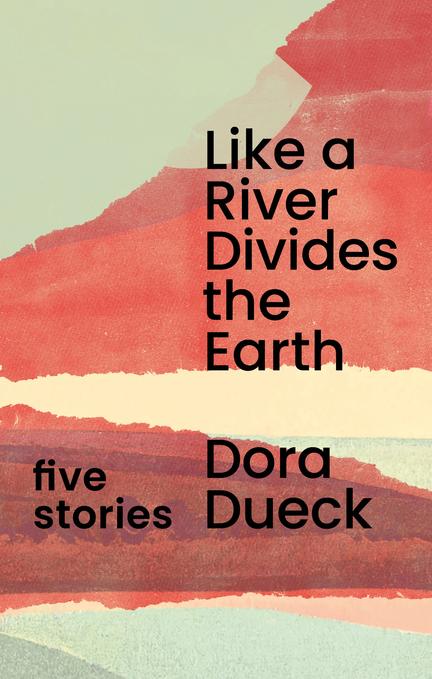
I was intending just to read the first page when I picked up Like a River Divides the Earth last week, looking for a taste of what expect from this book, one of my most anticipated reads of the season, but then I started reading—”I was fourteen before I saw my father’s face. The ruins, I mean, the face behind the mask. Holes instead of a nose. Dark holes in a pink crater of pulled-tight skin running from cheekbone to cheekbone, though the tip had been spared and stood there by itself, pale and hideous, as if too stubborn or stupid to quit when abandoned, Nostrils like tiny arches. And where his left eye should have been, he had a crater too.”—and that was it, really, for the next 56 pages, the first story, “Mask,” which unfolded like a novel, rich and detailed, taking place over decades and continents. Just like the four stories that follow in the collection, it was absolutely exquisite.
Long short stories are not always my jam, but when the writing, plotting and characterization are as rich as Dueck’s, the reading is easy, even when the subject matter is heavy and hard. The stories are various, which means each one feels like a wonderful dive into its own universe, stories with wide scopes, most of them hearkening to and from a pivotal moment in which a lifetime is riven in two, as per the collection’s title.
In “Mask,” it was that moment when the daughter accidentally sees her WW1 veteran father bare-faced, his gruesome injuries on display, and how she never tells her mother what she’s seen, not understanding the dynamics of her parents’ complicated relationship but knowing that saying nothing was safer. In “Blue,” it’s a somewhat (maybe?) innocuous gesture within a Golden Girls’ style house-sharing relationship between four older women that makes the drowning death of one of them even harder to fathom; in “Her Own Self,” a bereaved mother’s feeble act of vengeance haunts her for decades to come; “The Ragatta” is a curiously framed story from the point of view of a grief counsellor whose one visit from a woman lingers in the mind; and finally the title story, one of the two in this collection about Mennonite history (both are set among communities hoping to escape Soviet Russia in 1929/1930), this one about a man betrayed by a love, by his neighbours, and forced to survive the unimaginable who is rankled by notions of history as an abstract distant thing.
Getting lost inside these stories is a transcendent experience. Dora Dueck is a marvel.
June 18, 2026
The Art of Looking Back, and Women Among Monuments
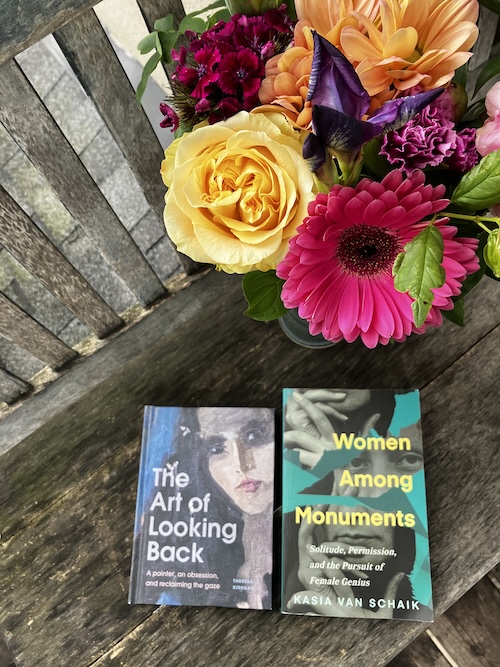
“Sometimes I felt his gaze on me as I rode my bike to work, sat at my desk thinking my way into poems, and later, much later, drank coffee by our woodstove in a beautiful silk robe given to me by a wonderful woman, a robe he never saw. I felt his gaze pinning me to paper like a bright butterfly. For years afterwards, a gaze followed me, whatever I did. “A coy black-haired girl wearing a vermilion red gown, on a green mauve ground with a pale summer green light from a window” (May 22, 1982). I was never her, never had a vermilion gown in pale summer light, and I never knew I could refuse the gaze. Until he was dead and I was too old.” —Theresa Kishkan
Never have there been two better suited literary companions than The Art of Looking Back: A Painter, an Obsession, and Reclaiming the Gaze, by Theresa Kishkan, and Kasia Van Schaik’s Women Among Monuments: Solitude, Permission, and the Pursuit of Female Genius, two works of nonfiction almost uncannily in conversation. Kishkan’s memoir is a deep study of her experience as a painter’s subject many years ago, when she was on the cusp of her whole life, and may or may not have had the agency she thought she did. One of the portraits now hangs on the landing in her home, and in this book, Kishkan is in conversation with her younger self, who’d never known that the gaze could be refused. Though perhaps her first notion of this began with a trip to Greece she writes about, to the Acropolis, and the Karyatids, statues of five women that for Kishkan became “profound emblems of strength.”
She writes, “Their bodies were foundational structural, they were not the objects of anyone’s gaze, or if they were or had been, it was immaterial after 2,500 years. Their own eyes were far-seeing. Their clothing loosely fit their strong bodies, one leg taking the burden of the building’s weight, that leg bent forward to demonstrate their strength. From behind I could see the intricate braiding of their long hair, thick and bold, serving to enforce the strength of their necks as they supported the burden of the entablature.”
In Women Among Monuments, Van Schaik questions why such monumental women are so rare, and why when we do encounter them, they’re as symbols of virtues rather than representative of actual historical people, object instead of subject. Her memoir is a record of a variety of experiences, among them Van Schaik as a young womn, devoting herself to studying the work of great artists, replicating their artworks. “As I sketched…I wondered what effect replicating all these paintings by men had on my brain. How was it shaping the way in which I women? I hadn’t learned about the male gaze yet, though I had experiences it, both as an obhject of it, but also inwardly, within my own mechanics of looking… All around me I could sense an ambient desire and disgust for women’s bodies. At this point, it was more a feeling of unease and the study of perspective in art seemed to be compounding this self-interrogation. But even without the vocabulary, I was starting to question where I, or anyone like me, fitted in the history of looking.”
And both of these books are a continuation of such questioning, meditative, inspiring, generative, generous and powerful.