August 17, 2015
A Really Good Brown Girl, by Marilyn Dumont
 I hadn’t budgeted for books at The Stop Farmers’ Market at Artscape Wychwood Barns a few weeks back, but it turned out that Pedlar Press and Brick Books were vendors (and I met Kate Cayley, whose How You Were Born I loved so much!) so I couldn’t help but pick up something. And I am so glad that the something I got turned out to be the deluxe redesign of Marilyn Dumont’s Gerald Lampert-winning debut collection, A Really Good Brown Girl. A book I read in days, which is rare for me and poetry, but I was captivated by the narrative, the language, the brute force of these poems, as well as their sense of humour, their cheek. “Squaw Poems,” about growing up Metis on the prairies, a household surrounded by “The White Judges” who waited to pounce. And never really went away. But then—
“I am in a university classroom, an English professor corrects my spoken/ English in front of the class. I say, “really good.” He say, “You mean/ really well, don’t you?” I glare at him and say emphatically, “No I/ mean really good.”
This line giving the book its title, a double as so many of the poems show the Metis girl who hears, “You are not good enough, not good enough, obviously not good enough/ The chorus is never loud or conspicuous,/ just there.” And also connecting Dumont not just to her literal foremothers (the women raising Blue Ribbon children with the White Judges looming ) but her literary foremothers too—in her Afterword she writes of the African-American women writers who inspired her, and other Indigenous writers from all around the world. She writes of another really good brown girl in “Helen Betty Osborne”:
Betty, if I set out to write this poem about you/ it might turn out instead/to be about me.
Another poem, “Letter to Sir John A. MacDonald”:
Dear John: I’m still here and halfbreed,/ after all these years/ you’re dead, funny thing… / because you know as well as I/ that we were railroaded/ by some steel tracks that didn’t last/ and some settlers who would settle/ and it’s funny we’re still here and callin’ ourselves halfbreed.
The poems are their own context, but in this new edition they are complemented by Dumont’s Afterword, as well as with an introduction by Lee Maracle:
“No other book so exonerates us, elevates us and at the same time indicts Canada in language so eloquent it almost hurts to hear it.”
I’m so glad I finally read it.
August 16, 2015
This is Happy, by Camilla Gibb
 While it is certainly true, as Joan Didion wrote, that we tell ourselves stories in order to live, it is possible that by now the phrase itself has become so hackneyed as to be a cliche, as have become gushing publisher’s copy comparing heartbreaking memoirs to Didion’s A Year of Magical Thinking. But while the good people at Doubleday Canada have resisted to the temptation to slap Camilla Gibb’s memoir, This Is Happy, with the Magical Thinking comparison, I think this the rare case in which the comparison really does apply—Gibb’s memoir is a no-holds-barred dispatch about devastating heartbreak from the frontiers of stark grief, a gut-wrenching story told from the perspective of a most cool and discerning “I”. It’s the “telling ourselves stories in order to live” in practice, Gibb, like Didion, pasting the pieces of her shattered life together, the art that emerges from the exercise.
For anyone familiar with Gibb’s fiction, much the memoir will be familiar too, so much of the former rich with autobiographical details, her first two novels in particular. It is clear that Gibb has been telling herself stories in order to live since her success with her first book in 1999, Mouthing the Words, which was also the story of a young girl from a broken home with a troubled father and plenty of trauma, mental illness, and the disillusionment of the Oxford experience. In This is Happy, Gibb goes back to her own beginnings to paint a picture of her early struggles, trying to pinpoint the moment where it all went wrong.
The happy ending was supposed to be Gibb’s marriage, which lasted ten years, to a woman who is called “Anna” in the book. A period of calm, of happiness. She does not slip into depression, she writes, she finds continued literary success. And then in her late thirties, she is surprised by a yearning to have a baby. After a painful miscarriage (though I don’t know there is any other kind), Gibb finds herself pregnant again, still tentatively so—just eight weeks along. When Anna reveals that their relationship is over, that she has fallen out of love with her. Sending Gibb into torrents of grief, which is extra-troubling because of the new life she carries inside her: this was supposed to be a beginning. Instead it’s more of the same, and Gibb fears her child growing up with the same hardships, emotional deprivations, and sense of displacement that plagued her throughout her own childhood. The damage is being done already, she feels, knowing how a fetus is meant to be affected by a mother’s stress. And she is powerless to stop it.
Except that she isn’t, which is the miracle of narrative. That it moves forward, even if one is only crawling in agony. The final third of the book is the story of Gibb’s pregnancy and experience of new motherhood, and it’s not clear for a long time that this will be a story of triumph. For most of this period, Gibb is wracked with despair, receiving special care after the baby arrives—she realizes later—not because her midwife has concerns about lactation, but because she is crying all the time. Gibb resisting a diagnosis of depression in a way I find interesting, because felt similarly when I first became a mother: that this is not depression, it just that life is terrible. Except that for Gibb, returning to antidepressants brings with it some relief. As does the support system that she has built around her as she’s put her life back together again.
In the new home that she has made for herself and her daughter, Gibb is surrounded by her long-estranged bother, an addict struggling to overcome his demons; her nanny, Tita, an immigrant from the Philippines who is waiting to be able to bring her husband to Canada to be with her; as well as friends, but not the ones she might have expected. Her brother builds her a back deck and does home renovations, she and Tita embark upon the complicated dance of an employer and employee who become much more than that. When her daughter is just a few weeks old, Gibb takes her across the country on tour for her novel, The Beauty of Humanity movement, revealing little of her pain in media interviews, though to be fair, most new mothers only ever really understand the mess they were in in retrospect anyway.
It is not a convenient trajectory: this unconventional family arrangement is not the ending either, but a moment in time. Gibb’s brother eventually leaves for Vancouver, his period of sobriety ending; Tita’s husband arrives, and they’re going to need space to become a family of their own. Gibb’s daughter gets older, a little person in her own right. Every resolution brings with it another kind of challenge, but eventually—with the help of her psychoanalyst, her unique support network, and a lot of what she’s learned about herself in the stories she’s told herself in order to live and then interrogated in order to see deeper—she finds some kind of footing:
“This is the circle that could never quite be complete… It is a story with a different ending. A story without an ending at all./ And this, I know, is happy.”
The amazing but necessary understatement of the final statement. Happiness being only an ordinary thing. And it is, and yet one must undergo a certain amount of experience before understanding that there is nothing ordinary about it—Joan Didion wrote about that in Blue Nights.
While Gibb’s own story is harrowing and awful, it emerges not as the most remarkable element of the memoir, which is instead her narrative voice, the “I” that is Didionesque. Not in the rhythms and cadence, for Gibb’s prose is excellent and entirely her own, but in the distance, the coolness, and restraint. The reader is not to imagine herself in Gibb’s shoes on that fateful day when everything changed, when she’d just purchased a freezer full of expensive fish, anticipating dinner parties and occasions unrolling into the future like a ribbon. She gives a sense of what it felt like, but that sense is not the point: the point is what does it mean? What does one make out of this kind of devastation?
And in Gibb’s case, with This is Happy, the answer is a beautiful, powerful book.
August 11, 2015
Sistering by Jennifer Quist
 It would have saved me a whole lot of trouble if Sistering, by Jennifer Quist, had had a different cover. Something pink and quirky, a decorative font, I’m thinking a pair of legs sticking out of an open grave, feet in sparkly slippers. Instead of the sombre cover the book has now, which had me imagining I was reading something deep and serious. Although the actual cover did appeal to me too—stair steps like siblings, one after the other. This was a book about five sisters, the copy told me, which put me in mind of the early ’90s melodrama Sisters starring Sela Ward and (for a season) an early George Clooney, which I was totally obsessed with when I was 12. But Sistering was more Mary Hartman than Sisters, a morbid comedy. A romp, like the cover copy says, even though there is nothing rompish about the cover image as it stands.
Which meant that I was confused at the beginning of the book by the strangeness of the characters, by their unnatural behaviour, and how nobody ever remarked on it. Although the story was compelling, and the writing was good, but I kept getting caught on certain points—how Suzanne is obsessed with her mother-in-law, for one. An affliction that’s happened to no one that I’ve ever known, but her sisters take it for granted. And then things with Suzanne and her mother-in-law take a particularly weird turn when the mother-in-law dies in an accident in her home, and Suzanne responds in a way that is, um, untraditional to say the least. At this point I was still not fully cognizant of the constructs of Quist’s literary universe—confused by the cover—and so the absurdity of the situation just seemed bizarre. Until I read further (compelling story, good writing, remember?) and realized that absurdity was the very point.
Quist is no stranger to odd books about death. Her first novel, Love Letters of the Angels of Death, was completely unique and well received, though with a twist at the end that I could not bring myself to bear for personal reasons, and so I was unable to fully appreciate it. This second book has a lighter touch, but with the same morbid preoccupations—one sister runs a funeral home, another mimes her own mother-in-law’s suicide, and another owns a shop creating cemetery monuments. Both books daring to present death as part of every day life, worth writing a romp about even. And in the end, the morbidness comes to takes a back seat to the sisters themselves, who were never meant to be ordinary or “relatable” in the first place—although they’re all familiar in many ways. Sometimes scarily so.
Over the course of the novel, Suzanne loses her mother-in-law, two of the other sisters find theirs are resurrected, babies are born, marriages are broken, so is an engagement, and there is a whole lot of gossip in the meantime under the guise of concern. That the sisters and their husbands are more types than fully realized characters is part of the exercise, as to exist in a large family is to be typecast—how else is one suppose to carve out her place? The types themselves setting up the potential for absurdity as characters behave accordingly. When nobody is just ordinary, neither is the plot.
I liked this book—though it took me some time to be sure about this, because for nearly the first half, I was mostly just confused. But once I figured it out—it’s supposed to be funny—it really was. Weird and original, a dark comedy indeed—not necessarily miles away from Sela Ward and Sisters either. This one that will appeal in particular to readers who loved Trevor Cole’s Practical Jean, and to anyone who ever had a pack of sisters.
July 19, 2015
On Go Set a Watchman
 Good news, if you are one who has constructed your identity along the lines of, “Everything I need to know I learned from Atticus Finch.” Because, contrary to what you may have heard, his wisdom features in Go Set a Watchman, Harper Lee’s new old book, her second book that is actually her first book and which is perhaps not a book at all but merely a draft of one. Lines like, “Hypocrites have just as much right to live in this world as anybody.” And also, “You must see things as they are, as well as what they should be.” Go Set a Watchman is not an incredible novel, though I liked reading it well enough, but it’s a remarkable artifact. (Confession: I may not have bothered reading it were the cover not so wonderful, so terrifically vintage.) I feel okay about reading it as rumours of Harper Lee’s lucidity seem fairly convincing, and I love when book news is so huge—on Tuesday, Watchman was on the six o’clock news. Book sales are good in general too, and so. Scout Finch grows up to be Midge from Mad Men—it’s kind of a amazing. And this Atticus, if he is in fact the same Atticus we know from To Kill a Mockingbird (and keep in mind that he is not Gregory Peck in any case) is indeed a racist, though I wasn’t as disturbed by his views as some readers have been because a) I live in the world and I am well aware that plenty of people think this way (and closer to home, his views about the backwardness of Black communities are identical to those I’ve heard about First Nations communities in my own country) and b) I know he is a fictional character. And it baffles me how readers seem to be so bothered by having the fictionalness of fictional creations pointed out to them (in this book, in incongruities between Attitcuses, or in Kate Atkinson’s God in Ruins at her book’s surprising twist at the end). To me, the fictionalness of a fiction is its most compelling characteristic. I love when a fictional universe is so absolutely rendered that I can see right to its edges. And so I am more interested in two Attitcuses and the two novels than I am betrayed or dismayed by them or their incongruences. Atticus Finch was never my hero. I have read the book more times than I’ve seen the movie, and for me, it’s Scout. Not to undermine the Atticus devotees or to suggest that Mockingbird isn’t a ridiculously good novel, because it is. I’ve read it at least once in the last decade and couldn’t believe how good it was. But then I didn’t reread it last week, which is key. Last week I was rereading a pretty unsatisfactory novel published recently (and it wasn’t even a first draft) so it was this to which I compared Watchman when I read it, and not To Kill a Mockingbird. It is possible that to be as good as or better than To Kill a Mockingbird is an unfair thing to demand of any book, no matter who wrote it.
- Read Hadley Freeman’s “With critics like these, it’s no wonder Harper Lee stayed silent”
- Lawrence Hill’s review in the Globe is wonderful. “But it is a pity that Go Set a Watchman was not published in the 1950s, when it would have shaken up readers, provoked even more calls for book bans …and accelerated public discussions of women’s sexual freedom.”
- And Heather Birrell’s review too, on what’s going on in Watchman and why Mockingbird still resonates
July 15, 2015
For Better or for Worse: The Comic Art of Lynn Johnston
 It’s a familiar story: an isolated mother begins sharing stories of her family life, expressing her frustrations with domestic life and the challenges of motherhood. Building a platform out of adversity—she’d been a single mom for a while, had a fraught relationship with her own mother. Largely self-taught, not necessarily ambitious. Hard-working, yes, but credits her success to doors opening by happenstance. Her platform growing to huge audiences, but she’s still not properly respected. She’s telling stories about kids and laundry, after all. But she keeps on telling those stories for nearly three decades, her success bringing with it fame but also certain challenges: what are the ethics of writing about one’s children, one’s family? When you’ve made a career out of telling their stories but their lives are becoming separate from yours, what kids of stories do you tell instead? And how to deal with trolls, online critics out for attack who seem to forget that you’re actually a human being?
It’s a career trajectory not so far removed from that of many popular bloggers, although Lynn Johnston’s began in the 1970s and her “platform” was the comic, “For Better or For Worse”, syndicated daily in newspapers across North America. And when I saw recently that she’d listed a book Erma Bombeck as one of her most influential reads, the whole thing made sense to me. That Johnston, like Bombeck, was one of blogging’s foremothers, and in particular with the immediacy of her strip, domestic life unfolding in real time.
Lynn Johnston’s life and career are outlined in the new book, For Better or For Worse: The Comic Art of Lynn Johnston, a book released to coincide with a retrospective of Johnston’s work on exhibit now at the Art Gallery of Sudbury until November. The book includes full colour and black and white comics from the course of Johnston’s career, as well as examples of her early work, a discussion of her influences, and notes of the creative work she’s been up to since her strip ended in 2008. It’s fascinating reading, a behind-the-scenes look at her work that’s still so familiar to me—the Pattersons, their friends and neighbours. Which, like the best blogs, is not ephemeral at all.

July 12, 2015
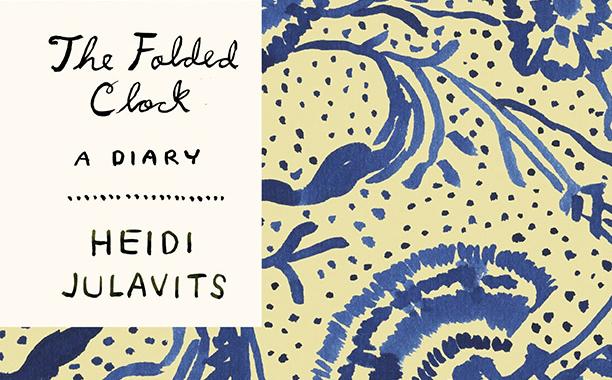
The Folded Clock: A Diary by Heidi Julavits
 On Monday evening, I became overwhelmed by an irrational compulsion to go out and purchase a copy of Heidi Julavits’ new book, The Folded Clock: A Diary. Like I really needed another book, but there was something about this one—I’d been reading about it at edge of evening over the past month or so—and I not only had a car (I was visiting my parents in Peterborough where the chain bookstore is open late) but I had no one sensible to talk me out of an out-of-the-way jaunt to the bookstore past the children’s bedtime, so we went and I am so glad we did. It would be a shame if my totally irrational compulsion purchase turned to be disappointing, but it was amazing, mind-blowing. I read it once and then went through it again in my hammock yesterday, making notes, trying to figure the whole thing out. It doesn’t hurt that the cover designer is Leanne Shapton, though the only bad thing about that is that the cover got damaged in my bag and now I am a little bit devastated.
- Read Eula Biss’s New York Times review of The Folded Clock
- Read Heidi Julavits’ tumblr, The Keeping Society: Objects and Ephemera from The Folded Clock
The Folded Clock is a diary, though it’s a most peculiar diary. Chronology is jettisoned in favour of an arrangement of time that is and isn’t wholly random. A year’s worth of entries, each one beginning with, “Today I…” The book’s inspiration, Julavits writes, coming from an experience she had revisiting the diaries of her young, writing that she’d always imagined was her foundation as a writer, and finding instead of a foundation that, “The actual diaries revealed me to possess the mind of a paranoid tax auditor.” Time itself, she notes, had changed, becoming sweeping, a simple day insubstantial. She’d also recently borne a serious illness, one that challenged her perceptions of time: “It was no longer linear; it did not cut through my day like a road. I did not see time ahead of me. I experienced time on top of me.”
 Time is a preoccupation of the entries in The Folded Clock, as evidenced by the title. Time itself not linear—many of the “Today I…” entries are actually about events decades-old, inspired by objects or experiences in the present day—and there is the issue of the construction of the book itself, which was deeply revised and shaped over another period of time divorced from the immediacy of the diary. Parenthood is another preoccupation connected to time—the impossibly tiny span of a childhood, which spins out of our control, and then conversely (but not really), the unbearable vastness of time in a child’s company: “how can this day not mostly involve my waiting for it to be over?”
The diary’s various settings become familiar—the writer’s apartment in New York City, the community in Maine where Julavits, her husband and their children spend their summers, the German villa where they’re living while her husband is on a fellowship, and various artist retreats to which she escapes throughout the year. There is nothing haphazard in the entries’ arrangement, so that we’re introduced to a concept or thing or incident and will be referenced later, our knowledge taken for granted. Less obviously, the entries seem contextualized from a future vantage point so that each one takes its reader somewhere—a mini-essay every one. There is cohesion to the entire project, though the patterns are difficult to discern. Which is the point, Julavits points out, in one of the several clues she offers throughout the book pertaining to its curious construction:
“What’s on the page appears to have busted out of my head and traveled down my arms and through my fingers and my keyboard and coalesced on the screen. But it didn’t happen like that; it never happens like that.”
The Folded Clock is a book about the puzzles and mysteries of an ordinary comfortable life. For me, one of those mysteries is the way that a book—an object wholly apart from my existence, until I bought it—can appear to be reading my mind, stealing my life. (I have this experience also when I am reading Rebecca Solnit.) Like Julavits’ whole chapter about Wasted: The Preppie Murder, by Linda Wolfe, and being three fucks away from Robert Chambers—not that I have ever been such a thing, but I have a thing about that book. Or about abortions as women’s work, about how the boyfriends are always informed but they’re never there—abortions are something that happen between friends. About the internet and desire, about conscious attempts to resist the google-ization of everything—which is interesting because there is at first glance something so bloggish about Julavits’ approach, and yet the construction of her entries is so counter to blogging’s immediacy. The Folded Clock is a bit of a throwback, a project decidedly analogue.
It works because the writing is wonderful: lines like, “Worrying about originality is like worrying about the best place to hang your wall phone.” Anecdotes that start with, “Once I stole the name of a fetus.” How could you not want to read the rest? And while her prose style isn’t Didion’s, Julavits has that writer’s ability to lay down a thread and appear to be following it, while she is in fact blazing an altogether different trail. Connections, symbioses, and coincidence—all interwoven, meaningful and nothing by the by. And always, unfailingly, interesting. The question of whether male writers ever consider female writers a threat. The nature of relationships. Some of these entries made me uncomfortable, sometimes because I couldn’t identify, and other times because I could. And any diary worth its salt should garner such a response.
I loved this weird wonderful beautiful book, a book that was also easy to read in little bits—important when I was caring for my children without a break last week. A book I knew I needed before I needed it, and there is something otherworldly about the whole thing. Or perhaps I mean the opposite, that the book—with its preoccupation with objects and thingness and remarkable beauty as a thing itself—is eerily all too wordly—but then its not, it’s so rarefied, no matter how much it seems to have busted out of a head, out of the earth.
But still, it’s the kind of object one wants to go around clutching. Last week I wrote down directions to my friend’s house on a yellow post-it note that I promptly lost, mysteriously—which is another of Julavits’ preoccupations, the way that an object can dematerialize. When I found the post-it note again yesterday between the end pages and the back cover, I was not at all surprised. And I left it there. I will discover it again the next time I read the book, and of course I will remember.
July 5, 2015
I Take You, by Eliza Kennedy
 A few years ago, I wrote a blog post about the trouble with comic heroines, their forever blunders, self-deprecation and “one-downmanship”, and about how female characters are not often permitted access to what novelist Kate Christensen refers “an august tradition of hard-drinking, self-destructive, hilarious anti-heroes” ala Kingsley Amis’s Lucky Jim. Christensen was talking here about the protagonist of her first novel, In the Drink, a character who ended up being pegged as a not-quite-Bridget-Jones (without the sweetness)—it was the late ’90s after all. But nearly 20 years later, readers still don’t quite know what to do with a female counterpart to a character like Amis’s Lucky Jim—a character who messes up, isn’t necessarily loveable, and who doesn’t care if you don’t like it. A character like Lily Wilder, the hard-drinking, crazy-for-sex heroine of Eliza Kennedy’s debut novel, I Take You.
But I loved her. I did. Within the first few pages it is clear that Lily drinks too much, swears religiously, and has no compunction about casual sex as long as the sex is excellent, and it was all so refreshing. That she was a bit silly, but not stupid. That she was empowered, interesting, and nobody’s victim. Which is not to say that she hasn’t herself in quite a pickle as the novel begins: Lily is engaged to Mr. Wonderful—it’s been a whirlwind—and she’s pretty sure she even loves him, but she still can’t kick her habit of picking up men in bars and in elevators, and, well, everywhere. Lily wants to marry Will, because he’s a smart choice and Lily is wise enough to be in the habit of making these. But she doesn’t seem ready to become domesticated—and now the wedding is just days away.
The thing about Lily Wilder is that she’s happy. In fact, she insists upon her happiness, her value, which is rare with comic heroines. She is not a problem to be solved, and she doesn’t want to be fixed. She just wants to have it both ways—but how?
The story is set in Key West, Lily’s hometown, where she runs into a childhood friend with whom she has a complicated past. Her father, a dashing Lothario, is in town for the wedding, and so are all his ex-wives, plus Lily’s friends, and Will’s too—she accidentally sleeps with one of the groomsmen. So things aren’t at all straightforward even beyond the state of the forthcoming union, plus Lily has to do some work while she’s on her vacation, coaching a client for an upcoming deposition—her law firm is defending an oil company whose drilling explosion has caused massive devastation throughout the Gulf.
Madcap shenanigans ensue, with lots of smart writing, funny dialogue, and plenty of explicit sex—the prose is as shy as Lily is. The novel suffers from two problems, which seem somewhat incongruous—the first is that the political ramifications of the plots are heavily underlined in expository dialogue. I get that this is a huge revolution, a heroine who loves sex and is unabashed about it, that there is a massive double standard at work in which men get to be awesome for sleeping around but women get to be sluts. Though perhaps these underlinings would be helpful to a reader who is a little less unaware than I am. My second criticism is that the ending was a bit too neat, though the neatness was satisfying, but my eyebrows were just a little but raised.
But never mind, because I devoured this book in 24 hours, stayed up late reading, enjoyed myself immensely, and laughed out loud more than once. It’s a book that promised to be funny, and it really really was (although funny is subjective—Goodreads reviewers seem to disagree with me on this point, although it’s possible that they’re all idiots). It’s a book that surprised me, didn’t underestimate my intelligence, and dared to be different from almost every book I’ve ever read. A book that underlines also that women are complex, interesting people, and their comic heroines deserve to be just the same. And this one is.
I Take You is fantastic.
July 2, 2015
Beyond the Pale by Emily Urquhart
 Emily Urquhart’s Beyond the Pale: Folklore, Family and the Mystery of Hidden Genes, is an interesting companion to Eula Biss’s On Immunity, both books inhabiting a fascinating creative space bridging science and lore, and underlining the expansiveness and importance of issues and ideas raised by motherhood. Both books also show the ways in which the experience of motherhood has a trajectory rich with unexpected directions, taking a mother to places she is rarely forecasting, not least of all at that pivotal, complicated, loaded moment when she sees her new baby for the first time.
For Urquhart, that moment was especially loaded. Her daughter was born in St. John’s Newfoundland on Boxing Day 2010 with a crown of snow white hair. From all around the hospital, people came to see the baby with the unusual hair, and it all seemed quite natural to Urquhart, a scholar of folklore in which wondrous children are often born on ominous days and people come from all around to see. It soon becomes clear, however, that matters are more complicated, when doctors determine that Baby Sadie has albinism. While initially, this diagnosis is upsetting, being not what Urquhart had envisioned for her child—Sadie has vision problems, her skin is extremely sensitive to sun damage, Urquhart imagines the social difficulties Sadie will encounter in looking different from her peers—she and her husband embark upon their own journey toward understanding their daughter’s genetic condition and loving her difference (for it is a part of the person they love, after all). It’s a journey that takes them to North American Albinism conferences, to Tanzania to learn about organizations dedicated to assist children with albinism whose lives are threatened by witch doctors who use their body parts for “medicine,” and them back into Urquhart’s own family tree to learn the history of her daughter’s particular genetic makeup.
It’s a journey that Urquhart spends much of the time finding her way on, seeking answers to her questions, examining her feelings and perspectives, feeling a bit lost and overwhelmed, unsure and ill-at-ease. Which makes her an unusual commander of a literary ship, so used to are we of being guided by a voice that is large and confident. On one hand, this undermines the book a little bit—the depth and refinement of Urquhart’s thought is understated. And yet this quality distinguishes the book as well, that Urquhart shows her work, her process—here is a different kind of non-fiction, one reflecting a truer experience of one embarking out into the unknown. Like Maria Mutch’s mesmerizing Know the Night, Beyond the Pale is a parenting memoir that takes its reader deeper into the world.
June 28, 2015
How You Were Born by Kate Cayley

When I was away last weekend, Kate Cayley’s story collection, How You Were Born, was an ideal literary companion. Slimish, perfectly packaged, each story its own realized vision. Its effect more muted and subtle than Rhonda Douglas’s Welcome to the Circus, another short story collection I’ve loved lately, but still—so very good. Which is important when one is away from home and hoping for reading as excellent as one’s surroundings—the kind of thing you mustn’t get wrong. When our mini-break was over, I could underline its success by the fact that I’d managed to nearly get a whole book read, and I am glad that it was this one.
Kate Cayley is a playwright, poet, prize-winning YA author, and now, with How You Were Born, recipient of the Trillium Book Award. The day the book took the prize, I received my copy in the mail from All Lit Up, which technically means that I liked this book before it was so extraordinary lauded (and therefore am cool and a tastemaker), but one might have expected as much from Cayley. Though it’s worth noting that How You Were Born beat out novels by Margaret Atwood and Thomas King for the prize. Perhaps they should put that on a sticker and slap it on the cover.
It has been interesting to read these stories, many of which are about Queer family life, sandwiched between Maggie Nelson’s The Argonauts and Ann-Marie MacDonald’s Adult Onset, which tell of the same. In Cayley’s first story, “Resemblance,” two women and their daughter travel to visit the mother of the girl’s biological father, who is recently deceased. The ending is quiet, ambiguous and uncomfortable as these people consider the weight and meaning of their connections. “The Summer the Neighbours Were Nazis” is spun from the most marvellous beginning: “My brother Richard was odd. By the time he was twelve my mother yearned for a diagnosis, but he was just odd.” A brother and sister spend their days high up in the backyard birch tree observing their eccentric neighbours, and the sister comes in sight of her own mother’s struggles and powerlessness: “My mother…was more like Richard than she knew.”
In “Stain,” a man attending a wedding weekend meets up with a woman he’d briefly encountered years ago in 2001 at the anti-capitalist protests in Quebec City. In “Midway, Midgets and Giants, Photograph 1914,” a two-feet-seven-inch tall circus performer reads of the legendary romance between Tom Thumb and Lavinia Warren, their wedding presided over by PT Barnum, and scans the crowds looking for her true love in the stands. And then a different turn altogether with “Fetch,” in which a man who supposes that his double has moved in next door, a harbinger of death, and responds as rationally as you might expect. “Acrobat” has a similar tone to “The Summer the Neighbours Were Nazis”, about a lonely girl who is new in town and partakes in an informal acrobatic circus, and learns something fundamental truth about herself in the story’s final moment.
In “Long Term Care,” things get complicated when an elderly father is moved into an assisted living unit, and his daughter fears that he is imagining himself back in Buchenwald, where he was traumatized in his youth. The blind protagonist of “Blind Poet” has a fleeting affair with an artist, the story tied up on classical allusion. “Young Hennerly” is a story and also the title of a creepy song sung to a folklorist collecting stories of residents of the mountains of West Virginia who finds the borders between life and myth begin to blur. In the Alice Munrovian “Boys,” a man finds himself responsible for his cousin who has always been a bit different, and whose own behaviour with young boys skirts the line between innocent and otherwise. And in the title story, a woman tells her child, about the sides and allegiances of motherhood, and of daring the “gamble” of bringing a child into the world.
June 24, 2015
Mini Review: In the Unlikely Event by Judy Blume
 In this book about a teenage girl growing up in the ’50s in Elizabeth, New Jersey, I was kind of hoping for the sequel to Starring Sally J. Freedman as Herself, which Judy Blume has called her most autobiographical work and which has dark and deep undertones more so than even a book like Tiger Eyes. In some ways though In the Unlikely Event feels less deep than Sally, though it deals with a situation particular and tragic. In 1951 and 1952, three planes crashed in three months in Elizabeth, something Blume herself lived through and reimagines in her new novel, her first for adults since Summer Sisters. The novel is told from a slew of perspectives, some of them just a few paragraphs long each, and also in fictional newspaper accounts. The centre of the book is the character Miri who is just 15 and embarking upon her first romance when she and those around her bear witness to the destruction and devastation of the crashing planes. PTSD wasn’t something anybody imagined at the time, and so Miri and her friends and family (and other characters on the periphery of their lives) are urged to just get on with things, their trauma manifesting in various ways. And while Blume attempts an allegory in which the plane crashes stand in for the more recent terrorist attacks on the World Trade Centre in 2001, more than anything the novel is a soap opera. The tragedies cast characters’ lives in new lights and they’re driven to impulsive acts outside their usual frames of experiences, which makes for interesting reading for the most part, if it dwells on junior high school drama a bit too much (as well as a curious bit in which a character is possessed by the spirit of a dancer who died in the first crash). If you’re complaining about too much junior high drama though, perhaps you shouldn’t be reading Judy Blume, which is fair enough, but then the adult story-lines were so interesting and (SPOILERS!) what happened on page 320 had me gasping in horror—more of that please! More than anything though, a new book by Judy Blume is an event, and I’m glad to have been part of it. We’re now upon the season such books were made for after all. But while the novel tied up tidily, it left me a little unsatisfied and I don’t think I’m going to feel better until I’ve gone back and read Sally again.






