June 3, 2025
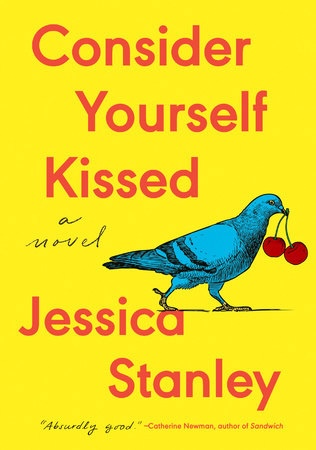
Consider Yourself Kissed, by Jessica Stanley
I periodically wonder if, had I’d lived through any other period from my thirties into my mid-forties, I might look less ravaged by time right now. If I might resemble that woman I was in photographs until around 2013, whose hair was dark brown, her skin unlined, decidedly youthful. And while I have absolutely no complaints about my grey hair and wrinkles (I like how I look and I’ve known too many women who would have given anything to win their grey hair and wrinkles, but didn’t get the chance), I do wonder if the last decade and a bit has been just a bit EXTRA in terms of things that might age one seemingly overnight.
And this is the period that Jessica Stanley documents in her novel Consider Yourself Kissed, the story of a marriage set right close to the eye of the storm—Coralie is a Australian expat who falls in love with divorced dad and political journalist Adam after she rescues his small daughter when she falls into a London pond, and dropped into his world Coralie finds herself BELONGING for perhaps the first time in her life, after a peripatetic childhood, ensconced in a life that is rich and full. But maybe too full? Is there such a thing?
Against a tumultuous decade in British politics (during which Adam’s star only rises), including Brexit and the nightmare of five different Tory Prime Ministers, capped off with a worldwide pandemic, we see Coralie trying to balance the demands of motherhood and marriage with her own career, and failing enough that she feels pretty bad about all of it, all the while neglecting the creative dreams she stuffed in a drawer when she met her husband who had ambition enough for both of them.
Consider Yourself Kissed (the title comes from how a character in Mary McCarthy’s THE GROUP signs letters to his girlfriend, a literary nod to perfunctory love) reminds me of Nora Ephron’s Heartburn, which is pretty much the highest praise a critic can offer to a comic novel bridging the political and domestic. It’s a that book that shows how women ARE that bridge, making the lives of seemingly important men possible, mapping out quotidian details while their husbands are charting epic tales and being celebrated, while these wives stay quiet in the background. Except that Coralie reaches a point where she just can’t do it anymore, which is the moment we find her at when the novel begins, and to explain how she got there, she has to go back to the beginning…
Charming, funny, touching, and so engaging it’s almost exhausting (because WHAT A TIME IT’S BEEN), Consider Yourself Kissed is a complicated love story, and absolutely a delight.
June 2, 2025
16 and 12
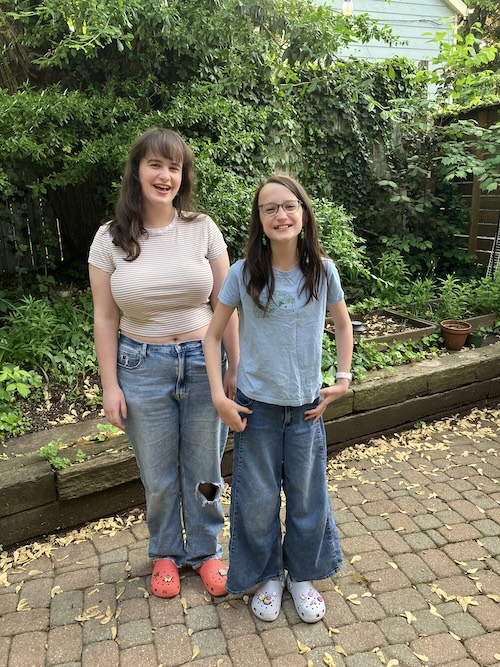
We’re deep in the heart of birthday season at our house, these two turning the mind-blowing ages of 16 and 12, and filling that house with noise, music, make-up residue, murder mysteries and graphic novels, Stardew Valley sounds, random socks in strange places, and an array of candy wrappers. It continues to be one of the nicest parts of my existence to live a life that overlaps with theirs, and I cherish all the togetherness because it won’t be too long before I have to miss it, which will be a happy part of the story too, I GUESS. But in the meantime, I just feel very lucky that they seem to like my company most of the time, and consent to tag along on adventures. I also feel lucky that they like each other very much, and are kind to each other, especially since we basically only had a second child because we wanted to the big one to have somebody to share carnival rides with. You can’t plan a lot of things in life, but thankfully this one thing worked out, and that I get to hang out with the two best people I’ve ever met is just the sweetest bonus, better than anything I ever could have imagined, their goodness beyond my wildest dreams.
June 2, 2025
Happy Birthday, Barbara Pym

It was 12 years ago today that I baked a Victoria sponge cake in honour of Barbara Pym’s centenary, and also because I was almost 42 weeks pregnant and had time on my hands. I went into labour shortly thereafter, which would have made for a better story had my labour not subsequently stalled with my baby born three days later by c-section instead of the home birth we’d planned with a shared birthday with the extraordinary Miss Pym. But Pym having a day of her own is most fitting, in retrospect, and I’m rereading all her novels this year just to be reminded of this (before my own Barbara Pym-inspired novel is published early next year!). This weekend I reread Jane & Prudence, her third novel, which received mixed reviews upon publication in 1953, and as I was reading the first two thirds, I was all set to explain how this was a second-rate Pym novel (her characters are a little too silly, it’s a reworking of a novel she’d written in the 1930s and perhaps less fresh for that, the set-up is artificial) but then at some point the novel won over entirely and I loved it as much as I loved everything Pym wrote. It’s an Emma-aware story of matchmaking gone awry, so-called matchmaker in question Jane, an unconventional vicar’s wife (she’s got an Oxford degree and no affinity for domestic tasks), who tries to arrange a relationship between her former student, 29-year-old Prudence, and her new neighbour in the village she and her husband have just moved to, the perhaps dastardly widower Fabian Driver. But then fate has other plans. Jane & Prudence is not the place to start with Pym, but the novel is not to be missed either.
May 30, 2025
Babies
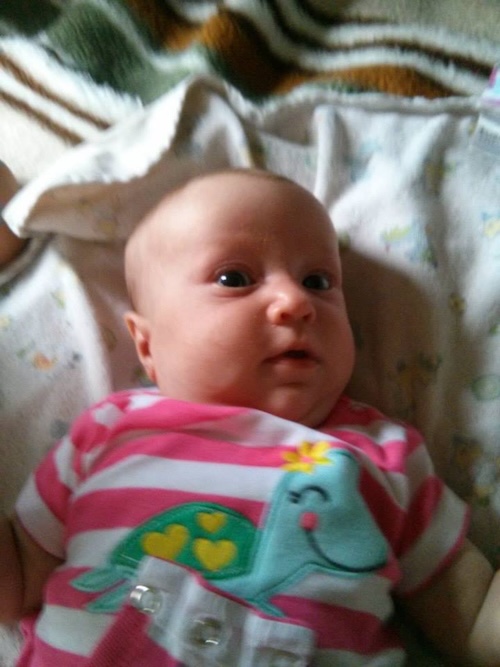
When I joined Singing Mamas in January, the fact that it was a group where women could bring their children was not the draw for me. I signed up in spite of this arrangement, really, having had it confirmed that plenty of people in the group would not be coming with kids. And I’ve got nothing against kids, I have even given birth to a couple of my own, and have spent more than my fair share of time in places that could double for the set of Romper Room, but these aren’t the spaces I am drawn to anymore.
Which makes it even more of surprise then, just how much spending time in the presence of babies has meant to me these last five months. These last few months as I’ve been working through a lot of things, living against a tense and unstable political backdrop, trying to make positive shifts to my ideas of community and connection, trying to be softer, more understanding. And perhaps the babies have pushed me in this direction more than anything else, helping me, teaching me. Each of them such a complete and funny little human in their own way, huge headed, gummy smiles, rolling over as a primary form of transportation. They eat, they poop, they cry, they laugh, they stare at the ceiling in wonder, and their regard in any manner (yesterday one of them tried to eat my shoe) feels like a gift.
And the more time I spend in the babies’ company, I realize what my fellow humans fundamentally are, all of us vulnerable creatures with big soft heads. That it’s funny how we all wear pants. That we are good, and we are worthy of love and care. And we have these weird amazing bodies that we’re not really in charge of, and that it’s a big deal to stand, and that everyone falls down sometimes, and there are so many fluids that it’s impossible contain. That we get hungry, and giddy, and sometimes we just have to sleep. That even being very serious is hilarious, especially if you have no hair.
They remind me of how much we need each other, and how much love there is to go around.
May 29, 2025
Cattail Lane, by Fran Kimmel
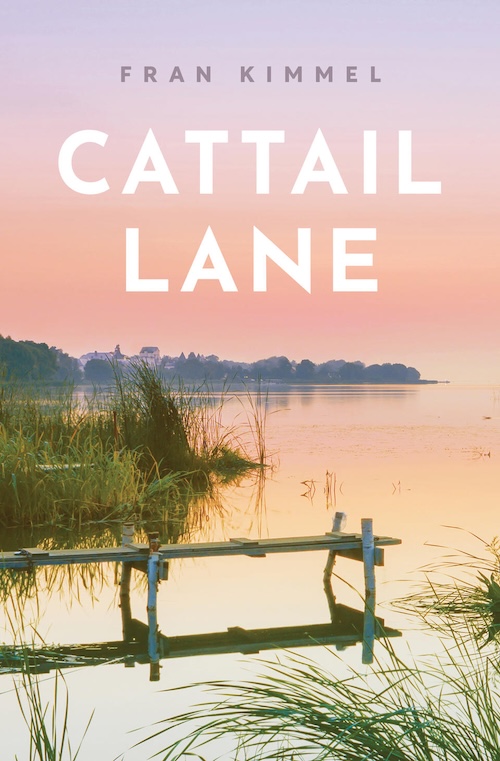
If the warm and gorgeous cover of Fran Kimmel’s Cattail Lane invites you in, then you’re likely going to love this book, a story of unconventional family and community that begins with Nick, aimless and drifting, receiving the news out of nowhere that he has a 14-year-old son, Billy, and that he’s been charged with the boy’s care now that his grandmother’s dementia has progressed where she needs to enter a care home. Both Billy and his grandmother, Evie, come to live in Nick’s small town, not far from the shores of the lake he grew up beside, and where he made a mistake years ago that he has yet to atone for.
Billy is resentful and standoffish, and no wonder. He seeks solace in visits with his grandmother in the dementia ward where she lives now, and where he’s drawn to Sarah, who works there, and whom Nick is drawn toward too, though for different reasons. With Sarah’s support, Billy and his artist grandmother begin a project to enliven the halls of the dementia ward with murals of nature (drawn from Nick’s photographs of the lake’s short and wetlands), and it’s a project that changes the atmosphere of the ward and shows Billy that he might be able to find a way to belong in his new life, and with Nick.
There are no straightforward villains in this novel (though a few contenders for the title, it’s true), instead a bunch of flawed and broken people who’d like to be trying their best, but can’t always manage to pull it off, which is everyone, from time-to-time. And in the generous world of this novel, redemption is possible, goodness is just beneath the core, and beauty is everywhere, if you only have the eye to see it.
May 28, 2025
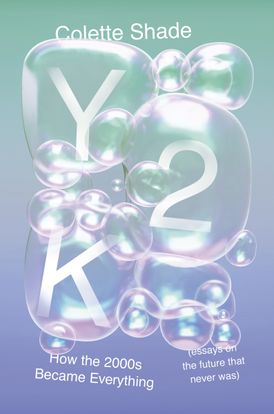
Y2K: How the 2000s Became Everything, by Colette Shade
Unlike my children—whose precision in understanding their respective cohorts (Z and Alpha) and how they’re defined by them is more than ridiculous considering that they’re two people with the same genes who share a bunkbed—I’ve never had a sense of my own place on the generational spectrum. Born in 1979, I was 11 when Douglas Coupland published Generation X in 1991, and certainly never supposed that it was a story about me. And then when the “millennials” discourse arrived about 15 years later (mainly denigrating), I didn’t think that was me either. Truly on the cusp, it’s been hard to measure (and these things are hardly scientific anyway), but I’ve recently come down on the millennial side of it all, which is pretty undeniable since my all-time favourite song is “I Want It That Way.”
Y2K looms large in my mind, not the predicted chaos necessarily (I was too young and self-centred to properly understand that anything bad could ever happen in my world), but the era, an era that Colette Shade marks as 1997 to the 2008 economic meltdown at which points dreams of a future that seems like THE future were officially over. And her book about that era is partly an exercise in nostalgia, but only a little bit. The rest of it a biting cultural analysis of the Y2k era as a period of neoliberal excess, the promise of infinite growth and infinite good times, and bubble that—like the inflatable chair she convinced her mother to buy her at Target—was only ever going to burst.
Shade’s essay collection Y2K: How the 2000s Became Everything joins a shelf of great nonfiction that I’ve been reading this year (John Ganz’s When the Clock Broke; At a Loss for Words, by Carol Off), books which answer the bewildering question of “How did we get here?” To a cultural moment of nastiness, inequality, technofascism, and deep polarization, where truth is relative, and the climate just gets hotter. And Shade points to the Y2K era as one in which the seeds of all of this were planted, her fun cultural commentary connected to a broader and cutting economic and political analysis: the growth of Starbucks and the decline of unions; 9/11 as a midpoint in an era of “unquestioned rule of American-led capitalism” instead of the end of any kind of era; the plundering of Russian state resources and the burgeoning fashion industry; the failure of Liberalism to counter Bush and the Iraq war; a nasty gossip industry to reality TV pipeline that becomes everybody’s reality now in a moment where you to be a brand or you are nothing. And so much more.
“The ice we skate is gettin’ pretty thin/ The water’s gettin’ warm so you might as well swim/ My world’s on fire, how ’bout yours?/ That’s the way I like it and I’ll never get bored.”
May 27, 2025
Olive, Again

The tragic news is that my #WinterofStrout is nearly over, and that OLIVE, AGAIN was the last time I got to read an Elizabeth Strout book for the very first time (until whatever she publishes next), and oh my gosh, I loved it. It’s funny because I think reading Strout’s latest book TELL ME EVERYTHING ruined me a bit for my reread of OLIVE KITTERIDGE, leading to me to expect all kinds of things that this book was never going to deliver. But OLIVE, AGAIN is completely a prequel to TELL ME EVERYTHING, a bridge between Olive’s stories and THE BURGESS BOYS and while Lucy Barton doesn’t appear here, I know that Olive will be meeting her soon (and I loved reading about Olive’s friendship with Isabel, whom I met in TELL ME EVERYTHING, and REALLY got to know on my #WinterofStrout when I finally read Strout’s debut, AMY AND ISABELLE).
I also love that I tripped walking up the stairs while holding this book and a mug of turmeric oat milk latte, splattering the top of the book with yellow, the same yellow bursts that are conspicuous throughout the pages of TELL ME EVERYTHING, forsythia and daffodils and everything.
I love the way that Olive grows in this book, or maybe it’s that both she and we get a little bit closer to knowing who she really is. And what she realizes about who she is, which is so different from who she’d been before, is that she really doesn’t know anything at all. “It seemed to her she had never before completely understood how far apart human experience was… She, who always thought that she knew everything that others did not. It just wasn’t true.” It’s a message that I think is so important right now, as so many otherwise kind and thoughtful people dig themselves deeper and deeper into the holes of their convictions.
And the message too that maybe not knowing everything is…fine? A line from the story “Helped,” “‘I think our job—maybe even our duty—is to…bear the burden of the mystery with as much grace as we can.”
May 23, 2025
The Names, by Florence Knapp

I was swept away by Florence Knapp’s novel THE NAMES a book that came on my radar when UK. bookseller Katie Clapham made it her book club pick. I was besotted by the premise: a mother in 1980s’ England walks to the registry office after a giant storm to register the birth of her son, a child is who intended carry the name of his father and his father’s father before him. But the child’s father is a monster, and so the mother makes a last minute switch and gives her baby a name chosen by his older sister. Or else she makes a different switch, and names the child herself. Or else she goes along with the original plan, naming the baby for her abusive husband as she’s expected to do, and the narrative rolls out in three different threads with what transpires with these different choices. The choices not just about the name the boy will carry—we encounter him and his family at seven year intervals throughout the next four decades—but the novel is so much more richly textured than that, being also about everything else that happens around him, especially his father’s responses to the different things the mother has done in choosing the names that she has and the different narratives that are put into motion, oftentimes unstoppable. (This book is tough to read in places. Imagine how many times the average novel might break your heart, and then multiply it by three. OOF.)
The NAMES recalled Kate Atkinson’s LIFE AFTER LIFE, another novel about fate and chance, and flaps of butterfly wings, and about how it’s impossible to ever get life completely right no matter how many opportunities you have to try. This is true especially in the novel’s depiction of domestic violence—there is not a single choice the mother will make that will ever be the right one. But in a more general sense, life is like that for everyone, every good outcome occurring with something else that’s lost, or other unseen consequences. To be in the world at all is only wild and capricious, risky, amazing, and awesome at once.
May 21, 2025
Catch You on the Flip Side, by Lee Kvern
All right, buckle up. Lee Kvern’s Catch You on the Flip Side, whose central setting is a Calgary casino in the early 1980s, begins at a pig farm in the Philippines, where the farmer is recruited for a mysterious mission. From there, we arrive at the Ambassador Hotel in Los Angeles, site of the assassination of Robert F. Kennedy in 1968, where Senator Benigno Aquino Jr., Opposition Leader of the Philippines and a threat to authoritarian President Ferdinand Marcos, pays a brief visit before his return to his country from exile, a return that he knows will put him in grave danger. And then we meet a Manila baggage handler who will be in the wrong place at the wrong time, and forced to sneak out of the country, the piece of the puzzle that connects Aquino’s murder to the staff and patrons of the Calgary casino where shady dealings are ongoing and will have ramification for everybody involved for the next 40 years.
I’m a huge fan of Kvern’s work, both its energy and its scope, and I love how I picked up this novel with no idea where it would take me—and how it took me everywhere. There’s audacity in writing a novel about a real life political assassination on the other side of the world, and I love how Kvern pulls it off (and also how much more I know about contemporary Filipino history after reading it). A story this tangled can be disorienting at times (and I wish the book’s production had been more robust—there are several copy edits and messy typesetting that adds to the confusion), but I read it gripped and finished it satisfied. Funny, moving, and epic at once, Catch You on the Flip Side is a standout.
May 20, 2025
The Snag, by Tessa McWatt
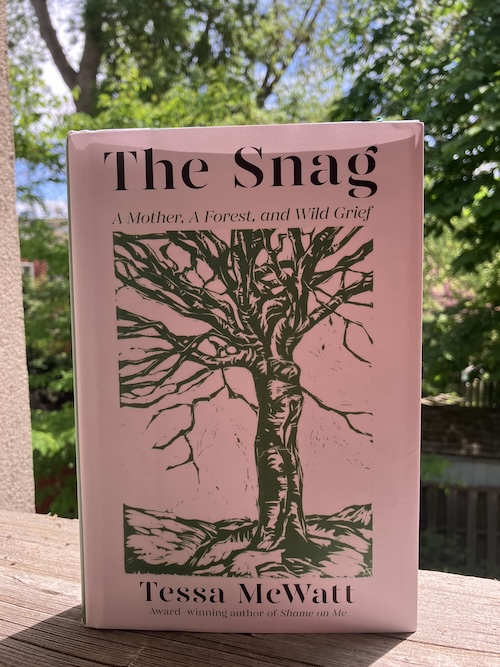
The Snag: A Mother, A Forest, and Wild Grief, by Tessa McWatt, the Guyanese-Canadian writer who lives in England, is a memoir woven of climate grief, the experience of slowly losing an aging parent, and one’s own experience of being in the world. How do we live? And how do we die? Which, of course, is mostly the very same question, and McWatt finds that the answer might lie in forests, and trees. In particular in the trees called “snags,” which are dead trees found in the forest and vital sites for biodiversity, a habitat for all kinds of creatures, and new life and possibilities. McWatt sees an analogy between snags and her own mother, whose dementia is worsening. The book begins on the day that her mother is moving out of her own home, one more uprooting in a life that’s been full of them. It is also, McWatt notes, “the last day of the hottest year in recorded history,” and she recounts a series of the catastrophes wrought by climate change over that year, plus an autumn that so much war and devastation.
“Grief arrives out of rupture. It is evidence of something treasures, now lost. If I sit with this evidence something else will surely come, the way a seed might eventually grow a tree. We are small and hungry and alive.”
Here is the thing that I love about this book, McWatt’s acknowledgement that grief must be sat with, but that also that this sitting is not the end of it. That something can come after this, and it will, but what? And once again, the answer is in the forests and the trees.
The Snag is one of the wisest books I’ve ever read, a memoir about observing, and listening, about music and singing, about the wonders of forests and what we can learn from them about connection and how to care for each other.
“Another world is possible. The extractive, consumptive way we are living demonstrates a severe lack of imagination. But we have the tools, models we use to reclaim, renew, invent. There are communities around the world still rooted, still defending their ecosystems, that are potent sites of resistance. And there are new ones being born.”