June 25, 2025
Gleanings
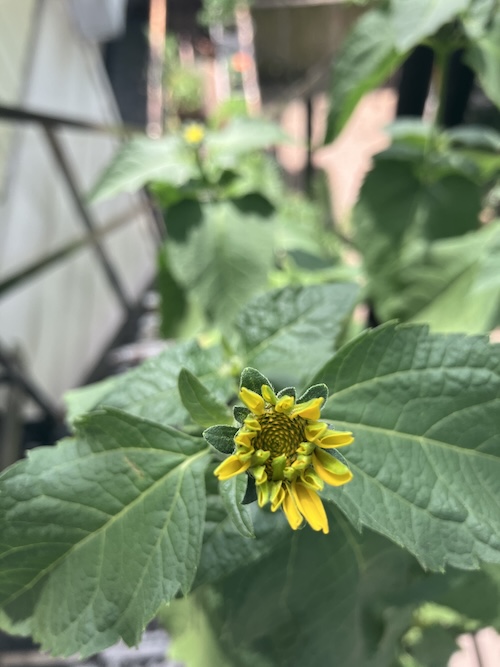
- One of my photography passions is wildflowers; they fascinate and charm me. All of them — even the simplest, most humble dandelions. Especially the dandelions.
- There are less and less … both dances, and people of that time. I look around the room, and can’t help but think it is inevitable, before this too, is gone. The man now alone with his guitar and laptop was once a part of a band, widows dancing with widows, some barely shuffling their feet and yet, here we are, the young so delighted by the old, the old enlivened by the young.
- And honestly, that’s my favourite thing about travel: the way that even the most foreign of experiences can remind you of something familiar.
- Writers, thinkers, listeners, see-ers, who insert themselves into the subject at hand. For me that brings an immediacy, an authenticity.
- I trust my imaginative plane as much as some people trust their god, or their tarot, or their psychic. I do. So, as I float about… what does it mean that i can’t stay still, that my foundation is afloat? Is it bad? Is it the world? Has the utter crazy of the global and national scene just knocked my roots from under me? The hope that is a usual tether has been snipped and I’m off.
- It turns out that being a real friend means doing something incredibly hard and, in a way, unkind: confronting Nicola with the truth. “Wake up,” Helen finally says; “You’ve got to get ready.”
- When Judith’s peonies, poppies and Irises are all in full bloom (and her red door is flung wide open to let the breeze in on her jewel of a home) it is a sight to drop-your-Metro-bags and behold. I learn so much about gardening –– about human nature –– by observing people in their gardens.
- We need beauty to help us weather out the storm.
- ‘Welp, I read the internet,’ he’d sometimes tell me around 10 am. “Got anything else for me?”
- But watching the bear, who was no doubt the offspring of one of the original bears — a child, a grandchild? — I realized that the orchard is remembered, in the way the beautiful old crabapple tree is remembered by successive generations of those same bears. It’s not what I expected but it’s something sweet.
- Baiting with Tolkien, luring Whippets named Rapunzel, and other ways to make friends.
- It occurs to me that we writers should emulate lighthouses and shine our lights without prejudice or favour, just keep putting our beams out there. If it guides some away from the treacherous shoals of life, all the better. If it helps other readers keep their own boats on course, comforted to know another kindred spirit is out there, has been through these same storms and survived, that’s all good too.
- It felt like life was curating the perfect evening.
- I have a terminal case of wanderlust. But even as the scrolling and research heightens my anticipation, once I arrive, alone, in a foreign city, I’m often struck by the question: Why? Why did I haul myself in a cramped seat across the ocean and plunk myself down, alone, in a strange place. What am I doing here?
- I also think it’s essential for an editor to be connected to the world at large, because the publishing industry is a mirror for society.
- The funny thing about bookshops is that their most regular patrons are the ones who aren’t short of things to read at all!The double-stackers, the hoarders, the ambitious lunatics, I love them dearly.
June 23, 2025
School’s Out Forever
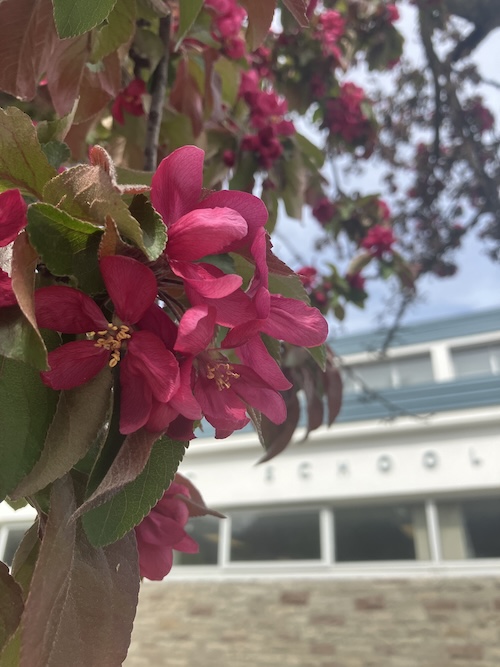
“But because I am neither my protagonist nor a bad-ass, I ended up joining Parent Council just so nobody would think I was Mitzi Bytes (in spite of all the ways I obviously was), and due to many qualities that would eventually land me in therapy, I dove into school volunteerism like a maniac…” All readers can read my essay “School’s Out Forever,” a reflection on the last 12 years I’ve spent as part of my kids’ school community as we’re now in our final week there.
And my June essay for paid subscribers is out now, which begins, “Of all the authorial humblings I’ve experienced, having the autobiographical protagonist of my debut novel deemed generally unlikeable has been one of the more complicated to process.” Don’t miss “The Perils of Writing to Find Friends.”
June 20, 2025
Water Borne, by Dan Rubinstein
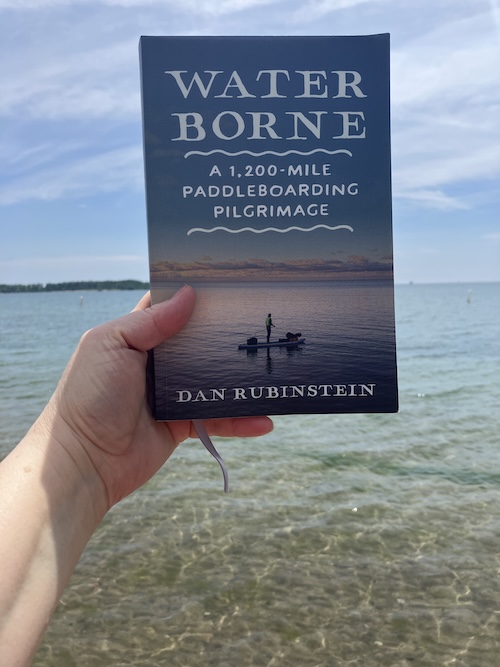
I became an admirer of Dan Rubinstein with his 2015 book BORN TO WALK: THE TRANSFORMATIVE POWER OF A PEDESTRIAN ACT, which I read not long after Rebeccca Solnit’s WANDERLUST, loving how the two books were complementary, and with his latest release, WATER BORNE, I am once again struck by how beautifully his work fits into a wider literary context, specifically books about water and rivers that have also come out this spring by Robert Macfarlane and Leanne Betasamosake Simpson, both of whom would likely also have underlined the following lines from Rubinstein’s book, “…borders, like the fringes of any lake, river, or ocean, are transition zones. The rough margins where change comes slowly, from the friction of daily and seasonal cycles. Or in a tremendous burst, like water breaching a dam.”
WATER BORNE is the story of Rubinstein’s journey by stand-up paddleboard (SUP) from his home in Ottawa, Ontario, to Montreal on the Ottawa River; from Montreal to New York City via the Lake Champlain and the Hudson River; and Albany, NY, to Buffalo, via the Erie Canal; and then from St. Catharines to Kingston, via Lake Ontario; and back home to Ottawa on the Rideau Canal. It’s also the story of the strangers he met along the way, the friends and relations who supported him, odd conversations at campgrounds, a chronicle of lost sunglasses., and the history of these waterways, man-made, histories that tell of the rise and fall of different industries over centuries, a progress that led to the degradation of lakes and rivers and the health of creatures who make their lives by their waters.
But it’s also the story of people who are working to change this cycle, of projects to restore life to waterways, both in terms of the natural world and actually making these waterways accessible to the people who’d most benefit from this access, people who don’t have the luxury of vacation houses or even swimming lessons. Throughout the book, Rubinstein imparts the wonders of “blue spaces,” which are like green spaces, but even better for our mental health. Considering all of this as he paddles during a season where the temperature is breaking heat records and the air is thick with smoke from wildfires. What lessons can blue spaces teach us at a moment when the stakes are oh so high.
Rubinstein’s narrative is funny and engaging, and personal as he weaves his family’s story in among the broader history. (His mother, who tracks his locations, and sends worried texts, is one of the best characters in the book.) Nimbly, he blends memoir with reportage to make a story that flows beautifully, and is both hopeful and inspiring, and a must-read for those of us who love blue spaces already.
June 17, 2025
Mystery Books I’ve Loved This Spring
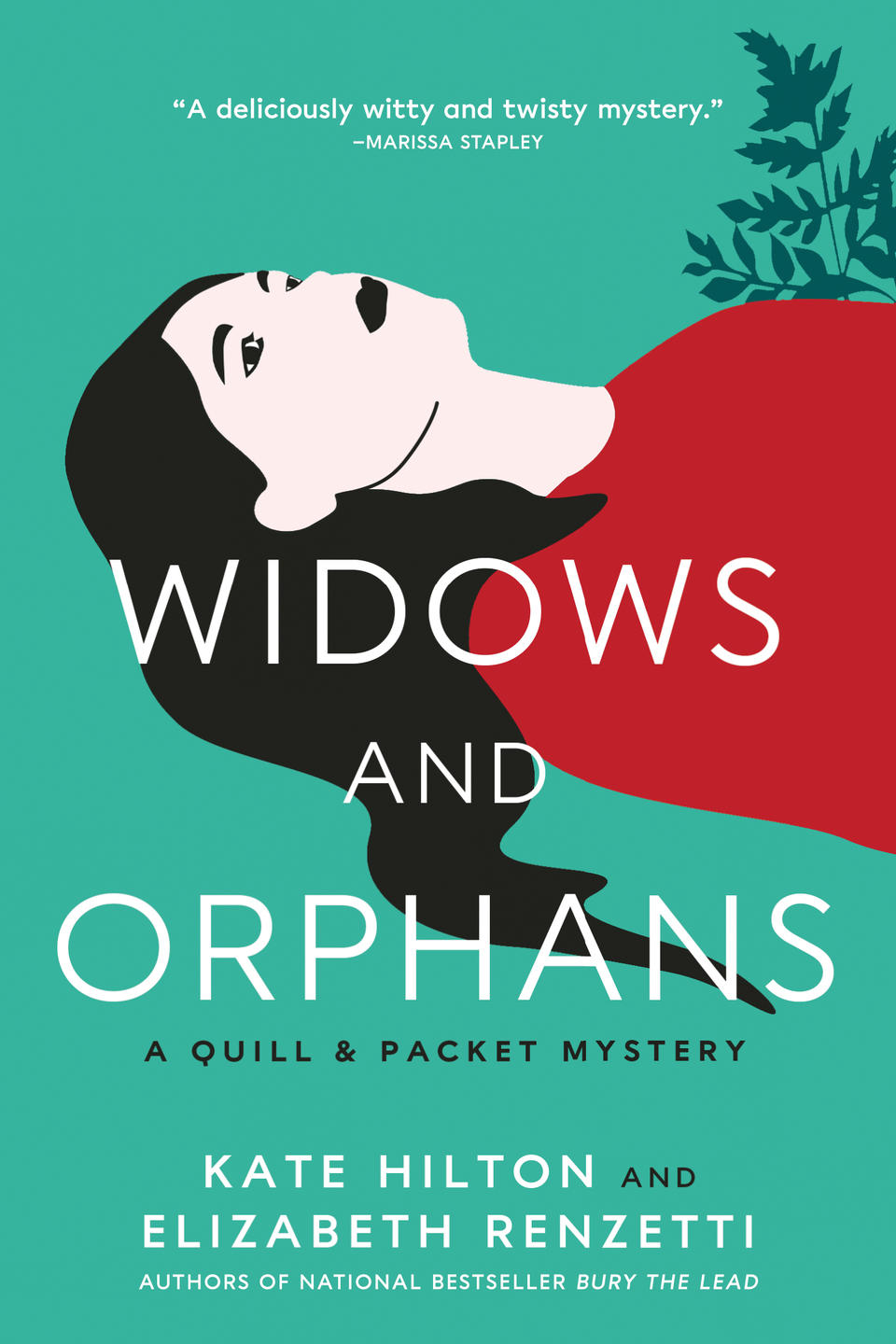
Widows and Orphans, by Kate Hilton and Elizabeth Renzetti
There is no joy quite like the second instalment of a mystery series being EVEN BETTER THAN THE FIRST, especially when the writers are your friends and you get to tell them so. I loved Bury The Lead, the first book in the Quill & Packet series about journalist Cat Conway’s relocation to a small cottage community where she works at the local paper, and the next book finds her covering a wellness conference where the supplements include murder. I was expecting a fun mystery, and was delighted to find this underlined by a biting critique of conspiracy quackery which reads as all too timely.
(Listen to the authors talking about their first book on the first season of the BOOKSPO podcast!)
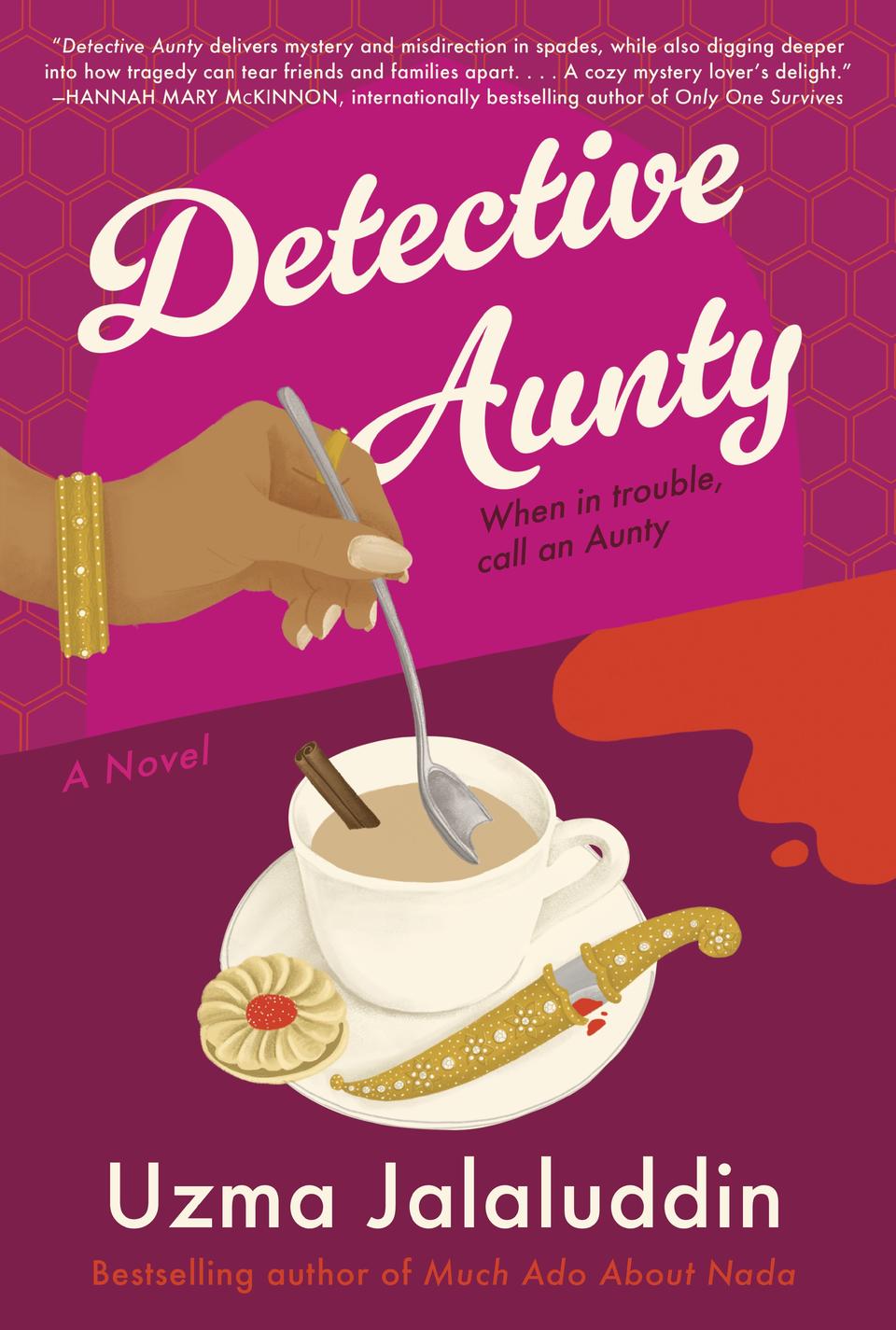
Detective Aunty, by Uzma Jalalludin
Imagine a Miss Marple-type detective, a sharp eyed older woman whose invisibility permits her all kinds of access, except she’s a Muslim-Canadian on a cusp of a brand new life after her husband’s death who is called on to help prove her daughter’s innocence when she’s accused of killing her shady landlord in Scarborough, Ontario. Can Kausar Kaur crack the case? Jalalludin is best known for her romance novels, but as she told me in our recent conversation on BOOKSPO, she was a mystery reader first and this is the detective novel she’s been hoping to write since the beginning of career as a novelist.
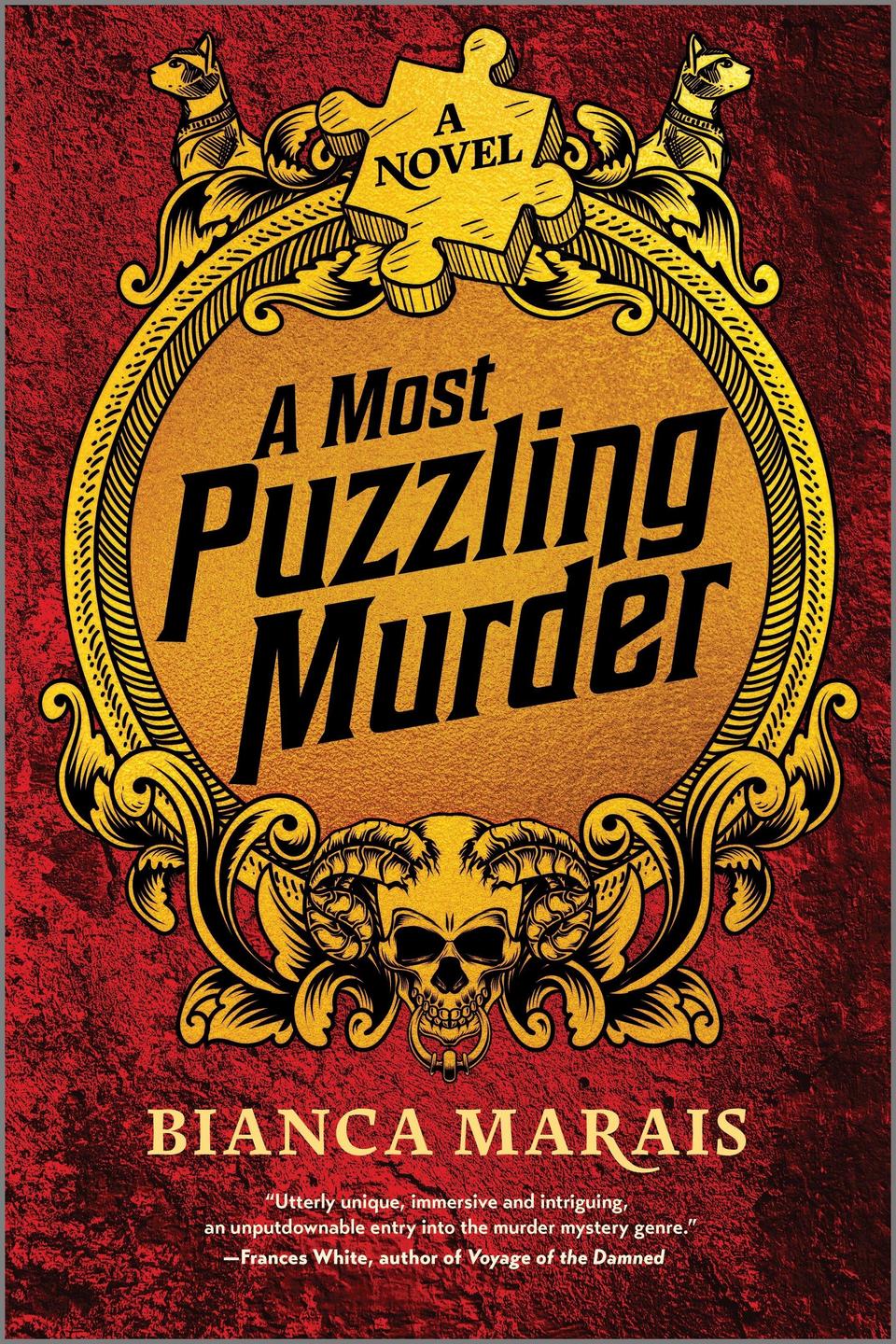
A Most Puzzling Murder, by Bianca Marais
The never-boring Marais returns with her fourth novel, a book unlike anything you’ve ever read before, except maybe the “Choose Your Own Adventure” novels that absorbed your attention during childhood, because A Most Puzzling Murder is just as engaging, the story of Destiny, a brilliant young woman who is alone in the world and hoping to find family when she encounters the Scruffmore family on their strange and isolated island. But it turns out that the stakes are higher than she thought, and it’s up Destiny to solve a series of puzzles (which are the reader solves alongside her) to solve a murder and figure out the mystery of her past.
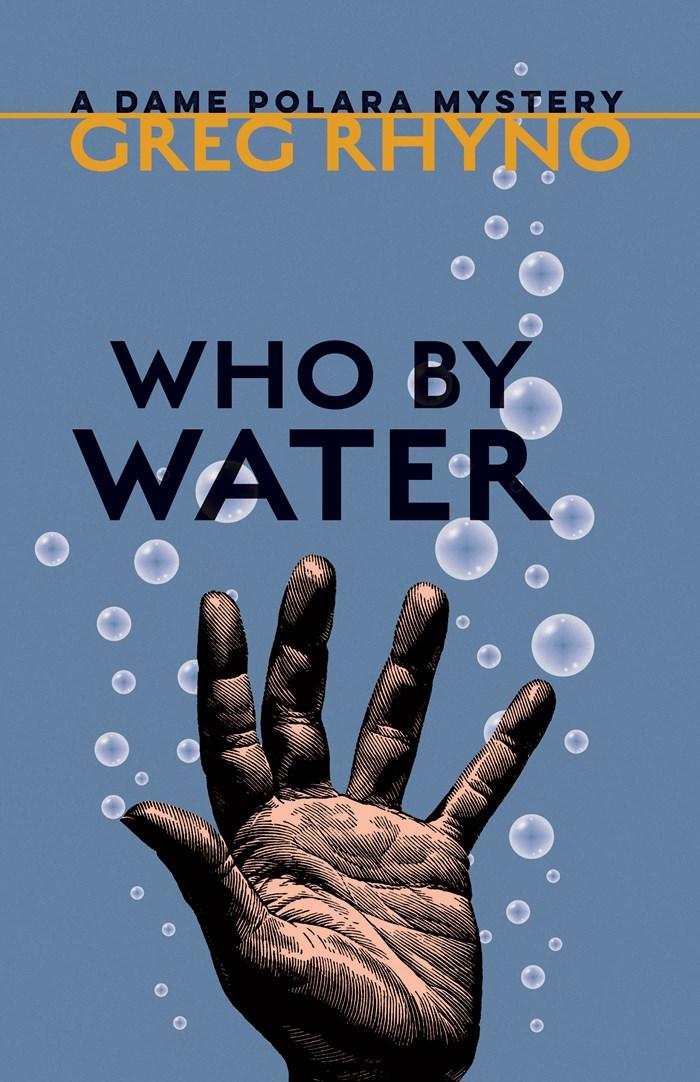
Who By Water, by Greg Rhyno
Another second-book-in-the-series that didn’t let me down, Greg Rhyno’s Who By Water marks the return of Dame Polara, reluctant PI, except she’s a single mother now, which means the stakes are oh-so-high when her ex-husband is killed and Dame has apparently been framed for his murder. The novel’s vivid Toronto setting and the complicated character of its protagonist are just two of the reasons to pick this up (listen to Rhyno on BOOKSPO talking about how he went about writing a female character whose depiction wouldn’t make woman readers throw the book at the wall), and the great mystery at its heart will keep you gripped.
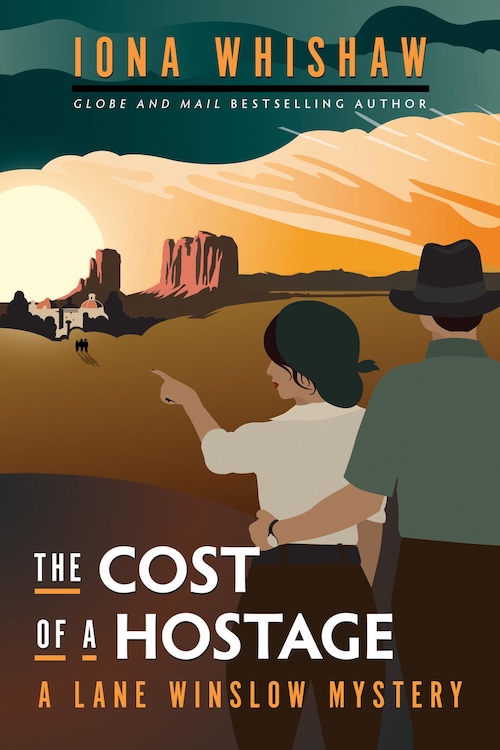
The Cost of a Hostage, by Iona Whishaw
And oh, I look forward to Iona Whisaw’s Lane Winslow mysteries so very much, with their setting and people that feel like home to me. I already wrote about The Cost of a Hostage here! Once again, Whishaw brings her readers a story with fascinating moral complexity and a healthy dose of feminism and progressive values. And yes, just enough peril that you’ll be totally gripped.
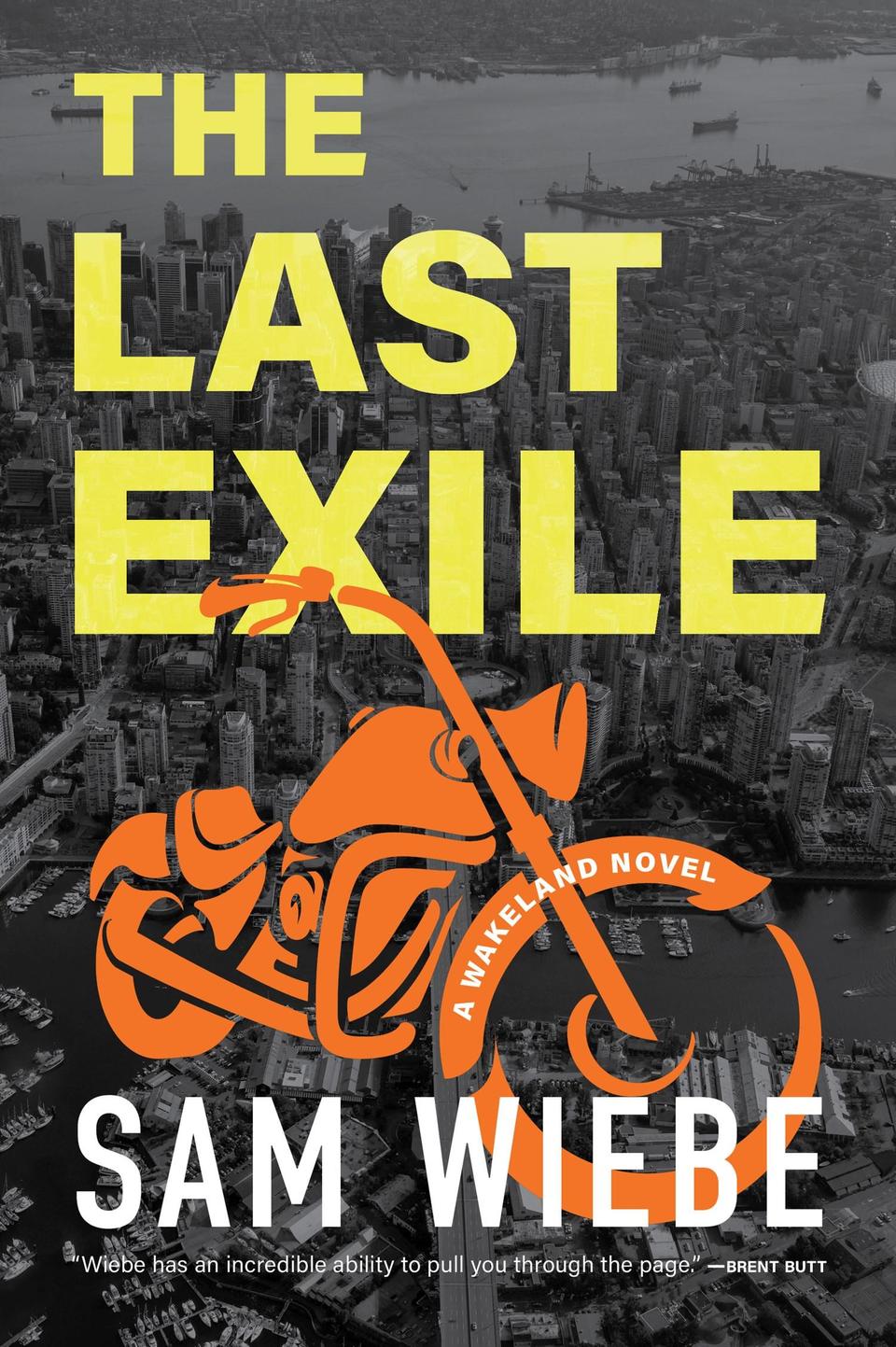
The Last Exile, by Sam Wiebe
And from my “On Our Radar” column at 49thShelf: My toxic trait is jumping right into mystery series midway through, a habit that horrifies some people, but I promise you that good writers design their books so it’s possible, and if I had to start at the beginning every time, I might never ever bother. But I’m so glad I did with Sam Wiebe’s Dave Wakeland series, and its latest installment, The Last Exiles, in which PI Wakeland returns to Vancouver to help prove the innocence of a rough-around-the-edges single mother accused of murdering a retired biker and his wife in their luxurious float home. It’s deftly plotted, absolutely gripping, and has real heart. (And yes, I will read the other books now!)
June 16, 2025
As Long as There are Stars Above You
When I was little, any time I spent not wondering just what exactly was going on on Meat Loaf’s Bat Out Hell album, I was likely listening to The Beach Boys, and understanding everything. And I don’t mean it as a rebuke to Brian Wilson’s talent and genius that his music managed to speak to me on a visceral level when I was a toddler—lines like, “There’s a world where I can go/ And tell my secrets to/ In my room.” “Wouldn’t it be nice if we were older, then we wouldn’t have to wait so long?” “I’m getting bugged driving up and down the same old strip” [on my Big Wheel]. The Beach Boys sang songs about being true to your school, about wanting to go home. “And we’ll have fun fun fun til her Daddy takes the t-bird away.” When The Beach Boys sang, I felt like they were telling my story, even though I was landlocked in the middle of the continent and still years away from a driver’s license, with no understanding yet that a t-bird was not, in fact, a kind of bird. Or even what a bushy blonde hairdo looked like.
When I was little, I thought The Beach Boys was this obscure band that only me and my family knew about, their music playing on the boombox we had on our boat. I remember mentioning them once to one of my contemporaries—I was about six at the time—and her correcting me: They were called the BEASTIE boys. But not at my house they weren’t. My very first concert was The Beach Boys live at Copps Coliseum in Hamilton, Ontario, when I was about six years old, though I don’t think Brian Wilson was touring with them by then. When they returned to the pop charts in 1998 with “Kokomo” on the soundtrack from the movie Cocktail, we were ecstatic. I can’t help but think that a small part of the reason I’ve never done drugs is because “Drugs” was always the explanation my dad gave me for the more unlistenable Beach Boys songs, compared to their lush tones and gorgeous harmonies. I mean, what if I did LSD and ended up trapped inside “The Elements: Fire (Mrs. O’Leary’s Cow)”?
The Beach Boys would also make way for my own adolescent zeitgeist, the harmonies of Brian Wilson’s daughters, Wendy and Carnie, along with Chynna Philips, whose songs are as much part of my musical DNA as their parents’, underlining the dadness of it all. So it seems fitting to have passed Father’s Day this year thinking about and listening to Brian Wilson, who died just a few days before. He was the dad’s dad, and his good vibrations will keep on vibrating even now that he’s gone.
June 12, 2025
Always the Smugness

As always, it’s the smugness that gets me in the end. If only I hadn’t valued my superiority as somebody who’d never click on one of those LOCAL STORE CLOSING AFTER SEVENTEEN YEARS EVERYTHING MUST GO ads or buy a sack dress that turned out to be an actual sack. I knew enough not to buy soft pants that looked like hard pants, or tea that tastes like birthday cake. I could tell that the leather was really pleather and that the softest blanket other was anything but. I thought I was savvy, and I even was, a little bit. When the ad caught my eye—a basket for the bbq so that veggies don’t fall through the grill, just in time for Father’s Day—I googled the company in question. Where were they located? They had a street address in Edmonton. And possibly the red flag should have been the text I received from my bank after I made the credit card payment asking if I had actually made this purchase. But of course I had, and so I okayed it, and the transaction went through. SO SO STUPID. What was I thinking? $50 for a wire basket? Yes, it occurs to me now that the price is a little high. And then I got my shipping notification this morning—my $50 wire basket is on its way from ACTUAL WUHAN. But this was a reputable company, right? Um, no, there is another company with a similar name. The company that I’d just sent $50 to for a wire basket has social media accounts that are a month old and have no customer engagement. The address in Edmonton turned out to be for the Chinese dropshipping company will be handling the transport of my no doubt piece-of-crap FIFTY DOLLAR BASKET. I feel very dumb. Meta is a terrible company. And hopefully I’ve learned my lesson and will never do anything quite this idiotic again. [Editor’s note: she totally will do something this idiotic again, but hopefully not this precise thing.)
June 11, 2025
How to Lose Your Mother, by Molly Jong-Fast
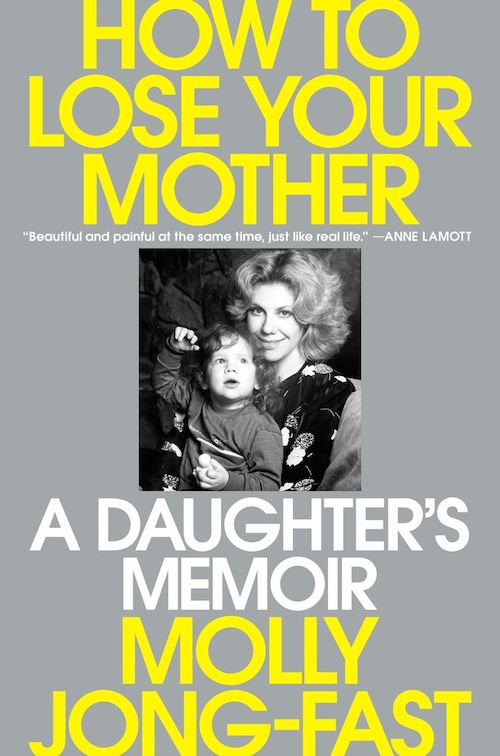
I saw myself in Molly Jong-Fast’s memoir, How to Lose Your Mother, specifically the part where she writes about how strangers project onto her their feelings about her novelist mother, a burden that she has born in good spirits, all things considered. When I published an essay about her mother’s iconic 1973 novel Fear of Flying way back when, I tagged Jong-Fast in a Twitter post, and I think she even shared it. Although in the years since, Jong-Fast has come to mean an awful lot to me as a person in her own right, in the last five years that I’ve been listening to her podcast, which continues to be a balm to my anxiety and has helped me make (some) sense of the chaos of our era, but then it turns out that making sense of chaos is something Molly Jong-Fast has been doing for a very long time.
And this novel is a document of that process, a memoir of her childhood born to famous artistic parents for whom “parenting” was not a verb, and of the neglect she experienced as her mother chased fame and ignored her addictions, and also a memoir of Jong-Fast’s very difficult year as her mother’s dementia advanced and Jong-Fast’s husband was diagnosed with pancreatic cancer, among other heartbreaks and calamities. Sober since age 19, Jong-Fast has designed a very different life from her mother’s, marrying at 24 and finding joy as the parent to three children, and now as her mother begins to decline (and her stepfather is dying from Parkinson’s concurrently), Jong-Fast resents the time she’s forced to spent caring for parents whom she feels never cared for her.
I really appreciated this honest portrayal of the realities of eldercare, and Jong-Fast’s awareness of her limits, her refusal to be a martyr. I also love the complexity of the mother-daughter relationship she constructs, that it’s all love all the same, even with the failures of mother and daughter both at various points in the relationship. That love is a multitudinous thing, but also that person has the right to own their own soul, their own story, which was the point of Fear of Flying after all, a lesson that perhaps is just one of many gifts (along with the burdens) that Molly Jong-Fast inherited from her imperfect mother.
June 10, 2025
The World So Wide, by Zilla Jones
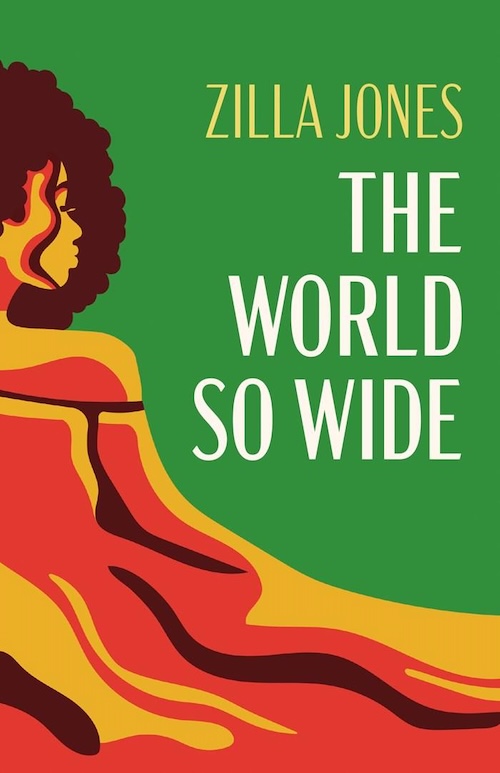
St. Georges, Grenada. October 1982. Celebrated Canadian opera singer Felicity Alexander has arrived in her mother-country to be part of a showcase of Grenadian talent put on by the Caribbean nation’s revolutionary government whose Marxist doctrine is seen as a threat by the US. Although Felicity’s own reasons for being there are personal—almost 20 years before she had been at university in London with the man who is now Prime Minister of Grenada, and with his deputy, who’d been Felicity’s lover. And soon after her arrival, a rival of the Prime Minister attempts a coup, Felicity being roped into the crew who is put under house arrest, and all the while rumours are swirling that the United States is about to invade.
Zilla Jones’ debut novel, The World So Wide, moves between the tense days under house arrest and Zilla’s experience growing up on Winnipeg, her immigrant mother reserved in her affecting but working hard to give her talented daughter the musical education she deserves, which leads to Felicity receiving a scholarship to the Guildhall School of Music in London, UK. More than anything else, Felicity is intent on her career success, and has no compunction about pursuing it, or liberating herself from her religious mother’s expectations, and also having sex whenever she cares to, which is very subversive for a woman in the 1960s, and especially for a Black woman. Once she gets to England, Felicity also finds that her Blackness is under debate in the company of other students from Caribbean in a way it had never been in Canada, where she was always firmly othered. Never really belonging anywhere properly, she becomes more determined to create a singular place in the world for herself.
Felicity knows exactly who she is, and does not bend to convention, which expects her to submit to marriage and motherhood. As befits an opera singer, her emotions and desires in the novel are outsized, larger than life, which makes for compelling and dramatic reading, the only drawback that secondary characters can seem slight in comparison, their own emotions and desires flattened. The novel does a terrific job, however, of using her personal story to bring history (albeit fictionalized) to life, illuminating the fascinating story of Grenada’s revolutionary government, which deserves to be better known.
June 9, 2025
Theory of Water, by Leanne Betasamosake Simpson
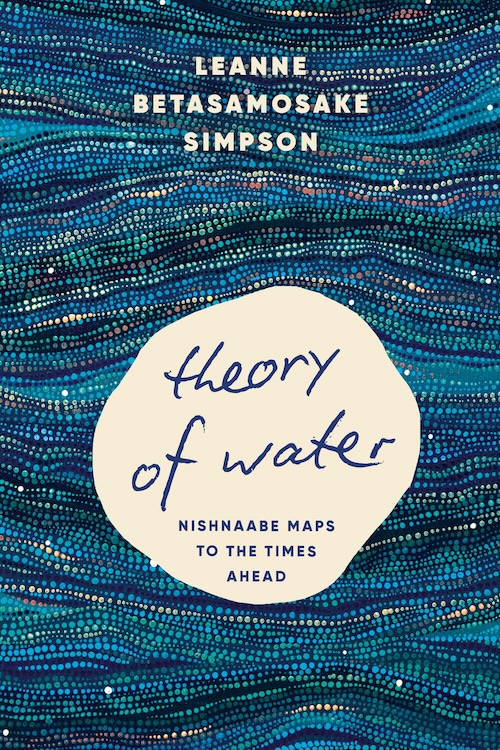
Both the big and small pictures in Leanne Betasamosake Simpson Theory of Water meant a lot to me, although the entire book is underlined by the understanding that the micro and macro are the very same, and that we can’t make a distinction, certainly not in the case of water, which flows and flows, escaping containment. Water is inherently connection, sometimes in the most surprising ways imperceptible to the naked eye. Simpson’s own connection to water comes from skiing, from water in winter, and she introduces me to the concept of “sintering,” which is when a snowflake forms bonds with other snowflakes to create “the fabric of a snowpack.” One thing leading to another, ordinary and miraculous at once.
The waterways that Simpson writes about are the rivers and lakes most familiar to me from growing up in Peterborough, and spending my summers on lakes in the Trent Severn System, and it occurs to me how little I really got to know these lakes and rivers. How I took for granted (or barely thought about) the few places where Jackson Creek had been allowed to surface in downtown Peterborough (and never made the connection between its burial and the massive floods that occurred in 2004), and never considered how the lock system, which permitted my family to so easily pass from Sturgeon to Cameron and then to Balsam lakes, changed and damaged the eco-system, destroying the wild rice on which Indigenous peoples had based their economy. Simpson writes about the eels that used to come from the Sargasso Sea and populate the Great Lakes and lakes in the Kawarthas and beyond until the St. Lawrence Seaway made their passage impossible. She writes about how giving waterways over to commerce and capitalism has been corrupting, and the necessity of a different kind of future.
So many answers to questions about what this land is and who we need to become to live well here are found in littoral places, shorelines whose boundaries are neither here nor there, hard to map, bursting with biodiversity and possibility, the places where life happens. We are not just of the water, but water is literally so much of what we are, and exploring this idea is key to a livable future.
June 6, 2025
My Grade 5 Science Project
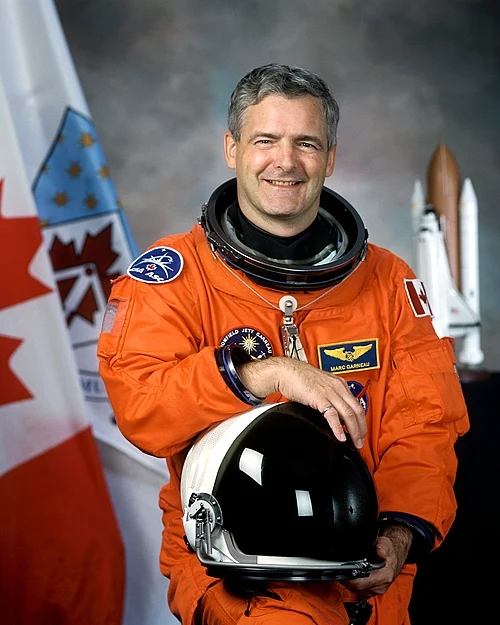
Marc Garneau has died, the former MP and first Canadian in space, less well known for doing my Grade 5 science project when we somehow mailed him a cassette tape on which I asked him to record answers to my questions about being an astronaut—AND HE DID IT! And sent me photos and CanadARM stickers to use in my display, and it was the only science project I ever did that won a prize. What a thoroughly decent human being.






