August 8, 2025
Bring the House Down, by Charlotte Runcie
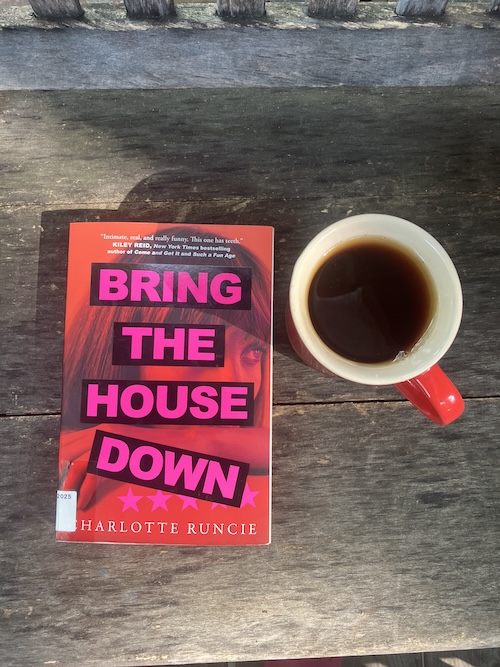
Okay, here’s the irresistible premise: theatre critic and infamous nepo-baby prick Alex Lyons writes a scathing review for a one woman show at the Edinburgh Festival, and then proceeds to pick up that one woman (an actor called Hayley Sinclair) at a bar later that evening, her having no idea who he is, and they spend the night together. By morning, the one star review is in actual print across the nation, and Hayley actually discovers it in Alex’s flat, seeing the photo beside his byline, and making the connection—she is furious, and proceeds to revamp her show into a revenge fuelled feminist takedown which quickly becomes the talk of the festival and goes viral turning Alex Lyons into an international pariah, the poster boy for shitty men everywhere.
What I didn’t expect from Charlotte Runcie’s debut novel BRING THE HOUSE DOWN, however, (Runcie also published a beautiful nonfiction book a few years ago called SALT ON YOUR TONGUE: WOMEN AND THE SEA, which I enjoyed) was Sophie, Alex’s colleague, and the narrator of this story. An art critic, she’s sharing the flat with him in Edinburgh and unwittingly gains a front row sea on the drama, and what a curious seat it is, Sophie also working through her own problems as a new mother recently-returned-to-work and frustrated by her academic partner’s failure to share the load with her, resenting the ways in which her life has changed since their son was born, whereas his goes on the same (save for these weeks where she’s away in Edinburgh, a rare break). She’s also still grieving the loss of her mother, and wonders if she’s stayed with her partner because he is her only chance to be with somebody who knew her mum, whom her mother knew.
While BRING THE HOUSE DOWN lives up to expectations of its sensation and propulsiveness (because what a premise it is!), Sophie’s presence makes the novel something different than the usual commercial fare. And there were moments where I wished she hadn’t, where I felt as though she puts us as readers from a remove from the action (I want the sensation! I want the scandal! I want the dial turned up to MORE MORE MORE), I actually think this makes for a more interesting project, and the narrative arrangement itself is a comment on polarization, he said/she said, the quest for nuance, the need for there to be something in-between sometimes. Sometimes when people say they’re looking for the grey area between black and white, what they’re really telling you is that they’re firmly wedded to the status quo, but Runcie’s grey area via Sophie isn’t like that, is genuinely something more interesting.
And in the end, this book with a sensational premise actually becomes a meditation on culture and criticism, and what it means to exist in a culture that is forever RESPONDING to culture instead of creating it, which means that this isn’t just a novel that is fun to read, it’s also genuinely thoughtful and really interesting.






