July 7, 2025
This Way Up, by Cathrin Bradbury
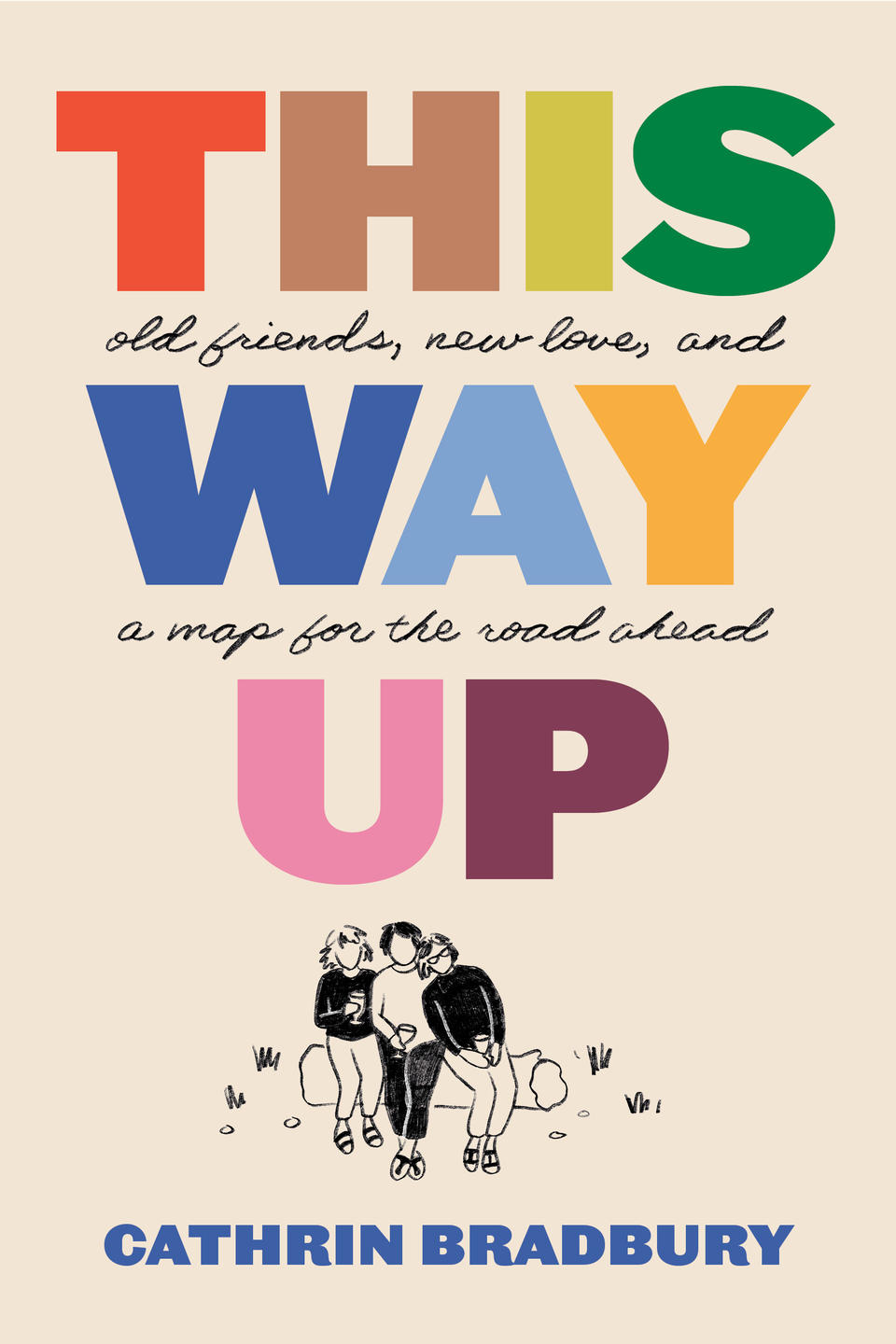
Cathrin Bradbury’s memoir This Way Up is an exercise in reorientation, in way-finding. Think about title, the label placed on boxes in transit, a simple instruction to show where the bottom goes. Although the title of the book is also a joke—at age 68, her doctor hands her a drawing labelled “Aging Changes,” and it turns out everything (“muscle mass, blood flow”) is in decline. “The very few times the arrows pointed up were for body fat and bone breaks. The small fibrillations of panic I had studying the diagram, the merest skips in my heart, were right there under myocardial irritability: ‘UP^'”
“I was going to need a map,” the book begins, with Bradbury on the cusp of her fourth quarter, and changes in the mix. Her marriage has ended, she’s retired from a career in journalism, her children are grown, and yet none of this indicates the end of her story. And it seems there exists no instruction manual for finding one’s way forward at this pivotal time of life, a moment at which she’s finding new love, discovering a new vocation as a writer, and reconsidering the stories she told herself about her history. And so, unable to procure a map for the future, she finds one that takes her into the past instead, a map of the setting from her earliest memories, St. Catharines, Ontario, consulting her trusty siblings to make sense of where she came from, who she’s been.
This Way Up is a delightful, hilarious, and richly crafted story of getting one’s bearings when everything seems upside down. It’s a terrifically candid story of mothering adult children (Bradbury’s daughter’s constant refrain of “Oh my god, Mom…” made her one of my favourite characters in the book), of sustaining longtime friendship, the twists and turns (and pokes) of sibling relationships, and the physical and emotional realities of aging. It’s also beautifully bookish, full of literary allusions, and a wonderful nonfiction companion to Elizabeth Strout’s Lucy By the Sea.
I loved this book, speeding through it in just two sittings. The structure and form are fascinating. On the surface, the reading is direct and straightforward, easy and breezy, but there are such depths, threads beautifully woven into the narrative, appearing and reappearing, so precise and impactful—nothing easy about it at all, except the way it’s such a gorgeous pleasure to read.






