December 13, 2012
Mini Reviews: You Never Know and Earth and High Heaven
 There are times when the books on my To Be Read (But Not New-Releases) shelf sit pitifully neglected, gathering dust (though dust-gathering is sort of a given in our house). And then there are times like now when I’m just barrelling through them, when I could stand to never read another new-release again and what I want is tried, tested and good. When I want something I wasn’t expecting at all.
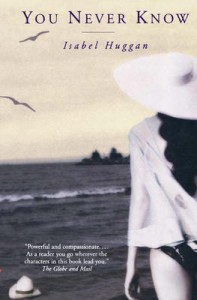
Since falling in love with Isabel Huggan in October (which is remarkable, really. October was a month during which my love was ridiculously hard to provoke. I hated everybody and everything.) I’ve been looking forward to reading her other books. You Never Know is a collection of short stories published in 1993. Some of the stories have a familiar tone to The Elizabeth Stories, narrated in a child’s voice, or in the voice of one looking back upon childhood. But there is lots of range here too in narrative approach, setting, and character. The story that blew me away was “The Violation”, the story of a newly pregnant woman trying to find a place for herself within the rural community that she and her husband had relocated to. The man who plows their lane stops by for lunch, and she proceeds to misunderstand him and he to offend her in the most subtly brutal, unexpected way possible. The gulf between them is enormous, and both of their situations are heartbreaking.
I would describe the shape of Huggan’s stories as inverted-triangular, like a bouquet of flowers. The surface is broad and pretty, but there is enormous depth there, and it goes down down down to levels you might not want to encounter. The themes of most of these stories relate to the collection’s title: how hard it is to know one other, the untraversable gulfs that lie between us. From the conclusion of the book’s final story: “Why we enter each other’s lives and how we’re meant to fit together is more that is given to us to know. And yet that’s what we want, isn’t it? That’s what we want to understand.”
 And then I read Earth and High Heaven by Gwethalyn Graham, which I found more than a year ago in a cardboard box on Heather Birrell’s front porch. I was aware of the title from a list of English Quebec fiction on 49thShelf. It’s the story of a upper-class Anglo Montrealer who falls in love with a Jewish lawyer, and is surprised to learn that the attitudes of friends and family are not so far removed from those in Nazi Germany and in Europe, where Canadian soldiers were fighting WW2. The war was a complicated issue in Quebec, and becomes even more so against the backdrop of Marc and Erica’s romance. It’s a wonderful Montreal novel, very contemporary in its feel, even as it reminded me of Hugh MacLennan all the while–Barometre Rising in particular, with its strong female character. Apparently Two Solitudes came out in this book’s shadow (Graham’s book won the Governor General’s Award, and was a huge bestseller in the US), and MacLennan resented this, considering Graham’s a lesser book for its “not explaining Canada”, for the anywhereness of her setting. Though that wasn’t the impression I got from Earth and High Heaven. It was very Canadian, particularly so in its setting and perhaps an easier book to encounter than MacLennan’s for not being didactic. It’s a conventional novel, but daring for its time and really well written. I enjoyed it completely and I’m so glad it’s in print. More readers need to know it.
December 12, 2012
Book picks at Vitamin Daily
 I’ve been recommending books left, right and centre lately (which doesn’t really make a change, does it?). Check out “Book Report: 5 picks for winter break” at Vitamin Daily for a particularly delightful selection.
December 11, 2012
Bunch holiday reads (for grownups!)
(Cross-posted from Bunch Family)
If the holidays are offering up a little window of reading time in your life, it’s important that you give that time to a book that’s worth it. The following is a list of great books guaranteed to go down easy once the kids have gone to bed, and stay with you long after the last page is turned.
 The Book of Marvels by Lornia Crozier: Crozier is one of Canada’s most renowned poets, and in her latest book, which is not quite poetry, she turns her attention to the domestic, illuminating the extraordinary life of every-day things. For example, from “Fork”: “It’s the only kitchen noun, turned adjective, attached to lightning.” The book is slim, gorgeous and devourable. A must-have for every household, actually.
 Stopping for Strangers by Daniel Griffin: “The first time I got pregnant, it was like the baby was stealing our youth… And then when I miscarried, it was like we were robbed again, and so I got pregnant again.” Here is parenthood and family life in all its complexity. Griffin’s short story collection was shortlisted for the 2012 Danuta Gleed Literary Award and is a testament to the short story’s amazing force.
How t o Get a Girl Pregnant by Karleen Pendleton Jiménez: Pendleton Jiménez’s memoir frames a very difficult question, “How is a butch Chicana lesbian supposed to get sperm?” In turns hilarious and heartbreaking,with incredible honesty and great writing, the book sheds light on the experience of infertility and the longing so many people feel for the (seeming im)possibility of parenthood. This one was nominated for a Lamba Lit Award for Lesbian Memoir/Biography.
 The Blondes by Emily Schultz: I can say that this is the only feminist novel that I’ve ever handed to my husband and said, “Hey, read this. It’s about an apocalyptic plague.” He liked it as much as I did. When a virus begins infecting blond women with murderous rage, women assume their old familiar positions turned against one another. It’s a fast-paced and suspenseful book that offers remarkable insight into women’s relationships and also reproductive rights.
 A Large Harmonium by Sue Sorenson: This is the book that I can’t stop recommending, and no one has been disappointed yet. A fun and hilarious book about balancing work and family life, a book with joy at its core, it’s a year in the life of a university English professor who finds herself dissatisfied with her lot. She’s contemplating writing a book about bad mother’s in children’s literature: “And in Good Night Moon, where has the mother buggered off to? That intractable little bunny who won’t go to sleep has been left in the care of a rather odd old lady sitting in a rocker… ”
 Never Knowing by Chevy Stevens: If you’re going to curl up with one book about a serial killer this year, let this be the one. Sara Gallagher’s life unravels when she discovers her birth father is a notorious killer, and then her identity is leaked on an online forum. And then she finds out that her father is still out there, and that he wants to get in touch. As Sara plots to keep her family safe, she must also grapple with the disturbing possibilities of her genetic inheritance.
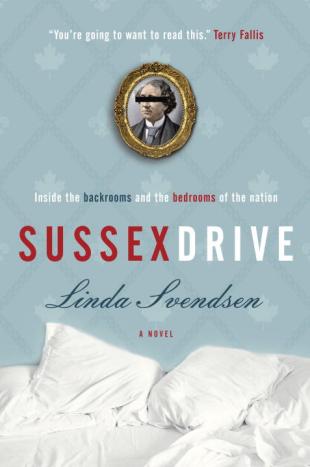 Sussex Drive by Linda Svendsen: For those of you looking for something political, I suggest Linda Svendsen’s smart and funny satirical novel. Svendsen re-imagines the 2008 prorogation of Canadian parliament from the perspectives of the power-house wife of Canada’s right-wing Prime Minister and the exotic, unlikely Governor General who lives across the street. Canada’s First Lady is going to let nothing–not even her teenage daughter’s pregnancy by way of a member of her husband’s RCMP security force–come between her husband’s party and its elusive majority. Can the Governor General stop her?
 Cadillac Couches by Sophie B. Watson: This book is fun, a tribute to musical fandom, an ode to ’90s Grrrl power, the tale of Annie and Isobel’s road trip beginning at the Edmonton Folk Festival and ending up at a Hawksley Workman show in Montreal. Along the way, Annie discovers Ani DiFranco and is half-transformed, they have a breakdown in Wawa, max out their credit cards, and have to busk in order to earn enough money to keep the gas tank topped up. Annie is convinced if they can just make their way to Hawksley that he will fall in love with her, and her half-transformation will be complete.

 Moby Dick and Pride and Prejudice from Cozy Classics: And for those of us who’d like to stick to literature with a bit of substance, definitely check out the Cozy Classics board books. With no more than one word per page, the books actually manage to stay loyal to their source material, plus the felt puppets in the illustrations are adorable. And we all know that these sorts of picture books are really for the parents anyway.
December 10, 2012
Christmas Reads: Comfort and Joy by India Knight
 I received this book for Christmas two years ago, the hardcover version, which is important to note because it features this gorgeous cover by Leanne Shapton. In a photo from that Christmas 2010, I am curled up on the couch with this novel and enormous glass of beer, which is pretty much an ideal way to spend any day. I reread Comfort and Joy this past weekend sans beer but with just as much pleasure. How nice to have a Christmas book for the adult set, and how nice too that the book stands up to a second time around.
It’s peculiarly structured, the continuing story of Clara Hutt who first appeared in Knight’s novel My Life on a Plate. Comfort and Joy takes place over the Christmases of 2009-2011, illustrating the pressure Clara feels each year to provide a perfect Christmas for her fractured family. The family becomes more fractured as the years go on–Clara’s second marriage ends, she worries about how it’s affecting her children. All the while she’s accommodating her eccentric extended family, several wacky friends, ex-husbands, and in-laws to create a 21st century perfect family Christmas. Not perfect as in magazine perfect–here there is no such veneer, and the table conversation is always unfailingly hilarious, however slightly offensive. Clara doesn’t mind being offensive, but she just wants everybody to have a good time, to feel a sense of belonging she herself missed growing up.
Comfort and Joy is light, smart and funny, and sure to delight anyone who’s enjoyed Knight’s other novels or her newspaper columns. A treasured volume in my Christmas library.
December 10, 2012
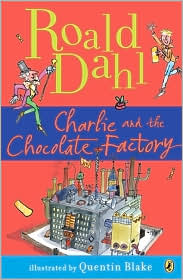
"THEY… USED… TO… READ! They'd READ and READ."
 The most important thing we’ve learned,
So far as children are concerned,
Is never, NEVER, NEVER let
Them near your television set —
Or better still, just don’t install
The idiotic thing at all.
In almost every house we’ve been,
We’ve watched them gaping at the screen.
They loll and slop and lounge about,
And stare until their eyes pop out.
(Last week in someone’s place we saw
A dozen eyeballs on the floor.)
They sit and stare and stare and sit
Until they’re hypnotised by it,
Until they’re absolutely drunk
With all that shocking ghastly junk.
Oh yes, we know it keeps them still,
They don’t climb out the window sill,
They never fight or kick or punch,
They leave you free to cook the lunch
And wash the dishes in the sink —
But did you ever stop to think,
To wonder just exactly what
This does to your beloved tot?
IT ROTS THE SENSE IN THE HEAD!
IT KILLS IMAGINATION DEAD!
IT CLOGS AND CLUTTERS UP THE MIND!
IT MAKES A CHILD SO DULL AND BLIND
HE CAN NO LONGER UNDERSTAND
A FANTASY, A FAIRYLAND!
HIS BRAIN BECOMES AS SOFT AS CHEESE!
HIS POWERS OF THINKING RUST AND FREEZE!
HE CANNOT THINK — HE ONLY SEES!
‘All right!’ you’ll cry. ‘All right!’ you’ll say,
‘But if we take the set away,
What shall we do to entertain
Our darling children? Please explain!’
We’ll answer this by asking you,
‘What used the darling ones to do?
‘How used they keep themselves contented
Before this monster was invented?’
Have you forgotten? Don’t you know?
We’ll say it very loud and slow:
THEY… USED… TO… READ! They’d READ and READ,
AND READ and READ, and then proceed
To READ some more. Great Scott! Gadzooks!
One half their lives was reading books!
The nursery shelves held books galore!
Books cluttered up the nursery floor!
And in the bedroom, by the bed,
More books were waiting to be read!
Such wondrous, fine, fantastic tales
Of dragons, gypsies, queens, and whales
And treasure isles, and distant shores
Where smugglers rowed with muffled oars,
And pirates wearing purple pants,
And sailing ships and elephants,
And cannibals crouching ’round the pot,
Stirring away at something hot.
(It smells so good, what can it be?
Good gracious, it’s Penelope.)
The younger ones had Beatrix Potter
With Mr. Tod, the dirty rotter,
And Squirrel Nutkin, Pigling Bland,
And Mrs. Tiggy-Winkle and-
Just How The Camel Got His Hump,
And How the Monkey Lost His Rump,
And Mr. Toad, and bless my soul,
There’s Mr. Rat and Mr. Mole-
Oh, books, what books they used to know,
Those children living long ago!
So please, oh please, we beg, we pray,
Go throw your TV set away,
And in its place you can install
A lovely bookshelf on the wall.
Then fill the shelves with lots of books,
Ignoring all the dirty looks,
The screams and yells, the bites and kicks,
And children hitting you with sticks-
Fear not, because we promise you
That, in about a week or two
Of having nothing else to do,
They’ll now begin to feel the need
Of having something to read.
And once they start — oh boy, oh boy!
You watch the slowly growing joy
That fills their hearts. They’ll grow so keen
They’ll wonder what they’d ever seen
In that ridiculous machine,
That nauseating, foul, unclean,
Repulsive television screen!
And later, each and every kid
Will love you more for what you did.
-Roald Dahl, from Charlie and the Chocolate Factory
December 10, 2012
Taking Responsibility
 The Canadian Women in the Literary Arts’ Blog launched today with my post “Taking Responsibility for the CWILA Numbers: My Piece of the Pie”.
“For years, I’ve been counting the pitiful numbers of female bylines in Canadian magazines and newspapers, dropping subscriptions in despair, so when the CWILA numbers were made public last spring, the numbers didn’t surprise me. If anything, I was delighted—finally here was quantifiable evidence that I wasn’t crazy or paranoid, that something was amiss. And I was also deluded enough to imagine that the next step would be simple, to suppose that now everyone knew what the problem was that things would start to change.”
December 9, 2012
High Water Mark by Nicole Dixon
 After chasing Lisa Moore around last week, it was sweet relief to encounter Nicole Dixon’s High Water Mark, finally something to hold on to. Though while these stories structures were conventional, their subject matter isn’t, Dixon going out of her way to introduce themes and ideas not always present in the standard Can-Lit (though if 49thShelf has taught me anything, it is that there is no such thing as “standard Can-Lit”). Her characters are bolshie, flawed, funny, horny, and determined to forge their own paths. They live in tiny Nova Scotia towns, in downtown Toronto, in Sarnia. Friendships are tangled, love lives are messy. These people are teachers, fisherman, wannabe farmers, and t-shirt folders. Nobody is sure of where they stand.
It’s a solid collection, even though the stories have been written over many years and a few have been published elsewhere– “High Water Mark” appeared in The Journey Prize Stories 19. The stories cover a broad range, but they fit together well, and their diversity makes for an interesting read. “High Water Mark” is the story of a teenage girl in tiny Refugee Cove Nova Scotia whose mother has terminal cancer and who has taken over her sister’s job folding t-shirts in a tourist trap since her sister’s baby died. And yes, it manages to be funny. “Sick Days” is one of the two Mona Berlo stories, beginning, “The grade-five students are making Mona Berlo ill…” and it’s an illuminating view into the classroom from a teacher’s perspective, and into the frustrations of having to guide young lives when one is still trying to get her own sorted out. Alcohol helps.
“Saudade” is the story of two women in a band whose dynamic is rocked by the introduction of a third member. “Mona Says Fire Fire Fire” was my favourite in the collection, Mona now relocated to Refugee Cove teaching French immersion and trying to make a place for herself among the locals while she considers a long-distance love. “Some Just Ski and Shoot” is about one woman’s revenge on her ex-boyfriend, which also represents the culmination of a long, long story. In “Happy Meat”, a couple goes back to the land and discovers that sometimes you need more than self-sufficiency. In “What Zoe Knows”, a teenage girl discovers her father is having an affair, resulting in heartbreaking conclusion and more of a glimpse than she’d like to have seen into the complexities of her parents’ lives, their vulnerabilities. And I loved “Diving For Pearls”, about a woman who goes home to work with her fisherman father and considers what to do about an unexpected pregnancy, the trouble of which is underlined in the context of a life her own mother had had to escape from. “An Unkindness of Ravens” about too-desperate love, the most dysfunctional relationship ever, and a subtly brutal ending. And finally, “You Wouldn’t Recognise Me” from the perspective of Zoe’s alcoholic mother who is struggling for forgiveness and to redeem herself after nearly killing her daughter in a car accident.
Stories like “Diving for Pearls” and “You Wouldn’t Recognize Me” are so incredibly nuanced that they left me longing for more of the same in a few of the others. “‘I know we’re expected to teach art,’ the blonde said quietly, ‘but as if I’m going to. Like it’s important.” This from “Sick Days”, from a character too dim for these stories–Mona’s strong perspective could well have been challenged by someone with more substance than that. There is a similar treatment of other women in book–the friends in “Saudade” are so surprised to meet another woman with whom conversation doesn’t “[default] to talk of shopping or TV or complaints about men.” It made me think that these women have been hanging out in all the wrong places, because brilliant women are everywhere, but they seem to be so apart in Dixon’s stories. And finally, there was a strange recurring theme of women settling into relationships and becoming obese, to the point where it was kind of conspicuous, to the point where there was no worse fate than fat, and being married was somehow synonymous.
But still, I really like what Dixon is doing here, and I hope that in her next book she realizes that she doesn’t have to try so hard to do it. “High Water Mark” is an absorbing, surprising, and affecting read whose characters live large beyond its pages.
December 9, 2012
Very Good Days Have to Just Be Allowed to Happen
 My holiday reading has started, and it’s so nice to be back with books on my own terms, reading solely for pleasure. I’ve read 2.25 books in the last four days, which is sort of lovely, yesterday in particular. And it occurs to me that you can’t really plan a good day. Certainly, you can collect them like they’re postcards (and oh, you should), but no amount of shrewd plotting can make a day truly magic.
I wouldn’t have even thought to request that yesterday’s weather be cold and dreary, or to think that there would be an up-side to Harriet waking up at 6:30 possessed by a demon. We had friends to brunch at 11:00 and we managed delicious and gluten-free, which is kind of amazing. Harriet was terrible, and by the end of the visit she was naked and throwing muffins across the kitchen in a rage. Thankfully I’d had enough rest and our friends had enough of a sense of humour that the whole thing was terribly hilarious. And as soon as they left, we threw Harriet into bed for that nap she was begging for and she stayed that way for three hours. (Harriet has stopped napping, for the most part. And now when naps arrive, they’re like a gift from the heavens.) I went to bed too and spent all afternoon rereading Comfort and Joy by India Knight. When Harriet got up, I still wasn’t finished, so I kept hiding from my family so I could get to the end, which was tricky because we live in a small apartment and the book kept making me laugh out-loud.
We were overjoyed to discover that Harriet’s nap had rendered her a human being again, and also that everyone in our family was equally inclined to not bother leaving the house. Except that we had to buy a Christmas tree, which was to have been the day’s main activity, but it was 6:00 by this point and dark outside. We went to get the tree anyway, carrying it home on our shoulder from the convenience store around the corner. Picked up Thai take-out to have before we hung the decorations up. We brought the tree home and unwrapped it to discover it was gorgeous, and so absolutely enormous that we’re going to be unable to remove it from the house after Christmas without causing major damage, but we’ll worry about that later. The whole house smells coniferous. And we decked our tree, rediscovering the fabulous decorations we’d forgotten we’d owned. And then Harriet was put to bed finally, the last of the pad-Thai eaten. And I settled in for the evening with Isabel Huggan’s You Never Know, which is so very wonderful.
The icing on the cake would have been not having to wake up every three hours all night long to pee, but that is too much for one woman to ask for. So I will content myself instead with the most accidentally perfect day.
December 5, 2012
The Selected Short Fiction of Lisa Moore
 To celebrate their 45th anniversary this summer, House of Anansi reissued 10 of their “classic books” as The A List, a gorgeously designed series of eclectic reads, and the first one I turned to was The Selected Short Fiction of Lisa Moore. Because I love Lisa Moore. I was so struck by Alligator when I read it in 2006; found it to be a Woolfian “recording [of] the atoms as they fall”. And then with February in 2009, a book I decided was absolutely perfect. I thought anything could be declared so objectively. As I read the novel, I had no idea of the polarizing reaction readers would have to it, that its reviewers would be alternatively sobbing hysterically or spitting with scorn. Though I’ve reread the novel since, and found it didn’t let me down.
I’d read one of Lisa Moore’s short story collections as well, but I can’t remember which, which is to say everything about its impression upon me. So I was very eager to read the The Selected Short Fiction, to know better the work of this author who has meant so much to me. And what struck me about the collection, which is made up of Moore’s two short story collections and a few unpublished stories, is that the novels are really not such a departure after all. The same setting, kinds of characters, preoccupations. Lisa Moore is brilliant, and it seems that what she creates can’t possibly come from mere imagination but from vision. The line highlighted by Jane Urquhart in the collection’s introduction: “They made love on the grass watching out for broken beer bottles, an aureole of amber glitter around their bodies.”
“Natural Parents” was my favourite (and I am know I’m not the only one who has ever said this)–the cerebral, all the action. The stories were funny, wrought, exhausting, hard to follow, which makes sense, considering this from Moore, from a CBC interview whose link no longer exists: “If the reader knows where you’re going, there’s no point in reading that sentence; they’ll just skip it. It’s not for the sake of being avant-garde that I want it to be unexpected. It’s because I think a real engagement with a book means that the reader has to chase after the story”. All that chasing in a short story collection though is really hard, one chase after another. I love short stories and I love impossible engaging literature, but it’s hard to fit that kind of read into a life. It’s almost like running around in circles. One short story at a time, perhaps, but then I don’t encounter my books that way. I really would much prefer to have to work that hard on a novel, if I have to work that hard at all.
It occurs to me that what Moore is up to in her novels is not really so different though–that Alligator is just as fragmented and hard to follow (and wonderful!) as the short stories are, and that anyone who sees February as anything otherwise is reading it wrong. There is a bare bones, semi-conventional plot to February that is decidedly not the point of the book. It’s what’s going on beneath the surface that matters, that as with the short stories moments far apart in time occur simultaneously. That February is in fact a long short story that takes on a novel’s dimensions, but look close and you’ll see the underpinnings are the very same. (I’ve written a whole essay on the goodness and value of this book. It’s pretty much all I really ever have to say about anything.)
Anyway, this is the great thing about reaching back in time for a book, about a series like The A List. Because on one hand, each book is a new encounter, but one that has the context of casting everything that came after in a whole new kind of light.
December 4, 2012
Christmas Reads: The Jolly Christmas Postman
 At the beginning of November, when I too was moaning about “the Christmas creep”, I forgot to bat an eye when I came across The Jolly Christmas Postman in the bookshop, and instead partook in an elaborate jig in my head and bought the book immediately. Because we’re big fans of the Ahlbergs at our house, and of the Jolly Postman in his original form, and the postal system in general. I saved the book until December 1 and we’ve been reading it steadily ever since. And how wonderful it is that this book isn’t riding the tails of its franchise, but instead is even better, richer than the original. We’re totally in love with it.
There is so much detail here, right down to the postmarks (from such places as Banbury Cross and Wobbleton, and if you’re as entrenched in Mother Goose as we are, you too will find this delightful). Allusions to the lady with the alligator purse, a glimpse into Red Riding Hood’s playhouse, updates on our favourite characters (The 3 Bears have become a 4some, Baby Bear now a big brother!). And it’s not jus’t letters our Jolly Postman is delivering; along with Christmas cards, his envelopes contain a jigsaw puzzle, a board game, and an elaborate 3D card. A present full of presents indeed.
Oh, and I love the meta elements! “‘A book in a book!’ says the Gingerbread Boy./ “What a simply delicious surprise.”/ (But if he only knew he’s in one too–/That would really open his eyes.)’ The first two lines of which are basically my literary philosophy.
The Jolly Postman’s route ends up at the North Pole at a certain workshop where he’s dropping off a huge pile of children’s letters. And fortunately, because it’s dark, snowy and cold, he’s able to hitch a ride on Santa’s sleigh to get home.