December 31, 2012
Terror and Joy
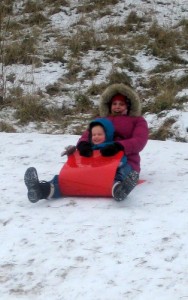 “For 2009, I make no resolutions, because things will be changing whether I will them to or not, and certainly, I am no longer (as) in control of it all.” Which is a thing I wrote exactly 4 years ago, supposing myself to be so brave and open-minded, but what I didn’t know then was how unhappy it would make me to lose control of it all, that I’m really not the type to go with the flow. Having a baby made me more aware of the fixedness of my limitations than anything else I’ve done before, except perhaps for that summer I spent alone adventuring in Europe and crying in phone booths.
So really, my most important resolution for 2013 is not to break. That I employ every bit of my minuscule store of patience. That I’m able to weather the difficult days with an awareness of where they’re taking me, which is to a place where I belong. To face forward, even with all the terror, that terror that is so inextricably mixed with the most enormous joy.
Happy New Year. May 2013 bring you fantastic books, a glorious summer, topped-up glasses and so so much clafoutis.
December 30, 2012
2012: My Year in Books
 For the most part, my year in books was a good one, but somewhere around October, it all fell to pieces. I blame my own circumstances for this mostly, but it’s true that books this Fall didn’t spark my enthusiasm as those from the Spring had. There was a time in the spring when I was so on a roll, not sure that there wasn’t a book in the entire world that wasn’t wonderful. By October, I’d stopped keeping track of the books I was reading, deciding I didn’t care about that sort of record anymore, though when I came out of my first trimester stupour, I realized I did, and spent an anxious hour putting my whole list back together.
 I’ve already shared my books of the year. I’ve also read some poetry, though I never know how to talk about it here, so I don’t. Some of the best books I’ve read this year that weren’t new were Subject to Change by Renee Rodin, The House With the Broken Two by Myrl Coulter, So Beautiful by Ramona Dearing, Bilgewater by Jane Gardam and All the Anxious Girls on Earth by Zsuzsi Gartner. Like everybody, I loved Gillian Flynn’s Gone Girl and How to Be a Woman by Caitlin Moran. And the most amazing book I’ve read all year, the review that brought me more hits than any other I’ve ever written, Firebrand by Rosemary Aubert, “Loving the mayor is a bit like that”. Other notables of 2012 were Tanis Rideout’s Above All Things, Jo Walton’s Among Others, Kyo Maclear’s Stray Love, Noah Richler’s What We Talk About When We Talk About War, Alice Petersen’s All the Voices Cry, Zadie Smith’s NW, dee Hobswan Smith’s Foodshed: An Edible Alberta Alphabet, Sussex Drive by Linda Svendsen, Miranda Hill’s Sleeping Funny, and Daniel Griffin’s Stopping for Strangers. And Isabel Huggan, the very best thing I found all year. I loved her two short story collections so very much, and have her third book Belonging lined up for not so far into the future.
I did not succeed in my 2012 New Year’s Resolution, which was to finally finish reading John Cheever’s collected stories. I am beginning to think that “collected stories” volumes are not necessarily reader-friendly. Or maybe the problem is simply me.
 I’ve read 120 books this year so far, and may get two more in before the year is out, as I’m just about finished Ali Smith’s collection The First Person and Other Stories. 120 is less than I’ve read in years past, but then I’ve also been reading for work more than I ever have before. It has been a very busy year, bookwise, with less room to read for pleasure than I’ve ever known, what with the work stuff and the obsolescence of naptime, but then I also know that I’m lucky to be paid to read at all. And that I’ll probably be breastfeeding again in about six months time, which comes with its own agonies, but ample time to read (one-handedly, all night long [yawn]) is not one of them. I’ve also been too isolated in a Can-Lit bubble this year, and need to branch out beyond. In 2013, I plan to do something about that.
Anyway, long live books! Long live authors! Long live small Canadian presses, which publish most of the best stuff out there. I’ve spent the last two weeks reading indulgently, and it’s been a pleasure, reading for reading’s sake. The definition of holiday. And I’ve got some exciting books lined up for the new year–new Lisa Moore, new Kate Atkinson! Also getting around to the 2012 books I’ve been slow on–John Lanchester’s Capital, for one, and others. As ever, I am looking forward.
December 29, 2012
Treasures and others
I’ve decided to remain unabashed about my propensity to read only/mainly female authors, at least until most of the literary world clues in to the fact that they’ve got the same prejudice but just in opposite. And now, apropos of, um, something, a few highlights from the Globe and Mail’s year-end book recommendations list, which I always enjoy and has found me some treasures in years past.
From Robert Hough: “One of the best is Any Human Heart, by William Boyd, all the more so because the central figure is male – a growing rarity in an industry that falls all over itself trying to please female readers.” Charming.
Miriam Toews sells me on Alison Bechdel’s Are You My Mother?, though I suspect Miriam Toews could sell me on anything.
Sarah Polley reads while breastfeeding! And while she recommends we read Anton Piatigorsky’s The Iron Bridge, which I really do want to read, but she notes we should wait ’til baby is weaned: “Generally it’s best to save books about how dictators become dictators for times when you are not lactating – this is something no one told me.”
From Ian Baruma: “Alas, this left little time for contemporary fiction, most of which seems to pale in terms of daring and ambition compared to Melville or Joyce…” Yawn. Though both he and Laura Penny recommend Moby Dick, and my feeling is that Laura Penny never steers one far wrong.
I loved Katia Grubisic’s recommendation of Patrick Warner’s Double Talk, which I’ve been interested in and now I absolutely want to read.
And thank goodness for Lisa Moore: “I choose books by Three Wise Women…” Zadie Smith, which I already know is great,Christine Pountney, which I’m getting a feeling about, and you can always trust a reader who is recommend Elizabeth Bowen, oh yes, you can. I also think that if I spent the rest of my life only reading what Lisa Moore told me to read that I would probably be all right.
And Martin Levin was good enough to recommend one book by a woman, “the great Jane Gardam’s Crusoe’s Daughter,” which I totally want to read now and Gardam is great indeed, though I am beginning to suspect that Jane Gardam is Martin Levin’s go-to woman writer (at least when conversation necessitates), what Woolf is to so many others, but at least he’s read her.
December 19, 2012
The Fairy Door
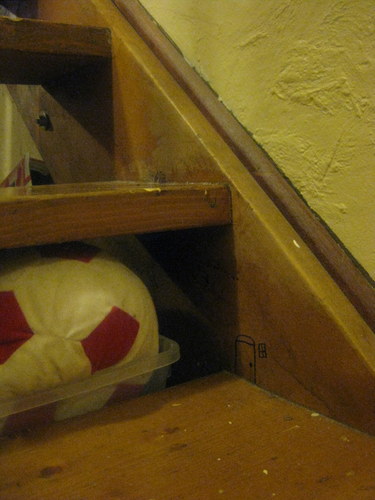 For me, the blogosphere has always been about inspiration, new discoveries, things to learn, and people to learn from. And while very often I’m unable to measure my own life up to those seemingly perfect ones I find online (I can’t decorate a cake for shit, my knitting is always wonky, and if I had a lifestyle blog, it would be called “Cluttered and Dusty”), I usually come away better f0r these encounters. My life is so much richer for what other bloggers have shown me to strive for over the last decade.
Sometimes these bloggers make it all seem so hard though, out of reach, or perhaps they are just underlining the very things my own world is lacking (like an expensive camera, patience and artistic ability). I’m here to show you, however, that none of these things are really necessary to create a little magic in your lives, and the Fairy Door is case in point. Now, Fairy Doors are amazing. I think I heard about them while I was pregnant with Harriet, and I loved the idea of a tiny portal, a door to nowhere and anywhere, of a secret world beyond our own. I wanted that kind of everyday magic in our household, an otherworldly realm to believe in. So at some point in Harriet’s first year, I “built” one.
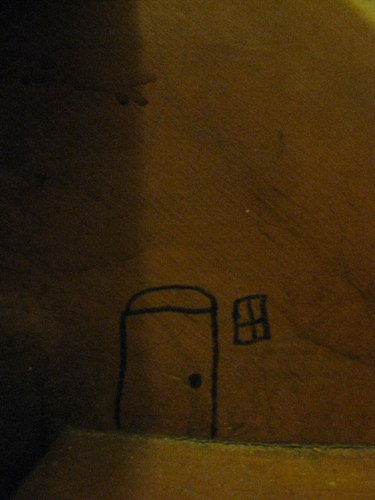 According to Pinterest and other fine sources, a Fairy Door is a beautiful thing. Apparently you can buy accessories for it. It’s one of those projects I would never ever have accomplished, or even tried, except that I made mine without a template. In fact, I made my Fairy Door without anything except a Sharpie marker, and it’s not beautiful, and my stairs are really dusty, but I promise you that neither of things mean that my daughter believes in the fairies any less.
Somewhere along the line, our Fairy Door became the home of the Hoopty’s, Mr. and Mrs. Hoopty and their daughter Harriet Hoopty who have been identified our own family’s reflections in the kitchen windows while we eat our dinner. (They must shrink down when they go home.) They have a younger child, a son called Hando, and they’ve also taken in Cousin Dupa since his parents disappeared and his babysitter died. Apparently, they’ve also just had a new baby, christened Butterfly, and it must have been a high-risk pregnancy because Mrs. Hoopty was in the hospital for 7 weeks. She’s been reported to be fine though.
Anyway, it doesn’t have to be as difficult as it appears, parenthood. Which is not to say that it’s easy, but there really are so many wonderful things for which almost nothing is all that’s required.
December 18, 2012
Reading indulgently
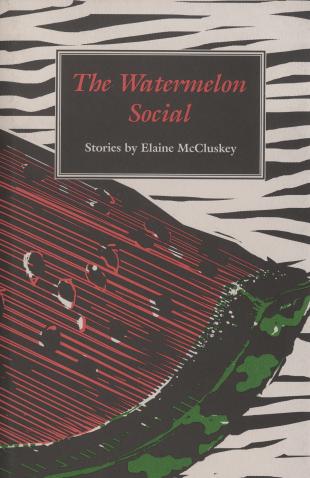 For the last week, I’ve been reading indulgently, books of the year either read or pushed aside, and I’ve been reading my own idiosyncratic to-be-read stack, the books I’ve bought at college book sales, discovered in clearance bins, at yard-sales, or scooped from cardboard boxes put to the curb. And I’ve only been reading thin books, anything too heavy (literally or otherwise) put away for a later date. I’m in the mood right now for progress, for the massive pile of books before me to appear to be getting under control. I’m in the mood also for books that will go down easy, that will surprise me, new discoveries. I’m so tired of the books that everybody’s talking about, which either means that I start saying what everybody else is, or else the book fails to live up to the hype and I start thinking everybody is stupid. It means, of course, that when I do start to rave about Elaine McCluskey’s The Watermelon Social that it’s a little bit lonely. Can I tell you how much I loved the line, “For God’s sake, Les, when we were young, radio stations played ‘My Ding-a-Ling'”? I’ve also read The Only Snow in Havana by Elizabeth Hay, which is such a strange and wonderful book, an ode to Mexico City and Yellowknife, and the ties between them. About love, loss and the fur trade. Both books were rife with stuff I didn’t understand, but I didn’t mind, and it didn’t hinder my enjoyment. I love these indications of further treasures locked within. And now I am reading The Chronicles of Narmo, which is the novel that Caitlin Moran wrote when she was 15, and I expect I could get though it in a single bath, and that there will be not much there that I don’t understand, but plenty that will make me laugh, and that’s most all right too.
December 17, 2012
Christmas Reads: The Christmas Birthday Story by Margaret Laurence
 I hadn’t heard of The Christmas Birthday Story by Margaret Laurence until I read a collection of her letters A Very Large Soul in October. And I was intrigued by the sound of this book, “…a re-telling of the Nativity story, for use with small children. I wanted to tell it in such a way that small children would understand and be able to connect with it. I really wanted to emphasize the birth of the beloved child into a loving family.” For me, Christmas has always been about new life and family, and not any particular baby or family either, so I appreciated Laurence’s approach, particularly as she has religious knowledge to do it properly. Here is the Christmas story but without angels, God doesn’t get a mention. It’s a very human story of family, of travel, of a carpenter and his wife who are going to have a baby. The only thing otherwordly is that most peculiar star.
“That child Jesus grew up to be a man, and he was strong and hard-working, like Joseph the carpenter. He was gentle and kind, like Mary his mother. And he was something else, too. He was a wise teacher and a friend to all people./ So we remember him always, and at Christmas time we celebrate his birthday…”
Long out of print, copies are hard to come by online, but I am glad I tracked one down for us. It’s a beautiful story, ideal for those of us who are not religious but want our children to understand our culture, why we celebrate at this time of year. Helen Lucas’s illustrations are dated, but my child has been raised on vintage picture books and hasn’t noticed.
December 16, 2012
Pickle Me This 2012 Books of the Year
As ever, it’s been a good year for books, and I’m only sorry that not everyone has yet been given the chance to fall in love with all the books that I loved best this year, but these are all books with good long shelf-lives and I know you will be happy to encounter any of these whenever you happen to do so. Just make sure you do.
 Here We Are Among the Living by Samantha Bernstein: I loved this memoir-in-emails, this wonderful Toronto book about coming of age in the shadow of 9/11 and the legacy of the Baby Boomers. From my review: It’s a book I emailed my friends about, my friends who were sitting around a booth with me at a College Street diner on the night of September 11 2001, and I told them, “This is our story.”
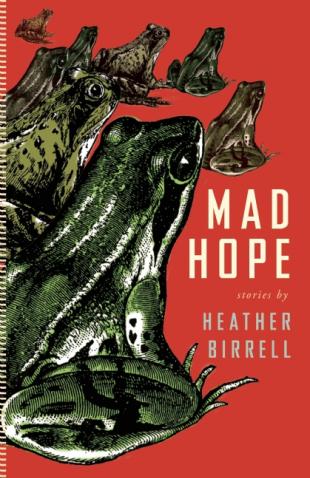 Mad Hope by Heather Birrell: Heather is my friend, but I have no compunction about including her book on my list with some objectivity because I really had no idea of the depths of her brilliance until until I read it. It’s a beautiful, rich, meticulously-curated short story collection, and it’s turning up on year-end best-of lists all over for good reason. Mad Hope is excellent.
 The Book of Marvels by Lorna Crozier: This is the book I kept talking to strangers about on busses, reading them the line about forks: “It’s the only kitchen noun, turned adjective, attached to lightning.” From my review: …one of the few books I’ve ever encountered that dazzles you when its dust jacket falls off: the book is argyle. Its design is splendid, and the contents will not disappoint, guaranteed to appeal to anyone who loves words, and stories, and the thingy-ness of things.
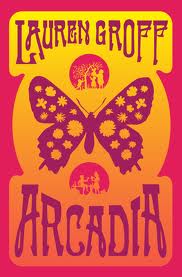 Arcadia by Lauren Groff: Groff is my favourite American writer, with so much more substance than hype about her, and in her second novel Arcadia, she just keeps getting better. From my review: Lauren Groff is a rule-breaker, a boundary-pusher, a genre-blurrer. There’s nobody else quite like like her writing right now, and she writes on the shoulders of those who came before her… She also writes with a deep appreciation and awe for history, for the role of story within history, and for the epic. Her first novel had a larger-than-lifeness about it, which is not so unusual for a book a writer has been working her life for, but it’s less usual for a second novel and for it to be pulled off so successfully too.
 The Forrests by Emily Perkins: One of a number of brilliant books this year that we haven’t heard nearly enough about. From my review: The Forrests is like The Stone Diaries, but edgier, and structured as the interior of its subject’s mind rather than her scrapbooks, and it’s enormously successful. Rachel Cusk, Virginia Woolf. Vividly human characters, gorgeous writing. It’s full of surprises, twists, turns and moments of illumination, quiet but profound in its brilliance, and devastating to have to finally put down.
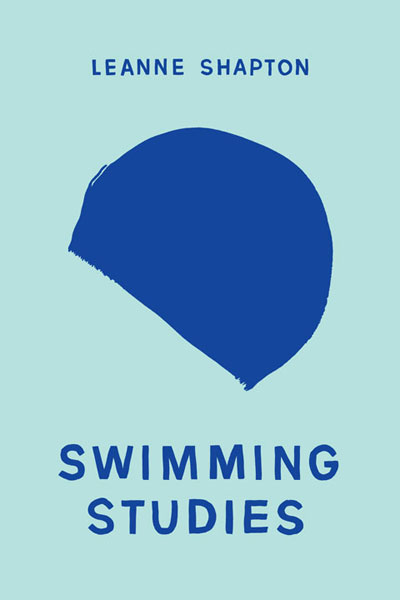 Swimming Studies by Leanne Shapton: Oh, sweet summer time and this gorgeous book I bought one sweltering day on a walk home from the swimming pool. From my review: Swimming Studies is a difficult book to explain, and I’m glad that I get to review it in my blog so that I don’t necessarily have to. That I can simply say that the whole thing just works, for no reason I can really fathom. Leanne Shapton writes about ponds and pools she has known– the Hampstead Heath Ladies Pond, the pool at the Chateau Laurier, the baths in Bath, and so many others. She writes about morning practice: “Ever present is the smell of chlorine, and the drifting of snow in the dark.” A many-page spread displays her extensive bathing suit collection. She includes drawings of her teenage swim teammates, with brief biographies for each: “I’m not crazy about Stacy since noticing that she copied onto her own shoes the piano keys I drew on the inside of my sneakers.”
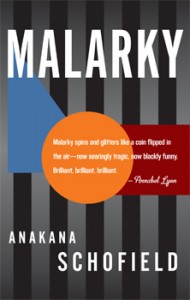 Malarky by Anakana Schofield: According to everybody that matters, this was one of the best books of the year, and when it comes out in the UK next year, the whole world is going to know it. From my review: If Hagar Shipley met Stella Gibbons, the end result might be Anakana Schofield’s Malarky, but then again, it probably wouldn’t be, because Malarky refuses to be what you think it is. And moreover, it probably wouldn’t be because the book is meant to be chock-a-block with allusions to James Joyce and Thomas Hardy. Don’t tell anybody, but I still haven’t read Ulysses (and hence the Gibbons instead of the primary sources), but I have read Malarky, and it was brilliant, which I know for certain even with the burden of my literary ignorance. And that I can pronounce a book as wonderful even whilst unable to access its higher planes of greatness is certainly saying something for the book itself, which is mostly, “You’ll like it too.”
 The Blondes by Emily Schultz: I devoured this book in a weekend, and as soon as I was finished it, I started to read it again. From my review: Hazel’s few friendships and alliances with women are shattered as individuals try to navigate their respective ways to safety… But Hazel ultimately finds herself entirely powerless to her biological destiny and to patriarchal tyranny when the plague and its circumstances make impossible her choice to terminate her unwanted pregnancy. Schultz shows how change creeps in little by little so that to a feminist academic, lack of access to abortion can become almost remarkable. The Blondes is powerful and solid, gripping and scary.
 The Juliet Stories by Carrie Snyder: A wonderful book, and the world thought so too because The Juliet Stories was nominated for a Governor General’s Award this year. I called it “one of the best Canadian books you’re going to read this year,” and as the year draws to a close, I’m standing by that declaration.
 Afflictions and Departures by Madeline Sonik: The best part of my life is that I got to spend this year coming up with excuses to put this fantastic book’s cover on the main page of 49thShelf. Winner of the City of Victoria Butler Book Prize and shortlisted for the 2012 Charles Taylor Prize for Non-Fiction. From my review: Sonik stitches her personal stories to the fabric of her time. Her narrative voice is blessed with startling omniscience, with the benefit of hindsight, and with an acute awareness of both how the extraordinary can be illuminated by ordinary detail, and also of how the ordinary and extraordinary are so often intricately connected. Sonik’s prose reveals her poet’s skill, as does these essays’ use of imagery and symbolism, but the broadness of her vision and the deftness with which she fits together surprising pieces of reality is evocative of Joan Didion’s masterful non-fiction.
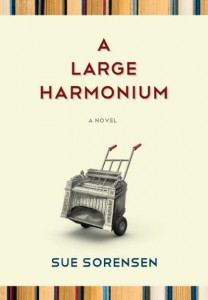 A Large Harmonium by Sue Sorensen: This book came out last year, but I only discovered it in June, and I’ve been recommending it steadily ever since to readers who have not been disappointed. From my review: Winnipeg resident Sorensen has much in common with Carol Shields, who was another, except that her tone is darker and more overtly hilarious. The novel’s pace is brisk and easy, which is not to say “light”, because there is depth here, but the story goes down just as well. Just as Shields did, Sorensen’s got a grasp on joy and how it factors amidst life’s absurdities. This is a wonderful novel with broad appeal. It’s absolutely the funniest and one of the best books I’ve read in ages.
December 13, 2012
Ten Years Ago
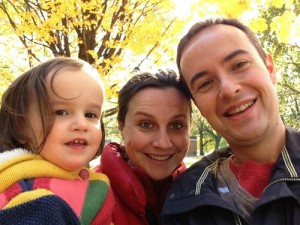
“It was ten years ago today that I met your Daddy,” I said. “And then you had a baby, right?” said Harriet, eager to get to her favourite part of the story. (Harriet cries if we look at photographs and she’s not in them. The Harriet-less world does not interest her one bit, and sometimes I see her point.) “No, not right away,” I said. “We lived in England for awhile and we were poor and bored, and we slept on an inflatable bed that slowly deflated every night. We were just out of school, barely employable, and we had no idea how we were going to do anything we wanted to do. So we decided to move to Japan, that old last resort. We had an apartment there that was smaller than our kitchen, and one day Daddy bought me a desk so I could write. He carried it home on his bicycle. We decided to get married, so we went back to England to have our wedding.” “And then you had a baby, right?” said Harriet. “Not yet,” I said. “We moved to Toronto, and I went to graduate school. Daddy had to wait a year before he was able to work in Canada, and we had to shop at the Dufferin Mall No-Frills. Our budget was $50 a week. And every month we had $20 to  spend on fun, so we went to Riverdale Farm often and we went out a lot for ice cream. And it wasn’t really that bad. I don’t know how we did it, and I couldn’t ever go back, but we learned a lot. Like to how to subsist on chickpeas.” “When do I come?” Harriet asked. I told her not quite yet. But we knew we wanted to have a baby, and so we moved to a new apartment where there would be room for our baby when she came. Our apartment used to feel enormous, but now it is brimful of bookshelves and tiny socks are scattered throughout every room. No amount of picking up the socks ever changes this reality. Harriet gets her sock-discarding affliction from her dad. I tell her, “We had a baby. And we liked you so much, we want to have another one.” She likes the story now. Harriet is looking forward to being a big sister, and what lies in store. And so are we, the great unknown. Which is terrifying, but also wonderful, and who ever could have foretold ten years ago what this extraordinary decade together would hold?






