October 26, 2026
TPOC and 3 Ghostly Reads
Thanks to everybody who helped me almost double my goal for the Turning the Page on Cancer Readathon. Yesterday, I buckled down and read for eight street hours in memory of my friend Melanie, and of TPOC founder Samantha, both of whom lived so hard under the shadow of metastatic breast cancer, and dreamed of a world where other women with MBC could live longer lives with better outcomes.
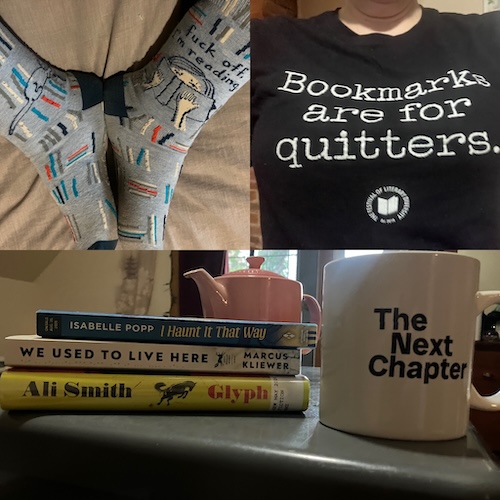
I make fun of the fact that this is an awfully self-indulgent kind of marathon—an entire day spent horizontal with a book in my hand is pretty much my dream scenario. But in our age of distraction, it actually is a feat of endurance to spend eight hours with books, and I’m proud that I have the capacity (and then some!). Intensive reading is also a deep and meaningful experience, an escape from the noise of the world, and the opportunity to not only focus on the books themselves, but also on the way they’re in conversation with each other.
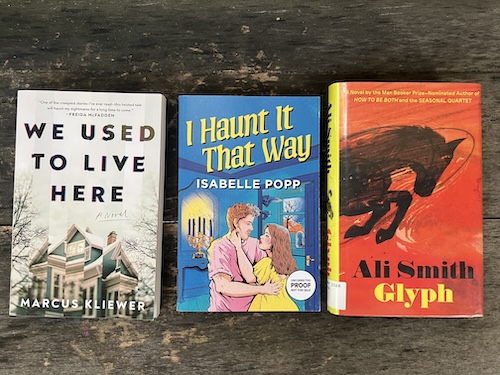
With Halloween on the immediate horizon, I decided to finally pick up Marcus Kliewer’s haunted house horror novel, WE USED TO LIVE HERE, about a couple whose cozy world is disturbed when a family shows up who used to live in the house, and just wanted to have a look around. If you’re going for intensive reading, you can’t do much better than a book that’s as hard to put down as this one—it was gripping, devastating, and terrifying—and I loved it. Next up was another haunted house book, but this time in the romance genre—I HAUNT IT THAT WAY, by Isabelle Popp is about a woman who works as an assistant for a woman who writes bonkbusters and receives a life-changing inheritance when her boss dies. She uses that money to buy her once-rich family’s old camp in the Adirondacks, but that purchase comes with her ex-husband’s handyman bestie, in addition to some kind of supernatural presence that doesn’t seem to want them there. I’d never read a haunted romance before, but this one delighted me to no end. And then finally, I read GLYPH, by Ali Smith, which is a more literary kind of ghost story, but also in conversation with the others (and with Smith’s previous novel GLIFF, which I also loved, and which characters in this latest book have also read).
Three very different books about ghosts and haunting, each of them absolutely excellent. I had a very good day.
October 23, 2026
Gaining Ground, by Joan Barfoot
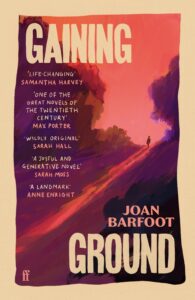
We’ll never know if I would have appreciated Joan Barfoot’s Gaining Ground quite as much had I picked it up in its original edition, a 1978 hardback, called Abra, published in Canada by McGraw-Hill-Ryerson Press. The novel won the Books in Canada First Novel Award, but it’s what happened to it decades later that has brought it onto my radar today, because sometimes the long afterlife of a book can bring surprises. For Barfoot—who went on to publish ten other books, was longlisted for the Man Booker Prize in 2002, shortlisted for the 2005 Scotiabank Giller Prize, and won the Marian Engel Award—that surprise was a message from an editor at Faber & Faber in the UK not so long ago that led to the book being reissued earlier this year with its UK title, garnering all kinds of rave reviews, and translation rights sold in 13 territories.
So that was that story that initially sold me on this novel, one that’s older than I am, now resurrected, but the new edition itself—with such an eerily gorgeous cover and painted illustrations of onions, radishes, eggplants, and other vegetables on the cover’s insides—was what clinched the appeal. Which was important, because I still wasn’t sure this wasn’t a novel I hadn’t already encountered in CanLit, along the lines of Surfacing, The Diviners, The Book of Eve, very much of its time. But with its fresh face, I was willing to give Gaining Ground a chance in its own right (definitely swayed by blurbs from Sarahs Moss and Hall, Margaret Drabble, Katherine May, and others).
And I’m so glad I did, because I found it enthralling, even though stories about people running away to the wilderness are never my favourite—social connection, for me, tends to be where story lives. But Abra’s voice in Gaining Ground is so rich and embodied in Barfoot’s first person narration that I never wished for her to have anybody to talk to (and even when she does, she is taciturn).
The story begins in the present, Abra disconnected from the world—from clocks and mirrors, and everything except the seasons and growing the food that sustains her in her rural cabin—when the world rolls up her driveway in the form of her 18 year old daughter Kate, last seen nine years before when Abra fled her tidy life in the city, leaving behind her husband and two children. At first, Abra doesn’t recognize the girl; Abra literally can’t even remember her own name after so many seasons of solitude. She is gruff, and antisocial, but vaguely aware that her daughter wants something from her that she’s not prepared to give.
What kind of woman abandons her family without a second thought? Barfoot’s novel is the answer to that, taking her reader back into the story of her former life, not even entertaining a justification of her actions, because Abra knows, like a kind of spell to which her curious name is the beginning. Whereas everything else about her except her name was always unremarkable before, especially the way she sleepwalks young into marriage, and a life of domestic convention. Eventually, she and her husband are well off. The husband is kind. Which means it’s impossible to explain how the key to her dissatisfaction is absolutely everything, and Abra doesn’t view her drastic escape plan as a kind of breakdown, even, regarding what happens to her instead as a story of finally becoming, of assembling a self and a life.
There is nothing romantic about Abra’s journey back to the land, nothing of Morag Gunn’s idyll by the river. Instead, her life is basic, rugged, and hard. Ever spring, she’s stricken with a fever. She lives on stored blanched vegetables from her freezer. Her work in the garden is backbreaking, and her body becomes hard and strong, and everything she does is imbued with a kind of essential purpose. None of it makes sense from the outside, she knows that others find her appearance disturbing, but the perceptions of others don’t concern her anymore, not in the slightest.
There is indeed something bewitching about Abra’s stream of consciousness, about the plainness of her telling, and what’s most interesting is its outright refusal of questions of right or wrong, what is natural and what is deviant, about good mothers or bad ones. This is a story that rises above such considerations and which, like its protagonist, is so solidly, marvellously, about itself.
October 19, 2026
Definitely Thriving in Spacing
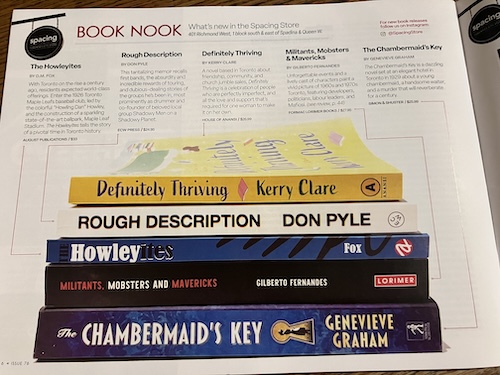
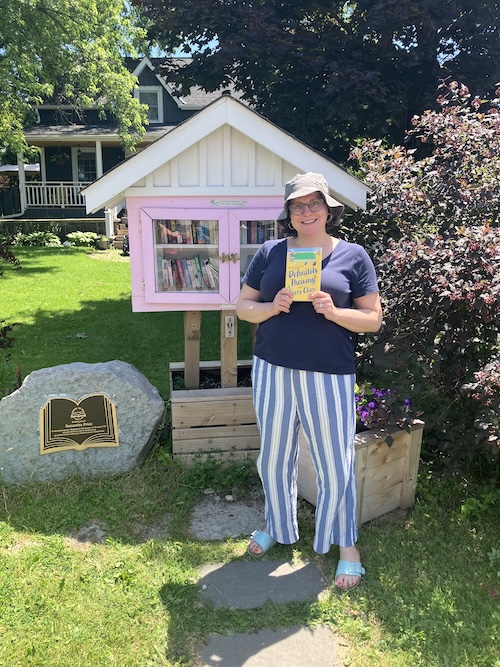
The new Spacing Magazine arrived in my mailbox today. Can you imagine how excited I was to discover THIS while flipping through the pages? Definitely Thriving is on sale at the Spacing Store. Toronto books have been a passion of mine ever since I took Dennis Duffy’s Reading Toronto seminar course at UofT in 1998, and I’m so happy now to have my own book in the canon.
October 19, 2026
Who By His Own Hand, by Greg Rhyno
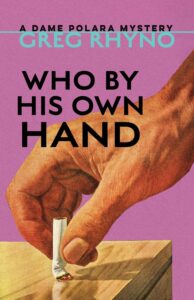
I actually read an advanced copy of this novel this spring for a blurb (“I love everything about the Dame Polara series—the heart, the humour, the vivid and sometimes gritty Toronto setting. But most of all, I love Dame, lockpicker extraordinaire, and in Who By His Own Hand, she’s as forthright, messy and indomitable as ever. Greg Rhyno has penned another winner.”) and read it again last week in anticipation of interviewing Greg at his Toronto book event tomorrow night, Tuesday October 20, at Ben McNally Books from 5-7pm. If you haven’t yet discovered Dame Polara, I’d recommend starting with the first book in the trilogy, Who by Fire, and getting brought up to speed. Witty, clever, and compellingly Toronto-set, these stories of a reluctant sleuth—the daughter of a famed PI who learned the tricks of the trade early (along with an affinity for strong coffee)—whose personal life keeps dragging her back to detection never miss a beat. In this third instalment, the stakes have never been higher as Dame’s young daughter is missing after a kidnapping by an unhinged municipal bureaucrat holding a murderous decades-long grudge.
Oh so funny (the bumbling detectives on the case are called Hall and Oates), but also incredibly moving (“Parenthood, Dame had learned, was an unrelenting series of terrors. No one could truly defend their child against the cold chaos of an indifferent universe. Instead, she used those three little words that were every mother’s poor substitute for control: ‘You be careful.'”), in addition to the facts of the case and the journey to cracking it (never actually my primary concern when it comes to detective fiction to be honest), this novel—like the two that preceded it—is such feast of rich delights.
October 17, 2026
Thank you for the lovely bouquet
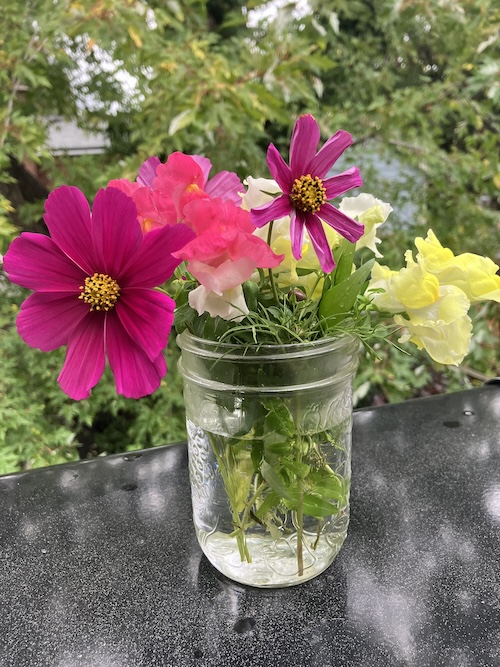
Chance-of-frost possibly final bouquet from my fire escape garden.
October 15, 2026
Anxious and Hairy, by Judy Wearing
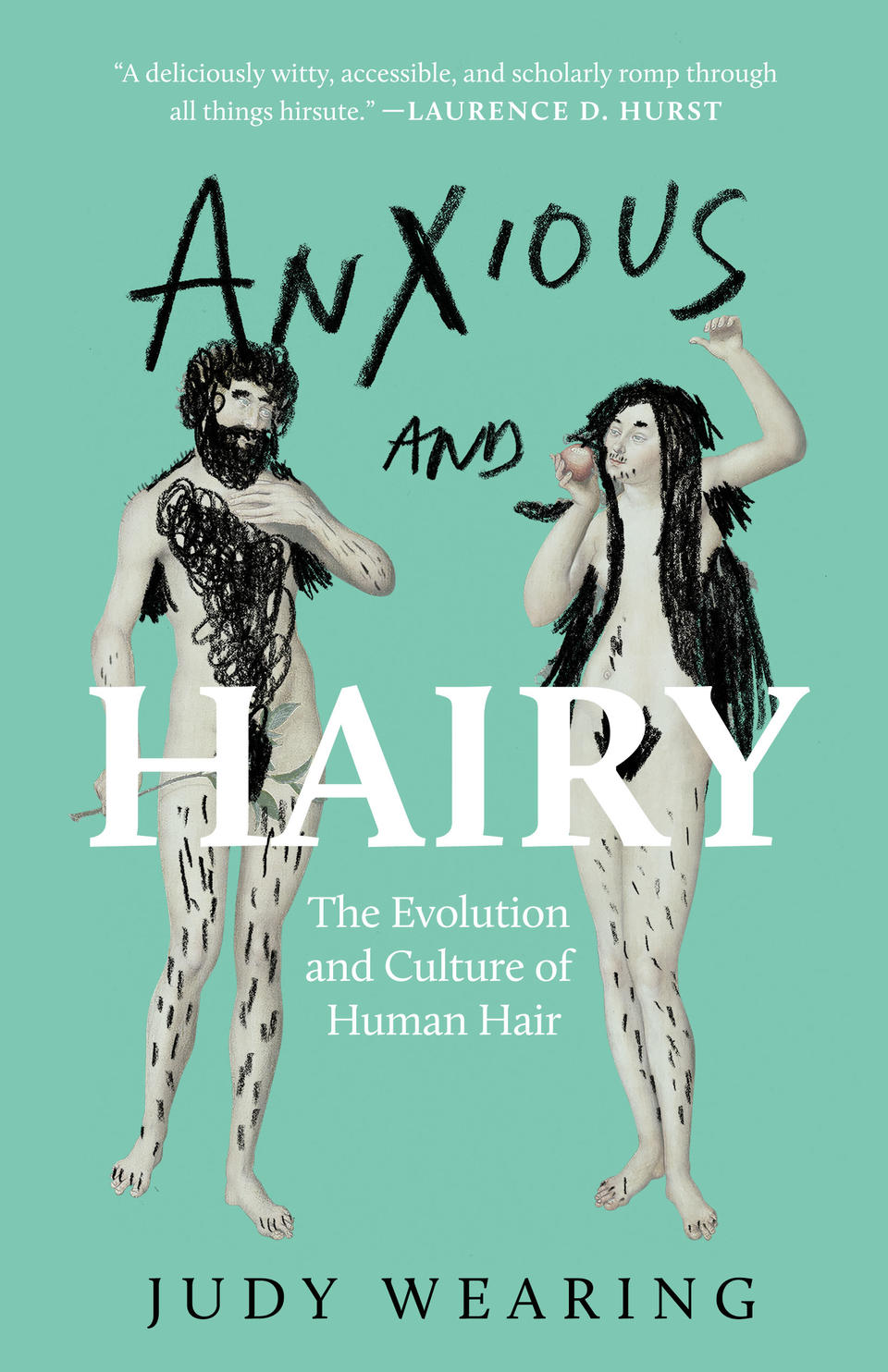
What a wild ride is Judy Wearing’s new book, Anxious and Hairy, a study through evolution and culture of human hair and the reasons why it makes us so anxious when it grows where it shouldn’t or doesn’t where it should. The scope here is huge, the approach so comprehensive (80 pages of notes and references!), and Wearing compellingly combines her own research with reporting from the front lines, ie accounts of her stylish Parisian hair cutting session, her experience attending a beard convention, or the time she submitted to a Brazilian wax.
If you’ve ever wondered why we have eyebrows—or what pubic hair is for, why we evolved to be (mostly) hairless apes, what evolutionary benefits are provided by Black hair, why beards might be useful to have in a bar fight, what alopecia has to do with foxes, what your hair and your nipples have in common, and why my eyebrows never grew back after they were sacrificed to the early ’00s style gods—this book will prove an absolute delight.
Wearing posits that hair makes us so, well, hairy, because our hair brings the reality of our animal selves to the surface. But our animal selves are also, she reminds us, what makes us human and—in our age of the robot overlord onslaught—this has never been more important to remember.
October 14, 2026
Trust Fall
I’m at a crossroads in a bunch of different ways, thinking about how I might be sharing aspects of my life on the internet going forward as social media spaces keep on changing for the worse. Although one thing that’s been clear to me for a while is how impossible it is to write about being a parent once your children are people of their own, because their stories no longer belong to us and they can speak for themselves (and they do!). I think of how much I valued honest conversations about parenthood when my children were very small, conversations that let me know I wasn’t alone in the struggles and anxieties, and how I miss being able to have such conversations in online spaces now*, because the alternative is posting photos that may as well be captioned, “Look at us over here! We’re killing it!” When, of course, we’re only killing it some of the time, and the rest is the usual heartache, frustrations, fears, and tears, which is harder to bear when it seems like nobody else is ever going through any of it and everybody else’s kids are perpetually shiny.
*Obviously, I’m still having these conversations. That’s what group chats are for.
Parenthood is the most wondrous agony, which is something I’ve been thinking a lot about as we’re less than a year away from launching our eldest child into the world, and this is everything I want for her, but also, how! And why? And no!! The most wondrous agony for which I’d sign up again and again, but that doesn’t make it any easier. Maybe the most blatant demonstration of how ease and lack of friction aren’t what any of us are here for in this thing called life. I don’t train for marathons, but I do have kids, and the agony is similarly baked in, but also—oh my goodness—nothing compares to the highs. These wondrous creatures who are the very best people I’ve ever met in my life. (And I made them!)
I take credit for very little when it comes to my kids (except I swear by the results of having asked them, “Tell me what you think first,” whenever they asked me anything at all) and know how much it all really comes down to pure luck. As we all learned in playschool, you get what you get, and you don’t get upset, and neither do you decide that anything about your children was the result of your superior parenting skills.
Although IF anyone was asking me how to get kids to read, I’d say that modelling reading yourself sure goes a long way, and I’ve done my fair share of that, and then some, and so maybe that’s part of how we got to here.
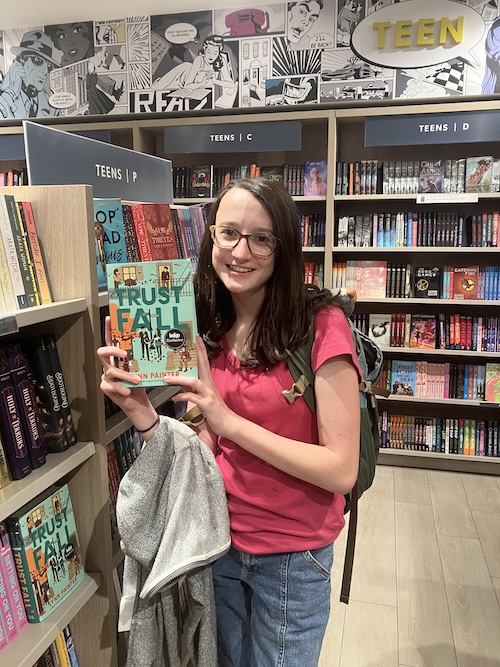
To where I get to meet my kid at the bookstore on the day a new release by her favourite author drops so I can buy her the book she’s been waiting for. Truly, this is the dream! We’re killing it!
Or at least we were that day.
October 13, 2026
Dish, by Nancy Jo Cullen
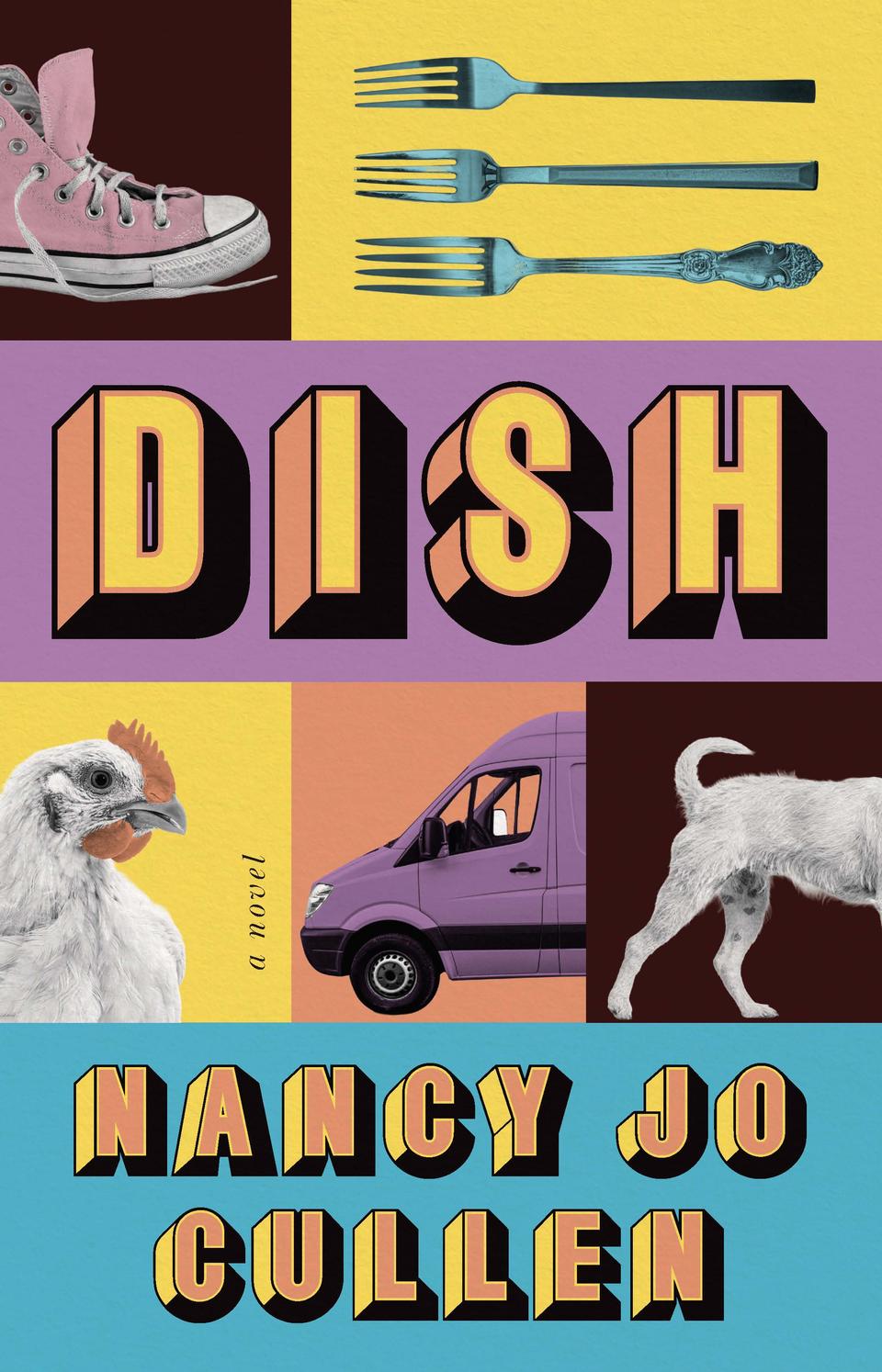
While it’s true that Nancy Jo Cullen had me at hello with the Brazilian wax-inspired story “Brenda’s Bush” from her 2013 fiction debut, Canary, she has managed to KEEP me—through 2019’s The Western Alienation Merit Badge and now her new novel Dish—with her keen eye for the perfect detail, her characters’ offbeat insider/outsider perspectives, her fantastic sense of humour, and a prose style whose rhythms I just can’t get enough of.
In Dish (which is just as good as its cover promises!), chef Frida Davis-Lefebvre is already back in her BC hometown with her tail between her legs after the failure of her big-shot Toronto restaurant. To add insult to injury, her new job at a local hotel brings her back into connection with her once-upon-a-time fiance to whom she’s still most explicably attracted. And speaking of blasts from the past, Perry—a down-and-out whose single connection to Frida had been the sperm donation that resulted in her conception decades before—has washed up at Frida’s moms’ house where he’s staying as he tries to put his life back together.
Dish is the story of Frida, and also of Perry, navigating these relationship tangles amidst the twists and turns of life as they try to move forward, stay sober, and figure out both where they’re going and how to get over where they’ve been. A celebration of queer family and chosen family, Dish is a love story—and a most compelling one—on so many levels, and an absolute delight.
October 9, 2026
Books to Fall For
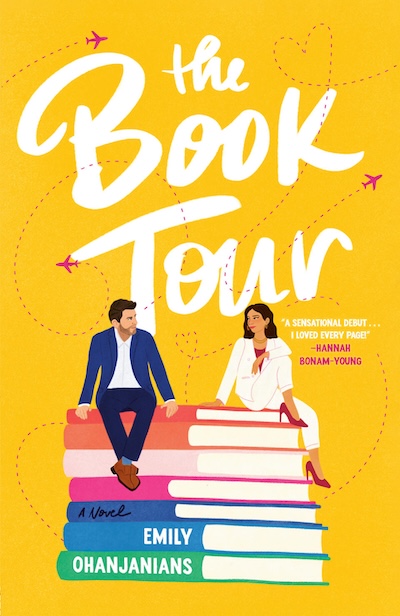
Who knew I wasn’t the only author who released a yellow book this spring in which the protagonist is masturbating within the first 50 pages! What a club! I feel lucky to join it. I loved this gem of a novel, for its empowered heroine, the dreamiest love interest ever, and such a smart and funny exploration of family, friendship, intergenerational trauma, and the inner workings of the publishing industry. The Book Tour, by Emily Ohanjanians, is the story of Ana, a Type A podcaster whose Armenian mother has never gotten over her dropping out of medical school, never mind that her podcast has brought her enormous success. And now she’s channelled her ethos (empowering second-generation immigrant young people to believe in themselves, delivering the validation their own parents have never been able to) into a book that’s sure to be a smash success. All good, except when her superstar publicist resigns, she’s replaced by the stiff and stuffy Ryan, whose lack of support for the book has always been apparent to Ana—she can tell that he thinks it’s a frivolous project and that Ana herself is an unserious person. But of course there is more to Ryan than meets the eye, and Ana’s book tour ends up being a sweet and sexy journey toward self-discovery and maybe even love. Like Ana herself, the novel packs a punch, and it’s also a pure delight.
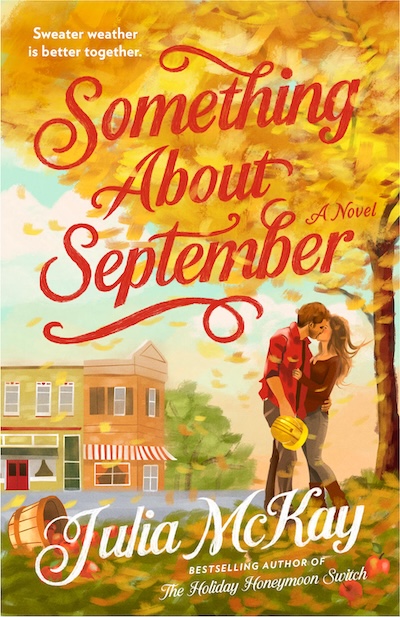
And this autumnal bestseller by Julia McKay (aka Marissa Stapley) is my favourite yet of Marissa’s romances. Something About September is so cozy and comforting, and with apple pie spice and bookish vibes. Go read it!
October 6, 2026
The Paris Files, by Eva Jurczyk
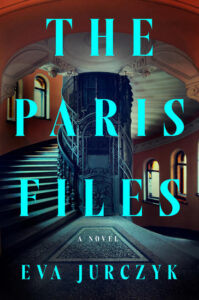
There is darkness when one first enters the apartment building at 44 Rue Oberkampf in Paris’s eleventh arrondissement, which is to say that none of us—neither the characters in Eva Jurczyk’s latest, The Paris Files, nor those of us who are reading—really knows what we’re getting into here. The story, the characters, all of it just off-beat enough to keep surprising at every turn, every twist, and the image that springs to mind is the staircase in the building spiralling up-up-up, the stakes growing ever higher.
It’s the story of Genie, a Canadian woman who meets an American man while she’s travelling in Asia, and they make this plan to meet again in Paris, which sounds incredibly romantic, except that Genie’s best friend is doubtful. Because Genie has been burned before, can come on a bit too strong, wants too much, and she’s close to 40, not some young ingenue. But the American arrives, the best friend is proven wrong, apparently…but not entirely, because the entire novel is told through police interviews. With Genie herself, telephone interviews with the friend Toronto, with the building’s concierge, the neighbours, the grumpy man who sells fruit and vegetables across the street and keeps an eye on everything. Because it seems that not long after the American arrives, he and Genie spending a few love-soaked days together, he suddenly disappears.
Like the staircase, the novel is dizzying, disorienting. Genie is unreliable, characters are keeping secrets, just why the police are interviewing her in the first place isn’t clear. And while the novel’s structure could pose a limitation for lesser writers, Jurczyk’s cool and easy prose style, underlined by a darkly comic approach, brings the story and its characters to life, along with Paris itself (and the food!), and the overall effect is utterly propulsive. What I didn’t know when I was getting into this book was that I’d start reading it on Sunday, and be as close as is humanly possible to being LITERALLY unable to put it down, so that was my day gone, but I couldn’t have spent it better.
A fresh twist on the unhinged female narrator, a story about friendship, travel, duplicity, and real estate, I had high hopes for this novel, but the experience of reading it surpassed all my expectations. It’s out today and you should buy it!