May 25, 2026
The Great Good Places
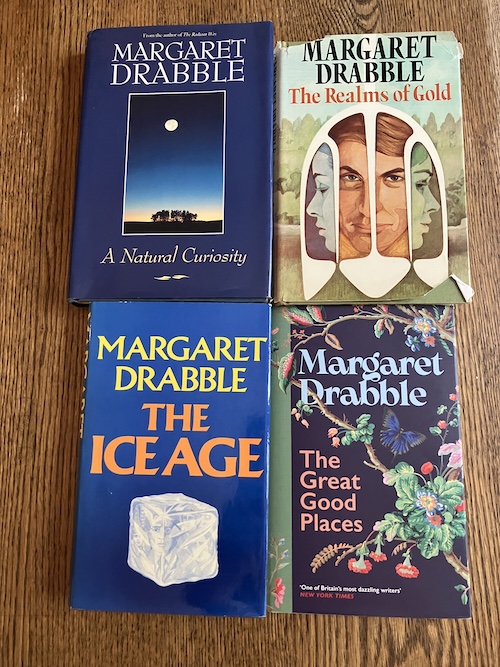
I was late to Margaret Drabble, unsurprisingly, since she started publishing novels almost twenty years before I was born, and it was only when I was living in Japan in my 20s that I fell under their spell, battered copies of her Penguin paperbacks with their faded orange spines readily available at Wantage Book in Kobe. Already somewhat dated (see faded spines: Margaret Drabble had been so CURRENT in the ’60s, chief to her appeal!) but somehow also seeming as though they contained the universe, which felt timely, as at that moment I felt I was on the cusp of my own life, including the writing career I so desired. Drabble’s intimate portrayals of ordinary lives were so tied to huge societal and existential questions, constellations that I felt as though I could map and come closer to understanding everything.
When we left Japan, I insisted on sending all my books home by sea, which didn’t make much sense, financial or otherwise, but I didn’t want to part with them. Only now, more than twenty years later, have I been able to let them go for these beautiful editions that are for more readable, first editions, no less, acquired via my mom and her voluntary work for her local library’s book sale. There’s a line in Definitely Thriving where Clemence notes that the upside of women’s fiction being so devalued is that you can collect their first editions for a bargain. And maybe now that I am nearing fifty and have become challenged by the impossible type in mid-century paperbacks, these new-to-me editions will make rereading more palatable.
The Great Good Places, however, is a first edition Drabble that is new to me, signed no less, acquired on our trip to England this spring. It’s a collection of essays and stories from where Drabble sits in her late 80s, all of it with an autobiographical bent. She tells us that her 2016 book The Dark Flood Rises is her final novel, for the death of her daughter in 2017 left her unable to write fiction anymore. There’s a sadness permeating the collection, unsurprisingly, but still the same clarity and curiosity that makes her voice her own, a writerly voice that still compels me and likely always will.






