April 22, 2020
Making Sense of What We’re Going Through
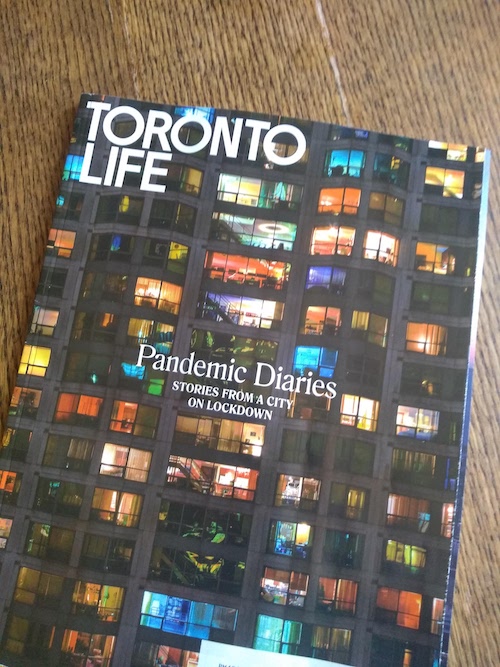
Spiritually speaking, magazines were a really terrible part of the first very bad weeks of this devastating global crisis, the new issues that arrived like vestiges of a different world, a world where there were events in March and April, arts festivals, hockey games, book launches, and photography shows, and museum exhibits. A world where one might require easy weeknight suppers, there being anything else to do on a weeknight besides cook an elaborate feast. Heartbreakingly, the April Toronto Life was “Best New Restaurants,” which is too much when you consider more than a few are unlikely to reopen again. The ads for the Winnie the Pooh exhibit at the ROM broke my heart—it was really the most delightful show, and such a draw for the museum and I am so glad we got a chance to see it before everything stopped. (I was also REALLY not into the outdated issue of The Guardian Weekly that arrived in mid-March with the headline, “The Coronavirus: Reasons Not to Panic.”)
It was an incongruity that only underlined how much absolutely nobody had seen this coming or knew what was going on, that there wasn’t a script for any of it, a template. “Unprecedented” the word that everybody was using, and I tried to stay positive by focusing on how much of what had precedent was truly awful, and also on what it meant it to learn that so much that seemed impossible actually wasn’t. But still, it felt like there was nobody at the wheel, not just in terms of leadership, and science, but also storytelling, all such a vast unknown. All the atoms in the universe just falling, and us having no idea where they’ll land. (We never do. Our current situation just exposed the illusion.)
For me, there is something tremendously heartening about the power of story. When I read Ali Smith’s Autumn in April 2017, I remember feeling hope again for the first time in almost a year. Because someone had gone and created art and story out of the mess of our time, post-Brexit and that Orange monster, and the very fact that someone could render art from it all had made me feel like maybe we were possibly a society worth salvaging after all.
And I felt the same when the May issue of Toronto Life appeared in my mailbox the other day, like we’d turned a corner somehow, the world we live in finally beginning to align with our idea of it again. It’s a miraculous issue for so many reasons, not least of which that it was put together in a matter of weeks once our reality had shifted. With eerily beautiful photography, stories of Torontonians weathering the storm, our current situation in all its mess and complexity. Context. (My understanding is that Toronto’s Spacing magazine has a similar issue coming down the pipes—I just purchased a subscription based on that promise.)
I’m so grateful for the writers who are doing the work of making sense of what we’re going through. Their work is invaluable.
April 21, 2020
Gleanings
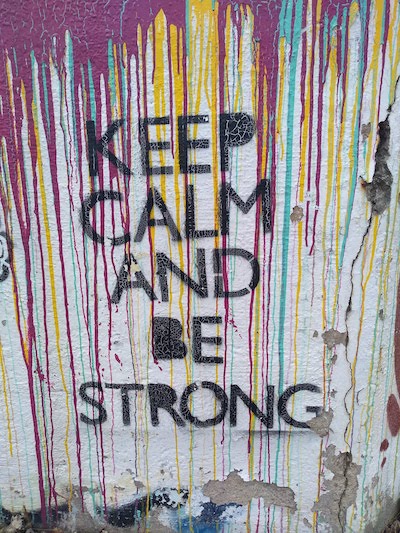
- My tiny problems are nothing compared to everything else right now. But they’re our stories. If we can be brave enough to listen, rewrite them (which we’re all going to have to do) and then share them—that’s hope!
- This will probably be the last time I read The Order of the Phoenix aloud.
- Hey, just realized my recipe for a writing day is kind of like my recipe for sourdough!
- Feel free to get completely carried away. Make a mess.
- I won’t wait 25 years to finish the candles. I can’t. The box is on the floor in the way.
- Finally, believing it must be true, what they say, about Fred and Ginger movies cheering people up in the Great Depression, because we saw them dancing “Cheek to Cheek” on TCM yesterday
- And now we’re at the point in April where, because we’re isolating and distancing, I’m more aware of ghosts.
- Lately I prefer Grimms’ fairy tales to the news headlines. Yet I definitely prefer the news headlines to the garbage being spread, fertilized, and growing on social media.
- I miss everyone so much and if I think about it for too long the sadness is overwhelming.
- “Open up. Keep trying.”
- Another life-saving thing has been to – quite late in life, I feel – begin to consciously and deliberately seek out fellow readers and connect with them.
- The novella seems such a perfect form to hold certain things I want to do with language and with the possibilities of story.’
- You might think it’s just sweet advice I’m handing out, but this goddamned practice is saving my life.
- The reason I re-read this book, is the same reason I re-read a lot of books on trees and nature generally… because of learning how to be on this planet.
- All I’m saying is that when Rosner talks about chicken, I find good reason to tune in.
April 20, 2020
A Note to a Tree

Dear Tree,
You are a silver maple or a black maple—I can never remember. Which doesn’t mean I love you less, because you’re everything. A home for birds, squirrels and a family of raccoons. Your shade means there are a handful of days in which our lack of air conditioning matters. Because of you, we live in a tree-house, a different view of you from so many of our windows. I have revelled in your gorgeous foliage as I relaxed beneath you in my hammock. Spending all year cleaning up after you, white blossoms in the spring, your maple keys afterwards, those yellow leaves that fall in November, and the sticks and twigs that break in winter with the ice. I can set my clock by you.
(Once I also looked out my window to see an arborist trimming your branches in a rain storm, smoking a cigarette like it was nothing. One of the most memorable performances I have ever seen.)
I am afraid of losing you. Desperately. You are 150 yrs old, so this is not an irrational fear, and when I am afraid of heavy winds, you’re what I am thinking about. How our homes, our lives, and all of us are so vulnerable. I cannot imagine this place without you, who was here before anything else.
But you have also taught me that strength is bending, that deep roots can endure, and how much everything is so connected.
We’re so lucky to be your neighbour,
xo
(You too can write a #notetoatree for a chance to win a collection of nature books from Groundwood Books in celebration of the publication of Andrea Curtis’s A Forest in the City. Head over to Twitter or Instagram and check the #notetoatree hashtag for more details. Two days left to enter!)
April 16, 2020
The Union of Smokers, by Paddy Scott

I confess that I cheated a bit with this one. A book about a twelve-year-old boy, “the heroic last day in the life” according to the copy on the back, and these days I just don’t have the stomach for heartbreak, so I read the last page first to see if this was a tragedy that was survivable—for me or the character, or both, perhaps—and I determined that it was. I could take this.
So I knew what I was getting into with Paddy Scott’s The Union of Smokers, is what I mean, but did I really? In this story of Kaspar Pine, a farm kid from the outskirts of Quinton, ON, which bears an uncanny resemblance to the town of Trenton, right down to the swing bridge and the creosote plant with a propensity for catching on fire.
Not everyone takes Kaspar seriously, in fact nobody really does, except Kaspar himself. (“Getting snorted at by women is bound to happen if you’ve learned your entire repertoire of charming manoeuvres from senior citizens.”) His mother’s whereabouts are unknown, and he was brought up by his father in a kind of deprivation, until circumstances changed and he was brought to live with his maternal grandparents on a farm outside of town. They, at least, provided him with the stability and love that had been missing from his life, and a sense of identity in farming culture, which most of the people who live in town don’t properly understand.
Kaspar, a prolific smoker thanks to the collection in his butt baggie, bikes into town to replace a canary (twice) and here is where the book begins, when he meets up with Mary Lynn, love of his life, just a couple of years older, with whom years before he’d once shared a dramatic adventure while dressed in a cowboy costume, but she doesn’t remember. The two of them become yoked, and it turns out their bond is even deeper than that, although not in the way that Kaspar longs for, and Mary Lynn herself has no idea what to make of this wacky weirdo kid who won’t leave her alone and ends up using her bra as a tourniquet, but not in a sexual way.
An eccentric portrait of small town life; a narrative voice that gets in your head and proves unforgettable, a story that manages to be utterly devastating and uplifting at once thanks to a character so strangely and richly imagined, with the most indefatigable sense of himself and his story and his worth—no matter what anybody else thinks, and you’re going to take his side. Not to mention be sorry when it’s finally time to leave it. I really loved this book.
PS I picked up the book finally after its virtual launch at 49thShelf. Throughout this month and next, we’re spotlighting new releases that deserve our attention at a moment when launches and festivals have been cancelled. Hope you can pay attention to what we’re doing here and do your best to support these books and authors.
April 15, 2020
Books on the Radio
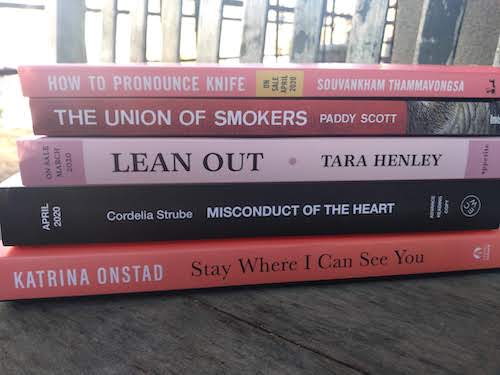
Books are giving me life right now, at a moment when life itself is kind of thin, and so it was a pleasure to speak on CBC Ontario Morning today about five books that have been good for my spirits lately, as inspiration, distraction, and reasons for hope. You can listen again to my recommendations here—I come in at 44:30.
April 14, 2020
Gleanings
- Not everything is a lesson. Not everything that happens is for you to analyze right as it’s happening.
- Though I was raised Catholic, my family actually worshipped at the Church of Frugality.
- I was grateful the book was there, even if I couldn’t give it the attention it deserved.
- Maybe I can write about what life is like when you feel like it is slowly ebbing away from you and some days you wonder why you are holding on so tightly.
- I wondered, myself, where is this surge of joyfulness coming from—not to be mistaken for the lack of concern for everyone that is and could be affected by COVID-19—and there is not one reason. I actually, counted 19.
- Love of reading in the time of corona
- Women Talking is itself a kind of manifesto, I suppose, though it does not read like a statement of intent so much as an inquiry, almost an autopsy.
- There’s never been a better time to enjoy the calm of green spaces. As the Chinese proverb goes, Life begins the day you start a garden.
- My fascination with loos began in early childhood, when a trip to the powder room felt like a flirtation with independence.
- So, I’m not. Nimble at catching my thoughts, that is. Quite the opposite. Mine are like dragonflies, abundant, right there in front of me but impossible to corral
- Yeast privilege is something that before the pandemic you may have thought you didn’t want to have because it sounds itchy.
- if there’s one thing we are good at here, it is staying the fuck home.
- As long as we can find (not just find but SEE and grab hold of) the tiny moments, the patches of light, the glimmers, then the days will continue to be ok.
- No, this is not what being retired is like
- The kind of book that feels like letters from a favourite aunt.
- Every picture a couple posts of a delicious meal they cooked together makes me wince with pain, as I eat sardines out of a can with my fingers.
- One thing, though which has really surprised me, is that I am much more of an introvert than I ever thought I was…
- It might be the least of our troubles, but curating the internet has never been trickier.
- But sometimes I’m kind of, I don’t know, done? I want to say, “Shhh.”
- I can solve nothing, I can save no one, but dammit, I can mail Patrick a copy of The Night Watchman.
- Two very different kinds of days and for me, two very different ways of reacting to each during these stressful, odd, pandemic days.
- You can’t be happy all the time, and you can’t be grateful for all moments, but all moments are opportunities for gratitude.
- It takes a true bibliophile to appreciate the desire not just to read books, but to surround oneself with them, to collect them, to pile them on shelves until the wood bows from the weight.
- I thought of how easily one adjusts to solitude. It doesn’t mean I don’t get lonely.
April 13, 2020
“I’m in the dark, feeling my way…”

“I don’t know where it goes from here. I’m in the dark, feeling my way… Maybe my actions…are futile, I have no way of knowing… The future, in my world, has always been obscure. I have come to appreciate its darkness. To see far ahead—to know exactly what is to happen—robs us of unexpected sparks.” —Cordelia Strube, Misconduct of the Heart
My favourite restaurant has pivoted. After a month of being closed, they’ve reopened selling groceries and meal-kits, and because they are my favourite, because their food is delicious, and because they’re probably the first place I’m going to go “once this is all over” so I want to do my part to make sure there’s still a place to go to, I made my order minutes after their new website launched, and I was struck by the automated response I received. A response I’m sorry now I didn’t write down verbatim, but it was something along the lines of, “Okay, we have no idea how all this is actually going to work. We’re still figuring everything out as we go.”
And it was so refreshing to read that, and resonated with me on all kinds of levels. It was an honesty that few other businesses/institutions/people have been willing to engage with these last few weeks, understandably enough, I guess. But it was the first time I felt like I was hearing from somebody who was actively engaging with reality. (It is not a surprise either that someone actively engaging with reality has done such a fantastic job of re-imagining a way to have their business work and serve their customers at such an unprecedented moment in time.)
Nobody knows. Such an incredible, impossible thing. Literally incredible, even, if you delve into the responses on politicians’ social media posts or read that forwarded email from your cousin about how Covid-19 is actually a biological weapon intentionally released by Saudi Arabian desert camels. Or even the outraged tweets and op-eds by pundits who seems to be confused how science happens and how knowledge works, accusing public health officials of more flip-flopping than poor John Kerry back in 2004. Who seem to think there’s a conspiracy theory about why our understanding of the virus has changed since mid-February, and are just as frustrated as the rest of us as to the lack of answers—how has this happened? Why’s it so bad? Why weren’t we prepared? When will it end? There’s not even anybody properly to blame, though that’s not stopped an awful lot of people from trying. How do you tell a story after all when there’s no certainty? No answers?
I’ve given up properly following the story. The answers aren’t there yet. After a straight week of losing my mind, refreshing Twitter over and over and desperately worrying about the fate of Tom Hanks, watching the numbers climb—I stopped. I don’t get paid enough to tune into daily press conferences and watching mounting death tolls. It serves nobody if I do, me least of all. So I stopped freaking out and returned to reading books instead, which were solid and contained. There were answers there and even lessons applicable to our current situation, uncanny signs sometimes. Of course, I read the weekend papers when they were delivered to my door, and looked at the news here and there on the news page my phone suggested for me (though the algorithm figured me out and soon it was all about sourdough bread). I paid some attention to the world outside, followed Boris Johnson’s medical journey quite closely, have myself been following public health guidelines so my ignorance puts nobody at risk, and I have read some extraordinary stories—read “Sirenland,” by Briallen Hopper. Read the Toronto Star’s Bruce Arthur on Bobcaygeon. There’s incredible journalism going on by now, but it’s being told by the people who are willing to accept that we don’t have answers yet and that it will be some time before we do.
“Okay, we have no idea how all this is actually going to work. We’re still figuring everything out as we go.”
It is interesting, is how I can frame it on my better days, when the sun is shining and the sky is blue, when I wake up and look forward to something ahead, even if it’s just discovering how my sourdough loaf has risen overnight. It is interesting to see so much learning happening, to see science in action, that there is no real definitive authority on what’s going on right now, that we really are—from internationally renowned health experts to the guy stocking cans in the grocery store—literally making it up as we go along. We are learning how fast things can change, how connected we all are, how essential science really is, that learning never quits and there’s always more, and the world is more amazing, unfathomable, untameable, random and strange that even the smartest of us will ever properly understand.
It’s also humbling—in a way that many of us could stand to learn a lesson from. Lessons that could change the world.
There was never certainty anyway. From the quote by Elizabeth Gilbert, which I came upon by way of my fave podcast, “You are afraid of surrender because you don’t want to lose control. But you never had control; all you had is anxiety.” The illusion of it all finally exposed, which isn’t necessarily a bad thing. Even though it’s hard and it hurts.
April 9, 2020
A Conversation With Tara Henley
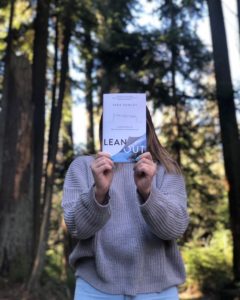
Like many of you, I found myself unable to read as this crisis arrived in our lives, perpetually in a panic, scrolling news feeds instead. Not being able to read, however, only compounded the trouble I was in, because if I’m not a reader, then who am I? And it was Tara Henley’s new memoir LEAN OUT: A MEDITATION ON THE MADNESS OF MODERN LIFE that brought me back to books again, a gorgeously written memoir that is perfectly timed for our current moment. Henley was kind enough to answer some of my questions about the book, so please read on to learn about how Madeleine L’Engle’s books expanded her vision for her life, what are the limits of self-care, and how “right now we’re seeing in stark terms the price we all pay for inequality.” I love this book so much.
April 8, 2020
How to Pronounce Knife, by Souvankham Thammavongsa

Make your book pink. Make your book slim. Put a nail file on the cover, and have your reader forget that it’s actually a blade, and this is how you do it, create a story collection that seems unassuming but will cut you with its razor edge. The “Yes, Sir” delivered in a tone that really means, “Fuck you!” And it gets under your skin, of course, a book like this, Souvankham Thammavongsa’s fifth book after four acclaimed poetry collections and her debut fiction, the short story collection How to Pronounce Knife. (Full disclosure: the writer and I were classmates twenty years ago, and I since followed her career with admiration.)
These stories are subtle, wonderful and jarring. They range between those from the perspective of children of immigrant families from Laos (reflective of Thammavongsa’s own background), children who are know before many of their classmates the way that parents are actually fallible after all, that they struggle and have limits, and stories of people awkwardly navigating social and romantic mores, failing to fit in with convention (which is another way of not failing at all—especially in a story).
In the title story, a child takes her father’s guidance on the correct way to pronounce “knife,” and learns the lessons of a lifetime in the process. In “Paris,” a woman who works in a chicken factory dreams of getting a nose job—and experiences vicarious heartbreak. A seventy-year-old woman has an affair with her young neighbour in “Slingshot,” a story with the most perfect, powerful ending.
I LOVED “Randy Travis,” the story of a family who immigrates from Laos, and the mother falls in love with country music, which helps define for her a different kind of life she desires for herself. In “Mani-Pedi,” a failed boxer who ends up with no choice but to take a job at his sister’s nail salon—but who insists on keeping his dreams. “Chick-a-Chee” is about one family’s embrace of a bizarre local ritual. “The Universe Would Be So Cruel,” awesome and heartbreaking, about a man who runs a small print shop and has an uncanny knack for knowing the future for the couples whose invitations he creates. A child considers the mystery of her mother in “The Edge of the World.” A school bus driver realizes he’s losing his wife in “The School Bus Driver.” A mother watches her daughter from afar in “You Are So Embarrassing.” The story “Ewwrrrkk” begins, “The summer I turned eight, my great-grandmother showed me her boobs.” An accountant looks for love (and potential clients) in “The Gas Station.” A childhood friendship is recalled in “A Far Distant Thing.” And a young girl goes to work with her mother in the final story, “Picking Worms.”
The stories are quiet but powerful, the sentences extraordinary, the volume as a whole is such a pleasure to read and to discover.
April 8, 2020
What’s Your Blogging Challenge?

Looking for a diversion? How about a quiz? In which I nail your biggest challenge in blogging, and give suggestions for how to overcome that challenge and achieve your blogging goals.






