February 3, 2021
And This is the Cure, by Annette Lapointe

So you could pitch it like this: imagine every Miram Toews book you have ever read—A Complicated Kindness, Irma Voth, The Flying Troutmans, All My Puny Sorrows, Women Talking, Summer of My Amazing Luck, Swing Low, I mean everything—all packed together in a single volume. Which is only misleading, because it makes it sound derivative, which it isn’t. So how about this instead: former cult member turned riot grrrl writes a tell-all memoir and finds fame as house of a Canadian broadcasting culture flagship pop culture radio show after its former host (a noted sexual predator) flames out in disgrace, but then her past life comes back to haunt her when her ex-husband is murdered and her estranged 11 year-old daughter is returned to her care, which means she’s forced to confront her ex’s conservative, religious family and their disdain for her, all the while she’s trying to stay on her meds and keep as stable as possible as she avoids confronting the trauma buried in her past, which does not necessary lie where she thinks it does…and then her band goes on tour in Japan.
And This is the Cure is the third novel by Annette Lapointe, whose first book Stolen was nominated for the Scotiabank Giller Prize in 2006. I also really appreciated her second White Tail Shooting Gallery in 2013, writing in a blog post that the book, “baffled me throughout, disturbed and troubled me, but it also intrigued me, continually surprised me, never stopped me wondering what would happen next…” And the same stands for her latest, which I loved. A book that ostensibly should be too much—how can a person fit so many things into a single novel?—but which works, is eminently readable. Mostly because of Allison Winter, Lapointe’s stunning fictional creation, a woman who is shattered and still standing, flawed and perfect, terrified and brave, smart and ridiculous, loving and fierce, damaged and whole, missing and present. A singular creation: regarding her daughter as a baby, she says, “I’d happily have killed things for her, but I would have preferred her to stay at home, in someone else’s custody, while I did it… I’d have made a decent, if absent, father.”
She’s the trickiest narrator, withholding information about her story until the present drags it out of her. She’s also unapologetic with a ferocity that never wavers, and I love that. Her unreliability turns the novel into the most fascinating, many-sided shape, but her perspective is still a steady one, the compass point that guides the reader through so much stuff. A lesser writer would have had this whole book come off its rails, but Lapointe nails it, unbelievably. I loved it.
February 2, 2021
Gleanings

- And of everything I’ve watched, Minari might be the best thing I’ve seen all pandemic.
- Such criticisms are reminiscent of the kind Wheatley was subjected to and more recently, takedowns of other Black women poets blocked from the mainstream literary canon, too numerous to list.
- Who knew that eggs in cakes were sometimes a …hindrance? Definitely not me.
- I didn’t intend to read two books back to back where women, politics, and arrogant men figure prominently but then I think if you have the first two ingredients, the last one is often a given.
- This is a game about moving and being while trans, and this is the aforementioned sentence I gnaw on, wrestling with it with ink, with fingers, but never with a voice.
- With all this pondering, I’ve also come to the realization that I simply trust myself to photograph whatever pleases me while not allowing myself to worry about how an image may appeal, or not, to someone else. There is a freedom in that ‘frame’ of mind.
- Criminal Minds had its share of missteps as far as writing was concerned…but if there’s one thing those writers could do, it was get people on planes.
- So you know how it’s possible to be that (possibly annoying) person — (aka me) who goes on about their mental sturdiness, their overall equilibrium, and who doles out calm advice for months and months on end, and then who basically totally utterly loses their sh*t. Yah. That’s where I’ve been the last couple of weeks.
- These handles might not be the touch-free tap handle of every germaphobe’s dreams and they’re certainly not the stuff of state of the art kitchen design, but they are a very simple hardware store fix that just generally makes kitchening more pleasant, whether you’re in a rental kitchen or otherwise
- I have been impressed with how Kamala Harris seems to really wear those Chuck Taylors quite often, not just for photo ops to look (comparatively) young, because even in the ‘80s the lack of arch support would leave me nearly crippled after walking my paper route.* So I can’t really imagine being 56 and wearing them for a punishing campaign day. BRAVA.
- Some days I feel like I’m living on the very edge of the earth, and in some ways I am.
Do you like reading good things online and want to make sure you don’t miss a “Gleanings” post? Then sign up to receive “Gleanings” delivered to your inbox each week(ish). And if you’ve read something excellent that you think we ought to check out, share the link in a comment below.
February 1, 2021
Virtual Author Talk
Last week I had the pleasure of two library events, and the live Toronto Library one was such a success, with so many of my favourite internet people tuning in. The next day we recorded my author visit to the Cobourg Public Library and it was also great, because not only was interviewer Ashley so fantastic, but she’d attended the TPL event the night before and was able to steer this one in a very different and fascinating direction. I had a lot of fun, there is so much energy and some real insight in the conversation, and I am delighted to be able to share it with you. Worth checking out, for sure.
January 29, 2021
Sometimes You Have to Lie, by Leslie Brody
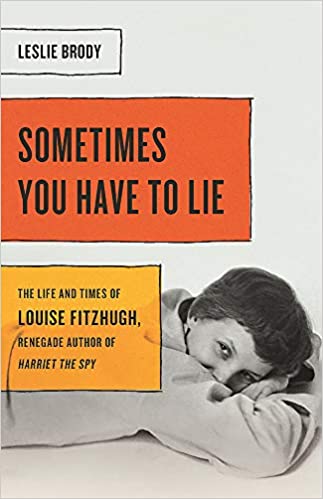
While Harriet M. Welsch put the truth in her notebooks, Louise Fitzhugh, who created her, kept her own truth closer to her chest, and it stayed guarded for years ever after, her literary executors and friends fiercely protective of the author. An academic book was published in 1991 that did provide some insight into the life and times of Fitzhugh, but its author was not granted proper access to archives and the book was kind of middling, and so we’ve had to wait all the way until now for a proper literary biography, Sometimes You Have to Lie, by Leslie Brody, whose previous work as biographer includes a book about Jessica Mitford, so you just know this is the kind of work you want to get behind.
Louise Fitzhugh’s story is pretty wild, and also sad. Her mother was a dancer and her father was a millionaire. They met on a transatlantic crossing in the 1920s, marrying in a whirlwind, and the whole thing was a terrible idea. Their daughter, Louise, suffered in the fallout, subject of a much publicized custody conflict, which her father won, and prohibited her mother from seeing her for years. Essentially raised by nursemaids, Fitzhugh grew up privileged in the Jim Crow South, and was well aware of the injustice that surrounded her. Also, much like Harriet, she seemed to always know exactly who she was, dating women while still in high school and not caring a fig for social convention.
Like many before her, she fled to New York City, seeking a creative life. She found success as a painter, but such success is relative—it’s a tough life, even for an heiress. She found her way into publishing by illustrating a picture book, Suzuki Beane, written by Sandra Scoppettone, a satire of the Eloise books set in beatnik Greenwich Village, and then eventually a few very rough pages of what would become Harriet the Spy found their way to Ursula Nordstrom, legendary editor of authors like EB White, Maurice Sendak, Margaret Wise Brown, and more.
Fitzhugh was not a people-pleaser, although she was well-liked and had a lot of friends, connected to many through artistic and lesbian circles. But it’s hard out there for a sensitive person, and she struggled to fit into most roles that were assigned to her, children’s book author among them. She refused to do publicity for her books. She had fallings out with her editors. She had trouble with her health, and didn’t heed doctors’ advice to stop drinking. And then in 1974, she published the novel Nobody’s Family is Going to Change, received a devastating review in Publisher’s Weekly, and then died. It was a brain aneurysm and possibly the two events were unrelated, but still. Honestly, it’s the kind of blunt conclusion that would come out of Harriet’s notebook. (“MY MOTHER IS ALWAYS SAYING PINKY WHITEHEAD’S WHOLE PROBLEM IS HIS MOTHER. DOES HIS MOTHER HATE HIM? IF I HAD HIM I’D HATE HIM.”)
I loved this book. Fitzhugh’s life was as fascinating as her work, just as complicated too and tricky to parse, and Brody really does her justice.
January 26, 2021
Gleanings
- And then of course there are art’s perennial twin questions: is this any good and who gets to decide? For too long a homogeneous cabal have been the arbiters of taste. But now the times, they are a changing. The house of poetry has built new wings. And some of the old guard are….well old and scared, it seems like.
- So, I wonder. I do not know. But as I wonder, in all my unknowingness, I know there is so much wonder.
- I’m holding 42 jujubes in my hand, my past and future, and I’m asking myself, I mean truly asking myself, “what are you going to do with them”
- The thing is, though… maintenance takes time and work. Attention takes time and work. Everything worth doing or having takes time and work.
- Fermentation brings me joy — and delicious food. My kitchen is like a laboratory.
- Patricia Highsmith is most often categorized as a genre crime writer, thanks in large part to the well-known film adaptations of her novels Strangers on a Train and The Talented Mr. Ripley. But while this classification is fine as far as it goes, it doesn’t go nearly far enough
- So, should you write for the market? My first answer might surprise you…
- Scrolling through Twitter one morning, as one does, I saw that someone posted a video with the caption, “turn up your sound” but I mis-read it as turn up your soul. We see what we need to see sometimes.
- How many is 400,000? How many is 20,000?
- The book manages to dance with all of these weighty themes and still maintain a light touch, and a wicked sense of humour.
- By the summer of 2018 I started asking myself if it would it be more helpful for us if I read one more book, or if we sat on our deck in the sunshine, feeding the ducks, just being together in the moment?
- Pain is a side-effect, not the goal, and it is most certainly not a reward.
- What I appreciate about Sarah Graham‘s flower paintings, is that they aren’t pretty. We have enough of those in the world.
- On a recent walk in the forest, carrying my camera to record the silent beauty, I was particularly interested in all the mosses.

My new blog course MAKE THE LEAP runs through February. Sign up today!
January 25, 2021
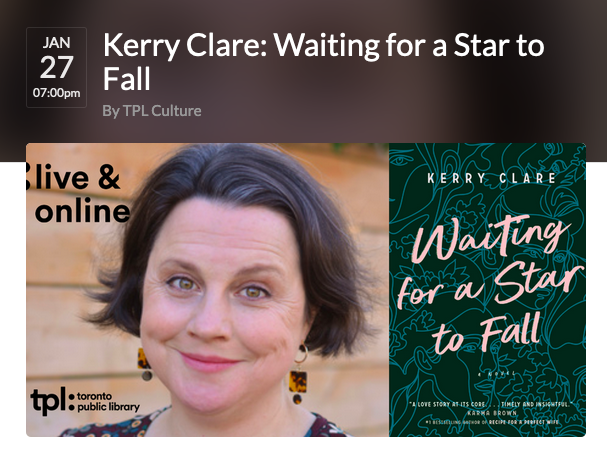
Two Events This Week

January 25, 2021
Jack, by Marilynne Robinson

It took me so long (by my standards; yours might be different) to finish reading Jack, Marilynne Robinson’s latest book in her series that began with Gilead. I started reading on Wednesday, feeling like it seemed a good day to read a great American novelist, but I just had all the feelings that day and was exhausted, and wasn’t in a great place to begin a book that asked much of its reader, even if it delivered rewards in return. This is not a book with a furious plot, or much of a plot at all if you consider that predestination renders plot kind of moot. This is the story of John Ames Boughton, disgraced and formerly of Gilead, IA, whose story we know from previous books in the series (and this book is the final). Though, truth be told, I don’t remember very much about the other books in the series, not specifically. I have read most of them twice, but I recall them more in general than specifically. But I didn’t need the references much at all to appreciate the value of Jack, whose protagonist is cut off from his past anyway—but not entirely. And what he’s been up to gets told in kind of a sideways manner, Jack never the kind of person to confront anything head-on. Out of prison, just barely getting by in an down-and-out rooming house, he has come into the company of a young Black school-teacher who is, like him, the child of a preacher, and the two are drawn together for reasons that Robinson manages to make complete sense of, no matter what a terrible idea their relationship is for reasons of legality and otherwise. Because of course a white man and a Black woman cannot be a couple in 1950s’ America, and Jack Boughton a terrible bet anyway—and yet you’d wager. That’s what I love about this book. The way that Robinson makes clear the anguish of being Jack and loving Jack, and of watching him make terrible choices over and over again, and there is just a kernel of goodness we’re determined to put there (and so is Jack’s father, and Della too, the school teacher), even if Jack doesn’t seem it himself.
Slow, rich, and satisfying, is how I found this book. There was something soothing in its meditativeness and it as a pleasure to get lost in its evocations.
January 25, 2021
On Teaching Algebra During an Insurrection

I was sitting in the kitchen when I learned about the riots at the US Capitol on January 6, alerted by an Instagram post around the same time that my daughter in the living room heard about it from this kid in her class who seems to be streaming CNN during virtual school. This kid is always first with breaking news, and that day it was their math class he interrupted to inform his teacher and his classmates that a terrifying mass of marauding thugs were storming the Capitol, and then their class went back to their regularly scheduled programming, which was algebra.
I was a wreck that day, whacked out on stress and anxiety. I took my children for a walk after virtual school was done for the day, and my youngest daughter said, “If this was a dream, it would be a bad one.” I had gotten no work done all afternoon, and I was grateful—as I often am—that I’d never gone to teacher’s college, “just to have something to fall back on” (as they say). Because this means that I will never have to teach a Grade 6 algebra class online during a global pandemic as terrorists mount an insurrection in the nation next door.
The following morning when both my children returned to class, they had their headphones on so that I could hear only their (particularly shouty) ends of the conversation, teachers apparently guiding them through discussions about what had just transpired in Washington. The Grade 2s were talking about voting and fairness and democracy, and over in Grade 6, my daughter was indignant about the latitude granted to those in the Capitol rampage when compared to police crackdowns on Black Lives Matter protesters the previous summer.
As a society, we ask our educators to carry a heavy load. This was the case even before the pandemic, staff at my children’s school forming task-forces to assist families living in poverty (collecting winter coats and boats, canvassing to furnish apartments for families moving out of refugee and domestic violence shelters) and to help students deal with skyrocketing levels of anxiety and other mental health challenges. All this is on top of the usual fare—sports teams, choirs and bands, lunchtime clubs, answering parent emails on the weekends, plus curriculum nights, and holiday concerts, which educators are expected to volunteer their time to.
For two and a half years, Ontario teachers have been serving on the front lines of our government’s reckless cuts, including reductions to minimum wage, cutting supports for the opioid crisis, cuts to social services, autism support, healthcare, housing, mental health problems, domestic violence, poverty—you name it, and never mind the cuts to education. Helping to stop up these gaps in our social fabric has become what teachers do every day in their work, in addition to teaching (which teachers do well).
And then the pandemic happened, school closures pushing working families to their limits—underlining the foundational role that schools and their staff play in the day-to-day functioning of our society, a role that so many parents had always taken for granted. When Ontario schools reopened in September, amidst so much fear and uncertainty, teachers masked up and returned to the classroom, my youngest daughter’s teacher telling me, “There is nowhere else I’d rather be.” And she was assuring me, of course, because this is what our children’s teachers do, taking on our burdens and struggles as parents, and our children’s struggles too, helping to make the load a little lighter. Teaching is about so much more than teaching reading, writing, and arithmetic, and more than ever in 2021, as we all navigate challenges that sometimes seem insurmountable.
The other morning, I got to listen in to a bit of my daughter’s Grade 6 class before she got wise to my eavesdropping and put her headphones on. Her teacher mentioning an article she’d read about people having trouble sleeping. “These are stressful times,” she said, and she surveyed the class to see if anyone else was having trouble, opening up a conversation about mental health, about anxiety. A throwaway conversation, so it seemed, but of course it wasn’t, instead a vital check-in, the kind of thing all good teachers now need to weave into their curriculum in this most unprecedented age, but so seamlessly that it is easy not to notice.
It is so easy to underestimate what educators do, and the outsized role they play in supporting the wellbeing and prosperity of all Canadians. For some, it seems like a reflex to malign the entire profession for their good pay and holidays, as though to value the work of educating and supporting future generations was foolhardy and not instead an investment that pays out for all of us. But the events of the past year have made clear the limitations of this point of view, showing us all how essential educators really are.
This year, teachers have shown up for us, and I hope many of us will return the favour in years to come by showing up for them, electing governments that value and support their role instead of constantly undermining it.
January 23, 2021
What Norman Rockwell Left Out of the Picture

How old were YOU when you learned that when Hank Aaron eclipsed Babe Ruth’s home run record in 1974, he was subject to hate mail and death threats by fans furious that a Black man could outrank a white baseball legend? That his successes were snubbed by baseball commissioner Bowie Kuhn, who would have been expected to congratulate him and didn’t?
I only found out this morning, myself, reading Hank Aaron’s obituary in the Toronto Star over my cup of tea, and I’m not really going to beat myself up that, because that I was reading an article in the sports pages at all was kind of remarkable. But it’s also typical of the limitations of my understanding and experience, as someone who grew up in the 1980s and came of age in the ’90s, believing that the fight for civil rights had long ago been won.
We thought a lot about Martin Luther King Jr., but never about the fact that someone had murdered him. I knew about Ruby Bridges from Norman Rockwell’s iconic image of the school girl, but never once in my life had I seen a photo of the ferocious mobs of white people (mostly women) who were screaming at her as she entered her school. I knew that baseball players like Jackie Robinson and Hank Aaron had overcome adversity and racism to succeed as they did in baseball, but all that strife was kind of abstract. Until this morning, I’d never really considered the kind of violent rage that would cause someone to write a death threat to a baseball player, to put a stamp on it. That this is literally white supremacy—a phrase that gets tossed around a lot these days, but possibly because it’s everywhere: the unfettered rage of a white person at seeing a Black athlete shine.
A lot of people like to spend their time maligning “wokeness,” and in some ways I understand the cynicism, and I actually see the fallacy of viewing everything that happens in the world through a social justice lens, but I also can’t think of a better metaphor. That I must have been sleeping, for what other excuse could there be for having failed to notice that those furious white women screaming at Ruby Bridges didn’t just disappear with the Civil Rights act, and neither did racism? That even if “the arc of the moral universe is long, but it bends toward justice,” there are so many people intent on throwing obstacles in its way?
That the story of a hero like Hank Aaron isn’t actually one of triumph in the end, but instead that of an incredible talent who lost his love of the game, because racism and white supremacy beat it out of him—and this story is so exhausting. It often seems never-ending. And people who haven’t woken up yet, who continue to insist that race doesn’t matter, that none of us are or should be judged or valued by the colour of our skin, that “making everything about race” is a thing that people go out of their way to do in a world where men get death threats for hitting home run records, in a world where race seems to be about everything—they’re only making that story even longer.
January 22, 2021
It Was Capitalism All Along…

“It was capitalism all along…” So goes the tagline of my favourite podcast, You’re Wrong About, which I have been in love with for months now. I was the only person on earth who was calm the week of the US election in November, because I just ignored the news and listened to the episode about Gary Hart instead, which was really the same story anyway. I really love the counterintuitiveness of You’re Wrong About, and also the judgment-free perspective of the hosts. Or maybe it’s not that they’re judgment-free—that would be no fun. So many people deserve judgment, but the pod really makes you think about where you’re putting yours, that who we’ve been led to judge is what we’re wrong about after all, but they also don’t do it in a virtue-signalling sanctimonious way either (as in, they don’t call marginalized people—or anybody—”folks”).
I have been reading Braiding Sweetgrass, by Robin Wall Kimmerer, for the last month or so, slowly, upon the recommendation of everyone. She writes about gift economies, and what it would be to show up at a farmers’ market where everything was free, and how you would be encouraged by this structure to take only what you need. As opposed to capitalism, which suggests hoarding and competition. If something at capitalism farmers’ market’s on sale, you buy up as much as you can, but gifts would be different:
From the viewpoint of a private property economy, the “gift” is deemed to be “free” because we obtain it free of charge, at no cost. But in the gift economy, gifts are not free. The essence of the gift is that it creates a set of relationships. The currency of a gift economy is, at its root, reciprocity.
Robin Wall Kimmerer
A couple of weeks ago, we headed back into lockdown in Ontario, with schools closed, many things shut. And I was talking with my husband about how difficult it seemed to be for many people to comply with stay-at-home orders, how they kept complicating instructions, looking for loopholes. Trying to game the system, really. And it was my husband who connected the dots, brought it full circle, how it really was capitalism all along. How in capitalism, we’re primed to take everything we can get, even to gamble. Lockdown advisories come out and the response of so many people seems to be, “How can I get the maximum return on these guidelines?”/ “Just how far can I possibly push these limits?” There is no sense of reciprocity, or humility, or duty. Anti-vaccine sentiments are in keeping with this idea too. Public health and capitalism are so very much at odds, but of course, you’d know that already if you’ve listened to You’re Wrong About the Exploding Ford Pinto.






