October 26, 2021
Gleanings
- But you know, the beautiful thing about a blog is that I’m not forcing anybody to read these posts, should I choose to write every day- and every so often, something I write that makes me feel good might just make someone else feel good.
- I believe that, to truly experience the world, you need to be out in it.
- Was there a Wanda? Maybe. Doesn’t matter. This is fiction. In fiction everything and nothing is possible and everything and nothing is real.
- The next day the trees had disappeared. Were they stolen in the night? Had the city reconsidered planting trees? Did whoever delivered the trees put them on the wrong street? In Montreal there are always many possibilities. The workings of the city and its employees are not transparent.
- I’m so grateful for friends like this, the shared meals, the stories, the laughter, the complete letting down of hair and being ourselves.
- But in the room yesterday, surrounded by photographs of Barbara, hearing from friends and family who knew her as a girl, then a young bride, a young mother, I thought that our lives are somehow liminal. Between.
- It’s here that I am full of hope and possibility. The kiln hasn’t had its wicked way yet. No cracking, blistering or warping. I can see the finished piece exactly as I want it to look. I
- What fascinates me most is family narratives and the intergenerational impact on women. Are we more resilient when we know our stories? Do we learn to break the cycle of generational patterns? Do our generational stories create bridges or chasms? Those are only some of the questions I want to explore.
- Oh, didn’t that quotation find me at just the perfect moment? I responded on Twitter that the “distanced intimacy” of reading takes many forms.
- After all, Amelia Earhart, with whom Grace becomes obsessed, is not a straightforward symbol of escape or liberation: sure, she broke barriers and flew away, but eventually she also, tragically and mysteriously, never came back.
- Together we were living out the narrative of this time together as it unfolded, it just too bad there weren’t any guitars or fiddles.
- It may not be quite the same as sitting at a table on a sidewalk in Europe, but a little bit of butter, a little flaky morsel, goes a long way.
- We need to make a point to fill ourselves up. I need to, as JGO says below, let the bitterness sink to the bottom of my life. Allow myself to take the joy to go. And this is found, often, in the company of good people, good friends, and yes, often in the company of women.
Do you like reading good things online and want to make sure you don’t miss a “Gleanings” post? Then sign up to receive “Gleanings” delivered to your inbox each week(ish). And if you’ve read something excellent that you think we ought to check out, share the link in a comment below.
October 25, 2021
About Last Spring: The Vaccine Narrative I’m Holding On To
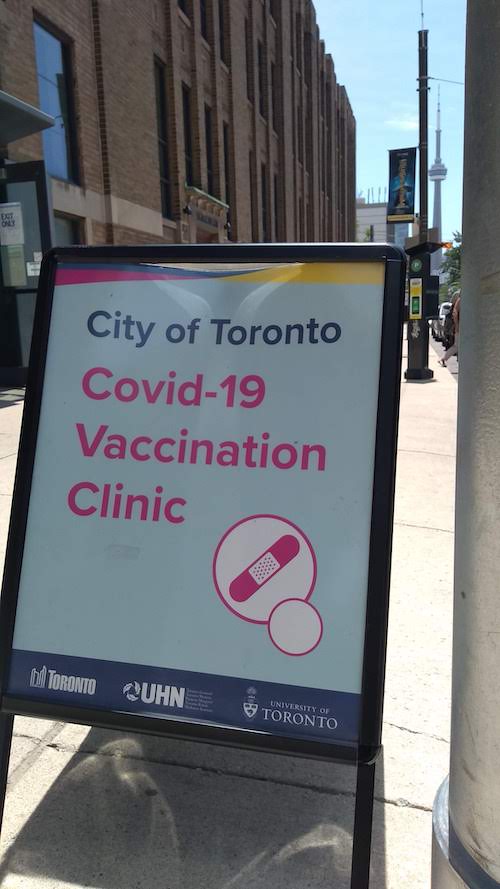
I’ve almost forgotten about last spring. Have you?
Because it’s been about 300 years since then, I think. We had a federal election, and a summer of climate emergencies, and the anxiety of school reopening, and real life returning, albeit slowly and cautiously here in Ontario, which seems to be paying off with a flattened curve, thank goodness. KNOCK ON WOOD.
But all this has been much overshadowed by the noise of a very small minority of our community members who distrust and refuse vaccines, community members whose grasp of science is perhaps as slight as their grasp of public relations—because I could have told them that the tactic of blocking hospital entrances and yelling at sick people receiving life-saving treatment was probably never going to win much support. A small minority of our community members who seem empowered by the idea that they’re part of a much larger movement, an illusion that fizzles out when you check out statistics such as that 73.7% of Canadians are fully vaccinated or that 87.9% of all eligible Ontarians have received at least once dose. Also 77.96% of Canadian 12-17-year-olds are fully or partially vaccinated, which seems to bode well for uptake once vaccines for 5-11-year-olds become available (and BRING IT ON!).
It’s such a far cry from the “vaccine-hesitancy” message that the media insisted on perpetuating as soon as vaccines were available, even as people were lining up around the block in the rain at 4 o’clock in the morning to get them. And it’s a far cry too from the anti-vax messaging we’ve been hearing from last hold-outs over the last two months, people who are becoming more and more desperate to own the narrative as it slips further and out of their grasp, and it becomes clearer that almost everyone you know believes in the Covid-19 vaccine project.
Back in April, however, there was no doubt about this. Just six months ago, at the peak of a devastating fourth wave that saw patients in field hospitals and pregnant women in ICUs, the Astrazenaca Vaccine was approved for people over 40, and suddenly we had a surge in vaccinations here in Ontario that brought us into a new era of immunity, one whose payoffs we’re all benefiting from right now, whether we’re vaccinated or not.
None of this was inevitable—we came into this new year hoping to get our first doses by September, if that. Opposition parties spent the first few months of 2021 bitching about the government’s “botched vaccination rollout,” never mind that we were lucky that vaccines existed at all. I remember the first person I knew in Canada who got a shot, a friend who’s a first responder, and we made him a celebratory card. In England, my mother-in-law got her shot. Other friends who worked in healthcare were vaccinated. And then there began to be more of it—friends who are Indigenous, those with underlying conditions. Every single one of these shots such a victory for every single one of us, bringing us one step closer to the project of herd immunity. There was a whole lot of crying for joy. And then in April, my parents had their shots. My mom got hers on Easter Sunday when we were in town for an outdoor visit, masks on. What a miracle, it seemed like. It was really happening. We just had to hold on, keep going.
I remember a few weeks later, it was Sunday night. Just hours after I’d read news headlines about AZ being approved for those over 40, I got a text from my friend M alerting me to appointments available at our local Shoppers Drug Mart the following week. I received that text while having a bath, and leapt right out again, dripping wet, wrapped in a towel, and phoned Shopper’s Drug Mart, which closed at 10:00. It was 9:30. I had to call back a couple of times before I got through, but when I did, I snagged an appointment for Stuart and I for the following Wednesday. And then I texted the news to my friend K, and my friend R, and both of them would get appointments for that very same week. I helped another pal get an appointment out of town. Other friends would also find appointments through similar ways, and still others could not get appointments at all and were angry and frustrated that they seemed so hard to come by. Huge teams of volunteers (Vaccine Hunters!) began helping to track down vaccine appointments online for complete strangers. On my neighbourhood Facebook group, people were sharing news of availability. More and more appointments were being rolled out all the time, and people were stepping up, helping others step up, and it was one of the most terrific examples of COMMUNITY that I’ve ever been witness to, let alone been apart of.
Not to mention the amazing public health agencies who made the whole thing happen. Sometimes even though it seemed like a systematic disaster—the lack of a central booking portal, random allocations of doses, the significant problem of vaccine availability not being accessible where infection rates were highest. Oh, it was a mess, such a mess, but it was also such a massive endeavour, and by the time I was booking my second appointment and even an appointment for my 12-year-old (CAN YOU BELIEVE IT?) things were smoother, and eventually there stopped being so much to complain about, and by the onset of summer, nearly everyone I know was fully vaccinated.
And this is the vaccine narrative that I’m going to be holding on to. What a rush and what an honour it was to be part of this singular moment, a moment that helped us turn a corner onto much better days and whatever comes after this. (We understand too that Covid-19 vaccines need to be made accessible to people all over the world—and to that end, UNICEF Canada recently raised $9.5 million for their #GiveaVax campaign, to be matched by the government of Canada.)
I’m so grateful to the millions and millions of people who got us here, and the way that each and every one them underlined my faith in people and my neighbours and US.
October 21, 2021
Back Home Again
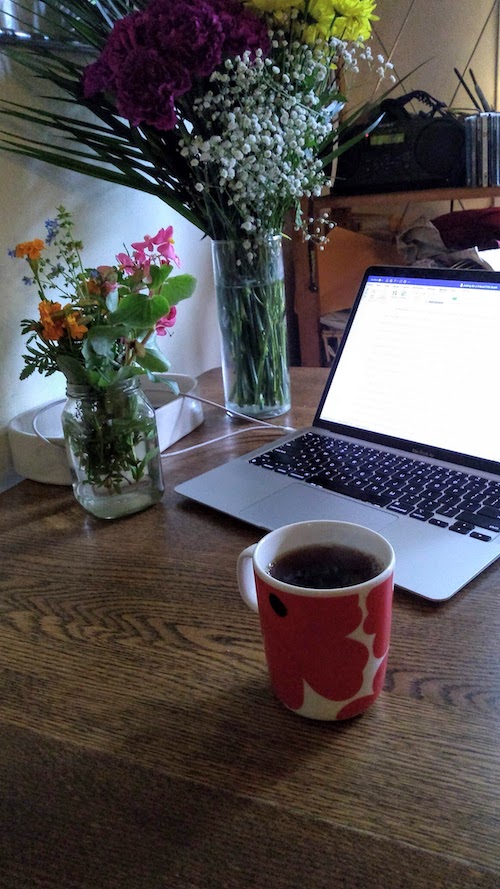
After months of floundering around (and not so fruitfully) in the Land of First Drafts, it’s such an absolute pleasure to find myself back at work on a manuscript that has a four walls and a roof, plus windows and doors (not to mention precious editorial feedback). The imagery of a house particularly fitting between this is so much a book about homes and spaces, more rooted in place than anything else I’ve published. And while the story is fiction, many of the places where they’re set are not, homes and apartments I’ve lived in, plus the Lillian H. Smith Library’s Osborne Collection and and the Royal Ontario Museum, and the effect of becoming immersed in this project again is so completely transporting, plus kind of cozy as the autumn weather makes way for the inevitable chill.
October 21, 2021
10 Questions
The excellent Kate Jenks Landry did a Q&A with me on her inspiring blog, and you can read it right here!

October 20, 2021
The Most Precious Substance on Earth, by Shashi Bhat
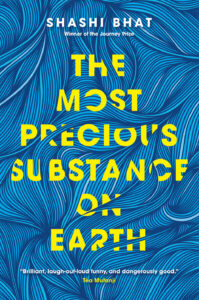
In 2018, when I had the great honour (and pleasure!) of being one of three jurors for the Journey Prize, one of the standout parts of that experience was encountering Shashi Bhat’s writing for the very first time. Although I didn’t know the writing belonged to Bhat herself—the stories were submitted anonymously. All I knew was that “Mute,” which would go on to win the prize, was utterly distinct in terms of its narrative voice, and its clarity, and its point of view. So smart, and wise, and funny, and sad, and I don’t know that I’d ever read anything else quite like it.
And now with The Most Precious Substance on Earth, Bhat’s debut, there’s an entire book of this, and I just loved it, and was just as struck by Bhat’s storytelling as I was the first time I encountered it—her award-winning story “Mute” is actually included in the novel. Which indeed does function as a novel—just as it also stands up an impressive collection of short fiction, as Steven W. Beattie argues compellingly in a recent review—because the entire book is so satisfying and rewarding as a whole.
At first, the appeal was nostalgic, familiar, and I texted my best friends to instruct them to get their hands on this book immediately, because Bhat’s tales of late 1990s high school were just so absolutely transporting to this particular reader (me!) who spent Grades 9 and 10 eating lunch on the dusty wooden floors in the alcove outside the science office of a high school at no longer exists. But it wasn’t only the nostalgia—the stories were so evocative because of the specificity of Shashi Bhat’s eye, which is to the eye/I of her protagonist/narrator Nina, who must seem detached from the outside, and we can understand that she sees everything, even the details she’s still too young and naive to process, such as her inappropriate relationship with English teacher.
It’s all so funny, deadpan, tortured and awful, Nina’s best friend Amy, and her boyfriend, and the way she peels the floors. The absurdity of ordinary experience, which is especially the case in high school, and the novel takes us from Grade 9 to a fateful band trip, and Nina’s coming of age, and the way in which she seems to weigh everything evenly, no judgment. The weight of what her did to her, or what happened to Amy, or what it’s meant to to so often be the only person of colour in spaces that were overwhelmingly white—none of this becomes apparent until much later, and it might be easy for a reader to suppose these experiences don’t actually matter much at all.
But all this is also not to say that Nina is a nonentity, just a simple observer—it’s the specificity of these characters and their experiences that so exalts Bhat’s writing. The baked ziti, and the tomato plants, and that Nina joins Toastmasters, and her parents’ eccentricities—there is nothing general about it, and these are the details that bring these stories to life. They’re also often very funny, Bhat’s prose just as assured and confident. She’s an extraordinary writer, and this is an extraordinarily good book.
October 19, 2021
Gleanings
- My family journey is an affirmation of the beauty and worthiness in life and relationships which are salvaged and repurposed.
- When I pointed out that a recipe book on her kitchen counter was mine, she said, Oh, we’re having sex, I hope you don’t mind. I didn’t mind about the sex. I did mind about my recipe books and cake tins.
- We can all connect to scenes of swimming in the local pool, waiting for the bus or sharing a meal with friends. No doubt, Monet, Morisot et. al. would be fans.
- Does an axis wish for a particular season?
- I’ve been thinking a lot about the words we use to describe ourselves as I step into retirement and cope with the death of my mother.
- I became very adept and meeting people and communicating online, and now this has become the primary way I engage the world.
- So it’s a good time of year to be looking in puddles–what’s real, what’s reflection, where’s your focus?
- I Will Follow Claire-Louise Bennett Anywhere
- Horror means something to me. It gets me through shit. Horror movies have literally saved my life. Maybe not life, exactly, but more like, just … saved me.
- I’m caught up in the details of organizing this ritual. Somehow, I have to free my thoughts of the minutia and write a eulogy. Sometimes there is a tendency to focus only on glorious achievements, while ignoring more down-to-earth, even negative aspects. I want to write about all of it, but from a place of love and understanding.
- My eight year old is obsessed. Can’t stop trying to spend her money on little bits of plastic that squish, or pop or spin. It is making me nuts, causing my inner panic buttons to be pressed about waste and the future and poverty and sea turtles.
- Our long walks up the mountain aren’t quite what they were. Rough ground presents difficulties so we try to find places to walk where the terrain is even. But I have to say that otherwise, things go on as they always did.
Do you like reading good things online and want to make sure you don’t miss a “Gleanings” post? Then sign up to receive “Gleanings” delivered to your inbox each week(ish). And if you’ve read something excellent that you think we ought to check out, share the link in a comment below.
October 18, 2021
When I’m shining everybody gonna shine
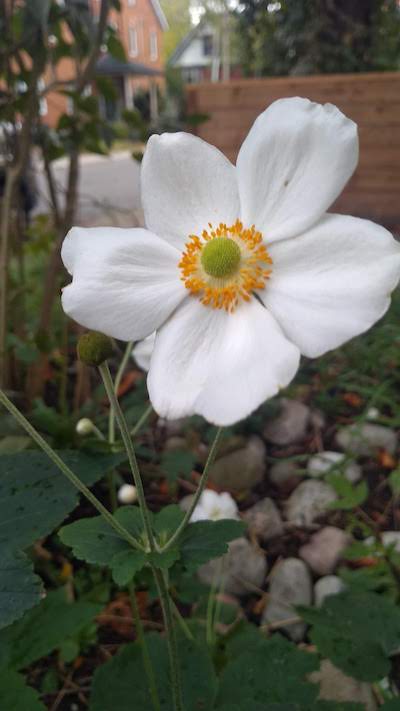
I don’t know if I smiled any wider last week than I did at the news that my friends’ new novel (The Holiday Swap, by Maggie Knox!) had made the Toronto Star bestseller list, and with this news came such overwhelming gratitude that other people’s good fortune could be fuel for my fire. And I’m writing this not to be smug, but just because I’m glad, and I’m still not 100% sure how I got to this place (though I wrote about it in a post a few years ago called “How to Get Over Literary Envy”).
I remember many years ago feeling so much more desperate, perceiving other people’s wins as a kind of violation, and no doubt some of the change has come about as I’ve grown older and settled into myself, achieving creative goals that I’m proud of (though I have yet to land on a bestseller list). This process too has taught me how much of success is usually a combination of painstaking work and glorious fluke anyway, which makes it harder to resent it when it lands on somebody else’s doorstep.
Though I will confess that there still exist more than a few people whose success makes me roll my eyes and grit my teeth—but these are mostly petty grievances, and the people in question are largely unknown to me (which, obviously, doesn’t mean that I’m barred from finding them annoying).
The people who matter to me though: I want them to win, and not just because of how I seem to win when they do—but yeah, that part also feels pretty good too.
October 15, 2021
The Strangers, by Katherena Vermette
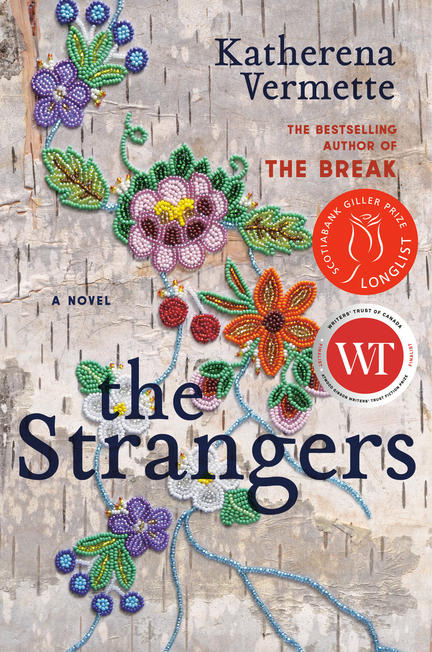
How does one follow a book like Katherena Vermette’sThe Break, a fast-paced novel with a thriller’s edge that managed to wed deft plotting to high literature, a book that was so rich and satisfying, and brutal and heartbreaking at once?
Five years on, Vermette answers the question with her second novel, The Strangers (though she’s been keeping busy in the meantime releasing poetry and a graphic novel series, among other creative projects), which is billed as a “companion novel” to The Break, and has already been longlisted for the Scotiabank Giller Prize and nominated for the 2021 Atwood Gibson Writers’ Trust Fiction Prize.
The Strangers is not The Break, and though it features some of the same characters, someone looking for a similar reading experience might end up disappointed. Rohan Maitzen’s excellent review notes that the novel lacks its predecessor’s urgency: “Even as time passes in it, The Strangers doesn’t seem to be going anywhere. It ends on a faintly hopeful note, but the conclusion doesn’t feel like a resolution: it’s just the next thing that happens.”
And yet I still found the novel compelling, in the stories of Phoenix, who gives birth in detention and has to give up her baby, and Elsie, her mother, stuggling to stay sober, both of them entrenched on a system that separates women from their children, exacerbating the estrangement and broken ties that created so many of these Indigenous characters’ struggles in the first place.
On a language level, I think the book is really interesting, Elsie and Phoenix’s sections written in the the way that these characters speak, not just in dialogue, the prose not adhering to the usual rules of grammar, though in a natural, easy way that doesn’t interrupt the reading. The sections in the voices of Elsie’s mother, Margaret, and Elsie’s other daughter, Cedar, are very different, reflective of these characters different levels of education, the different company they’ve kept, underlining one of the book’s most salient points: the two people can come from the very same place and each turn out so differently. That what’s easy for one person might prove impossible for someone else.
So no, the plot doesn’t zip, but perhaps the ploddingness is not an accident, especially when you consider time from the perspective of a character counting the days since the last time she got high, or from that of a woman who’s counting down the days until she gets out of jail, trying (and failing) to overcome her violent impulses. Life itself is hardly deftly plotted, which might be the point of the entire book. Instead, it can be random, often lonely, and tragically unjust, especially for those who are marginalized.
October 13, 2021
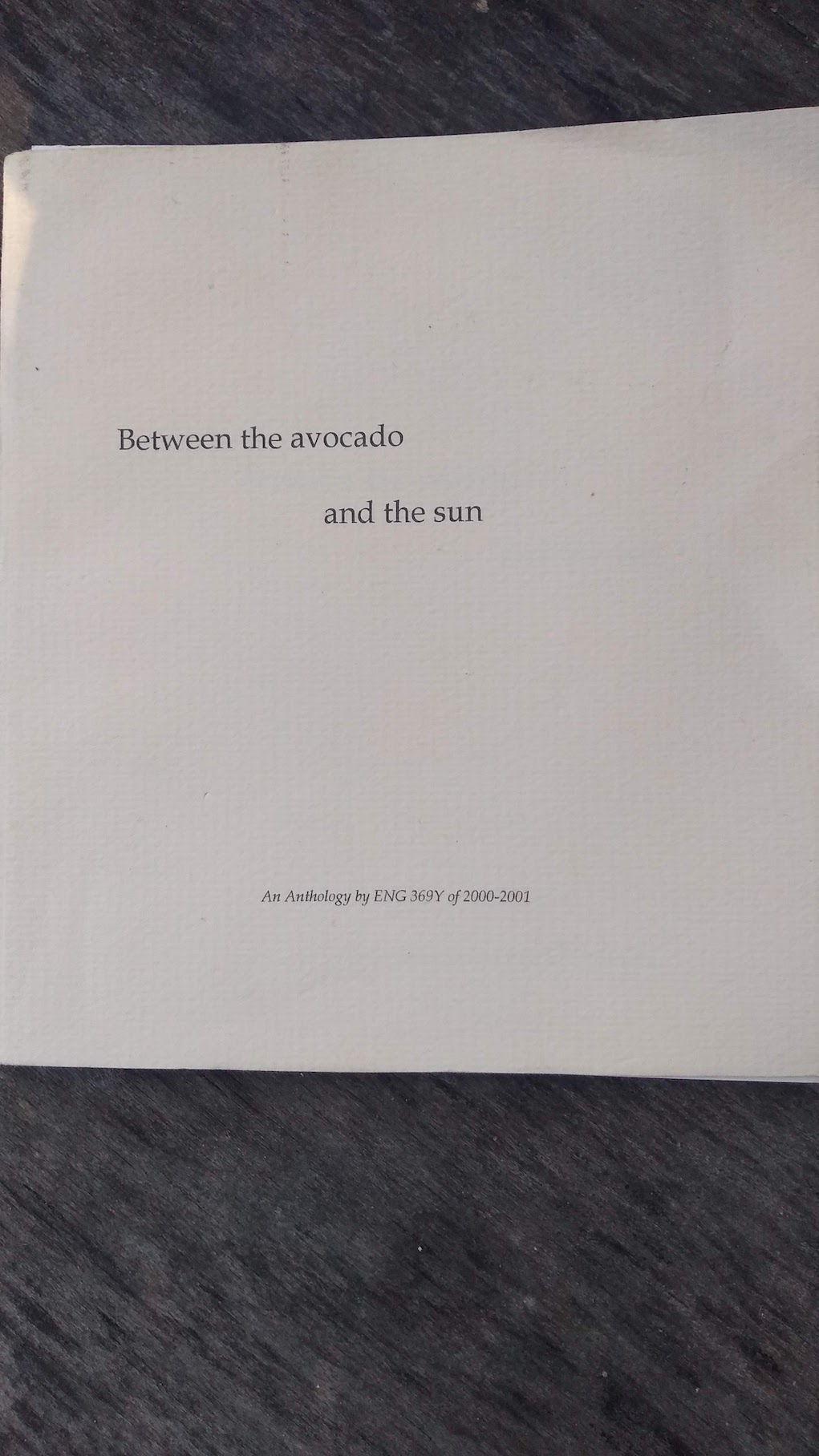
Class Reunion: ENG 369Y 20 Years Later
During my third year of undergraduate studies, from 2000-2001, I was part of ENG 369Y, a creative writing workshop led by Dr. Lorna Goodison through the Department of English at the University of Toronto.
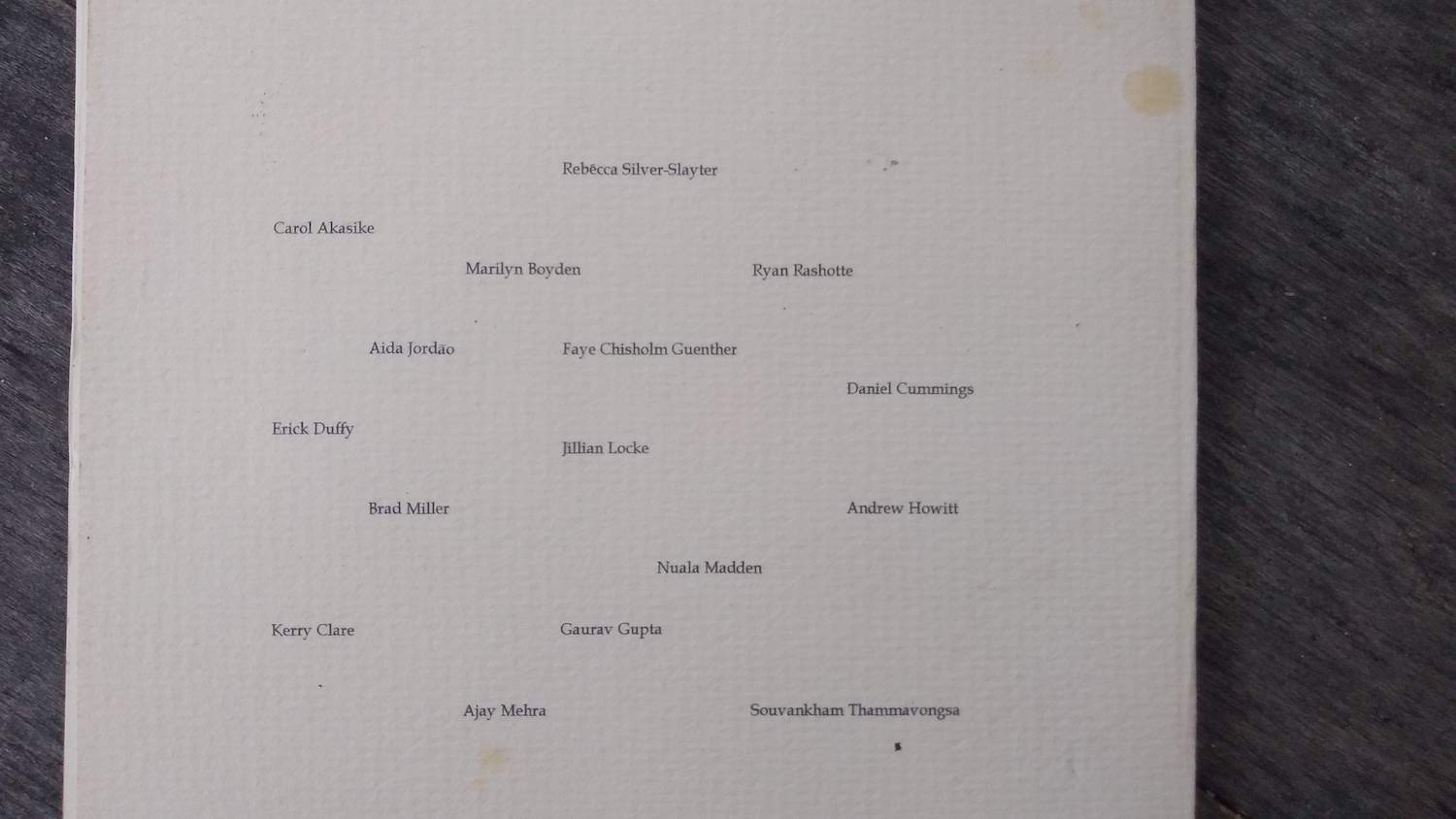
For so many reasons, many illuminated below, this class would be an unforgettable experience, though it seemed especially remarkable when—two decades later—four of us from the class would all be publishing books within the same year and a bit.
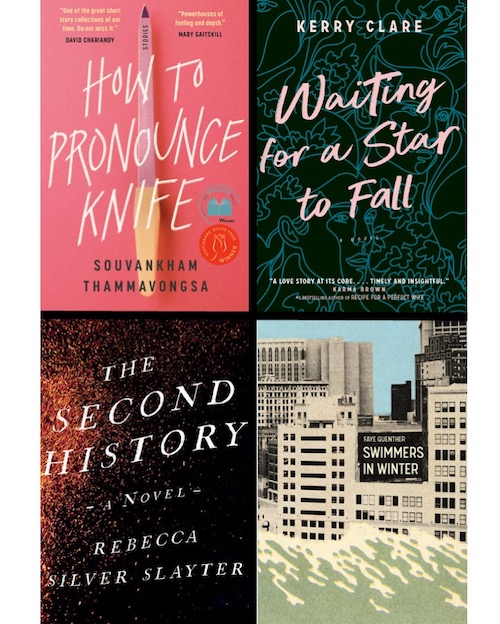
- Souvankham Thammavongsa’s How to Pronounce Knife was published in April 2020, and it was awarded the Scotiabank Giller Prize that year, as well as the 2021 Trillium Book Award, among other accolades.
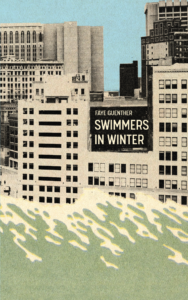
- Faye Guenther’s Swimmers in Winter came out in August 2020, and it has been a finalist for both the Toronto Book Award and the 2021 ReLit Award.
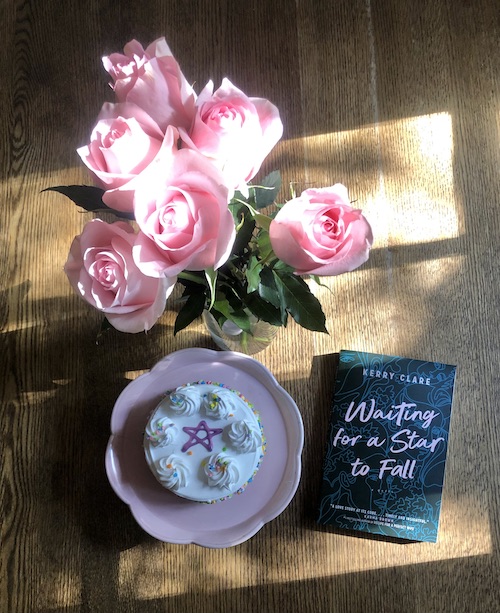
- My book, Waiting for a Star to Fall, arrived in October 2020, and the Montreal Gazette called it, “Subtly complex […a] romantic drama tailor-made for the #Metoo age.”
- And Rebecca Silver Slayter’s The Second History found its way into the world this summer, with no less than Lisa Moore writing that it’s “one of the most honest renderings of romantic love I’ve ever read. [A] truly mesmeric story, tender, unflinching, quakingly good.”
To me, the serendipitous occasion of our new releases after all this time seemed like an splendid opportunity for us to reconnect and reflect on our time together, as well as so much that we’ve learned about writing in all the years since then, and so the four of us shared our thoughts and ideas via email.
tell us about 20 years in the writing life, about the trajectory of your writing life since our class together in 2000.
Kerry Clare: I don’t think I had a focussed relationship to writing at all in the first ten years after our class together, even as I completed a MA in Creative Writing at the University of Toronto from 2005-2007. There is a line in Annie Dillard’s The Writing Life that I may have misremembered, but it’s about a superficial idea of writer-dom being analogous to one admiring the way one looks in a particular hat, and I always thought she was talking about me, which was mortifying.
When I finished graduate school, I worked for two years reading financial documents all day long, which was not fun, but gave me stability and a salary, though little in the way of creative inspiration. It also gave me parental leave benefits, which I used when I had my first child in 2009, and becoming a parent really seemed to up the stakes for me writing-wise. I became invested in the world in a more meaningful way, and therefore had more to write about. My first big success in writing was an essay about new motherhood I published in 2011, and this led to my first book, the essay anthology The M Word: Conversations About Motherhood, which I edited and was published in 2014.
At this point, I wasn’t sure that writing fiction was going to be my destiny, and was even making peace with that (throughout this entire period, I’ve been blogging, which has been a creative lifeline), but then something clicked shortly after my second child was born and I finally figured out how plot works. My first novel, Mitzi Bytes, was published in 2017, and I’ve been writing them ever since, and though I am constantly terrified that one day I won’t know how to do it anymore, it seems to keep happening.
Souvankham Thammavongsa: I am not a very good example of a writing life because my trajectory isn’t a simple one and it is not for everyone. I don’t think anyone would want it. I worked for fifteen years in the research department of an investment advice publisher, I counted bags of cash five levels below the basement, I prepared taxes. This work helped me write what I want and it didn’t take away my desire to write. I still have that from 2000, this desire to write, but it wasn’t anything someone taught me.
Faye Guenther: I stayed at the University of Toronto to do undergraduate and graduate degrees in English. Then I went to York University and did a PhD in English. While I was a student during those years, the jobs I had to support myself weren’t related to writing, but they showed me things about the world and this is useful to a writer. I’ve found that no matter what you do, the key is to make the time to write. My writing life has also been shaped by who I’ve met along the way, including fellow writers. In 2017, I published a chapbook of poems and short fiction, Flood Lands, with Junction Books. In 2020, I published a collection of short fiction, Swimmers in Winter, with Invisible Publishing.
That is probably most of what I’ve learned in these two decades. How to take in all the advice, all that you’ve learned from other things you wrote, from things you read, from other writers, and then listen very hard for the tiny sound of this book calling for what it needs from you.
Rebecca Silver Slayter
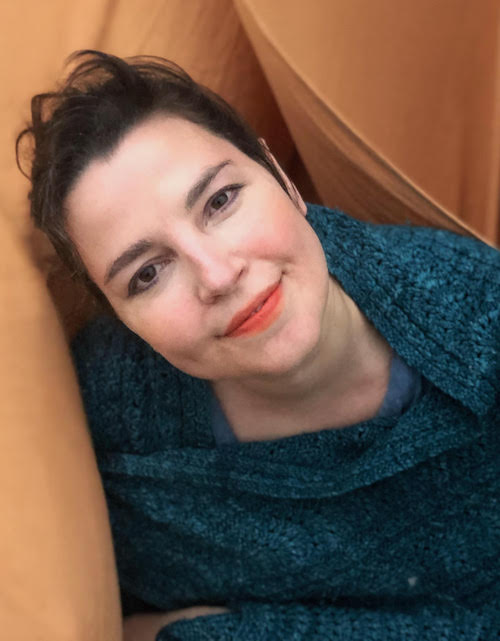
Rebecca Silver Slayter: I decided to stop writing not long after that workshop. I think, to reverse what Souvankham said, I worried my desire to write might be something someone had taught me. That I had lost track of why I wanted to write at all.
So I stopped for a year. Or two. Or three? It felt like forever because I was 20-something and everything was forever.
And meantime I decided to make my life and work writing-adjacent. I interned at Quill & Quire and The Walrus. I worked for a startup children’s publisher. I did odd jobs to complete the financial math, yardwork and errands. Eventually I was hired for my dream job, working as managing editor for Brick literary journal.
Sometime in the midst of that, I met my husband, and told him, proudly, how I had made the tough, mature decision to give up writing, and he listened and nodded and then said, I know you are a writer, with such certainty that I didn’t know how to doubt him and I began writing again. And I found to my great joy what I had been missing in those earlier writing years; a desire to write that easily overtook the desire to be a writer.
I did graduate studies in Montreal, where I wrote the first draft of my first novel, In the Land of Birdfishes. When I graduated, I returned to Nova Scotia, and bought a house for a song in Cape Breton, which I will be renovating for the rest of my earthly days.
This is for me a very good place to write, near the ocean and the highlands, in a community where music and storytelling are woven into everyone’s daily life. Here I published my first book and then wrote and rewrote and rewrote my second book, which was just released this summer: The Second History. It took me eight years from first draft till now, mostly because I tried to write it faster than I’m able to. It turns out I’m a writer who needs to take my time…
That is probably most of what I’ve learned in these two decades. How to take in all the advice, all that you’ve learned from other things you wrote, from things you read, from other writers, and then listen very hard for the tiny sound of this book calling for what it needs from you.
what was the best thing the writer you were in our classroom had going for them? And what writing advice would you give that previous incarnation of you? (Though would you even have taken it?)
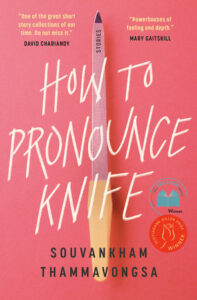
ST: My intuition. I listened to everyone, and knew when not to. This taught me how to pick through edits. When we see edits, sometimes it’s about the person and their life experience and it doesn’t mean they are right or know but you have to be generous and allow them to have their thoughts.
I wouldn’t give myself any advice. I think advice can be a disservice to a writer. There’s a lot I didn’t know and I want myself to not know and to live in that not-knowing in order to know it. I want myself to encounter and work through those difficult and lonely moments. I don’t want anyone to hold my hand or do me any favours or make it easier or easy. I like the difficult, and I want to continue with that difficulty.
RSS: One of my clearest memories of that workshop was of Professor Goodison saying, as we discussed one of my poems, “You come from preachers, right?”
I was tongue-tied with confusion. “What?”
“Your people, they’re preachers, right?”
I had absolutely no idea what she meant. “No….” I stammered.
“Then why are you preaching at me?” she asked.
Oof. Caught. I was constantly preaching. Trying to find a much-too-simple way of understanding much-too-large things. I had a weakness for sentences that began like “Love was…”
I think somewhere in this is both my weakness and strength as a writer (probably as a human too). It is writing-in-bad-faith to just polish up pretty turns of phrase that sound truish. To go around making tidy summaries of untidy things. But… I think if I mine deeper I can find underneath that impulse what drives me to writing still, and to reading itself… The sense that there is some luminous other way of noticing the world that will make it brighter, stranger, more visible. That certain words can be incantatory, a pathway to looking again and seeing more.
I have two small children, and have found it astonishing to witness language dawn within a person who formerly had none. How each child altered a bit around the language they used. How they learned what it was then to be nervous, even tired, even thirsty. How what began as the ragged, indeterminate longing of a baby’s howl became so clear, so precise, so unmysterious. And I miss a bit the mystery. The wonder of watching a peer being who doesn’t know what yesterday is. But I think there’s another way that language can give us back what experience has made ordinary. And I think that’s what I was searching for twenty years ago and search for still, but with a few degrees more purpose. And a lot more joy.
So I would maybe advise myself something like this: First, don’t write any more poetry. You are very bad at it. And for a time, don’t write at all. Wait until the desire to write is something you have to resist. Wait until it wells up in you. And then go find the joy of writing words that make you look again, more deeply.
I wouldn’t give myself any advice. I think advice can be a disservice to a writer. There’s a lot I didn’t know and I want myself to not know and to live in that not-knowing in order to know it.
Souvankham Thammavongsa
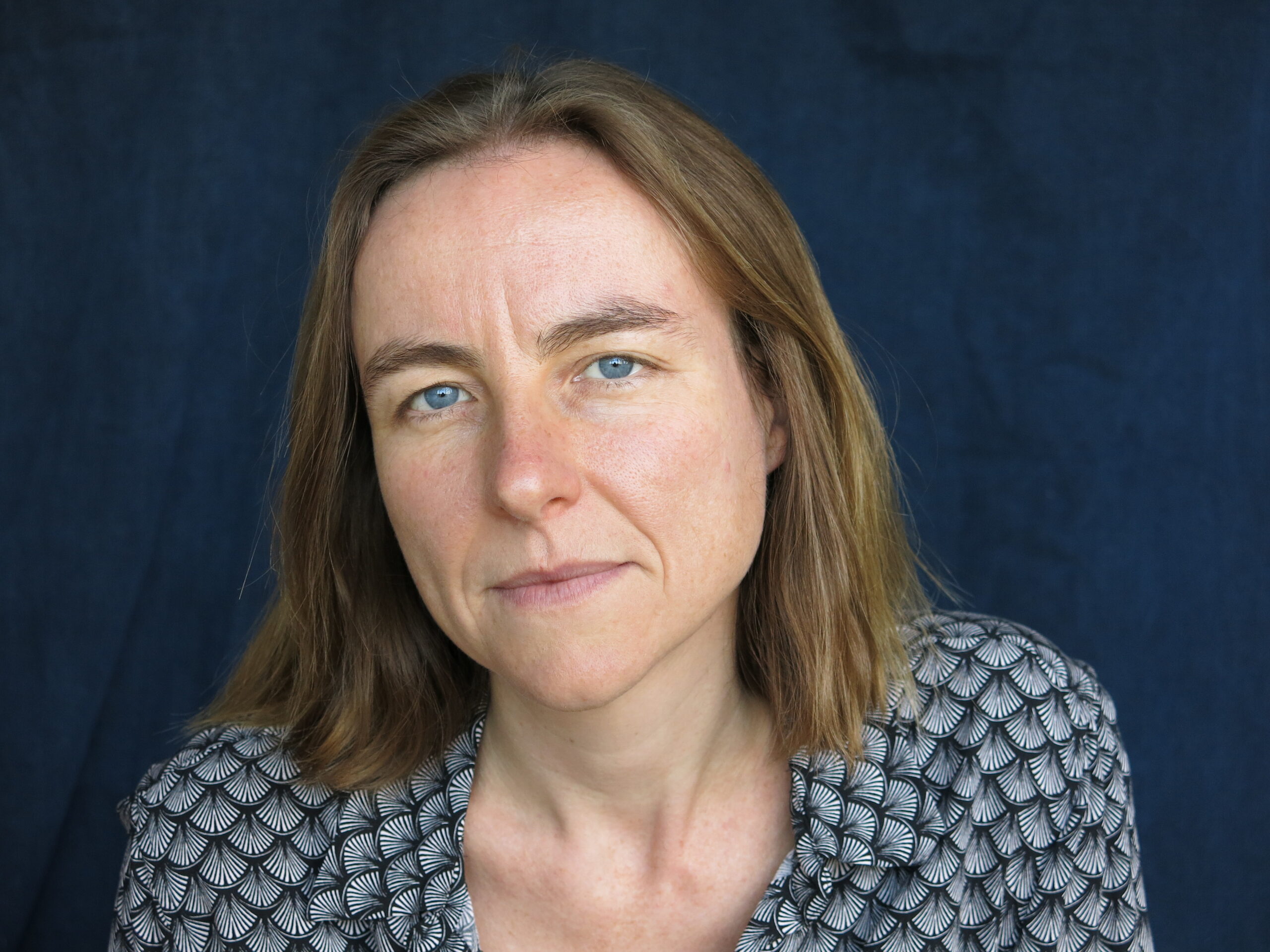
FG: I remember being openhearted and creative. The writing advice I would give my earlier self is to be bolder. I think when boldness is combined with a practice of being open with yourself and to the world, there is a sharpening of creative focus that can happen and a strengthening of creative perception, no matter what challenges life brings.
KC: The writer I was in our classroom had no idea how much she didn’t know, and far more confidence that she deserved to have, and I’m so happy she did because being 21 is hard enough. I was not a serious person or a serious writer AT ALL. (I remember that Souvankham appeared to be both, and it was such a powerful example for me, though I think I was still too young to fully appreciate it.)
What a tremendous opportunity to develop my skills that class should have been!! But I did not work all that hard, honestly, too busy checking out my look in the hat, remember? I mainly wrote poetry because you could finish a piece in a few minutes. This did not mean my poetry was good, however, although I think sometimes some of it was.
If I could give that writer I was any advice it would be to write something REAL, instead of something you think sounds like something that could be real. (And find writers you love, instead of reading all the writers you’re supposed to love.)
For the record: I would not have listened.
what roles have literary journals and small presses played in your writing career?
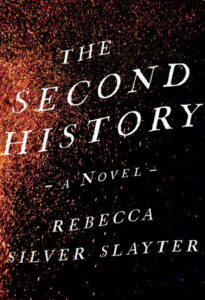
RSS: I know literary journals and small presses better as a worker than as a writer. But I am shaped permanently by my years at Brick literary journal, and by the trips I made then, twice a year, to Coach House Press, where the journal was designed at that time.
The Coach House basement was a kind of church I visited like a disciple of those beautiful machines for cutting pages and laying type … and of the people who made them run and knew the stories of an older Toronto and the mesmerizing adventures then had by not-yet-famous writers. In a way that is both corny and essentially true to me, that is what I feel a tiny part of when I write: all the people in all those tiny offices and studios and nooks making small-press books and magazines; their labours of love, their care and bravery, those parallel arts of ink and paper, alongside those of prose and plot.
They taught me what was foundational to writing; the courage and the care of the work. And the kinds of community it can build.
FG: Reading literary magazines gave me an awareness of community. They were the first space where I was published, and I know this is true for many writers. Smaller presses often foster innovative and ground-breaking work. They frequently publish voices and stories that historically have been marginalized. I think smaller presses are important for energizing and sustaining a vibrant creative culture.
My first piece of published fiction was in The New Quarterly in 2007. I will never forget the joy of receiving that acceptance
Kerry Clare
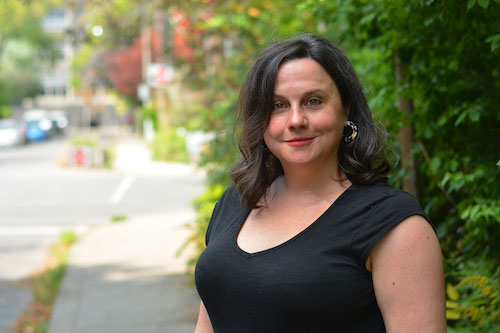
KC: My first piece of published fiction was in The New Quarterly in 2007. I will never forget the joy of receiving that acceptance, especially in the wake of the novel I’d written for my Masters thesis that went nowhere (because it was boring!) because I was really feeling kind of discouraged, and then this message from the universe arrived suggesting maybe I should keep going after all. In the next few years, I would publish pieces in TNQ and other journals, and the high of an submission being accepted has never diminished for me. And then Goose Lane Editions, a remarkable Canadian indie press with an impressive history, published The M Word, and did the book such justice. Without literary journals and small presses, I’d be nowhere.
ST: Literary journals teach you things a writing class or editor or a dear friend and family cannot. They don’t love you and are not beholden in any way. They teach you about rejection—what that feels like, what to do with it. They are often the first place where we get to see ourselves in print. It’s important for a writer to understand the difference between seeing yourself in print and publishing a book. They are not the same.
what are your favourite memories of our class?
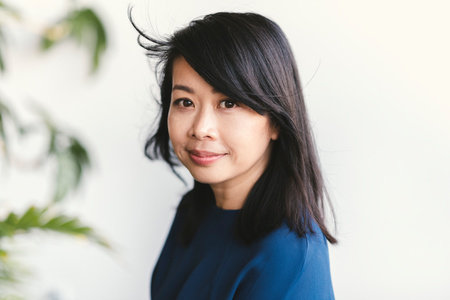
ST: I remember the talent and fun. There were so many writers in that class who are more talented, more ambitious, more interesting…but they aren’t here, or with books. They became lawyers and engineers and professors. I always keep that in mind. Having a book doesn’t mean I am good.
KC: I have so many memories! I don’t know if we were particularly interesting as a group, or if it was the work of Professor Lorna Goodison in creating community, or just the particular mix of experience and personalities in our class, but I felt very connected to everyone. I think we were a well written cast of characters.
I remember Souvankham on the very first day, and how she impressed me so much with her sense of herself. I remember we had to write a poem inspired by postcards, and mine had a field of sunflowers and said, “Welcome to Michigan,” and I wrote a poem with the line, “I won’t forget the motor city.” I remember REDACTED who wrote a poem with the line, “Let’s make love in the astral plane,” and I was seriously impressed by how sophisticated he seemed. And someone else who wrote a poem about someone sucking on her toes while listening to Robbie Robertson sing “Somewhere down the crazy river.” Everyone seemed to be having a lot more sex than me. (One could not have been having less sex than me.)
I remember Faye seemed especially interesting, partly because she seemed kind of badass with a shaved head, and we always sat in opposite corners of the room. And how I was in love with the name “Rebecca Silver Slayter,” which belonged to the woman who often sat in the same corner as me and whose work I felt very drawn to.
I think it’s kind of wonderful that in addition to the four of us, plenty of others in that group have gone on to very interesting careers in academic, television writing, and more.
One of my memories of the class was discovering what a literary reading could be—the ways prose and poetry can be shared beyond their existence as words on a page and become something like music in a public space.
Faye Guenther
FG: I’m grateful to have had the opportunity to learn from our teacher Dr. Lorna Goodison. One of my memories of the class was discovering what a literary reading could be—the ways prose and poetry can be shared beyond their existence as words on a page and become something like music in a public space.
RSS: This sounds like very cheap, opportunistic flattery, but honestly, though I remember well many of the talented, interesting writers in the class and their poems and stories, what I remember most clearly is the three of you.
I remember how beautifully Souvankham’s work was always laid out on the page in lovely, tiny type—the form so perfectly echoing the work itself, the grace and economy and polish of her words; how her work seemed always already complete, and I was stumped on how to write any feedback that didn’t just feel like tampering.
How Kerry’s writing was funny and powerful at the same time, and I hadn’t even known that was possible. How she seemed so at home both on the page and in the classroom, warm and open and at ease in a way that awed me. I remember Faye’s compassion for her characters, their rich interiority. How reading her stories felt like someone whispering in your ear, that intimate.
My strongest memory of the class was the first one. When we went around the room and each offered up our names.
Souvankham was near the end, seated at the table perpendicular to the one where Professor Goodison sat.
After she said her name, Professor Goodison asked, “So what do you want to be called?”
I was caught off guard by the question, but Souvankham answered clearly and immediately. Without blinking or skipping a beat, she said: “I want to be called a writer.”
Professor Goodison looked at her and Souvankham looked back. Then she said, “I’m going to call you Sou.”
And I was as astonished as if Souvankham had wafted out of her seat and up into the air between us. I was at that time so uncertain, so full of twenty-one-year-old desires to be interesting, to be brave, to be invisible and/or famous. I would have probably told Professor Goodison she could call me whatever she wanted. Or tried to guess what she might prefer me to be named.
Year by year over these last twenty, I get a little closer to what Souvankham already had then. That certainty. That clarity of purpose and identity as a writer that struck me silent when I was twenty-one.