May 17, 2022
Gleanings
- I am eternally searching for murder mysteries that scratch a very specific itch.
- When the Cherry Blossoms at Robarts Library are in full bloom I know that winter is well and truly over.
- I’m glad to have recognized, yet again, that it is possible (necessary) to love the imperfect.
- In Dublin I wondered why I’d ever left that western island but it was the beginning of something else, a key, the life I live now, and Dylan somehow knows that and offers his own strange consolation.
- Words and photos never capture the breathtaking beauty of sunrises and sunsets. They are an experience one has to witness.
- And the flowers open in sunshine and close again in the evening and in cloudy weather, which makes me wonder about the mysteries of nature. How it does this. How it knows.
- But I do know what fear feels like, and looks like, and how it shows up in me, and in our world and so what might be possible if love simply is moving away from, or through fear, to a place of openness and spaciousness and being with… to the myriad of possibilities that lie beyond fear?
- If he’d lived, he would be 96 now. If my mother had lived, she would be 99. That would be improbable, for me to have a 96-year-old father, a 99-year-old mother. Am I old, then?
- What I have learned this past while is that it’s very easy to be a buddhist among buddhists. It’s easy to be a good listener among other good listeners. But in the absence, it can be quite ridiculously difficult! Likewise, it’s very easy to be just and fair and kind among same.
- It’s revelatory and delightful to discover (again and again?) that the self is so sturdy.
May 13, 2022
Before the Beginning
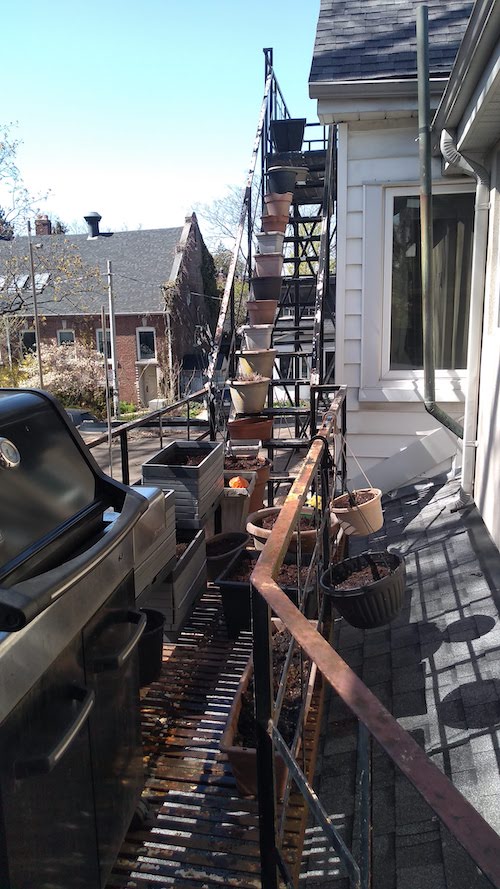
My favourite time is before anything happens, when it’s all just possibility, because possibility is something that you might even imagine you can hold in your hands, unlike everything that happens after that. (The force that through the green fuse drives the flower…) My favourite weekend day of Thursday, and my favourite month is April, even though April is horrible (which we managed to escape this year with a week in England and getting Covid after that…), because when it’s April it means you’ve still got May and June before you, which means you’ve still got all of summer. The moment before it all gets started, that upstoppable motion, when the green shoots exploding, go, go, go. And forsythia turns into lilacs turns into cosmos, and weeds start growing up from the cracks in the sidewalks, and it seems impossible that my garden was ever just an assemblage of buckets of dirt. Which it was until last Sunday, when I sowed a whole bunch of flower seeds in the pots all up the stairs, though I can no longer remember into which pot went what, but we’ll find out soon enough. Seedlings arriving yesterday from one of my kids’ school fundraisers—we’ve got lettuce, and basil, two strawberry plants, a sunflower. My one perennial that survived the winter throwing up a bit of green, and it’s all starting to happen, but yes, I love it most (because I love it all) just before anything does.
May 9, 2022
Cambium Blue, by Maureen Brownlee
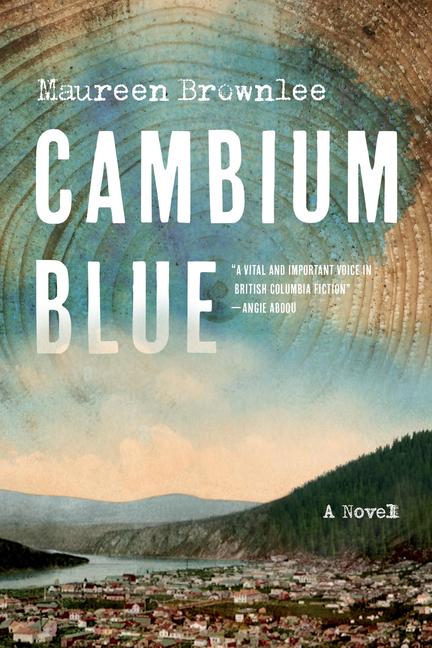
Oh my gosh, I loved Maureen Brownlee’s Cambium Blue from its first pages, with characters so vivid, sympathetic and familiar that I felt like I was watching a small town TV drama and the story’s spell was never broken. The story moving between the perspectives of Stevie, single mom turned newspaper reporter; her eccentric neighbour Nash, a veteran of the Spanish Civil War; and Maggie, the community newspaper publisher trying to decide whether or not to carry on with her flagging business after the death of her husband. It’s 1995 and changes are already afoot in the rural British Columbia town of Beauty Creek, ever since the sawmill closed down, which has locals are struggling, plus a beetle infestation is threatening the area’s most valued resource and local politicians are determined to add polish and red tape to the way things things have always been done.
A smooth-talking businessman is promising fortune in the form of a luxury resort, but not everybody is convinced he has town’s best interests in mind. Similarly controversial is a crackdown on Nash’s yard full of things he’s scavenged from the town dump, which has Stevie coming to his defence once they’ve developed a prickly connection when she dares to interview him about his history for the paper, but Stevie’s never been an advocate for anybody before, a teen mom who never finished high school, though Maggie sees something in her and has given her a chance to prove herself, the kind of chance Maggie herself might have appreciated once upon a time before her promise had been overwhelmed by that of her husband.
Cambium Blue is a novel about community, and change, its necessity sometimes and other times one must rail against it. It’s also a beautiful ode to community newspapers, situated at a moment just before the advent of the internet made the business seem impossible—though some of defied the odds. (Brownlee’s biography mentions her ten years spent as “variously publisher, editor, reporter, photographer, graphic designer and janitor for a weekly community newspaper.”) There’s a certain amount of small town dynamics that make the story especially compelling, but there’s nothing tawdry about this, Brownlee permitting each of her characters such a fierce dignity and inspiring sense of self that makes the story so alive. Such characterization, along with beautiful prose, resulting in novel that really sings, and reading it was moving, and such a pleasure.
May 5, 2022
Good Things About England
I’ve always lived by the proverb, “Go to England for a week, and you’ll have a nice holiday. Find an English husband, and you’ll be going to England frequently over the course of your lifetime.” But it had been far too long since our last visit, our trip scheduled for March 16, 2020, having been cancelled when the entire world shut down. Sometimes it felt like we might never get to go again….but we did! The long-awaited April 2022 trip happened, and it was incredible, so excellent to be back out in the world again, having adventures, smack dab in the middle of springtime.
Things we loved about our trip to England, in no particular order.
- The weather. It was sunny every day and we came home with tans and new freckles on our noses.
- Our flat. We stayed at the most wonderful Air BNB around the corner from Lancaster Castle, with a ten minute walk to the city centre in one direction and a ten minute walk to Stuart’s sister’s house in the other. It was so comfortable and filled with light.
- Swimming!
- We drove an electric car and it was so much fun, and I ended up spending a grand total of $45.00 on charging for the entire week.
- Our family! We got to visit again for the first time in so long, and also meet our three-year-old niece/cousin, who was more than worth the wait and we adore her.
- Bookshops! Lancaster features a Waterstones AND a wonderful Oxfam bookshop, where I was able to pick up two novels by Barbara Trapido. And one morning we drove to Lytham St. Ann’s for a visit to Storytellers Inc, which I picked up a veritable tower of titles.
- Special dinner on the canal. We didn’t dine indoors while we were in England, but thankfully were able to enjoy picnics, and other outdoor delights, including a dinner at the Water Witch on the Lancaster Canal, which is where it dawned on me that my children were old enough now that travelling with them was just so thoroughly a delight instead of a chore, and I felt very lucky. Plus the lamb shank was so good, and we had stick toffee pudding for dessert.
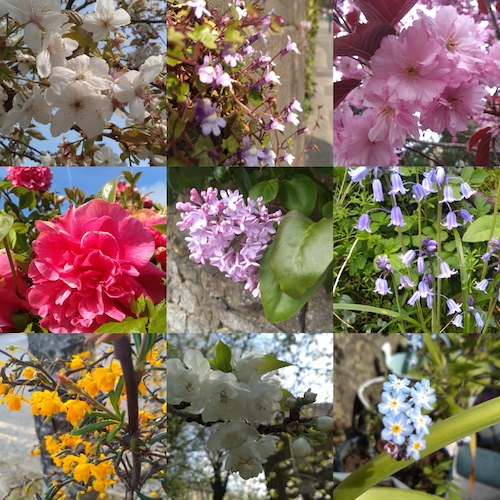
- The blossoms. Bluebells, pink trees, camellias, even an early lilac, and so much more. It was a floral feast.
- How relaxing it felt to get away…especially from Covid. I read the Saturday Guardian while we were there, and it didn’t mention Covid at all? My jaw didn’t hurt from stress clenching for the first time in two years. Honestly, the fact that we all ended up getting Covid didn’t even damped the moon.
- To remember that good things are possible. Oh, it felt so wonderful.
May 4, 2022
New Lane Winslow: Framed in Fire
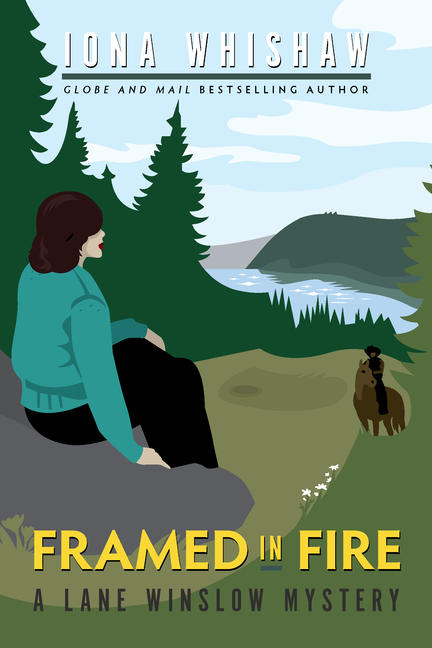
Being ill last week was not without its advantages, among them: a chance to spend an entire Friday in bed reading the new Lane Winslow. Framed in Fire is the ninth title in this detective series set in and around Nelson, BC, in the late 1940s, and throughout the series, author Iona Whishaw has performed the remarkable feat of tying her plots to so many issues relevant to our present-day experience—racism, xenophobia, domestic violence, rape, ideas about women’s independence, and more. And I suppose it shouldn’t be so remarkable to find such stories in historical fiction, these issues being—unfortunately—timeless. But that Whishaw manages to address them without anachronism is what’s really impressive. And while I’ll admit there might be something just a little too good about the people of King’s Cove—the murderers and dead bodies among them notwithstanding—I am not sure such enlightenment is entirely anachronistic either. Because as much as we excuse egregious deeds and ideas of past figures for being “of their time,” it’s also true that there were always people who knew that all people were deserving of rights, that colonialism was barbaric, the women were people. In Framed By Fire, Lane encounters an Indigenous person for the first time since her arrival in Canada, and has her preconceptions challenged that First Peoples were thoroughly of the past. And while other characters do reinforce the racist and colonial mindsets reflective of the population at large, that Whishaw writes others who challenge such ideas is smart and subversive, and why these stories read as so fresh and fascinating.
May 3, 2022
Gleanings
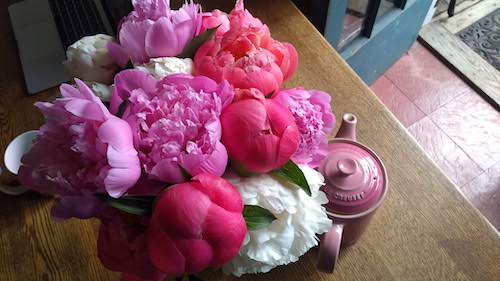
- Give me ordinary. Give me cups of tea in the backyard and an afternoon so slow I can hear the hummingbirds. Give me time to look at the moon and midday trips to the bookshop. Give me satisfaction with Enough. (via ARB)
- My mother died in 2003, ravaged by Alzheimer’s, which robbed her of memory but not of her spirit. “There was a terrible war, here,” she told me, pointing at bullet holes that still mark the facades of old Wrocław buildings. “Terrible things happened. Terrible.” By then, she did not know she had a daughter, but the memories of the war lingered in her mind.
- There is a suddenness to beauty, a shock to it. I sometimes think I’m quite dulled to the world these days, but then it happens, I’m pulled through, and that reminds me what I’m here for.
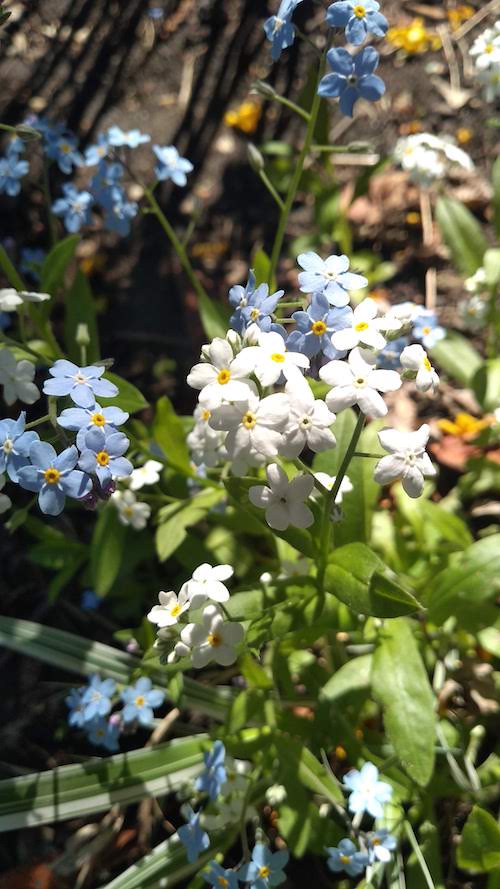
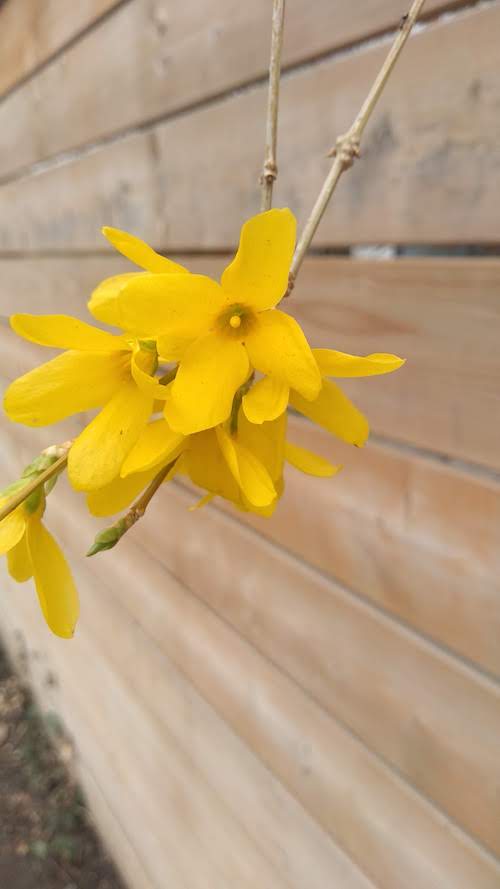
- Purple, acid yellow and milky white. I can’t imagine how many seed species there are on earth, and like the urchins, how much variety exists in each one’s appearance, both subtle and dramatic. It blows my mind.
- For I know I can’t make time slow, but I can lean into inhabiting the ever-present nowness, the slices of the day.
- Earlier in the day when we had first pulled out the map book, we looked at the grid the lines that marked the roads and then out at the prairies that surrounded us and wondered if there was anything out there. And the answer is yes, there much to be seen and much more to be imagined.
- It has been extraordinarily hard navigating the tightrope between expressing myself truthfully, and not hurting my mom’s feelings.
- Imagine, I always said, the death of a child. How terrible. How terribly sad.
- All through the 1st year of the pandemic, when we didn’t see anyone apart from masked cashiers in the grocery store and the masked lifeguards at the pool, I was so grateful for the company of jays.
May 2, 2022
Bridge
I got Covid last week, and the whole experience takes me right back to pregnancy and early motherhood in way that narrative can be imposed from without when we’re most vulnerable.
And also how resistant I am to being vulnerable.
I’ve never liked being told who I am, or what is my destiny. I have no interest in numerology, or my enneagram, or Tarot. There is a part of me that’s ever resisting the idea that I’m not singular, that I’m one of the others, even though I know that I am the others. All I want is for there to be a little room for me to figure things out for myself.
Maybe I just really hate anybody telling me what to do?
I remember being that insufferable though when my kids were small, on both sides of the equation. I remember all the people who smugly smiled and said, “You’ll see!” and how I was so sure that I’d show them and do it differently (and sometimes I actually did). I remember too coming through the other side and how I’d perilously managed to piece my shattered universe back together with ragged pieces of scotch tape, it seemed like, and all these lessons I’d decided I’d learned so painfully so that other people wouldn’t have to. All the advice I imparted, literal Excel spreadsheets in regards to baby books, and sleep schedules, stroller models, and baby carriers. None of it really of any use to anyone else. Such a lesson in subjectivity, but one that it took me a long time to learn.
A month ago, when many people in my circles started getting Covid, I got my hackles up. Partly because I REALLY wasn’t in a place to accept getting Covid, because we were on the cusp of a trip to England that had already been cancelled once due to Covid. Nope, we weren’t going to get it. We couldn’t. And we didn’t, thank goodness, thanks to avoiding places like crowded airports and jet-planes. Though I was paying attention, people I know on social media sharing their stories, providing daily Covid updates. I went shopping and bought a whole of stuff like Lipton Cup-a-Soup and Vicks Vapour Rub, imagining these as a kind of insurance. If I had them, I wouldn’t need them at all.
And mercifully, I didn’t. Not until we were home again, and the stakes weren’t as high. We’re all vaccinated and boosted. and if Covid’s inevitable, now’s as good a time as any. I suspect the airport and the jet plane are what did it, Canadian customs with officials yelling at us to bunch up together in the lines, all those people whose masks were hanging down below their noses. “If I can see your nostrils, then what’s the point of your mask?” I sang, not loud enough, half-delirious after twelve hours of travel.
Three days later, Iris woke up with a fever. The test was positive, but we didn’t need it to know. And it’s been fine, Covid not so much “ripping” through our house, but creeping through on tiptoe. Iris had a mild fever for part of one day, was a bit congested for a day or two after, but mostly was back to normal and bored until she’d returned to school after five days of quarantine. I developed cold symptoms last Wednesday, symptoms identical but much less severe to another cold I’d had to January, an affliction I’d been hesitant to label as Covid because that seemed like tempting fate—it had been too easy. Though I hadn’t tested then, because we’d all been locked down anyway, and there was no place to go, and our apartment doesn’t really have a proper place for someone to isolate. In January, at least, nobody else got it.
This time we’ve all got it, but it’s been mostly just relaxing, everyone’s energy a bit depleted with cold symptoms, but nothing worse than that, thank goodness. Everyone’s eating normally, albeit more popsicles than usual. Nobody’s really suffering at all, and I’m so relieved by that—to be fine enough to sit around reading. To not be confined to my bed for days at a time with muscle aches, and fever dreams, all those things I was dreading. (I had a terrible bout of pneumonia in 2015; to have to go through that again, with everyone around me sick, and fears of mild cases getting worse—I didn’t want any of that at all.) We’re so lucky. This is definitely okay. As best scenario Covid stories go, this is the next best thing to being asymptomatic.
But am I doing it again? Not being the others? The way that in the early days of motherhood, I would sometimes fancy myself as rocking it, not having to contend with what everybody else is going through. Am I being Covid-smug with my stuffy nose? Like one of those people who lose the baby weight in a fortnight?
And oh, the inapplicability of everybody else’s advice. Even though I know they’re just trying to be helpful, but it seems strange sometimes to be inundated with tips by people who think their own experience applies to everyone, people who have no idea what you’re going through. (Of course, I do this too.)
The subjectivity of Covid is one of the few things I think we can properly take away from all of this—in addition to “Wash your hands.” The danger of thinking, “I know exactly what you mean.” That there isn’t a gap between your experience and mine. I’m not saying we can’t bridge it, but it’s important just to acknowledge that it’s there.
April 28, 2022
The Friday Gospels, by Jenn Ashworth
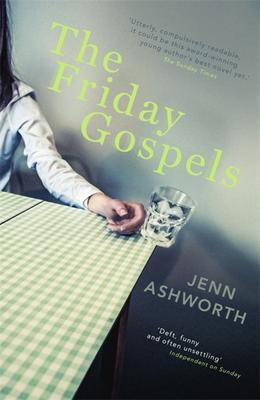
I wanted something new, something different. There’s an award called The Portico Prize, given “for the book that best evokes the spirit of the North of England, open to new works of fiction, non-fiction, and poetry.” I found the 2022 shortlist, and sought out some titles from it when we were at Storytellers Inc, and picked up The Mayflies, by Andrew O’Hagan, whom I’ve read before and which was published in Canada, but it sounded great. And then I also bought a book by Jenn Ashworth, an Lancashire author whose nominated book Ghosted wasn’t on the shelf, but her 2013 novel The Friday Gospels was, a review on the back of it reading “put me in mind of Mike Leigh.”
And oh, I loved it so completely. Instead it terrific when longing ends up in something that so completely satisfies?
The Friday Gospels takes place over a single day in the life of a Lancashire Mormon family whose second son is returning from two years away on a mission, the point of view moving between each member of the family—younger sister Jeannie: troubled older brother Julian; father Martin who’s fallen for a woman he met in the park while out with the dog; his wife Pauline, who’s become a shut-in and struggles to walk, plus Gary himself, whose actual experience and the way he’s regarded by his family are wildly divergent. But then, as it becomes clear, this is the case with all the family members, each one hiding shocking secrets, and just when you think such a character could not possibly have your sympathy, Ashworth turns her story inside out, the most incredible sleight of hand, and she does it again and again.
So that there is bleakness, but also so much humour, and humanity, gorgeous love and redemption, and the most ridiculous-seeming character is brought to life so vividly, flawed and human, tough and tender. With a plot that twists and turns—I read this on the plane and found myself gasping, whisper-shouting “NO!” at the page more than once—I was thoroughly gripped by this story of a single family, but also tremendously moved. I loved this book, and am very happy I also picked up a copy of Ghosted so I have that one to look forward to.
April 28, 2022
Tunes
The song on constant play in our house right now is this one, by George Ezra, which we got into while driving our little electric car along the motorways of northwest England last week. It turns out that George Ezra is already very popular, so my efforts at discovering an obscure indie artist are all for nil, but it’s still such a fun song, and I’ve come to love his others too.
April 27, 2022
The Direction of Your Dreams
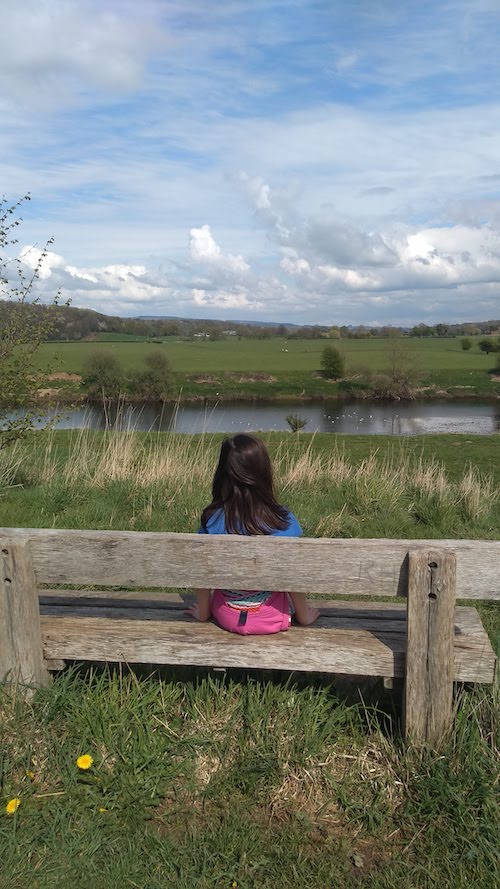
I was recently writing in a journal of prompts in response to the question of what I’d like to tell my younger self about my life right now. And what I remembered was how much possibility my younger self once found in the phrase attributed to Thoreau , “Go confidently in the direction of your dreams and live the life you imagine.” Inscribing it into all kinds of scrapbooks, perhaps purchasing a poster of a sunset with it quoted.
What I’d tell my younger self: “Look! I did it.”
*
Two years after my first novel came out, I’d found myself in a creative jam. My publisher had rejected my next novel. I was proud of Mitzi Bytes, but its sales hadn’t set the world on fire, and I was feeling pretty despondent. Like this was my chance, and I’d blown it.
(Never mind that so much of things like book sales are outside an author’s control. Suspicions I’d long held were underlined in a really smart and candid recent post by novelist S.K. Ali, who wrote, “Your book sales are not yours to bear…if you love marketing, great! but a publisher has the greatest pull of all and can put a book on any list — NYT, Indie, USA Today etc — without you moving a finger. So, Sajidah, keep doing all of that stuff you do, giveaways, tiktoks, AMAs, but only because you love your readers. [Those things don’t move book sales. YOU don’t move book sales. Don’t bear that burden.]”)
It was late 2018, in response to that despondency, and feeling like I’d used up all my chances, that I decided to conjure some more. In 2019, I launched the #BacktotheBlog Movement, which led to Blog School, and also a wonderful bookselling project I’m still so proud of, the now-departed Briny Books. And then, in the midst of that summer, I signed a deal for my second novel, everything coming up Kerry after all.
*
I wonder if any advice I have to impart about going in the direction of one’s dreams would be as relevant if I hadn’t ended up defying the odds and getting that book deal in the end? I think it probably would, because my happy ending was not the end, but just another chapter (hurrah!), but experience has shown me that an author is never set, never really arrives, that writing, like everything, is a process of becoming, and the next thing is never sure. That the advice about going in the direction of one’s dreams never stops being applicable.
*
When I say, “Keep going! Don’t give up,” I’m not saying that you should keep beating your head against a brick wall. Sometimes “keep going” means doing something different, a shift, a pivot. I finished a novel in 2007 that nobody wanted to publish, and I’m glad I didn’t go to the ends of the earth in an attempt to find a publisher, because I might have found one if I’d tried hard enough, and that novel wasn’t very good.
What I’m saying is don’t stop creating things. Don’t stop being inspired. The wonderful thing about literature is that readers are so central to the form—there’s nothing passive about it. Keep reading. Keep engaging with ideas. Keep a notebook. Keep a blog. Maybe you have bigger dreams of projects you’d like to get to the end of, but in the meantime, a notebook, a blog. A quilt. A cake. A conversation. All these things are tangible and real. In keeping with the life you’ve imagined.
*
*
I started thinking about all of this in response to a recent post by Kelly Duran, whose kindness, generosity and candour as an author has been so refreshing to encounter. Her feelings about where she is two years out from her debut novel resonated with me for sure, and made think about the metrics we have to measure success. As well as the dangers on fixating where we’re going instead of noticing and appreciating where we are right now.
With writing, its always about the next thing. And while I understand that, but it’s not the way I want live my days, to measure out my life. I want to rest on my laurels. I want to breathe. I want to rest.
*
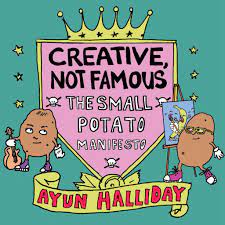
I started thinking about all this in response to the book Creative Not Famous: The Small Potato Manifesto, by Ayun Halliday, whose comics I used to read in Bust Magazine back in the days when I was learning to call myself a feminist. I think I am the small potato I am because of Halliday’s influence, because of her example that it’s possible to live a creative life, to combine that life with motherhood. Blogging’s DIY ethos in line with her zines and off-off-Broadway plays. Her example of how exactly one goes about confidently in the direction of one’s dreams and lives the life she imagines.
Most of us are never going to hit the big time. But is that really the reason we’re doing it?
It’s not the dreams themselves, it’s the direction.
I’m thinking of yoga, and how much of a pose is about reaching for it instead of actually getting there, and how it’s really the reaching that makes the process worthwhile.
If you didn’t have to reach, what would be the point?
*
I remember thinking about my goals when I was a little bit older, too old to be penning axioms by Thoreau into pretty notebooks, and I wasn’t actually thinking about Thoreau at all. But I was plotting out my life the way one might be plotting the trajectory of a line on a graph, and it occurred to me that if I tried to be a writer, to write, that even if I never achieved such goals as a published book (or two books, or three, or a bestseller, or a prestigious prize) that I’d end up in a very different and likely more interesting place than if I hadn’t tried at all.
That it’s actually impossible to lose this game.
*
What Thoreau actually said, from Walden: “I learned this, at least, by my experiment: that if one advances confidently in the direction of his dreams, and endeavors to live the life which he has imagined, he will meet with a success unexpected in common hours.”






