November 21, 2023
Gleanings
- I do love to inject a bit of novelty into our Advent. And I’ve loved creating a new Yule Log for ELEVEN out of the past THIRTEEN years I’ve been posting here on SSJ (and, before that, on The Lunchbox Season). That’s a top-ten list and a bonus! But I hereby proclaim, “Eleven yule logs is enough.” My work is done in the tree-like cake department. They’re all my babies and they’re all my favourites. And I don’t need to build my catalogue up to a dozen log-cakes, let alone a baker’s dozen.
- This is one of my favourite things about the novella form: the way that worlds are created with just enough carefully crafted elements and strong imagery to bring them alive and to gain your trust, and the rest is on you. Novellas just don’t have the time or the space to hold your hand. I find myself loving that.
- That what we must do is awaken our own creativity, generosity, and create small islands of sanity when we cannot stop the insanity that is occurring elsewhere.
- My Significant Other tends to get depressed around his birthday. And he’s had a hard year. Last year’s birthday was spent in the hospital and this year is a significant milestone so I decided that we needed to celebrate. Really celebrate.
- I did have a minute of thinking, “hmmm, I never even tried this on before today, it would be terrible if I were allergic to yak hair and found out during a six-hour meeting.” But if the yak hair did give me a terrible rash at least I would be sitting with fifty dermatologists, and maybe some of them have cutting-edge creams in their carry-ons. (The denouement: no issues! Me and yak hair sweaters are best friends.)
- I quilted rivers all over the quilt, trying to echo the routes, the oxbows, the chaotic systems of those days. I listened to the news and quilted, hoping to find a way to see something positive in what had happened.
- I read that Bening trained relentlessly for a year to hone her stroke, and averaged four to eight hours in the water, day and night, in all kinds of weather conditions. She was adamant that she would swim every stroke in the film. Nyad was obsessive and single-minded in her pursuit of her goal, and Bening was obsessive and single minded in pursuit of hers. “We build these cages for ourselves in our brains about what we can and can’t do,” Bening says. “We get so used to that, that we sort of even forget that they’re there.”
- It is poisonous stuff, though, and—to bring Amis back into it—there’s such a sense of gleeful bad boy “look at me” about the whole thing, with all the metafictional cleverness deployed as back-up in case the whole “I’m only joking” excuse isn’t enough.
- There was a sense that the tree itself knew it had become a danger and the space it left was given like a gift, not only to the bee balm and juniper, lilac and witch hazel that have barely survived in its shadow but to me, personally. Its stumps invite me to weave ribbons around them and carve them with Cohen’s words.
- i feel that veil is thin, yes, and it is the grey boundaries between past and future in which i feel myself becoming a flock of birds. the neither here nor there, an inability to be present for it.
- Start with the darkness, the unknown hour. Roll over. Squint to see if the glimmer of light could possibly be the beginning of the sun rise. Notice the well-worn thoughts about not getting enough sleep and the old stories from days gone by that still want to dictate how this day with little sleep will go.
November 20, 2023
The Heaven and Earth Grocery Store, by James McBride
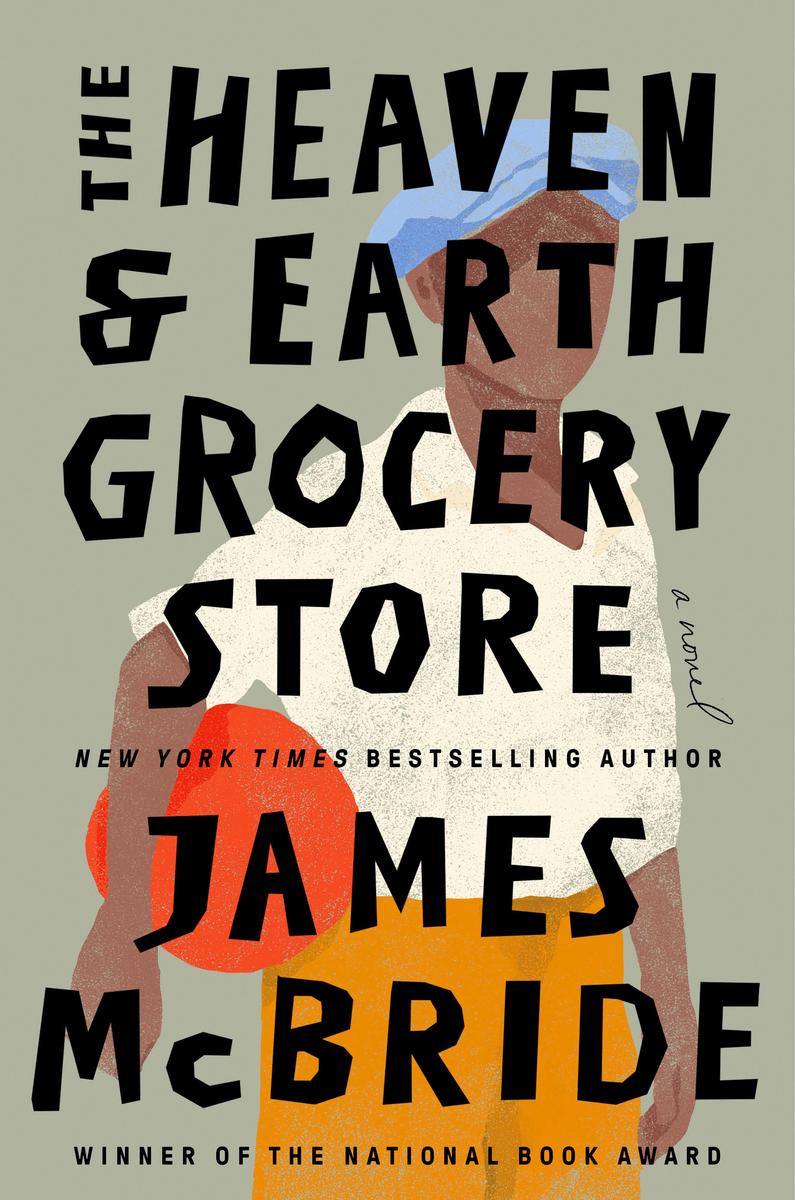
The luckiest thing that ever happened to me was the Little Free Library discovery of Deacon King Kong (in hardcover, even!), a novel that turned James McBride into one of my must-buy authors. That book was brilliant, huge in scope, full of play and wisdom and literary magic. And now I’m raving about McBride’s latest, The Heaven and Earth Grocery Store, set in a Pennsylvania community that’s home to Black Americans and Jewish European immigrants, and it’s just as strange and wonderful, a story to get lost in. A novel I’m finding it hard to find words to describe, arriving at “spectacular,” with emphasis on “spectacle,” because there’s just so much going on here. The way that McBride has constructed an entirely literary universe in Chicken Hill, with buildings with something going on (or being stored) on every single story, and tunnels dug underneath all that, the action never quits, which isn’t too say that so much of it’s not going on inside the minds of its incredible characters, fallible people of such feeling and depth. I just loved it, though it really was “a story to get lost in” at first, pitched—as I was—into 1925 with Moshe Ludlow’s vision about Moses as he strives to make a go of his theatre in Pottstown, Pensnsylvania; his wife, Chona, who works behind the counter in The Heaven and Earth Grocery Store and writes furious letters to the editor calling out the town doctor for marching with the Klan; the deaf Black boy being harboured in the basement from government agents who want to send him to a local asylum; Moshe’s bigshot cousin Isaac in Philadelphia; old Malachi, the world’s worst baker, and a tiny pair of cowboy pants; the neigbourhood gossip, whose name is Paper; not to mention Soap, and Fatty, and Nate Timblin, who had a different name before. And how do all these characters connect? Well, therein lies the adventure, a gorgeous tale of community, solidarity, and humanity. Larger than life, and somehow also its essence.
November 16, 2023
Did you know…
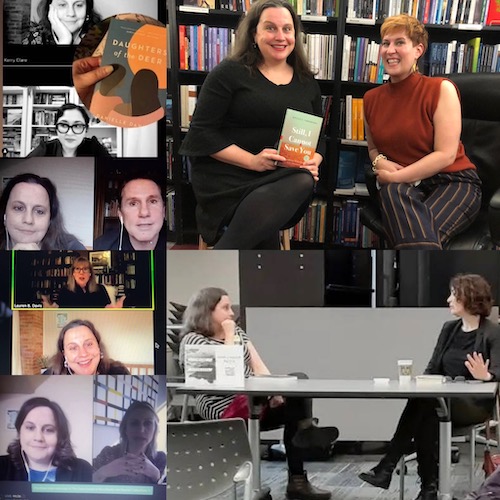
Did you know that, in addition to being a prolific tea drinker, that I’m also an accomplished host/moderator of literary events?
I love these roles, bring all my energy to them, and can engage with books on a really meaningful level that’s satisfying and fun for writers and audiences alike. I will never ask anyone how she finds the time to write with kids, or how much her life is similar to her protagonist’s. I will also keep my cool when, just say, someone in the audience faints, or when your building’s fire alarm keeps going off while we’re on Zoom (both true stories!).
Hire me! I can help make your event really great!
November 16, 2023
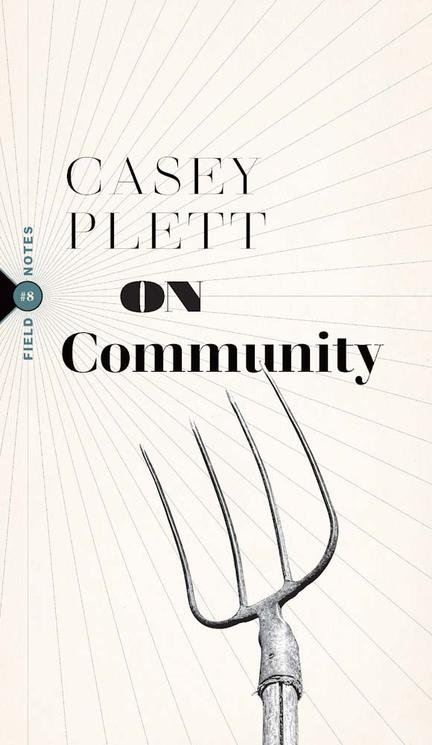
On Community
A thing I think about sometimes is how, about 15 years ago, there used to be these gatherings of people associated with publishing or who were publishing-adjacent—most of which I did not attend, though when I did, I usually felt like a numpty—after which there would be ecstatic posts on Twitter saying things like, “If they’d dropped a bomb on The Ferret and the Firkin tonight, there’d be no one left in Canadian books!” How, at the time, I even thought this was true, and there was something reassuring in that, in the world and its subsections being so knowable, contained (and the solipsism to boot!).
And I’m not sure exactly what has changed since then—if the world actually has become more complicated, fragmented, if social media is the culprit, or if social media has only made it clear that life was never so tidy, that no single community could ever be so defined or fit in a pub (in Toronto, no less!). Or maybe it’s just that I’ve gotten older and have seen for myself that community and belonging and understanding is a bigger, weirder, harder project that I ever knew, and sometimes the amorphousness of it all, of everything, causes me incredible anxiety.
And that amorphousness—of community, of the idea of community, of the way we talk about “the [FILL IN THE BLANK] community—is the subject Casey Plett takes on in her book On Community, part of the Field Notes series of long essays inspired by big ideas. A book that, like all my favourite nonfiction, not just managed to articulate my preoccupations—my anxiety around community’s amorphousness; how the idea of community can paint over complexity; how perpetually difficult community is, even with its rewards; ideas of belonging and who doesn’t belong; policing borders and what you lose when you don’t, and what you lose when you do; and so much more—but to connect the dots between them in a way I didn’t see coming.
Plett brings a fascinating personal perspective to her essay as a trans woman (ie a member of “the trans community;” “the LGBTQ community;” [by the way, I think the first time I ever heard the absurdity of all this considered was—somewhere?—a laughable reference to “the fat community”]) and as a Mennonite who grew up connected to the communities in Manitoba from which her parents had come. Both are groups in which the idea of community is central, though it manifests in ways both good and bad (and similarly too—ideas of belonging or not, of excommunication, of who does the work and who reaps the rewards, of who gets called out, and whose transgressions remain unremarked upon).
From New York City to Windsor, Ontario; from Plett’s family’s stories and the books of Miriam Toews to her adventures couch-surfing across North American to promote queer small press titles; to whether the internet enhances connection or breaks it (she references characters in Toni Morrison’s Sula hating on the telephone because it meant nobody ever dropped by the house anymore); and the fact that any one community can be embody many different things at once; Plett’s essay is a thoughtful, rich and engaging unpacking of the complexity behind simplistic ideas, and a clear-eyed consideration of what really is a universal human experience.
November 15, 2023
Something Borrowed: The Edible Woman
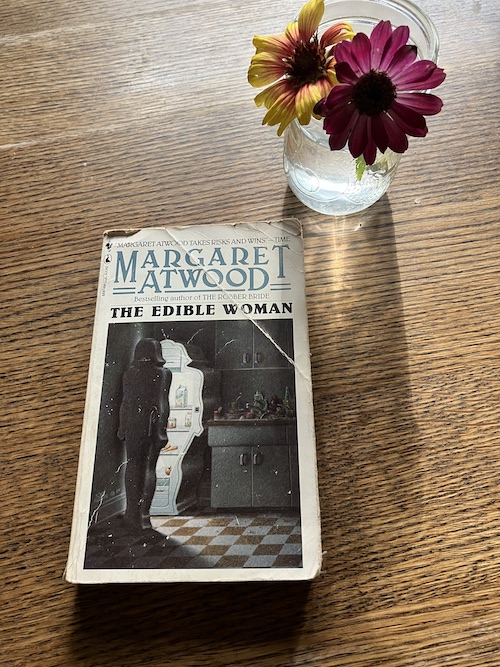
It’s been awhile since I did a #somethingborrowed, acknowledging the parts of my novel ASKING FOR A FRIEND that were inspired by factors beyond my imagination. Savvy readers might have discerned the debt I owe to Margaret Atwood, and her 1969 novel THE EDIBLE WOMAN, which I’ve not read for years and years, but whose image has stayed with me of a monstrously pregnant woman called Clara who is lying, TRAPPED, supine on a chaise longue in the chaos of her backyard/domestic life. To me that image/scene stands for the way that motherhood can make our friends wholly unfamiliar to us, both in body and in mind, and that sense of estrangement was something I built my narrative around (even to the point of stealing my character’s name from Atwood’s story!). Though when I went back recently and found the scene, I learned that I’d remembered parts of it wrong. It was not a chaise longue at all that Clara was sitting in, but “a round wicker basket chair with metal legs,” and she’s not rendered enormous by her pregnancy either, rather, “she looked like a boa constrictor that has swallowed a watermelon.” But all the same, Atwood’s scene planted a seed from which my novel grew.
PS the most remarkable thing about my Seal paperback copy of THE EDIBLE WOMAN is that it is—most ironically—the only volume in my entire library that has been LITERALLY eaten. Head to my video where you’ll see the little hole that was bored into my copy by an actual BOOKWORM. I discovered the damage because there was a tiny pyramid of dust on the shelf from the boring. The hole is so neat and tidy and I’m obsessed with it.
November 13, 2023
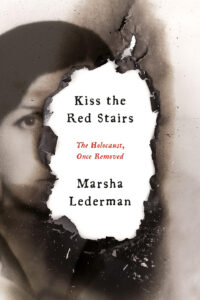
Kiss the Red Stairs: The Holocaust, Once Removed, by Marsha Lederman
I think I learned about the Holocaust wrong. (It is possible that everybody has learned about the Holocaust wrong, no matter how they learned about it.) A decade and a half after Marsha Lederman did, I came of age in a public school system that had evolved to include the Holocaust in the curriculum, having read so many middle grade and YA novels about Holocaust experiences, and having taken at least one school trip to the Holocaust Museum in Toronto. I read about Nazis in so many books before I’d ever heard them spoken about in conversation, so much so that I remember being surprised when I realized they weren’t called “nazzies,” to rhyme to “snazzy.” When my family talked about the war, you see, we talked about “The Germans,” against whom both my grandfathers had fought in the Navy, and for the longest time—such a shamefully longest time—I’d understood that the whole purpose of the second world war, and my grandfathers’ service, had been liberation of the Jews. We were the good guys. It was all quite straightforward. Moreover, the stories I read in children’s books had all been sanitized, from the perspective of spunky kids who survived. Anne Frank and her fate, in my education, had been an outlier. And all of it, all of it, was in the past.
The problem with the way I learned about the Holocaust is that I still can’t quite believe that it happened, which is not to say that it didn’t—it did; I’ve been to Dachau; I also can’t believe that there are people who make a point of refuting these things—but just that the scale of it, the brutality, the evil, is still unfathomable to me. And I know that the difference between me and so many Jewish people is that, for them, it’s all too fathomable after all, a knowing they carry in their bones, one that’s literally part of their DNA.
Which is not to say that the way that many Jewish Canadian children learned about the Holocaust was necessarily the right one either. Beyond the DNA, and the fact of a tattoo on one’s mother’s arms, the conspicuous absence of grandparents, aunts and uncles and cousins—which were Lederman’s experience growing up in Toronto in the 1970s—she and her peers were made to watch upsetting films, were subject to terrifying exercises that trained them to imagine Nazis around every corner, experiences that Naomi Klein recounts from her own upbringing in her latest book Doppelganger and names not as acts of remembering, but instead acts of re-traumatization. (Klein also writes that “Our education did not ask us to probe the parts of ourselves that might be capable of inflicting great harm on others, and to figure out how to resist them. It asked us to be as outraged and indignant at what happened to our ancestors as if it had happened to us—and to stay in that state.”)
As someone who lives with anxiety and was on a list receiving the most alarming updates from my local Jewish community centre (of which I am a member) in the days after October 7, I am going to boldly assert that I understand a single percentage point of what my local Jewish community in general were going through at that time (some will disagree and that’s fine): it was scary and awful (and continues to be). And I’ve been thinking about that ever since, as well as about the very different contexts in which me and my Jewish neighbours are living, different contexts that were wholly invisible to me until now, contexts in which flags and phrases have entirely different meanings, the ideas of peace and ceasefire. October 7 itself, which to me is a single piece of a larger nightmare stretching back into the past and—devastatingly—into the future, and I can’t regard it as an atrocity onto itself because of how the brutality and loss of life has just been compounded every single day since then. (There was a line from Kate Atkinson’s new book that I was reading that very same week that struck a chord: “The old man was tired… Tired of the fear everywhere. It had been an opportunity to make the world anew, but they were, inevitably, failing.”)
I wanted to read Marsha Lederman’s Kiss the Red Stairs: The Holocaust, Once Removed. I’d already been called “an enemy of the Jewish people” in my DMs in the last couple of weeks, which tells you plenty about the level of fervour at which a lot of people are operating these days (I am definitely not an enemy of the Jewish people, and also the person declaring me as such wasn’t even Jewish, just nuts. Side note: I have a theory that no one who’s ever screamed at anybody on the internet to “educate yourself” has ever actually been smart.) Having felt an iota of the dread that so many were experiencing post October 7, I’ve been curious to gain a better understanding, and so Lederman’s celebrated memoir about growing up as the child of Holocaust survivors (her parents’ first home in Canada was just around the corner from my house) seemed like just the thing.
It’s such a good book. Lederman begins in the wake of a devastating divorce wondering if something in her parents’ experiences (both of their entire families were murdered; Lederman’s father managed to get false papers and spent the war in Germany hiding in plain sight while working as a farmhand; her mother had been at Auschwitz and worked as a slave labourer) had lodged itself in her psyche making sadness and despair her destiny, the rest of the memoir an act of repair as she learns about the science behind epigenetics and trauma, and also attempts to fill in the blanks in her family history, to come to terms with what her family had lived through in order to create a different kind of future for her son. She writes about the pervasiveness of antisemitism, however, and what it felt like to see neo-Nazis marching with their tiki-torches in Charlottesville in 2017. Not all of the horror resides just in memory—which was clear to so many people when the details of October 7 emerged, people stolen from their homes and families, the rest of the world quibbling about the details and just *how* exactly the babies had been murdered, as if that was what mattered. The parallels are uncanny, but then so they are as well to the devastation in Gaza ever since then, people cut off from power, water, and sanitation, more than ten thousand lives lost (a statistic I saw someone counter with the fact of high birthrates, a detail whose callousness blew my mind).
I think what was most wrong about how I learned about the Holocaust was the idea that it was a one-off, extraordinary in any way beyond its scale, and that there is a special category of humanity with the capacity to inflict such violence upon their fellow beings (although white people do tend to excel in this area.) And Lederman writes about this in her memoir, finding solidarity with descendants of enslaved African-Americans, Indigenous residential school survivors, and others. This kind of barbarism is not just part of the Jewish experience, but part of the human experience in general, and—at this moment of antisemitic and anti-Muslim rhetoric at such a disturbing high—we need to acknowledge that, and strive to be our better selves.
November 8, 2023
Gleanings
- It used to be that I could envelop her with my love; now I have to wrap it around her, more like I do with her dad or a dear friend. The physicality mirrors the emotionality—that she is still able to find solace in my love, but that it is slowly, slowly becoming more like accompaniment than absorption.
- Is “take a penny, leave a penny” my Roman Empire?
- Now more than ever, living ubuntu challenges us to search for our similitudes, to find and preserve humanity – that common thread that is woven into the fabric of each of our lives, connecting us.
- There was a time (yesterday, and a century ago) that all three of them were attached to me like barnacles and the local playground was an extension of our home. Every mother thinks (read: hopes/dreads) that life might stay that way forever, that one day a plaque will go up next to the swings that reads, “she was a good Mum and she swung really high.” Lucky for all of us, it doesn’t
- And yet, for me, this is the allure of eavesdropping – not knowing the whole story and crafting my own version of the interaction I am witnessing.
- My goals for my career have changed, and the deflation is far less than it once was. I have a strategy of having extremely low expectations for my work’s success in the world while having all the hope and optimism that writing requires. I think it’s some kind of detachment I’ve cultivated to survive all this pain. I’ll always write. I love to write.
- The lifeguards laughed at something. Outside the leaves were falling. I turned at the deep end and pushed my way through the blue water. Each song a palimpsest, the empty pool a reminder.
- Later that day, maybe it was the heat from the water thawing me a little but I became aware I was sobbing incoherently standing under the shower-head, shaking, close to falling down. Instead of calling 911, I called a friend.
- Why do I get to live in such abundant peace while others are burying their children? There are days when I could be entirely sunk by that thought alone, feeling sick with the privilege of my safe, warm little house with its overflowing cupboards and soft beds. It is bitterly unfair.
- When mostly, I am coming to embody and realize that life, life is what is always happening right here, right now. And that life is often slow, quiet … boring, ordinary.
- So I’m reading. And the one thing I can do is share what I’m reading. Things that have helped me think things through, make sense of what can’t be made sense of. Here we go.
November 7, 2023
Roar, by Shelley Thompson
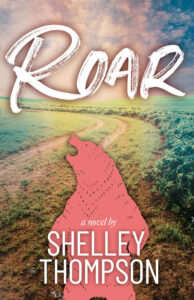
From its opening pages, Roar hooked me with its heart. Although if I’m being totally honest, I think I was truly hooked by the blurb from Sheree Fitch (whom I adore) on the back that reads like a Sheree Fitch verse: “Wow. Wow. Wow. I want to roar, READ THIS BOOK.” And I’m so glad I listened!
Roar is the debut novel from actor/director Shelley Thompson, based on her 2021 feature film Dawn, Her Dad, and the Tractor, the story of a family grieving the death of Miranda, its mother, as the younger child, once Donald, now Dawn, returns to their rural Nova Scotia community and the family farm after years of estrangement.
Elder sister Tammy has also come home from her life in Toronto, a prickly character to begin with, and she’s hurt to discover that Dawn, her sibling, now her sister, had absented her and her father from her story, all the while maintaining contact with their mother and actually being with her when she died. Tammy’s fiance Byron finds himself embroiled in the tension of the family drama, with a heightened awareness of the bigotry Dawn faces through his own experience as a Black man in their small town. Dawn’s father, John-Andrew, is at a remove from all of this by virtue of his reserve, but wanting to do good by his beloved wife and out of love for his child, he’s making small steps toward reconnecting with Dawn, although the road there is far from smooth.
The story moves between the perspectives of Dawn and her family (as well as some beautiful scenes from the haunting perspective of Miranda herself) to show how this family moves forward through these difficult days, grappling with the hurt of estrangement, difficulties around understanding Dawn’s transition, hate and bigotry from some corners of their community, and surprising love and acceptance from others. Dawn, who has always been herself, begins the task of refurbishing her mother’s old beloved tractor, this project reopening (and perchance healing) some of her father’s old wounds, and also finally bringing father and daughter together.
November 7, 2023
Ideal Reading Experience
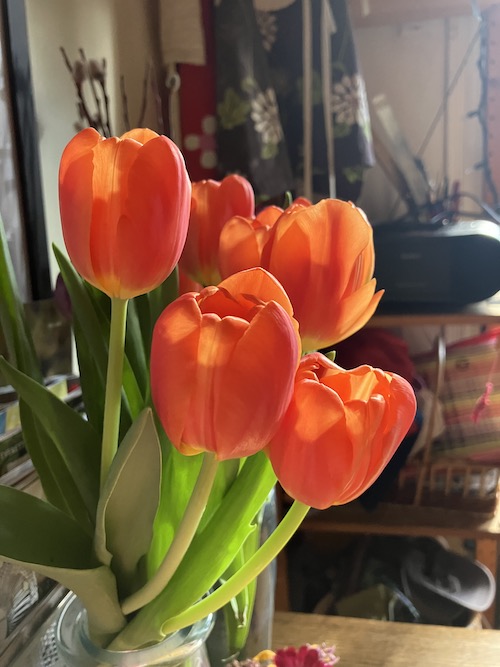
In the New York Times Book Review interview, there is always a question about one’s ideal reading experience, and this weekend helped me to articulate what mine is, though I think I’ve know it for a while. My ideal reading experience is a day with 25 hours in it, particularly if that day features golden sunlight filtered through what’s left of the leaves on the trees. When I linger in bed first thing, picking up the book from my bedside (my phone so far away it’s unthinkable), and I read and read, and then finally have to head downstairs and confront the task of cooking breakfast…at which point I realize that it’s an hour earlier than I thought, and so back to bed to go, actually finishing my book. This pattern continuing throughout the day, always just a little bit ahead of where I’m supposed to be. Right up until bedtime when it’s 9:34 according to the clock in my kids’ room and I’m hurrying the small one up to her top bunk, and if I’m lucky I’ll get an hour or so of reading in before my own “lights out” at 11pm. Except it’s 8:34, and the rest of the evening is laid out before me like…like… a hammock? Cozy suspension, such a terrific indulgence. I’ve just opened a new book and I love it, and I read and read and read.
November 3, 2023
Four Books I Really Loved
These four books are going to have spots on my Favourite Books of the Year list for sure, so I want to make note of them them here, but (apart from Penance, which I read last weekend) they were also books just so thoroughly read for pleasure that I didn’t want the work of writing a proper review….
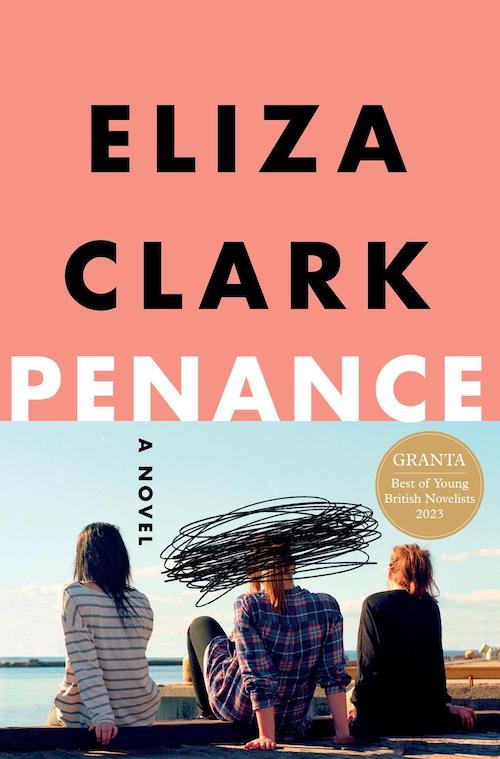
Penance, by Eliza Clark
I bought Penance after reading a review in the New York Times and I was so glad I did. Set in a desolate English seaside town (is there any other kind of English seaside town?) on the literal eve of Brexit, it’s the story of a teenage girl who is set on fire by a group of her peers, the novel framed as a Capote-esque true crime expose by a male author who has interviewed the girls involved in the incident, as well as the mother of the victim. Although by the end of the book, readers will be asking who isn’t the victim here, and while the dead girl hardly had it coming, this also isn’t a typical story of bullies gone homicidal—there are all kinds of dynamics at play, and there’s a centuries old curse, a legacy of witch trials, a haunted amusement park, and more, which made it a pretty satisfying read for near Halloween.
*
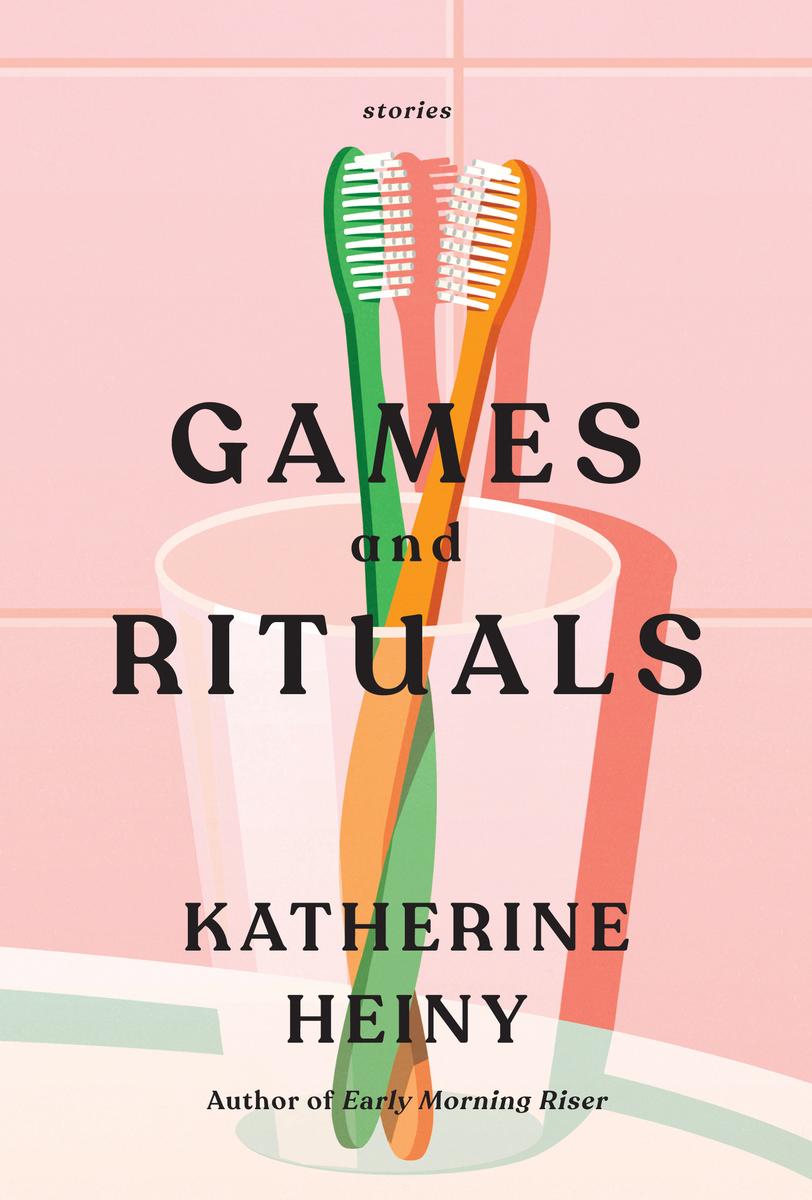
Games and Rituals, by Katherine Heiny
It’s possible that loving Katherine Heiny’s work could constitute a very large part of my literary identity if I let it, and a highlight of 2023 for me was that a new Heiny book was in it, just as I’d read everything else she’d written (and I guess it’s time to reread now). I didn’t love Games and Rituals as much as I did her earlier collection Single, Carefree, Mellow, but that’s a high bar, and I did love it enough to read an advanced copy during a snow storm in December and then buy a hardcover and read the whole thing again in April. All these months later, I’m still thinking about the story of the women dressed inadequately as she’s helping her husband’s ex-wife move, hauling boxes in the freezing cold, a woman she’d first encountered years before when the two of them worked a overnight suicide hotline together. Heiny gets compared to Laurie Colwin (I encountered her first as emcee of a literary event celebrated the reissue of Colwin’s work in 2021), but she also has Sue Miller vibes in mapping unconventional emotional terrain and reinvention of the family tree as family is made and remade. I love her.
*
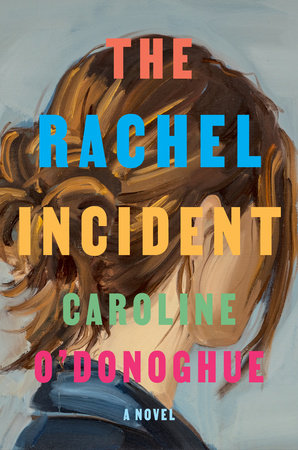
The Rachel Incident, by Caroline O’Donoghue
I read this one over the August long weekend, partly on the beach, and it was incredible, twisty and full of surprises. It’s about an Irish journalist who lives in London covering Irish issues, their abortion referendum in particular, and she happens to be quite pregnant with her first child, all this the backdrop to a story of something that happened years before when she was a student in Cork and shared a house with her friend James, who’d been her colleague at a bookstore where they’d finagled a professor she’d had a crush on into holding a book launch for his academic book that really wasn’t of interest to anyone, but what happens that night changes the course of everybody’s life. A story of class, love, and friendship. I loved it.
*
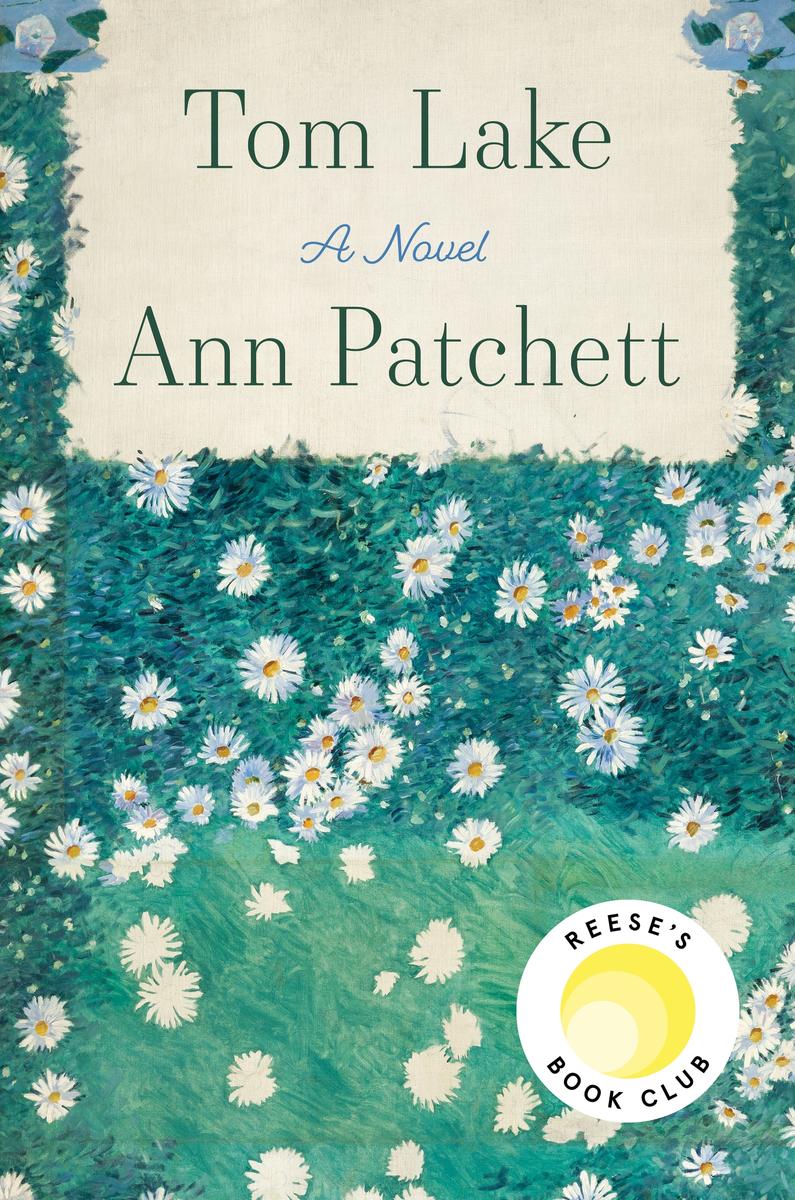
Tom Lake, by Ann Patchett
I bought the hype, and the book lived up to it, but also I wasn’t resisting, and I think that’s key. A slow and cozy book, set during Covid lockdown. A mother’s three grown daughters return home to help with the family’s cherry harvest, and she tells them stories of her experiences playing Emily in productions of “Our Town,” the daughters still scarce believing that once upon a time, their mother was almost a movie star. This is a novel about mothers and daughters and their unknowability to each other in fundamental ways. It’s also an ode to Thornston Wilder’s “Our Town,” which I know absolutely nothing about (I think it’s quintessentially American…), and I enjoyed it anyway. Plus I found a used copy of “Our Town,” which I’m looking forward to reading soon.






