September 19, 2014
Iris is the solution to everything
 Iris is the solution to everything, namely if your “everything” is getting away with the world’s most paltry book haul from the Victoria College Book Sale (which runs all weekend). And my everything was certainly that very thing this morning, because I have so many books and the bookstore called me yesterday to let me know my order is in, plus the one I bought online yesterday direct from the publisher etc, so I didn’t need any more. So this is all I came away with, which I am quite pleased about, because under most circumstances I have absolutely no restraint.
I’d come prepared with a cookie and a cinnamon bun, hoping these would keep Iris occupied for a little while, and they did, for about 10 minutes, as she snacked in her stroller. But then she wanted out, which she demonstrated by screaming and screaming, because Iris has recently come into her own as a piercing soprano. I ignored her for a little while, and tried to pretend there was nobody else around. And then finally, I took her out and put her in her carrier, browsing continued, popping a “dumma” (soother) into her mouth, but that peace lasted no more than sixty seconds. Who screams while sucking on a soother? But Iris wanted to go, so I let her, and that was okay, because underneath the book tables were boxes and boxes and more books, and Iris likes things in boxes, and I got to look at a whole bunch more books while she played with a box of Goosebumps paperbacks (hence my excellent picture book selection).
And then I took her upstairs to the fiction, which had no boxes under the tables at all, and she was obsessed with the big old staircase that we’d had to climb to get up there, so every time she was let loose, that was where she headed. A brief diversion was a wastebasket, and I let it go for awhile, but then she started picking things out of that box, so I shut it down. I had to hold her, and she was screaming and screaming. Again, I kept my head down and ignored everybody. Surely, I thought, they’d understand that a mother needs to get her book browsing done. A smart trick was holding Iris upside down, which was funny, so she laughed instead of screamed, but that only goes so far, and it made it hard to look for books. And so she kept on screaming, and I think some people may not have found it so charming, but what is a bookish mother to do, I ask you? Well, give up, which I eventually did, but only because I had no business buying books in the first place.
As I was leaving, a very earnest undergrad came up to me and pointed to Iris, who had since calmed down, because we were no longer looking at books. “Is that the baby that was unhappy?” she asked. Apparently Iris was getting a reputation. “Is she okay?” she asked me. “Well, she’s Iris,” I should have told her, but instead I promised her that she was. Whereupon we met my seven-months-pregnant friend and her two-year-old who’d turned an Old Vic couch into a trampoline. I am not sure the book sale is going to recover from a visit from the likes of us.
September 16, 2014
Author Interviews at Pickle Me This: Rachel Wyatt
 Rachel Wyatt is a prolific and award-winning author of novels, short fiction, stage and radio plays and non-fiction works. Her six novels include The Rosedale Hoax, Foreign Bodies, and Time’s Reach. A half-dozen professional productions have been mounted of her full-length stage plays, including Crackpot and For Love or Money. She has also had over 100 plays produced by CBC and BBC radio, and monologues and scenes from her works have been included in many anthologies, most recently in the Oxford Book of Stories by Canadian Women.
Rachel Wyatt immigrated to Canada with her family in 1957. She was Director of the Writing Program at the Banff Centre for the Arts during the 1990s and has appeared at writer’s conferences across Canada and internationally. She has won the CBC Literary Competition Drama Award and was Awarded the Order of Canada in 2002 and the Queen’s Jubilee Medal in 2003.
 Kerry Clare: I discovered your work through Amy Lavender Harris’s Imagining Toronto, in which she wrote about The Rosedale Hoax, which is nearly 40 years old. I read The Rosedale Hoax and was impressed at how contemporary in tone it was, a wonderful depiction of Toronto and its classes and masses. It’s a very funny book.
Rachel Wyatt: After all this time! The book began life with a fanfare. Anansi spent its entire advertising budget on large posters in the Toronto Subway. Then a woman reviewer wrote a really nasty, almost personal, piece about it in the Globe, and that more or less killed the novel at birth. At least a woman who was a realtor in Rosedale used to buy a few copies every year for a competition she ran in the area. I’m delighted that you and Amy Lavender Harris have taken notice of it.
Kerry: What was it like to be writing about Toronto in 1977? How was your vision of the city different from how you’d seen it presented in literature before?
 Rachel: Writing, thinking, about Toronto in 1977. Well, my own first impressions in 1957 were reflected in what was being written at that time. It was dull, cold, narrowly Protestant. Strict laughable rules about buying liquor from the store or in bars were enforced. “Men Only” signs here and there. Ladies Entrances in the pubs. By 1977 much of this had changed and I saw the more casual approach to life, as if some tight hold on the city was beginning to relax its grip. And by 1993, it was/is to me the great city I hated to leave.
Kerry: Since then I’ve read your two most recent novels (Suspicion and Letters to Omar) and their narrative approach was so similar to The Rosedale Hoax. I don’t mean to imply that you’ve not grown as a writer in this time, but instead to suggest that your style has long been well-defined. It’s also singular—I can’t think of what I’d compare it to. Do you think you think you were ahead of your time? Or apart from time? How have your preoccupations changed from then to now?
Rachel Wyatt: I’ll answer the last part of your question first as it’s the easiest. If my preoccupations have changed, they have perhaps grown wider in the sense of considering the whole world—depressing as that is. In my first years in Canada (we arrived [from England] in 1957) I was looking around at this new place with wonder, delight and occasional puzzlement, and using what I saw and heard.
Yes, I have been perceived as ahead of my time and that, when it comes to selling one’s work, is not helpful.
 I’m not used to considering my own style, narrative habits, structure and so it’s a bit of a mystery to me. I’m only the writer. My editor has said my writing style comes out of the Brit tragi-comedy of manners. Some of my stage plays have been described in that way too. I think it’s a habit of looking at the world a little sideways on, if that makes sense. And that won’t have changed over time and certainly won’t now.
“I think it’s a habit of looking at the world a little sideways on…”
As for the way I tell a story, it’s a matter, perhaps, of beginning in the middle. I’ll keep thinking about it but if I think too much, I might stop writing.
Kerry: You do begin in the middle—in Letters to Omar this is particularly apparent. This approach much be disconcerting for readers who are used to being led through novels with their hands held. You have faith in your readers though to find their way, to figure it out (and I did! It’s all there). Or are you thinking of the readers at all? What makes the middle so compelling? Isn’t it easier to start at the start?
Rachel: Like most writers, I say that I tend not to think of potential readers while I’m writing. But just as I like to be treated as an intelligent person when I read or watch plays, so I assume readers and audiences of my work to be intelligent too. It makes me feel good to grasp something in a novel that isn’t obvious at first, or to get the ‘aha’ moment in a play. It’s part of the pleasure.
Also, starting in the middle makes the “unfolding” or revealing more fun. I keep seeing “reveal” used as a noun now. I don’t like it but I can see its uses.
 Kerry: Your latest novel, Suspicion, puts its “reveal” right at the start though, and it’s the rest of the characters in the novel who have to wait to find out the truth about what happened to Candace Wilson. (I loved this book! It’s on my Canadian Gone Girl list). What was the attraction of turning the structure of the suspense novel inside out?
Rachel: Suspicion is about suspicion. Have you read Chekhov’s “In the Ravine”? It’s about gossip and how it affects lives. I wanted to show how this event, Candace’s disappearance, changed the town and the people. Whispers, rumours, “false witness” even, spread around. And when it was all over, Jack, for instance, would always know he’d been suspected of murder and even after she’d been found, of a failed attempt.
I’m very pleased that you loved it and that it’s on your Next-Gone-Girl list. Perhaps someone will make a movie of it. A big perhaps!
Kerry: Oh, the Chekhov reference is helpful here. Your work is such a fascinating puzzle, and this goes a step toward decoding it. Who are your other literary influences? And (which might the same question, or maybe not), what authors and books are most beloved to you?
Rachel: This is a big question. I look at my bookshelves and love all the writers and all their books. Influence is the hard question. I suppose writers take from just about everything they read. When Tennessee Williams was asked which three writers had influenced him most, he said, ”Chekhov, Chekhov and Chekhov.”
Virginia Woolf is a favourite, The Waves in particular. Conrad, Henry James, the ancients—The Aeneid, The Odyssey. The Brit humourists, Evelyn Waugh, P G Wodehouse and now Ian MacEwen, Martin Amis. Canadians: Mavis Gallant who was also a dear friend, unparallelled Alistair MacLeod, and of course Alice. Recently, The Sisters Brothers by Patrick de Witt and Lee Henderson’s The Man Game. In the early seventies, I was given a copy of Adele Wiseman’s Crackpot. When I’d read it, I wanted to jump up and shout, “This is the great Canadian novel”. We became friends and after she died, the CBC commissioned me to adapt Crackpot for radio, which I did. Subsequently, I adapted it for the stage and it’s had productions from coast to coast.
 But this is becoming a biography in books. I’ve loved the classic Russians and the French. Jose Saramago’s books are amazing, Roberto Bolano. . . .
At the moment, I’m reading a dark Japanese mystery by Fuminori Makinara and re-reading after decades Ford Madox Ford’s The Good Soldier. I’ve just finished Margaret MacMillan’s The War that Ended Peace. A brilliant book but disturbing because it’s all happening again.
I won’t start on poetry and plays but I get great pleasure from reading those too.
You shouldn’t have got me started! Influence? I don’t know. But I think my use of language was helped along by going to church with Grandma and hearing the words of the King James Bible. I also eavesdrop all the time.
“I think my use of language was helped along by going to church with Grandma and hearing the words of the King James Bible. I also eavesdrop all the time.”
Kerry: No surprise that you’re an eavesdropper. You have such an ear for dialogue—I loved:
“What is stupid,” Mike went on, “is to go about having illusions about people you never knew in the first place.”
“You’re not likely to have illusions about someone you know,” Dorothy said. “Once you get to know them.”
Where so many authors would use exposition, you tell the story obliquely through characters’ conversations. Is this where your background as a playwright informs your fiction writing? And what do you love about the way people talk?
Rachel: There is poetry in the things people say and the things they don’t say. We speak often in shorthand because friends and family know what we mean to say and will cut in. A short phrase can carry a great deal of weight. Some of my short stories are, in effect, little plays. In writing for radio, everything including the scenery must be in the dialogue but not obviously. Timothy West, the actor, wrote a fine parody of a radio play entitled, “This gun that I have in my right hand is loaded.” A simple “Don’t shoot” from the other person would imply a gun—unless they’re out in the woods with bows and arrows. And so on.
 Kerry: The dialogue in Letters to Omar is fascinating in that it’s not actually dialogue—there is so little listening involved in how the characters respond to one another, which results in misunderstandings. But it’s also the way that old friends speak—they know each other so well they feel themselves beyond having to listening. Their conversations are a glorious mess. Your depiction of a lifelong friendship between three women is one of my favourite parts of this book—you show how it informs their lives (and someone else remarks, I think, that it has kept them from maturing, that they’re forever stuck in a time warp of girlhood when they’re together). Women’s friendship is still rare in literature, though common in the world, I think. What was interesting about it for you to approach as a novelist?
Rachel: I’m an opera fan and had been thinking about the fine duets between male friends as in The Pearl Fishers, or between Orestes and Pylades who are prepared to die for each other in Iphigeneia in Tauris. Then there are Achilles and Patroclus—I don’t think anyone’s written an opera about them. And Sidney Carton who does the “far, far better thing” and goes off to the scaffold in his friend’s place.
I can’t think of anything like that between women in opera or literature. I think I mentioned that I was reading Middlemarch. Dorothea, in that small enclosed society, doesn’t have a single true female friend. And her sister isn’t much help. Emma in Emma bestows her “friendship” on poor Harriet whom she wants to improve, with disastrous results. Elizabeth and Jane Bennet are an example of sisters who are also “best” friends.
I think friendship between women is an unseen thing, unheard and, clearly, unsung. We know who our “best” friends are. They’re the very few we trust with our secrets, who will come to our aid in time of need and so on, and for whom we do the same.
“I think friendship between women is an unseen thing, unheard and, clearly, unsung.”
Kate and Elsie and Dorothy have made a kind of web for themselves, a sort of safety net, I suppose. They will be all right as long as they jog along together, holding each other up in a crazy way. Some days they’ll dislike each other but they’ll defend each other against everyone else. Kate’s husband for instance is a villain to them all. I think it was that kind of carry-over from their college days that I liked. All of them sharing a “room” forever.
Kerry: And I’ve heard the good news that you’ll have a new short story collection published by Coteau Books in the spring. Congratulations! What can you tell us about it?
Rachel: Street Symphony will indeed be published in spring—if we can get it together in time. I’m a café addict as I may have mentioned. Six mornings a week I can be found at Café Misto down the road when it opens at 7am. I have coffee and a muffin and read the papers and talk to other regulars. Then I walk home again and talk to the people on this very short street who are setting off to work or getting the kids off to school. So some of the stories reflect all that. Who are these people who turn up for coffee so early? Why are they there? I invented new café denizens for my tales.
Another story began from seeing a grubby-looking aquarium in another café. And so on. I’ve written about the lives of people around town as I think they might be. And I hope people enjoy reading the stories—and buy the book.
September 15, 2014
The Busy Bookshop

This morning, Iris had a doctor’s appointment with a specialist at St. Michael’s Hospital (which is notable for being the birthplace of Harriet) in order for us to confirm that she does not in fact have an allergy to parmesan cheese, and the best part of our appointment (apart from her diagnosis) was that we got to stop in at the wonderful Ben McNally Books beforehand. Where I found this treasure, The Busy Bookshop by Marion Billet, part of a series of board books, but clearly this is the best one. It is a bookshop! With bunting! And if you can’t take your toddler to a bookshop every day, you can read this book on the days in between because it’s important to indoctrinate early. The book is utterly charming, delightfully bookish, and robust; unlike others that we like to call “rip the flap books”, this one comes with slidey pieces whose destruction would have to be really hard won. And with the slidey bits, books and their contents pop off the page (times two), making for a most engaging read. I love this one. Add it to the list for all your favourite book-loving babies.
September 14, 2014
A Girl is a Half-Formed Thing by Eimear McBride
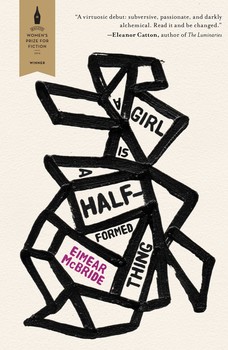 On Saturday morning, I read the newspaper and cried, so overwhelmed was I by despair, three articles in a row—David Gilmour teaching classes again this year at my alma mater; a certain male sportsperson not convicted of violence upon the girlfriend he shot to death; 10 people charged in the attack of Malala Yousafzai, a child shot for the crime of going to school. Not to mention the sad circus of municipal politics in my city, a state of affairs that has led me to abandon Twitter for awhile because I just cannot stand the onslaught of awful, this horrible misogynist idiot whose supposed tumour will never alter my conviction that he’s a dangerous shitty human being who says horrible things about women and whose wife has had to call the cops on him more than once. This man has forever viewed himself as beyond reproach, and now that he’s ill, we’re all meant to finally agree with him? I cannot.
It is also relevant that my baby keeps terrible hours and I’m very tired. But it’s relevant too that I spent last week reading A Girl is a Half-Formed Thing by Eimear McBride, yet another piece of evidence that affirms that we live in a world that treats girls and women like garbage. And maybe it was just a coincidence that I was reading this book as I was sent into despair, a testament to its power perhaps. But I don’t know, because whenever I was asked about, I’d respond with, “The book is…well. It won the Bailey’s Fiction Prize.” Otherwise, I probably never would have read it. I’m not sure I’d recommend it to anyone. It’s interesting, yes, but underwhelmingly so. The prose is as half-formed as its girl is, deliberately. Sentences stumped off, broken, truncated. There is no evolution, no progress. Even McBride’s girl’s life, in all its sordid detail, is not abject in anyway—there is cruelty, abuse, the usual litany of terrible things. But I’ve read worse, rendered in prose that stunned me, rather than this prose, which numbed me. Or I thought it had at least, until I found myself crying over the newspaper.
I don’t think I could properly write a review of A Girl is a Half-Formed Thing. For a good example of one, however, read Anne Enright’s, in which she so perfectly articulates what I can only throw my hands up and gesture about in regards to this book. What I am reviewing here is more my own reaction to this book, which confuses me. I recoil from it, not because its so difficult. Yes, the prose is difficult to find one’s way into, but once you’re in, you’re in, and there is a peculiar rhythm and rhyme to it that make the pieces fit. Perhaps it was the unrelentingness of it all, that there was progress after all, but it was always going toward the same place and I was longing for any moments of light. What a courageous author who dares to give her readers none of that, to hold back on everything we’re hoping for to save us. To tell the story she wants to tell, and it’s true that I never wanted to put the book down. I don’t want to open it again, yes, but that’s a different thing.
I didn’t like this book. I didn’t like it at all. But I read it and I’m glad I did, because it’s like nothing else that’s going these days, and because there was nothing half-formed about the book itself. (Read McBride’s profile in The Guardian: “I think the publishing industry is perpetuating this myth that readers like a very passive experience, that all they want is a beach novel. I don’t think that’s true, and I think this book doing as well as it has is absolute proof of that. There are serious readers who want to be challenged, who want to be offered something else, who don’t mind being asked to work a little bit to get there.”) I’m glad I read this book because the fact of whether or not I liked it doesn’t really matter at all, and I like any book that shifts the conversation away from that point, such a sad and tired place from which to embark upon a literary discussion.
September 11, 2014
Colville

I don’t know if there is a better exhibit than Alex Colville (now on at the Art Gallery of Ontario) to take your five year old and one year old to, because the latter will be gripped by all the images of dogs, while the former sees her own world reflected in the paintings, but rendered just unfamiliarly enough to warrant another look. We note people and animals suspending in space, captured in motion—horses, dogs, a little girl with her skipping rope. “What do you think’s going to happen next?” Which is the very point. Plus the defiance of gravity. And the strange ugly beauty, hydro corridors, overpasses and smokestacks. The sky’s enormity. We found it fascinating to learn that Colville’s art was so informed by his commute to work, that same stretch of road, a seemingly dull track. And also the sea pictures, all that blue.
Andrew Hunter’s new book, Colville, designed to accompany the exhibit, gives a marvellous sense of the artist and his power, and just as the exhibit does, of his context as well. In his essay in the book, Hunter posits Colville as a place, and finds connections to that place not just in geography, but also in literature, music, film and popular culture. As befitting a man whose own life was so often his subject, the book embraces Colville’s biography as well, and more than 100 reproductions of his work. It’s a really wonderful complement to an extraordinary show.
September 9, 2014
Girl Runner by Carrie Snyder
 I spent the weekend reading Carrie Snyder’s new book, Girl Runner, a novel about Aganetha Smart, a 104 year old Olympic medallist who was briefly the nation’s sweetheart during the 1920s. It’s a book that has a map inside (!), which shows a lighthouse in the middle of a farmer’s field, so clearly this is a book that is constructed of mysteries and wonder. It begins with Aganetha being taken from her nursing home by two young people who are strangers, but she doesn’t have the wherewithal nor stamina to protest in any way, and besides, she is intrigued by being taken anywhere. From the book’s beginning: “All my life I’ve been going somewhere, aimed toward a fixed point on the horizon that seems never to draw nearer.”
The narrative shifts between Aganetha in the present day, being taken on her strange journey, and her memories of the past, growing up on her family’s farm and in Toronto, where she moved during the 1920s. Notably, the flashbacks occurs outside of chronological order, which isn’t the way this thing is usually done, and makes much more sense as being a story as constructed by a somewhat patchy 104-year-old mind. Plus it’s just pretty interesting to have all the pieces come together in a (seemingly) random order until we realize that Snyder has been placing these pieces like a puzzle, and just how they all fit together proves most surprising, and plotted by a decidedly deft hand.
The novel spans more than a century, and there’s a swiftness to it that befits a story about a girl whose feet made her fly, though I wanted more depth at times, more meat and grit. Because there is so much to delve into—Snyder weaves fascinating stories into Aganetha’s timeline, including her mother, a midwife, who performed abortions for local girls in trouble; the story of a doomed stepmother and her parade of dead babies; the reality of life working at a factory in Toronto in the early 20th century; what it was to be a female athlete at that time; complicated dynamics between Aganetha and her siblings; her dreamy father and his crazy inventions (and just why he built a lighthouse in their field); and also a glimpse into the poverty and desperation of the urban poor. All this and more, and this isn’t even a long book. The pages fly on by.
I first encountered Carrie’s work with Hair Hat back in 2010 when we did the Canada Reads Indies, when the title of her blog was even a little bit true. Since then, she found great success with her second collection, The Juliet Stories, and it’s also a sign of her kindness and generosity that she contributed her wonderful essay, “How to Fall”, to The M Word. And I’m particularly excited about Girl Runner, whose rights have been sold in countries are over the world, that it’s everybody’s chance to encounter Carrie Snyder now. Because the hallmark of all of her books has been their prose, vivid imagery, and characters’ strange tendencies to fly off the ground… and off the page.
So readers, get ready to be dazzled.
September 9, 2014
In Which I Meme: Ten Books….
I don’t meme much. I don’t like memes. I like the internet best when everybody is doing her own thing, but I got tagged twice on Facebook, and I’ve been thinking for awhile about how I don’t know how to answer the question of what are my favourite books. For me, the books all blend together, their connections to each other and to the facts of my life all cumulating to pave the path of my progress. It’s not about the book but about the reading. I love books more than I love any one book. But I also love rereading, and so my list of books that have stayed with me (whatever that means—I think any book that’s any good would do such a thing) or a list of my favourites would be a list of books I’ve read more than once, and will continue to revisit to find out how they change as I do. They’re the books I’ll never get over being over.
 Where’d You Go, Bernadette? by Maria Semple : Partly circumstantial—I read this in the hospital after Iris was born, and had a very visceral connection to everything was reading then, but I just loved it so completely. It was so funny, smart, and fresh, and I’ve been longing for a book to love this completely ever since. Will definitely reread.

 Slouching Toward Bethlehem by Joan Didion: I’ve read this book about six or seven times, and return to it to fall under the spell of the rhythm of Didion’s prose, and to admire the precision with which she arranges details in order of giving her stories the illusion of telling themselves.

 Wave by Sonali Deraniyagala: I was so afraid of this book, my worst nightmare, the story of a woman who loses her entire family in the Boxing Day Tsunami in 2004. I finally obtained a library copy and was bowled over by the brilliance of the book, and so I had to buy my own copy. I haven’t reread it yet but I will. It’s a a heartbreaking tragedy, a litany of sorrows, but also beautiful, magical celebration of love and life.

 The Radiant Way by Margaret Drabble: This was my first Margaret Drabble novel, which I bought at a used bookshop in Kobe. Had no idea what to expect, but fell in love with its writer, and the book too, for its vividness and how it reflected and engaged with the world.

 To the Lighthouse by Virginia Woolf: The one book I’ve read more times than Slouching… and it just gets more and more profound and lovely. I read it most recently in July, having replaced my battered and stupidly marginalia’d university copy. It’s the thinking woman’s beach read.

 The Crack in the Teacup by Joan Bodger: I’ve read this one twice, and think about it all the time. It’s about being a woman in the 20th century, about loving books, about heartache, about this city. And about the life of an extraordinary woman who was of her time and also never quite, always in a way that was fascinating.

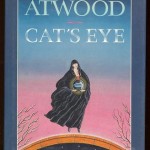 Cat’s Eye by Margaret Atwood: (And also The Robber Bride). Of all the books on my list, I was youngest and stupidest when I first read these, but also so young that they became foundational in my understanding of the lives of girls and women.

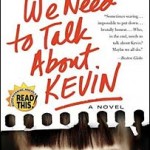 We Need to Talk About Kevin by Lionel Shriver: This was one of those books I was never going to read, because I found all the hype at the time annoying, but I came to it somehow, and have read it five times since. I discover a whole new layer of complexity every time, and have determined that it’s just about marriage and womanhood as it is about motherhood. Also worth noting: still a gripping excellent reading when fully aware of its great twist, which is quite a literary feat.

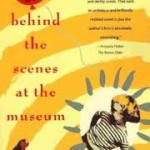 Behind the Scenes at the Museum by Kate Atkinson: I will never forget the moment of Ruby Lennox’s conception, which was also my introduction to the inimitable Kate Atkinson, whose boundless enthusiasm for pushing the limits of what a novel can do makes her one of my favourite authors. Have read this a few times. It contains the seeds of every single wonderful thing she’s written since.

 Unless by Carol Shields: I’m a bit of a zealot when it comes to this book, which I’ve read so many times that its pages are covered in scribbles, and whose subtle tricky complexity continues to amaze me.

*And don’t get me started on the children’s books, Anne of Green Gables, Tom’s Midnight Garden, Charlotte Sometimes, A Handful of Time, Booky, etc. Plus Flowers in the Attic. And so many more…
September 7, 2014
The Opening Sky by Joan Thomas
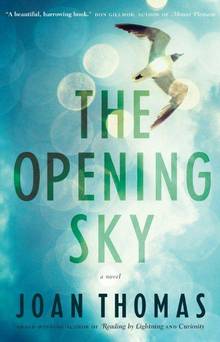 I was so pleased to review Joan Thomas’s new novel, The Opening Sky, in this weekend’s Globe and Mail.
““Never explain, never apologize,” is part of a quotation attributed to Nellie McClung, the title of a chapter in Joan Thomas’s novel The Opening Sky, and an admirable motto, unless one happens to be parent to a young person whose behaviour embodies it. Which is the predicament in which Aiden and Liz find themselves.”
September 7, 2014
Super Red Riding Hood
 As mother of a child who loves any hero in a cape (particularly if she is female, and sporting Wonder Woman-esque motifs), I knew that Claudia Dávila’s Super Red Riding Hood would be right up our street. Dávila is the former art director for Chirp and Chickadee magazines, a seasoned book designer and illustrator, plus author/illustrator of the The Future According to Luz graphic novels series, but Super Red Riding Hood is her first picture book. It’s about a little girl called Ruby who likes to fancy herself a defender of justice and imagine stories in which she gets to prove her super-hero mettle. While a trip through the woods to collect raspberries isn’t quite the mission she’s been fantasizing about, Ruby makes the most of it, rescuing small creatures and being brave in the face of weird woodland sounds. And so she’s totally ready when she stumbles into a situation requiring actual super-heroics, and has to stare down a ferocious wolf.
 Turns out all that Super-Hero practice has paid off—Ruby stands up for herself, and learns that all her Wolf prejudices aren’t exactly accurate. And the wolf’s impressions of little girls are transformed by his encounter in the woods with Ruby—indeed, little girls can be Super Heroes after all. Which is a lesson that Harriet was already well aware of, but it was awfully nice to have it affirmed.
 We turned up at Claudia Dávila’s launch yesterday at Little Island Comics, because the store is around the corner from our house, and we were fans of Super Red Riding Hood already. Harriet brought her own red cape, because we assured her that this was a cape-friendly event, though she was apprehensive about its lack of hood.Turned out this was not a problem, and she had fun posing in the big dark woods (with not a big bad wolf in sight, thank goodness).
 Harriet and Iris enjoyed colouring Super Red Riding Hood, and Harriet made her own Big Bad Wolf puppet, while Iris was chased around the store in circles. Later, we all settled down to listen to Dávila read to us from her book, and she was wonderful, and Harriet had a good time reading along to the parts she knew off by heart already.
 We have two birthday parties to attend this weekend, and both friends will be receiving their own copy of Super Red. Dávila’s fantastic illustrations are matched by a fun and inspiring story that never gets too scary, and reminds boys and girls of all ages that caped crusaders come in all kinds of excellent packages.
September 4, 2014
First Day

First day of Senior Kindergarten, which proceeded with no trauma or drama, unlike last year’s. Except that I am missing my big girl terribly (never mind that now I have to spend the day making conversation with a baby), and sort of considering that someone as averse to change as I am probably should never have embarked on parenthood. I could have just avoided mirrors, and, well, windows, for that matter, and lived comfortably in a blissful bubble imagining that everything was ever the same. Instead of meeting each day with this marvellous piece of irrefutable evidence that life is going, going, going (but, happily, not yet gone). Anyway, onward. We were contemplating all the things she didn’t know how to do one year ago, and wondering what miracles this next year will bring.






