March 26, 2020
What Are You Going Through?

“What are you going through?” is the question, a line from Shawna Lemay‘s Rumi and the Red Handbag (which I’ve included on a new list at 49thShelf of books in my library I want to reread). And it’s a particularly pointed question for right now, when we’re all going through it, when “we’re all in this together,” except we aren’t, of course. I’m still struck by the essay I read yesterday about a woman whose husband has been brutally ill with the Coronavirus, and this from the perspective of their teenage daughter:
“I took out the kitty litter,” CK says, “and I saw some people standing on the corner, and I was like, I want to see strangers! And then I heard them saying: ‘It’s actually been really nice. It’s been a chance to connect as a family.’ And I was like, No, actually, I don’t want to see strangers, and I came back in.”
My hardships pale. Compared to those who are ill, or caregiving, or grieving. Those who are unable to find childcare, or who are put to work in unsafe situations for minimal pay, or who struggling to put food on the table. For those whose support services have been cut, or whose lifesaving treatments have been cancelled. Compared to those workers who head into the eye of storm, while the rest of us are hiding in our houses. Even comfortably. Sheltering in place.
*
I had been freaking out about the Coronavirus for a while, since the end of February, waking up at night with anxiety, which seemed weird and almost laughable, but it kept happening. We’d been booked to travel to the UK last week, and I’d worried about travelling at such a heightened moment, about the coughs kids always have, and I’d been worried about us staying healthy before our flight anyway, which is a gamble at the best of times. We were applying hand sanitizer quite religiously, perhaps obsessively. On the last Monday before school ended, I had a doctor’s appointment, and friends were taking my children to their swimming lessons that night, and the anguish I was feeling at this situation was definitely out of proportion, though it didn’t help that I was sitting there in the waiting room with the 24 hour news channel screaming from a big screen.
Something wasn’t right, and I started seeing Twitter threads of devastation in Italy. We were leaving for the UK in less than a week, and cancelling our trip was just impossible. (So many things were impossible two weeks ago.) So much money on the line, and we couldn’t throw that away. (Since January, I’d been reading about people living under lockdown in China with absolutely no understanding that such things could ever been connected to me.) On Tuesday, I spent two hours on hold with the airline, only to be told that since there was no travel advisory, we weren’t eligible for a refund if we cancelled. What if we went then, I wondered, but ordered a boatload of face masks? I even looked them up on Amazon, which is anathema to me, but there was no availability anyway until early April.
By Wednesday it was clear though—things were bad. To travel to Europe would be lunacy, whether there was a travel advisory or not. I was starting to realize there was space between the lines of what public health officials were saying, that they were telling us we could go abroad…but that was not the same thing as saying we should. That there was really no one in charge here was something astounding to consider, but also that we had the power to use our own minds and make responsible choices. I did a panic shop that afternoon after picking up my kids from school, which sounds less shameful when you consider that I don’t have a car and had to carry home everything I purchased, and my children are still pretty excited about that trip to the grocery store “because you let us buy everything we wanted.” Mostly chips.
On Thursday, Harriet went to school, but we kept Iris home with a cough we would not have paid any attention to under normal circumstances. Over the course of the day, Stuart gradually stopped fighting my state of high alert and conceded that this was something. This was the day after all the sports were cancelled and Tom Hanks got diagnosed, and Sophie Trudeau the next day. I’d stayed up on Twitter late into the night, and then woke up in the middle of the night in a panic that was only abated by me going downstairs and turning my computer back on to discover that Twitter was not as terrifying as my mind was, which is really saying something.
I kept both kids out of school on Friday and Stuart worked from home, and it was here where our self-isolation began, and the idea of us ever having not cancelled our trip became hard to imagine. We were over it, though still profoundly disappointed, especially as Stuart’s dad has been very ill, and we were due to meet our baby niece, and it’s very hard to be apart from family with so much dire business going on. (This was also while the official UK policy was “Many people are going to die….”)
I could not eat. I wasn’t sleeping. I discovered that phoning friends was a lovely kind of reprieve, something I hadn’t done in years. I felt safe and comfortable at home, lucky for so many reasons, glad we’d done the panic shop early and avoided the rush. I felt overwhelmed by grief and sadness, and sorry for my children, and so much disappointment, and the idea of so much devastation still to come. The idea that nobody really understands what is happening, or how to fix it. Glimmers of hope too. Thinking of my relative comfort, and how to hold that in the same space as my fear for the future, but also awareness of the much more difficult situations that other people were going through. The nurses. The clerks at the grocery store.
I did not do very well last week. I kept calling it my roller coaster/ hamster wheel. I’d be doing a puzzle and have to go lie down because I was having a panic attack. The weight on my chest that is either anxiety or a deadly respiratory illness. I kept looking online, desperate for good news, but there was nothing, and I kept waking up at three o’clock in the morning, convulsively shaking. I was so scared, my body on high alert, and I had been right about everything, is what I was thinking. For weeks I’d been in a panic, and everything I was afraid of kept coming true.
And I keep thinking about all those people who are much more experienced at living with uncertainty than I am, how naive and silly I must sound. “Welcome to my world,” is what they’re all polite enough not to be saying out loud.
On Wednesday night, I watched Crocodile Dundee, which I can’t stop talking about, but it was such a turning point for me. I went to bed and slept all night, though waking up feeling okay in the morning made me not vigilant enough to resist indulging in behaviour I’d come to be sorry for, a whole afternoon refreshing Twitter, bad news and more bad news, and that night I went to bed and had legitimate nightmares. I started to see that feeling okay would have to be a conscious choice here, one that took more work than the submitting to the lazy river of media consumption (when will there be good news?). I’d spent too long scoffing at the idea of mindset and staying positive—what’s the use of that when everything is shit? But when everything is shit, I realized, mindset is all you’ve got, and being unable to eat or sleep, or get through the day without five panic attacks is not the way to stay healthy.
So what has helped me?
- Music! The radio is usually a constant soundtrack in our house, but lately it’s just upsetting noise. In very 20th century problems, our CD player broke last week, but then we finally signed up for ad-free Spotify and now I have all the music in the world at my fingertips.
- Avoiding the news: I was turning to the news for answers, but nobody has any of those (yet). Once a day or so, I will read the news online at a reputable source. I have stopped following charts and tallies. They are not helpful. Everything is bad. I know it. I don’t have to steep in it.
- No social media after dinner: The exception is Instagram, which is just wall-to-wall sourdough bread right now. Stupid movies and TV shows are good. Books are even better. Rereading Kate Atkinson’s Jackson Brodie books is the best thin ever.
- Counting my blessings. Even though this makes me feel guilty and I wish that blessings were more fairly distributed.
- Little rituals: good things to eat. Watching the sunset. Hugs with my loved ones. Talking to friends and family on the phone. Making food last longer. Making somethings out of nothings. Leaving chalk drawings on friends’ sidewalks.
- Connection! On Zoom, Skype, out the window, across the street, on the phone, etc. etc.
- Moving! This really helps me with sleep. I have been riding my exercise bike, which (another blessing!) mercifully I never got rid of, even though it’s been sitting in my closet for four years. Taking walks when we can. We’ve also done a couple of online fitness classes, and I really loved these (especially when the instructor’s cat walks in…)
- Feelings check-in—and sharing my feelings with my children, when appropriate. I think it’s helpful for them to know that complicated and difficult feelings are to be expected in hard times, and that sharing those feelings is normal and even helpful.
- Everyone in Italy is not dead. I am not being flippant. The situation in Italy is terrible and we should be (and are) doing everything we can to avoid it, but also remembering that most people in Italy are perfectly well inside their homes and waiting for some semblance of life to begin again is something that keeps me going when it seems like the entire world is on fire.
- Things in China have gotten better. My high school classmate who lives in Shanghai has written a post about how things have gotten better there—and how we know a whole lot more now than they did when things started getting bad there in January. She also has some really practical tips for getting through the weeks ahead.
- You don’t have to fix everything. You don’t have to save all the local businesses, and carry the burden of healthcare workers, and feed the homeless, and hold the anguish if all those who are ill. (If you can, however, maybe donate to your local food bank.) You don’t have to feel terrible if you cannot do all these things. It doesn’t help anyone if you do.
I’ve been functional for almost a week now, which is not so important in the grand scheme of things, but which is hugely important if you happen to live in my head, or in my household. Staying at home and not falling to pieces honestly is the best thing I can do for our overburdened medical system at the moment, and if this is what’s required of me, then I am happy/grateful to deliver.
I hope that you’re able to take care of yourself too. xo
March 24, 2020
Gleanings
In good news, I have pulled myself off the floor after a week of abject panic. Before I share this week’s gleanings, I wanted to let you know that I wrote a piece for 49thShelf on the strangeness of being unable to read, and also that I created a mini-guide to blogging for kids if you know any who are looking for a creative outlet.
- A person’s tolerance for uncertainty is how well they handle being in a situation with an unclear outcome.
- What I’m trying to say is, if you’re feeling a lot of anxiety over the next few weeks, just turn off your phone and focus on those little details.
- Don’t try to be ‘happy’. Just aim for a steady baseline when you can. Being OK is a much better goal. Happy can be the cherry on the cake. Steady as she/he goes is just great. The odd dip is totally understandable too.
- If my online brand is cute things on the internet and openly available then I guess I will use this time of crisis to recommend resources to get us through.
- Count blessings. Practice gratitude. Do your part, however small it feels.
- Watch out for the bullshit, and whenever you come into contact with it, wash your hands.
- So much is beyond control or management, but clean bedding I can do.
- Who would be shadowing our days and even (it seems) our nights, ambling around outside while we sleep, helping himself to kale and a few succulent ants.
- And at the time, bedrest was all we could do to feel some semblance of control in a situation where we had none.
- I left my Heart in Paris and my Appendix in Berlin
- You don’t really notice how much you count on a guy like Tom Hanks.
- Not to be Outdone, I Rode a Wild Cow in a Rodeo
- Each time I open one up to write, the words don’t come.
- All shall be well and all manner of things shall be well and fingers crossed for the return of the swallows soon and owlets to come.
- When those reserves run low, one of the things we celebrated in the old world that can still replenish our spirits in this new world is a good, inspiring, comforting, diverting book.
- We shouldn’t shut joy out of literature even when – maybe, especially when – we are all too aware that the world is full of troubles. Sometimes it’s important to stand facing the sunshine.
- However does a woman teach herself to be an awesome photographer?
- Once upon a time a tree grew into the wires overhead.
- I’m shaken, as we all are, by how quickly our personal safety and our collective safety has been changed and compromised
- It seems unlikely my book club will be meeting any time soon, but if we were able to, I’m not sure this book would give us that much to talk about.
March 20, 2020
Crocodile Dundee

The only thing I am properly equipped for at this time (except for keeping calm and staying home, of course) is writing about Crocodile Dundee, which I watched on Netflix two nights ago, and it was so terrible, but fascinatingly so, and also short. The strangest thing about the film is that I am sure that I was taken to see it in the cinema when I was seven, and while the movie is not inappropriate exactly, it doesn’t really seem really appropriate either. Similarly, while the movie is really short with lots of action scenes, nothing much really happens in it at all. It’s just so bad, and not just because the female lead is a journalist whose boyfriend edits the paper she works for and her dad is the owner. She’s late coming back from Australia, because she’s got a lead on a terrific story, about a guy in a remote territory who was attacked by a crocodile and survived. She meets him, and it turns out that he is very greasy, skin like leather, appears to be literally coated in dirt. So naturally, she develops sexual feelings for him, or kind of. Also, she treks through the jungle without a hat or bug spray, which I just couldn’t get over. She has a bodysuit for every occasion, as you do on a jungle trek, I suppose, and her bodysuit has a thong, which we learn when she takes off her skirt to bathe in the lagoon (where she gets attacked by a crocodile and Mick Dundee saves her).
And then she decides to invite him to come back to New York with her, because wouldn’t that make a fish out of water movie! Her boyfriend greets her at the airport, and it turns out that Mick Dundee doesn’t know how to use an escalator, and later he has the same problem with a bidet, and he doesn’t even know how to use a bed. Sue has absolutely no character development and her fundamental purpose in the film is to find Crocodile Dundee adorable in a childlike way, simultaneously sending confusing sexual signals, all the while having zero chemistry. And her boyfriend is so rude and unattractive! And the parties that she takes Mick to are totally weird and boring! And he keeps grabbing people’s genitals, and it’s supposed to be funny, but it’s horrifying. Also why does Sue have no friends?
The “that’s not a knife” scene lived up to my memory of its epicness, but everything else is terrible. In the movie’s final scene, Sue and Mick meet in a crowded subway station and to get to her, he hauls himself up to the rafters and literally walks across the crowd, stepping on people’s heads, and it’s supposed to be charming. It was not. The movie was awful, and yet somehow it was exactly what I needed.
March 17, 2020
On Being New to Handwashing

As I’ve written many times, I blog to make sense of the world—but I’m not quite ready for that yet in terms of how this crisis is unfolding, as I’m cycling through all the feelings at supersonic speed, and the ground underfoot just feels ever-shifting. We are not in a place to make sense of any this yet, but in the meantime, and in response to recent judgy internet memes, I want to write a frivolous explanation for one specific instance of poor personal hygiene.
And I’m talking handwashing, which has become all the rage these last few weeks, to the point where our hands are chapped and bleeding. Whatever it takes though to protect our health and that of others—SIGN ME UP. But yes, it’s true that obsessive handwashing is kind of a new thing for me. “I washed my hands before it was cool,” so goes the judgy meme, and I did too, I guess, at all the obvious moments, but never while singing Happy Birthday.
I have never been very squeamish about germs, which is good, because I have children, and when my daughter was two, she ate part of a cheese sandwich she found under a table in Glasgow. When I’d take my children for walks in their strollers, they liked to reach out and touch the garbage cans on the sidewalk as we strolled by. They licked subway poles, and the bottoms of shoes, and I’d read that scientific study about how picking your nose and eating it builds immunity, so I just decided to let it go.
And so washing our hands just wasn’t really a thing, unless maybe your fingernails were green, or you’d just gone to the bathroom, or had been finger painting, or digging in the dirt. Definitely after handling raw chicken, and usually before. Yes, I am gross, but “better gross than neurotic” was honestly my kind of slogan.
Of course, I’ve since gone over to the other side. Now I watch TV and see people shaking hands, touching their faces, and my heart starts palpitating. Ordering takeout and fetching the mail seems fraught. I am going to have to go out grocery shopping one of these days (we’re on Day 5 of Keep Calm and Stay Home) and the ideas honestly terrifies me. Potential contagion everywhere. I am washing my hands constantly, even though I don’t leave the house, as though lather was a kind of prayer, and maybe it is.
March 9, 2020
Gleanings
- How to be Sick and Single
- This was the era of travelling around Europe in a camper van and that’s what we were going to do.
- The ‘fetch’ from the bookshop in Plymouth was as exciting as collecting any book you’ve waited years for could be. I’d preordered and thus supposedly saved £7, except we drove an eighty mile round trip to get it, got stuck in a slow traffic jam for half and hour with the engine running, had to pay £2.80 to park the car, ended up needing sustenance in the M&S cafe and so I think came out of it in financial deficit. But at least I can say I was there on the dawning of the day.
- …what’s easy for us may be hard for other people. That talents and skills don’t always intersect.
- That time between eighteen and twenty-three was vulnerable and embarrassing and I’ve kept it private for no reason other than it was weird and messy and full of a soughing longing and despair, and because I hadn’t really lived in my own skin at that point, so that it hurts to look at it even now.
- It’s what both overwhelms and excites me about pottery, and life, how very much there is to learn.
- ALL THE THINGS that I spend my life trying to avoid in my own work. All the stuff I suggest authors don’t do. This book is STUFFED TO THE CEILING WITH ALL OF IT and it didn’t bother me once.
- That turtle toilet filled me with such irrational joy when it turned out so well! Who would ever think of such a thing? Who would ever make it?
- One of those mornings, the sky soft and promising after a few days of chilly rain and snow creeping down the mountain behind our house, one of those mornings when you turn to each other in bed, saying, Where did they go, the years?
- Quiet time is space our minds need to recharge also helping us to discover what matters most in our life.
- On #IWD2020 and every day from now on, be bodacious, be brave, be brilliant but please don’t tell me you’re not a feminist…
- Still life of ketchup, hot sauce, and empty champagne glasses.
This week for International Women’s Day, I am offering 15% off my blogging courses with promo code IWD. My self-directed course is ready to start whenever you are and the guided and interactive version runs next in June. Check out my testimonials page to find out what people are saying about BLOG SCHOOL.
March 5, 2020
Polar Vortex, by Shani Mootoo
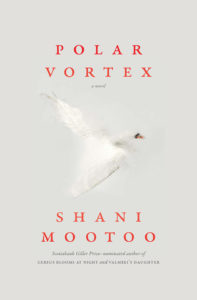
At first glance, this is a novel about a love triangle. Priya, who is married to Alex (a woman), and they live together in quaint and rural Prince Edward County. But something isn’t right, even before we learn that their household is about to be disturbed by a visit from Priya’s old friend, Prakash. Even notwithstanding Priya’s erotic dream about Prakash, which opens the novel. There is a distance that stands between Priya and her wife, and also a strange, uncanny hollowness to Priya’s first-person narration—or maybe it’s not hollow, but instead there’s a kernel of something there (what?!) that the reader is not privy to.
Prakash is a very old friend, a friend that Priya has barely spoken of to Alex, though she has pointed him out in an old photo from university, a photo of the two of them alongside Priya’s first girlfriend, Fiona. And is Alex threatened because he shares a cultural heritage with Priya? They are both diasporic Indians, Prakash from Uganda (where his family was expelled and brought to Canada as refugees) and Priya from Trinidad—though Priya would argue that this isn’t such a remarkable connection. But of course there is more to it, more than even Alex knows, more than Priya is willing to admit to herself or to even remember.
The novel takes place over the course of a day, and the tension in the text can be excruciating—but in the very best way. The kind of excruciating tension that makes a book unputdownable, that causes a reader to yell at a page. Polar Vortex becomes a book about truth and memory, about how little we know each other, and ourselves. Strange, ominous, haunting, it’s a propulsive read and a deliciously unsettling one.
March 4, 2020
My Barbies Always Got Pregnant

Maybe it’s genetic? Because we were listening to our children playing Playmobil the other day, and one little plastic figure or another in their game had gotten knocked up, and my husband said, “It’s just like you!” Because my Barbies always got pregnant, always. I didn’t even really have Barbies, but I played when them at my cousin’s house, and the narrative of our game would inevitably reach the point where I’d stuff a pile of clothing under my Barbie’s voluminous blouse (my cousin’s Barbie fashions were very 1970s and a-line) and suddenly it would be A Very Special Episode. I don’t recall that my Barbie ever had a partner, because who could be bothered with Ken, who underpants were moulded to his body, so it wasn’t like that old Barenaked Ladies Song. I don’t recall either where I got the idea for this Barbie story line—it is possible I was unduly influenced by the movie Look Who’s Talking, but that movie didn’t come out until I was 10, and I think I’d been playing Pregnant Barbies for years before that. And it wasn’t even Barbies—any kind of imagination role-playing game would, for me, inevitably lead to me getting pregnant (with clothes stuffed up under my t-shirt, natch), to the point where people didn’t want to come over and play with me anymore—although it’s possible there were other reasons for that.
Other pop-cultural pregnancies that influenced me: Elyse Keaton’s shark-jumping pregnancy late in the Family Ties series (she goes into labour while wearing a brown velour track suit that I think my cousin’s Barbie had); Elizabeth McGovern’s pregnancy in the movie She’s Having a Baby, with co-star Kevin Bacon, which I never even saw, but I was obsessed with the trailer and where she said, “I stopped taking the pill”; when Martha Plimpton gets pregnant in the movie Parenthood (and perhaps that entire movie); and the Molly Ringwald vehicle For Keeps, which I am not sure I ever saw either, but I sure did read the back of the VHS tape at my corner store. And yes, Look Who’s Talking, and maybe the source of all of this is that I figured if I got pregnant, at least I’d end up with John Travolta in the end. (And Kenickie and Rizzo in Grease. Even though that was just a false alarm.)
I also spent my childhood reading newspaper articles I didn’t properly understand about stories like Baby M, and Chantal Daigle.
Anyway, it occurred to me—as I listened to my children following my imaginative footsteps, as I was going through copy edits for my brand new novel that is forthcoming in October—that my Barbies never actually quit getting pregnant, and that I just started writing their stories down in stories instead. Because my fictional characters always get pregnant too. Or they don’t—I’m currently writing a short story about a man whose wife, an online influencer, decides to monetize her infertility. In 2014, I edited an anthology of essays all about the experience of getting pregnant, or not getting pregnant, because these are the big turning points in a person’s life. A year ago I wrote about how I do love me a good fictional abortion (which is not to say that the nonfictional ones aren’t worth having, obviously) but I think I can take a step back from that and consider that it’s pregnancy in general (desired or not, realized or not) that most intrigues me from a narrative point of view. It’s why, to be frank, books about men don’t interest me that much, because men’s lives don’t offer the same possibilities, the same questions and potential for transmogrification. The hero quest? Yawn. Instead, the possibility of having your entire life railroaded (by a pregnancy or the failure to have one), not being architect of your own fortunes, so much left to chance, hope, luck. It’s in all the fairy tales, some of our oldest stories, Sleeping Beauty and Rapunzel, even the old woman who lived in a shoe.
March 4, 2020
March Books on the Radio
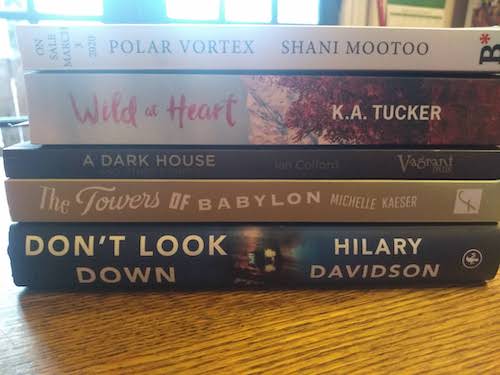
So happy to talk GREAT BOOKS on the radio this morning with the lovely Wei Chen, who even reads the books I recommend. If you missed it live, you can listen again on the podcast. I come in at 35.00.
March 2, 2020
Gleanings
- I like to think of myself, in some ways, as an artist of the everyday.
- “Let it rest” can mean giving the piece an hour, if that’s the deadline. For an essay, a week or a month is better.
- Some moments call for flowers, or a lasagna.
- This is what blogging is about, that we can see each other even when we feel invisible, that through time and space and memory and algorithms, we see each other. We hear each other. That in the quiet, we are briefly together.
- First steps and leap years
- I’ve been keeping a “book” since 2011.
- A long time ago my husband built a hang glider.
- Due to the luck of the draw I was one of the last to be called, and the jury was selected before I was asked to return to court.
- So I’ve developed a kind of short hand for interpreting dating profiles to save me from spending a precious evening suffering through a bad date instead of chocolate-dipping a whole box of strawberries and eating them by myself.
- When people suggest feminism has somehow been a failure, I like to hark back to the world I was born into, the world that made my mother so full of suppressed fury…
Do you like reading good things online and want to make sure you don’t miss a “Gleanings” post? Then sign up to receive “Gleanings” delivered to your inbox each week(ish). And if you’ve read something excellent that you think we ought to check out, share the link in a comment below.
February 28, 2020
The Bug Girl, by Sophia Spencer
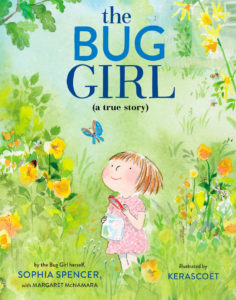
The Bug Girl, by Sophia Spencer, with Margaret McNamara, has a very cool backstory—when a young girl with a passion for insects finds herself bullied by peers, her mother reached out to professional entomologists to offer support for the girl, which went viral. And this is how Sophia Spencer became a debut picture book author at the age of 9, but even knowing none of this, there is a lot to love about The Bug Girl. It’s a book about unabashedly being yourself, about pursuing your own avenues and fascinations, and about defying other people who might hold those fascinations against you. The book is sweet and fun, but also an inspiring call to resist peer pressure, and to understand just how great and wondrous the world is—beyond the limits of one’s own community, and also right down to the smallest creatures on earth.






