June 3, 2020
Thoughts about Being Okay
I started having panic attacks again on Monday, the kind I was having back in March when “all this” began. I’d been feeling sad and overwhelmed since Thursday, on Saturday our summer holiday got cancelled, and that afternoon helicopters circled the sky as protesters took to the street to stand up for Black people’s lives and the roar of those machines was dark and ominous. The scenes in the US were getting more and more upsetting, and Monday ended with news of the US “President” assembling troops to attack citizens in the street, and also peaceful protesters being cleared with tear gas so that dipshit could pretend he was going to church. (Dude did not know it was Monday.)
I was trembling, my heart was palpitating. I knew I was going to be in some trouble, and so after my children were in bed, my husband and I sat down to talk and try to calm me down, which helped a bit, but it still wasn’t finished, and the only way out of panic, I’ve found, is through. My mind so highly strung, and I was scared. We have a fan in our room, for ventilation and white noise, and I started imagining I was hearing the sounds of more helicopters. Trying to convince myself otherwise, but I was lying in bed awake for hours, my mind a million miles and hour, and it was the sound of people shouting and screaming I heard next, and what was happening outside? To this world?
I got up to find out, and went to the window, where perspective shifted—and I realized the sounds I was hearing were birds. I’d been up so long that the birds were awake. And the fact that birds were singing was a lulling thought, this ordinary thing instead of the nightmare I’d been imagining. And I fell asleep finally sometime around 4 am.
Spending the next day bleary-eyed and with a headache, the panic still there, and it was hard to function. I barely did. And then the panic was finished, and I still was tired, but I was calm again, and there was light to see, and the birdsong was birdsong, and world a place I recognized. Such relief in that—euphoric, even. Like an illness and the absence of pain—I was so glad to be through it.
But of course it’s not over. I feel okay again, but it’s not okay again, and I don’t think it ever has been. I was thinking too about how it’s important, perhaps even essential, for white people to feel uncomfortable. And how the greatest reason for my fear when I’m overwhelmed is usually connected to my children, my fears for this world into which I’ve brought them. And the lightness of my imaginary helicopters when compared to the concrete fears of other parents for their own Black children, to feel like that all the time. The people for whom the sounds don’t turn out to be birdsong.
I get relief from my fears—I acknowledge the privilege in that, and how different my experience is from those of other parents all over the world, in my city, even. I get to feel better, which is not a bad thing, because my panic was debilitating, short of rendering me unable to function. But the point is that now that it’s done, I need to remember that my feelings are not the end of the story of inequality and injustice, of battles that are still going on and which we need to be fighting regardless of what I’m going through.
But also that I can be okay when things are not okay, and that is okay too.
June 1, 2020
Calm Is Still a Superpower
It was my fault—all of it.
Do you do this too? Do you have a whole host of reasons why the disastrous spring of 2020 was a product of your own consciousness? Covid-19 has got me out of both jury duty and a colonoscopy, and it’s crossed my mind that I’ve likely engineered all this, my ability to control the universe gone terrifically awry. (I am sorry.)
But the worst of my crimes was this blog post, the one I published on February 21, when I wrote about how after months and years of freaking out over everything (natural disaster, WW3, and mass slaughter, and every theoretical terrible thing), I finally accepted that nothing TRULY bad was really going to happen and calmed down. And even though unrest and instability, war and tension continued throughout January and February, I met it with my Zen approach, because I’d mastered consciousness, and was basically a yogi.
And then the universe said HA.
Or it didn’t, because the universe isn’t so responsive, and I don’t actually reside at its centre (so I’ve been told), but for a long time, I thought of my February blog post and felt sick to my stomach. When I’d been feeling sick to my stomach anyway, because there was a whole week in March where I couldn’t eat for a week, or sleep, or even sit down and look at a puzzle without having heart palpitations—and that I was looking at a puzzle at all is indicative of how bad things were at. I am not a puzzle person, but I couldn’t even read.
I thought I’d figured out anxiety. What a lark! And that was back when I only had abstract notions to be anxious about, when I could shop for groceries or take my children to school without fear of a deadly contagion. When the President of the USA wasn’t sanctioning police violence in the streets. It seems laughable now.
And yet, the answer is the same. And at least I wasn’t giving a prescription in my February post and I acknowledged there was uncertainty, a wavering—I’d never really claimed to have mastered anything. But I was observing a point in my process instead.
“None of it’s simple,” I wrote, “and the only way toward an answer is work, which is what’s happening now all around us, and we need to be patient. And calm.”
Which doesn’t mean passive. It doesn’t mean waiting and doing nothing, and eliminate the necessity of action, but instead.
It means breathing. It means grounding. It means thinking, and listening, and connecting, and learning, and (in the words of Ann Douglas) calm is still a superpower.
Maybe more than ever.
June 1, 2020
From My Mother’s Back, by Njoki Wane

Want to support a Black Canadian writer releasing a book this spring? Pick up Njoki Wane’s rich and generous memoir From My Mother’s Back, a story that weaves her childhood in rural Kenya with her current experiences as a professor at the University of Toronto, showing the long journey she took to meet her goals, but also how these two parts of her life are deeply connected, and informed by her strong bond with her siblings, her parents, especially her mother, and her ancestors.
Wane writes about the view from her mother’s back as her mother showed her the world, about losing her name and connection to her culture as she attended Catholic boarding school, her passion for learning and teaching, and what it means to be Black in Canada (“It’s like there’s a story written on my skin that I’m not allowed to read.”)
There is wisdom here, as Wane writes of overcoming hardship and also of her struggles. “These are the moments that shape us; these are the memories that carve our future from the woodwork of possibility. Struggle and challenge, appreciation and gratitude narrow our focus define our values and provide us with stillness necessary for grounding.”
It’s a wonderful, inspiring and hopeful read.
May 28, 2020
Terrible and Fine
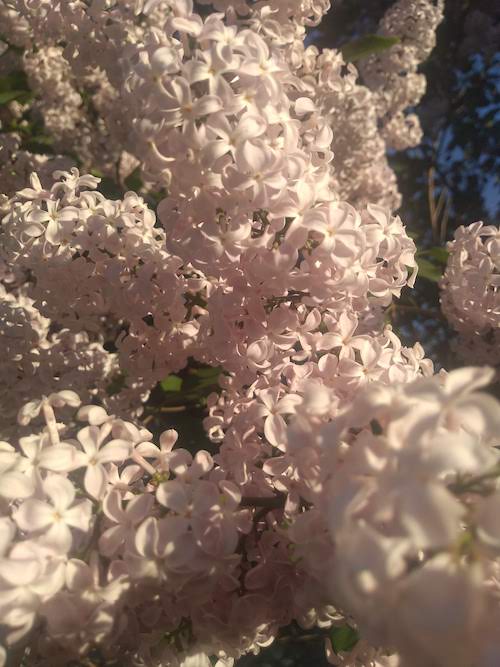
I can never understand how difficult a moment is until it’s over, which is useful as far as self-preservation mechanisms go—though it might be hard for other people to understand, people who prefer to confront the darkness head on. I imagine those people find my social media posts annoying, everything crumbling, and my insistence on noticing daffodils. But I cannot look at the darkness, instead walking through it in a fog, squinting and imagining that I’m discerning silver linings, and the fog is what’s keeps me going. The fog and the hope, because otherwise I can’t get up off the floor, and it’s doubly convoluted because this crisis, for me and my family, is abstract. Our home is comfortable, we still have our incomes, my children’s needs are met, we’re healthy, and we can afford to stay home and stay safe, meanwhile the weather is glorious, and potato plants are coming up in my garden, and there are wildflowers everywhere—lilacs, peonies, and irises, so much abundance, and so where is the crisis? Whereas if I walked twenty minutes east, I’d encounter homeless encampments, but they’re not on my route. And if I walked by them, would I even see them? How would I make them part of the story I tell?
I cried this morning when the school principal made an appearance on Iris’s class meet-up. Yesterday I scrolled through my Instagram account from the last few months, which is rich with colour and beautiful things, but I knew those images were standing in for sadness and hard feelings (and if you read the captions, this is often the case. I am not entirely delusional). It’s been a terrible few months. It’s also been fine. And how the mind struggles to know both these things at once.
May 27, 2020
Spring Books on the Radio
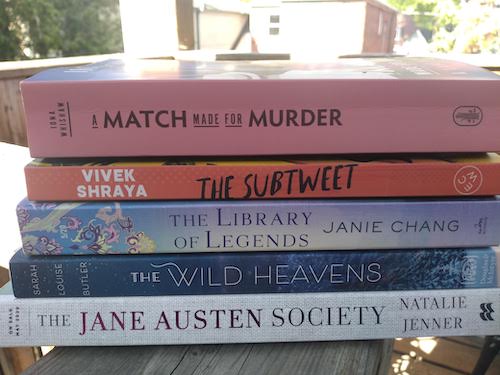
Today I had the pleasure of talking about these gorgeous books today on CBC Ontario Morning: a charming mystery, a breezy but cutting book about friendship, a book that delves into part of Chinese history I’d never heard of before, and the most philosophical book about Bigfoot that you’ll ever read. I ran out of time before I was able to recommend Natalie Jenner’s novel, The Jane Austen Society, which came out yesterday, and if I’d had the chance, I would have told you that it”s a delightful escape from reality, a heartwarming story of how books and community can save us in our darkest days. A lovely hammock read!
May 26, 2020
Gleanings
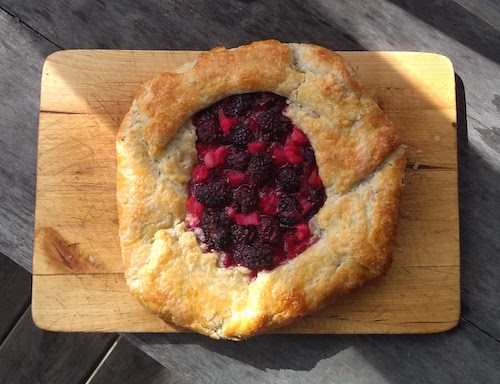
- It’s time to resist the siren call of pie season and make a galette instead.
- At my desk, in the night, I was thinking about rumours.
- Having the decision made for me by circumstances hasn’t changed everything about how I feel about teaching online, but it has made a lot of those feelings irrelevant.
- What I know about kitchens, is that we make them work, even when they don’t make sense.
- The world is opening up, meaning that we’ll have to see each other again. Get to see each other. My bad.
- And yesterday, I was reminded that all writing starts somewhere, and a sense of wonder–both in the sense of “awe” and in the sense of “curiosity”–is a great starting point.
- when I do get the urge to sew, and when I’ve gotten out all of the things, I binge like a run-on sentence
- Probably I would have melted down by now, but it’s the flowers keeping us going.
- Do you keep a book on your breakfast table and read it in the morning?
- A diary of the mundane and (some of) what we ate.
- what do you think will happen?
- I realize as I do this that I am more interested in the process than the result.
Do you like reading good things online and want to make sure you don’t miss a “Gleanings” post? Then sign up to receive “Gleanings” delivered to your inbox each week(ish). And if you’ve read something excellent that you think we ought to check out, share the link in a comment below.
May 25, 2020
There Are No Good Places to Be During a Pandemic

Are there really no good places to be during a pandemic? During the last three months as I’ve gone nowhere, I’ve certainly had time to reflect on this. And definitely, there are bad places to be during a pandemic—at the source of the outbreak, of course. Or in a care home or group living facility, as the virus spreads through patients and staff (and the systemic failures here are a tragedy. Everything about how these places are funded, staffed and receive oversight has to change). On the streets is a very bad place to be during a pandemic. At work in a hospital is also a bad place to be, particularly when you don’t have access to protective equipment. Twitter is also a very bad place to be during a pandemic, because everyone is as angry and irritable as I’m feeling often these days. So I keep posting lilacs on Instagram instead.
But the idea of a good place to be—I’ve been thinking about this, because for the first time in my life, I have struggled with being in the city, being in the city without a car in particular. Envying people who’ve already escaped to their cottages, people with backyard pools, people with huge houses where everybody has their own room and no parent has to take a Zoom call in their kids’ bottom bunk because there is nowhere else to go. Wishing we had a different kind of life, living off the grid, self-sustainably in the middle of nowhere, perhaps. Would it be easier then? Seeing the appeal of the suburbs, of green lawns for days.
Although I am not complaining. Much. I miss transit though, so strongly, which made the whole city open up wide for us… But our apartment is a comfortable place to be with room for all of us, and the good weather means we throw open the doors and the porch becomes an extra room. We are surrounded by trees. We have a backyard, albeit one that is mainly concrete, but I’ve been hammocking avidly and we’ve bought a small pool that we’ll be setting up as soon as the cover arrives from Home Hardware. We have neighbours that leave gifts on our porch, and friends who leave chalk drawings on the sidewalk, and so many friends’ houses to walk by on our meandering aimless walks. Yesterday we managed to walk down to the lake, which always seems so much farther away than it actually is. (What I would give to visit the beach though!)
We’re luckier than many people, although so many of us can say that. I have a friend who lives in an condo tower, but the lake is at her doorstep. My friends in the suburbs can camp out in their backyards. Friends near lakes can go swimming. Friends in the wilderness are surrounded by the splendours of nature, and those of us in the city have bakeries and sushi joints nearly on our doorsteps, which has certainly made weathering these last few months a more pleasant experience—and I think living in more density has made me more acclimatized and less likely to view every passerby as a potential agent of contagion. My friend who lives in a high rise apartment can walk easily down into the cool of a ravine. Other friends have family nearby. Some have got the low risk of rural communities, but the best hospitals in the country are a ten minute walk from where I live, so it’s a trade-off.
So many of us, no matter where we live, are blessed with the extraordinary kindness of neighbours.
I suppose while there is no good place to be in the midst of a pandemic, the best place to be is where you’re home.
May 21, 2020
The Wild Heavens, by Sarah Louise Butler

I was describing Sarah Louise Butler’s debut novel The Wild Heavens last week as, “Like Contact, but about sasquatches.” A novel set in the BC interior that begins with tracks in the snow, tracks that—in the book’s exquisitely written introduction—persuade a man to reroute his life, from the seminary to pursue a career in science, to explore the mysteries suggested by these outsized man-shaped footprints. Faith vs. science, but the dichotomy turned inside out, and what of mythology? The fact of proof. Maybe it was never really such a dichotomy after all.
The man in the introduction is Aiden Fitzpatrick, through the centre of the story is his granddaughter Sandy who comes to live with him after her mother dies, being raised in their isolated cabin in the wilderness where he continues to search for proof of the creature, one who is never directly named in the book, but they call him “Charlie.” Charlie becoming a projection of each characters’ own fascinations, questions and preoccupations. Sandy grows up in the company of a young boy whose mother has found safety on the remote property, hiding from her son’s abusive father. And in some ways, it’s an idyllic way to live, surrounded by love and so much natural beauty, but there are also questions that have no answers, unspoken longings and so much grief.
The novel takes place over the course of a single day as Sandy—now a widow, a mother in her fifties—sets out to finally discover the truth about the creature after discovering its tracks in the snow after so many years. Interspersed between her risky quest to find it are her recollections of her childhood, growing up with her grandfather, falling in love, becoming a wife and mother, enduring loss and heartache, and the draw of the landscape, that creature who’s ever-elusive. And as ever, it’s less about the finding than the searching, about the wonder instead of answers, about the stories we tell about the mysteries both of ourselves and of the world.
May 21, 2020
A Summer Birdcage, by Margaret Drabble
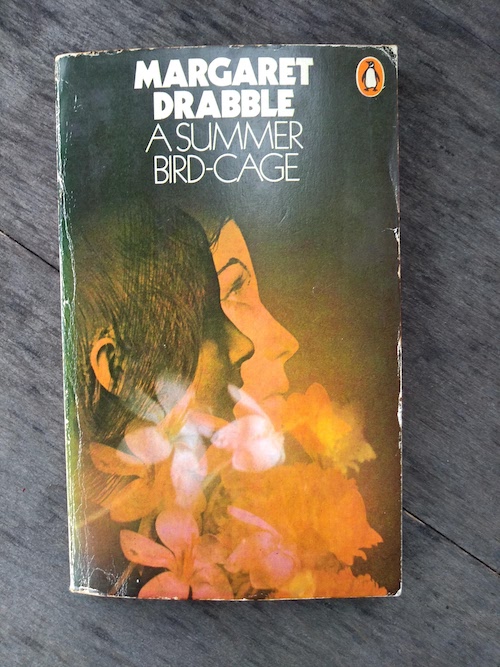
I started reading Margaret Drabble in 2004 when I bought The Radiant Way from a used bookstore in Kobe, and I don’t remember why I picked up the book, or if I’d known anything about Margaret Drabble before I did, but I became obsessed with that novel, and the wonderful thing about reading Margaret Drabble in 2004 (even in Japan) was that she had 14 other books I could read after that, many of them readily available in tattered paperback. And so I read them, mostly her 1970s’ novels, which I also loved, but which have blended together, stories of single mothers in London, stories that led directly to The Radiant Way where Drabble’s vision moved from the individual to society, which was pressing in the age of Margaret Thatcher, no matter what Margaret Thatcher thought.
The 1970s novels are fat and the books only got fatter (the final book in The Radiant Way trilogy is huge, and Drabble’s vision has expanded so much more that it’s all about Cambodia now). I was not able to read the more recent books (1990s on…) until I’d returned to Canada, and so most of my later Drabbles are not weirdly stained paperbacks, and I’m a little bit sorry about that.
Her 1960s books, however, compared with the next decade’s, are slim, with those distinctive orange Penguin spines (and many of their covers, oddly, feature Drabble’s own face, which is weird for a novel—but more about that in a moment) and they were never my favourite. Some of those reads that were blessedly short, but I don’t recall enjoying them. They didn’t resonate, and the theory I came up with about that was that they were very fashionable and of their time…which meant they were certainly not timeless.
And so when I decided that I was going to reread all the fiction Margaret Drabble had ever published (what better way to measure out these days, I guess?), her earliest books were what I was most intrigued about, the gap in my Drabble knowledge most need of filling. And, blessedly, they were short, at least.
So I started (naturally) with her first novel, A Summer Bird-Cage, published in 1963, a book whose only detail I could recall was that there was a whole lot about coming down from and going up to Oxford, which I always found confusing. And what I realized upon rereading it again was that a) it still wasn’t really my cup of tea but also b) its use of words I kept having to look up in the dictionary had perhaps kept me from understanding that this book was meant to be relatable.
A young woman, Sarah, just out of school (down from Oxford, natch) who has come back from a sojourn in Paris to be a bridesmaid at her sister’s wedding, her sister who is marrying the celebrated novelist Stephen Halifax, and no one really can understand why. Sarah has a boyfriend herself, but he’s away studying in America, and she meets with friends who’d married just out of school, and it’s all gone a bit wrong, Bohemian husbands expecting wives to cook them dinner on a nonexistent grocery budget. 1963: it was such a long time ago. This was even before the Beatles.
But also this story of being single in the city, weddings and bridesmaids: this is chick-lit, Bridget Jones diary, I wrote in a DM to a friend, and I didn’t mean it in a bad way. But I felt guilty too, because this novel is bending over backward to be exceedingly literary, which is partly why it’s so annoying—it never just out and says what it means, instead gestures vaguely, and I had a hard time discerning the point. Whereas the parts that were supposed to be obscure (whatever was going on between the bride and the best man) was obvious at the outset.
What would young Margaret Drabble think—aged twenty four, and married “since 1960,” it reads, curiously, in her author bio—about the comparison to Helen Fielding?
And here I return to the books with Drabble’s not exactly glamorous face on the cover—I think she was a famous young thing, married to her actor husband, and her personality was very much used to market these books, the same way that women authors complain of today. So we’re really not so apart from Bridget et. al after all…
And now I’m doing it too, reading fiction as biography, when I decide the key to the thing is the line where Sarah confesses, “Beyond anything I’d like to write a funny book. I’d like to write a book like Kingsley Amis, I’d like to write a book like Lucky Jim. I’d give the world to be able to write a book like that.”
But Lucky Jim, if Jim were a woman, would be decidedly chick-lit, slight and commercial, and I’ve always thought that—so my comparison to Bridget feels justified. Moreover the mention of Amis suggests that young Ms. Drabble is writing in the shadow of fashionable male authors, instead of firmly in her own vision, which would explain why this book is just slightly out of focus, doesn’t land perfectly, the way her later books do when Drabble isn’t trying to write like anyone but herself.
And I think this book actually is funny, but the humour doesn’t land right either, because of the way she so particularly captures a moment—between the 1950s and the 1960s, with the advent of feminism—that really was only a moment, before a cultural revolution came along and reshaped the landscape, in a way that Drabble would document in her later novels. So that what she captured here is hard for me to understand so many years after the fact, plus, yes, she is also writing about a very specific social milieu, and maybe she nailed it, but all these years later it’s hard to tell.
May 20, 2020
Finding Our Way

I noticed a chart on social media last week, a list that ranked one’s level of caution and care in terms of exposure to Covid-19, and a few of my friends seemed to find a great deal of appeal in this chart. The idea being that you could determine how you ranked and then find friends with similar rankings to associate with as we slowly expand our social bubbles after two months of quarantine, which makes sense, because you probably don’t want the person you hang out with when all this is over to be Buddy who was over at the Michigan legislature protesting with his machine gun the other week. Not just because Buddy is an asshole, but also because he’s been congregating in large groups without a mask on and likely doesn’t wash his hands.
Of course, there was a level of smugness to it too— I mean, no one who scored “VERY OPEN LEVEL 5” was sharing this chart on Facebook. And I mean no judgment with that either, because I can be as smug as they come, and if you’ve been depriving yourself of human company and good groceries for coming on 70 days now, you have every reason to feel superior to that woman down the street whose kids never stopped having playdates and whose boyfriend sleeps over every Saturday.
But still, it didn’t sit well with me, that list. It was the narrowness, I think—and I would consider possibly because I can’t declare myself a “VERY STRICT 0.” I have not worn masks while walking outdoors, I go shopping more than once a week, I’ve likely been within six feet of somebody while passing on the sidewalk. Although the shops I’ve visited have been small and not crowded, better than grocery stores. But also I live in a unit with shared space with other households. Which doesn’t require riding an elevator and my door knobs are my own, but I am also really not attentive enough at disinfecting doorknobs. Though since people have stopped coming over, I’ve decided not to get worked up over this. But what I mean by all this is what I mean most of the time when writing a blog post, which is that it’s complicated.
Has the pandemic made everyone more annoying, or has it made me irritable, or both, is another complicated question, and the answer is probably yes. (And don’t think I don’t acknowledge that I fall under the category of “everyone” who is more annoying too.)
But I really have struggled these last few months with people’s demands for certainty and clarity in a situation that no one really understands. The week before this all shook down, way back in March we cancelled our trip to England because it was becoming clear that travelling right now would be a really bad idea. Prior to this, I’d been watching government travel advisories and assuming these were gospel, and then had a revelation, which was that just because the government said we could go didn’t necessarily mean that they thought we should. That we live in a country where citizens are free to make their own choices for the most part, and don’t need to be told what to do. I found everyone that first week even extra annoying, because everyone on social media had an opinion about banning flights from certain places, shutting down the borders, etc—when it was clear to me that all this was going to happen, but the government was rolling out measures slowly because they have to. And yet I understand where the complaining people were coming from because there still were people departing on vacation in mid-March, when it was demonstrably clear that this was a terrible idea. But tragically, really (and even literally, sometimes), sometimes freedom of choice means that people are going to make appalling ones.
Or at least ones that are different than yours, ones that you just can’t understand—why that man isn’t wearing a mask, and why that woman brought her toddler to the grocery store, the person standing on the street corner audibly hacking up a lung. For me, much more innocuously, the big one is people who wash their fruits and vegetables in soapy water. I don’t get it—and also, it makes me terribly anxious because I’m just not doing that, and these people doing something different makes me afraid I’ve made bad choices, instead of underlining my virtue and my safety—which is what we all want anyway.
Also: okay. You’re washing your bananas. Great. But why do you have to document it on Instagram?
But my husband has a good point (he is one of the few individuals alive who has NOT been made more annoying by the pandemic) which was that washing fruits and vegetables, and Instagramming them, no less, made those people feel good.
“You know how you liked ordering from the bookstore?” he asked, because this was the week I’d ordered more than fifteen books to be delivered from stores across the city, and he really was bringing this home with an analogy that was so on my level. “Because it made you feel happy, and normal, and like you had some element of control over the world?”
We’re all trying to hard to find our way through this unknown situation. And the people who don’t seem to be trying are trying for the rest of us, and those who are struggling mirror all the ways that I am, and those who seem to know everything only underline just how much I don’t, and I suppose it doesn’t help that my relations with nearly everybody these days are enacted on social media where we are all performing, and sorting our feelings, and showing our best selves and/or our worst ones, and how are the rest of us supposed to tell which is which?
We’re doing it though. By trusting the science, and using our imaginations, we are, no matter how restless and impatient we feel. And that’s the amazing thing, even though nobody really knows what’s what, and it’s never been more apparent what has always been true, which is that we’re all trying to find our way in the dark. But we’re finding it. Day by day.






