July 7, 2020
Gleanings
- One of the goals I set for my epic 2020 to-do list? Make more preserves and pickles than last year!
- I think if we really go deep and allow ourselves to answer those questions, the world would be a better place.
- All I know is that I feel beleaguered – by these strange and difficult times, and by people who are making it worse.
- Despite outside influences, my attitude toward dandelions sashayed as if in a dance.
- There is the constant ongoing slightly absurd persistent splendid fact that you are required to make something beautiful.
- She’s good– very good, even! It’s just that she’s always good in exactly the same way, sometimes even in the exact same words.
- You’re walking and your eye yanks at your brain and says, Hey look, look again, look closer.
- Swimming, the swallows light on the surface of the lake, I want to tell that young woman to linger in the garden, linger among the vines and leaves.
Do you like reading good things online and want to make sure you don’t miss a “Gleanings” post? Then sign up to receive “Gleanings” delivered to your inbox each week(ish). And if you’ve read something excellent that you think we ought to check out, share the link in a comment below.
July 6, 2020
Not for Me
In the 21st century, it almost seems radical to dislike something in non-declarative terms. Not even with a “meh,” which is more disdainful than it seems, but instead something more along the lines of, “I tried this, and it’s not for me.”
My new thing is easing out of having strong negative opinions, unless the strong negative opinion is super interesting and worth delving into. But more often than that ever being the case, strong negative opinions seem to me to be a fancy way to dress up the fact that one simply doesn’t like a certain thing. Or maybe what I’m saying is that you needn’t necessarily develop an elaborate theory as to why a piece of art is not to your taste.
(I’m still figuring this out. It’s an ongoing process.)
I’m thinking about this because Ottessa Mosfeigh has a new novel out, and people are excited, and whenever people are excited about a novel, I want to be excited about it too. But I think I just don’t like the work of Ottessa Mosfeigh. I read Eileen and it was interesting enough, but when I finished it, I kind of thought I’d read all the Mosfeigh I wanted to read for this life. And then last summer, friends were reading My Year of Rest and Relaxation, and loving it, so I decided to give it a chance—but it was the kind of book I rejoiced at finally finishing at the fact of its being over. Even as I recognize, I do, what other readers find remarkable about it, even appealing, but it doesn’t work on me, I think. I am insusceptible to Mosfeigh’s spells.
I also (forgive me please) didn’t see the point of Jenny Offill’s Department of Speculation. It didn’t work for me. I don’t understand the appeal of “art monsterdom” anyway (could a distaste for monstrousness be at the root of my feelings about these books, I wonder?). I own a copy and at least it’s short, so I’ve been able to read it more than once, to try to figure out what everyone else was seeing in it—and I’m not quite ready to abandon Offill yet, but I don’t want to shell out cash for her latest novel either (it’s hardcover!) so am on the library holds list, where I’ll probably be waiting for hundreds of years.
Now, of course, there are plenty of books I do think are terrible, and if we ever meet up for a drink, I’ll probably tell you all about them, but I’m thinking about something different here, things that are good that I still don’t like, and how that’s okay, both for me and the people who like them.
July 3, 2020
The Moment of Tenderness, by Madeleine L’Engle
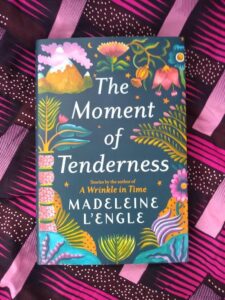
It’s a gamble, a collection of previously unpublished short stories discovered after an author’s death, particularly if, as with The Moment of Tenderness, by Madeleine L’Engle, most of these works were written during her wilderness years, after she’d achieved only modest commercial success with her novels and hadn’t yet published A Wrinkle in Time. Even worse, I read her first novel The Small Rain last year, and I thought it was pretty awful.
So what was I getting into with this new book, in hardcover no less, bewitched by the gorgeous cover design, and its prominent display in a local bookshop window?
Mercifully, it all turned out fine. And that nearly all these stories are worlds away from A Wrinkle in Time actually suits me, as I’m much more a fan of L’Engle’s realism anyway. Many of these stories autobiographical and laid out as a coming-of-age, with child protagonists at the beginning, growing older as the stories progress. Many of these feature a character called Madeleine, even married to a man called Hugh Franklin, as L’Engle was, though Madeleine L’Engle’s husband was on All My Children, and the Hugh Franklin in the book runs a general store. (And as always, it is this way that L’Engle blurs fiction and reality that I find as fascinating as any questions posed by sci-fi or fantasy.)
The middle stories were my favourite, New England fiction that channelled Shirley Jackson, who was L’Engle’s near contemporary. One of the stories even features witches. Others recall the works of John Cheever, stories of suburban dissatisfaction. And there’s even a turn to the Southern Gothic–L’Engle had a transient childhood, but roots in the south.
I loved reading this book, though I am not sure it’s necessarily going to appeal to anybody who ever had a thing for Meg Murry. For L’Engle completists however, and also short story fans, there is so much to delight in.
July 2, 2020
Things I Like
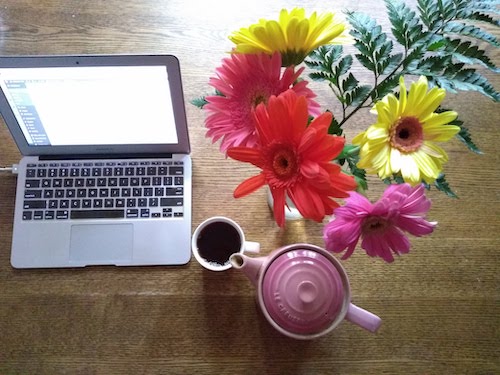
I am sorry I’ve been out of touch. Except for social media updates, of course. And we’ve been getting together with friends in our neighbourhood, picnics in the park, but the idea of anything further afield kind of overwhelms me. By April, I was done with Zoom. And my world is so small right now, wedded to routine, that any deviation throws me for a loop. I’ve always been a bit like this, but living in pandemic times is even more so—and as real life begins to return again, it’s something I’m going to have to work on, at least if I want to continue to have friends, which I do.
But in the meantime, I read on the couch every night—which is kind of my ideal situation, to be honest. And I’ve tried to balance going to nobody’s online literary event by buying and reading all the books instead—even in the before-times, I’ve always preferred partying alone with my book to going to a book party anyway.
And when I’m not reading, there are a few other things that I’m getting up to, things that help me measure out my days and bring me joy, which is why I want to share them with you.
Jen Knoch’s Tuesday newsletter is fabulous reading, rich and thoughtful with smart ideas about our environmental impact. I look forward to it every week and you should sign up too!
I’m not a metal fan (you are SHOCKED, I know), but “Wind of Change”, by Scorpions has long been a fascination of mine, along with Cold War history, so I was intrigued by this podcast exploring rumours about whether the song had been a project of the CIA—and it’s by Patrick Radden-Keefe whose book about the IRA Say Nothing was a favourite in our household this year. The podcast is fun, but really interestingly explores ideas about propaganda as it progresses (is the podcast itself propaganda, Radden-Keefe wonders?).
We call this “The Trashy Podcast” at our house, but it’s also smart and interesting—the episode with Congresswoman Katie Porter was unforgettable. To be honest, co-host Rick Wilson is not my fave, a former Republican strategist whose work is responsible for the mess we’re in—he refuses to see a possibility of politics not having to be a dirty game, but he likes himself enough that my feelings are never going to matter—but Molly Jong-Fast is great, and it’s the kind of perspective on American politics I appreciate right now, one that refuses to take the Ding Dong President seriously.
There are some stand-out moments in the blur of these times, and the weekend of The Big Lasagne at the end of April was one of them. (It was actually too hot to be cooking lasagne that weekend, and I was reading Writers and Lovers, by Lily King. It was lovely.) Samin Nosrat, of Salt, Fat, Acid, Heat fame, decided that people the world over could cook lasagne together, and so we joined her, making SmittenKitchen’s recipe that involved two days of prep and fresh pasta. It was amazing and our lasagne even got reposted on the New York Times Cooking Instagram feed, which might be as close as I ever come to being in that paper.
Things delivered to my door have also been a real delight—books, donuts, popsicles, and more!—but Spade and Spoon is my absolute favourite. We were almost out of maple syrup one day in April when they first came to our service, and we bought jam too, lots of jam, and pickles. Every two weeks they’ve been delivering their products to the GTA, and we’ve ordered quite a few times. Nothing tops the pickled asparagus though. So so delicious.
When I read Madeleine L’Engle’s Austin series last year (which I haven’t mentioned for at least five minutes!) I felt very sensible for having borrowed each book from the library, but there came a moment in April where not having these books in hand was no longer acceptable, so I ordered them all, speaking of deliveries. The best thing? They’re kids’ books so five of them is not much more expensive than a regular hardcover. (In my mind, this basically constitutes making money…which is one of many reasons why I am not rich.) And then I started to read them with my family, and everybody’s enjoying them—we’re halfway through The Moon By Night. I can’t WAIT to read The Young Unicorns with them! Previously, I’d thought perhaps these books with their ominous undertones was too dark for family read-alouds (as Vicky Austin contemplates the genocide of Indigenous peoples and fears nuclear holocaust) but it doesn’t feel like that anymore.
I miss swimming. It’s been over a hundred days since my last morning swim and my towel and bathing are still hanging over the banister where I hung them, but I am filling the void with morning yoga classes online with the YMCA of Greater Toronto, which similarly let me start my day with my body feeling good. Our favourite teacher is Nazia White, and we love her. The YMCA is moving to a summer schedule next week so there might be less yoga in the offering, but we might double up on the classes, because a daily dose is a very good thing.
July 1, 2020
Leftover Spaghetti Frittata (or We’ve Come a Long Way)
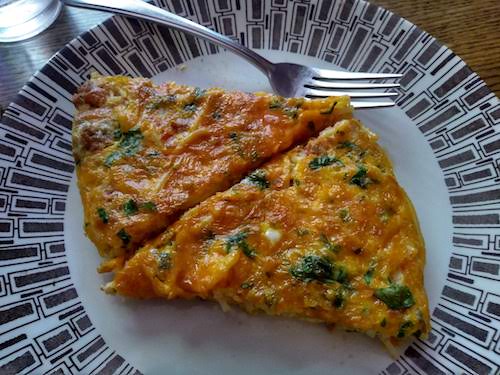
I made leftover spaghetti frittata for the first time at the end of March. This was when I kept scrolling news in hopes of good news, and there was none. I kept checking in on food writer @emikodavies under lockdown in Italy, and it was some solace to see her family’s daily life continuing, albeit in confinement. If they could keep going, so could I, was my reasoning. The recipe she posted in her feed also appealed to me for its frugalness. This was in my “reusing parchment paper” phase, when I was worried about food availability. It made a meal that was as comforting as it was delicious.
I do not think the pandemic is over. And I WOULD go into detail about our rituals, the ways we’re taking precautions, but I won’t, because reading such posts from other people makes me anxious. Suffice it to say, however, that we have not returned to business as usual. But we have also found ways, in this new reality, to reclaim joy and pleasure, and it’s not at all as incongruous as a lot of people might think.
I do not think the pandemic is over, but I really want to celebrate how far we’ve come since that dismal day in late March when I first poured eggs into my spaghetti. I think a fixation on US politics here in Canada has confused many people about the many ways their situation is different from our own. And there are, of course, a hundred other reasons to be lugubrious right now…but we’re still here, and now it’s summer, basil blooming in my garden, which I mixed into our frittata today.
There have been unfathomable losses, it’s true, but things are better now, infection rates here in Ontario continue to be low, community spread decreasingly a factor. The pandemic is not over, but do you not see still what a wonderful thing this is? That we are not without reasons to be hopeful after all?
I am going to make spaghetti frittata forever, I think. I am going to use spaghetti even as a means to frittata, in fact, and it’s going to remind me of these days, of all we’ve learned about community and connection, living with uncertainty and weathering hard times. Of what grows, and persists, and even blooms.
The pandemic is not over, but we have come such a long way.
June 30, 2020
Gleanings
- We white people, who have the privilege of not being treated badly for our skin color, are being called to create new stories for everyone.
- The work I’m doing is my business and I have to think hard—constantly — about how to effect change and uphold my values
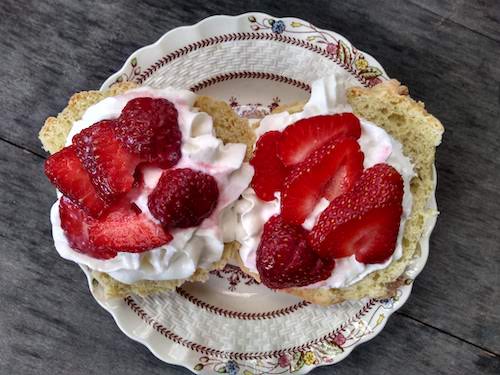
- Strawberries pretty much steal the show…
- “Oh my god,” I thought to myself in shock, “what am I doing? I don’t even know this guy and in just a few hours I’m going to marry him!”
- But watching these clouds parade across the sky, was a ritual which brought into my body, through my eyes, a sense of possibility as endless as that blue sky….
- So anyway, that’s me and masks and I’m just going to have to embrace it like everyone else.
- Writing is not the only work.
- I am never quick to clear plates, because I find this stage of a meal thoroughly satisfying.
- Six nags and mottos to embroider, when I master the satin stitch.
- Cruel systems surround us. Unless we’re cut by them, we can stay blissfully unaware.
- There is a specific kind of rain that warms my cockles. It’s the steady, light as the wing of a hummingbird, and flows in a gentle, easy way.
- You never knew, eavesdropping on Mildred’s stories, what you might hear, but it was guaranteed to be good.
- If, during these sheltering at home times, you’re lucky enough to have a garden, I’ll bet you’re embracing it.
- Swimming this morning, I wondered, where does the word “lake” come from?
- The chamomile is posing against the black currants that I’m looking forward to.
- I really admire Vivian Maier’s photographs, in particular her black and white self-portraits.
- The thing about posting photos of yourself through time, is that you really begin seeing yourself, and seeing yourself differently.
A handful of posts here are from writers who took part in my June blogging experience. They have been amazing. My next course offering is coming in September, and registration is open now.
June 26, 2020
Our Job is to Hear Them

I have been thinking a lot about how those of us who are white people can continue to have conversations about race, but also about how “conversations about race” isn’t most effective when it’s just us yelling at other white people. And this is not to say that white people don’t need to be yelled at, BUT I am not sure the white people in my feed are necessarily those who most benefit from the “Things to Stop Saying to Black People” memes that begin with, “Quit asking us if we twerk.” I have never asked anyone if they twerk. I don’t know what twerking is.
But those of us with social skills enough to, say, know not to touch people’s hair, still have thinking to do, racist biases to unpack. Which is why I keep clicking on these memes, because I want to do this work, to figure these things out. But I think that memes are not going to be where the answers are found, and that original thinking (and learning) is required instead.
And so I want to write about what I’ve learned and am still learning about listening, and about how listening is more important than understanding. (“But you see, Meg, just because we don’t understand doesn’t mean the explanation doesn’t exist.”) For a long time, my friend would talk about how conspicuous he felt as a person of colour in my hometown—and I just assumed he was being sensitive. I used to hear stories of racism, and assume there must be more to the story, because things like that don’t just happen. And then one day another friend told me that her son was being teased for the colour of his skin, and I replied, “But that doesn’t make sense.” Because so many kids in the class were people of colour, was what I meant. And she gave me this look, a look that turned my world around. In that look I saw the fact that I have no idea, and that to define my understanding of the world by the limits of my own experience is such a fallacy, that it’s ignorance. And who would want to live in the world like that?
I will tell you that when I heard about the death of Regis Korchinski-Paquet, killed when police arrived at her apartment during a mental health episode here in Toronto, I was unsure what role the police had played in her death, figuring it must have been an accident. Because “things like that don’t just happen.” But of course this is when the world was still reeling from the murder of George Floyd, killed when a police officer knelt on his neck for nine minutes. And if we hadn’t seen a video of that, would anyone have believed it?
But of course, plenty of people would have believed, their life experience having established that police brutality is an unremarkable fact of life instead of an aberration. And those of us who have remained ignorant? It’s only because we weren’t listening, because certain voices matter more than others, because we’ve been so invested in the status quo, in our comfort, that we’ve failed to read the world.
So what now? Because the point is never to be one’s own awakening. The point is what we do with our knowledge, with our power. Voice your solidarity with Black Lives Matter. Call your mayor and city councillor and demand police defunding. Support Black-led businesses and organizations. Keep learning, keep reading. (I recommend Jesmyn Ward’s Men We Reaped, and Desmond Cole’s The Skin We’re In.)
Keep listening.
The stories are there. Our job is to hear them.
June 26, 2020
Five Little Indians, by Michelle Good

‘Lucy leaned back in her chair, hands folded in her lap. “They call us survivors.” “Yeah.” “I don’t think I survived. Do you?”‘
Cree writer Michelle Good’s debut novel, Five Little Indians—winner of the HarperCollins UBC Prize for Best New Fiction, Good earning her MFA at UBC while also practising as a lawyer—is the story of five Indigenous young people who were taken from their families as children and grew up at a remote church-run residential school where they were subject to abuse and deprivation, and then cast back out into the world with nothing as they came of age—with no skills, no community or ancestral ties. Nothing but trauma, and then what happens next? And the novel is the answer to that question.
Set in Vancouver’s Downtown Eastside during the 1960s and decades that follow, Five Little Indians weaves together the stories of Kenny (once notorious for his escapes from the school, a pattern that continues), Maisie (a mother figure for the others, but unable to comfort herself), Lucy (who finds meaning in motherhood), Clara (who finds herself in the American Indian Movement and connecting with the teachings of an elder), and Howie (who struggles to stay out of jail).
The first 100 pages are hard-going, not just because of the trauma they convey, but because the reader is still getting a sense of novel’s structure and the characters themselves too seem to be finding themselves, their feet, and are not as developed as they’ll be in the rest of the book. I will admit that I was wary during these pages that this would be a novel that worked for me, but I am so glad I kept going. Because when Clara’s character takes her turn telling the story, all at once the novel is injected with a furious momentum and energy, the writing in these chapters so artful and confident, and it charges the remainder of the book with narrative magic. And we see that these characters find ways to support each other, to save themselves, to keep going and try to survive and thrive. And sometimes they succeed, and sometimes they don’t.
The point of a book with five protagonists is that there is never just one story, or maybe that one story turns into a different story for every kind of person. This novel also complicates the idea of survival, which is more meaningful in theory than practice, a process that never ends, and which can be impossible. Many of us readers like tidy endings, a story of healing, resolution, but for those who carry the traumatic legacy of residential schools, there is often no such thing. Because how does one reconcile the irreconcilable?
But the end of the book, these characters were firmly lodged in my head, their voices, their connections, their pain and their joys. Powerful and deeply felt, Five Little Indians is both a good read and a literary achievement.
June 25, 2020
A Good Day
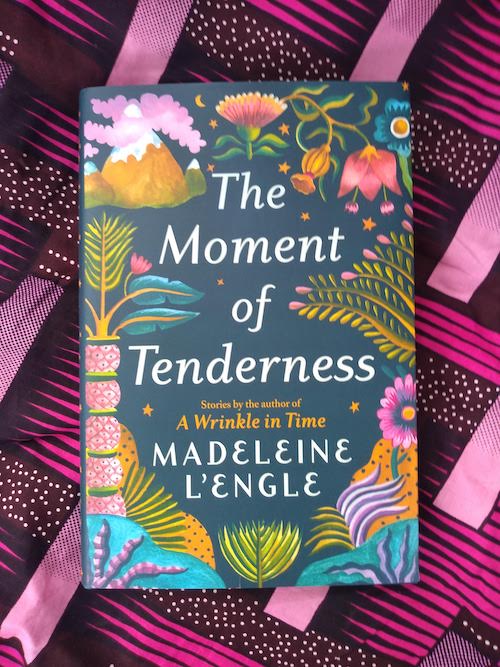
Yesterday I turned 41, and had the most excellent day. I’d asked for a gorgeous dress from Zuri and a new collection of unpublished short fiction by Madeleine L’Engle that was displayed in the window of the sci-fi/fantasy bookshop around the corner from my house, and the aesthetic effect of my gifts is so absolutely stunning, not to mention I’m wearing the dress right now and I love it, and the book is terrific—I am halfway through already.
The other remarkable thing about yesterday is that I went on the subway (and a bus) for the first time in months to pick up a car rental. (We usually use a carshare company which is much more convenient, but it’s still not reopened.) Transit was unremarkable really, the subway pretty empty, the bus not crowded either. And then I had a car and we all drove to the beach, and that the weather was blustery and we were wearing sweaters didn’t bother me in the slightest, because I’d rather be warm than roasting, and the clouds were so delightfully moody, the sky an ever-changing scene.
We had tea and scones, and kids got buried in sand, and they looked for cool rocks, and we collected sea glass, and chilled our bones by wading. Later we walked up to Queen Street, the restaurant patios on their first day of reopening, which meant we could get the lunch we wanted, though we ate it takeout in the park, and went back down to the beach to collect more sea glass and get ice cream cones, and it was the most extraordinary ordinary kind of day, and I feel so very lucky.






