November 14, 2025
The Seaside Cafe Metropolis, by Antanas Sileika

“How is it possible to live under tyranny? One must create a sort of fantasy world to shield at least part of oneself from the oppression. And under this shield, people can make alternative lives for themselves, real or imaginary ones.”
There is no seaside at the Seaside Cafe Metropolis, and there is no metropolis either, instead Khrushchev-era Vilnius, Lithuania, to which Toronto-born Emmett Argentine has followed his idealistic socialist mother and still can’t seem to be unravelled from her apron strings, never mind that he’s the one in the kitchen now, or at least overseeing the kitchen, and the rest of his restaurant, the Seaside Cafe Metropolis, which is indeed a cafe, if nothing else. And also the centre of Bohemian life in Vilnius, although there isn’t much competition for that distinction, and Antanas Sileika’s The Seaside Cafe Metropolis is a rich, funny, and quietly poignant chronicle of this most distinguished undistinguished establishment, where KGB agents listen from the basement to microphones installed at the tables so that nobody can ever say in so many words just how much the Soviet reality has failed to lived up to its promise, but also everybody knows, so nobody has to. And in the meantime, Argentine (not in fact from Argentina) contends with informants trolling for dissidents, securing a jazz band, the mediocrity of Soviet champagne, the dramas of his young patrons (the poet, the philosopher, the sculptor, the artist), a visit from Sartre and Simone de Beauvoir, protecting his employees from the terror of the state, and a one unforgettable chain of tragedies involving a lion, each chapter complete with a recipe (“Buckwheat Groats,” “Potato Kugel,” “Herring and Onion on Warm Potatoes”) rounding out this culinary experience, which turns out to be a celebration of community, solidarity, and the transformative power of imagination.
November 11, 2025
The Dad Rock that Made Me a Woman, by Niko Stratis

“Dad rock is a guiding principle more than a sound or a guitar tone. Dad rock is comfort in the darkest part of ourselves.”
Niko Stratis’s The Dad Rock that Made Me a Woman is a memoir and a mix tape, an essay collection that weaves music writing and autobiography to tell the story of how songs can be the lights that guide us home—or sometimes just one headlight, in the case of The Wallflowers. I only knew about a third of the songs that inspired the essays in this book, and wondered if I’d be that interested in the essays about songs that were unfamiliar to me, but it turned out that I burned through the whole book like a fire. Each essay is not only about the song that inspired it anyway, just like dad rock is not really about dads, except that sometimes it really as, as Stratis writes about growing up in the Yukon and learning the art of mix-tape making from her dad, along with the glass-making business that would eventually become her trade before she came out as trans in her 30s, and so much else in her life changed.
But before that, she was a kid growing up, watching the world around her to learn what men were, what women were, how gender was performed, how each understood the other. The gendered divisions of labour in the grocery store where she found her first job would eventually come to inform her understanding of all of this, plus her understanding of music as well: “It’s easy to poke fun or mock grocery store radio rock but to me and my heart it always feels like home. Songs live and breathe in stores like this, contain all the breadth of their emotions played through shitty speakers hidden away in the ceilings. The music that moves around bodies as they search for something, lost in thought, walking through the world…”
Like the best mix tapes, this collection is full of wonderful twists and surprises, along with the mainstays—such as what a line like “I want to change my clothes, my hair, my face” might mean to someone who is coming into an understanding of their gender identity. Other connections are less straightforward, and all the richer for it. This is a book with which to broaden your horizons, musical or otherwise.
November 6, 2025
Cover Story, by Mhairi McFarlane
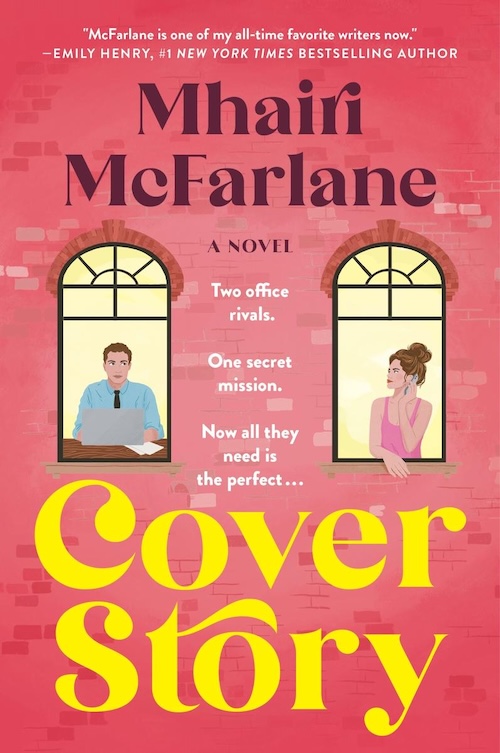
I don’t consider myself a romance reader per se, not because I don’t read romance (I do!), but because there is a culture to romance fandom that I just don’t understand, catalogues of tropes and subgenres, and a fervour along the lines of “Name five songs” demands, and I probably can’t. I don’t know. My most shameful secret is that I used to read romance novels and think that these books would be really great if they weren’t so formulaic, not understanding that for so many readers the formula is most of the draw. I get it now, even if I still don’t get it entirely, but still. And of all the romance writers in the land, Mhairi McFarlane is my favourite.
Her latest is Cover Story, about Bel, an investigative journalist in Manchester, UK, whose new intern turns out to be surprisingly handsome…and her age? But he’s snooty and arrogant, and she’s too busy following up on a lead that may out the city’s mayor as a predatory creep. Which Bel knows something about, having just fled a bad situation with a former colleague who refuses to leave her alone. She’s got things on her mind, but then so does the intern, Connor, who is not remotely as put together as he seems at first. But when he stumbles upon Bel in a bar on an undercover mission, the two are forced to pretend to overcome their mutual dislike and pretend to a couple (this is a trope! I know that much. Take THAT, romance aficionados!) and you’re not going to BELIEVE what happens next. Okay, just kidding, but you will be so thrilled when it does.
An ode to feisty fearless journalists and the taking down predatory powerful men? What is not to love? All this AND happily ever after.
November 4, 2025
John Candy: A Life in Comedy, by Paul Myers
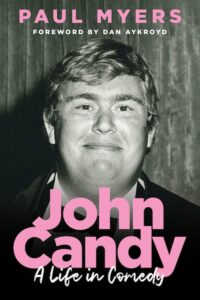
I read John Candy: A Life in Comedy, by Paul Myers, during my TPC readathon last Sunday (thanks to everyone who helped me reach my goal!) and it was just a pleasure to learn more about this actor whose work—from SCTV to The Great Outdoors to the Camp Candy Saturday morning cartoon, and more—was such a big part of my childhood, and whose generous heart seems to have been as important to his legacy as film and TV roles. Myers’ biography is a big picture view of a remarkable life that ended too soon, and its focus is primarily his creative projects and the partnerships that served as these projects’ foundations. Candy was a complicated man who faced his own demons, but Myers keeps such analysis at a distance and minds his own business about the details of Candy’s personal life—though most of these details are that Candy was a faithful husband and a loving father anyway, so it’s not like we’re missing a lot of dirt. I learned about aspects of Candy’s personality I’d not been aware of before—his strong sense of justice, how he’d stick up for others, that everyone who talks about him speaks to his excellent character, that beneath his cuddly comedian persona were some serious acting chops. His acting career from the ’70s to his death in 1993 was a whirlwind, full of highs and lows, an unstoppable machine that might have been part of Candy’s downfall—he suffered stress and anxiety, he worried about providing for his family, every crowning glory would deliver the challenge of surpassing or even just sustaining it. There was a never enoughness to Candy’s creative pursuits, a sense that he too was never enough, much of this coming from the trauma he carried from his own father’s early death and the pain of that experience that he never really was able to process. Time was something else that Candy felt he didn’t have enough of as well, and it would turn out he was right. Myers’ compelling biography, however, shows that he filled up every moment he had and then some, and gave this world his all. We’re lucky for it!
November 3, 2025
First Time, Long Time, by Amy Silverberg
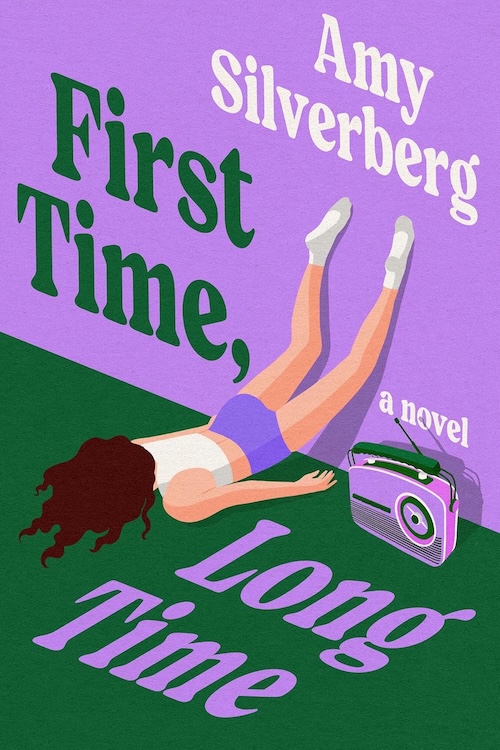
I picked up Amy Silverberg’s debut novel after Maris Kreizman called it “this year’s Margot’s Got Money Troubles, a book that poses big questions with both confidence and a breeziness and that will keep you wanting to turn the pages.” And First Time, Long Time, did not let down, though I wasn’t entire sure about it as I was reading, sure of what all the pieces would add up to. Because indeed this a novel comprised of fragments, just as protagonist Allison’s entire life is. She works various jobs—hosting book clubs for rich ladies, and teaching junior college among them—while living in a studio apartment in Los Angeles where she’s trying to launch her writing career and make a fresh start after the death of brother, which looms large in her mind, all the while her divorced parents continue to torment her in their own ways. And one night when she’s out at a bar, she meets a man she at first pretends not to know, but knows him, she does. He’s Reid Steinman, a famous radio DJ whose voice haunted her childhood from when her father was a fan. Inspired by Howard Stern, Steinman is a similarly complicated character who contains multitudes, as Allison learns for herself once they get together and begin a relationship, the daddy issues only multiplying once Allison also gets somewhat involved with Steinman’s 20-something daughter.
“Wait, did you just give away the whole plot?” asked a friend in my group chat where I’d been recommending this book, and I replied that I sure hadn’t. Silverberg, who is also a comedian, turns out to the a master of the set-up, one I’d spent the novel wondering about even as I was breezily turning the pages as Kreizman predicted. Where could this novel of twisted, broken and mirrored family ties, and unsatiated appetites possibly be leading, I’d wondered, but oh, just you wait. The climax is unforgettable, impeccable, perfect, and it leads to the most wonderful final paragraph I’ve encountered in any novel ever.
October 29, 2025
6:40 to Montreal, by Eva Jurczyk
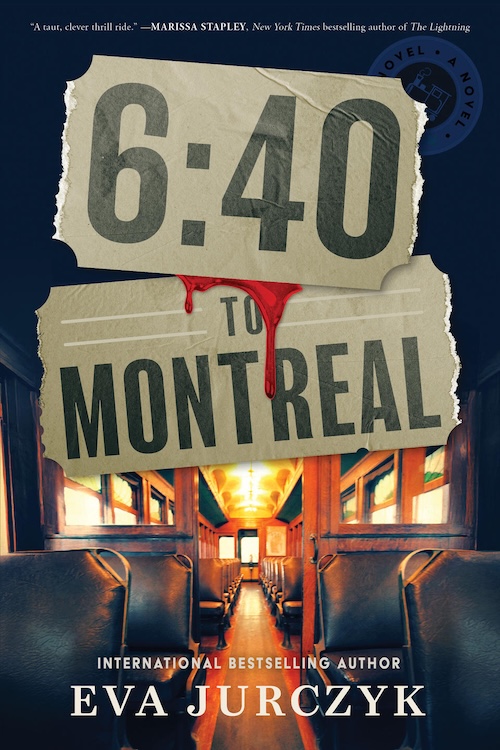
After establishing herself writing thrillers set in libraries (she’s a librarian by day!), Eva Jurczyk leaves the stacks behind in her third novel, 6:40 to Montreal, a locked room mystery set on a train that comes by its literary allusions honestly—the protagonist is a novelist called Agatha, a character is the first literary Dorcas I’ve encountered since reading The Affair at Styles, the setting of a stopped train during a terrible winter storm has Murder on the Orient Express as its precedent. But don’t think that all this means that Jurczyk’s novel is in any way derivative—instead, it’s a deeply layered work that manages to be dark and twisty, strange and absurd, gross and bloody, and also richly poignant and hilarious at the very same time.
The layers are peeled back over the course of a day that novelist Agatha St. John was supposed to spend sans WiFi on the train from Toronto to Montreal travelling in first class, a writing retreat on wheels that’s a gift from her husband who knows that she’s been struggling to write the follow-up to the runaway bestseller that changed her life. But when a terrible storm strands the train in the wilds outside Cobourg, Ontario, as the snow piles up, and then a passenger dies, Agatha and everybody else in first class—including an unflappable customer service agent, a man who appears to be a lumberjack, a doting mother and the young man who’s her son, and finally Cyanne, the wannabe yoga influencer obsessively stalking Agatha since her book came out who’s convinced that Agatha stole her life for fiction, which she’s not entirely wrong about—is confined to the car with the body and no phone signal, a situation that sends every one of them over the edge, and not all of them are going to get out alive.
And it turns out that Agatha too has something to hide, the plan for her arrival in Montreal not remotely what her husband had in mind, and also that her writer’s block has been courtesy of a harrowing diagnosis that’s sent an current of dread through every aspect of her—in particular her relationship to her young son. And what does it mean that she’s using the carnage around her now for creative fodder? Is Agatha actually the thief that Cyanne accuses her of being, stealing other people’s stories to claim as her own?
6:40 to Montreal is a rollicking ride, wild and a bit nuts, all the while weighted with real emotional heft, and sprinkled with the most wicked and wonderful humour (Blundstones fans, leave your feelings at the door). In a genre too wedded to templates and tropes, Jurczyk’s thrillers read as off-kilter in the very best way, and this latest is no exception.
October 24, 2025
The Longest Night, by Lauren Carter
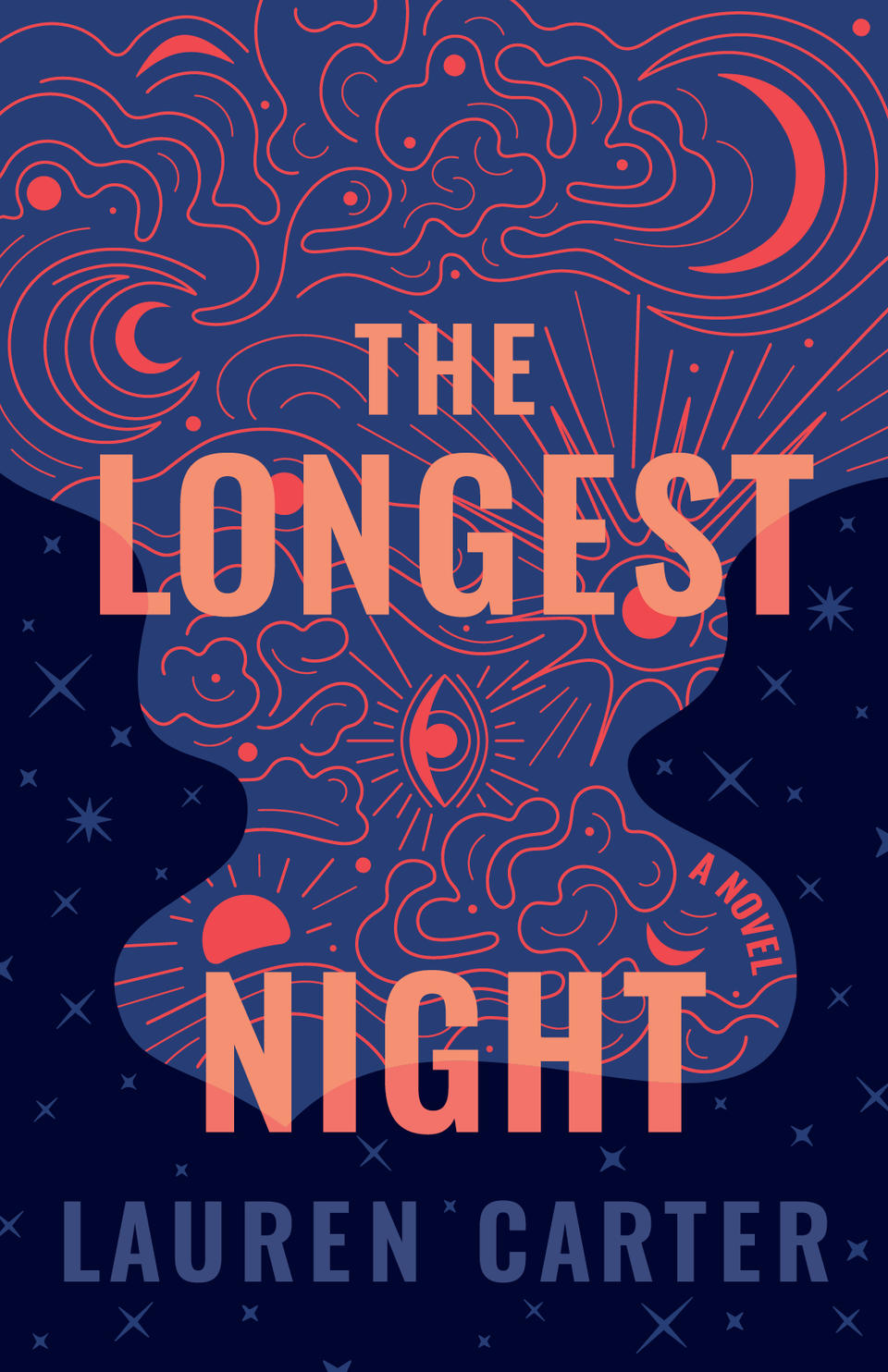
Okay, this book was totally bananas. And also made me very uncomfortable, and disoriented, and I had no idea what trajectory the narrative was going to take, which put me in league with the protagonist, but I also could not put it down, and it was all so fascinatingly mind-bending and satisfying that I think I actually loved it. Lauren Carter’s The Longest Night begins in Minnesota on the winter solstice in 2021 when Ash Hayes finds herself locked out in the frigid cold after escaping another one of her parents’ fights the night before her best friend’s father’s funeral. She’s left her phone inside, her frantic knocking brings no response, and she’s not dressed for the elements, frostbite already setting in, and so it seems like her only choice is to make it to a distant neighbour’s place, and the next thing she knows, she’s waking up in the strangest place.
It’s a house like something out of a time warp, no modern technology, the kitchen appliances are olive green. There are boxes and boxes of stuff, the windows are sealed, her clothes are gone, her hand is bandaged, and the only thing she can find to keep warm is fur stole still with its fox’s head. And it’s here where she meets Lucille and the doctor, the curious people who seem to be holding Ash hostage with especially nefarious intentions that won’t become clear for some time and will culminate in a horrifying act of sexual abuse.
When Ash manages to escape their clutches (although not for long—they’ll come and bring her back again) she discovers that the weird house and its inhabitants are only the beginning of bizarre happenings, for it seems that every time she ventures outside, it’s the morning of September 11, 2001, a day of great importance for the entire world, but for Ash’s life in particular—it’s a day that set events in motion that would lead not only to the death of the baby brother Ash never got to meet (she was born in June of the following year), but also to the death of Ash’s best friend’s father, Frank, who would take his own life after years of PTSD following tours of duty in Afghanistan and Iraq after 9-11. So is here her chance to alter fate and save the people she loves? But what about the laws of time travel, which Ash is aware of after years of watching TV with her grandmother, not to mention the beginning of her university studies in astrophysics? Should she adhere to those rules and try not to change future? How does the future still manage to seem so random and unknown even when you have an idea of what happens next? And how did Ash get herself into this time loop? Is there any way that she’ll be able to defeat the evil doctor with his omnipotent powers and get back to her time?
There is tough stuff in this novel, parts of the abuse which Ash is subject to that is difficult to read, and yet Carter balances this with the real love and warmth in her life from her best friend and her grandmother, and also with fascinating questions about fate and destiny, borrowing all kinds of fun time travel tropes from popular culture. (At one point, Lucille and the doctor show up at Ash’s parents’ place with a photo of her, asking, “Has anybody seen this girl?”) At a certain point I was fully invested, buckled in for the wild ride, and I just really hoped that Carter would find a satisfying way to resolve this bonkers story of time loops and quantum leaps—which she absolutely does.
October 22, 2025
Pick a Colour, by Souvankham Thammavongsa
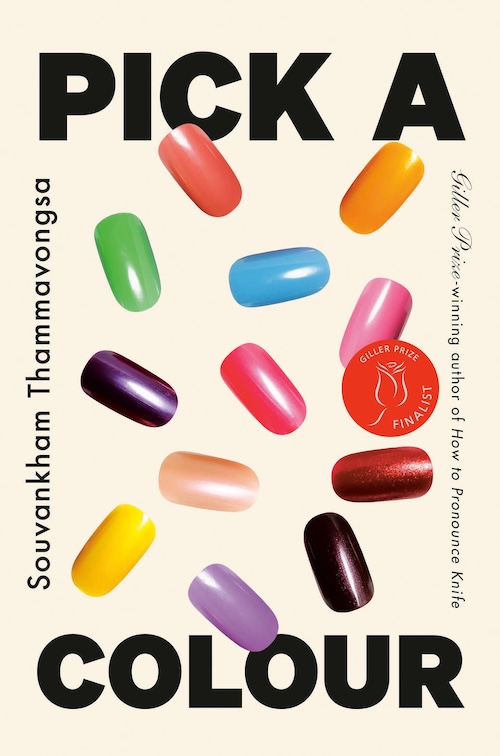
Souvankham Thammavongsa’s debut novel Pick a Colour—following four poetry collections, and her Giller-winning story collection How to Pronounce Knife—is a short book that packs a real punch, narrated by Ning, an ex-boxer, now proprietor of a nail salon at which all the staff wear the same name-tag, “Susan,” just so that the worker that clients ask for will always be available, and the clients never know the difference anyway. The novel takes place over the course of a workday, Ning treating the narrative as carefully as she engages with her clients, providing just enough extraneous detail, but nothing more than she needs to, her narrative voice guarded and spiky, careful and strategic. The sense that she’s a fighter remains long after she’s put her boxing gloves away, but now she’s fighting to run her business in a tough and competitive environment, where customers need to be brought in and turned over, and the polish has to be watered down in order to make it last.
Pick a Colour is written in English, but there are only a few instances of spoken English in the book, uttered by clients. Otherwise, the dialogue in the novel, while shown in English, actually takes place in Bing’s own language (which I presume to be Lao, though Thammavongsa does not specify), the nail salon’s clients as oblivious to the context as they are to everything else going on around them—although there are a few instances where they nearly twig to the fact that they’re being made fun of, but Bing and her staff will never admit it (and let’s face it, they have it coming).
Pick a Colour is a hardheaded narrative of tough stuff, underlined by fierce love, humour, kindness, and humanity. One day in a nail salon, as crafted by Thammavongsa, is also a meditation on community, beauty, gender, class, and care.
October 21, 2025
The Witch of Willow Sound, by Vanessa F. Penney
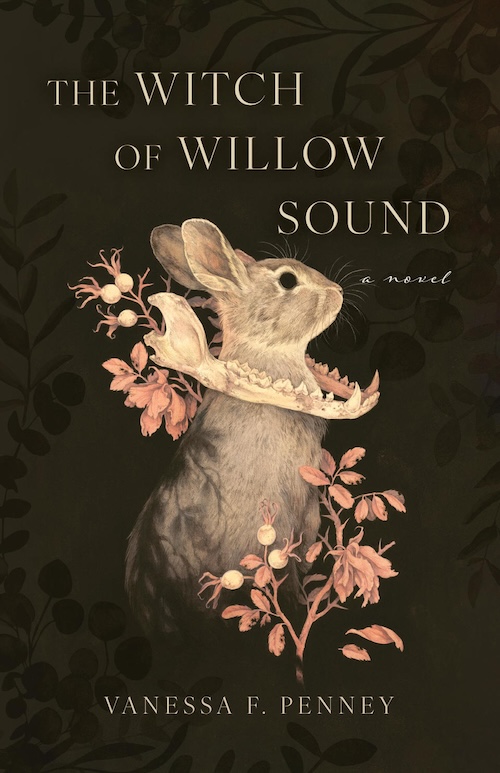
It was that cover that won me over first, and then it turned up on the inaugural CIBA Booksellers’ List among other stellar selections, and so when I finally got my hands on a copy of The Witch of Willow Sound, by Vanessa F. Penney, at Word in the Street in Toronto, I had to buy it. Even though stories of magic and witches aren’t always my speed, but there was something about Penney’s narrative—plain spoken, understated, somehow embedded in the actual world—that held me fast even when wild things were happening. And it’s the perfect book for October, Chapter 1 opening with Phaedra “Fade” Luck waking up from a slumber beneath a tombstone, “frost in my hair and bony little fingers digging in my hoodie pocket.” (The fingers belong to a skinny raccoon who is after her half-finished bag of ketchup chips.) She’s mostly estranged from her mother, but it turns out there’s no one else her mother can call when Fade’s Aunt Madeleine is reported missing, Fade tasked with travelling to Aunt Madeleine’s dreamy little cottage built on a cliff above the Northumberland Strait in Nova Scotia where she hasn’t been since her mother and aunt broke off contact more than 20 years before. But when Fade arrives, nothing is the way it’s supposed to be—the house is decaying, the gardens are dead, there’s almost no sign of Aunt Madeleine, and officials from the neighbouring town of Grand Tea (a somewhat nefarious place whose inhabitants live under the constant thread of being crushed by a mountain) seem far too up in Aunt Madeleine’s business. Meanwhile, a hurricane is approaching that threatens to flatten Aunt Madeleine’s little house for good and eliminate any chance that Fade will ever be able to figure out what’s happened to her once beloved aunt. But with her own doggedness (and useful detective skills), plus the help of a trusted archivist (every book needs one!) Fade might just be able to learn the true story of her family’s history—if she’s brave enough to face it! This fun and twisty story is also an ode to the wisdom of nature and the women who carry it, as well as reminder of the importance of balance and the way that histories will haunt us unless we are honest about what our stories really are.
October 20, 2025
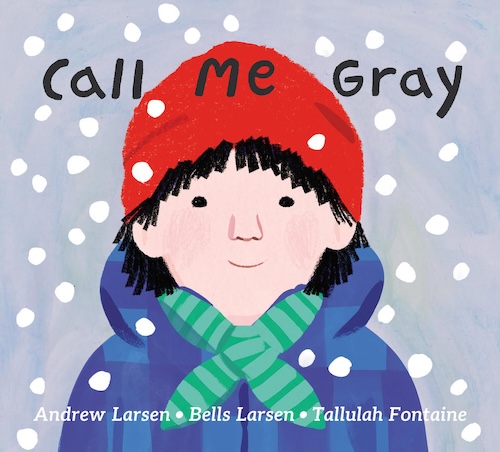
Call Me Gray, by Andrew Larsen, Bells Larsen, and Tallulah Fontaine
Some things are hard to intuit, difficult to understand if you only know about it in theory, instead of in practice, or if you only learn about it via, say, the Harry Potter lady’s unhinged tweets. As somebody whose gender has usually fit comfortably, I actually can imagine a very different world from the one I live in—where I happen to be surrounded by a wide range of gender expression and encountering trans people is an unremarkable everyday occurrence—where transness might be tricky to get my head around. And the reason why it’s not tricky is because I know people whose lives and stories are what we’re talking about when we’re talking about those things that other people like to yell about on Twitter, and let me tell you that this kind of knowledge—created of human connection and understanding—makes all the difference in the world.
And this kind of bridge between experiences serves as the foundation of CALL ME GRAY, the new picture book by my friend Andrew Larsen and his son, the musician Bells Larsen, illustrated by Tallulah Fontaine. It’s the story of a parent and child partaking in their annual tradition of constructing a backyard ice rink, the same way they do every year, continuity and tradition being oh so important—except that one thing has changed. Being a boy, the child explains to their dad, just doesn’t feel right. Which the father doesn’t understand at first—when asked if he ever feels mixed up about who he is, the father answers, ‘”I feel mixed up about a lot of things… I think most people do.”‘ It takes some time for him to actually catch on, as the two work together to build their rink.
Later the child tries again, “‘My name feels like an itchy sweater,’ I tell him. ‘I want to change it… [W]ill you call me Gray?'” The father answers, “‘I’ll try.'” And while the father doesn’t get it right immediately, he gets there eventually, the two completing the rink with their usual rituals of the first skate and hot chocolate, all those things that don’t have to change just because other things do.
What gifts the child in this book offers their parent—wisdom, trust, and the opportunity to receive their child’s essential self with abject love. Humanity is at the core of all of this, and CALL ME GRAY provides some hints for how we ought to show up for each other, whether the other person in question is our own child or somebody else’s.