June 7, 2012
Never Mind the Patriarchy Part 2: Myrl Coulter and Helen Potrebenko
 Last week, I read Myrl Coulter’s The House With the Broken Two: A Birthmother Remembers, a memoir of Coulter’s experiences growing up in Winnipeg and being forced to give up her son for adoption in 1968 when she finds herself pregnant. Like Madeline Sonik’s Afflictions and Departures, which I enjoyed so much, Coulter shows “what happens when individual lives collide with their particular historical moments.” Unmarried and a teenager, Coulter was sent away from her family and community to live at one of those ubiquitous maternity homes while she waited to have her baby. As an unwed mother, she was treated by disdain at the hospital where her son was born, and expected to move on with her life after the fact as if the story had never happened.
Unsurprisingly, this moving on proves difficult, and the memoir goes on to show how Coulter carried her experience inside her for so many years in silence. Looking back, she questions how her parents could have let it happen, could have sent her away, could have let her give away her son. Eventually, years and lifetimes later, she and her son are reunited, and she’s forthright about the complicated nature of their relationship, and also about her anger at Canada’s closed adoption system that manipulated and wronged so many young woman just like her.
She writes, “…the feminist version of me… was born on a dark night in 1968 when I gave birth to my first child alone in a big crowded hospital. I knew at last that my feminism stems from the invisibility society demanded for unwed mothers back then; I knew that my sense of agency was born in a social order that dictated no one should stop to offer comfort to a frightened eighteen-year-old girl in labour simply because she wasn’t married… I knew.. that being a feminist and being a mother are inevitably connected, like fetus and placenta.” With excellent writing and perfect detail, Coulter paints a rather stark picture of life “back then”, though all of us who have ever been pregnant by mistake are well-aware that the experience carries a devastating stigma to this day.
 There was no reason why I picked up Helen Potrebenko’s TAXI! to read next, except that both books had come in at the library at the very same time. But, as in my first Never Mind the Patriarchy experience in March, random books brought forth remarkable connections. Once again, I was reading a book that Anakana Schofield had recommended, this time TAXI!, which Schofield calls her “favourite Vancouver novel” (and you can believe it). It’s the story of Shannon, a female taxi driver in Vancouver during 1971 and 1972. The episodic novel follows Shannon as she philosophizes and longs for revolution, driving the streets of Vancouver with various down-and-outs and scumbags throwing up in her backseat.
Says Shannon, “There are so so few choices for women. They’ve got you in a cage. If you’re bad they tighten the bars around you so you’ve got no space at all. They they give you back the original cage and call that freedom.”
It’s a funny book, but timeless in a way that is tragic. Protesters erect tent cities in local parks, unions are striking, there is social unrest, not enough jobs for young people, and there’s a war going on. “The first time Shannon drove cab drunk out of her mind was the Christmas after the War Measures Act.” TAXI! could have been written yesterday, which is a mark for Helen Potrebenko, but bad luck for the rest of us. Shannon herself would probably not be so surprised, having never suffered any illusions about progress.
June 4, 2012
The Marriage Plot by Jeffrey Eugenides
 “Against Domesticated Fiction, or The Need for Re-Enchantment” was an essay by Patricia Robertson in Canadian Notes & Queries 84, in which Robertson decried contemporary writers in general for their failure to imagine the world beyond the individual, and the failure of contemporary writing to be anything but tedious. Hers was an inspiring argument, even stirring, and yet… I’m not yet tired of the kind of novel she’s maligning. Domesticated fiction remains what I most want to read, and I’m not nearly finished with it yet. And I don’t even have a good argument as to why this should be the case, except that I think that with the reader taking an imaginative leap, domesticated fiction can do as well as the fantastic, or any other kind of literature, to “incorporate some of the wildness, the strangeness, the mystery of the world around us.” To show that we are indeed “participants in a vast web of being.”
And all this is preamble to the fact that tonight is the night Jeffrey Eugenides has been freaking out about for ages, the night I give my two cents on his latest novel The Marriage Plot (which my husband gave me for Christmas, I’ll have you know. How domesticated is that?). My Jeffrey Eugenides backgrounder is this: I think I tried to read The Virgin Suicides once, but couldn’t; I thought the movie was really weird; I liked Middlesex a lot, except for the part where Cal joined the circus, because in those parts, the novel wasn’t domesticated anymore. All of which suggests that I come to The Marriage Plot with a lot less Eugenides-related baggage than the average avid reader. But I come to it hesitantly all the same because I’d heard reports of reader dissatisfaction, because I’m allergic to hype, and because the novel sports all these allusions to literary theory and David Foster Wallace, and I know as much about one as the other, which is nothing.
But then I started to read it, the first line: “To start with, look at all the books.” And then Eugenides describes the contents of Madeleine Hanna’s bookshelves, and then it was clear that he’d written this novel just for me. It begins the morning of Madeleine’s graduation as she’s still dealing with fallout from the breakup of her relationship with Leonard and runs into an old friend Mitchell who’s sweet on her and who only makes her angry. The plot swoops back and forth from past to present, and it’s true that here is one of these books where everything that happens has happened already, but how I admire Eugenides’ command of chronology and all the details. Though the details themselves are not the point, instead the plot is. On one level (and there are several) the novel is an exercise as to whether 19th century romance/marriage plots can work in a 20th century story, and I come away from the book assured that they always have.
The Marriage Plot is social satire, academic satire, a bookish orgy, and the most beautiful celebration of Ludwig Bemelmans’ Madeline that I’ve ever come across in a 400 page novel written by a man. Yes, there were times when I skimmed, allusions that went over my head, and did read the book a little wide-eyed, a bit too eager to attribute significance at every turn. That the 1982 “Cosby-sweater” reference could not be an anachronism surely, and that Eugenides, with some kind of ironic gesture, had planted it there for a reason. And even if he hadn’t, it was planted all the same, and the text was a different place for it.
Eugenides shows that there is no torture quite like life in one’s early-twenties, regardless of the century. Here is the story of the most world’s most scalene love triangle, and the angles mean more than the love does. Manic-depressive Leonard with the tortured background who captivates the romantic Madeleine in a semiotics class, and Mitchell who is convinced that Madeleine is meant to be his wife but she’s having none of it (except for drunken gropings here and there). The first two become inextricably tangled and love doesn’t have so much to do with it. Meanwhile Mitchell is off on his grand tour, culminating in an experience volunteering at Mother Theresa’s mission in Calcutta, and he’s thinking maybe he’s a religious mystic but suspecting that this isn’t the case. He’s become obsessed with The Jesus Prayer and insists that Franny Glass has got nothing to do with it. All the time that Leonard and Madeleine are cracking up and up, and then she and Mitchell meet up again at a party a year after their graduation…
And that ending, so perfect. I’m not going to spoil it for you, but Reader, she says, “Yes.”
May 31, 2012
Full Frontal T.O. by Patrick Cummins and Shawn Micallef
 Now here is a book that our entire family can love, though not immediately, because after I picked it up at the bookstore last Thursday evening, I read it all through dinner and didn’t talk to anybody. Which was kind of annoying, but when I finally shared the book, they understood. Even the three year old, who found the pictures fascinating and absorbing, context not really being the point of their appeal. Full Frontal T.O.: Exploring Toronto’s Architectural Vernacular collects a series of photos by Patrick Cummins who’s been documenting Toronto’s street-scapes since the 1980s. Context is provided by way of Shawn Micallef’s pithy text. The photos show how the same city blocks have changed over time in some ways, and remained the same in others– the gist of the approach is shown on the Full Frontal blog.
The black and white images of single building or blocks changing over time is an urban time machine, showing patterns of decay and gentrification, or stagnation, in other cases. Interspersed throughout the book are full colour spreads of buildings grouped by theme– dead stores, semi-detached houses, gothic cottages, DIY cottages (which is my favourite– these buildings fascinate me), variety stores. And the effect of all of this is make me realize how little I actually see of the city around me. We walk its streets as if we’re sleeping, and then turn to a book like this to find so much that is familiar, so much that is in my neighbourhood, so many buildings that I’ve wondered about (like this one!) but it never occurred me to take curiosity further than that.
Every time I’ve opened this book, I’ve discovered something new– my ex-boyfriend’s old house, places right around the corner, blocks of streets I used to walk down daily, and lines like, “It’s good to stick your head out of a window sometimes because, apart from looking out of, that’s what they’re made for,” a critique of Toronto’s ubiquitous three-panelled windows. And in this way Full Frontal T.O. is a simulacrum of the city itself– you never encounter it the same way twice.
May 28, 2012
All the Voices Cry by Alice Petersen
 Summer is here, at least in spirit, and the cover of Alice Petersen’s short story collection All the Voices Cry meant that I had to read the book at once. (Book has been reviewed well already, and been long listed for the Frank O’Connor International Short Story Award.) Though these are not stories of lazy, hazy days; the fish ain’t jumping and the cotton’s not high. Petersen’s are most often stories of summer places out of season, or of people out of place in those summer places. And the places themselves– rural Quebec, Petersen’s native New Zealand, even Tahiti– frame characters’ expectations in terms of idyll, pastoral, and usually (as is the way) experience comes up short.
Alice Petersen knows her way around a good sentence: “We knew he drank at night on the boathouse steps; the more beer he drank, the more bottles there were to get a refund on.” This from the first story, whose title “After Summer” is a good way to frame the whole book. A young man is looking back at summer memories and the darker shadows behind them, contemplating his single father’s loneliness, and how the notion of family got away from them. In “Among the Trees”, a widow contemplates the life she’d built around her artist husband which manifested in the artists colony they built together on her family’s property. This colony is a centre the collection revolves around, many of its stories loosely linked to its characters and geography. We see the widow and her husband from the outside in “All the Voices Cry”, in which Freya, another widow, a neighbour and a stranger, walks through the surrounding woods in winter and contemplates her “sustaining illusions”.
We meet Freya again in “To Catch a Fish”, avoiding entering her cabin where her new lover is cooking dinner. And fish aren’t jumping indeed, to great consequence, we see, when Freya makes the choice to choose herself and her solitude, the ground she stands on. In “The Frog”, with subtle gestures, a single mother considers what ties her to her life and beyond it, and how people without children move through life like amphibians (which is something to wrap one’s head around, just what exactly Petersen means by this, and the process of engagement steeps the reader further in the story).
The last six stories in the collection are different from the others, removed from the Quebec landscape we’ve been planted in thus far. Also, these stories are more storied, artificial, set-up than the others (which is not a criticism). Though I could get this impression from these stories’ settings’ unreality in my own mind. They take place in New Zealand gardens, on the International Date Line, on Tahitian cliff sides, foggy beaches. A few of them also have a mystical nature, and maybe that’s where the airiness comes from. A man enacts futile attempts to defy a psychic’s predictions, a woman dares to abandon her vexing husband in the middle of a tropical nowhere, a couple attempts to ignore potentially devastating news by going through the motions of sight-seeing, characters’ own lonely histories bubble up inside them.
None of Petersen’s characters is quite where they’re meant to be, where they want to be, and they see themselves in new lights against the unfamiliar contexts. The book is slim, the stories are subtle and quiet, and though their impact is not always immediate, All the Voices Cry is a collection you might want to meditate on, its pages getting dog-earned and stained with coffee rings as the summer wears on.
UPDATE: Speaking of quiet depth…
May 22, 2012
Night Street by Kristel Thornell
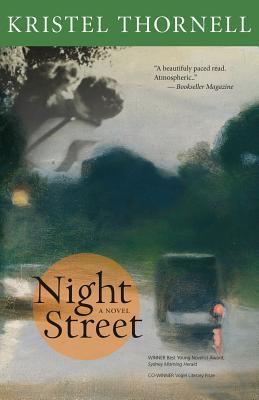 I often wonder about the nature of the fictionalized biography, the kind of which Kristel Thornell has created in her first novel Night Street, which is based on the life of Australian artist Clarice Beckett. Though I realize any biography contains its own fair share of fiction, the blatant fictionalization makes me uneasy, it makes me seize on something that isn’t so and could lead to me going around in public spouting lies quite unaware. And then I wonder about my own wonderings, if they have any basis in a novel whose fiction is inspired by a real-life person I’ve never heard of. Do I put my wonderings away then? Does it even matter what is fact and fiction in a book that wholly creates everything I’ve ever known about this artist called Clarice Beckett? It’s kind of interesting to consider. Even more so when I think that this book was marketed to me as being an Australian literary award-winner, the Vogel Literary Award no less. Which I’ve never heard of either, but I take it as authority, and isn’t it funny how we do that? And I like it actually that I come to this book with no preconceptions at all.
I wanted to read Night Street because I’ve been dying for a novel, and also because we don’t get to read enough Australian writers in Canada (and when we do, I generally appreciate them. At the moment I’m thinking of Helen Garner). Thornell has apparently chosen to fictionalize most elements of Clarice Beckett’s life because Beckett was elusive by nature anyway, not terribly well known, and because Thornell wanted to blur the edges of her work as Beckett did with her own paintings, one of which is displayed on the novel’s front cover.
And when I read this book, I kept thinking of Katherine Mansfield, mostly because I read so little literature from Australia that New Zealand’s Mansfield is all I can come up with, also because Thornell’s treatment of Beckett’s life reminded me of Janice Kulyk Keefer’s Thieves, and because both Mansfield and Beckett came to tuberculotic fates, though that and approximate geography are about all they have in common.
Thornell’s Clarice Beckett (and I still have to make the distinction! I just can’t let it go) was not a woman of tumultuous passions, being wholly devoted to her art from a very young age. Painting was it from the very beginning, and so the decision to live at a remove from the rest of the world was never a difficult one to make. Her family’s reservations about her choices don’t bother her, she racks up rejected proposals without compunction, she builds a portable painter’s studio and wheels it out onto the beach and paints and paints as the rain falls down (which, as you might see, leads to the fate which befalls her). She has a couple of love affairs, but even these fail to permeate her focus, and her feelings towards her lovers are more aesthetic than erotic.
So it’s not so much Beckett’s edges that are blurry in this novel, but Beckett herself, whose remove from the world is also a remove from the book. She’s an unknown quantity. There is no friction driving the novel forward, which at times is frustrating, and yet the singularity of Beckett’s vision is the novel’s chief appeal. Everything she sees is in terms of tone, of light and colour. “Tone came in first. Apt and beautiful, the word tone for describing the stages of intensity of light and shade, gradations in luminosity being indeed every bit as subtle and sliding at the moods of a voice. ” Every person she speaks to, she’s peering past them, over their shoulders because landscape is the point always. “A distance off, the child, until then seated, unfolded, elongated and became kinetic: a small figure running away from the beach. Clarice noticed in herself a growing interest in the human form; perhaps physical love did that to you.”
A problem I often have with books about art is that I find myself unable to see what the text is describing, but this was not the case with Night Street. Thornell brings her images to life on the page, and uses language in way that is just as intriguing (“Silence flattered him like a high-class suit, a generously positioned lamp”). And it was refreshing to read a book that doesn’t rely on the same plot-points to turn on– pull between self and society, love or art, home or the world. For Thornell’s Clarice Beckett, it was only about art always, and Thornell has created a convincing portrayal of a woman so absorbed.
May 21, 2012
Show Me a Story: Why Picture Books Matter
 Last Sunday, I had a the rare pleasure of walking into a bookshop, browsing awhile, and buying a book I had only just discovered. That book was Leonard Marcus’s Show Me a Story: Why Picture Books Matter, 21 Conversations with 21 of the World’s Most Celebrated Illustrators, which I bought not just for its cover art (a Mo Willems book for me!), but because the illustrators interviewed included Quentin Blake, John Burningham, Eric Carle, James Marshall, Robert McCloskey, Lois Ehlert, Helen Oxenbury, Maurice Sendak, Peter Sis, Rosemary Well, William Steig, and Willems himself, among others. The book was wonderful. I was amazed to learn that Oxenbury and Burningham are married, that Tana Hoban and Russell were siblings, Steig was incredibly grumpy, Blake said he could only draw automobiles that were falling apart, that George and Martha were inspired by Frog and Toad (but of course!). That Sendak was a mentor to so many others, and that picture book illustration was such an old boys’ network. I loved learning about how many illustrators had a background in graphic design, reading their ideas about fonts in picture books, how much of a role technology had– being able to do books in full colour changed everything. And now it’s a big deal when an illustrator wants to hold back a bit, do some pages in black and white. I also love that as I’m still a picture book novice, I can read a book like this and discover so many new authors and illustrators– the book is in alphabetical order, and first up was Mitsumasa Anno with whom I fell in love as soon as I hit the library.
“One of the most important things is to laugh with your children and to let them see you think they’re being funny when they’re trying to be. It gives children enormous pleasure to think they’ve made you laugh. They feel they’ve reached one of the nicest parts of you.” –Helen Oxenbury
May 16, 2012
People Who Disappear by Alex Leslie
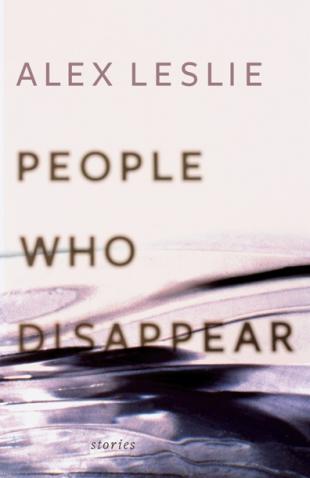 Twice last week I tried to read People Who Disappear, the short story collection by Alex Leslie, but couldn’t get past page 20. Not because there was anything wrong with the book, but instead because it seemed a bit heavy, and I suspected it would require an emotional investment I might not be ready to give. The third time I was ready though, it finally took, and the first story “The Coast is a Road” was so absolutely perfect. I read the ending over and over in disbelief that the story had led where it had. The story of of two young women, one a free-spirited journalist travelling in search of stories and the other her lover who trails along after her: “A tin can rattling, small tin rabbit jumping, tied to your bumper.” Together they travel through northern British Columbia, skirting disaster at every turn, tracing the limits of their commitment to one another, and the story is fabulously full of plot, jarring images– the horses! the horses! Seriously, have you read it yet?
This is a story collection populated with people who do disappear, with fractured lines, with miscommunication, gaps and questions. Closest family ties tend to be with strange uncles, or dubious fathers. Lovers are not wholly known to one another, test each other’s limits. The roads these characters travel are off often the map, literally and metaphorically: “There were so many, a person could spend their life driving around and around these invisible roads.”
Something I’ve noticed recently in reading reviews of short story collections is that very rarely do reviewers reach any consensus about what stories are the strongest or weakest of the bunch. And I’m beginning to think that as subjective is everything, the stories in a collection are in particular. The best stories here are the ones I liked the best, like “The Coast is a Road”, and also “Face”, its trap of nostalgia. My husband is not Canadian so he did not get it at all when I read to him the line that evoked my entire childhood:
“He went down in the pits again, taking his best friend, who played hockey by himself against his garage door every night, sending hollow metallic bursts down the block, so everyone knew at the same moment when his sweat got its first chill and he went inside; then we knew it was night.”
And of course, check out this writing. Clearly, this story’s appeal is its language as much as the personal connections I’ve made with its plot details.
In “Like-Mind”, a woman agrees to help an old friend whom she knows is unstable to drive around Vancouver picking up freecycle items for his new apartment, and she knows that becoming involved with him again is ill-advised, but he has no one else. It is inevitable that their history will be repeated. “People Who Are Michael” is a series of descriptions of videos uploaded to the Youtube channel of a Bieber-ish pop sensation who’s cruising for a crash. “Wire Boy” and “The Bodies of Others” are stories of childhood outcasts, and a young narrator is also at the heart of “Long Way From Nowhere”, the story of a girl who rides the invisible roads with a man who tells authorities he’s her father, but clearly they both have something to hide. She finally escapes him to run away to a community of environmental activists who live in houses in the trees, and this story is like the collection’s first story– as substantial as a novel and as surprising in its turns. I also enjoyed “Two-Handed Things” about two women whose relationship’s cracks are exposed but unremarked upon when one fractures her arm and becomes wholly dependent on the other.
Leslie’s stories are firmly rooted in their place, coastal and northern British Columbia with its ferry boats, extreme weather, and Vancouverosity. To those for whom these places and things are familiar, I imagine this book might feel a bit like home. And to people like me for whom it isn’t, the sense of it all is evoked just the same. It’s a really wonderful collection.
May 13, 2012
Bad Mommy by Willow Yamauchi
 The world already having had its fair share of bad mothers, bad mothers, and bad mothers, I’d wondered if Willow Yamauchi’s new book Bad Mommy was a necessary addition to the canon. But the book turned out to be quite different from what I’d supposed it was, not another tell-too-much so-bad-I’m-awesome mother memoir, but instead a satirical guide to motherhood, the perfect antidote to any baby book I ever read, particularly in the early days.
And best intentions do start early, don’t they? I spent my pregnancy reading Ina May’s Guide to Childbirth and Pam England’s Birthing From Within, eventually become a compulsive parenting expert, found becoming a mother akin to the universe exploding, and clung to its pieces with my few certainties: cloth diapers, front-facing strollers, not to feed baby to sleep, to breastfeed lying down at night, black and white mobiles, etc. At first there were the things I “knew”, and eventually, with enough confidence and experience, there were actual things that I really learned, though it baffled me how inapplicable my advice seemed to be to other people’s experiences. Why weren’t they taking my certainties on board? And even more baffling– why did I care so much what other people were doing? Why did other people’s (ill-advised, I thought) breastfeeding holds make me crazy? Why did nothing terrify me more than seeing other mothers making different choices from mine, I wondered? And of course, I see now that I was clinging to order in a chaotic world, imagining there was one path to good motherhood and that I was walking on it, because the alternative (which was the reality) was too much consider–that there was no path, and that all of us were all just stumbling blindly, making our own way as best we could.
I’m not sure I could have read Bad Mommy back when I was still clinging, when it was so important to me to be certain. Yamauchi’s irreverence is without restraint, nothing is sacred, and anyone and everyone is a target– she’s fair and balanced in that respect. Let’s face it, she tells us in her introduction, you are a bad mommy. You may be trying to be good, but you’re still bad, or at least somebody is going to tell you so. And in the next 40 chapters, she proceeds to tell us how: you will always be too young or too old to be a good mommy; no matter how you time your pregnancies, you’ll always get it wrong. Even if you remember the folic-acid, there will still be plenty of opportunities to fail your child’s development in utero– sushi, cheese, paint and kitty litter to choose from! You’ll gain too much weight, or not enough. You’ll deliver your baby in an idyllic water birth, and have the baby get stuck in the birth canal, or you will give birth in a hospital with painkillers which will result in an apgar score of less than perfect.
Everything you do as a mother, says Yamauchi, will be wrong, so you might as well have a sense of humour about it. Oh, and the breastfeeding– night nursing leads to tooth decay! Women who pack in breastfeeding are failures! Mommies who breastfeed into toddlerhood are perverts! The chapter on circumcision was my very favourite, the entirety of which I read aloud to my husband whilst laughing hysterically– “A common reason given for circumcision is that men want their little boys to ‘look like them’ down there. This is such a bizarre concept. First of all, what kind of parent and child compare their genitals for familial similarities?…” Though, she writes, don’t circumcise and your son will end up with STDs, Bad Mommy.
And so it goes, through disposable diapers and cloth, how to put your baby down to sleep (and the standards for this, Yamauchi notes, change every ten minutes, along with car seat requirements, and when and how to start solid foods), to vaccinate or not to, to work or stay at home. The point is to go confident in your choices, says Yamauchi, because you’ll only ever be wrong in them.
And there are so many ways to be wrong– I related in particular to the “Crafty Bad Mommy” chapter, as our craft supplies haul is mainly stubby crayons. You can be the Bad Mommy who sends her kid to school sick, or the Bad Mommy with muchhausen by proxy. You’ll have fat kids, or anorexic ones, you’ll look like a frump or a mutton-dressed-as-lamb, and onwards and onwards, so it goes, until you start to see that Yamauchi is joking but she also isn’t.
The book ran a bit too long to my tastes, and I found Yamauchi’s chapters more interesting than the case-studies that followed each of them (though even these had their moments), but in general, Bad Mommy is a great counter to so much of the faux-earnest or overtly polemic conversations about parenting going on all around us these days. Though everything is fair-game in the book, its point is not to abandon your principles as a mother (and for the record, I am still a cloth diaper fanatic. I just shut up more than I used to. Not that anyone actually wears diapers in our house anymore [!!!]), but to embrace them.
To be Willow Yamauchi’s bad mommy is simply to be the mother you are, but with gusto.
May 8, 2012
Almost There by Curtis Gillespie
 “Happy families are not the most fertile writerly soil, for as Tolstoy so famously wrote in Anna Karenina, ‘Happy families are all alike; every unhappy family is unhappy in its own way.’ But if I can be so presumptuous as to reframe Tolstoy’s words, I would say that every happy family will vacation in its own unique way, whereas unhappy families are all alike on vacation.” –Curtis Gillespie
There was the trip to the east coast when I was ten, when the floor of the backseat was so packed with toys that we could only sit cross-legged. Memories include the jellyfish sting in New Brunswick, being buried in the sand in Ingonish, lobster dinners, the Sandspit Amusement Park in Cavendish, too much mini-golf, and winning a free supper someplace with my rendition of “Free to be you and me.” The west coast was six years later, and I remember less because by then I was a sullen teen scouring small towns for payphones from which I could call my boyfriend, but I remember Banff with my sister (who would, a decade later, decide to call the place home), disgusting roadside bathrooms, swimming in the freezing cold Alice Lake, how beautiful was Victoria, and goats on a rooftop on Nanaimo. And before and after and in between, there were summers at the cottage, drives to Florida, boat rides through the Thousand Islands, road trips all over Ontario, and unfortunate March Break when money was a bit short and we resorted to making Kitchener our destination.
So yes, I agreed with Gillespie’s thesis entirely in Almost There: The Family Vacation Then and Now that our family vacations are the means by we get a sense of who we are as a family, of what “family” is. He writes, “The family vacation is a way to bank family memories, to colour in what might otherwise be broad outlines.” His book is a mix of those memories, of his childhood family vacations and vacations now with a family of his own, with broader historical and sociological research in regards to the family vacation. Which, academically speaking, remains an unexamined field of study– the family vacation itself is a very modern institution.
It begins, Gillespie tells us, with the advent of leisure time, to paid holidays and weekends. And, he notes in his first chapter, with the widespread use of the automobile that suddenly made “getting there” not only an attainable goal, but also part of the adventure. From the history of the road trip, he moves on to camping and cottaging: “Returning to a favoured place, owned or not, is a key and appealing aspect of the cottage ritual, and therefore becomes a central part of our memory making… The ritualized and repetitive nature of such holidays becomes a measuring tool…” His observations regarding camping– that we’re looking for a manufactured form of adventure– become even more pertinent in his chapter on cruises, then Disney destinations, and RVs. (Gillespie writes, “But it seems to me that if the point of having a luxury RV is to take your home with you, then why don’t you just stay home?”). And what is the future of the vacation? Gillespie fears that our children are being entertained to death, losing the vital skill of being able to pass hours on a car journey whilst staring at the window, which is the kind of experience that opens the mind up so wide (and what vacations are about in the first place).
Gillespie’s anecdotes throughout the book are funny, the first and final ones horrifyingly so. His parents and five siblings took advantage of their station wagon’s jump-seats and partook in an epic drive from Alberta to Mexico City whose highlights are the highlight of this book also. Later on, the family got serious and bought themselves a converted bus, which they eventually decided to sell due to its dubious propane stove. He recounts also a harrowing trip down a hill in Australia behind the wheel of an RV, his terrified family behind him, also how they all barely survived a hot air balloon ride, and the time his daughter tried to take off his pants at a public reading during the summer they spent in France.
It must have broken Gillespie’s heart to discover that the very best title ever for a book like this was already taken– Are We There Yet? was published in 2008. And though he demonstrates that he’s familiar with that book and others in the same field, even though his research in general was impressively extensive, I came away with a sense that his material was still unprocessed. The anecdotes were hilarious, the trivia was fascinating, but what it culminated in failed to leave a great impression. At times, even Gillespie seemed aware of the lack of momentum in his narrative, as ideas kept being rephrased and re-framed, as he would backtrack to undermine his own points or ideas, many instances or “as I’ve already said” or “…but we’ll get to that in a moment.”
Though in a way it’s a fitting structure for a book about the vacation, the journey being the point after all, and the diversions, the surprises. For a book that calls itself Almost There, and so it is, but the trip is still memorable.
May 1, 2012
Mennonites Don't Dance by Darcie Friesen Hossack
 I overcame my fear of prairie fiction to pick up Darcie Friesen Hossack’s Mennonites Don’t Dance, which was nominated for the 2011 Commonwealth Writers Prize for First Book, was also a 2011 Globe and Mail Best First Fiction Selection, and nominated for the Danuta Gleed Literary Award. And I came away from this book hungry. Hossack’s bio lists her as a long-time food writer, and her cred comes through in this collection with its evocative descriptions of Mennonite fare– rollkuchen, varenyky, fresh baked bread, and pies, even the thin ones. (“No wonder we’re all as fat cheese,” a character at one point says.)
Mennonites may not dance, but through these stories Hossack shows that their lives take place on the full spectrum of human experience. Demons are fought, temptations succumbed to, secrets are kept and revealed, a cache of dandelion wine hidden, and characters carry history like an awkward burden that refuses to be shed. The great strength of these stories is the complexity of their people, who struggle between impulses and are most human in their tendencies to choose the path of least resistance. So that the mother or father who has every intention of learning from their own parents’ mistakes finds his or herself falling into the same old patterns worn like grooves in a dusty road.
The stories fall down in their dialogue, however, which never flows as naturally as the rest of the prose, and seems stilted and obvious delivered from characters who are shown to have such rich inner lives. It’s the one indication that this book is a first book, because otherwise, the reader can get entirely lost in the remarkable textures of these stories. In “Luna”, Hossack telescopes time, showing Jonah from boy to man, struggling to be a better man than his father was but finding it easier to forget the lessons his childhood taught him, to carry on a family legacy of anger and bitterness, casting off the reasons he was always sure he wouldn’t. In “Ashes”, a daughter-in-law’s miscarriage opens a mother’s old wound, and fosters a connection between the women for the very first time. In the story “Little Lamb”, which was shortlisted for the Journey Prize, a sensitive boy is toughened up for farm life, steeled with the same hardness we see other characters carry through their lives and how much it is a construction. This story is impressively narrated by the boy’s older brother who has seen it all before. “Dandelion Wine” and “Loft” are also told from the perspective of siblings acting as an awkward juncture between a parent and child’s fraught relationship, pulled by dividing loyalties.
The long story “Mennonites Don’t Dance” shows the disconnect between generations and family members. When Lizbeth’s brother is murdered by redneck neighbours, she views her parents’ passivity in the face of the tragedy as a failure and begins a retreat away from history and tradition, but one so far that she becomes stranded. She is saved by her mother, however, which puts this story apart from others in which parents (burdened by the same hardness as necessitated in “Little Lamb”) are unable and unwilling to catch their children when fall, and also who persist in pushing their children away from them. And I like how the generational breaks here are a two-way street– Hossack’s parent characters are, like all her characters, complicated, difficult, and so are their feelings towards their children.
From “Poor Nella Pea”: “My mother lifted her hand as though she was about to slap me. In one movement though, she lowered her hand and closed the space between us, wrapped me up in her arms. When I tried to pull away, she only held on tighter.”
Hossack’s stories are structured around that push and pull, the tension that life and love is.