April 27, 2026
Go Gentle, by Maria Semple
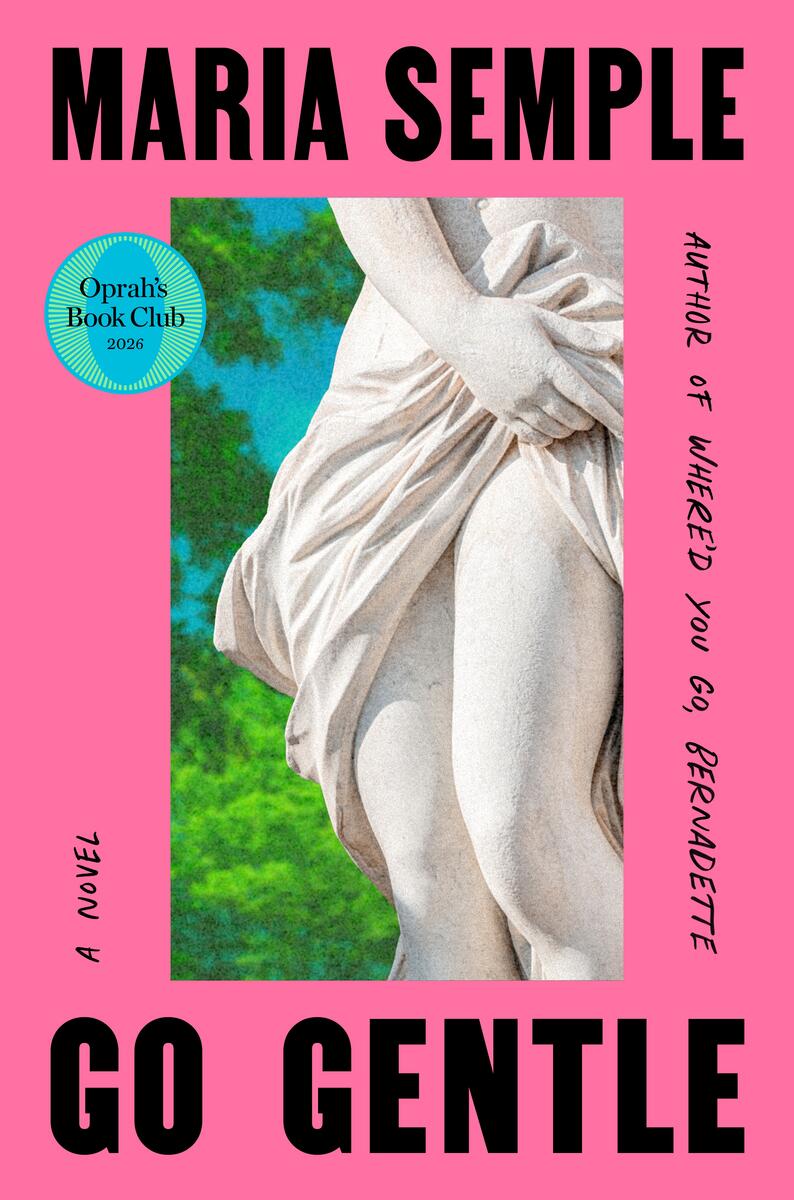
“It’s hard to imagine another writer getting away with this kitchen junk-drawer of a novel,” writes critic Ron Charles of Maria Semple’s latest, Go Gentle, and Charles means it in the best way. Because this isn’t your mother’s kitchen junk drawer, or your own, or anyone’s, instead a junk drawer that could only belong to the wondrous mind of Semple, as brilliant as it’s squirrelly, her narratives prone to sharp turns and unlikely diversions. Stoicism, 1990s’ comedy writing rooms, #MeToo, motherhood, covens, art heists, weird rich people, Central Park, the Louvre, bomb threats, secret agents, divorce, hot sex, success, and failure.
Go Gentle is the story of Adorra Hazzard, a mid-life divorcee, and a Stoic philosopher who lives on New York’s Upper West Side and is populating the units in her apartment with like-minded women so that she can form a coven. But then she meets a man one night at the opera, and the whole world becomes unhinged after that, Adorra cut up in an international plot (or is she just imagining things) that somehow ties back to her earlier career as a comedy writer before sexual assault by a colleague and an NDA put an end to that part of her life for good.
If you’ve never read Semple before, you’ll likely read this book, and wonder what’s going on here, and I certainly did the same sometimes—Semple throws her reader into the deep end, no hand-holding, it’s up to us to find our bearings, and there were moments when I was lost and confused. There is such a breeziness to her narrative voice that I’m compelled to fly through it, but there is some method to the madness and details that need to be attended to. (Up until the novel’s last page, I’d missed the cameo from the protagonist of Semple’s breakout hit, Where’d You Go, Bernadette?)
I’m the last person to read Maria Semple critically—Bernadette was a game changer for me as both a reader and a writer, and I’d follow her sentences anywhere. I loved this book, because I love everything she does—and I’ve also found her weird twisty books give bang for their buck, just as revelatory and fun to read a second time.
April 21, 2026
Adulting for Amateurs, by Jess H. Gutierrez
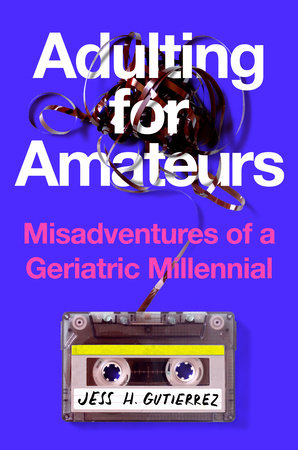
I made a new friend last week, and her latest book is out today, and if you think it’s all been a bit fast, you would be correct. I watched Jess H. Gutierrez being interviewed at the live taping of the Totally Booked Podcast on Thursday, and fell in love with her sparkling personality, as you will too when the episode airs, and then afterwards we got to talking, and couldn’t seem to stop, having the very best time walking down Sixth Avenue and being endlessly impressed by the big city whirling (and honking) around us. And then we bid our farewells, and I made my way to the train to the airport, sorry to be leaving her company.
But then once I was on the plane, I opened her book, Adulting for Amateurs: Misadventures of a Geriatric Millennial, and there she was again, Jess, just as as vivacious on the page as IRL. The first essay is titled “Same, Girl. Same,” and omg, same, girl. Same. Have you been reading toxic shock syndrome warnings on boxes of tampons while pooping since you turned twelve? Does Kermit strumming a banjo while singing “Rainbow Connection” break your heart? Were your at-home-from-school sick days “resplendent with waiting for paternity tests and familial ass-beatings on Jerry Springer?” Or selling random shit on the roadside (“It’s your damned day, because my dad stupidly left a partial roll of Rolaids hanging out in his van.”). Flight of the Navigator trauma, not to mention the hazmat suit people from ET, and unlikely diversions (involving mullets) on our sexual discovery journeys.
The next essay is “Garage Sale Gold Mine,” about Gutierrez’s childhood adventures mining suburban yard sales with her Auntie Jill, and the incident that led to her mother’s most emphatic teaching: “Listen to me, Jessie… Never ever EVER do we wear other people’s panties. Never.”
Adulting for Amateurs is a collection of essays about the weirdness and wonderment of coming of age at the turn of the century, and about that feeling of arrival that never arrives. Whether Gutierrez is donating plasma for cash (!!), discovering her boyfriend giving a blowjob to a lad in a skirt, trying and failing to be convincing as a death metal chick (“If Christina Aguilera’s “Dirrty” was the wrong kind of music, I didn’t want to be right”), being the world’s worst dog-sitter, and booking mopeds for a joyride in Hawaii that turned out to be …not quite the thing, this reader was cringing, LOLing, same-ing, and gasping in horror and hilarity.
Gutierrez hardscrabbles her way into her 30s and 40s, into a steady job and good health insurance, into marriage, and motherhood, but the humour and incidents of calamity never stops, life being life. Maybe it’s the magic of Jess and her writing, or just the era we grew up in, that the life and times of a lesbian from Arkansas as just so doggone relatable (same, girl. Same). Anyway, I’m just excited that I made a new friend last week, and now her wonderful book is in the world, and you can meet her too!
April 17, 2026
Cherry Baby, by Rainbow Rowell
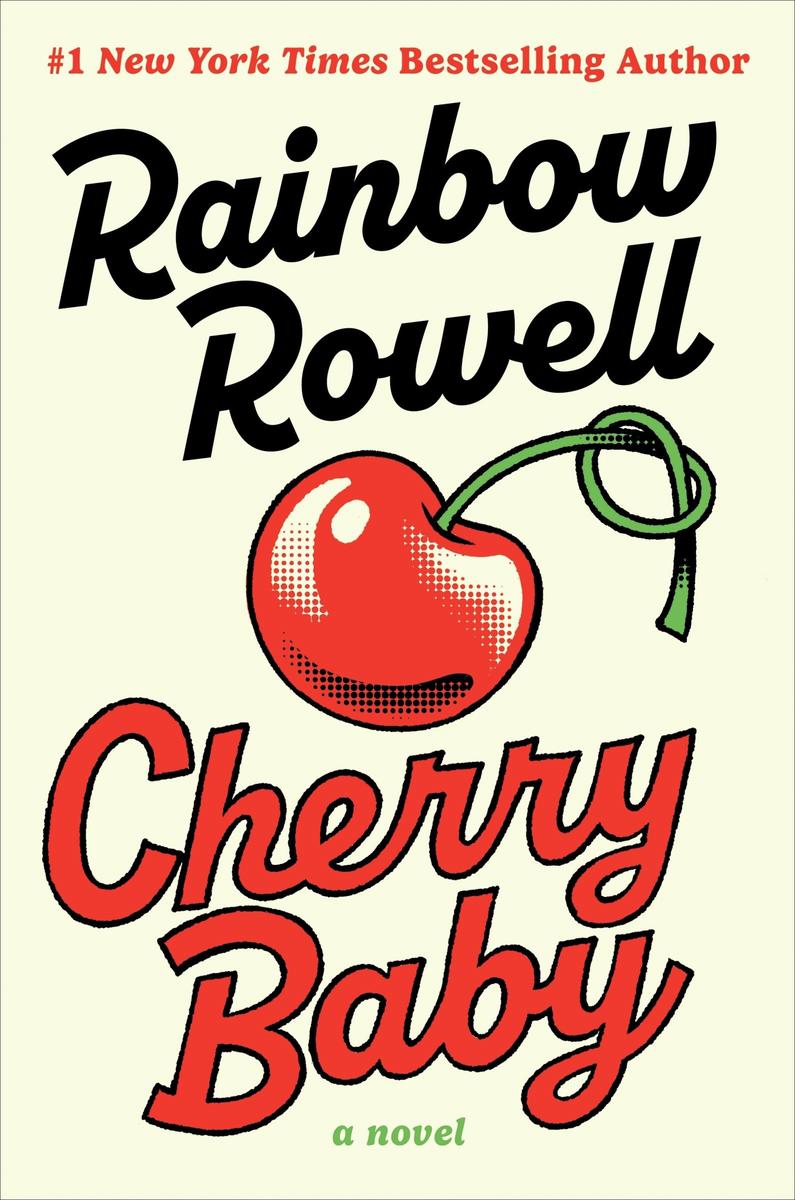
I’m a little bit obsessed with the way that every Rainbow Rowell novel is about time travel, not just the one that literally is. With the way she can play with chronology, weaving different eras together, as though our history is ongoing simultaneously with the contemporary moment. And how in the novels where she doesn’t do this, her characters’ emotional baggage stands in for the same, the past ever present, no matter how badly we’d like to put our burdens down. There are so many feelings, so much yearning, and desire, and all of this is at the heart of her latest novel, Cherry Baby.
Cherry Baby is about the particular moment at which Cherry is beginning to realize she’s going to have to disentangle her life from that of her husband Tom, who is also her ex-husband-to-be. But this is complicated by the fact that Tom’s ultra successful biographical web-comic has just been turned into a film, and the caricature he’d created of Cherry—all boobs, curves, and double chins—is going to be rendered even larger than larger than life, for everyone to see. And then Cherry runs into Russ, an old friend, and something is kindled between them, raising the possibility that Cherry might have a future beyond simply being left behind by Tom, but that future is troubled by Cherry’s notion of Russ’s shame about her fatness and his reaction to her depiction in Tom’s film. This same trouble is compounded by Cherry’s one sister’s weight-loss, an anomaly in their family of fat girls and their fat mom, and everyone’s suspicion that she’s been using weight-loss drugs, but the sister won’t admit it.
Fatness is complicated, and I don’t know a single woman—fat or otherwise—who doesn’t have a relationship to it. And what makes it extra complicated is that whether we’re looking at ourselves or somebody else, what we see is a kind of funhouse mirror, a warped version of our own fucked up perceptions. And fatness is complicated too, because it’s complicated, and Cherry feels a sense of betrayal at her sister’s weight-loss, because her sister’s example had always been a sign to her that she could be fat and loved and happy, but her sister has her own reasons for doing what she’s doing, and the novel holds that complexity, the ambivalence, the uncertainty. (I love the destabilization in Rowell’s prose as sentences in brackets undermine what’s just preceded it.) (And then the contents of a second set of brackets serves to further wobble all that. Life, love, relationships, bodies—it’s all so awful and gorgeous and wonderful and messy.)
Cherry Baby is about family, marriage, home, and wanting, and also choosing. And what Cherry chooses in the end isn’t what I’d expected at the start, and (except for the book’s very last scene, which is PERFECTION) perhaps not entirely satisfying, but I find that interesting, actually, that Rowell is not set on giving readers what they want, that she resists those tidy endings. Her books are tough to classify, insist on being true to themselves, but no matter which way it all shakes out, I always find them absolutely delicious.
April 14, 2026
City of the Muse, by Kate Hilton
“Never forget that the world will try to persuade you to chose the smallest possible life. The only thing worth having is freedom, and the world will fight against you having it, at every turn. If you desire approval, you will have to abstain from adventure. That is the choice we women must make: to bind ourselves to convention or to leap into the void and trust we can fly.”
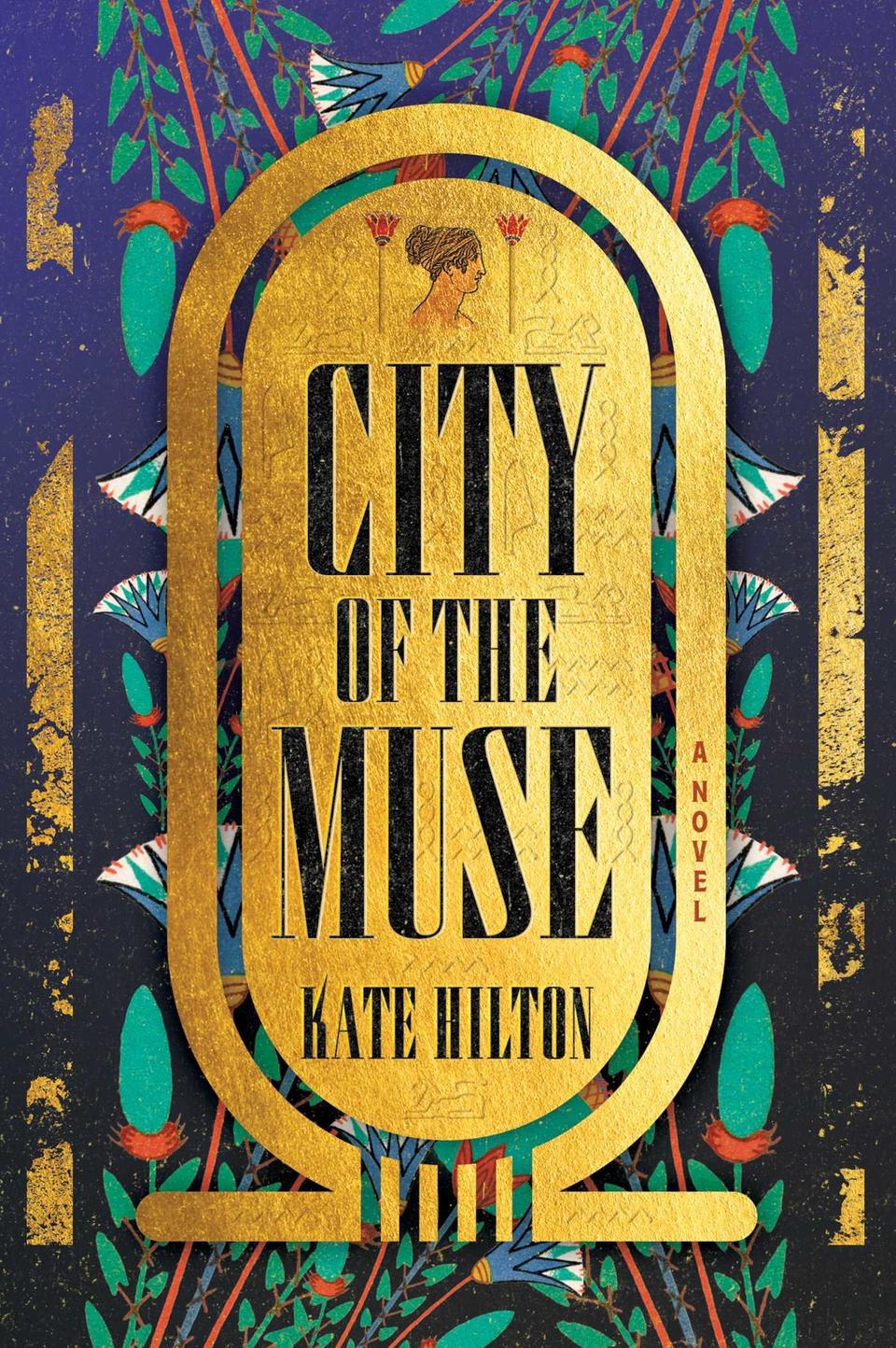
Kate Hilton’s latest is a duel timeline historical fiction novel, a murder mystery, a ghost story, even, as well as a deep dive into archaeology and papyrology more specifically, as a group of English and Americans scramble to unearth ancient artifacts in the fictional Calliopolis in Egypt at the turn of the twentieth century, competing among one another to realize their visions for what stories these ancient fragments might be telling—as well as to profit from their value, though this goes against what is supposed to happen, as the artifacts discovered are not meant to leave Egypt.
The contemporary timeline is about Maddie, a young woman working at a the Toronto Archaeological Museum in Toronto who is lovelorn, estranged from her family, but hoping she’s finally found her own plot twist when she discovers an ancient scroll hidden in a jewellery box belonging to her great-aunt who’d worked on the aforementioned dig in Egypt more than a century before. Could something in the hidden scroll uncover the truth of what happened to Helen Gardiner, Maddie’s great-aunt’s friend and colleague, a skilled papyorologist whose murder perpetuated the story that Calliopolis was cursed?
As Maddie works to uncover the truth and solve the mystery of Helen’s murder, the parallels between how women are treated in the field and academia both then and now become undeniable, the same patterns echoing through the centuries, women having to defy convention and authority to get what they deserve and what they’re entitled to, so much so that the two storylines ends up speaking to each other. And by the novel’s conclusion, this is literally true, the effect of which is beautiful and satisfying.
April 13, 2026
Cleo Dang Would Rather Be Dead, by Mai Nguyen
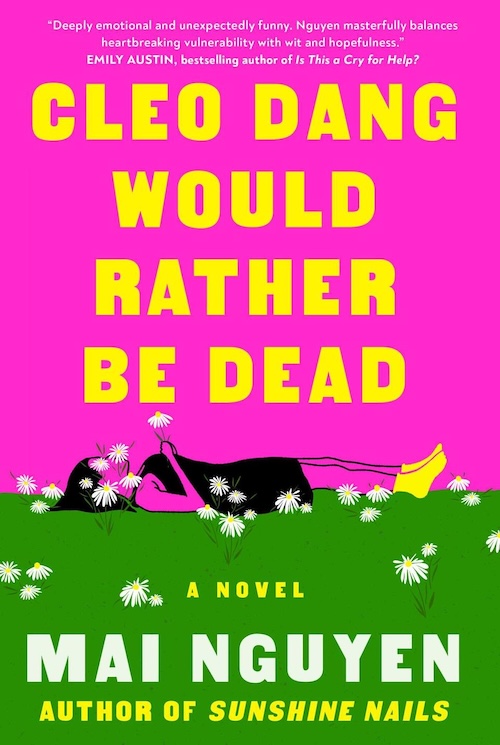
Mai Nguyen’s second novel, Cleo Dang Would Rather Be Dead, is a gift to anybody who’s ever thought, “I can’t imagine”—as well as an invitation to try. A comic novel about the aftermath of infant loss sounds impossible, I know, but also maybe it doesn’t—the absurdity of the situation is actually the perfect set-up, and this fiction born of the author’s own experience of loss and grief is so gorgeously heartfelt and human. And for those readers who don’t have to imagine, because they’ve been there, Cleo’s story is a powerful reminder that they’re not alone.
The story begins with the funeral, a tiny coffin, Cleo paralyzed by grief and amazed that she’s still expected to go through the ritual of a receiving line. Thankfully, her extrovert husband steps in, and Cleo retreats, establishing the dynamic they’ll be stuck in for months to come. To make matters even more complicated and terrible, Cleo’s best friend and neighbour, Paloma, has just given birth on the very same day as Cleo, except that she was able to bring her baby home, and is now going through the motions that the two friends had been expecting to experience together. And Cleo is unable to face up to any of it, overwhelmed by sadness at the loss of her daughter and the vision she’d had for what her life would be.
I’m taking part in a panel with Nguyen at Hamilton’s Grit Lit festival this weekend, which had me thinking about Cleo in connection with Clemence Lathbury, the protagonist of my recent novel, whose own loss and grief are considerably less heavy to hold than Cleo’s, but who similarly dares to blaze her own path through a period of transition, leading everyone who loves her to suspect that she’s gone totally insane. But like Clemence, Cleo stays the course, taking advice here and there, but locating her own compass through grief, grieving on her own timeline, taking on a most curious job to fill the hours in her day and the hole in her life—in Cleo’s case it’s a job as an assistant at a funeral home.
As sad as Cleo’s story is (in addition to being so very funny—in her loss, in her rage at her bad luck, the lady is pulling no punches), Cleo Dang Would Rather Be Dead absolutely overflows with love. Love for her daughter, love for Cleo herself from her husband, her parents, her friends. And love for life itself, eventually, even though for so very long the novel’s title rings true, and Cleo can’t think of a reason to go on, choosing to numb her emotions and consciousness with pills and booze, but a wise friend makes her realize that it doesn’t have to be this way. That the love and grief she carries for her daughter can be a reason to live, instead of why she doesn’t want to, and that a future is indeed possible.
Cleo Dang Would Rather Be Dead is a beautiful, poignant, funny, and life-affirming read.
April 12, 2026
A Week Away
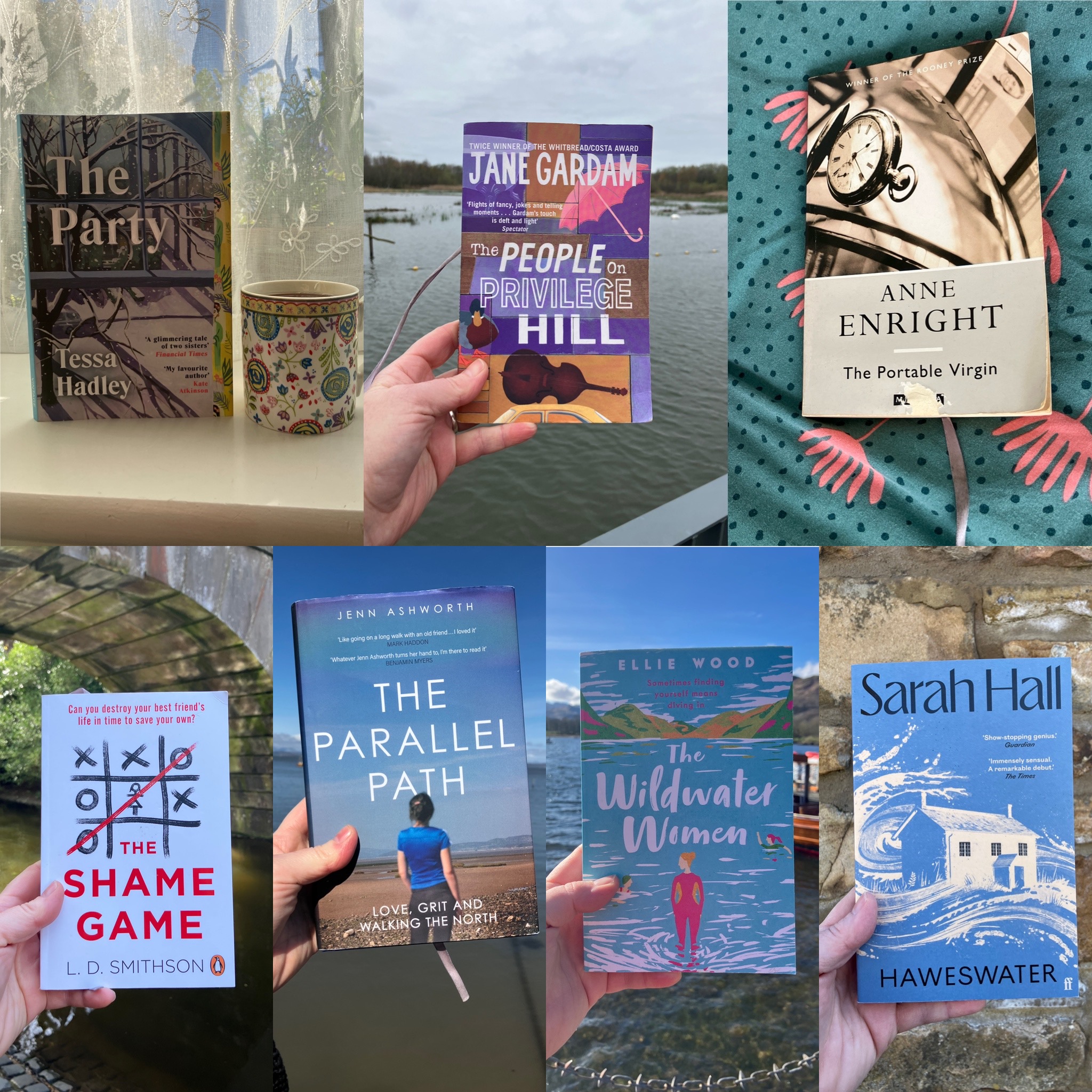
We were in the north of England last week for a trip to visit family, and between the hours on a plane, lazy mornings, and bookshop visits, I read so many books!
The first read was The People of Privilege Hill, by Jane Gardam, which I’d stuck in my bag to read in case nothing at the airport struck my fancy, and when nothing at the airport struck my fancy, I was awfully glad to have it there. A short story collection is an awfully good idea for an overnight flight and fragmented attention, and while Gardam reads so strangely to me sometimes—the first book of hers I read was Old Filth, which was getting all the hype at the time, and I was disappointed to find it quite unfathomable—a commitment to appreciating and understanding her approach has proven most rewarding. It also helps to be able to read a short story twice or even three times to finally comprehend it. I finished the collection as our plane was touching down, which left me in a moment of panic—I needed to get to a bookshop pronto, and the W.H. Smith at airport arrivals only sells snacks and newspapers now.
Luckily we made it to Waterstones in Lancaster before the end of the day, and I was thrilled to find on the shelf two books I was coveting. The first of which was Tessa Hadley’s The Party. “What had happened… seemed to have two opposite faces, and she couldn’t choose between them. It was a humiliating drunken mistake full of risk, the very thing nice girls were warned against, which would shame her and ruin her forever. But it was also a revelation of lust, savage, and real, into which she must pass in order to become an adult, and sophisticated.” Hadley does not disappoint with this gorgeous novella, which has nothing slight about it. Rich and textured, with the most wonderful twist, a story of two sisters coming of age in postwar Bristol and the moment from which their futures begin to properly unfold. I loved it.
And then I got to read The Parallel Path, by Jen Ashworth. “I don’t know if there was some greater wisdom in my body that led me out onto the fells and over the rough ground the summer before, telling me I needed to learn how to walk, how to fall, how to manage when I lost my bearings, how to pick my body way slowly along uneven ground. I don’t know if my body – already knowing about the passenger in my skull – was seeking not a cure but a way to care for itself. But I’d like to think such things are possible.” While I’ve been visiting Lancashire on a regular basis for 23 years now, it is actually reading Ashworth’s books that has deepened my understanding of this place and of Northerness in general, her writing articulating so much I’ve always wondered about in connection with this culture I’ve married into (and in which the act of wondering at all is sometimes regarded as mildly suspect).
The Parallel Path is her memoir of her experience walking coast to coast across the north of England during the sweltering summer of 2023, a journey she was compelled to make in the wake of pandemic trauma and ongoing grief after the death of her former partner, her daughter’s father. Caregiving through all of this proves to be all-consuming and her coast to coast walk is meant to be a reclaiming of self, a rediscovery of untetheredness, and an exercise is self-sufficiency.
But Ashworth is never alone, not least because an ailing artist friend has resolved to send letters to each of her stops along the way, his thought provoking messages about death and dying tapped into the thoughts she is having along the way. And because those thoughts are rich and plentiful, delving into the past, the history of the places she encounters, into her own past, and also into her thoughts of her partner and children at home not so very far away.
Is she walking toward home or away from it? And similar paradoxes come into play as she considers life and death, sickness and health, solitude and connection , care and carelessness, and how between all of these is a kind of edgeplace that requires us to make friends with it if we want to live fully (if often uncomfortably) in the human experience.
Next up was The Portable Virgin, by Anne Enright, her fiction debut published in 1992, and which I purchased at the Oxfam Bookshop in Lancaster. My trips to the Oxfam Bookshop have become so unrewarding since I’ve apparently already acquired all the books I’ll ever want, and everything on the shelf is by Anita Shreve, but I was glad to find this one. Inscription reads: “14 September 1993/ Magic, I hope this marks the beginning for you. Congratulations – Women Studies here we come! With love, Annabel XXX.” Which in some ways is as inscrutable as these weird and disorienting stories that I mostly didn’t understand but still enjoyed. “Cathy was often wrong, she found it more interesting. She was wrong about the taste of bananas. She was wrong about the future of the Bob. She was wrong about where her life ended up. She loved corners, surprises, changes of light.”
I loved The Wildwater Women, recommended by the amazing Fred’s Bookshop (since 1956!) in Ambleside in the Lake District and even set in Ambleside among a group of women whose lives are transformed by wild swimming. Such a perfect vacation read and proper northern too—complete with mention of ginnels. ”Abby felt pride blaze across her chest. It was always easier to give advice than to take it, she knew that. But sometimes when your friends did amazing things – showed positivity and perseverance – some of that reflected back at you. Friendship was about knowing who was there for you when you got out of your depth – and she knew these women were. And as she swam in the water, melding with the landscape, she felt truly at peace with life in that moment.”
And oooh, I had a perfect read for my flight home from England. I LOVED The Shame Game, by LD Smithson, who I met by chance while browsing in The Grove Bookshop in Ilkley as her children conspicuously celebrated finding her bestselling book on the display table. So naturally I had to buy it, and I’m so glad I did. It’s the story of four old high school friends who each receive a message threatening to reveal their most shameful secret UNLESS they publicly reveal a shameful secret belonging to another member of their crew. Who among them will be willing to destroy a friend’s life to save their own? I cared about the characters so much, the story kept me guessing all the way through, and at a certain point became unputdownable, which is just what you want on an eight hour flight. I especially love that it was set it Ilkley. Such a wonderful souvenir.
My final vacation read was Sarah Hall’s Haweswater, which I also bought in Ilkley, but mostly read back in Canada, though it didn’t feel like it because her depiction of the Lake District was so evocative, and having been not too far from there, I could see it all so vividly in my mind. This is the debut by Hall, whose books have previously piqued by interest but seemed not quite for me. I started to read her latest, Helm, a novel that takes place over millennia and whose central character is a wind, but it wasn’t quite the right moment for me to get it. Now that I’ve read Haweswater, however, and enjoyed it so thoroughly, it gives me a better sense of her overall literary project and makes me think there’s a chance I can still find my way into it.
I picked up Haweswater because the true story and place it’s based on is mentioned in Jenn Ashworth’s memoir when she walks past the vividly blue Haweswater water reserve, and contemplates the villages that had once existed at the bottom of the lake when it was still a valley, before it was flooded during the 1930s in a massive project to bring drinking water to the people of Manchester. Hall is quite clear that her novel is a fiction, but the geography that inspires her story is so real—the water trickling through the fells, the blue slate of the so solid buildings of Mardale—cottages, the school, the church, and the pub. The narrative is unfathomably bleak—nothing ends well for anyone in this love story between the man from the Waterworks who arrives to tell the villagers about the project and the fierce young farmer’s daughter who is determined to oppose it. But oh, the prose is so vivid and alive, densely woven with meaning, and the bleakness takes a backseat, and it’s a pleasure to be enveloped in the story with all its various perspectives and unfathomable beauty and brutality at once. I am now firmly a Sarah Hall convert, and can’t wait to read more.
March 31, 2026
Inheritance, by Jane Park
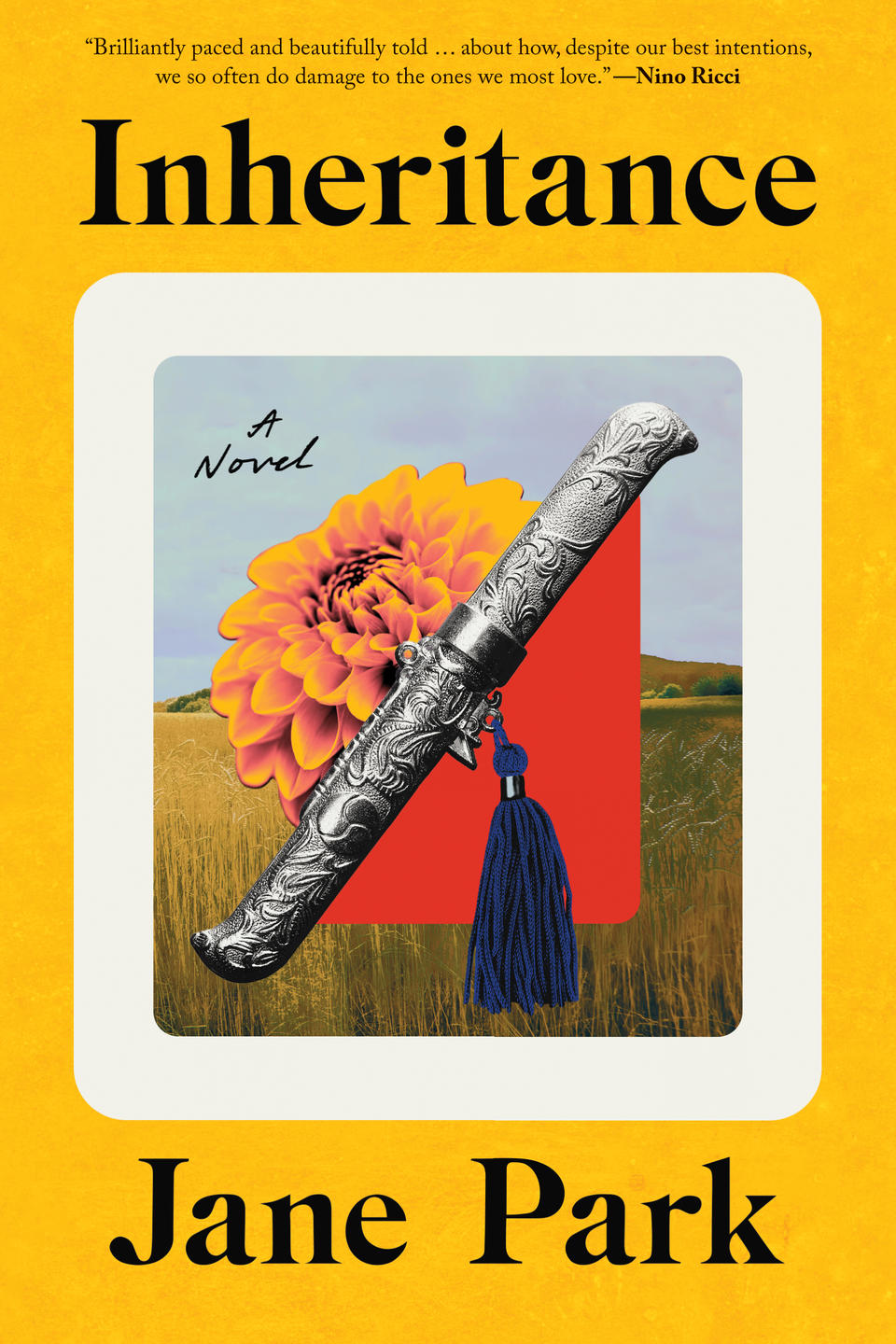
Jane Park’s debut novel is the compelling story of a Korean immigrant family arriving in Alberta in the 1980s, how their Canadian dreams measure up to reality, and how the family’s history continues to influence their present, even as so much of the past remains unspoken. The story is narrated by the youngest daughter, Anne, who has a successful career as a lawyer in New York City, but returns to her mother and brother in Edmonton after her father dies. The story moves between the present day, as Anne takes stock of her job, her life, and her relationship, and her family’s past, including the difficult period where her parents struggled to eke out a living running a small town grocery store, a period that ended with a horrific act of violence that would shape the trajectory of everything that happens after that.
Some aspects of Jane’s character in the present day seem underdeveloped, although you could make a case for this being a result of everything that’s happened to her and her family rather than a literary problem. The weaving of the different time periods in among her story makes for rich and effective storytelling, however, and there is real nuance as Park considers different class and social dynamics within Korean communities, and within the small town community the family finds itself within as well, including members of a nearby Indigenous nation. Within each individual character too, there is a most human blend of light and dark, good and evil, and the notion of inheritance is considered from a variety of interesting angles, resulting in a read that’s rich and absorbing.
March 25, 2026
Will This Make You Happy, by Tanya Bush

With this book, I’ve finally succeeded in my goal of becoming a person who reads cookbooks cover to cover, although it helps that Tanya Bush’s Will This Make You Happy is as much narrative as recipe collection. The recipes themselves are just a little bit fussy (as opposed to no-fuss) in a way I find most appealing at the moment, having to go out of my way for an ingredient or two, realizing that the effort makes a difference, that it’s worth the reward. Like the malted milk power in the banana bread, which I’ve already made twice, once with the glaze, and once without, which just offers the most wonderful edge to the overall sweetness. I’m dying to try the recipe for blueberry jam corn muffin next, and don’t know where I can begin to source sweet corn powder, but I’m not giving up just yet. The point of the story, these recipes, is to venture out of one’s comfort zone, try something new, to indulge your appetites, see how much the world can hold.
Will This Make You Happy (intriguingly with no question mark) is organized by season, a collection of vignettes about the author’s life followed by a bunch of recipes loosely based on those mentioned in the narrative. When the book begins, Bush is 23, which for me was the year upon which everything hinged, and she’s stuck in a depressive malaise. Unemployed, too comfortable in her relationship, she longs for something more, and finds it on a whim when she bakes a cake to change to her mood. The first cake collapses, a veritable disaster, but she finds more success with banana bread, discovering the way forward in her tiny New York kitchen, and she begins to consider a future in baking.
The path ahead is not straightforward. She partakes in an internship of sorts in Italy, which proves to be a dispiriting time, rife with annoyances and disappointment. She wants she wants she wants, but getting doesn’t always make her happy, there is always something hard, there is always something more, and this continues to be the case when she ventures outside of her long-term relationship to pursue a crush on a woman she meets through a connection at her restaurant job. Her boyfriend is patient, but he has his limits too, and in love, and life, and eating, the question continues to be, What do I want? How much is enough? How will I know when I get there?
With gorgeous illustrations by Forsyth Harmon, Will This Make You Happy is a story about wandering and wondering in search of sweetness, listening to your heart, and discovering that settling isn’t necessarily a bad thing.
March 24, 2026
Never Been Better, by Leanne Toshiko Simpson
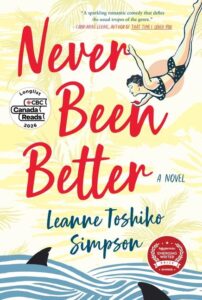
Finally, finally, I got my hands on Never Been Better, by Leanne Toshiko Simpson, a book that I’ve been really looking forward to since my friend Chantel Guertin awarded it the Kobo Emerging Writer Prize for Romance and couldn’t stop raving about it. I’ve become an admirer of Simpson’s advocacy for people living with mental health struggles and the way she shares her own experiences with bipolar, and so I’ve been looking forward to finding out how she considers these ideas via fiction in her debut novel, billed as My Best Friend’s Wedding, except the plot starts in the psych ward.
Our narrator is Dee, whose mental health troubles continue and whose life is held together by desperation, chewing gum, and the valiant efforts of her audacious sister Tilley—and I appreciate that in a novel about three psychiatric patients, the most deranged character of neither of these, but Tilley instead, who insists on joining Dee as the plus-one for her friends’ Matt and Misa’s destination wedding in Turks and Caikos, mostly because Dee’s intent on revealing her true feelings for Matt before the ceremony, and Tilley’s determined to save her sister from herself, whatever that entails (and also partake in the amentities of an all-inclusive)
It’s complicated, because Dee, Matt and Misa all met as psychiatric patients, but now that part of their story is written out as Misa presents a picture-perfect image of her relationship to her Japanese-Canadian family who have no idea that she lives with mental illness—they think she’s just an extra-dedicated hospital volunteer. That she cannot be honest about where her and Matt’s story began only underlines Dee’s certainty that Matt’s chosen the wrong person, and that breaking up the couple is the honourable thing to do.
What happens next is messy, twisty, human, and real, replete with hilarity (the line about Dee’s meds giving her the libido of a ham sandwich!) and also real heart. While I had my doubts, because this plot seems like it’s heading for a shipwreck, the resolution is rich and meaningful, a meditation on ever after (in mental sickness and mental health) and what being “better” really means.
March 23, 2026
Nowhere, by Jon Claytor
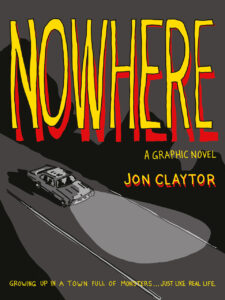
The monsters are real in Nowhere, the debut graphic novel by Jon Claytor, a book I’ve been looking forward to because I’ve enjoyed Claytor’s comics on Instagram and because it’s edited by Bethany Gibson, who’s one of my favourite Canadian editors. But then it turns out the cube in Nowhere is real as well, as in actually real, nonfictional, a giant white box outside Sackville, NB, that is (according to my web searches)…a facility for storing cranberries? Although that’s a part of the story I choose not to think about too deeply, instead considering all the other ways that Nowhere most intriguingly blurs the line between impossible and otherwise, its uncanniness and familiarity. It’s the story of 12 year old Joel whose deadbeat stepdad’s car runs out of steam in small town that seems nondescript save for the aforementioned cube (I don’t believe in cranberries) and oh yes, the gangs of marauding wolves and clowns and zombies who walk the streets at night, and ordinary citizens who keep disappearing.
Nowhere is a monstrous tale of growing up in an unstable world where anything is possible in the worst way and everything else is precarious and uncertain. It’s a story of becoming and unbecoming, of loneliness and desperation, probing the eerie edges of reality, adolescence, and inexplicability. Weird and twisted, it’s quietly absorbing in the very best way.






