June 9, 2026
Happy Pub Day to THE LOST SEASON
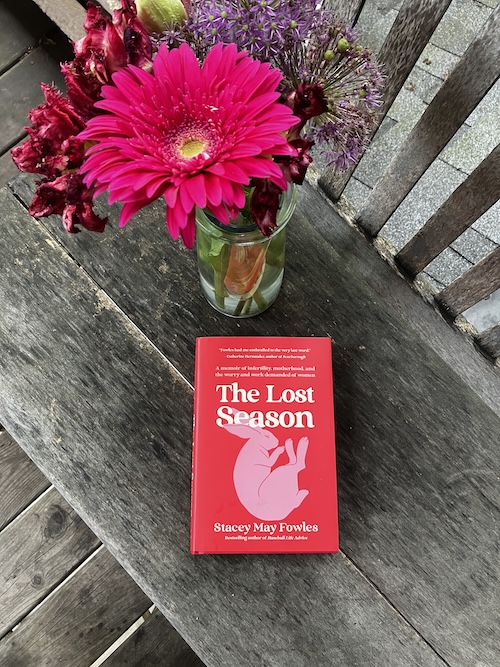
“When I picked up Fowles’ The Lost Season: A Memoir of Infertility, Motherhood, and the Worry and Work Demanded by Women, I’d understood the title to be a reference to those seven years, to the seven years it had (surprise!) taken Fowles to publish a book after becoming a mother, this book. And while “The Lost Season” does indeed refer to those years, the title means something different from what I’d anticipated, which had been the loss as a creative loss, time squandered that the artist will never recover, an account of the books that didn’t get written while she was busy changing diapers.
No, instead “The Lost Season” is a season of being lost, rather than a season of losing—save for the way Fowles had also lost herself, with everything that had previously anchored her identity and understanding of the world upended by the arrival of her daughter (not to mention years of struggling with infertility before that).
Which is not nothing, obviously—this kind of loss is terrifying and devastating—but there’s also nothing fallow about it, and the point of the book is that the creative seeds sown during those seven years, during that lost season, would turn out to be bountiful. And this is such a more interesting narrative than those affirming the standard line about motherhood and writing being incompatible, hybridity impossible, that every baby you have equals one less book.
Fowles pushes back on all this, her memoir opening with a powerful reclamation of not just mothers writing at all, but mothers writing about motherhood, and why such writing matters, never mind “the voices of literary men, or the anxious voice inside me that asks to be to be small and hidden, to pretend it doesn’t matter.”
She writes: My daughter is in every moment—every small, quiet, intimate thing. She is all the pieces of me, public and private, lost and found, broken and healed. And she is certainly in the writing. In every word.
*
Congratulations to Stacey May Fowles on the release of your memoir, and thank you for the inspiration that led to my “Hybrid Creatures” essay on Substack. This book is so good.
June 8, 2026
Venom Lake, by Emma White
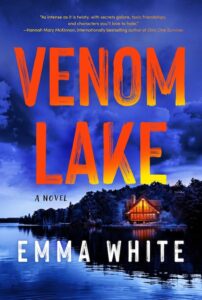
I’ve been disappointed before by books that look like this one, books that have promised tight storytelling, suspense, the kind of grip that really does, genuinely surprising twists, fresh approaches to old tropes. That cover, that setting, a read as compelling as that cottage lit up by the side of a lake, drawing me in, and I’m thrilled to report that Emma White’s debut Venom Lake lived up to all of my expectations—and then some.
The premise is this—a true crime book club in Toronto made up of four friends embarks on a September retreat to the not-so-cozy-sounding Massasauga Lake, and by the time they’re arriving on the island, we already know that the dynamics of this group are seriously awry. Every woman has something to hide, in addition to a reason to seek revenge, and what White does that’s so interesting is make the unveiling of every layer in the narrative fresh and surprising, all awhile the mystery itself (one of these women is going to die, and another one of them will have been the one to kill her) unfolds in a fashion familiar to anyone partaking in the crime or true crime genres—and it definitely comes in handy that these ladies are connoisseurs.
There is fabulous intertextuality, references to real-life Toronto true-crimes, transcripts from a fictional true crime podcast that ends up covering what happens on the island, and layer after layer revealing the story to be not quite what you thought it was in the most engaging and satisfying way.
In a crew of such bitchy conniving characters, who will actually prove to be the most monstrous of the lot? Emma White keeps the competition twisty and fierce right to her novel’s final sentence.
PS Go read Kate Jenks Landry’s interview with Emma White at https://www.theneedleandtheknife.com/home/2026/5/21/10-questions-for-emma-white
June 5, 2026
Yesteryear, by Caro Claire Burke
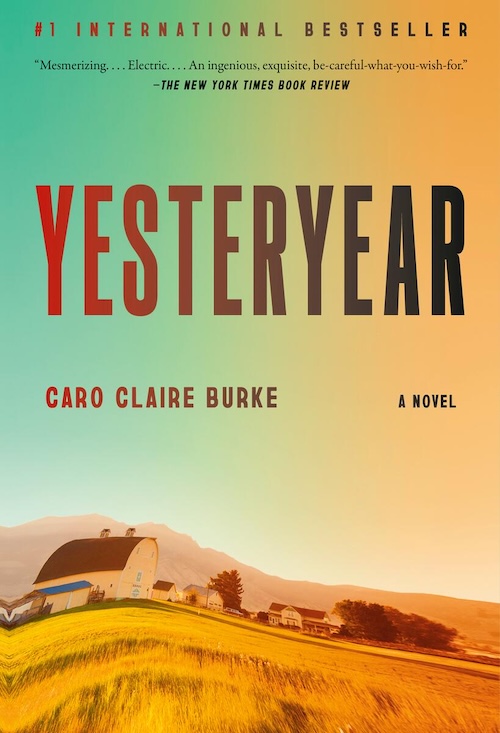
When I first heard about Yesteryear in February from a friend who was reading an early copy, the premise didn’t compel me—a tradwife influencer wakes up in the 19th century and has to actually live the life she pantomimes, nary a washing machine to be seen. Neat idea, bro, but it sounds a bit like Back to the Future III, which had been my least favourite of the trilogy, so no thank you. I’ve already read Laura Ingalls Wilder. And even when the novel had become legitimately buzzy, I still wasn’t bothered—until I discerned that the buzz was so incredibly divisive. Readers were loving this book, and readers were hating this book, and readers were apparently flummoxed by “the twist,” which I managed to learn nothing about, avoiding the discourse entirely.
I didn’t REALLY want to read Yesteryear, however, until I couldn’t get it, the last copy at Blue Heron Books sold right under my nose at Canadian Independent Bookstore Day and for a while after that, it was out of stock everywhere, so when I saw it again, I grabbed a copy at once. (Scarcity! Such a powerful drug.)
Readers, I loved this book. And I kept waiting for that twist everybody was talking about, but it never came, and I realized that some readers must have supposed they were reading a much more straightforward book than this one, a book where problems are resolved and there’s only just a single hinge, but this is a more complicated project, one that might warrant as many pages of explanation as Pa’s whatnot got in By the Shores of Silver Lake. There are layers of meaning here, and it’s not simply a send-up or satire of influencer culture, instead its own fictional creation, a statement on so many things but also remarkable for more than just simply what it’s “about.” It’s a troubling, uncomfortable, uneasy read, but I absolutely mean that as a compliment.
June 1, 2026
One Day Hard and Clear, by Anne Baldo
Where do I even begin to tell you about how much I love this book?
Perhaps with the email I received three summers ago by editor Stephanie Small telling me about the short story collection, Morse Code for Romantics, by debut author Anne Baldo, a collection whose excellence was so sustained, and which was steeped in nostalgia, hot summers, and had me feeling as delightfully spent at the end as a long day at the beach.
And then with the experience I had the summer after that where I had the opportunity to work with Baldo on her next manuscript, a brutally glorious book that glittered, light reflected from the kind of edges that most people take for granted, don’t even pay attention to, but in an Anne Baldo sentence, they shine.
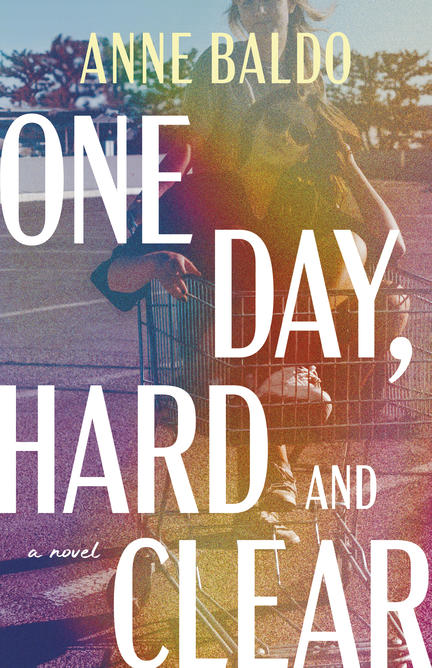
Then there was last summer, when I didn’t have an Anne Baldo book to read at all, but we don’t have to focus on that part of the story BECAUSE, One Day Hard and Clear is out today. The published version of that book I read two years ago and I’m so thrilled how it’s turned out, how it’s even more wonderful than it was on my first encounter, how that incredible cover sets you up for all the goodness this novel holds inside, it’s sepia tone, the stupid recklessness, female friendship, the posturing, and the heart at its core which is aching, human, and true.
One Day, Hard and Clear is about Sami, who has just finished high school in Windsor and dreams of escaping that world to Paris with her best friend Lucy, whose mother has never quite thought Sami was the right kind of friend for her daughter. And as the distance between them becomes clearer, Lucy moving into a different kind of realm as she pursues her university studies, Sami turns to True, with whom she’d once been a couple, but even after that was over, they’ve never been able to escape each other. Not even after Sami takes up with Bodie, who’s a wildcard, but such a predictable wildcard that he’s never going to really disappoint her, because she knows he only ever will.
Moving through the first decade of the century, the novel tells Sami’s story with extraordinary clarity of vision, her point of view understated but so tremendously defined, the power and beauty of Baldo’s prose underlining all of this. (“I’d stop calling True, I promised myself. Stop being like the sea, lovesick for the moon/ They say the moon, as it now is, was formed in the wreckage of a collision, millions of years ago, all the dust and debris transforming, out of devastation, into something luminous and new.”)
Rife with pop culture references, sympathetic Britney references, LFO playing in the background, characters who are so unbearably realized, reaching for each other but unable to connect—the tension of that. The brilliance of these sentences. The details with which Baldo builds her fictional world, it is all of just so wonderful, and I am so excited for the rest of you to discover it all.
May 29, 2026
This Is Why I Need You, by Alecsandra Kakon
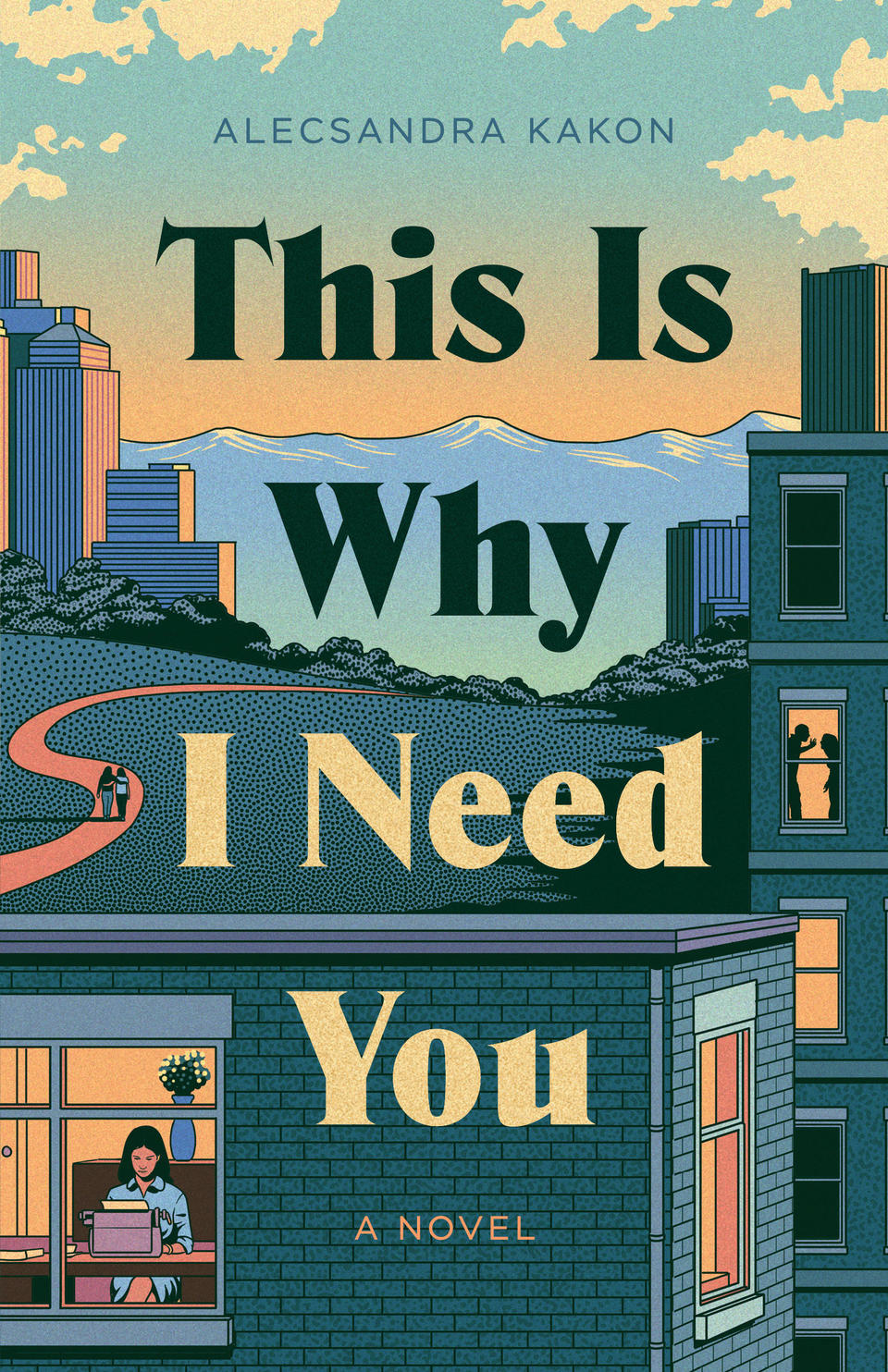
Alecsandra Kakon’s debut novel, This is Why I Need You, begins with the drama dialed up to eleven: besties Zinnia, Fay, Kiara, and Valentina, are on the eve of their annual girls trip together, this time to Barbados, but Valentina has just rejected her boyfriend’s proposal, Kiara’s controlling fiance is flying all the red flags, and Zinnia and Fay have secretly become “more than friends,” even though Zinnia is married with children. None of these are spoilers, all happening at the novel’s outset, and while I had some doubts about a story being so front-loaded, whether such tension could be sustained (and it does get frothy in a few spots), the novel—which follows the women over the course of a life-changing year—was ultimately enjoyable and meaningful, a celebration of complicated friendships and messy lives, love, forgiveness, and chosen family.
May 28, 2026
How to Commit a Postcolonial Murder, by Nina McConigley
“You have to acknowledge wrongdoing, or it will never heal. Vinny Uncle never acknowledged it. He was just like Lieutenant Marley, doing whatever he liked, regardless of the cost to others. Who was going to rewrite our story? Who was going to say what he did to us was wrong? He wasn’t. So we had to.”
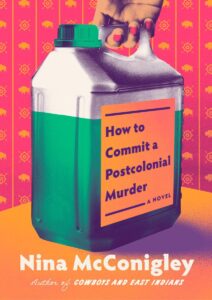
Like its protagonist, the American-Indian Georgie (short for Georgette Ayyar, her sister is Agatha Krishna), How to Commit a Postcolonial Murder is a mash-up, a mix, and a mystery—but not quite for the reasons you’d think. Set in the 1980s, and scattered with multiple choice quizzes ala teen magazines (“How do you know if a boy likes you? …Mostly a: Sounds like he must be confused…”), this is a story if sisterhood, a novel about two girls who decide to take justice into their own hands and kill their sexual predator uncle, a monster who lurks in their home.
That home is a ranch house in Wyoming, a curious place to be a girl with brown skin, where a mythology of cowboys and Indians (the other Indians) continue to dominate, and the threads of colonialism seems consistent, universal. And this story, which has something of the screwball comedy about it as much as a murder plot, takes on an unbearable poignancy. This is a slim little book that’s outrageous and contains multitudes.
May 25, 2026
The Great Good Places
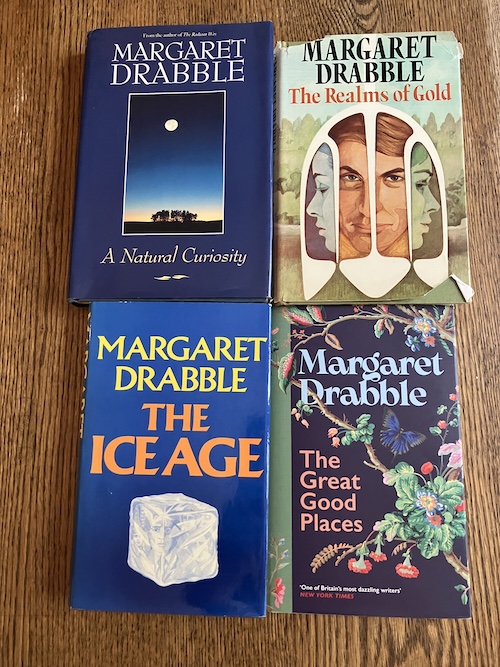
I was late to Margaret Drabble, unsurprisingly, since she started publishing novels almost twenty years before I was born, and it was only when I was living in Japan in my 20s that I fell under their spell, battered copies of her Penguin paperbacks with their faded orange spines readily available at Wantage Book in Kobe. Already somewhat dated (see faded spines: Margaret Drabble had been so CURRENT in the ’60s, chief to her appeal!) but somehow also seeming as though they contained the universe, which felt timely, as at that moment I felt I was on the cusp of my own life, including the writing career I so desired. Drabble’s intimate portrayals of ordinary lives were so tied to huge societal and existential questions, constellations that I felt as though I could map and come closer to understanding everything.
When we left Japan, I insisted on sending all my books home by sea, which didn’t make much sense, financial or otherwise, but I didn’t want to part with them. Only now, more than twenty years later, have I been able to let them go for these beautiful editions that are for more readable, first editions, no less, acquired via my mom and her voluntary work for her local library’s book sale. There’s a line in Definitely Thriving where Clemence notes that the upside of women’s fiction being so devalued is that you can collect their first editions for a bargain. And maybe now that I am nearing fifty and have become challenged by the impossible type in mid-century paperbacks, these new-to-me editions will make rereading more palatable.
The Great Good Places, however, is a first edition Drabble that is new to me, signed no less, acquired on our trip to England this spring. It’s a collection of essays and stories from where Drabble sits in her late 80s, all of it with an autobiographical bent. She tells us that her 2016 book The Dark Flood Rises is her final novel, for the death of her daughter in 2017 left her unable to write fiction anymore. There’s a sadness permeating the collection, unsurprisingly, but still the same clarity and curiosity that makes her voice her own, a writerly voice that still compels me and likely always will.
May 22, 2026
American Fantasy, by Emma Straub
I’ve learned a lot from Emma Straub about the kind of books I want to write—her novel The Vacationers was the last book I finished reading before I sat down to begin my first novel, Mitzi Bytes, in 2014—and this is because hers are also the kind of books I most love to read. Light in the very best way, in a way that takes light seriously, this lightness coupled with real wit, and intelligence that’s equally matched with warmth. Her fictional worlds are a pleasure to get lost in, replete with complicated relationships, family drama, unanswerable questions, and a powerful poignancy.
And in American Fantasy, her sixth novel, she turns her discerning eye to notions of lightness, of pop, and escapism, all these factors melding into a plot about a nostalgia cruise ship for avid fans of a fictional has-been ’90s boy band, Boy Talk, including the boys themselves, now middle-aged, but sticking with their teenage dreams (and fans’ teenage screams) to pay the bills. The novel is told from the points of view of Sarah, head of the production team that runs the cruises with their over the top itinerary, who’s in no hurry to come home from sea after her girlfriend has just left her for a 23 year old dog walker named Plum; Anne, a 50-year-old divorcee who arrives onboard solo after her younger sister (for whom the cruise had been a birthday gift) is stuck home with a broken leg; and then Keith, one of the boys, one of the two who can actually sing, but he struggles with his demons, most of which involve his band-mate brother and his cold not-yet-estranged wife. Over five days, trapped in the unreality of the American Fantasy cruise ship, these three characters’ lives intersect in surprising and meaningful ways
Life is long and complicated, in a way that the lyrics to those ballads the boy bands sang (but didn’t write—and which fans can still immediately recall 30+ years later) never alluded to. American Fantasy is about how the reality never measures up to the promise, and what else might be possible in the space between.
May 20, 2026
Suddenly Light, by Nina Dunic
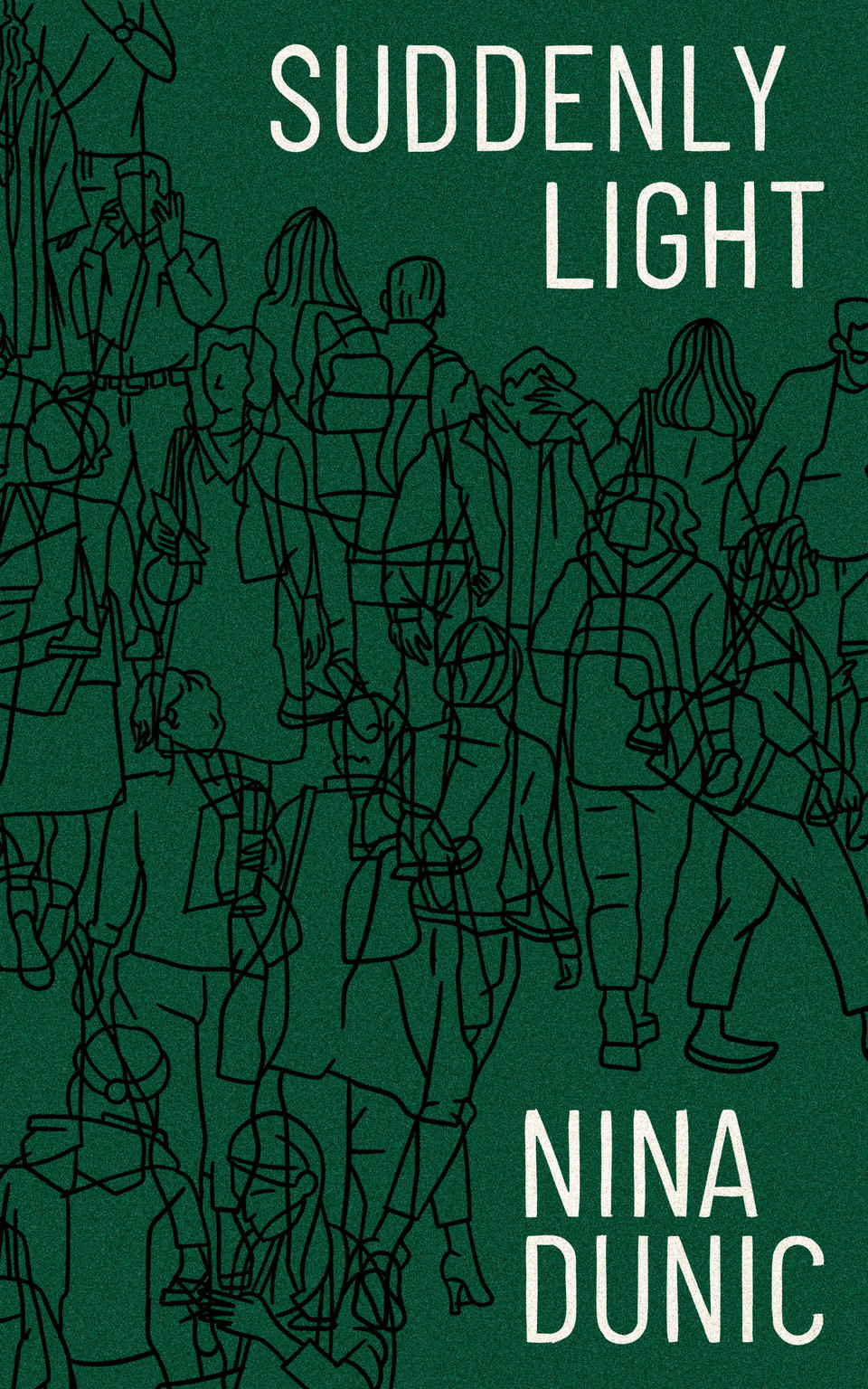
“Remembering my grip on her arms, hurting her, wanting to shake her, hard, so she would stop being drunk—wipe her face, so she could participate like the rest of us. Participate, like all of us. Didn’t she get it? We didn’t want to be here either. Somewhere between the turquoise eyes and the brown smear were the rest of us.”
Nina Dunic’s short collection Suddenly Light—which follows her award-winning debut novel The Clarion—troubles the space between people, ourselves and others, sometimes perfect strangers, and other times the people we’re closest to. A quiet sadness permeates these stories, but there are moments—like the title says—of powerful illumination, of sometimes fleeting connection. Though these moments are never the crux of things, because the point of Suddenly Light is that life goes on, much longer (and darker and harder) than anyone anticipates at the beginning of it all, when you’re young and on the cusp of everything, the future only possibility, no such thing as compromise. Narrative never quite unfolds the way we imagine it will, and Dunic’s stories show this, the ongoingness, the granular attention to detail, the strangeness and randomness, what participation requires of its players, how much is felt but never said.
May 12, 2026
The Things We Never Say, by Elizabeth Strout
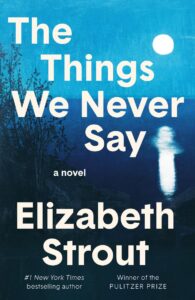
Don’t let that Elizabeth Strout has followed up her novel Tell Me Everything with one called The Things We Never Say make you think she’s shifted gears. Although she’s left Maine behind, and the familiar cast of characters—Lucy Barton, Bob Burgess, Olive Kitteridge, and others—who’ve populated her stories over the past three decades are absent from the book. In fact, yes, The Things We Never Say seems set in a different universe altogether, one in which Strout’s beloved literary people, Bob et. al, are fictional (CAN YOU IMAGINE!?), because there’s a reference to her main character, Artie Dam, reading a book “about some crotchety old woman from Maine,” which is clearly Olive Kitteridge. “People die of loneliness,” Artie recalls the woman in the book thinking. “It happens all the time.”
But what this quotation reveals is that this latest book is still familiar territory for Strout, territory she’s mined before—the unknowability of other people, even those who are closest to us, how alone we can feel within intimate relationships, the depth of mystery contained within each and every one of us. This is territory that Strout will likely never stop mining either, which is fine with me, because what she writes reads like answers to questions I will never stop asking, and I’m glad she’s wondering too.
Artie Dam is a man akin to Bob Burgess, a man with feelings, many of which he’s unable to express. He’s a beloved high school history teacher and it’s 2024, which is a hard time to be a student of history in the United States of America, to have one’s eyes open to what’s happened and what’s going to happen next. The great heartbreak of his life is a car accident when his son was a teenager that killed his son’s girlfriend, and changed everything for their family, especially the dynamic between Artie and his wife. But then Artie learns something about his past that changes everything he thinks he knows about his family, and Artie has to figure out what happens to that, a problem that’s aligned with questions he keeps asking himself about the nature of free will.
This is a novel in which not much happens at all, or rather it happens in such a way that it’s easy to overlook that everything happens in this book, life, death, betrayal, heartbreak. But also redemption, hope, possibility, (sometimes) connection. This book is wrenching in the same way that being alive is, and similarly it’s so deeply worth the ride.






