September 15, 2025
Ripeness, by Sarah Moss
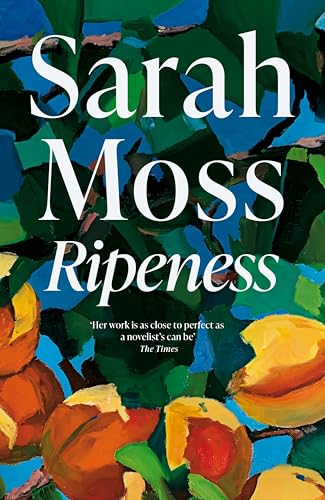
This is not a review. I’m still piecing together my experience of reading RIPENESS, the latest novel by Sarah Moss (out now in Canada), whose work I fell in love with through her three short novels, GHOST WALL, SUMMERWATER, and THE FELL. Her most release is the memoir MY GOOD BRIGHT WOLF, about her childhood and more recent experiences with anorexia. And now RIPENESS, a novel-sized novel, but which rips apart convention regarding structure. The very first sentence is, “Yes, Edith says.” Quotation marks done away with, long long paragraphs, dialogue within those paragraphs, the novel comprising two sections whose relationship is hard to discern, except that they are both about Edith, one (in third person) set in the present where Edith is around 70, divorced, living a comfortable life in Ireland, and the other (first person) about Edith’s experience in the 1960s on the cusp of adulthood travelling to a villa in Italy to spend time with her older sister, a ballerina, who is waiting out the final weeks of an unwanted pregnancy.
How do these two sections knit together? The answers to that question are not straightforward, but they’re interesting, even if I’m not sure what they are yet. How does the story of her sister’s child connect to Edith’s friend’s discovery in the present that her mother had once given up a child long ago, a son who was raised in America and who is returning to Ireland, a place to which he feels he belongs? A place to which Edith, who is Edith, will never belong. Edith an exile who is the child of an exile, her mother a Jew who was the sole member of her family to survive the Holocaust when she was sent to the British midlands just in time. How does all this connect to the Ukrainian refugees who’ve made their homes in Ireland, and the less familiar-seeming refugees from other places whom Edith’s neighbours resent and wave placards against?
There is all this and so much more, so much ripeness—the fruits on the trees in Italy, the very pregnant Lydia, Edith at the beginning of her experience just before she goes to study at Oxford. There is no sex for young Edith, but plenty for Edith in the present day (she utters the first line in the midst of it). A study of maternal ambivalence, of bodies, of citizenship, of youth, and age, and fathoming unfathomable things. RIPENESS is a novel about saying YES, and also saying no, sometimes. About life, and consequences, and I need to read it again in order to fully understand it, but the point is that I want to.
September 10, 2025
A Sense of Things Beyond, by Renée Belliveau
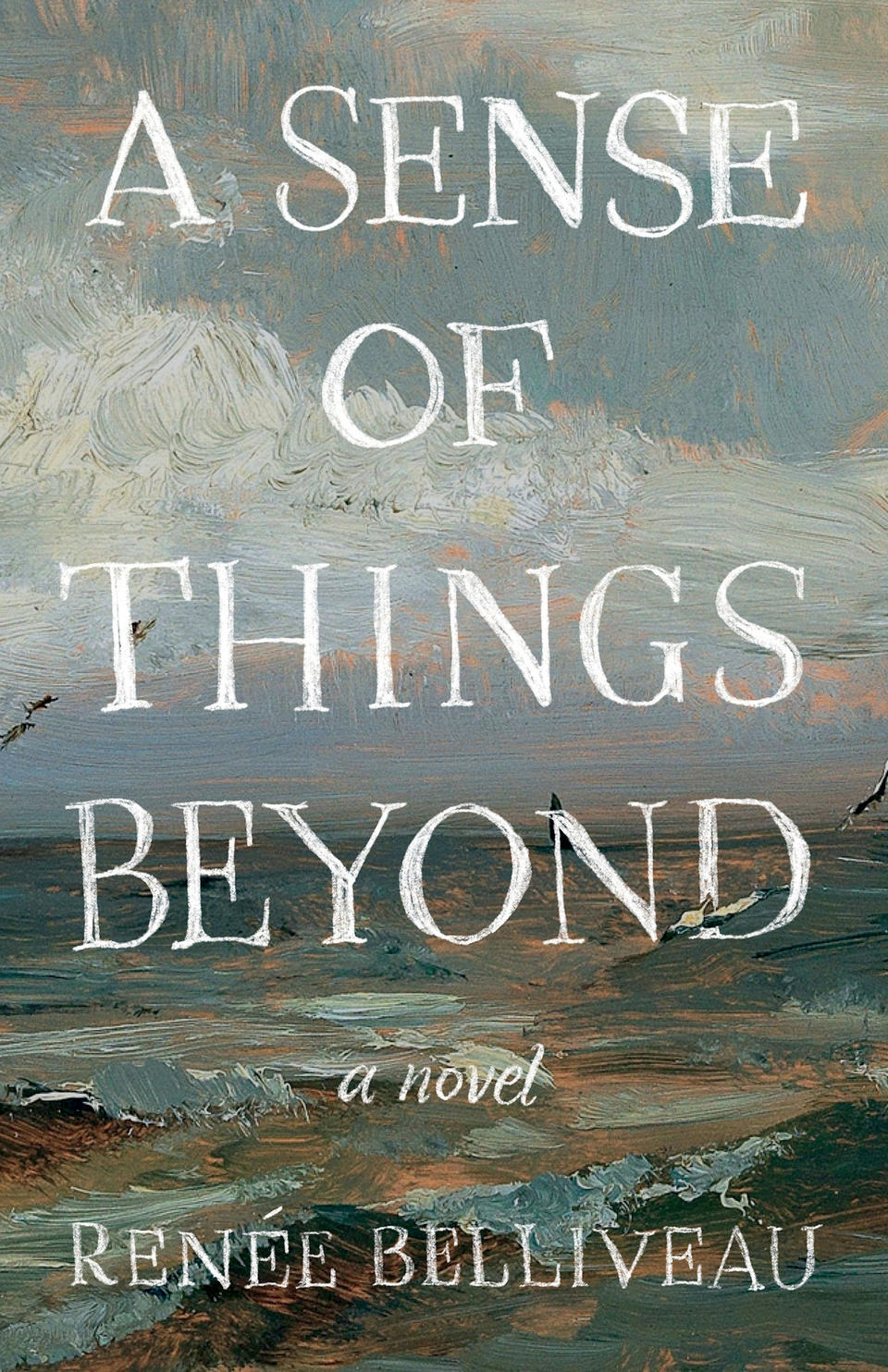
Who gets to remember in war? Who gets to be remembered? And how does that remembering perpetuate the very narratives that makes war possible (and often likely) in the first place? These questions and more are at heart of A Sense of Things Beyond, the second novel by Renée Belliveau, whose fiction is informed by her work as an archivist, and who I had the good luck of being able to work with in the early stages of this book. It tells the story of two people in the early 1920s who are struggling to move forward from their experiences in WW1, especially since those experiences fail to conform with the simplistic and conventional narratives of war and all its glory.
Rose was a nurse who worked on the front lines, who enlisted from her home in Toronto with pride at lending her skills to a cause she believed in, along with her fellow Canadians fighting on the side of righteousness. For Frederick, who Rose has met once before (his brother is married to her sister), things are more complicated. He’s studying languages in Berlin when Archduke Franz Ferdinand is assassinated, and has come to think of Germany as his home, which means he stays too long once war is declared and spends the duration as a civilian detainee at the Ruhleben internment camp, an experience with its own trauma inherent, but nobody around him sees it that way afterwards. Some even think he got off easy because he never had to fight, and he makes his case even less sympathetic by refusing to demonize the Germans as an enemy. He’d been there when the war ended, saw the people of Berlin starving and suffering, and he refuses to mark a line between “us” and “them.”
Which makes sense to Rose, who has seen what war does to bodies, who knows it happens to bodies on both sides, who has seen the mud and seen the death, and knows that stories of heroism are mostly just myths. She has seen also the way that stories like hers have been left out of the narrative, and stories of colonial soldiers who were people of colour, and has lost faith that people like her beloved nephew died for a reason. And so when she connects with Frederick at his home in Nova Scotia while she’s visiting her sister’s family, a romance grows between them, and both of them are force to face the hard experiences they’ve been trying not to think about since war ended. And only once they’ve finally done that can Rose and Frederick begin to face a future, maybe even one together…
This is a novel that brings history to life, that brings untold stories into consciousness, and complicates the way we think about war and remembrance. At a moment when military conflict is all too common (and more dangerous than ever), we need stories like this one to remind us of what it is to be human.
September 5, 2025
Rufous and Calliope, by Sarah Louise Butler
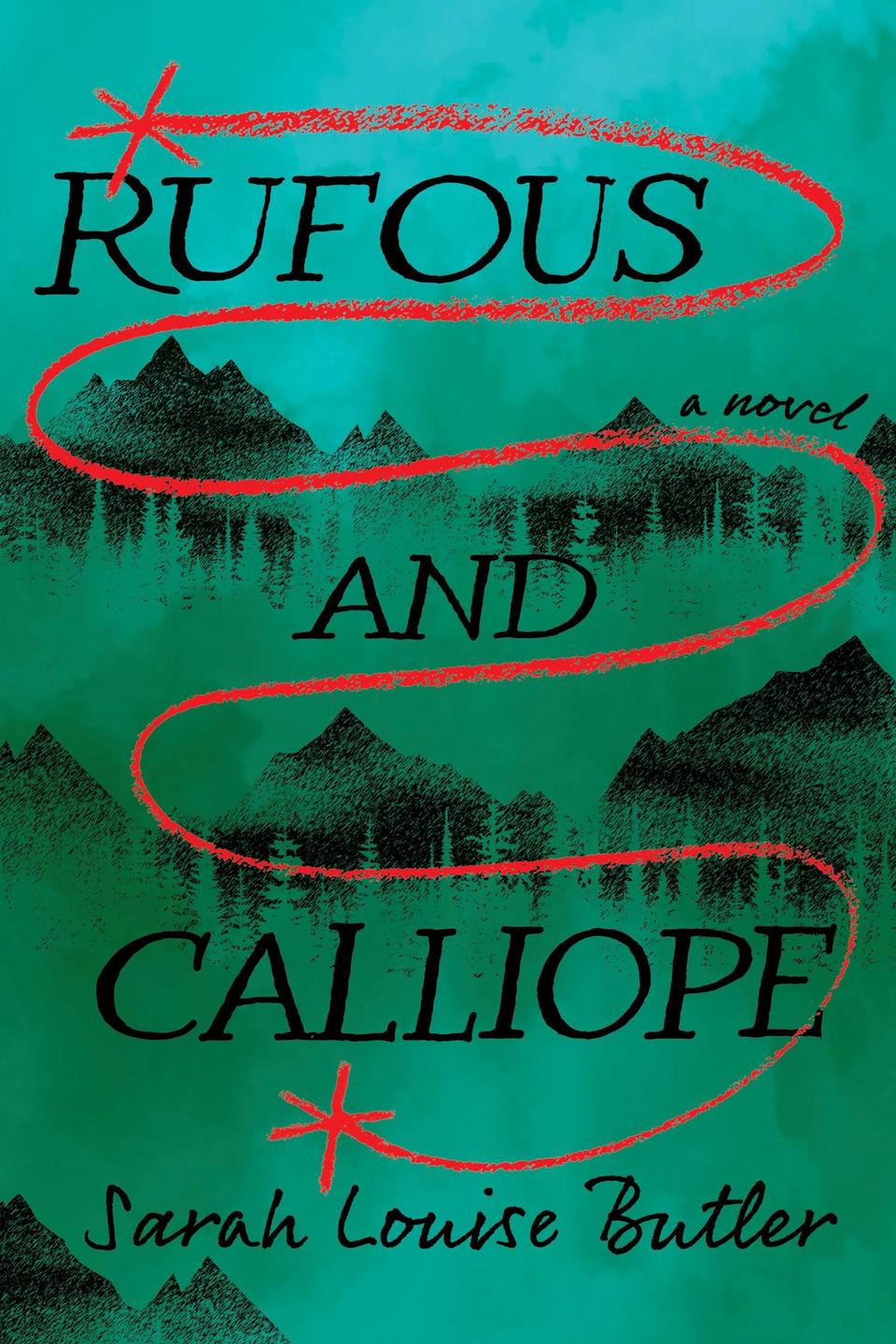
When I reviewed Sarah Louise Butler’s beautiful debut novel The Wild Heavens—about a quest to prove the existence of the Sasquatch—in 2020, I wrote, “it’s less about the finding than the searching, about the wonder instead of answers, about the stories we tell about the mysteries both of ourselves and of the world.” Her new novel, Rufous and Calliope, seems like a different kind of story on the surface, not a mythical creature in sight, but it similarly blurs the lines between fact and fiction, fancy and reality, and is wholly under the spell of its vivid natural setting deep in the rugged British Columbia interior.
The novel begins with Rufous, in his forties, suffering from a degenerative neurological disorder. His hold on the present is tenuous, and he’s had to give up driving, leave his job as a cartographer, and the novel finds him on an epic quest across the landscape to return to the treehouse where he and older his siblings made a home for themselves for a season when he was five years old, after the death of their grandmother. And as Rufous walks, the narrative moves back those enchanted days when he and his siblings were ever skirting the authorities who would have brought them into the child welfare system, but he felt cared for, and everything was infused with a magical sense of freedom. But the season came to an end through circumstances that are not delineated until the end of the story, Rufuous’s siblings leaving him the care of a lesbian couple in a small town who run a cafe, and he grows up loved and cared for, but the loss of his siblings wears heavy on his soul and is as conspicuous as the missing little finger on his hand.
What was the cataclysmic event that tore the family apartment? Whatever happened to Rufuous’s twin sister, Calliope? And what’s really going on with Rufous in the present as he makes his way along the route back to the treehouse? Is he actually going to find his siblings there, or is this just another of his delusions and hallucinations, manifestations of the crumbling in his mind? His decline mirrored in the ecological devastation all around him, the wildfire smoke particles he breathes in all along the journey.
Does this sound bleak? Its not, not really. There are harsh truths that are central to the story—death, and loss, and heartache. But these are balanced out by other things that are just as true, examples of care, friendship, extraordinary survival, wonder at the nature and the mysteries of the universe. What an incredible book.
September 3, 2025
Snap, by Susin Nielsen
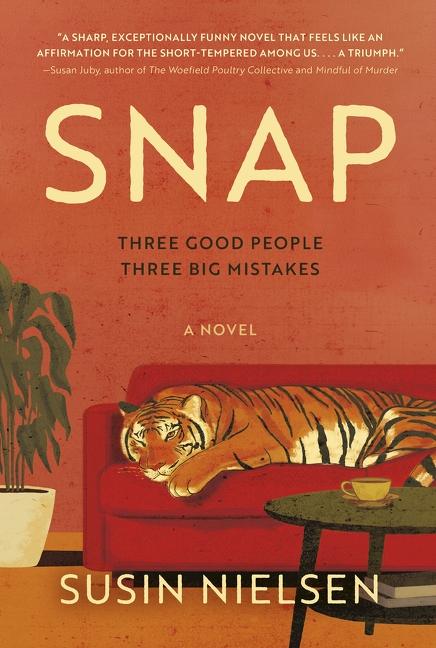
A picture book I really love is AUTHOR’S DAY, by Daniel Pinkwater, which is perhaps truest to the experience of being a writer in public as anything I’ve ever read, the story of a children’s book writer who shows up to a school visit and is met with one abject humiliation after another, to the obliviousness of school staff, and it’s an experience like that—no doubt somewhat universal—is the catalyst for SNAP, the first novel for adults from celebrated and award-winning author Susin Nielsen.
Frances Partridge is smack-dab in the worst year of her life: her children are grown, prickly and difficult; she feels like she’s losing her mother to dementia; and her husband has left her, out of the blue, after 25 years of what she’d always believed as a happy marriage. And so when an adolescent boy starts harassing her during a school visit where she’s reading from her beloved middle grade series, Phoebe Unknown, Frances—on her last nerve—is not having any of it, and tells him what she really thinks…while his classmate is filming the whole episode, the video going viral within hours, and soon Frances has being dumped by her publisher and charged with assault on a minor among the series of disasters that have befallen her lately.
SNAP is the story of what happens next, when Frances is sentenced to community service and an anger-management class during which she finds an unexpected connection to two of her classmates, and after some frustration and much humour, their lives become transformed. It’s a hilarious and heartwarming story of justice and vengeance (and very annoying lapses in swimming pool etiquette), and I loved it through and through.
August 25, 2025
More Summer Reading
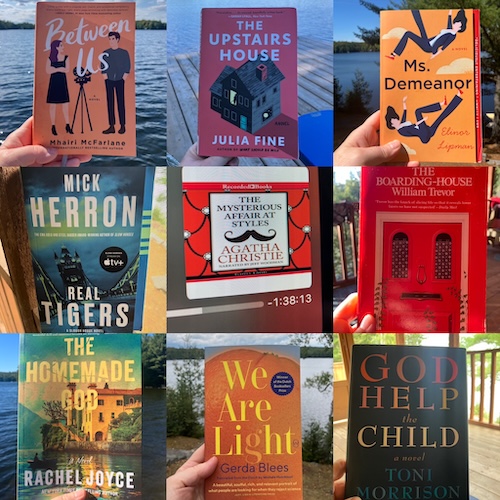
If someone wrote a book about MY summer, it would be awfully boring to read about—all glory, no drama—but oh how lovely it’s been to experience. Last week we spent another beautiful holiday lakeside, and there was so much time for everything—being a little bit bored, even. We watched a movie every day and one day even watched two (Jaws and Puss in Boots—an incongruous mix but the latter was a nice palate cleanser). And of course, there was reading.
I started off with THE HOMEMADE GOD, which is the first book I’ve ever read by Rachel Joyce, and while it didn’t blow my mind, I enjoyed it, and the depiction of the lake in particular (and swimming) made this a very good book with which to kick off my holiday, even though my lake was in Haliburton instead of Italy. It’s the story of four adult siblings from London whose lives have been defined by their father, a middle-brow but very famous artist, and how their messy arrangements and understandings are turned upside down when he marries an enigmatic woman in her 20s, and then winds up dead at his Italian villa not long after, and his purported final painting is nowhere to be found.
Next, I read THE UPSTAIRS HOUSE, by Julia Fine, which came into my life in the most beautiful way. I happened to be in a bookshop a few weeks ago and picked up this book for absolutely no reason at all, and ITS PREMISE WAS A POSTPARTUM WOMAN WHOSE HOUSE IS HAUNTED BY THE GHOST OF MARGARET WISE BROWN. I mean, WHAT?? Could there BE a more perfect premise for a book? And how did I never hear about it, and can you imagine if I’d never picked up that book at all and shared a timeline with a novel about a postpartum woman whose house is haunted by the ghost of Margaret Wise Brown and never ever read it? I cannot imagine a greater tragedy. Even better, the book was WONDERFUL, dark and literary, about an academic whose thesis on Margaret Wise Brown and her influence by modernists like Gertrude Stein is put on hold by the birth of her first child, and things get weird after that, the novel itself haunted by Good Night Moon (itself a ghost story, if you read carefully) and The Runaway Bunny, and like any good writer herself influenced by Margaret Wise Brown, Fine resists an ending that doesn’t unsettle somewhat. This book was terrific.
And then I picked up REAL TIGERS, by Mick Herron, the third novel in his Slow Horses series, which I’m really enjoying (and it’s been reported to me by reputable sources that the TV show is even better than the book!). The series subverts spy tropes (among many tropes) and is so interesting for that, though sometimes the narrative gets very in the weeds and I’m a bit lost, which doesn’t bother me so very much (this is the case for me and any spy or mystery novel, to be honest). Anyway, I’m a fan and will keep reading—though my husband is two books ahead of me and maybe read too many at once, and suggests I space them out a bit, because it’s possible to have too much of a good thing.
And then GOD HELP THE CHILD, by Toni Morrison, which kind of cemented the theme of moral ambiguity in my reading list, as all of Morrison’s works do, blurring firm lines adhered to by people who are too fond of certainty. It’s the story of Bride, born to a mother who is shocked by the blackness in the hue of her skin, and brings her up with emotional deprivation to train her for a world that is going to be hard on her, another novel that subverts the readers understanding of good and evil (that last line! Absolutely haunting…) and maybe this is the first time a reviewer has compared Toni Morrison with the Slow Horses books, but both are utterly uninterested in making their readers comfortable or confirming anything.
And then I read MS. DEMEANOR, by Elinor Lipman, whom I’ve never read before, but I found this one in a booksale earlier this year and have been saving it for a holiday. Unlike THE UPSTAIRS HOUSE, this is a not a novel whose central appeal lies in its premise, if only because the narrative is all over the place (which is kind of ironic for a story about house arrest). It’s about a woman who gets caught having sex with a junior colleague on the rooftop deck of her Manhattan apartment, subsequently losing her job and being sentenced to six months of house arrest, but it’s also about love, Polish aristocrats, 19th century cookbooks, twins and sisterhood, and the possibilities for redemption. I devoured it, and it reminded me of Laurie Colwin, which is the highest literary praise I know how to deliver.
Next up was THE BOARDING HOUSE, by William Trevor, whose novels have been a summer staple of mine ever since I bought a used copy of his 1971 novel MISS GOMEZ AND THE BRETHREN for 10 cents in the Presquille Provincial Park park store. His works are so wicked and irreverent, his earlier books in particular, a bit of a Muriel Spark presence of the devil sensibility (Toni Morrison would concur). This 1965 novel was his third book, the story of a ragtag group of tenants in a London boarding house whose plans go awry when the owner of the house suddenly dies and his will leaves two very incompatible tenants in charge of everything—a surefire recipe for chaos, which transpires. My one reservation about this book was the single character of colour, a Nigerian man called Mr. Obd, who is not gifted the same complexity as his fellow characters, who is rendered simple and childlike (and his physical features drawn in racist terms). It made me think a lot because ALL the characters in this book were hideously flawed, so in a way Trevor’s portrayal is a kind of equality, but Obd doesn’t get to be human in the same way, is a collection of cliches (and also the novel’s ending doesn’t serve him). This is not a reason to not read this book, which is such a wickedly good one, but it’s definitely grounds for thoughtful critique (and this is a problem I find it almost any British novel from its time which acknowledged that Black people even existed).
And then the sweet treat of a book by Mhairi McFarlane, who is one of my favourite romance novelists, her books having a wonderful complexity and depth of character. Between Us was published in 2023, the story of a school teacher whose writer boyfriend’s TV series has been enormously successful, and she wonders if this is part of the reason why their relationship feels stale, or if it would have happened anyway after a decade together. And then she watches the pilot of his new show and discovers painful details from her personal life have been included in the story, and other details make her wonder if she really ever knew him at all—but also a break-up would destroy their longtime friend group and she might be left with nothing. All of which is complicated when she’s called back to her hometown to help out in her mother’s pub, stirring up the same memories provoked by what she’d seen in the show, and making her face things she’s been hiding from since her childhood.
Followed by WE ARE LIGHT, by Gerda Blees, which I bought on impulse at a bookshop in Bancroft while we were away, and it’s a fascinating book, translated from the Dutch by Michele Hutchison, based on a true story about a commune whose members attempt to live on light and air, foregoing food, which leads to one member’s death, which is where the book begins, and the narrative uses the language of the commune of collectivity and oneness to tell a story where each chapter begins with “We are ——”, beginning with “We are night” and concluding with “We are light,” the story told from that precise point of view (which includes that of a pen, a pair of socks, the scent of oranges, the neighbours, the dead woman’s family, the detective investigating whose own daughter is suffering with anorexia which gives her work a personal edge). There is a whimsical element to the approach, but the care and precision of the perspective means there is nothing “light” about it. This is a novel about truth, understanding, perspectives, meaning-making, and also connection, the necessity of the WE (but also it’s limits). Did I buy this book because the cover fit into the very orange palette of most of my reading (DAMN YOU, MICK HERRON.) Perhaps I did, but I’m so glad I did. This was an illuminating and surprising read, and a reminder that reading off the beaten track is so often incredibly rewarding.
And my ninth book was THE MYSTERIOUS AFFAIR AT STYLES, by Agatha Christie, our audiobook for the car journey, which (as usual, being no Poirot) I was completely confused by before the big reveal, but I enjoyed the ride all the same.
August 15, 2025
Blue Hours, by Alison Acheson
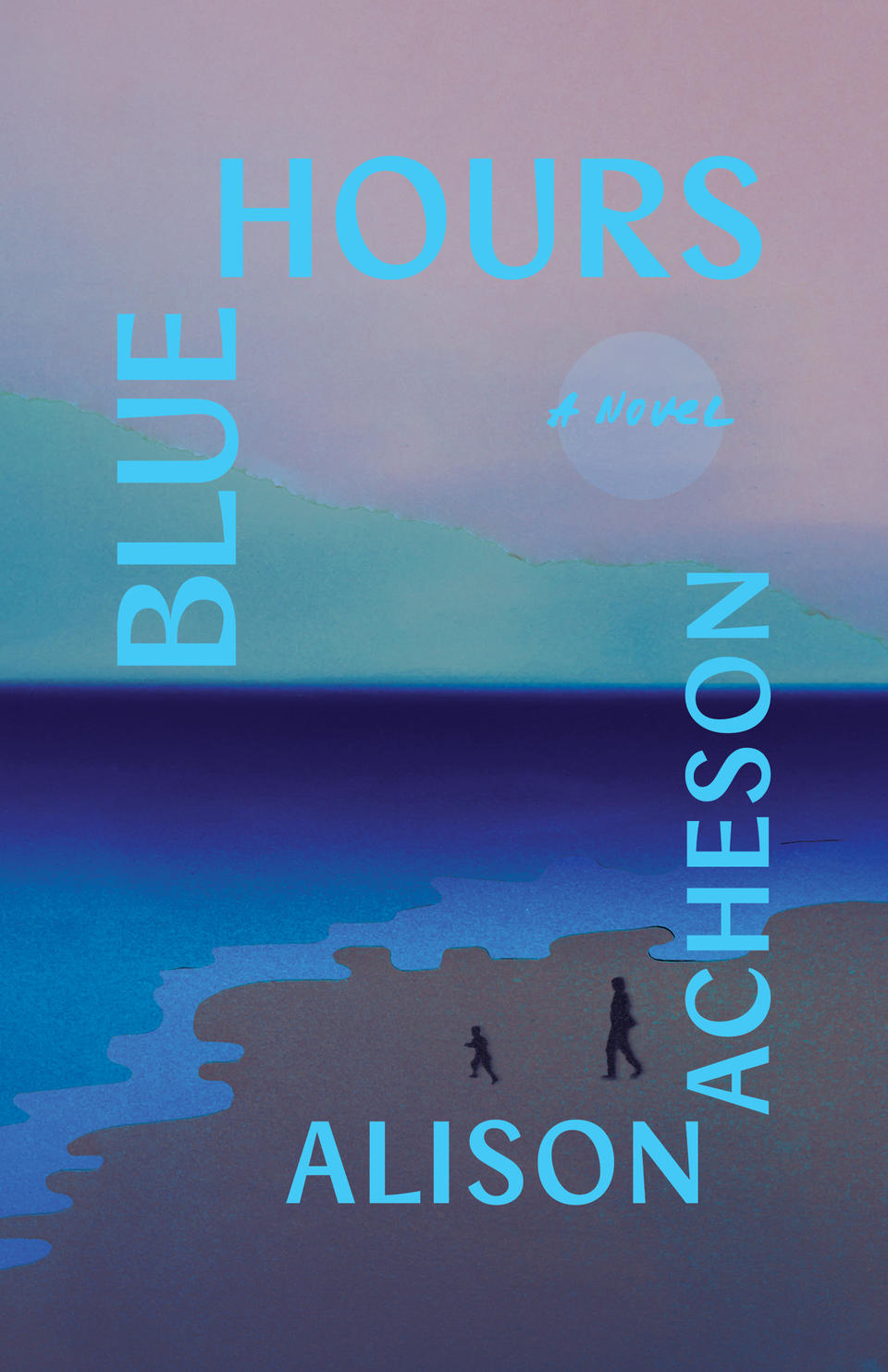
I really enjoyed Alison Acheson’s moody atmospheric novel Blue Hours, a story about fatherhood, and widowerhood, and what it means (and what it takes) to keep going. It’s also the story of a marriage, Keith and Raziel’s, through which they’d both aspired to defy convention. She was the breadwinner, a successful photographer, and he was the caretaker, a stay-at-home dad to their son Charlie. All the ways in which Raziel wasn’t like anybody else were part of what Keith loved best about her, but when he begins to sort through her things after her death, he discovers there were parts of Raziel’s life that he never knew about, he starts to wonder if he ever really knew her at all. All the while their 7-year-old son is processing his own grief, and Keith has to stay attentive to that, his son’s mind a mystery as great as his wife’s had been. And grief is its own kind of terrain, something Acheson knows about from her own experience—she’s author of a memoir about her husband’s death from ALS. Time marches on, and Keith needs to find a way for him and his son to go with it, and Blue Hours is a novel about enduring, artfully and evocatively wrought.
August 14, 2025
Guilty by Definition, by Susie Dent
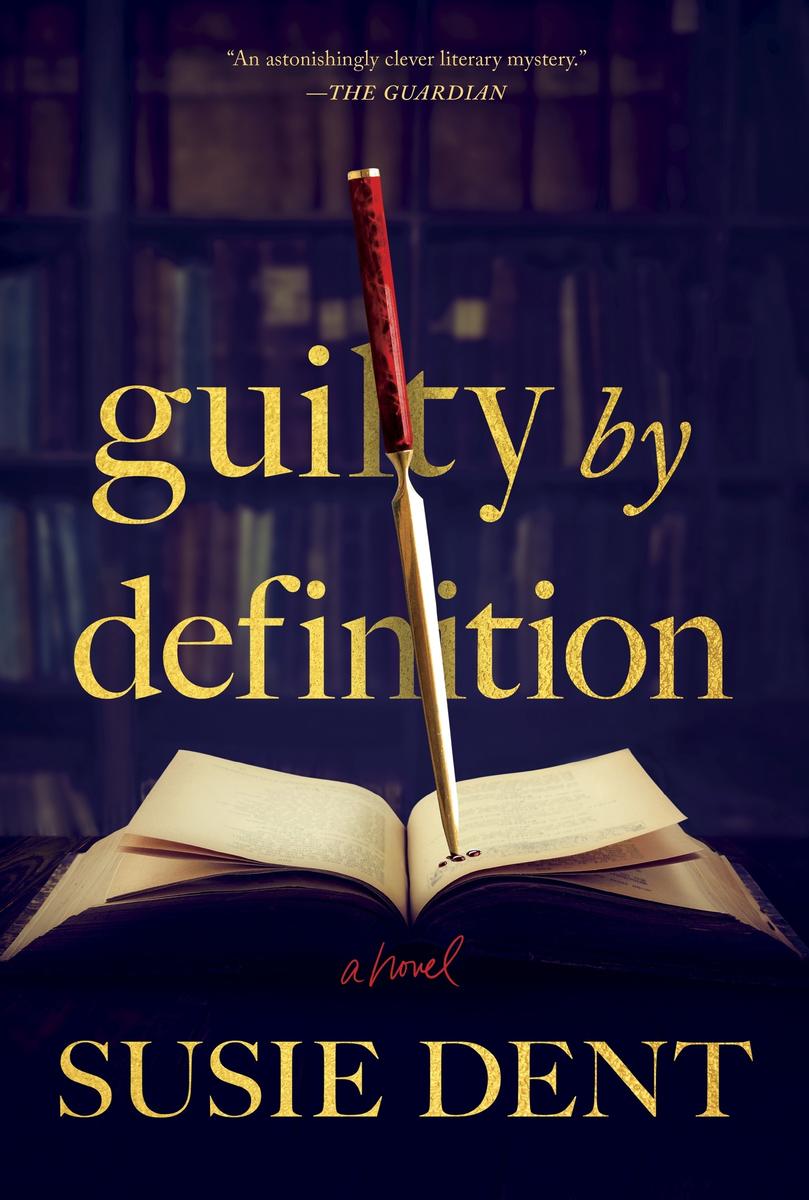
Lexicographer, etymologist and TV personality Susie Dent is a pretty big deal in her native UK, that renown finding its way across the pond to the point where I was stopped by a stranger on the subway this week while I was reading her fiction debut, Guilty By Definition, who asked if she was same Susie Dent from 8 Out of 10 Cats, a question I was unable to answer at the time (turns out it’s a comedy panel show, and yes, she is!), but I told him the book was fascinating. It’s a murder mystery set in Oxford that begins with a mysterious letter delivered to the offices of the famous (and fictional) Clarendon English Dictionary, a letter rife with Shakespeare references that alludes to the unsolved disappearance of the newly appointed editor’s sister, who’d also worked for the dictionary, years before, the sleuthing intermingled with rare book lore, etymological wonders, and each chapter is named for a rare and perfect word like Chapter 27’s “engouement, noun, (nineteenth century): an irrational fondness.”
I will admit that the puzzles became too puzzling for me, who couldn’t solve a cryptic crossword to save my life or even know where to begin with one, and the characters in the novel lacked much emotional depth, but if the idea of a murder mystery all about words and their meanings, and dictionaries and the people who make them intrigues you at all, then you’ll find this book a rich delight.
August 12, 2025
Kakigori Summer, by Emily Itami
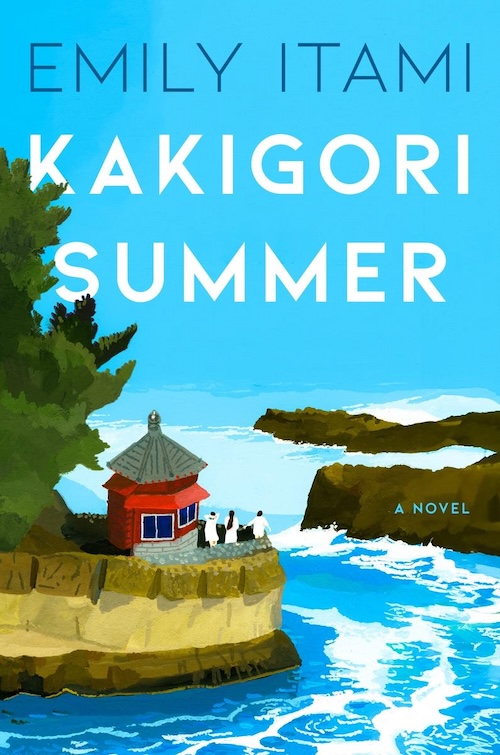
“There’ll be days when the way things are will make you weep, and the fact of the world is too heavy to get out from underneath. And then other days, when you can’t believe you’re here, with people you love in the world that contains barley tea and kakigori, sun after rain, watermelons and grumpy cat, and this front door. Hikaru runs through it, in such a rush he barely has time to get his shoes on, roaring at me that it’s time to go. Sunshine catches one half of his face, and the only thing I want to tell him is to keep his face turned towards it. The light, always the light.”
Emily Itami’s sophomore novel KAKIGORI SUMMER is a beautiful summer novel about sisterhood, the story of three sisters—the eldest working in finance in London, the second a single mother in Tokyo, and the third a famous J-pop star—who together retreat to their childhood home on the Japanese coast one summer after the youngest suffers a national scandal that puts her mental health at risk. Their mother has died years before, their English father lives his own life far across the sea with a new family, and their grumpy great-grandmother is impossible to get along with, which means the sisters are on their own, the way they’ve always been, making sense of their place in the world as mixed-race Japanese, if being “haafu” means that they’ll never be whole. And the novel explores the sisters’ unique position between two different cultures and ethnicities, as well as their legacy of mental illness and secrets, moving between three different characters’ voices to tell a story that sparkles like kakigori, the Japanese shaved ice dessert.
August 12, 2025
WRITERS & LOVERS
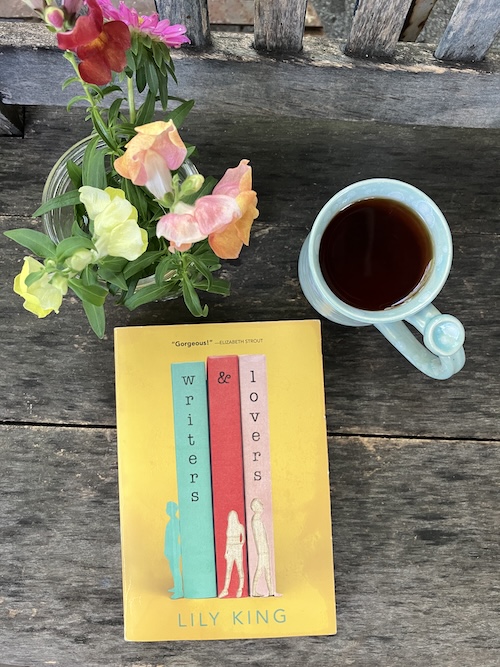
WRITERS & LOVERS made me a Lily King fan. (I am the only person in the world who was underwhelmed by her previous novel EUPHORIA.) But I also don’t remember all that much about W&L, except that it offered a lovely reprieve from pandemic lockdown doldrums during the winter of 2020. And then @streetavocados told me that King’s forthcoming novel HEART THE LOVER has a connection to W&L, and she was wild about the new book, which seems to be sentiment among everybody who has read early copies, and so I decided I needed a refresh, to reread W&L, and I’m so glad I did. Never ever have I read such a polished story about a life that was such an absolute mess, sort of like those gorgeous absorbing illustrations in Shirley Hughes books of rooms with all kinds of stuff piled up on tables and stuffed into corners. The way she writes about waitressing too, her portrayal of Casey’s work a glimpse into another world with its own vernacular and bizarre rituals, and the gamble of a creative life, which is something I’ve thought a lot more about since I read this book the first time (when I was on the cusp of publishing the sophomore novel I was hoping would be my breakout hit). W&L is a novel about life itself, which is a crummy way to some up most novels, but with this one, I actually think it means something, a book about grief, love, disappointment, friendship, money, hope, dreams, and broken promises. The kind of art that reads as effortless. I can’t wait to read what comes next.
August 6, 2025
Milktooth, by Jamie Burnet
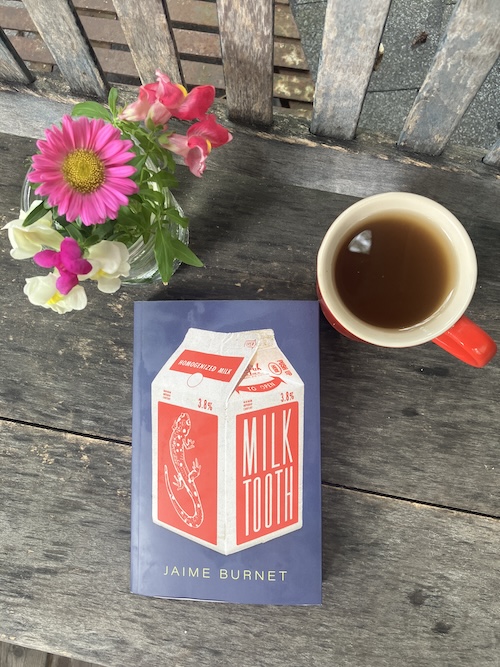
“I think the thing about life might be that it’s just hard, for no divine reason, and it will change you, with no preordained end, and it’s for you to decide whether the hardness hardens you or cracks you open.”
Oh my gosh, this novel is so good, stayed-up-past-my-bedtime good, because I had to see how it ended. (And how it ended! Wow!!). Jaime Burnet’s MILKTOOTH is absolutely spellbinding, and never misses a beat, the story of Sorcha, whose relationship with her girlfriend Chris fast becomes toxic and abusive, repeating patterns from Sorcha’s own childhood within her religious family from whom she’s been estranged since she came out to them. And while Sorcha knows that her relationship with Chris is not altogether healthy, she still wants to be with her, because otherwise what if she ends up alone and misses this one chance to fulfill her dream of having a baby?
But after she and Chris move to an isolated community in Cape Breton, leaving behind the close-knit queer community Sorcha had found for herself in Halifax, things between them only get worse, and when Sorcha finally gets pregnant, she decides there’s no way she can live with Chris anymore, fashioning an escape to the highlands of Scotland where she connects with her aunt, a midwife, who’s as estranged from the family as she is, and together they—along with Sorcha’s friends back home—begin to plot out a future for Sorcha and her baby.
With beautiful prose and gorgeously-rendered human characters (which is to say REAL), Burnet has created a story that swept me along, mesmerized. The dynamics of Sorcha and Chris’s relationship and of Chris’s emotional abuse are pitch-perfect and also hard to read in just how believable they are (how she wears Sorcha down; the gaslighting) and then just when it might be too much, Sorcha takes flight, and the triumph of her exit and everything that happens after that and also the solace and love of her friends—who are so steadfast, forgiving, and true—makes for the most moving, rich and also hilarious read. I loved it.