November 24, 2021
Gleanings
- Right now, we’re making do. Sitting on it. Doing nothing.
- In the years since, I’ve put characters in a novel on that road, just so I could travel it again over and over, as I wrote…
- This week I am numb. I think our brains can only take in so much suffering and heartache and I am maxed out.
- I’ve been looking forward to this novel by the very funny and sharp Saskatchewan writer, Dawn Dumont. I read it as soon as it was released, and loved it.
- It’s never the same, some days I walk alone, some days with others, some days with awe, some days it’s a head down get it done kind of walk.
- I think we all need a little more cake these days.
- Do we need to know our forefathers? And by knowing the details of their lives (but not their personalities, their struggles, their stories) – will it change who we are today?
- What I recognized through this work was that my inner light has the capacity to shine brightly in many situations; but there is payment afterward (or before) when that energy burns.
- Three books that are really hitting the spot for me of late…
- For decades, we have been telling ourselves that we need to be perfect if we want to satisfy our audiences. But AUDIENCES DON’T WANT PERFECTION. They want to see themselves reflected on stage. They want humanity.
- Writing essays is easier for me and often more fun, but writing novels feels like what I’m supposed to be doing with my life. I may be wrong about this. I often wonder why I don’t just stick with the thing that’s fun.
- “Whenever someone writes a memoir about death and dying or grief, it’s always like this: ‘My house burned down, I lost my husband in a car accident, and now I’m CEO of this company,’ ” Hitchins says. “You have that story, or the self-help version, which is, ‘Ten years later, here’s my post-traumatic wisdom.’ What is it like when your only achievement is you started showering again?”
November 19, 2021
Angels, Hope, and High Stakes: A Conversation with Shawna Lemay
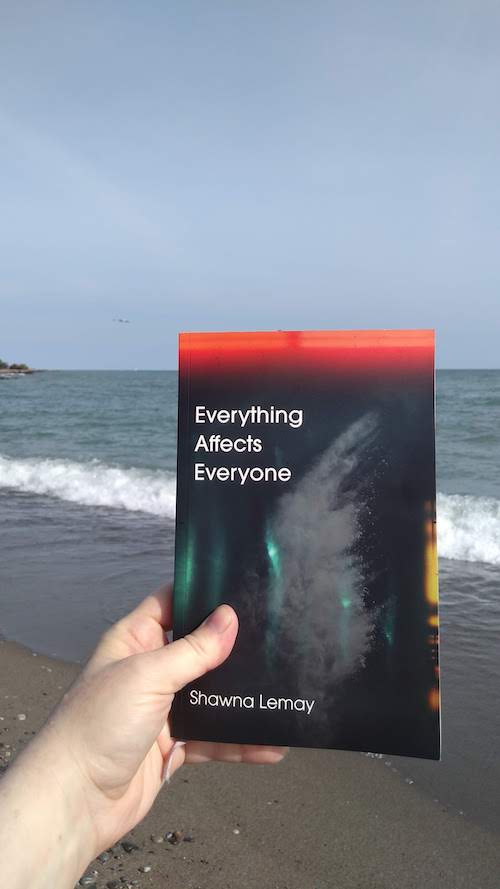
Shawna Lemay’s new book is the novel Everything Affects Everyone. You should be reading her blog Transactions With Beauty.
First thing: I am not interested in angels. Not at all, and so I’d wondered about Shawna Lemay’s new novel, whether it would have the power to sustain my non-interest in angels for the length of a book, but if you’ve ever read anything by Shawna Lemay (her blog, her fiction, her poetry, her essays) you’ll know that her work is never just about one thing anyway, instead a jumping off point for daydreams and reveries and musings on art and other golden things
Second thing: Everything Affects Everyone is a novel about questions, and boy do I have some, such as “How did your obsession with Bruce Springsteen influence this novel?” and “How you decide what kind of container your ideas will fit into, especially since there is such wide overlap and connections between everything you write?” and “What does it mean when you’re writing about questions and answers and dialogue, and yet YOU (Shawna Lemay) are imagining all of it, the illusion of a back and forth,” which kind of makes me start thinking of angels then, and reminds me of one of my favourite lines from the book about how maybe angels aren’t real, but the doubt is real, the wondering is real.
Everything Affects Everyone is wonderful and strange, rich and engaging, provocative and comforting, and filled with mystery and beauty. And what impressed me most about this book is how Lemay’s entire oeuvre is an essential context for appreciating this book properly, the way it fits into and extends her ideas and philosophy, which is utterly original, and inviting, which you can’t say about most things one might term a “philosophy.”
I am obsessed with Shawna Lemay’s obsessions, and the generosity with which she shares them, and the way that she can make me become vicariously obsessed with anything.
Even angels.
*****
Kerry: Can I start off with: How did your obsession with Bruce Springsteen influence this novel?
Shawna: I don’t think there could be a more perfect first question. I wanted to write a book where the stakes were high which I used to understand as maybe telling a story about the brutal state of the world, a story that was about escaping trauma or violence or incredibly difficult circumstances. I admire these kinds of high stakes narratives. I find them necessary. But there are other approaches.
It felt almost radical to insist on a narrative that looks at beauty and mystery and tries to move toward hope. Springsteen puts everything into his songs, and then also creates a narrative about his life, and lets that live around his work, too. Everything he does is part of the Springsteen story, I think. So, I like that. The stakes are high for Springsteen—he doesn’t shy away from the tough subjects, but he comes to them through music that is pure joy.
Springsteen says, “…you can change someone’s life in three minutes with the right song. I still believe that to this day. You can bend the course of their development, what they think is important, of how vital and alive they feel.” There are the things that you hope to do when you write a novel, but it will be received however it will be received. I would love to think that this book could go some way toward making the reader feel alive, feel invigorated.
It felt almost radical to insist on a narrative that looks at beauty and mystery and tries to move toward hope.
And then in an Esquire interview he says, “You’re trying to take all this misunderstanding and loathing, and you’re trying to turn it into love—which is the wonderful thing that happens when you’re trying to make music out of the rough, hard, bad things. You’re trying to turn it into love.” So while it may or may not come through in the novel, I asked myself, what if you just pour everything you have into this container called a novel, and just let it all turn into love somehow? What would that look like? Instead of the cockroach in Kafka’s The Metamorphoses, what if we had an angel? What if the act of imagining ourselves as an angel was just another way of imagining how to be human? What if we could be the angel who could guard each others’ “dreams and visions?”
Kerry: Oh wow, I love this, I asked the question because I honestly had no idea what your answer would be (and these are usually the most worthwhile questions to be asking in the first place), if it might be that there’s no connection at all, because it wasn’t like I read Everything Affects Everyone, and was thinking about Bruce Springsteen. But I know that your connection to him had been somewhat concurrent with your writing of the book, and (as somebody wise once titled her novel) everything affects everyone.
And I’m so glad you mentioned containers, because this WAS on my mind as I read your book. You who I first met through a blog called “The Capacious Hold-All.”
First of all, I feel like your containers are ever overflowing, anybody who’s read your blog, and your essays, your fiction and even your photography will know how connected they are, that these are all just different containers for your ideas and fascinations. Would you agree with this assessment? And how did you know/decide that Everything Affects Everyone was going to be a novel? I could see how it might have been poetry or nonfiction as well—and it even takes the form of invented nonfiction. So why fiction? How did you choose this particular container?
Shawna: I love your description of my work as being different containers for my fascinations—I immediately envision a still life of all sorts of clear glass jam jars, different shapes, with different facets, designs, sizes, filled with colourful liquid like potions—the light striking them and casting colourful shadows. And you’re right, I could have written a book of poetry or essays about angels. But I think a novel is the proper container for my angel fascinations because of the way that it holds mystery. All writing has this potential, of course. It had to do with time and movement, in the way that a viewer in a museum will look at a still life and experience it close-up and without moving very much, vs looking at a huge landscape or scene—the way you walk from one side of it to the other side, you move back, move forward. The text of a poem embeds in you differently than the text of a novel that you spend maybe days reading. Angels are like a flash of poetry but then there is all that living around an angel experience.
I think a novel is the proper container for my angel fascinations because of the way that it holds mystery.
Well, I say all this, but in honesty, the form just happened. It called. The writing proceeded organically and with surprisingly little calculation. I had Clarice Lispector’s words in my head about genre. She says, “Genre no longer interests me. What interests me is mystery.” But I had that in my head when I wrote The Flower Can Always Be Changing, too. (It’s the epigraph of that book). This book is in part an effort to be in conversation with Clarice Lispector, who for me, as soon as I learned of and read her work (which I can only read in translation) made my hair stand on end. I think Rumi and the Red Handbag is in conversation (bold claim) with The Hour of the Star and maybe this book is in conversation with The Passion According to G.H. Or maybe A Breath of Life. This sounds grandiose but I really didn’t want to die without having written this novel and published this book. I wanted to fill that container with my all.
Kerry: How did angels start to happen for you?
Shawna: I have intermittently been called an angel my whole life. I know that this is because as a child I had white blonde hair. If you had asked me as a kid what an angel was I probably would have answered “a goodness.” And I knew I wasn’t necessarily that, so immediately: a contradiction, a “huh!” As far as I knew back then, all the adults were calling all the children angels. One of the more memorable times I was called an angel was by the Irish poet Michael McCarthy who died in 2018. He recounts our meeting in his posthumous book, Like a Tree Cut Back. The year was 1995. Michael writes: “On my second day in Edmonton I visited a bookshop in the local mall. A young, tall woman approached me and asked if she could help.” He had this otherworldly quality, and I would find out until later that he was a priest, and that he was recovering from cancer. He would win the Patrick Kavanagh Award for the book of poems he wrote in his time in Edmonton. I would introduce him to the poetry community and because of that he often referred to me as his angel. But when I met him, he seemed the angel, or at the very least a magical bird. It was the middle of winter. He took off his toque in front of the poetry self, and his grey hair stood on end with the static. The air around him crackled.
Another one of the angels of my life is Barb Langhorst. I can’t remember the year but she was teaching at St. Peter’s College in Saskatchewan, and was using the story by Gabriel Garcia Marquez titled, “A Very Old Man with Enormous Wings.” She sent me a copy because she knew it would interest me. I became obsessed with the story which can easily be found on the internet these days, but also in his Collected Stories. As soon as I read it I knew it would find its way into my writing someday. But it turned out that Amanda Leduc wrote The Miracles of Ordinary Men first, an amazing book. And then in 2017, Peter Darbyshire wrote his edgy and super cool Has the World Ended Yet?—which is full of angels. But by then I realized (and was already writing this book) that you could sit a dozen people in a room and say, write about angels, and they’d all write something completely different. So that was a good moment.
I realized that you could sit a dozen people in a room and say, write about angels, and they’d all write something completely different. So that was a good moment.
Meanwhile, people who come into the library where I work continue to call me an angel from time to time. (Maybe now that I’ve said that it won’t happen again). A couple of weeks ago, though, on a phone call (so it wasn’t about the blonde hair) I looked something up for a person who then said repeatedly, you are an angel, a real angel. My book was in the stores at that point and it honestly really shocked me. I do, funnily, get that fairly often at the library, but then I’m pretty sure all library workers get that.
In short, though, I would say that on average throughout my life I’ve been called an angel by someone once every couple of months. When I say it though, man, that sounds weird! But there it is. It always startles me. It’s a shock. Electricity! Whenever someone calls me an angel I always assume they’ve got it backwards, and they’re the angel.
Kerry: What’s the connection with libraries and angels? (I love, by the way, that your novel references City of Angels, and that it’s not just fancy German art films all the time. The lack of pretension with which you talk about rarefied things is so inspiring, plastic bags and grocery store flowers…)
Shawna: I think most writers and readers have had what is known as a “library angel” experience in “coincidence theory.” (Which in fact, I had done no looking into until just now). There’s a book by Arthur Koestler that details the phenomena anecdotally, apparently. (Perhaps that book will fall into my path now that I’ve mentioned it). It’s just the phenomena, though, of a book finding you in whatever way as if you have conjured it, and there are tales of books falling off the shelf and it being the precise one that person needed or was hoping for. Have you ever had an experience like that?
I’ve had a few of those library-angel experiences, though I tend to just put them down to serendipity, or the fact that because I spend so much time working in a library that this is just bound to happen. But people regularly talk about this sort of thing happening in library-world.
And if we can think of angels less as figures from the history of religion, and more as either paranormal or secular manifestations or projections of our unknowing or as non-denominational spiritual messengers (so many possibilities!), then it makes some sort of sense that they end up in a library. In the secular world of my novel, the angels wouldn’t be drawn so much to cathedrals but to libraries because this is where people seek—libraries are full of people seeking information, help of so many different types. If angels are primarily messengers of one sort or another, then a library is a pretty great place to impart them.
In the secular world of my novel, the angels wouldn’t be drawn so much to cathedrals but to libraries because this is where people seek. If angels are primarily messengers of one sort or another, then a library is a pretty great place to impart them.
There’s a lot of literary and filmic precedence for angels in libraries, too, so I liked echoing that. As you mention, scenes occur in City of Angels and Wings of Desire. But there are library scenes in Lucifer, and in Constantine, where Tilda Swinton plays the angel Gabriel. There is also the amazing Charles Simic poem which he wonderfully allowed me to use in the book.
There is the fabulous quotation by Caitlin Moran about libraries, where she says a library “is a cross between an emergency exit, a life raft and a festival. They are cathedrals of the mind; hospitals of the soul; theme parks of the imagination.” And in my experience, a lot of people come to libraries not so much to be healed, though that also happens a lot, but to find hope. Just being in a library is a kind of message, so there’s that too. It makes sense that angels would congregate in such a place.
Kerry: Sometimes you ask a question and the answer you get is more wondrous than you’d ever supposed it could be. I love this, Shawna! And I suppose I have experienced “library angels.” I used to work in a library when I was in university, and there are so many books that came into my life because they happened to be on my shelving cart, or because they happened to be filed beside a title that was. I suppose that’s less random, really, but it was such an inspiring method of discovery.
I also remember doing “shelf reading,” which was going into the stacks to read the spine of every single book to ensure that the books were in order, which I once upon a time supposed was a kind of make-work project, but now I see we were being library angels ourselves, rescuing volumes that might have become fallen or misfiled, and needed to restored.
And now I am thinking of angels as agents of order? Or disorder?
Shawna: I love that you worked in a library when you were in university! I did, too, and I don’t think I knew that about you. I worked in the science library for five years which was such an interesting place for an English major. Anyone who frequents libraries though has experienced the angel of shelf reading! They just might not know that.
One thing I love about working in libraries, and I guess I’ve been in one library or another as a worker for more than twenty years of my working life, is watching the body language of people in libraries. I’ve internalized a lot of it, but I think I could write a whole book on just that, which would of course include photographs! There’s an utterly unique way of “being” in a library, is my theory.
Kerry: I am thinking too about your own preoccupation with questions, with dialogue—so much of your book is written as questions and answers, you exploring the power of this sort of exchange. And what is different, or perhaps even just the same, because you, the fiction writer, happen to be questioner and answerer both here?
Your novel also made me think about the title of Miriam Toews’ novel Women Talking, which would also have made a good title for Everything Affects Everyone.
Is asking you if a fictional conversation is as potent as an actual conversation sort of like critiquing a still-life because you can’t eat it?
Fittingly, or not, I don’t even have a question here, Shawna. Except maybe, “what say you?”
Shawna: Well, to immediately circle back to libraries, I think I’ve just realized, because of this conversation that we’re having right now, that so much of the book is informed by my experience of what we like to call in the biz, “the reference interview.” Wow. And so what every library worker knows and works toward, and really this is one of my life’s main raison d’êtres, is the perfection of the reference interview. Which is ever unattainable, a work in progress, the holy grail of library work. Because, as in most conversations, a lot of what happens is sidelong. Sure there is often the straightforward person who comes in wanting X book, asks for X book, and walks out with same. Wonderful, that! But often the person arrives looking for something that they can’t say, or don’t know how to say, or want to say but are too uncomfortable to say, or don’t even know that they can ask for this thing that they need. So, it is this really delicate back and forth, that must be purely openhearted, and orchestrated to not presume, to not overextend, to probe but with good intent, with a mind to privacy, a mind to empathy, and with a great deal of instinct, as to when to be blunt, or ask the really dumb or super open ended questions, when to be silent, when to nod. It’s an exercise in hope and humility and curiosity and must be filled with a genuine interest in the human before you.
So, it is this really delicate back and forth, that must be purely openhearted, and orchestrated to not presume, to not overextend, to probe but with good intent, with a mind to privacy, a mind to empathy, and with a great deal of instinct, as to when to be blunt, or ask the really dumb or super open ended questions, when to be silent, when to nod.
So I guess all of this to say, that I’m always thinking about how we can have a better conversation, in the aforementioned circumstance, but also in other areas of our lives. There was a recent interview on On Being, with the always wonderful Krista Tippett in conversation with Priya Parker, about gathering. They talk about how a gathering is improved by the preparation beforehand, when we guide the invitees on how to show up. Like, let the people know what they’re showing up for, what’s the purpose! What’s the framework? There’s an intentionality. They quote another favourite author of mine, John O’Donohue, that an intentionally extended invitation allows us “to cross our thresholds worthily.” And a conversation can be a threshold, too. How do we have better conversations? How can conversations be transformational? How do we transform in conversations?
I was reading recently (ack I can’t remember where) about the difference between an answer and a response, and how an answer will potentially close things down, but a response will keep things open. And isn’t that interesting to ponder?
Regarding the fictional conversation. This is interesting, because I think I was drawn to that form partly because in real life, I’m not the best interview subject, haha! I’m not. If we were sitting here talking I would not be getting half this stuff out, because I usually get so nervous, my brain shuts down. So maybe writing fictional conversations is a way to redeem this failing? Maybe. But it also allows the writer to be in two minds about something, to embrace more than one possibility, and to even posit things that they don’t necessarily believe, but want to hear “out loud” as a sounding board of sorts.
Kerry: Oh, yes! I often think of something you wrote awhile back: “Consider the opposite.” That idea is a kind of touchstone for me. How would you say that Everything Affects Everyone is a demonstration of this very idea?
Shawna: When I was writing Rumi and the Red Handbag, part of what got me started was thinking about what a literary critic had said, about how men go on quests, but women go on errands. And then I got thinking about errands as quests, the handbag as the grail, which led to the central question of that book which is, What are you going through? When we start to wonder about the opposite of one thing, quest vs errand, for example, we then begin to question if those two things are really in opposition and how.
So with Everything Affects Everyone, I was very much inspired by the Marquez story, “A Very Old Man with Enormous Wings” and wondered if it could be young women with you know, just beautiful wings. But then what kept coming back to me was Kafka’s Gregor Samsa and his transformation into probably a cockroach. And wondering what happens when instead of a cockroach, one becomes an angel. And what if wondering about what it would be like to become an angel were really just another way of imagining what it’s like to become a human, or a better human, or just to become who we are. And isn’t that a marvellous possibility?
So I love that you have held that phrase, “consider the opposite,” because while it’s not explicitly in the book, it has meant a lot to me, too!
And what if wondering about what it would be like to become an angel were really just another way of imagining what it’s like to become a human, or a better human, or just to become who we are. And isn’t that a marvellous possibility?
Shawna Lemay
November 18, 2021
Time Squared, by Lesley Krueger

Okay, speaking of time, I have but fifteen minutes in which to write this post before I have to take my daughter to the dentist, and so I’ll dive right in and tell you that that novel, Time Squared, by Lesley Krueger, which I’ve loved more than I’ve loved than any book I’ve read in ages, could be billed as Kate Atkinson’s Life After Life meets Kazuo Ishiguro’s Never Let Me Go, if we wanted to underline just how badly you really ought to read it. And oh, you really do.
The beginning is kind of strange and discombobulating, but the reader eventually realizes there is good reason for that. Eleanor, a young woman in the nineteenth century, is being groomed for marriage, finds herself falling in love with Robin/Robert, the younger brother of the man her aunt is hoping she will marry in order to ensure security financial and otherwise. Robin is on the eve of leaving to fight in the Napoleonic War, and over the course of the novel, Eleanor, and her aunt, and her friend Catherine, and other members of their families and community, bide their time as battles prove inevitable, and Eleanor waits for the man she loves to come home.
Except that she keeps finding herself moving about curiously in time.
The plot unfolding, relationships growing, deaths, and heartaches, and other losses, but sometimes it’s the early nineteenth century, and sometimes it’s the Victorian age. Sometimes Robin is fighting in the Boer War, WW1, the London Blitz. Sometimes they’re in mid-century America against the backdrop of the Korean War, the war in Viet Nam. A few strange glimpses of even earlier times, the 14th century. 61 A in Londinum.
And Eleanor is getting these glimpses, seeing these visions which she cannot possibly understand, which are written off as migraines, or perhaps something more troubling. Accustomed—as a woman, as an orphan, as a person whose financial destiny is precarious—to being moved about by others as if a pawn, until finally she gets tired of being played, and makes the decision to finally confront her masters.
Oh my gosh, this book is excellent. It takes some time to find its way into, because its unstable narrative is the very point, but it’s always interesting, underlined by literary allusions in the most delightful fashion, but by about midway through, I was finding it very hard to put it down. Last night I had to stop reading around page 250, because I had to go to bed, but then I couldn’t sleep, my mind all wrapped up on the narrative and just where the narrative is going.
And it’s going somewhere so perfect, a story that cannot possibly just be a cheap gimmick in the end, and it isn’t. Oh the ending, I loved the ending, so absolutely perfect, that last sentence the most extraordinary gift and promise.
November 17, 2021
Gleanings
- Thank you for tolerating white board markers that never have enough ink, hours that never have enough minutes, and parents that never have enough empathy for what you deal with in a given day.
- This is NOT what I thought I was signing up for that summer when I decided I wanted to do this for a living.
- And tweeting small observations about the world around me, as well as lifting up others’ voices, is enough to keep me checking in.
- Can I hope we will meet in person someday, coffee cake or no coffee cake, to continue the conversation? GAH. Sometimes I miss people. In person. A lot. And I’m an introvert who loves being at home in her comfy pants!
- Women are like that, putty in their stylist’s hands. Hoping the blonde will darken in a few months, I will return to him, because I still believe in his skills. And yes, I want to look good, even while going grey.
- It’s as if that one remark moved us into something different, from strangers to fellow travellers, from small talk, into conversation.
- Our walks were how we connected with a city in lockdown and how we stayed close to nature, to ourselves and to each other.
- Why don’t you try something you haven’t done and why don’t you see where it takes you? Why don’t you.
- It’s funny how you can set your life up to be the way you want it to be, and then forget to appreciate it.
Do you like reading good things online and want to make sure you don’t miss a “Gleanings” post? Then sign up to receive “Gleanings” delivered to your inbox each week(ish). And if you’ve read something excellent that you think we ought to check out, share the link in a comment below.
November 12, 2021
Wayward, by Dana Spiotta
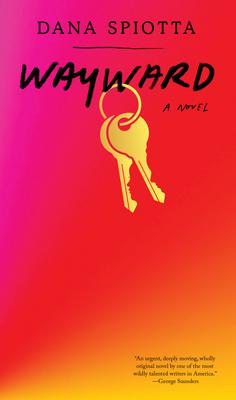
I recently read Dana Spiotta’s novel Wayward in one sitting, not necessarily because it was it was unputdownable, but because I’d chosen it for the Turning the Page on Cancer Readathon a few weeks back. And it turned out to be a perfect selection for such a thing, the novel utterly absorbing, although I read it kind of deliriously, now that I think about it. It’s a pretty intense novel with a whole lot to unpack, and so the affect of reading it all in one burst was a bit like being smacked in the head with a baseball bat, but in the very best way possible.
It’s a highly specific novel about something so many of us tend to speak about in general terms, namely what happened when the world went off the deep end in 2016. For Samantha Raymond—whose mother is ailing, whose daughter is coming of age, who suddenly finds herself unable to sleep at night—this surreal moment in the universe sends her life into a tailspin when she decides to leave her comfortable suburban home, and her marriage, purchasing a ramshackle historic home in a dodgy neighbourhood in Syracuse.
The first line of the novel: “One way to understand what had happened to her (what she had made happen, what she had insisted upon): it began with the house.”
“It began with the house” could well be the opening line to most novels that I love.
Wayward is a twisty, tricky novel, that’s also about mid-life, aging, about feminism, about white feminism, about cities, neighbourhood, community, motherhood, daughterhood, about notions of justice and what it means to lead an authentic life. As can be expected from the title, Sam’s pursuit of such a thing is not straightforward, usually ill-advised, and hers is a story of mistakes and wrong-doing, the inevitability of these, the impossibility of purity, of the possibilities of redemption.
November 10, 2021
Gleanings
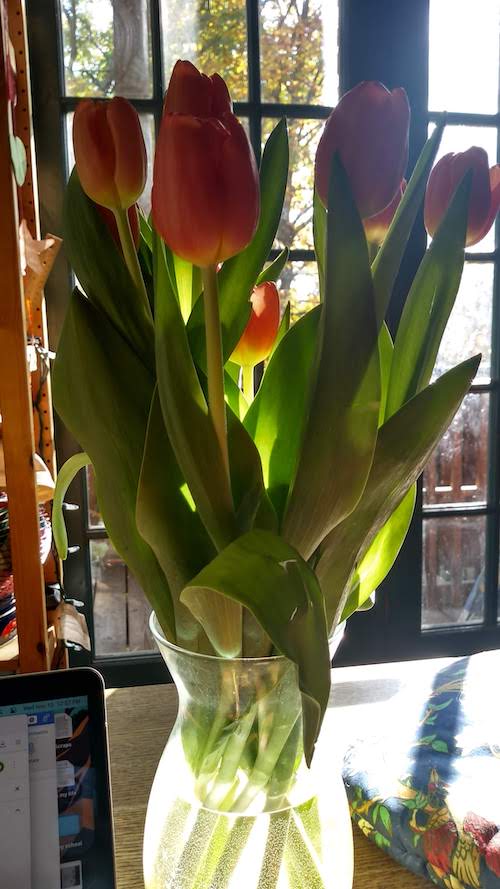
- Baked in a disposable foil cake pan for easy door dropping and classic Deep n’ Delicious aesthetic, with frosting piped on with a star tip to complete the effect, I’ve baked this several times and it has been devoured each time – it’s wonderful, vegan or not.
- And then it gets weird. The Hong Kong avian flu introduced H5N1 to the world, a new and dangerous virus, transmitted from birds to people, causing fears of a worldwide influenza pandemic. The European Union experienced major floods, while a massive tornado stormed through Texas killing 27 people. Meanwhile, world leaders from 150 countries met in Kyoto to sign an agreement to address climate change.
- I am about halfway through You Look Good for Your Age: An Anthology, edited by Rona Altrows, and so the theme of aging—body and mind and soul—is clearly on my mind.
- A deliberate act of stopping, noticing, looking up, breathing deep, all in stillness – a necessity I am becoming more comfortable with, in this hunt for awe, whose closest companion, may just be gratefulness.
- I’ve got a lot of houseplants, dude. Each time a mood strikes me, I find myself holding a potted plant.
- Books have been a comfort to me since early childhood as I learned to navigate life in a world that expected much more from me socially than I would ever be able to give.
- I’ve had less flattering juxtapositions of “Taylor Swift” against other aspects of my identity, most noticeably in university when a Black friend pondered why a Black man would be listening to a “basic white woman”. The false description aside, my reason is simple: her themes embody the kind of writing I seek to create—emotive and universal, yet highly specific.
- I suppose what gets to me is this belief that we need to take classes to learn, to become perfect at something. What happened to just plain practicing? Why not sing, dance, paint, or write for the pure joy of it, rather than feeling like we need to be experts?
- It feels like the epitome of late fall to me, the kind of thing I can never resist on a lunch menu because isn’t it wonderful when someone else has already gone through the trouble of roasting squash?
- The power went out at 5:30 this morning, the small lights we are accustomed to at night–the shell nightlight in the bathroom, the glow of the modem in John’s study beyond our bedroom– extinguished
- What is a character without place? Even if it’s a place as small as a room or a country where the character does not feel she belongs.
- I’m miserable when I’m not writing in some form — so if I don’t write for too long, something starts to feel deeply off and so I keep coming back to this complex relationship.
Do you like reading good things online and want to make sure you don’t miss a “Gleanings” post? Then sign up to receive “Gleanings” delivered to your inbox each week(ish). And if you’ve read something excellent that you think we ought to check out, share the link in a comment below.
November 10, 2021
Best Possible Time
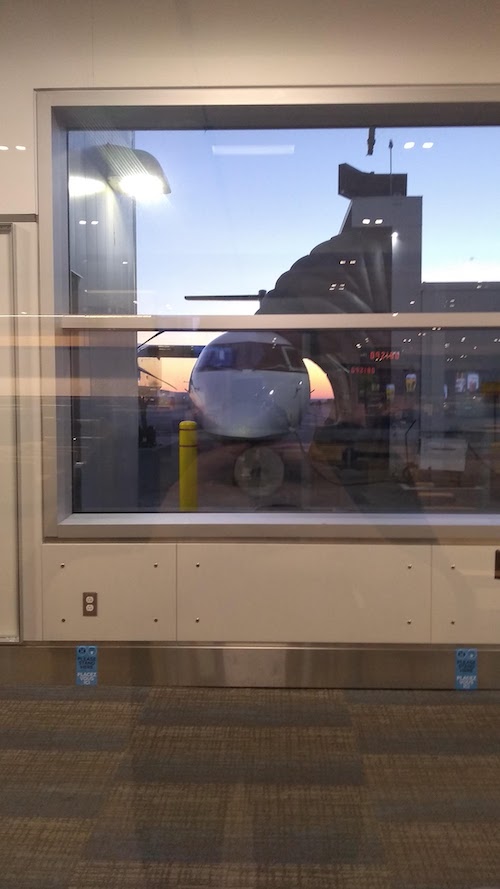
I went away for the weekend—on an airplane. And I KNOW. What decade is this anyway? The experience a necessary one, I figured, when it was offered to me. An opportunity to think and rethink, examining my comfort zone in what has been a time where it’s been all too easy to hunker down inside it.
Something I’ve appreciated all along about living through the last 18 months, or at least tried to appreciate in the moments which such things were also kind of excruciating, is how interesting it’s been to be residing in a time of such abject uncertainty. Even though I really don’t like uncertainty, abject or otherwise, but it really is inherent to the experience of living—it’s just that most of time we have the luxury of pretending otherwise. Imagining our plans and arrangements are somehow in keeping with the order of the universe—and perhaps they are, sometimes, because we’re part of the universe too—but I just know that it’s been good for me to let go (or to begin to let go, or perhaps to ponder the beginning of letting go) of the notion of control. To be asking questions whose answers are far from fixed, if they’re even known.
The line from Tom Stoppard’s Arcadia, which I really need to reread again: “It’s the best possible time to be alive, when almost everything you thought you knew is wrong.”
And of course it’s not the best, but I’ve been doing my best to learn from this time, to resist the way my own instincts are drawn toward certainty, rules, and constraints, even though that’s not really how the world goes. Last fall as families were making the call between in-person schooling and virtual learning, it was fascinating me that while we spend a lot of time posturing about there never being one right choice in regards to parenting, this really was one of those rare circumstances in which this was actually true. To the point where it really didn’t matter much what side you came out on, because nobody was sure of which was the right one, and all of us were just doing the best we could with the information that we had.
I have found it fascinating for there not to really be rules, for safety to be quantifiable. All of using the tools we have at our disposal to mitigate risk, to take those chances which are worthwhile for us to take. 18 months in, we know enough that this is finally getting to the point of being less frightening than genuinely interesting, license for each of us as individuals to think about what’s right for us. To be thoughtful and deliberate in our choices, and they don’t have to be the same as everyone else’s, and that’s really okay.
Because there’s no right answer, which also means there’s no wrong answer, and how often do opportunities come along like that?
November 4, 2021
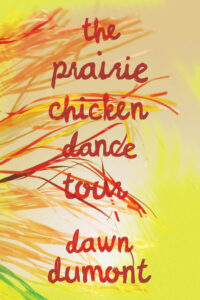
The Prairie Chicken Dance Tour, by Dawn Dumont
I’ve gone back in my archives to remember when it was that Dawn Dumont, from the Okanese Cree Nation, became one of my favourite Canadian authors, and turns out it was 2015 when I read Rose’s Run, “a book that’s funny, breezy and heartwarming, and then manages to include a terrifying demon in the mix who feeds on the strength of women, so I was hooked in a cannot-turn-out-the-light-until-I’m-done kind of way, an I’m-going-to-have-nightmares kind of way (and I did!)…”
She followed up Rose’s Run, her second novel, with Glass Beads two years later, a novel in stories in which the demons were less literal, the narrative tracing four friends through decades of their lives, loves and losses, ups and downs, a novel that similarly irreverent if more realist, as well as heartbreaking and hilarious at the very same time.
Heartbreaking and hilarious is a tricky balance but in her fourth fiction release, Dumont has done it again. The Prairie Chicken Dance Tour is set in 1972 as food poisoning has taken down the Prairie Chicken dance troupe on the eve of their European tour, cowboy John Greyeyes reluctantly agreeing—even though he hasn’t danced in years—to lead a cobbled-together team of subs as a favour to his brother who’s Chief of the Fineday Reserve. (Politics factor large in all Dumont’s novels; she also served as a Liberal candidate in the September 2021 Federal election, something else on her CV now, in addition to novelist, lawyer, and stand-up comedian).
As can be expected of any novel that begins with diarrhea and features a hijacking within the first three chapters, The Prairie Chicken Dance Tour is indeed a string of madcap adventures, funny and ribald, over the top and unconstrained, and unrelentingly amusing. Greyeyes has to contend with a young dancer who flirts with anything that moves, her uptight Catholic auntie, plus a fourth member of their group who isn’t who he says he is, not to mention the original leader of the dance troupe whose stomach has finally recovered and is on her way over to Europe to take up the job that should have been hers to begin with.
The book is fun, but it also pulls no punches. Set in 1972, its main characters are survivors of residential schools in a country that has not even begun to reckon with this, living with the trauma and broken bonds of these experiences. Dumont showing too that every person who’s able to survive has their own way of doing so, which can be complicated, as is the case with Edna, who finds strength and solace in the Catholic church and whose processing of her experiences doesn’t immediately make sense from the outside.
But Dumont shows us each of these characters from the inside, deftly using fiction set fifty years ago to consider ideas and issues of racism, cultural genocide, and the possibility of reconciliation that have never been more timely. Using humour too to diffuse the pain, to create the chance for some kind of happy ending.
November 3, 2021
Gleanings
- Unvaccinated people didn’t just arrive in Toronto from Mars. They are products of a culture that over the last few generations has become increasingly individualistic, distrusting and focused on personal welfare over the larger community.
- It’s a very bizarre thing to find yourself squeeing in the middle of a gut-wrenching and upsettingly graphic story about the bubonic plague. And yet. Here we are.
- Last week we held a celebration of life for my mother and yesterday we hosted a baby shower for my oldest daughter.
- But somehow the days accumulated until yet another summer had passed, and I didn’t swim to the island.
- But why the maniacal drive for completeness? And what is completeness, anyway?
- So yes, I was today years old when I realised I was happy – definitely the best birthday present I could ask for.
- No bluegrass song has ever been written about freaking THROAT COAT TEA
- I think Beautiful World also offers a more affirmative response, though: that there is value in both love and art, that they are what can make the world beautiful, that they are worth believing in and standing up for, and that the novel (including this novel) is one way of doing that.
- (for the life of me i will never ever be able to keep a secret about myself. for others? til death. but myself? never ever. Is this a flaw? a strength? a quirk? idgaf. yes, that.)
- I think part of me thought it was too typical that a woman would write about food, and that I wanted to make my voice known on other topics. But somehow, I’m still hungry.
- But the history of kitchen cabinets and the appliances tucked in snugly between them is not pretty or seamless. It’s brimming with attempted liberation, deliberate oppression, Cold War marketing and feminist utopias founded on white supremacy. And it’s still stewing.
- Afterwards, when the street was quiet and the night was black, we blew out the candles in the pumpkin and brought him inside. I thought about how some things that we avoid actually turn out to be good.
- In his book, Williams uses the word whiplash to describe the sensation of going about one’s daily life until, without warning, one is confronted by a reminder of race and its implications
- So yes, I do aspire to be kinder, more generous. I aspire to give you what you want before you ever ask. But most deeply I aspire to be eccentric
- The coconut word triggered a few memories of instances when I felt misjudged or slightly vulnerable because of my skin colour.
- Asked what her first principle for detecting a good story was, Schoemperlen speaks in terms that echo Kennedy, albeit with fewer lethal connotations. “The stories to which I felt an immediate connection were the ones that just made me say, ‘Wow!’”
November 2, 2021
Good Burdens is here!
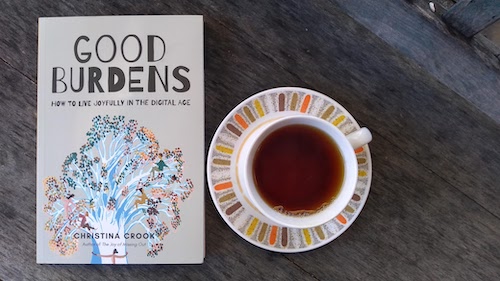
If my Blog School course had a textbook, Christina Crook’s Good Burdens would be it, a heartful and inspiring book about living a mindful and joyful digital life. After blogging for more than twenty years (and using my social media platforms as an extension of my blogging space), I know that the tools of the internet are capable of making our lives richer and deepening social connections, but that involves considered and deliberate practice, a willingness to go against the grain and serve ourselves (and each other) instead of an algorithm. And the payoff? A meaningful online life whose riches spill over into the real world in the form of friendships, inspiration, and creative work.
What is a Good Burden? Our good burdens are the work we do to that add meaning to our lives—partaking in a community project, putting dinner on the table where family will gather, sending a card or a letter to a friend. In a world where technology promises endless ease and convenience, it’s too simple to forget how much these kinds of gestures matter, both to our communities and to ourselves.
And in Good Burdens, Crook shows that the notion of good burdens can bring light and meaning to our digital experiences, and also to the rest of our lives. She urges her readers to pay attention to the world around them and to those things which deliver joy. What is joy and how do we find it? How do happy people use technology differently than other people? What makes a good life? How do you get there?
The book is a warm, inviting and engaging read, but also structured as a workbook with space for readers reflect and write down ideas, offering personalized approaches instead of one-sized-fits-all solutions, urging us to ask ourselves the right questions instead of promising answers. Good Burdens is about ideas that I think about a lot, but I still found it rich and inspiring—and really enjoyed the opportunity to talk with Crook on a recent episode of her JOMOcast all about the spaces where her ideas and my own blog thoughts overlap.
I first read this book as an advanced reader copy, and liked it so much I pre-ordered a finished copy, and then the publisher sent me a finished copy, so now I have two! If you would like the chance to win a copy of Good Burdens, make sure you’re signed up for one of my newsletters (sign up for the Pickle Me This Digest or the Blog School Newsletter) for a chance to win my spare copy. If you’re on my mailing list already, watch your inboxes—coming Friday!
And if you just can’t wait, you can go to your local bookstore and pick up Good Burdens today.






