January 3, 2022
My Novel in STELLAR Company

A very pleasant end-of-year surprise for me was the inclusion of Waiting for a Star to Fall on this amazing end-of-year round-up! Thank you, Rochelle!
January 3, 2022
The Old Year Broke Me
The old year broke me—it did! Which I should have seen coming. Scrolling back in my Instagram feed, I realize that I spent much of November overwhelmed by difficult emotions, mostly stress and sadness. While my own situation was pretty stable, I was feeling everything in the world so deeply, and then the advent of a new pandemic wave absolutely sent me over the edge. And not even the prospect of the wave itself, but everyone else’s perception of it. I saw a news headline at some point mid-December which was, “Holiday Health Advice from 150 Experts,” which pretty much summed it up for me, too many voices in my head. It began to feel like everybody’s Instagram stories were yelling at me, and there was so much doom, which I suppose some people felt was informative, but in my fragile state I interpreted it all as, “We’re all going to die.” It felt like, I told my husband, there was an asteroid heading straight for me. I was having panic attacks, spending nights mostly awake in abject terror that the airplane flying over my house was in fact end times. One day, coming out of the gym, I caught a glimpse of the 24 hour news channel that absolutely destroyed me. My panicked responses were just like I’d been in the first wave of the pandemic, which was SO ANNOYING because I’d already looked back and realized how useless and idiotic my reactions to the crisis had been. AND NOW I WAS DOING IT AGAIN!
Except I didn’t. I called my doctor, after dropping my daughter off at the bus stop and walking up Major Street weeping, the same way I’d wept 12 years previous when that same daughter was born and I was sure I didn’t have Post-Partum Depression and it was just that everything was awful, but only now I understood that it wasn’t that simple. That everything might be awful, but that there’s still no reason to be crying like that, to have to bear the load this way. That maybe the feelings and chemicals rushing through my body have far less of a connection to what’s actually going on in the world, even if those things are hard, than I really understand. No, I surrendered, because I absolutely couldn’t do this. “I just want to be put into a coma for the next three months,” I kept saying, which at the time I thought seemed perfectly reasonable.
I couldn’t have timed it better. (Look at me, optimizing my mental health breakdown, whee!). I put on a pair of trackpants and a sweatshirt, and leaned right into cozytown. The daily toll of worrying about school outbreaks was getting to me, but we made it to the end, and the world seemed to be shutting down a bit just as I kind of needed it to. I finished up my work for the year. I started my holiday reading, and decided that our holiday television indulgence would be Ted Lasso, instead of the bleak murder mystery I’d been gunning for. I got a prescription for Lorazapam, to use as needed, and it helped so much, and then my friend Kate helped connect me with a therapist colleague who even managed to fit me in for a session before her own holidays began, and all of this—as well of the quiet of Christmas, reading When Things Fall Apart, by Pema Chodran, and disconnecting from all those too many voices—helped me so much to feel stable and safer again, though the process of finding balance will be, of course, ongoing.
So that was my December, and it’s all been very intense, and also illuminating, and I am grateful to have so many new tools in my belt as we head into what will no doubt be a winter of pandemic challenges (my pool reopened today and i got to go swimming this morning before it closed again this afternoon due to new provincial restrictions, which include a delay of in-person schooling, all of this probably for the best, but also disconcerting, because there is no careful planning involved, instead it’s like somebody shooting darts with their eyes shut).
In the weeks ahead, I am intent on working on the nature of just being, even in more challenging moments, instead of being overwhelmed by anger and judgment, right and wrong, good or bad. I also want to do better at keeping everyone else’s voices, thoughts, rage and anxieties out of my head. Because Instragram, which was the last social medium that brought me pleasure (though it still does, but omg, stop sharing screenshotted tweets. If I wanted to be on Twitter, I would be on Twitter, and I don’t!) was such a big trigger into my mental health spiral, I’ve also become really wary of of the platform and less excited about creating on it.
And so leaning into #BackToTheBlog is going to be a big part of my 2022 plan, I think. Writing stuff out on Instagram and elsewhere has been a huge part of me processing our experience those last few years, but I’m losing interest in process, or at least in what’s intended as the result of it. Something succinct, and conclusive, a revelation. Except I find myself in a moment where I don’t feel like I know anything at all, which is just fine I think, and I’m happy to sit with that unknowingness—as opposed to the wild speculation that delivered me nothing but anxiety and pain. And here on my blog, I think, is the ideal place to do this.
So, Happy New Year. (And really, I mean it!)
December 15, 2021
2021: Books of the Year
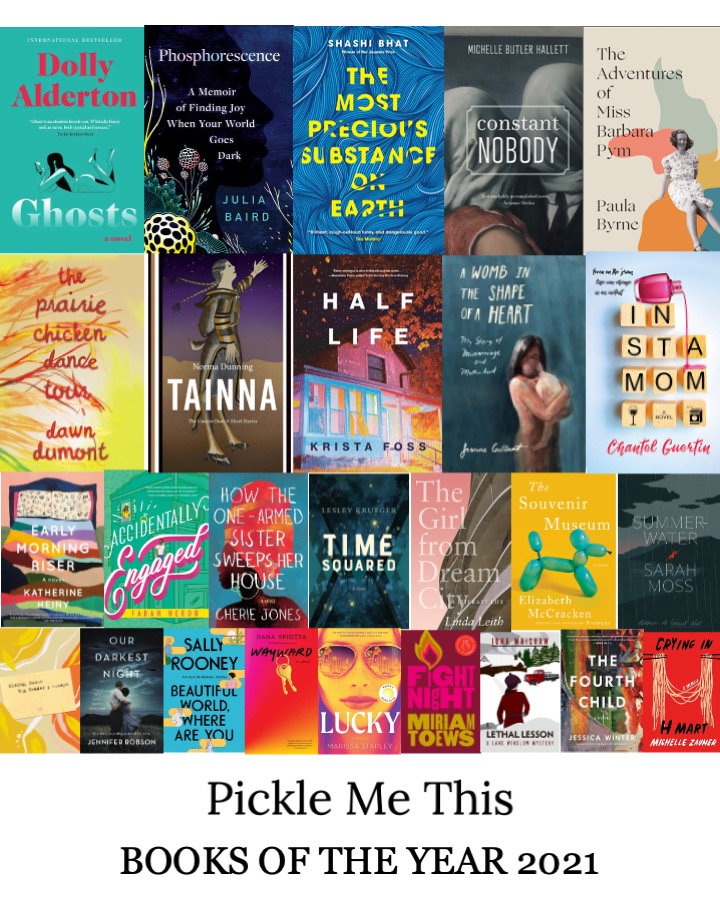
- Ghosts, by Dolly Alderton
- Phosphorescence, by Julia Baird
- The Most Precious Substance on Earth, by Shashi Bhat
- Constant Nobody, by Michelle Butler Hallett
- The Adventures of Miss Barbara Pym, by Paula Byrne
- The Prairie Chicken Dance Tour, by Dawn Dumont
- Tainna, by Norma Dunning
- Half Life, by Krista Foss
- A Womb in the Shape of a Heart, by Joanne Gallant
- Instamom, by Chantel Guertin
- Early Morning Riser, by Katherine Heiny
- Accidentally Engaged, by Farah Heron
- How the One Armed Sister Sweeps Her House, by Cherie Jones
- Time Squared, by Lesley Krueger
- The Girl From Dream City, by Linda Leith
- The Souvenir Museum, by Elizabeth McCracken
- Summerwater, by Sarah Moss
- Big Reader, by Susan Olding
- Our Darkest Night, by Jennifer Robson
- Beautiful World, Where Are You, by Sally Rooney
- Wayward, by Dana Spiotta
- Lucky, by Marissa Stapley
- Fight Night, by Miriam Toews
- A Lethal Lesson, by Iona Whishaw
- The Fourth Child, by Jessica Winter
- Crying in H Mart, by Michelle Zauner
December 8, 2021
The Books of the Years
I’ve written different versions of this post a million times over the years, about the books that are launched into the world and how hard it is to tell as an author, for most of us, if our books ever really land, because while there are several metrics for taking stock of these things—awards nominations, rave reviews, billboards, celebrity endorsements, bestseller lists, appearing on the New York Times Notable list, etc—there are so many books and so few opportunities that most of us won’t end up making any of these. Which can be crazy-making, which I know from experience, and also every time I post anything like this, someone responds with an angry comment how about how I still haven’t reviewed their book yet*—one woman once did this ELEVEN YEARS after she’d sent me her book, which I’d say is a long time to hold a grudge, but then I’m an author too, so I get it.
But also, you’ve got to let that shit go.
It is very hard to release a book in Canada in 2021, and while I would have told you the same thing when I published my first book back in 2014, since then it’s only gotten harder. But one thing that’s the very same is the author’s lack of control over most of it, even if you hire a super fancy publicist.
Which is really hard, of course—that you can’t make magic happen. But also: the magic is going to happen without you, which is the very point of magic.
I’ve written this too before: the life of a book is long, and your book is out there in the world being picked up and put down, and picked up again, read, and reread, borrowed and lost, and found, and shelved, and picked up again. Even if you don’t know about it, it’s happening.
Yesterday I published 49thShelf’s Books of the Year list, a job I so enjoy being tasked with because I know how much it will mean for each and every author to have their book recognized by our humble little list. And I have another list of my very own coming up soon, with a few overlaps, another chance to shine light on the titles that I’ve loved best, but also to take stock and make sense of my own reading year. It’s really personal, mostly, and as arbitrary as any of these lists really are, in that they mean everything, and nothing at all.
Also yesterday, Reese Witherspoon’s Book Club announced their December pick, which is a big deal, this decade’s version of Oprah’s, and it just so happens to be my good pal Marissa’s latest novel Lucky, which came out in Canada in the spring, a truly life-changing opportunity for an author, and this is the kind of magic I’m talking about, a game of fortune and chance, and it’s the one thing that just can’t be plotted. I think we ought to just be grateful that they happen to anyone, and be glad we live in a world where books are still hot commodities, even if it might not be our specific books enough of the time….
To just keep going, and writing, and reading, and dreaming, and to be a part of the literary fabric of the world at all, as readers and writers alike—what a privilege that is. Most of the time, though it doesn’t pay the rent, it’s even enough.
December 8, 2021
Gleanings
- Art is such low stakes. Nothing depends on me getting a painting just right, not even my happiness! No one’s life depends on what I make. Nothing bad is going to happen if I don’t make art. And yet…
- For a writer, what’s important aren’t the tools but the words–except that I’m also a human animal who likes her creature comforts.
- In fact, it looks to me like there’s a resurgence of blogging as people seek out alternatives to being at the mercy of the social media bully boys. And why wouldn’t they? Social media is super convenient and lots of fun, but it’s also governed by a gang of democracy-crushing, money-hoarding, self-obsessed narcissists. It makes sense to seek out an alternative.
- I will miss you, little brother– maker of the best wooden toys, travel companion, shoulder to cry on, world’s best uncle, teaser extraordinaire, reasonable sounding board, and last of the male Pinniger line.
- They talk about traditions as being anchors, when we’re feeling unmoored, providing a place for us to hang our hats and connect the dots to our real here and now life … traditions as ways to mark us as who we are and attempt to draw us back to the places where we feel like we belong and come from.
- …sharing the food that I love to make, that I drool over and lick my lips in anticipation of, feels like an act of joy, pleasure and love towards the beautiful fat body that is my home.
- Meander too is Greek in origin, though now located in Turkey, near the ancient Greek city of Miletus, a river that gave its name to a concept.
- You still have to have a feeling of people here,” Cayley recalls Wells saying. “Not just your zombies and your billionaires and your underground bunker. That will not carry you.”
- So really, it’s thanks to sandwiches that I’m feeling more myself.
- Struggle is pivotal to books and movies, drawing us in, keeping us reading or watching. And yet, when struggle or conflict happens in real life, we want it gone.
- The town of Frank is the home of the famous Frank Slide where, in 1903, an entire side of Turtle mountain came tumbling down in an avalanche of rocks, some the size of crates others the size of boxcars.
Do you like reading good things online and want to make sure you don’t miss a “Gleanings” post? Then sign up to receive “Gleanings” delivered to your inbox each week(ish). And if you’ve read something excellent that you think we ought to check out, share the link in a comment below.
December 2, 2021
The People Who Can’t Understand, But They Do
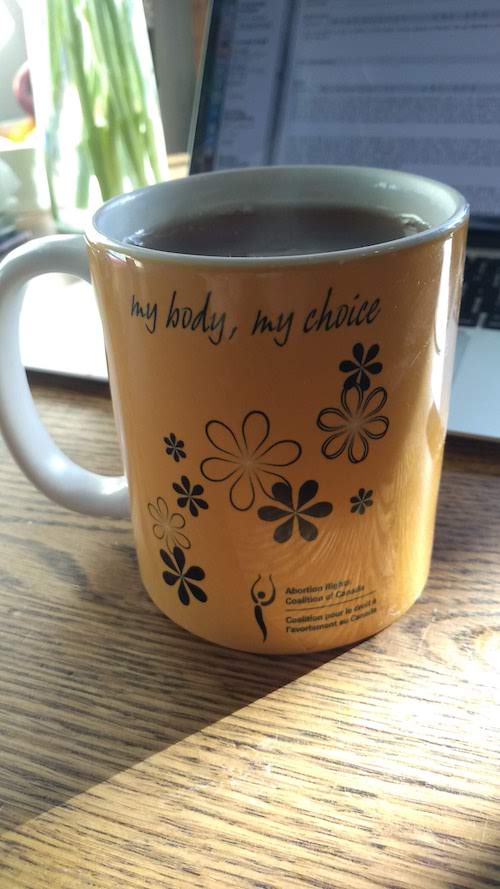
The people I’m grateful for are the people who can’t understand, but they do.
“We share the similarities of our stories, lamenting the invisible pain of women, and I discover the physical side of abortions is the same whether they are unwanted or chosen.” —Joanne Gallant, A WOMB IN THE SHAPE OF A HEART
The people who could never imagine having an abortion themselves, who think they wouldn’t be able to live with themselves if they did. The people whose beloved babies were born at 26 weeks and had to fight for their lives. The people raised in religions where abortion is presented as anathema. People who can’t shake the ableism baked into arguments for reproductive rights. The people who gave birth to their first child at age 17, and it was the best thing that ever happened to them. The people who longed for babies they were never able to have. The people who’ve spent years pummelled by grief at babies lost before six weeks. The people who were themselves adopted and raised in happy families, and who are so glad they’re here.
And I’m not just talking about those people who might have experienced any one or more of these things, and had abortions also, because there are so many of these people. Each of us, of course, contains multitudes.
But no, the I mean the kind of person who would never celebrate abortion, for whom, perhaps, abortion makes their heart hurt.
And yet.
They know that every woman’s circumstance is different. They know they have no idea what it might be to walk a mile in someone else’s shoes. They know that abortion, to so many of us, has nothing but life, our lives, the greatest liberation, to choose our own destinies. (As opposed to those destinies being decided by arbitrary laws, by strangers, or imperfect ideologues who’ve stacked a “supreme” court.)
They know that abortion happens, has always happened, and will continue to happen, even if it has to go on under the cover of darkness. And they know that if this is the case, people will die.
They know that abortions happen least often in places where abortion is most accessible, because in places where abortion is accessible, there also tends to be sexual education, contraception, and women are empowered to make healthy choices.
They know that in spite of our differences, there is still so much common ground, and it is on this common where these people come to support reproductive justice, however quietly.
So that other people can make a different choice.
And that is no small thing.
December 1, 2021
4 Great Memoirs I Rushed To FINALLY Read Before Year’s End
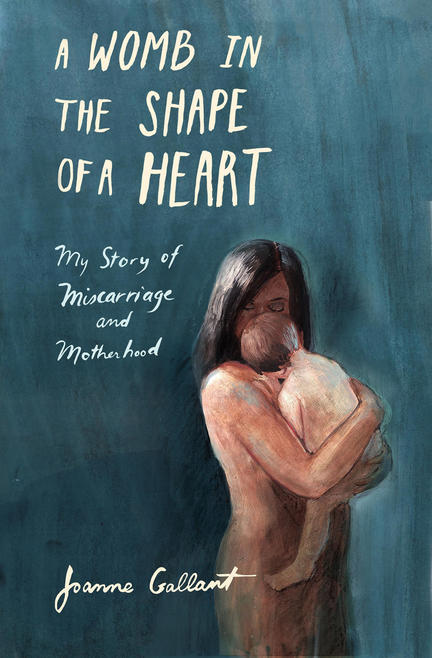
A Womb in the Shape of a Heart, by Joanne Gallant
Joanne Gallant’s A Womb in the Shape of a Heart is a story of motherhood and loss, a motherhood story that didn’t always promise a happy ending either, though Gallant had no inkling of this when she and her husband set out to have a baby. A pediatric nurse, a person who’d always seem in control of her own destiny, the grief and powerlessness of miscarriage and infertility would rock Gallant to her core.
A Womb in the Shape of a Heart is a beautifully woven story of loss and love, Gallant eventually giving birth to her son, but the pregnancy was fraught with anxiety, and the early days of his life were spent in the newborn the intensive care unit.
And it’s just a story so gorgeously crafted, honest and brave in so many ways, a story that encapsulates the experience of so many families but is still considered taboo or shameful. Joanne Gallant shattering that stigma with beautiful prose and such compelling storytelling that will assure so many people that they aren’t alone.
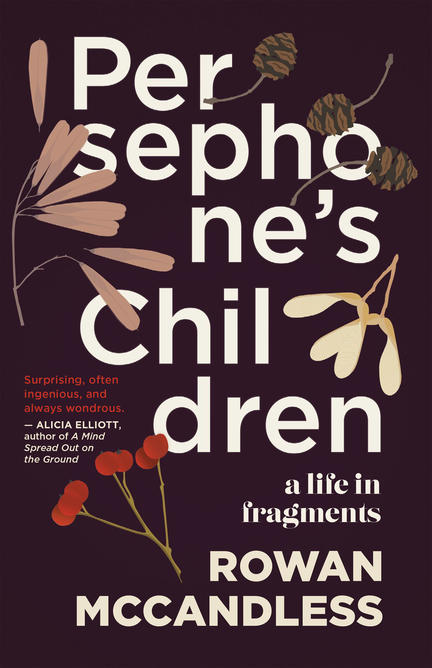
Persephone’s Children, by Rowan McCandless
All right, this book is excellent. Which is remarkable because a collection of “fragments,” you’d think, would be inherently raw and unpolished. Especially when the fragments themselves are so curious in form: the essay as crossword puzzle, as drama script, as quiz, as diagnosis.
Pretty cool, right? A fun gimmick. But challenging to execute…
In her debut collection, however, Rowan McCandless gets it right, each of these pieces so meticulously crafted to tell a story of a difficult childhood, of growing up Black and biracial, of surviving and escaping an abusive marriage. She writes about motherhood, mental health, and living with trauma.
This is a book that’s going to surprise and delight you.
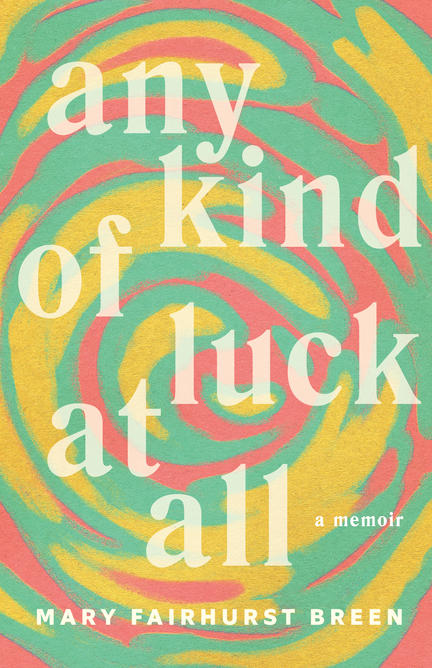
Any Luck At All, by Mary Fairhurst Breen
Any Kind of Luck at All, by Mary Fairhurst Breen, is from one of my favourite literary genres: memoirs by women who’ve seen some shit. She writes about her suburban childhood, her father’s unspeakable mental illness, her burgeoning activist experiences, marrying young and perhaps unwisely, about parenting as her husband’s addictions overtook him, of becoming a single mother, a lesbian, of a career in nonprofits subject to the whims of government funding, of the struggles of finding work as a woman who’s over 50, and of supporting her daughter through her own mental illness and losing her to fentanyl poisoning in March 2020. Breen originally started writing down her stories for her daughters to read, and as a result they are told with such warmth, and are candid, breezy, funny, and wise.
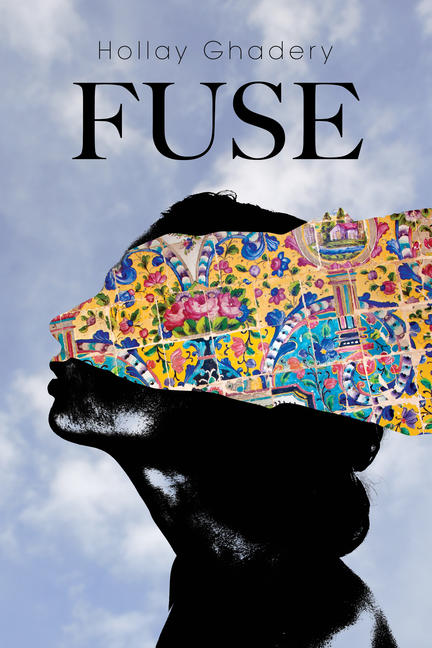
Fuse, by Hollay Ghadery
I enjoyed Hollay Ghadery’s uncomfortable-making, complicated, richly textured collection of essays, a memoir of daughterhood and motherhood, mental illness, eating disorders and biracial identity SO MUCH. Most things are not just one thing or another, but instead both, and neither, and everything at once. In Fuse, Ghadery unapologetically demands the right to have it both ways, to be a messy, conflicted, raging, loving, hungry and full to bursting human
November 30, 2021
Gleanings
- Change is literally baked into plot, just like change is baked into each of our lives.
- If you stop and take a moment to let them in, you’ll see that joys abound.
- Friendship has been on my mind a lot lately. We tend to overlook its importance in our lives. But when you’re single and live alone, contact with friends is important, especially in a pandemic world.
- And how does one move and live and experience joy and laugh and dance amidst all of it?
- There is more delight than I could have foreseen in these teenaged years. Sometimes its just the tiniest moment between the tumults, but man, they are an entire world of glow. a secret look into the snowglobe of the world.
- I wish Jo Baker had not written Longbourn: if I hadn’t assumed that she was just one more unimaginative barnacle on the unstoppable ship Austen Always Sells, I might have read her other books sooner.
- And maybe swimming is just that too: swimming. But it feels like such a potent time, a meditation that isn’t always peaceful (those waves), pushing my body forward and back in the water, eyes open but not seeing anything outer.
- Most days, I am happy to drift aimlessly on a gentle breeze. Increasingly, I welcome the wind swirling around me, giving me that extra push needed as I set my course.
- She told me she’d be with me always, I know she is and maybe it’s in these sparrows on my deck, at my feeders full of spicy seeds.
- Just as each day is different, so too each walk is different. Each walk is like a story with different scenes, characters, and storylines.
Do you like reading good things online and want to make sure you don’t miss a “Gleanings” post? Then sign up to receive “Gleanings” delivered to your inbox each week(ish). And if you’ve read something excellent that you think we ought to check out, share the link in a comment below.
November 29, 2021
Smarter Than the Tricks Played on Your Heart
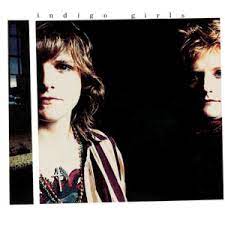
I’ve spent the last six weeks revising my third novel, which is actually my second novel, written between Mitzi Bytes and Waiting for a Star to Fall. A novel that, like the others, has a soundtrack, but with a twist—this one’s soundtrack is actually good! And how it came to be has been, I think, such an interesting and organic journey.
Beginning as I was brainstorming potential titles, and “Power of Two” by The Indigo Girls kept occurring to me, because my novel is the story of a long friendship and that song’s title, as well as many of the ideas contained within, are just perfectly fitting.
Before my latest draft, the single musical reference in the book had been to another Indigo Girls song, “Love’s Recovery,” misheard lyrics from the CD player in my characters’ kitchen where such music is perpetually playing. (Now there is so much more, and it includes Dar Williams, Tracy Chapman, Ani Di Franco, Lucinda Williams, and an opaque reference to Sarah Harmer’s gorgeous “Lodestar,” which I am OBSESSED with at the moment. It’s a 1990s female singer/songwriter GOLDMINE.)
And just last week as I was writing a new chapter, it occurred to me that my immediate task at that moment was writing a line that expressed the pivotal question from the Indigo Girls’ song “Mystery”: “And if it ever was there and it left/ Does it mean it was never true?”
Not even consciously, I’d been drawing on stories and ideas from their lyrics, songs that I’ve been listening to for almost thirty years.
As a woman who came of age in the 1990s while strumming basic chords on an acoustic guitar and singing in harmony with my best friend, The Indigo Girls have always been important. I’ve seen them live at least twice. Their “Romeo and Juliet” was my only “Romeo and Juliet” for so long, same with “Tangled Up In Blue.” Before I really ever thought very much about queerness, there was still Emily and Amy, who were both gay, we knew, but not a couple, which we hetero teens were always struggling to get our heads around. They were partners, friends. And because of the place and time in which they were coming up in the industry (they were from the American South; they lost out on Best New Artist Grammy Award in 1990 to actual Milli Vanilli) they sang love songs, but couldn’t be explicitly gay about it (kind of like my cousin who always brought a “friend” to Christmas dinner) which sucks, but it also means that growing up, I was privy to the most textured, nuanced and artful portrayals of I’ve always immediately perceived as platonic friendship.
Um, though clearly I was missing several signs, of course. Just what WAS the singer’s hand doing on the subject’s knee “Five miles out of the city limit” after all?
But intense friendship is very physical too, particularly when you’re young, as I expressed in my novel. Lots of bed-sharing and clothes changing, and hugging, and holding hands. Sure, I missed the signs, but so many of them were part of my own experiences of being with my friends. So maybe I was more solipsistic than ignorant.
(Maybe there is no maybe about it.)
How lucky were we to grow up against an Indigo Girls soundtrack, to find a place for ourselves inside their gorgeous harmonies? Their songs like tiny epics that I could use to understand my own connections to other women, to my best friends. How much it managed to articulate all my teenage longings, which seemed somehow inexpressible, beyond understanding, and there it was, all that wonder and amazement, pleasure and pain:
I could go crazy on a night like tonight
When summer’s beginning to give up her fight
And every thought’s a possibility
And the voices are heard but nothing is seen
Why do you spend this time with me
Maybe an equal mystery
November 26, 2021
What Comes Next
I’m so tired this week, and I’m trying to think of reasons this might be (I woke up too early on Tuesday morning because I was very excited for my husband’s birthday and also to book Iris’s vaccine, and these days I need eight hours of sleep to be a properly functioning human), and then I recall that I was also so tired this time last week, and maybe that’s just how weeks go. Last Friday I was also trying to work through a substantive change within the novel I’m revising, a change that would alter the project considerably, and when I am tired, everything is terrible, hopeless, impossible. In the week since then, I’ve come so far in figuring out what to do about the problem in my book. Last week it was a giant gaping hole, and by now it’s been filled in so much that you might not even notice that it hasn’t always been this way, and I’m thinking that waiting and patience really are the answers to so many questions. In writing, or anything, to skip over the part that’s got you stuck is usually a good strategy. You don’t have to do everything in chronological order, and become exhausted and paralyzed by the question of what comes next. (Wait and see, remember?)
The news seems dire today, not catastrophic floods of last week (climate change news has wrecked my jaw, so much clenching, and now I have to sleep with a night guard that I really ought to wear all day), but a huge increase in Covid numbers and also a brand new variant of concern, and no one knows any more about this variant than they did yesterday when I first spied the headline, the article, when I clicked, just a handful of lines, but it’s almost like a balloon now, so much speculation and opining about something still very unknown and uncertain, but way inflated, and I don’t understand why ordinary people think they have to follow the news, to refresh and refresh, I mean, when really you could check out a newspaper about two times a week and not be that much less informed. It reminds of right before I finally quit Twitter, when I logged into the site and Van Morrison was trending for penning an anti-lockdown anthem and I wish I’d never known that. Passively scrolling and refreshing Twitter does not count as engagement. Neither does refreshing your favourite newspaper’s Covid life-feed, or watching a cable news channel 24/7. What if you decided to curate your own feed, and it was the world right in front of you?
More than anything else in the world, it’s other people’s anxiety that makes me anxious, and I sure wish the media would stop so unceasingly feeding it.
I am looking forward to the holidays, the same thing that happens to me reading-wise on the verge of happening again, which is that I SCRAMBLE to get all the current year’s news releases read, and that at a certain point I thrown up my hands and say, “Fuck it!” Which always happens in early December, before I begin my holiday properly, but my reading habits are on vacation already, and I start reading the fully indulgent paperbacks that have been piling up, books of little consequence and it’s this reading off the beaten track that’s my favourite part of the holiday season, along with the Globe and Mail holiday crossword, so rich with strangeness and surprises.
It was during the Christmas holidays a year ago that I first learned about the UK variant. I always spend my holidays offline, but had opened my laptop to google Eilis Ni Dhuibhne, whose novel The Dancers Dancing had been sitting on my bookshelf since 2013, and which I was finally reading, totally obsessed with. And I remember perusing The Toronto Star online when I was done, and it was either a story about the existence of the variant, or that it had found its way to Canada, and the overwhelming sense of all this was dread, which is what I’m feeling today. (It’s also overcast, which doesn’t help).
But here’s the thing: there’s been far too much of this for far too long, I know, but we’re still here, so many of us, and real life goes on to the point where I’ve started getting frustrated at people again for swimming too fast in the slow lane, such a petty concerns. The pettiness continues, which is wonderful, really, don’t you think? That even two years into a pandemic, that everything needn’t be high stakes all the time, and I just think that adapting is what we do, and we will, and we don’t have to be afraid all the time, freaked out about what’s next, because we’ll find a way. My youngest daughter is getting vaccinated tonight—what a thing is that! And as we headed off into this new year, a miracle like that was certainly never predestined, and maybe just that not everything is always going to turn out terrible, is what I’m saying. Allow for the possibility that some things will be fine.






