December 14, 2010
My Favourite Books of 2010
 1) The Lacuna by Barbara Kingsolver: If ever an author belonged on the cover of Time this year, it was Barbara Kingsolver for her brilliant novel The Lacuna, which won the 2010 Orange Prize. Admittedly, it took 150 pages for me to get into this book, but it all made sense once I’d flown through the next 400 pages, and then I was devastated that the book was done and I had no more pages to read. This is a story of a boy growing up in Mexico, working in the household of Frida Keho and Diego Rivera, witnessing Trotsky’s murder, settling down in small town America, and becoming embroiled by McCarthyism. A snapshot of the twentieth century and a depiction of extraordinary lives, but also with much bearing on ordinary people and the way we live today. The Lacuna is the strongest work yet from this learned and imaginative writer who engages with the world in such a fascinating way. Read my review.
2) Lemon by Cordelia Strube. Here is the new feminist protagonist Canadian Literature has been waiting for– Strube’s Lemon is the only whole thing in a shattered world, and though that world threatens to take her down with it, she fights back with ferocity. The book is bleak and terrifying, brutal and sad, but Lemon carries it and we become so invested in the hope of of her eventual triumph. Her young voice is so authentic, and her perspective informed by the library of books she has devoured, her allusions and their interpretations a fellow bibliophile’s delight. Read my review.
3) Light Lifting by Alexander MacLeod. When I finished reading the story “Light Lifting”, which is right about in the middle of this 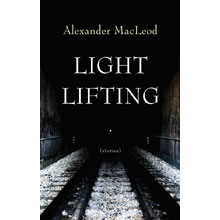 collection, I sent MacLeod (who I do not know) an emergency email to ask whether Robbie would be all right. He never replied, but I suppose he was busy, because that was the week he was longlisted for the Giller Prize, the shortlisting coming shortly after that, and though I really think he should have won, he sort of did, because this was the book he wrote after all. A giant, pulsing book, whose stories are all equally wonderful, though we all have our favourites. Mine include “Miracle Mile”, for its glimpse into the world of athletes, “Wonder About the Parents” for a rhapsodic reflection on a couple’s journey through marriage, parenthood and family life; or “Light Lifting” about brick laying, beer coolers in the workplace, class collisions, and brutal violence; or the one about learning to swim, or the one about the young boy delivering prescriptions, or or. Which is about all of them. You will love this book. Read my review.
4) The Slap by Christos Tsiolkas. All right, I hated this book. It was ugly, misogynistic, and full of filth. But it was also unputdownable, fabulously plotted, and posed some interesting questions (even if they weren’t half as interesting than its author had supposed). Read this book if you’re looking for a well written soap opera, and you aren’t easily offended.
5) Black Water Rising by Attica Locke. This book was on the Orange Prize shortlist, where it did not quite belong (more John Grisham than John Updike, neither of whom belong on the Orange Prize shortlist either, but you know what I mean), but I believe it was there to prove that women’s writing is as various as writing is. Locke’s novel is well-plotted, her background in film obvious, the novel utterly enveloped by its period– it’s the hot, hot summer of 1981 in Houston, Texas, and a young Black lawyer awaiting the birth of his first child becomes embroiled in a dockworkers’ strike, the oil shortage, a mysterious woman saved from drowning, and a group of powerful people who will stop at nothing to get what they want. Read my review.
 6) The Little Stranger by Sarah Waters. “So what is it about these stories, about outsiders coming up the drive toward the stately home that’s past its prime?” I asked in my review of this book, and I suppose if you’re not partial to such things, you might not get it. But I loved this book, its unravelling mystery, which never unravelled enough to convince me that this was a story I was finished with. It was also so scary that at one point while reading it, I was too frightened to get out of the bathtub.
7) A Short History of Women by Kate Walbert. This is the kind of novel it is heartening to realize that large presses are still publishing, challenging work that refuses lie down and be any one thing. Certainly a novel, but comprising stories that have been published elsewhere, this book tells the tale of four generations spanning 100 years, and the many ways in which feminism has changed everything and nothing, and how feminism itself evolves and doesn’t. And regardless of the uncertainity, there is life here. Read my review.
8) So Much For All That by Lionel Shriver: Far, far from a perfect novel, but certainly worth reading anyway because it’s entertaining, and also because Shriver insists on breaking the rules over and over again, and she pulls it off. Here is a novel “about the American health care system”, and only Shriver can make something that sounds so dry so enveloping. Read my review.
9) The House Beneath by Susan Telfer. This book arrived in my life in the dead of last winter, because somebody thought I might like it, and I was so pleased that they were right. In my review, I called this book “a Carol Shields novel compressed into 78 pages”, and it lived up to the promise of its beautiful cover. Through her poetry, Telfer tells the story of her parents’ marriage, and how the terrible past refuses to rest, particularly once she has children of her own. About how deep are our roots, even when we can’t (or don’t want to ) see them.
10) Mammoth by Larissa Andrusyshyn. Once again, a collection whose narrative swept me up. The narrator is inspired by discovery of mammoth DNA to imagine similarly bringing her own father back to life, and so the book is about grief and loss, love and family, but also about a cartoon mammoth who begins attending school, and how we are related to our bodies, and what remains of us once we’re gone. A must for those of us who adore literature about science. Read my review.
11) Joy is So Exhausting by Susan Holbrook. I came to this book through the poem “Nursery” (a long, long poem as a mother perpetually breastfeeds her child): “Left: Now that you’ve started solids, applesauce in your eyebrows, I’ve become a course. Right: Spider on the plastic space mobile, walking the perimeter of the yellow crescent moon. Left: Dollop. Right: Now it’s on Saturn’s rights; if it fell off, it would drop right into my mouth. Left: I take 2%, you take hindmilk. Right: Fingers shrimp their way through the afghan holes. Left: I have hindmilk.” The entire poem is joyful (and exhausting), and the rest of the collection is filled with a marvelous sense of play. Read my review.
12) Track and Trace by Zachariah Wells: A truly beautiful package, but the poems are the true attraction. About the strange intersections between humans and their environment, and how it’s not even their environment after all. From my review: “Within each poem, the words fit together in surprising ways, with subtle rhyme, rhythm and alliteration. Within each word, the syllables, the vowels and consonants on and around my tongue. I read these poems aloud, lying on the carpet while my daughter threw blocks in the mornings, and the poems were a pleasure to put my mouth around, the starts and stops and open spaces.”
13) Vs by Kerry Ryan. I only finished reading this book last night (“Turn off the light!” “Just two more poems…”) so there is no review, but I loved this book about a bookish girl’s foray into competitive boxing. Ryan writes about learning to stand her ground, about learing to punch and be punched, about how her body changes, about how the people in her life relate to her new pursuit, about how it changes the dynamics in her marriage in most surprising ways, and about what it is to discover a part of ourselves we’ve never encountered before. Her poems are bare and unflinching, and the collection is gorgeous.
 14) Baking as Biography by Diane Tye: The weekend I was reading it, no one wanted to talk to me because I was so frightfully boring, starting all sentences with, “Did you know…?” and “Would you believe…?” and finishing with a fascinating fact from Tye’s book. Of which they were many, as Tye goes through her late mother’s recipe box to reconstruct her life and her times. The book beginning with the most fascinating fact of all– that this woman who baked and cooked for her family for decades once remarked that she didn’t even like baking. It took a few more decades for Tye to understand how interesting this was, and the resulting book explores the history of homemaking, feminism, family and eating, and the complex ways in which we understand all of these things. I loved this book. My review is here.
15) Imagining Toronto by Amy Lavender Harris. From the review I posted just last week: “Though its bibliography is 24 pages long, Imagining Toronto is no catalogue, or dry academic treatise, but instead it is a story, and the story is a city (and the city is a story, but we could go on like this forever). Harris has not merely written a book about Toronto, but she has written the city itself, from the depths of its ravines to the tip of the CN Tower, 1815 feet up in the sky. Her raw materials are the city’s fictions, and the city is rendered by these poems and stories in glorious concreteness.”
December 14, 2010
Knowledge had to be fought for
“All this affected my formation as a historian: I became addicted to the thrill of the chase, the excitement of the game of matching your wits and will against that of Soviet officialdom. How boring it must be, I thought, to work on British history, where you just went to the PRO, and polite, helpful people gave you catalogues and then brought you the documents you wanted. What would be the fun of it? Knowledge, I decided, had to be fought for, achieved by ingenuity and persistence, even – like pleasure, in Marvell’s words – snatched ‘through the iron gates of life’.” –Sheila Fitzpatrick, A Spy in the Archives (full text available!).
December 14, 2010
Literary Intersections
I haven’t read Anne Michael’s Fugitive Pieces in years and years, but I am still buzzing from Amy Lavender Harris’ Imagining Toronto. Having read that book recently means that I was familiar with the passage from Fugitive Pieces displayed on the Project Bookmark plaque on the Northwest corner of College and Manning Streets, which Harris also excerpts in her book to give a sense of that neighbourhood’s international quality. Context upon context. Books make neighbourhood roaming a most satisfying pursuit on this cold and snowy day.
December 13, 2010
Ode to the coffee table
 The addition of a Christmas tree to our living room decor means that we once again have a coffee table. Previous to the tree’s arrival, our coffee table (which is an old steamer trunk we found five years ago on Shaw Street) had been pushed against the small book shelf, in order to give us some open space, but more importantly to keep small people from hurling the books to the floor. Now the Christmas tree is performing the latter task, and the coffee table has returned to its rightful home. And it’s so useful! For putting pyramids of books on, and feet on, and coffee cups, and beer bottles, and teapots etc. I think I’d always taken coffee tables for granted before, but I will do such a thing no longer.
December 13, 2010
Advent Book Blog recommendations
 The Advent Book Blog has been going on for the last two weeks, its second season as proving to be as effective as its first. As in, what happens when wonderful people recommend the books they’ve best loved lately? And what happens is something along the lines of got, need, need, got, need, need, got, got, need, need. etc.
My “needs” have been as follows: Reality Hunger by David Shields recommended by Sean Cranbury, Fifth Avenue, 5 A.M. by Sam Wasson recommended by Natalie St. Pierre, The Death of Donna Whalen by Michael Winter recommended by Samuel Thomas Martin, A Village Life by Louise Glück recommended by Beth Follett, What It Is by Lynda Barry recommended by Sarah Selecky.
A lot of my “gots” are there too, and you’d probably be well served to get them for yourself.
December 13, 2010
On "discovering" Bronwen Wallace
I read Bronwen Wallace’s People You’d Trust Your Life To this weekend, and I’m still a bit overwhelmed by the experience. As a first book, it reminded me of Alexander MacLeod’s Light Lifting (an anchronistic reference, I realize, but humour me)– a writer who has been saving up the goods, writing that is remarkably assured, and doesn’t have to even try. A collection of short stories and not a dud in the bunch. I suppose if one had to publish just one book of fiction in one’s life, it would be tremendous for it to be this one. But then how tragic for a reader to get to the end and realize it’s all there is. (Wallace died shortly before the book’s publication in 1990.)
Not that there is not enough, no. There is everything here, a web of characters and relationships, and the stories become illuminated by moments of connection, between characters, and between the reader and the work. These connections so acute that, for example, you will be reading this book in line at the crowded supermarket on a Sunday afternoon and the cashier closes her till and you’re left standing there with your groceries, and you won’t even notice and, moreover, you won’t even care.
Funny, these are stories of their time (references to Michael J. Fox on television, girls with bright green hair clips, when Swiss Chalet waitresses had to dress like Swiss milkmaids [which I’d forgotten]), which serves to locate them but not to date them. Probably due to the universality to the experiences they depict– mother/daughter relationships, the anguish of having a child with food allergies, negotiating terrain with a new partner, processing nostalgia and what we’re to do with memories we’re holding on to.
I loved the stories of Lee Stewart, which recur throughout the collections, and whose whole life we come to understand, her childhood, early motherhood, life post-divorce. I loved the recurring image of her enormously pregnant, floating in an inflatable pool and sipping a beer. I loved the Carol Shieldsian illuminations of the lives of ordinary people. I loved the multitudinousness and contradiction the collection embraced, and once I got to the end, I reread the epigraph, and I completely understood, and I was stunned by the solidity and coherence of Wallace’s message and this collection.
From Adrienne Rich’s “Integrity”: Anger and tenderness: my selves./ And now I can believe they breathe in me/ as angels, not polarities.
December 12, 2010
Imagining Toronto by Amy Lavender Harris
 Amy Lavender Harris’ Imagining Toronto is one of the best books I’ve read this year, blowing my mind with its gorgeous prose, fascinating facts, stunning narrative, and sheer readability– I was absolutely lost inside it. Which is fitting for a book whose author/narrator implores her reader to: “descend until we lose our bearings, until the landscape merges with the base of the bridge, and the sounds of trains, traffic and the river grow almost indistinguishable from one another. We have reached the city at the centre of the map: let us begin.”
Though its bibliography is 24 pages long, Imagining Toronto is no catalogue, or dry academic treatise, but instead it is a story, and the story is a city (and the city is a story, but we could go on like this forever). Harris has not merely written a book about Toronto, but she has written the city itself, from the depths of its ravines to the tip of the CN Tower, 1815 feet up in the sky. Her raw materials are the city’s fictions, and the city is rendered by these poems and stories in glorious concreteness.
Though it was fascinating to realize the volume of literature that has been written about Toronto, to encounter books I’m familiar with (The Robber Bride, Moody Food), books I need to reread urgently (Headhunter), and books I simply must read now (What We All Long For, The Torontonians etc.), the greatest delight of Imagining Toronto was what these fictions had to tell me about the city itself. About its geography– the true location of Cabbagetown, for example. About the infamous Ward slum (finally razed with New City Hall) which Harris intriguingly refers to not as the city’s “other”, but as its shadow. And about the migration of its residents westward toward Kensington Market, and then eventually out to the suburbs. About multiculturalism, which Harris shows through various works is our “creation myth”, suggesting more productive ways to understand our neighbours and negotiate this space we all share. She writes about situations in which fact and fictions fail to gel, in particular with the portrayal of Toronto’s homeless populations in works such as Carol Shields’ Unless and Girls Fall Down by Maggie Helwig, and the virtual silence in our stories from characters who’d reflect the reality of homeless people’s lives.
Harris is utterly in command of her material, her footnotes populated with engaging asides. She leads her readers on a tour across Toronto’s varied topography, through its neighbours, and along its “desire lines” (“despite their lyrical nomenclature, we owe these cartographies of desire not to poets, but to transportation engineers […who] used the term to refer to the informal footpaths worn by pedestrians deviating from paved pathways…”). She writes about “Desire’s Dark Side”, and highlights that missing children are prominent in the city’s history and in its stories– Shoeshine Boy and Barbara Gowdy’s Helpless among others. We are taken to the Toronto Islands (the number of which, I was surprised to learn, is anybody’s guess), and not only learn of the stories the islands have told, but the story of the islands themselves, and of the artists and writers who’ve lived there. In “City Limits”, Harris highlights another disparity between fact and fiction– “The Myth of the Monocultural Suburb.” And what it means that so many places once at the limits of the city have now been absorbed into the city proper.
Just as you have to walk a city to gets its sense, so too do you have to actually read this book to understand its comprehensiveness. References are current to August 2010, and include recent books such as Alissa York’s Fauna. (And though the works within Imagining Toronto seem an exhaustive list, Harris includes an ever more complete Toronto Library on her website.) One gets the impression that this is the kind of book an author could have gone on writing forever (Volume II, anyone??), but reading it is a similar experience. With every page, we discover a new dimension of the city to explore, another book to add to our list to-be-read, and when we reach the conclusion, we realize we’ve been transported somewhere new.
Or perhaps we’ve been here all along, but we’ve only just starting noticing, and imagining. And then we realize that noticing and imagining are so often the very same thing.
UPDATE: See Harris’ piece from The Toronto Star this weekend, Best kids’ books based in the GTA.

December 9, 2010
I love my book club.
 I didn’t sum up our latest meeting of The Vicious Circle, because I only caught an hour of it. A few weeks before, we’d realized that my husband would have to work late the night of our meeting, which had brought forth much distress at our house: I love my book club, and my husband knows how much I love it. So we came up with a compromise that suited everybody (except my husband who’d have to come home from an extended work day to put the baby to bed, but alas, he is a kind man): I’d book an autoshare car and dash out the door the instant he came in, and then drive like a law-abiding demon out to the west end where I could join The Vicious Circle for the last hour or so of our meeting. These are the lengths I go to, and if you were a member, you would understand.
I love my book club. I feel the need to voice this after reading “I broke up with my book club” in the Globe and Mail today, and after reading “Behind Enemy Lines: My life in an all-woman’s book club” in CNQ (though I feel the latter would have been better titled “I don’t like women, or most people, and I am smarter than you”). I understand why book clubs are derrided– I used to run them down myself. I was always an annoyingly obstinate independent reader (which is the reason I have still not read A Complicated Kindness), and the idea of being told what to read and then discussing said reading with a group of stupid people never held much appeal to me.
And then one day last winter, a group of distinctly non-stupid people asked me to join their brand new book club, and though my instinct was to run for hills, it was the kind of honour one couldn’t turn down. Some of these people were survivors of bad book clubs, and were determined to forge something different with this new experience. They’d chosen members carefully, each of us passionate about reading and connected to the literary life in various capacities: we have authors among us, of picture books, abridged classics and short stories; an illustrator; most of us blog about books; a lot of us work in publishing, in publicity; one of us is a journalist. Though we are bookish, we are various, and that none of us would be considered a casual reader is probably the one thing we all have in common.
We capped ourselves, because the survivors had learned that book clubs fall to pieces once there are too many to focus on one conversation. We picked our books casually, choosing from a pile of paperbacks we brought to the first meeting, and we’ve read all novels so far, contemporary or less-so. We do enjoy visiting one another’s houses, and snooping through nooks, and crannies, and bookshelves. Wine and cheese is popular, and so is dessert. We’re fond of gossip, and our name isn’t just clever– it’s apt. As the evening grows later, the talk gets louder, and more and more inappropriate.
But the best thing about book club is that we talk about books. Our conversations, our various points of view, approaches, and backgrounds all opening up new avenues in the works we’d never have found whilst reading alone. We challenge one another, ask questions, disagree and shout a lot. No one shuts down discussion: if you don’t like the book, let’s talk about why. We show up most excited for the meetings at which we’ve loved the books, but it’s true that the talk is always best at the meetings where we’ve hated it. There was one meeting where a blah book hadn’t elicited very much response, and admittedly that one time we did focus mostly on the guacamole. But it must be said that the guacamole was really very good.
So the problem is not book clubs, the problem is YOUR book club. The problem is that you’re doing it wrong. Maybe you shouldn’t be in a book club at all? (Book clubs should be the endeavour of choice for those who read already, not those who merely wish they did.) My book clubs exists as living proof that the institution itself is not to blame.
December 9, 2010
Course Offering: The Art and Business of Blogging
I am very excited to announce that I’ll be teaching the course “The Art and Business of Blogging” at the University of Toronto’s School of Continuing Studies in the spring. The course runs from April 11-June 13, and will explore the various uses of blogging, the blog as community builder and as a tool for promotion, the blogging gamut from Dooce to Gizmodo, the importance of storytelling in blogging, how to craft an excellent blog post, and the technical aspects of the blog. Among other things, syllabus still being under construction. Anyway, the course is still a while away so I’ll be mentioning it again in the next few months, but I just wanted to get the word out now, mostly because I’m thrilled about it.






