February 13, 2014
Four Letter Word
 In the mood for some Valentines Day reading, I’ve been dipping in and out of Four Letter Word: Original Love Letters, by Joshua Knelman and Rosalind Porter, which I reviewed in 2008. It’s a really great anthology of love-letters as stories with a fantastic line-up of writers. I particularly enjoyed the contributions by Miriam Toews, Chimamanda Ngozi Adichie, Lionel Shriver, and Valerie Martin. I’ve been interested lately in the life of the literary anthology, and this one with its short pieces and thematic approach is probably one that’s worth keeping on the shelf. I’m glad I did. And not just because when it’s on my shelf, I get to look on its spine, which in my hardcover edition is printed to look like a collection of actual letters bound.
Beautiful!
February 12, 2014
Our lives can teach us how to read a book
 “A book may not tell us exactly how to live our lives, but our own lives can teach us how to read a book. Now when I read the novel in light of Eliot’s life, and in light of my own, I see her experience of unexpected family woven deep into the fabric of the novel–not as part of the book’s obvious pattern, but as part of its tensile strength. Middlemarch seems charged with the question of being a stepmother: of how one might do well by one’s stepchildren, or unwittingly fail them, and of all that might be gained from opening one’s heard wider.” –Rebecca Mead, My Life in Middlemarch
February 10, 2014
Be the Mavis.
Things are busy here. In lieu of a post proper, I bring you Mavis Staples, whom Stuart and I had the great pleasure of seeing in concert on Friday night.
February 5, 2014
On Truth, Justice, and Ramona Quimby: An Appreciation
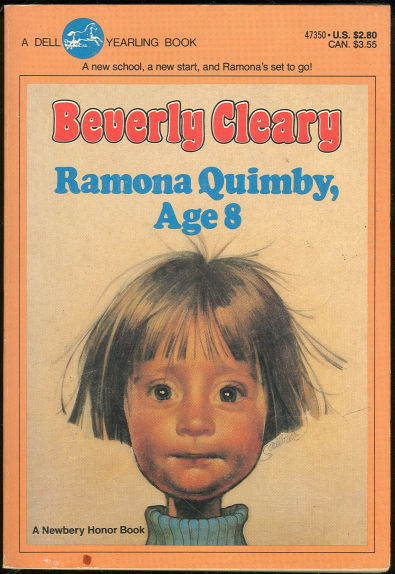 I have heard rumours here and there that to children raised on Hogwarts and Lemony Snicket, the adventures of Ramona Quimby come across as a little bit dull. Perhaps so, but then the domestic has always been my literary milieu, setting for plenty of magic in its own right. As a child, I was wild about Ramona, about her “wonderful, blunderful” self, as she was referred to at the end of Ramona Forever. In her blundering, I suppose she was a forerunner for chick-lit heroines on shoe-covered books in decades to come, and it’s part of the reason I identified with her, but here is a serious distinction: unlike Bridget Jones on the fireman’s pole, to give an example, Ramona never ever lost her dignity.
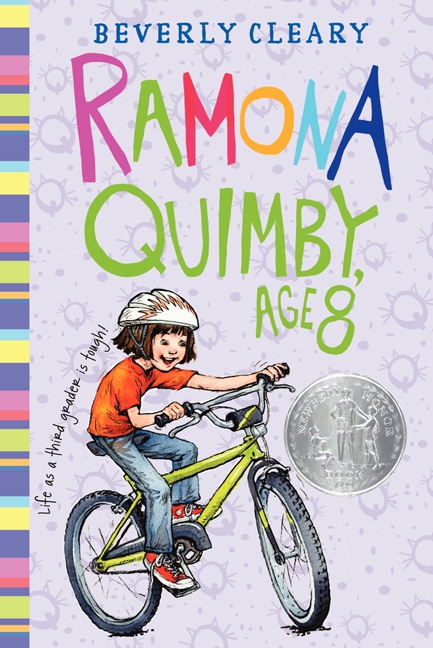
To be an adult encountering Ramona again has been absolutely fascinating. First, unlike Rowling, whose magic spells allow us to forgive literary missteps, Beverly Cleary never misses a beat. The pacing, characterization and dialogue in these novels is brilliant. Nothing clunks. These books are really not so dated–I only remember the line in Ramona the Brave, when Mrs. Quimby announces she is going back to work, and Beezus responds with, “Mother! You’re going to be liberated.” I note that on a newer edition of Ramona Quimby, Age 8, Ramona is depicted as wearing a bicycle helmet, which seems bafflingly incongruous (but then I have this theory that “safety” is a conspiracy theory, and that’s another story).
Reading these novels with my daughter, I see they are tremendously useful for educational purposes. For my education, that is, Cleary’s stories reminding me exactly of what it was like to be little in the world. I have forgotten this, the injustices of childhood, which Ramona calls attention to and battles at every turn. And injustice it truly is, to have no say in your comings and goings, to have the ground pulled out from under your feet on a regular basis, to have your fears and worries scoffed at, to be shushed and quieted, shooed away from underfoot. Reading the Ramona books provides with tremendous sympathy for how difficult it is for a child to be in the world. Reading the Ramona books, I think, makes me a better parent.
They’re also useful to my daughter though, not for morals and lessons, but for everything that’s going on in the background. That Ramona’s mother and father are depicted as real people, for one, their experiences providing a whole level of subtext to these stories that I wouldn’t have picked up on as a child, but which I zero in on now. I was reading aloud the Quimby parents’ argument from Ramona and Her Mother recently, and it was so pitch perfect and hilarious:
“Ramona, don’t just stand there,” said Mr. Quimby as he laid the bacon in a frying pan. “Get busy and set the table. As my grandmother used to say, ‘Every kettle must rest on its own bottom,’ so do your part.”
Ramona made a face as she reached for the place mats. “Daddy, I bet your grandmother didn’t really say all the things you say she said.”
“If she did, she must have been a dreadful bore,” said Mrs. Quimby, who was beating batter as if she were angry with it.
Mr. Quimby looked hurt. “You didn’t know my grandmother.”
“If she went around spouting wisdom all the time, I can’t say I’m sorry.” Mrs. Quimby was on her knees, dragging the griddle from behind the pots and pans in the bottom of the cupboard.
 It is remarkable how much economics factors into these books, much like how they do in our own family life. Though by no means poor, the Quimby family has to think about costs and expenses. A new bedroom is only built onto their house because Mrs. Quimby returns to work and they have the means to do so. Later, Mr. Quimby loses his job, and when he returns to work, it is to a position that makes him terribly unhappy. This leads to Ramona’s perpetual worrying, and her silent pleading with him via attempted thought control, “Daddy, please like your job. Please like your job.” Her concern as she listens from her bed to the timbre of her parents’ late night discussions in another room.
And don’t you remember that? Anxiety and fear over things of which you have no control? Only hearing patches of the conversation, parts of the story, and filling in the blanks with all your deepest fears? The dawning understanding that your family life is built on unsure foundations, as unsure as is anything I mean, and the terror of thinking it might all come apart?
That life isn’t fair is such a cliche, but in her stories, Cleary makes this idea endlessly interesting. Her situations are always sometimes unbearably true to life–the frustrations of trying to sew a pair of pants for a toy elephant, for example. Or the problems of a not-so-great teacher. Not a bad teacher, but just one generally lacking in appeal. There are teachers like this, and while in other novels, her student might discover her actual heart of gold, in Ramona, such teachers are trials to be borne. Because life is like that. Life is unfair. Sometimes your cat dies and you’ve got to bury it and you get blisters on your fingers.
But life is also rich in its smallest details—the squelch of boots in the mud, the appeal of a banana sticker, the sounds of kids riding bikes outside, a haircut that transforms you into a pixie for a while. That the foundation of family can be surer than you think. And that when you’re wonderful and blunderful, you’re a lot like life is. Which is something that’s good to know.

February 2, 2014
Sanaaq by Mitiarjuk Nappaaluk
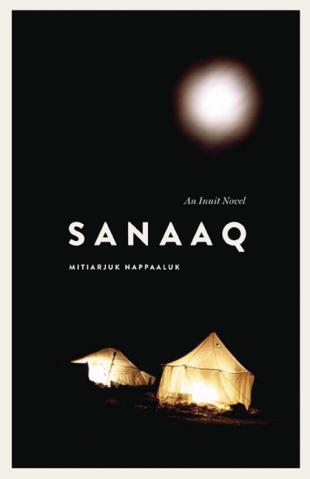 While I loved Keavy Martin’s review of the Inuit novel Sanaaq by Mitiarjuk Nappaaluk (transliterated and translated from Inuktitut to French by Bernard Saladin d’Anglure, and translated from French to English by Peter Frost in this new edition by University of Manitoba Press), a review which placed the novel in its context but also took it beyond the context—this is not “merely” a novel written by somebody who’d never read one, but a work of literature onto itself, something to be understood or even just experienced rather than contextualized—, I do think she overstated the challenge this book poses for the inexperienced reader. All set for a challenge was I, but instead I found myself enjoying myself, not so lost in an unfamiliar environment. The novel comes with a glossary of terms, but I could deduce most words by how they were used. The novel’s foreword by Bernard Saladin d’Anglure set the story up well for me, and in terms of the novel’s episodic nature? Well, obviously this was just an Inuit version of Armistead Maupin’s Tales of the City (I am only being half facetious here), so I knew what I was getting into.
Sanaaq is a young widow with a little daughter living as part of a semi-nomadic community in Northern Quebec. The novel’s 48 episodes show the rhythms of their daily life and its seasons, with all the usual drama implied–marriage, love, familial strife, hardship and loss, tragedy, and happiness. Oh, and tea. These characters are as preoccupied with tea, its having and its making, as characters in any English noel I’ve ever read, so I actually felt quite at home. For the reader unfamiliar with Inuit culture and traditions, the stories contained in this novel are rife with interesting details–about the hunting and storage of food, for example, or how the women in the book are always sewing and repairing their boots, and the logistics of Igloo-building. It’s not a portrayal of an Arctic idyll—life can be difficult and dangerous; I found it interesting to see how the dogs were regarded as pests, forever getting into food supplies and causing trouble, having items thrown at them. At one point in the story, Sanaaq is a victim of spousal violence, injured so badly by her husband that she must be flown to the south for medical treatment, and this is treated in the text with unflinching detail of the emotional complexity of the matter. But there is humour here too, and genuine human connections.
As we move through the novel’s 48 episodes, changes in Inuit life become apparent through contact with the qallunaat (non-Inuit people), which begins first with the sound of an airplane overhead, and then becomes more regular and embedded in ordinary experiences—Sanaaq’s husband is taken away to the south for work, her daughter becomes a Catholic convert, old people begin receiving social security payments.
The narrative skirts omniscience in a way that seems curious to the reader who is accustomed to the English novel. There is a matter-of-factness to the telling, perhaps related to its origins—it was written in a shorthand that can be written as quickly as it is spoken, and so this written novel has an oral nature. There is also a simplicity to its delivery that only comes across as such because a whole layer of the narrative is inaccessible to me as a reader (and I think that this is the challenge for this reader that Martin was writing about in her review). Saladin d’Anglure’s foreword makes clear that the apparent simplicity of Nappaaluk’s novel is undermined by the Inuit symbols and stories referenced, as well as details of Nappaaluk’s own life and members of her community. In short, this is only a straightforward story because I’m not smart enough to know it isn’t otherwise.
Sanaaq can and should be discussed beyond the story of how it was written, but the story is still pretty fascinating—Mitiarjuk Nappaaluk was asked by a missionary to write down phrases of the Inuktitut language so that he could develop his vocabulary, and what she delivered him instead was his long work of fiction, which she completed over many years. As Martin writes, “Mitiarjuk’s work has long been celebrated in Inuit communities, and… she received major honours before her death in 2007—she was awarded an honorary doctorate from McGill and was named a Member of the Order of Canada.” And now finally her work has been made available to be read by English readers, for pleasure just as much as enlightenment.
January 31, 2014
Solid
 There is a segment of the population that won’t understand this at all, but sometimes I get bothered because I’m not famous on twitter. (Some of you know exactly what I’m talking about though.) I have never once gone viral. BoingBoing pays me no attention at all, and neither does Reddit, except for the time that I reviewed a Harlequin Romance novel about the mayor of Toronto. And sometime I worry that my lack of twitter fame means that I fundamentally don’t exist, which of course is everything turned inside-out. I know this. It doesn’t take much to remember the truth, which is that if the whole internet disappeared tomorrow, taking my writing career along with it, and I was left with just my little family in the world, I would still have everything. This—our friends and our family—is what really matters. Of everything I ever make, this life we have together is more important than anything else.
And so I focus on the domestic. Not terribly fashionable, I know, but quite timeless (and celebrated, in all its raw complexity). I love my home, my kitchen at is centre (complete with the obligatory red teapot and bunting). We’ve lived in our apartment for 5 years now, which is the longest I’ve lived anywhere since I was 19 years old. We are committed to renting, and committed to this place, which may not be “a house”, but it is home. And in order to make this home work for the next few years, especially now that we’re a family of four, we had to do something about the kitchen. A kitchen which wasn’t big enough for our round oak table (which had been my childhood table; my mom bought it at an auction years ago), or at least the table was the wrong shape, it took up too much room, and it was far too crowded when everybody was sat at it. And I wanted to be able to have dinner parties. Dinner parties, to me, are integral to home.
 So we had a new kitchen table built. Our friend Nigel Wilson, of Red Lion Workshop, took our measurements and plans (for a rectangular table with benches that could be tucked underneath when not in use) and this morning, with his excellent family, delivered the most important piece of furniture we’ll ever buy. Made of reclaimed oak, it is as solid as it is beautiful. It is everything we dreamed of.
I think that materials are important. I like to think in the long-term. I used to buy furniture in flat packs made out of particle board, and then one day I realized I didn’t want a life made out of such things after all. It is quite likely that I will never buy a kitchen table ever again, and so the extra investment we’ve made now will pay off in the long term, and then to be able to sit down together at a piece of furniture that’s made so well–what a magnificent foundation to build a family life upon.
To contemplate a kitchen table is a loaded thing. It’s still tied up in philosophy for me, because I’m thinking of Woolf and To the Lighthouse, and Mr. Ramsay thinking about a kitchen table when one isn’t there. For me, that kitchen table always looked a lot like this one. But to contemplate a kitchen table is also thinking about the future, about our children sitting on these benches, their little legs growing longer until they one day reach the floor. All the breakfasts and dinners we’ll eat here together, glasses of milk spilled and angry toddlers sent to their room, but the harmonious meals too, the conversations we’ll share. Homework also, once the dinner is cleared away. And birthday parties, play-dough, cookie-baking, hide-and-seek underneath it. Breaking out our portable ping-pong set. The friends who’ll sit around this table with us, friends we might not have even met yet. That we might move one day, and be able to replace the benches with chairs. The amazing privilege of possibility, the assurances of a future, or our faith in such a thing. Which is what a solid kitchen table signifies to me.
The table is pristine for the moment. I was talking to Nigel about this when he was here for lunch. I said, “How do we take care of it?” He said, “You have to use it. The first few rings on the wood, he said, will be painful to see, but you’ll get used to it. Then one day, maybe 20 years now, you’ll look back and you’ll see that mark, and that mark. And you’ll remember everything.”
January 29, 2014
Big Picture Press: Mamoko and Maps

Harriet is (sort of) beginning to learn how to read, and as Harriet balks at any activity that is remotely challenging or involves learning by rote, I have to tread very carefully in my exuberance for her acquiring literacy. A book like Mamoko, by Aleksandra Mizielińska and Daniel Mizieliński, which I brought home from the library the other week, is a perfect reminder for both of us that books can be wonderful fun.
Think of Mamoko like Where’s Waldo, but for people who love stories. The book’s inside cover introduces us to a range of characters whose stories we will follow throughout the rest of the book in dynamic, busy, detailed, wordless illustrations. There are dramas experienced, mysteries to be solved, jokes shared, and something new discovered every time. You can pick a new character and “read” a new book in Mamoko over and over again, or else just pick peruse the illustrations for general entertainment. The stories in this book aren’t straightforward either, and we went back and forth a lot to try to understand what we missed, to figure out exactly what was going on. It was utterly engaging, the illustrations smart enough to make this very satisfying, and while we had lots of fun with this book together, it’s also nice to have a book that Harriet can “read” all by herself.

 Another book by the same press and same authors is Maps, which was one of (too) many books I’ve picked up at Book City lately (sob). I’ve got such a thing for maps and atlases (my prized one is Atlas of Remote Islands, and I so want to get my hands on Infinite City by Rebecca Solnit), so I was excited to get a kids’ atlas. There is a world map, and about 50 others of individual countries. And as with Mamoko, the creators of this book know that story is what compels someone to open a book over and over again. And so each country’s map includes an image of a little boy and girl who might live there, and we learn their names, which is how these countries become more than just a shape on a page for young readers. And then we learn about that country’s wildlife, famous exports, cultural figures (fictional and otherwise), different cultures, national food and drink, industry and agriculture, all though adorable cartoon illustrations.
Pick a page, any page, and Maps will take you on a journey.

January 27, 2014
Two Posts for Family Literacy Day
January 27 is Family Literacy Day, an excellent initiative by ABC Life Literacy Canada to promote the importance of families taking part in reading activities together. And because this is pretty much my favourite time of year, I’ve been busy writing Family Literacy Day-related things.

For Today’s Parent, I wrote “The Secret to Raising Readers.” Here’s a hint: it involves Trollope castles, letting your children eat their books and then throw them on the floor.

And at 49thShelf, I wrote about why I censor our family’s bedtime reading. (Why? Because family literacy is not just about the kids.)
May all your story-times be fun, and your picture books be brilliant.
January 26, 2014
Dear Leaves, I Miss You All by Sara Heinonen
 Weather-wise, it’s been a long, hard winter. The kind of season in which you think it must surely be March by now, but then it’s not even February, and there is no single month which is longer than February. The other night, we were reading Barbara Reid’s book Picture a Tree, and upon gazing on the “A tree can be a tunnel” page, I suddenly exclaimed, “I miss green leaves so much,” and then my aha moment–so that was what the title of Sara Heinonen’s book meant. It was so clear that it was strange that it hadn’t been always.
I found my way into the stories in Dear Leaves, I Miss You All in a similar way. With the first few, I had trouble finding my footing, didn’t understand Heinonen’s project. Was there even a project at all? Her places (which are mostly Toronto, and sometimes Hong Kong) are a strange borderland between here and there, apocalyptic realism. The world we know, but the sky’s a funny colour. At first, I wondered if there wasn’t much to these stories, save for some starkly defined edges nfused with clarity of vision or humour. I read “Notes from the Fallen” and it made me think of Cynthia Flood’s “Care”, but “Care” was so much more (action-packed, experimental, difficult, daring). Heinonen’s first story, “The Edge of the World,” about teenagers trying to imagine a future once the economic engine of the world had sputtered out and their parents had settled into various forms of regressive malaise (the mother who is addicted to watching owls on a web-cam. I loved this). People kept disappear into holes, sniffing poultry, falling and not getting up again. I didn’t know what to think. I was disoriented in these stories’ universe.
And then. Reading “Walking Along Steeles After Midnight”, more of the same, I thought. Set at the north edge the city (borderlands), a banquet-hall, a woman going nowhere in her marriage and her life. She leaves the party, she’s offered a ride. It’s insisted that she takes it, but no. “I want to feel my boots sink into the thick new snow on a deserted suburban sidewalk… It’s just a matter of how to refuse the ride.” And aha, finally I get it. Figuring out how to refuse the ride, how not to be taken for one, to blaze one’s own trail, small and significant acts of courage in the dark. From this point on, I decided that I loved this book.
Also: trees. As Heinonen’s biography notes, she’s a landscape architect by trade, which might be related to these stories’ fascination with all things concerning arbour. Dear Leaves, I Miss You All—indeed, the splendour of trees, their solidity and munificence, wonderfully evoked.
The Barb and Benny stories throughout the book—were they bordering on caricature, I wondered in the beginning? But I came to understand them as funny and lovely instead, a subtly subversive and surprising riff on domestic themes set in the east end of Toronto. Barb is a neurotic environmentalist, intent on sewing polar-fleece onesies for her husband and son so they can keep the thermostat down. And now her neighbour is set on pruning (*butchering*) the horse chestnut tree whose nuts keep dropping in his swimming pool (which is now open until the end of October, thanks to global warming). The paragraph in this story that I read aloud to my husband while laughing included the line about Barb’s son, Carson: “He’d recently purchased a chinchilla without our permission and named it Gandhi.” The story ends with a party, a storm, Gandhi in a tree, diehards in a castle, bouncing and missing what’s coming.
In “The Chairs in Bjorn’s Room,” a newcomer to Toronto attempts to woo a pretentious furniture designer. In “The Bloom”, a woman contemplates a former colleague who is afflicted with a cherry tree bough protruding from her abdomen. In “The Blue Dress”, a woman who’d moved to Hong Kong on the coattails of her lover’s career makes a decision about her future, perhaps the first one of her life. I loved “Night of the Polar Fleece”, in which Barb is trying to channel her anxiety into fiction, and stumbles upon a writers’ group in a bar on the Danforth in a blackout during a snowstorm. While wearing her fleece suit, which makes it awkward to take her coat off. She is beginning to learn, through her earnest son, that sometimes you have to take a break from being the change you wish to see in the world.
“Ghost Woman” is about a widower, an immigrant from Hong Kong whose daughter has shrunk away from his control and all his dreams for her. In “Closer,” a heartbroken driving instructor projects his own pain onto a student who has a sad story of her own. And then “May Day Mayday”, Benny and Barb and it’s a silent spring. Or maybe it isn’t. “The sky has gone strange again,” says Barb. “I don’t know what to prepare for.” But inside, “the house is fragrant, vibrating with the crescendo of Benny’s heartfelt song, energized by Carson’s tapping on the computer keyboard, hopeful with ceilings I painted sky-blue.”
This is a book that ends in the kitchen, “where something good is possible.” The casserole cooking doesn’t cancel the strange sky, and anything terrible could fall apart at any time whether outside or in. But for the moment, there is dinner on the table.
This is mercy, this is grace.
I look forward to reading what Sara Heinonen writes next.