September 23, 2015
Why I keep shouting my abortion

Tomatoes. Because, seriously, what other images could I use on this post?
I can’t remember when I started talking about my abortion. When it happened, my girlfriends knew, of course, and obviously so did my boyfriend, but in general, I kept it quiet. I don’t remember why. I think I was profoundly embarrassed and ashamed at having become pregnant in the first place. It was also a terrible time, a really awkward situation in which I had to come home early from my post-university European tour to have the procedure. (I wrote about this all here: I always knew I would. It really was the most interesting thing that has ever happened to me.) I remember other friends inquiring as to why I was back in Toronto, and I didn’t say anything about it. I think I was just waiting for all that time to be over and done with; if I didn’t tell the story, I could imagine that it had never happened.
My husband knew very early in our relationship. I was still quite a bit bonkers about the whole thing when we met, which is not to say that having an abortion was a bad decision, but just that the whole experience (accidental pregnancy, having my life fall apart, etc.) was awful and it took me a very long time to get over it—though he helped by being wonderful and good. And beyond that, in years to come, my abortion was the kind of thing that came up in conversations with friends once we’d had too many drinks. Because everybody’s got a story. I was never ever alone in any of this, but it wasn’t the kind of thing I talked about in daylight.
As time went on, I started to become concerned. Abortion, to which I owe my life, I think, started to become more and more politicized. Or maybe I just grew up and started paying attention. And it bothered me that the only people who were talking publicly about abortion were men who were trying to sign bills to deny women access to it. It was becoming clear that I’d have to become more political as well.
My first public act as a pro-choice person was attending the pro-choice Jane’s Walk in 2011, learning about the abortion landmarks in my neighbourhood, including the clinic around the corner from my house that was fire-bombed in 1992. I had no idea. And as this event took place on Mother’s Day, it only underlined how connected my experiences of abortion and motherhood were, however incongruously (if you are the person who has trouble grasping two realities at once—in recent days, I have learned this is a lot of people). This experience would be the basis of my essay, “Doubleness Clarifies”, which was published in The M Word (and later reprinted in The Huffington Post).
Practicing for the essay’s entrance into the world, I published a blog post two and a half years ago when Dr. Henry Morgentaler died in which I noted that the reason this man was so important to me was not only had he fought valiantly for Canadian women to have access to abortion, but he’d actually performed mine. And there: I’d said it. I was a woman who’d had an abortion. It turned out to not be so difficult after all.
It was particularly not difficult because the support I received in response and in response too to The M Word essay was overwhelming. And I mean my mom and dad buying cases of my book and standing proud in the audience at the launch as I read my essay, to my mother-in-law quietly “liking” my Facebook posts, and my husband never ever getting tired of my increasing comfort with the subject. The people who matter, of course. But also the women who came up to me after readings who whispered, “that was me,” the journalist who wrote about my story and said the same thing, the reviewer whose understanding of abortion had been shaped by her own miscarriages and who with my essay saw it from a different point of view, and the amazing Plum Johnson who I read with at an event filled with 200 suburban matrons and when I confessed that I was nervous about that particular crowd said, “What? You think nobody here has ever had an abortion?”
Truth: I’d rather not be talking about my abortion. Not now at least. And not because it’s painful, or because I’m ashamed, but because it’s history. And because I’m wary of becoming someone who talks about her abortion all the time. As in, “We know Kerry. You’ve told us that story.” Abortion is not my only trick. I am interested in many other things, such as literature, bunting, the upcoming Federal Election, and Devon Closewool Sheep. I’m also wary because I know it seems insensitive to talk about my abortion all the time when my friends and acquaintances have their own stories: infertility, miscarriages, sick children, dead children. But the costs of staying quiet to stay polite are really starting to seem too high. And I really do believe that all these stories are part of the same story, a larger story about women’s lives. So I keep returning to abortion again and again.
In the summer I was walking down Bloor Street pushing Iris in a stroller, having just dropped Harriet off at day camp. We were hurrying home for lunch and nap, but I had to stop at the corner of Bloor and St. George where two very young people were holding pictures of lentil-sized fetuses magnified so they were bigger than I was. (What, when blown up at that level, would not be disturbing to look at?) Now I have walked past pro-life activists many times in my life because I lacked the courage to do anything but, because I do not like confrontation, and yes, because I always have better things to do than talk to people who standing on the sidewalk holding signs.
But it was different this time. Because this time, I’d learned to talk about my abortion in public. And as a person with that knowledge, I had an obligation, I thought, to speak up again. To stop there and talk to that impossibly young girl who’s trying to pass me a pamphlet with a number to call for support should I happen to regret my abortion (“We’re not judging you,” she tells me) and tell her, no no no. To point to my daughter sitting there waiting to be given her lunch, and say, “This is my baby. This baby would not exist were it not for my abortion. This life, this amazing life, my life, would not exist were it not for my abortion.” To say to her, “I have two children and I’ve had an abortion. There I things I know that you don’t know. Do not dare to stand here on the street and purport to educate me. Allow me to educate you.”
“There was nothing I wouldn’t have done to end my unwanted pregnancy, that my desperation had been just the same as that of all those women who’d had unsterile elm bark slipped through their cervixes to induce abortion, but that I hadn’t had to kill myself in order to relieve it.”
For the past few days, the hashtag #ShoutYourAbortion has been trending on Facebook, started by feminist activists Lindy West and Amelia Bonow in the US. (Read West’s piece in The Guardian: “I set up #ShoutYourAbortion because I am not sorry, and I will not whisper.”) This was my kind of bandwagon, so naturally I jumped on, sharing my essay from The M Word. And while the response to the hashtag was just the kind of thing I like to see—this conversation being owned by the women who’ve lived it, who for once are not trying to stay quiet for fear of offending sensibilities. It feels good to talk about your abortion out loud, this thing that made you and to not have to keep the story inside. It’s nice to see the thing I know is true from all those late night conversations over too many beers really is true after all: women have abortions, we get on with our lives, this is an ordinary, quotidian thing, and while the decision can be “harrowing” or “difficult,” sometimes it is just a thing. Sometimes an abortion can deliver the greatest kind of relief.
Of course, the hashtag got hijacked, levels of hatred I’ve never seen before. I don’t engage in online arguments ever, and certainly not with people whose twitter header photos feature their gun collections. I started to realize there was a direct correlation between people with American flags in their header photos, and the need to tell me that I was evil. I suggested to one woman that maybe Jesus (who, according to her twitter bio, was the answer to every question) might have shown some more compassion, and she informed me that unless one had repented, one was against Jesus, with Satan. (I had no idea. They didn’t teach that at my Sunday school.) Murderer. Murderer. Murderer, they said. Along with slut. I saw “trollop” once. I have never been witness to such abject hatred as these people (who claim so much to love babies) have for women who’ve had abortions.
I tweeted, “So much hatred by #ShoutYourAbortion trolls. If you can feel for a lentil-sized fetus, surely you can empathize with actual human woman too?” It’s been retweeted nearly 300 times, which counts as viral by Kerry Clare standards, and favourited 736 times, but this means that I’ve been exposed to even more lunacy, people who want to debate me on this. To what end, I don’t know: it’s not like I’m going to go back in time and not have an abortion. And they keep wanting to tell me things I already know, like that my decision was a selfish one, and there is an odd contradiction in talking about abortion when you’re actually a mother (although this isn’t a contradiction at all, but these people have small minds), and that not all aborted fetuses are the size of lentils (although everyone I know who has ever had an abortion later than 8 weeks or so did so with heartbreak in order to avoid the trauma of carrying a nonviable pregnancy to term, so fuck you asshole), and that unborn babies don’t get to make a choice (welp?), and of course, there is always adoption. Of course there is.
Um, there was also the guy who told me that I was a Nazi who had morals on par with ISIS. Later he tweeted about how he didn’t abort his hydrocephalic baby. The guy was a moron, but I got him then—his feelings spring from a genuine (albeit limited) place that I can understand. I even understand the woman who’s determined to stamp out abortion because of how it hurts women—apparently she spends her days holding other women who are traumatized by theirs. (Perhaps less shame and stigma might ease this kind of pain. Also, where is this woman hanging out? Sounds terrible. She needs new friends.) And yes, many of these people are just people who hate everybody, women in particular. “You shouldn’t be able to have everything you want!!” somebody tweeted at me. “But I can,” I wanted to crow. “I do!!!!”
My husband has finally told me to stop talking. On twitter at least. “These people are crazy,” he said. “These are people who would literally kill you and think that’s okay.” He also points out that I have better things to do than argue online with sub-literate people with eggs for avatars, and he’s right on both points. It’s also really, really exhausting.
So yes, no more twitter exchanges, but I’m not done with the hashtag yet. I’m not done with talking about my abortion either. And I’m guess I’m just laying the whole thing out here so that perhaps you’ll understand why.
September 22, 2015
The Day the Crayons Came Home

True confession: I don’t love The Day the Crayons Came Home, by Drew Daywelt and Oliver Jeffers, quite as much as I loved its predecessor, The Day the Crayons Quit. The premise is the same but it’s just not as fresh. However my children are quite nuts for the book, and during the first few days after we bought it, Harriet insisted on taking it to bed every night. So when I heard about Small Print TO’s Crayon Creator’s Club event this weekend, I knew we had to be there.

And so on Saturday morning, we headed down to The Lillian Smith Library (which is the most special twenty-year-old building in the universe) and my children posed with the enormous crayons adorning the entrance. We were able to buy a copy of Harold and the Purple Crayon (can you believe we didn’t have it yet) and listened to the story, before the children were let loose to do some purple crayon-ing of their own. (We also learned that Harold actually grew up to be a graffiti artist, ala Bansky.)
After that, we reassembled for The Day the Crayons Came Home, which is about Duncan’s crayons that have been lost, abandoned or broken over the years—left behind on holidays, stuck between couch cushions, puked up by the dog. In the end [SPOILER ALERT] Duncan welcomes his colouring implements home by building them a crayon fort that meets all their special needs now that they’re in altered states. And then each of the children got to work constructing a crayon fort of her or his own.

Next up: the door prize. Guess who was quite thrilled to win a crayon that is taller than she is? (And she doesn’t mind in the slightest that it doesn’t actually colour. If it were made of wax, it would have been even to carry home than it already was.)

All in all, it was a most rewarding morning at one of our favourite places. We posed out by one of the gryphons for posterity.

And speaking of Lillian H. Smith and crayons, I’m quite excited about the All the Libraries colouring book by Daniel Rotsztain, coming next month from Dundurn Press, featuring drawings of every single Toronto Public Library Branch for your colouring pleasure. You can learn more about the project and see some drawings here.

September 20, 2015
Fates and Furies by Lauren Groff
 “…consider sacrificing surprise, the lowest form of literary pleasure, for the much richer satisfaction the first half of this novel can deliver when read in light of the second,” writes Laura Miller in her review of Lauren Groff’s new novel, Fates and Furies, in which spoilers are revealed. A line I delighted in when I first came upon it; that a good book can’t be spoiled is something I’ve long insisted on. But like all good rules, there are exceptions, and I got to thinking about them after reading Miller’s review. There are books—one of my favourite books, We Need to Talk About Kevin is one; a more recent example is Karma Brown’s debut, Come Away With Me; also Kate Atkinson’s wonder A God in Ruins—in which the element of surprise is an integral part of the reading experience. In which the reader gets to the twist, puts the book down and asks, “How did she do that?” When we aren’t even aware that a twist is coming. And then the reader goes on to pick the book up again in order to discover the answer to how did she do that, compelled by the crafting that goes into the kind of book that will never be read the same way twice. Whereas other compelling books—Gone Girl, The Girl on the Train—fail to similarly necessitate another reading. The twists are all. These are books—gripping, great and fun, but still—that can be spoiled merely by being read.
Fates and Furies is not quite either kind of book, but that is not surprising. I still vividly remember reading Groff’s debut, The Monsters of Templeton, for the very first time, and being bowled over by the book’s audacity, by the author’s talent. And with each subsequent book—the story collection, Delicate Edible Birds, and the acclaimed novel, Arcadia—Groff has surpassed all expectations. She’s a writer of huge ambition and even larger canvases, unabashedly literary, unabashedly story, traditional in her approach to crafting fiction, except that she seems to be reinventing the novel every time, pressing at its limits. I’ve spent the last week reading Fates and Furies and being particularly annoyed that anybody imagines Jonathan Franzen to be “a greatest living novelist” (?) when: Lauren Groff. Lauren Groff. Lauren Groff.
(If she were a man and a giant asshole, however, she’d definitely be discussed in those terms.)
There is not a twist in Fates and Furies, per se, but instead a shift. At one point, its shape is described as an X, an intersection. It’s the story of a marriage, but as Robin Black’s review on The New York Times explains, it’s (mercifully!) not so much about the institution of marriage as one marriage specifically, the individuals entwined within. The first half of the book (Fates) is concerned with Lancelot Satterwhite, known as Lotto, destined for greatness from birth. His story a whirlwind, taking us from his childhood growing up wealthy in Florida, his father’s death, his mother’s descent into mental illness, teenage delinquency headed off at the pass via prep school, and the college. And at the end of his four years there, on a cusp (he hopes) of a career as an actor, he meets Mathilde. They marry after a two week courtship, and for the next two decades she supports him through lean times and periods of great success as he finds fame and fortune as a playwright. The reader is party to their healthy sex life, chatter at their popular parties, their quiet moments and their public ones, as well as scenes from some of Lotto’s plays. Mathilda silent in the background, “a saint,” Lotto calls her, as well as a “pathological truth-teller.” The quintessential caregiver, wife.
I wasn’t sure… This is what I reported as I was reading through the novel initially, sometimes finding Groff’s prose overwritten, while at the same time fragmented in a way that was off-putting. The story so male, centred on the penis. Literally and otherwise. It wasn’t overwhelmingly interesting. And yet, I knew there was something. I wasn’t sure what because (uncharacteristically) I’d been avoiding spoilers, but I’d read the headline of Ron Charles’ review in the Washington Post which contained the word “masterful,” and the I’d read the first sentence: “Even from her impossibly high starting point, Lauren Groff just keeps getting better and better.” So I had faith, and I certainly wasn’t bored, just baffled, and it was just that my expectations were oh so high.
And as usual, Lauren Groff met them and then some.
There is not a twist in Fates and Furies, per se, but instead a shift. Midway through the book, the perspective moves to Mathilde’s, and we learn that nothing has been what it seems. And while Lotto’s story is indeed one of fate and luck and fortune, Mathilde has been the true orchestrator of their shared life, pulling strings Lotto never glimpsed (though as we note them dangling when we’re impelled to go back and reread). Mathilde’s story is the Furies of the title, beginning with a tragic childhood and, as Laura Miller writes, “Mathilde’s story contains more outlandishly fictional twists than those of David Copperfield, The Goldfinch’s Theo Decker, and Becky Sharp combined.” It’s all a bit nuts, but fascinating in its intersections with Lotto’s story, how the two parts complement each other. A bit of a relief too.
And fascinating for what the novel says about women’s lives and women’s stories, about the role of the wife, which is nothing like Lotto envisaged. In her acknowledgements, Groff credits the work of Jane Gardam for helping to inspire Fates and Furies, and the reader can see how she was inspired by Old Filth and The Man in the Wooden Hat in her construction of separate universes within a single marriage, all the ways in which we are infinitely unknowable to each other.
Fates and Furies also suggests that men’s stories automatically take precedent in the literary canon. That Lotto’s story comes first is as symbolic as it is for literary emphasis. It would be easy for the reader to miss that Mathilde is a writer as well (and not just in her role as actual co-author of Lotto’s plays, manipulating his work as she did their entire life, perhaps this ensuring success). She’s a little bit Judith Shakespeare, albeit actually writing, but nobody reads it.
Anger’s my meat; I sup upon myself
And so shall starve with feeding.
Volumnia says this in Shakespeare’s Coriolanus. She—steeling, controlling—is far more interesting than Coriolanus.
Alas, nobody would go to see a play called Volumnia.
(Later we learn that Mathilde writes a play called Volumnia. Nobody goes to see it.)
If there is a twist in Fates and Furies, it occurs in the novel’s final five pages, in which the book’s two sections are woven together in the most beautiful, heartbreakingly lovely manner. In which we realize that this isn’t just about two solitudes and deception, but that even with secrets, misunderstandings and mysteries never solved, there is such a thing as love after all. That the novel is not point and counterpoint, illusion and reality. That like all the great polarities, the truth is somewhere in the middle.
September 17, 2015
Buddy and Earl, by Maureen Fergus and Carey Sookocheff

There are books, and there are books, and even in the realms of the best books, there are the books my children like and the books that I do. And Buddy and Earl, by Maureen Fergus, illustrated by Carey Sookoocheff, manages to be both.

Stories of unlikely pals abound in picture books, and Buddy and Earl is refreshingly different. The characters’ relationship is not built on their respective differences (and learning to appreciate and respect them, blah blah blah) but on highly individuated interactions. Buddy is not just DOG, but A dog with best intentions, insatiable curiosity and a tendency to forgo the rules. Earl is a bad influence with a remarkable imagination and is ever-so-cool that butter wouldn’t melt.
But what is Earl exactly? Answering this question is Buddy’s first task in their relationship, and while Earl attempts to steer him wrong (and have a bit of fun: “I’m a race car!” “I’m a sea urchin.”) before finally revealing his real identity: “The truth is that I’m a talking hair brush.”
Buddy, who’s a bit simple-minded, uses all the rational powers at his disposal to get to the heart of the matter of Earl: “You do not have a steering wheel. You do not have wheels. I do not think that you’re a racecar, Earl.” Or, “You look like a sea urchin, Earl, but I do not think you are a sea urchin. You see, sea urchins are underwear creatures and the living room is not underwater.” Turns out Buddy is not so simple after all. (And reading this deadpan dialogue aloud is so much fun.)

BUT. It turns out the living room IS underwater, or at least it is in the game that Earl ropes Buddy into, a game of pirates, in which the ship is the couch—a dog no-go zone. The two embark upon an eventful voyage with lots of noise and tomfoolery, so that Buddy eventually gets into trouble and Earl gets off scot-free. Because who ever imagined that an innocent hedgehog could cause so much trouble?
In the end, neither is able to identify the other in a taxonomic sense, but both decide it doesn’t matter. Because what are Buddy and Earl after all? Well, they are friends. And this adventure is just the beginning, because there are two more books in store. We are looking forward to them.
September 16, 2015
A ride in the bucket
 I’m something of a pathological truth-teller, which is a line I stole from Lauren Groff’s new novel, Fates and Furies, the book I’m reading right now. The interesting thing about that line being that the character described has a more ambiguous relationship to truth than the speaker supposes. Which is always the way. Truth is fudgy. I think I only have such a strong affinity for the principles of truth because lies are so easy, the slipperiest slope—and then anything one says ceases to have meaning, and then what is the point?
It’s true though I’m often willing to forsake a bit of truth for the sake of a story. Which is why I wouldn’t be surprised at all to have made up the whole thing, the story of my friend Britt and I driving down a country road outside Peterborough during the summer of 2000. How there was a hydro truck pulled over by the same of the road, a crew working on a Sunday. (At the time, I don’t think I knew the song, “Wichita Lineman”, or else I would have been humming it.) We pulled up alongside, and somehow had the nerve to roll down our window.
“Could we have a ride in your bucket?” I asked.
And I’ll never forget the so-perfect response: “I can’t think of a reason why not,” the crewman said.
And he even meant it.
And so the crewmen paused their work for a moment and gave us each a chance to put on a hardhat and take a trip up in the bucket. Violating more health and safety policies than I can dream up, though I was 21 at the time and didn’t think in those terms. Still though, we knew it was amazing. We took pictures. That vivid blue sky, the wispy clouds.
If not for the photo, I really wouldn’t believe it. I’m not even sure I really remember it happened. That ride in the bucket seems more like a figment. A figment of reality, if there exists such a thing. “I can’t think of a reason why not,” that crewman said—has there ever been anybody else with so limited an imagination? And yet. Perhaps he was dealing with a surfeit, head in the clouds literally and otherwise.
And I mention this story here now because for the past few weeks, I’ve been stuck in the past, working on a story whose roots are autobiographical. All this spurred on by my husband’s application for Canadian citizenship, and how I was rooting around in boxes to unearth his university degree (which confirms his competency in English). I found my diary from my final year of university, a diary that begins on September 14 2001 and is written by a girl who was dazzled and devastated by the world at once. And I found the scrapbooks I so painstakingly compiled back in those years, determined to preserve every single moment. Not yet understanding then that there are so many moments, if we’re lucky, more moments than ever could fit in a storage locker full of scrapbooks. Not understanding then either that I mightn’t want to hold onto everything forever. That there would be so much I’d want to let go.
When we moved back to Canada ten years ago, I got rid of a whole bunch of stuff. Diaries, scrapbooks, yearbooks, tossed out in black plastic bin bags. There wasn’t room for all of it. Who wants to go through life with so much baggage? But I didn’t get rid of all of it. Enough to fill a couple of boxes, from the years that were most monumental. So there would be gaps, big gaps, but I don’t regret it now. I don’t regret the bits I kept either, which become more and more precious all the time. But so too are the gaps, which allow me tremendous freedom both as a writer and as a human being. To let stuff go, to be allowed to forget, but also to fill those gaps with other things—creation.
To go for a ride in the bucket, I mean, whether it happened or not.
- If Creative Nonfiction is your thing, check out Amanda Leduc’s series this month on The Puritan’s Blog. She writes about Lucy Grealy and chutzpah, see Julia Zarankin on birdwatching and the pursuit of the strange, and Liz Harmer on writing without rules.
September 14, 2015
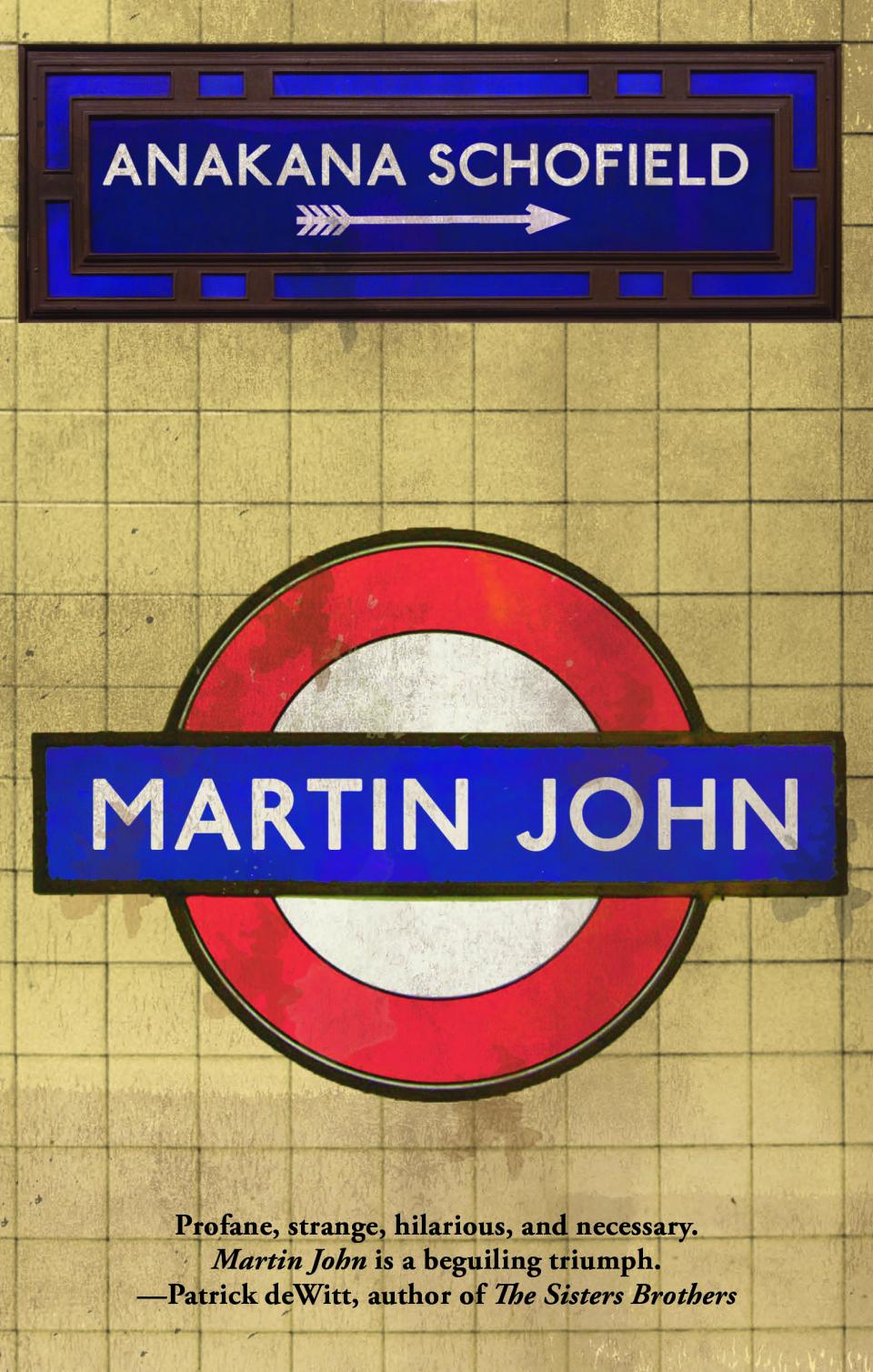
Martin John, by Anakana Schofield
 “That’s aggressive, but you see this hasn’t been an easy book for any of us.”
Anakana Schofield’s Martin John, a novel about a sexual deviant and the follow-up to her award-winning Malarky, is primarily a book about language. It’s about sexual violence is able to happen because of words and ideas that are never articulated or defined, and how these ellipses in our understanding go on to create further damage and harm. “It was a time when people didn’t ask as many questions. That’s the time it was.”
And so in order to fill in the blank, to ask the questions, to define the it, Schofield has to reinvent the shape of a novel. Eschewing chronology, point-of-view, objectivity, artifice itself for something that more resembles a case study, a long-form incident report. Just the latest for Martin John, the reader supposes, who has been in and out of the care of psychologists, social workers and other medical professionals for much of his life. Though he makes a point to stay out of their way—meddlers—and to keep to his routines, essential. He’s holding down a job as a security guard, lives in a nondescript shabby house in London (albeit one cluttered with the detritus of his media habits), visits his Aunt Noanie on Wednesdays, under specific instruction of his mother back in Ireland. (D’ya hear me, Martin John?) But it’s clear that, no matter his circuits and refrains, this centre (a precarious arrangement orchestrated by the mother) simply cannot hold.
The Mother. Martin John’s mother is a spiritual sister to Our Woman from Malarky, who does make an appearance in this latest book, encountering Martin John in a psychiatric ward. (You might remember him as “Beirut”.) Both women are undone by motherhood, wielding teapots as weapons, this action underlining their powerlessness. And yet. Are they really powerless? Are they bad mothers? Do they do what they do out of love? Or what? Do we blame the mother? Does it even matter? Does being a mother somehow put a woman beyond reproach?
Do we blame the mother? The collective address here is not rhetorical. I’m talking to you, and Schofield’s narrator is talking to all of us:
“She did not the idea she had a role in it.
You would not like the idea you had a role in it.
Did she have a role in it?
Have you had a role in it?
Do you have a role in this?”
Martin John forces the reader to be held accountable for some of the violence contained therein, for that time it was in which people didn’t ask as many questions is happening right now. “A thesaurus of vagueness for remembering,” Schofield writes. Think of a now-infamous CBC presenter, hmm? All this making for a discomforting read, made even more so, remarkably, by the reading not being so discomforting at all.
For a novel about a sexual deviant, Martin John is positively breezy. It’s humorous in places, fast-paced, its momentum spurred on by the arrows separating the text’s sections, part of the book’s overall transit motif. A motif that’s important to understanding the book as a whole, notions of underground and close proximity, of public, that these are people who live among us—they are us. And what are to do about that? The idea of transit and transit maps connecting to Martin John’s behaviour too, his loops and circuits. A sense of inevitability. The way that one thing leads to another: “Strange. Estranged. Estuary ranged.” It all comes back to words again, connections, missed or otherwise.
As Anakana Schofield is a friend of mine, I perhaps cannot be relied for a wholly objective review of her work, those it pleases me immensely that I don’t have to be. Read a rave review (one of many) from the Globe and Mail this weekend, and celebrate Martin John’s deserved appearance on the Scotiabank Giller longlist.
September 10, 2015
Daisy Saves the Day, by Shirley Hughes
 British institutions collide in today’s Picture Book Friday pick, in which the great Shirley Hughes pens a picture book right out of Downton Abbey with bunting as a major plot point. I know.
The book is Daisy Saves the Day, about a young girl who has to leave school and take a job as a scullery maid in a grand house in London in order to earn money to help care for her younger siblings. Which was not such a remarkable path for a young girl of her class, but Daisy herself is quite remarkable, bright and clever, hardworking at school. She’s also not particularly good at, well, scullery-ing. Her employers’ modern and unconventional niece, who is visiting from America, wrangles her permission to browse the house’s extensive library however, which makes Daisy’s life a little less lonely.


The story takes place during the summer of 1901 when George V was crowned, and the streets of London were decked in Union Jacks, flags and streamers. (The text doesn’t explicitly say “bunting,” but them there triangles are not just any flags, are they….) Except that Daisy’s house remains plain and unadorned—her employers, The Misses Simms, considered the decorations vulgar. And Daisy, naturally, is disappointed to not be part of the fun.

Ever-enterprising, however, she devises a cheeky way to join in, fashioning a string of bunting out of dishcloths and pillowcases and BRIGHT RED BLOOMERS, no less.

Which, of course, gets her in hot water with the Misses Simms, and poor Daisy is landed in disgrace. She’s given so many extra chores that by the end of the day, she’s too tired to even read. But never fear, there will BE redemption. When one night Cook hangs dishcloths a bit too close to the fire and then nods off, it is Daisy who smells the smoke and rushes to the kitchen to help put the fire out, saving the day, as per the title.

The Misses Simms are so impressed with their young charge that they bestow on her the ultimate gift: they free her from service and offer to pay for her schooling. Because “…it seems to me that you are better at reading than at polishing and scrubbing.” Indeed. And then a happy ending, because Daisy gets to go home to her mother and her brothers. A cheerful end to a cheerful tale, gorgeously rendered in classic Shirley Hughes style, and with endpapers decorated with vintage advertisements for household cleaning products.
We loved this one!
Check out the Daisy Saves the Day website, with more information about the book and activities too.
September 10, 2015
It begins.

I got pregnant at nearly the exact same time as Harriet started playschool three years ago, when she was three years old. And I so vividly remember those precious mornings, the time, rushing home to rescue my tea from under the cozy and sit down to get some work done, not wasting a single moment. To be alone. Although the time did not seem so luxurious: I was in my first trimester and would pass out every night not long after Harriet did. If I hadn’t had those mornings, I would have had no time to get any work done. After Christmas when my energy levels had returned, I got a job writing a book about Arctic exploration, the gold rush, mountain climbing, and parkas, and by then my days of freedom were numbered anyway. So I spent that winter reading Pierre Berton on the Klondike and listening to Iris by the Split Enz over and over again, dreaming of my baby as she kicked away inside me—so you see, I was really not so alone at all.
It seemed like the smallest window, that year. I knew that with our new baby, we’d soon be thrown back into newbornland and babyhood, and we’d have to find our way out again. That it would be a long before I once more found myself at home alone at 9:30 in the morning, the teapot still warm. I edited an entire book as the baby slept on my chest, for heaven’s sake. And now, here I am. And dare I say it: it all went by so fast?
This morning I dropped Harriet off at Grade One, which she is enjoying immensely so far, and then Iris and I trekked down the street for her to begin her first day of playschool. The playschool she has known since she was a fetus: she spent her first year in her carrier as I did co-op shifts three times a month. By the end of the year, she was scooting around the room like a champion. It has always been familiar to her. We love the teachers. Last year when Harriet was no longer a student there, we still visited our playschool friends often, and we’d play with them at the park.
Drop-off was not without its drama. Iris was not happy about my departure, and while I wanted to get out of there and trusted she was in very good hands, I’m a bit worried about the teachers who’ll have to deal with her. Though I assure myself that perhaps like all parents, I’m imagining that my child is more unique and particular than she actually is. I’m crossing my fingers that they’ve seen it all before. And that she’ll have a wonderful morning.
And now here I am, right back where I’ve been before except that this is the way forward instead of just a blip. It’s even time to put the kettle on. It’s time to get some work done. To figure out this new routine, just what to do with all this space and this quiet.
See also: “When I got home again, I didn’t know what to do because there was so much that I wanted to do.”
September 9, 2015
Light Years, by Caroline Woodward
 Caroline Woodward is author of Singing Away the Dark, which is one of my favourite picture books of all time, a book in rhyming couplets with just a few hundred words that has actually given me great strength more than once at times when I needed it. It’s based on Woodward’s own rural childhood: “When I was six, and went to school, I walked a long, long way…” and recounts her journey in the dark through the woods to meet her school bus each day, facing down fears, shadows, and actual cows. And so her latest book, Light Years: Memoirs of a Modern Lighthouse Keeper, is not such a departure, another book about lighting the darkness, being audacious and daring, and about the deep and complex relationship a person can have with place.
From the back of the book: The very TRUE STORY of a WRITER who always chose ADVENTURE over security, LOVE over logic, and who (naturally) quit her best job ever to go off with her equally peripatetic husband to LIVE at a LIGHTHOUSE and WRITE all the stories she always wanted to write, including THIS ONE.
(I don’t usually include descriptions from the back of books, but I particularly love that one.)
Woodward’s memoir is as meandering as her life has been, and I mean that in the best way. I mean that instead of a straightforward narrative about days in and days out as a lighthouse keeper (days that begin at 4am for the first weather report), we’re permitted to a broader story about how she and her husband came to live “on the lights” (after previous careers as booksellers and Woodward’s time spent working as a publishing sales rep up and down Vancouver Island, and throughout all of this wanting to make space for writing in her life), her own childhood spent homesteading in Northern British Columbia, in-depth lessons on meteorological geekery, about baking in a lighthouse kitchen (with enough cookies to feed the Coast Guard at Christmas), about how not to be decapitated by a helicopter propeller-blade, and gardening in challenging climates, and how lighthouse keepers cast their votes (Elections Canada officials arrive by helicopter!). It’s also a fervent defence of manned lighthouses, which are always under threat of budget cuts, and the role the lighthouse keepers play in keeping boaters safe, rescuing lost hikers, monitoring weather conditions and documenting the composition of sea-water for scientific data.
Somewhat incongruously, this book about remote and lonely places is not about loneliness at all, but about one finally finding her place in the world after decades of searching. And it’s a love story, Woodward and her husband’s devotion to each other a constant throughout and one of the chief delights of the memoir. They both work as relief lighthouse keepers, this involving separation for weeks or months at a time, and they find ways to stay connected through these periods. When they’re home, however, they live together at the Lennard Island Lightstation on the West coast of Vancouver Island, and Woodward knows she is privileged to live this remarkable life.
At the end of the book, she writes, “Remember this, memorize the pitch and rise and fall of these sounds because you will not hear them once you are far away from this life, this wonderful, amazing adventure.” And the reader is lucky to be journeying alongside for awhile.
September 7, 2015
Cake and Back to School
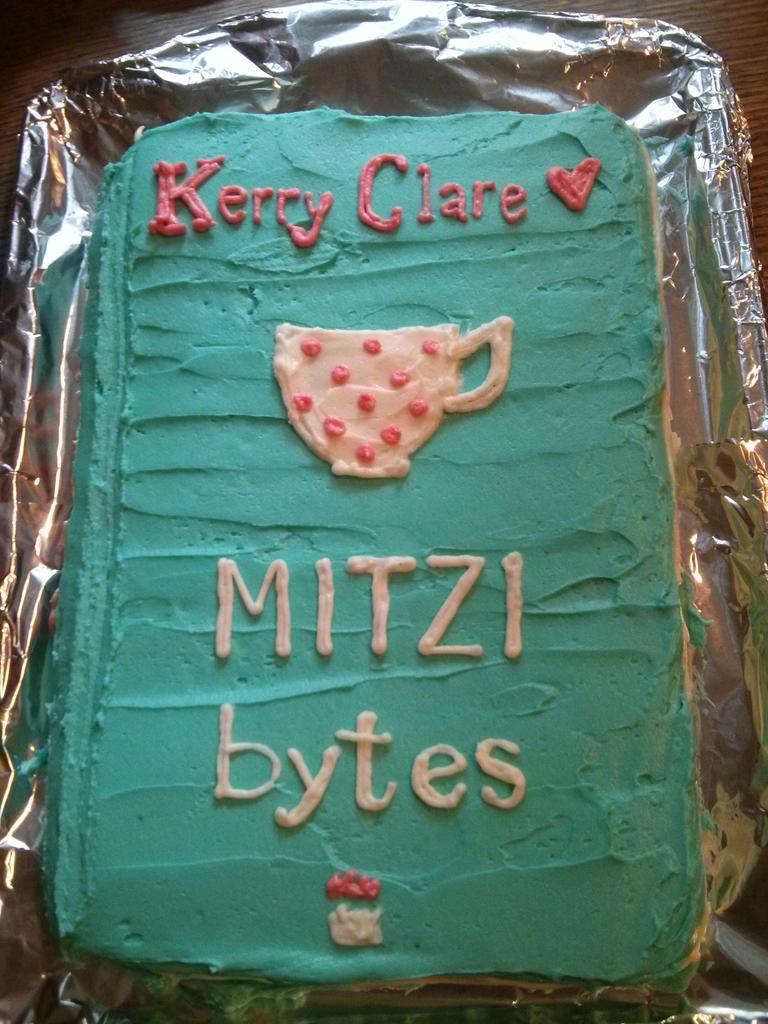
Back to school tomorrow! Which means that we spent much of today at the CNE, which was excellent, and the prize-winning celery was as wonderful as I’d hoped for. (It’s basically the reason I go.) And we are so very hot, the weekend spent dripping with sweat and entertaining people in high humidity. Last night our best friends from kindergarten came for dinner, one of our now-regular togethers that involves too much wine and so much cake. Meeting these families was one of the best parts of last year, and I will miss them as our children move onto new classes and schools and our daily lives are no longer as connected. Although friendships can and do endure, as evidenced by tonight when my friends and former roommates Kate and Erin (and Kate’s husband Paul) came over last minute for pizza. The last-minute thing remarkable because Kate and Paul live in Vancouver, and we’ve not seen them in three years. But here they were tonight, with a cake even. And what a cake? If my book ends up looking half as excellent as this one, I will be satisfied. (Apparently the image was inspired by my Mitzi Bytes pinterest board, because there is indeed such a thing.) I have the most terrific friends. Anyway, the convenient thing about all of this is that Harriet’s first day of school lunch is leftover pizza and cake, so her year is off to an excellent start. Wish us luck tomorrow as all the madness and fun begins!






