April 10, 2016
The M Word: Heather Birrell on Talking to her (M)Other Self

This is the second in a series of posts catching up writers from The M Word, and finding out what they’re up to now. (Find out more about The M Word and read its rave reviews right here.) From last week: “Kerry Ryan on Wishing and Washing“.
Heather Birrell’s “Truth, Dare, Double Dare,” opened the collection, a beautiful story about second-chances, forgiveness, and the reality of what it takes to make a family. But the essay’s happy ending would turn out to be the beginning of a more complicated story, which she delineates here.
*****
Promise to Repeat
My sister used to talk to herself when she was about four; at eight, I overheard her chatting away in her bed. She was not discussing the world with an imaginary friend—she was talking to her Self. We knew this, my parents and I, because she used the actual word: ‘Hello, Self,’ she’d say. ‘How you doing today, Self?’ And then she would let her Self know exactly what was up.
In the essay I contributed to The M Word, I talked about my mixed feelings about having a second child—how my first child’s traumatic arrival and aftermath gave me pause. Then I got pregnant (unplanned) and I was so scared. But going ahead with that pregnancy turned out to be a wonderful choice for me and my family. My essay had a happy ending.
But, when The M Word was on the brink of publication, I was struggling through a new crisis; a kind of delayed post-partum depression characterized by Pure OCD that saw me mired in a horrible muck of guilt and fear. Pure OCD sufferers experience repetitive intrusive thoughts that usually involve violent or taboo images. As new (and new-ish) mothers can attest, being so close to fragile new life cannot help but call up thoughts of death. We imagine we will somehow—accidentally or on purpose—hurt our kids. Pure OCD amplifies those thoughts in monstrous, seemingly inescapable ways.
When I was being treated in a Toronto hospital’s short term mental health unit, one of my psychiatric nurses asked me to write a letter to myself. ‘But,’ she said, ‘imagine you are talking to a dear friend in your same situation. We are often much harder on ourselves than we are on our friends.’ The idea was to show myself the compassion that my depression had transformed into criticism and cruel falsehoods. This was a surprisingly easy exercise for me—maybe because I truck in fiction, the words came readily. Writing the letter did not heal me; I didn’t recognize myself in writer or recipient. But the next day, when I re-read what I had written, I felt a measure of comfort. The exercise felt artificial, but the result was something authentic and poignant.
In a blog entry I posted just before The M Word came out (and I use the term blog loosely; I am an infrequent, undisciplined recorder of life when it comes to my online presence), I bemoaned the fact that the essay in some ways did not feel like the ‘truth’ anymore: “I was ashamed that my relationship to motherhood had once again become so challenging, so darkly complex. I felt like a fake.” My truth had changed drastically; my sense of myself as a mother had been shredded by months of despair. The end of my M Word essay is a tempered triumph. And I was feeling far from triumphant.
This past winter, I published an essay in Canadian Notes and Queries as part of their Rereading Series (‘Further Up and Further In: Rereading The Last Battle In the Wake of Mental Illness’). In the essay, I explore how the stories I have absorbed and told myself shape my reality. That essay is one of the many conversations between selves I have been having since I became a mother.
Here is another:
Things I Might Say to My M Word Self
Hello Self. How you doin’? You know, our brain is sailed by some mighty ships. They carry precious cargo. But those ships? They’re vulnerable to our body’s tides, its hormones and adrenal secretions; when they capsize, they send some powerful chemicals sloshing over the sides. Self? You will believe some things about yourself that are not actually true. Or if they are true, they are not true in the everlasting, evil way you are thinking.
Oh, Self, in the next year or so, you will endure some of the hardest, most heartrending days and nights of your life. You will have a moment on a subway platform. Another with some pills. You will not be thinking solution, you will be thinking relief. And I will not tell you suicide is wrong. Because I don’t judge those who wants to end suffering. But I will tell you that what you are feeling will not last forever.
It’s like those nights where the baby will not sleep, and will not sleep, and will never sleep. And then, the baby sleeps. But not every night! Just sometimes, Self. The way forward will be like that.
You check yourself into the mental health unit on your oldest girl’s birthday. This is a detail which will pester you as proof of something. Back up, Self. Recall that you also collected her birthday cake and delivered it home on the way to the hospital. Remember that a mother takes care of herself so that she can take care of her children.
All of this will be hard for your husband to understand. Let him protect the children from this; let him cook for you even when you aren’t hungry. Love and loyalty can take many forms.
Hey Self! Call and email and text all your friends. Say: I need you. Go for walks with them. Watch Miss Fisher’s Murder Mysteries. Let your mother fold your washing and sort out the kids’ hand-me-down shoes and don’t imagine she is thinking, ‘This sort of couch-loafing behaviour is typical of the selfish, ‘sensitive’ daughter.’ Also: So what if she does think this? Your clothes will be folded and the kids’ shoes sorted.
You are sick. The hard part about this sickness is that they don’t always know which is the right medicine or how long it might take to work. Take the medicine anyway. But don’t shut up if it’s making you sicker. If you can’t speak to the doctors—because this sickness can steal your voice—ask your sister, her voice is strong. Talk therapy is a medicine. Sleep is medicine. And so is time. Do yoga too; you can’t om your way to happiness, but taking deep breaths and rolling around on the floor can’t help but be good for you.
In the hospital, they will ask for your religion. They will ask if you have any hobbies. You will stare at them vacantly. That’s okay; ‘hobbies’ is a dumb word.
Self, I am here in the super-future. We made it.
Heather Birrell’s most recent story collection, Mad Hope, was one of the Globe and Mail’s top 23 Canadian fiction titles in 2012. The Toronto Review of Books called the collection “completely enthralling and profoundly grounded in empathy for the traumas and moments of relief of simply being human.” Winner of the Journey Prize for short fiction and the Edna Staebler Award for creative non-fiction, her work has appeared in many North American journals and anthologies. She currently lives on the Isle of Lewis with her family.
April 8, 2016
The Not-So-Faraway Adventure, by Andrew Larsen and Irene Luxbacher
Guess what? I’ve got an extra copy of this book to give to one of you. Anyone who signs up for my newsletter and/or leaves a comment on this post by midnight Friday April 17 will be entered in a random draw to win The Not-So-Far-Away Adventure, and I’ll mail it to the winner. Good luck!
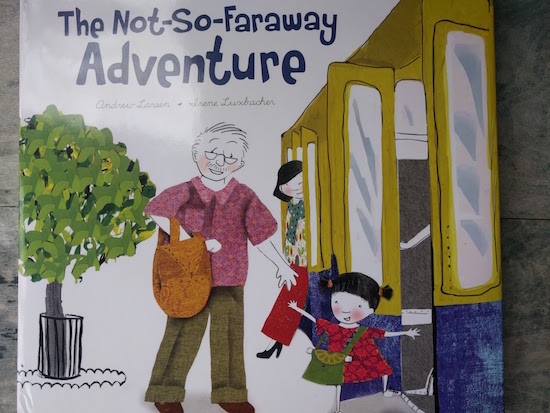
I’ve been looking forward to The Not-So-Faraway Adventure, written by Andrew Larsen and illustrated by Irene Luxbacher, partly because it follows up on the story of Theo and her grandfather from The Imaginary Garden, a book I first read (and loved) in 2011. At that point, I’d known Andrew lived in my neighbourhood, and I’d met him once at our local library (which is where he reconnected with kids’ books as an adult, attending library children’s programs when his son was young), but it was through my review of his book that we connected online and actually became friends. And in the years since, I’ve loved his books one after another (see last year’s See You Next Year), plus our children go to the same school now, so it’s always a good day when I run into him on the way to pick-up. I like his company just as much as I like his books.
And The Not-So-Faraway Adventure is no exception. It’s a story that takes as its premise one of the undercurrents of The Imaginary Garden, which was about a little girl and her grandfather who make peace with the small apartment he moves to after selling his family home. And implicit in the story was that Theo’s poppa had led a rich life—we see family pictures on his walls, and when he leaves part way through the story to take a trip (i.e. he has a life outside these pages) he packs his clothes in a suitcase covered in stickers showing all the places he has been.
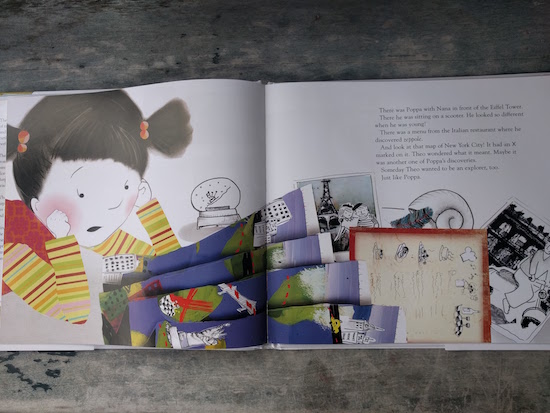
“Theo’s Poppa was an explorer,” begins The Not-So-Faraway Adventure. “He had been everywhere.” We learn a little bit more about him as Theo tells the reader about the contents of his trunk, which was packed with memories: “pictures, postcards, maps and menus that he had collected on his adventures.” Photos from Paris, maps of New York City, and “a menu from the Italian restaurant where he discovered zeppole.”
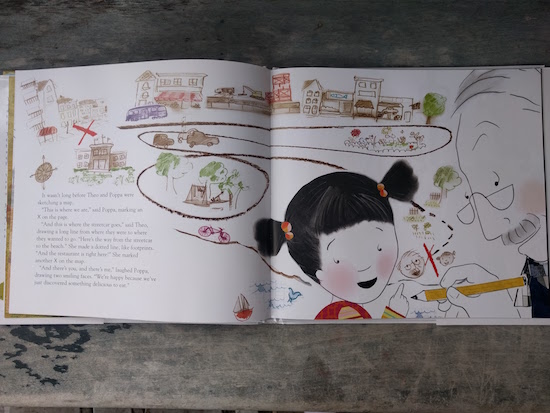
Inspired by the trunk, Theo decides to make a new adventure for her Poppa’s upcoming birthday. Together they devise a plan: a trip on the streetcar out to the beach. “There’s even a restaurant,” Theo tells him as they sketch a map of the places they plan to go. Theo is expanding her horizons as she plots their way out into the world, and Poppa delighting in connecting with his granddaughter as his own world has become a little smaller—but no less amazing, as their ensuing adventure proves.
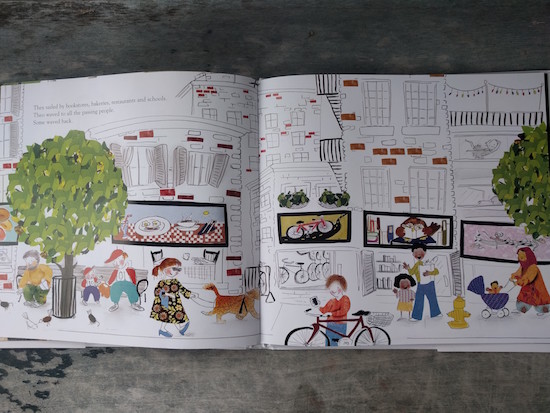
In addition to celebrating intergenerational ties, The Not-So-Faraway Adventures delights in city streets and city life, public transit and the sidewalk ballet. Luxbacher—whose work I love; see my review of her recent Malaika’s Costume—depicts a streetscape thrumming with people who wave back when Theo greets them from the streetcar. She passes “bookstores, bakeries, restaurants and schools,” which seems especially poignant to me as my local bookshop turns into a Chipotle and there’s one generic hipster pizza joint after another instead of stores that sell actual things. As always, I love the texture of Luxbacher’s illustration, her use of textiles and prints mixed with paints, all the florals, and I love her city’s architecture with its European bent.
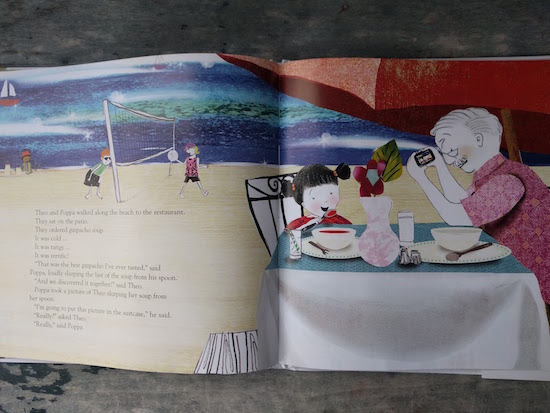
Finally Theo and Poppa arrive at the beach, where the water ignites their imaginations, they revel in the warmth of the sand on their feet, and order lunch on a patio and have the best gazpacho ever. ‘”And we discovered it together!” said Theo,’ which is my favourite part of the book, that they’re on the same level, the respect accorded to Theo by her grandfather, that he genuinely respects her as an individual, is never patronizing, is willing to follow her lead despite the years between them, and how she certainly loves him all the more for all of this. The mutuality of their experience, and the generosity on both these characters’ part: how much they want to give each other and how much they actually do (which manages to be even more).
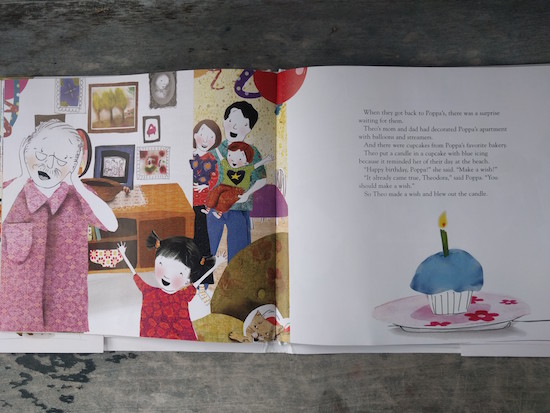
Theo and Poppa arrive home from their adventure to find a party waiting for them, cake and balloons and celebrations, but we know that this will not be the part of the story that either of them will remember. And to affirm this, Theo places the map of their journey inside Poppa’s trunk, finding a way to make his long-ago adventures seem less far away, a connection between past and present—and to insert herself into his fabled history as well.
As Larsen’s stories always do, this one celebrates the magic inherent in ordinary experience if you just have wonder enough to look for it. One never has to travel too far.
April 6, 2016
Escape Plans, by Teri Vlassopoulos
 Back in November, I went to the launch for Teri Vlassopoulos’s novel, Escape Plans and bought the book with great anticipation, but then I got pneumonia not long after and the book got lost inside a month of illness, a month during which Escape Plans received a short review in The Globe and Mail, which is always a good thing. So I should have known then that when I finally picked up on the book on Friday that I was in for something excellent, a weekend of really wonderful reading. I finished the book on Sunday night in the bathtub, which was kind of fitting in a small-scale way. And I enjoyed it so completely.
We learn in the prologue that one of our three narrators, Niko, drowned in the Aegean Sea, this information disclosed by his daughter Zoe who is recalling how she learned of her father’s death, returning home from swim practice, the smell of chlorine, her wet bathing suit in a heap on the floor. And then the novel proper begins, Niko’s first sentence, “I’ve always been good at leaving,” and telling the story about how he left his family in Toronto and returned to his native Greece to work for an ailing shipping company that had once belonged to his uncle and grandparents. Zoe’s storyline begins years after the prologue, as she moves to Montreal for university and embarks on her first real love affair. And finally, we meet Zoe’s mother Anna, Niko’s wife, who is travelling to Paris with her partner, this storyline contemporaneous with Zoe’s, and Anna is unsure about the terms of her relationship, the future, and also worried about her daughter back home.
It’s a fascinating structure, in particular that one of the narrators is (seemingly) a dead man, these passages narrated by a ghost. Vlassopoulos does a wonderful job creating suspense as his story progresses, and we want to find out what happens to him, and it seems impossible that he could actually die, so alive are his words on the page. Just as effective are the ways that Vlassopoulos have the members of this broken family, disparate figures, each of them, curiously echoing one another, and connected in ways that only the reader is privy to. The inspiration for this structure is the mythological Graeae, three sisters who shared a single eye (which in this case is the novel’s first-person narrative, a single I). The Graeae enter into the story via poetry written by Niko’s mother, who also wrote about a historical figure who shares a name with a turtle belonging to Niko’s next-door neighbours in Athens….by which I mean that this is a novel loaded with freight (also fitting). There’s nothing incidental, even if Zoe’s haphazard road trip to New York City and then Niagara Falls kind of seems that way, even in her own mind. And each character is laden with their own history—Zoe with the tragedy of her father’s death, Niko’s legacy from his literary parents, and Anna’s own childhood growing up with her geologist father in Northern Ontario. Vlassopoulos’s characters are (sometimes unknowingly) such products of the people they’ve come from, and the places they’ve been, and she shows how experience and inheritance comes with its own DNA, and so much of it is inescapable. (There is also a Bonnie and Clyde reference near the end that’s exquisite, that their doomed outcome was never the point.)
While there’s nothing showy about Escape Plans, and getting used to the structure takes a few chapters, eventually the deftness of the novel’s construction becomes overwhelming, and I finished the book asking myself, “How did she do that?” It’s the kind of book that I want to return to again, to discover connections (odds and omens) that I wasn’t savvy enough to pick up on the first time.
April 5, 2016
On Putting Politics Aside
 On Friday I was listening to CBC Rewind, and heard then-Toronto Maple Leafs owner Harold Ballard on the radio in 1979 telling journalist Barbara Frum to shut up and that females didn’t belong on the radio. And hearing that helped me articulate why I had been taking the heroic eulogizing of disgraced Toronto mayor Rob Ford so personally, why I hadn’t been able to respectfully stay silent while Ford was memorialized (even if he was memorialized with such statements as, “He was a profoundly human guy.” Indeed).
Now, I knew about Harold Ballard. From childhood, I have known he was an asshole, and though I didn’t know why he was thought to be so, and I suppose any reason anybody would have told me about wouldn’t have been concerned with his views toward women. Another important point is that I’ve been extremely fortunate in my life to be surrounded by men (my dad, my friends, my husband) who make the idea that some men think women are literally garbage (or objects to be knocked over, or raped, or joked about raping, or silenced—I could go on for paragraphs about the ways Ford was disrespectful and hateful towards women) completely baffling and foreign to me. But these men exist, and they end up in positions of power, and because it’s not 1979 anymore it’s not all right to go on the radio and say as much, but there are certain men who aren’t containable and so everybody knows.
And everybody lets it go too. It’s harmless. He’s just a character.
I was dismayed when Toronto’s current mayor came into power and his first motion was to thank Ford for his service. Really? Ford was ill, but regardless, here was an opportunity for a new beginning, a chance to do better than an ineffectual, decisive council that fuelled resentment and anger across the city. A chance, perhaps, to say nothing, and in that silence to tell this city, “We are better than that. We will no longer stand for this. This is not who we are.” To honour the women of this city, the people of colour and gay community, all of whom were derogated by Ford throughout his term in council. That was when saying nothing would have been a respectful gesture.
But not now. Not when Ford was able to milk his whiny victim narrative right into the grave and beyond, and everybody played along with him. History whitewashed: that this was a man who loved his city, the best mayor Toronto ever had, a man of the people. None of it remotely the truth, and the truth matters. And if “putting politics aside” means overlooking abusive, offensive comments about women uttered by people in power, I really don’t think I’m capable of doing it. Basically my politics are that women are people worthy of respect, an idea so elementary, basic and foundational that I can’t imagine putting it aside ever.
I hope that in 40 years the story of Rob Ford ends up on an episode of CBC Rewind, and a young woman listening won’t be able to believe that there was ever such a person like that, instead of seeing such an anachronism reflected in the world all around her.
April 3, 2016
The M Word: Kerry Ryan on Wishing and Washing
This is the first in a series of posts catching up writers from The M Word, and finding out what they’re up to now. (Find out more about The M Word and read its rave reviews right here.)
Kerry Ryan’s “Confessions of a Dilly-Dallying Shilly-Shallier” was a will-she/won’t-she essay exploring the question of whether or not to take the great leap into motherhood, which makes the prospect of catching up with her more than two years later—it’s actually been even longer since the piece was written—most enticing.
*****
Motherhood: More Wishing and Washing
Confession: by the time I’d finished writing my essay for The M Word, about deciding whether or not I should have a child, I was already pregnant.
Which seems pretty damn decisive for someone who wrote about flip-flopping on the “should we/shouldn’t we?” question.
Writing the essay didn’t exactly help me find an answer, but it did help me understand I had to make a decision. In the end, the decision I made (and ok, my husband was part of it too), was kind of a lame one. I decided we would try.
I was 36 and knew the fertility odds were against me. Plus, my periods were irregular and I figured that didn’t bode well. So, believing it wasn’t likely to work, I decided we’d try for a year and that would be that. We’d have tried, and our life of quiet activities, sleeping until 9:00am on weekends, and taking vacations would continue as usual.
Looking back, I wouldn’t have made it through a year of trying; I’d have chickened out, probably after the first month. Luckily for all of us, my daughter is brave, decisive and seizes the day. I was pregnant after the first try.
At the time, I thought didn’t think: I have made this decision. It was: the decision has been made. (And sometimes: the baby has decided.) But, no matter how, the deciding was complete. What I didn’t realize was this decision was a monster from mythology – decide to have a child and you face 5,000 new decisions. Name. Brand of car seat. Helicopter or free-range parenting. Cloth or disposable. Gender neutral or gender specific.
When you don’t have a newborn, deciding the exact minute a baby should fall asleep or be woken, the position to hold her when she’s nursing, seem inconsequential. When you’re a new mother, every decision is dire. Choose incorrectly and your child will never again sleep in her own bed, will have trust issues, or be otherwise stunted and screwed for life. Even now, whenever I google ideas for trying to get my three-year-old to eat her veggies, I learn that my decision (no dessert until you eat your green beans), guarantees she’ll have an eating disorder when she’s twelve.
Of course, I am not the only decision-maker in the family. My husband and I have equal parenting roles. But in the case of one for and one against, who breaks the tie? The one who is most/least tired/frustrated. The one who is sitting closest. The one who is blaming the other because our toddler is being irrational. So, we’re not always consistent. I’ve read that this will cause our daughter to become a gambling addict, but sometimes we all just need to get back to bed.
As a mother, the decision I have to make most often is laugh or cry? (And, truthfully, sometimes it’s cry or weep uncontrollably?) But, all those little questions have helped me answer the next big one: should we have another? On that, I am resolved.
Kerry Ryan has published two books of poetry, The Sleeping Life (The Muses’ Company, 2008) and Vs. (Anvil, 2010), a finalist for the Acorn-Plantos Award for People’s Poetry. Her poems have appeared in journals and anthologies across Canada and she has a poem forthcoming this month in All We Can Hold: Poems of Motherhood (Sage Hill Press).
April 3, 2016
Nothing particularly exciting about a round world
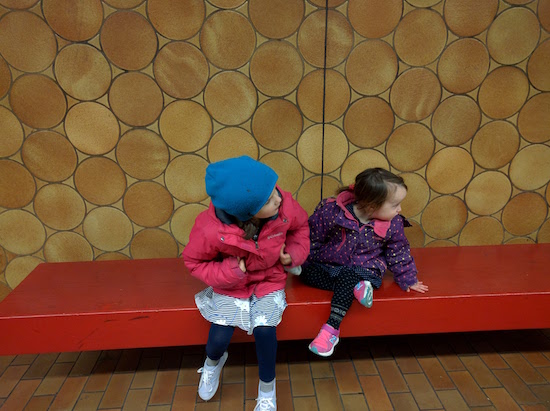
It has been weeks and weeks since I’d had a night’s sleep uninterrupted, which is part of the reason I was feeling awful last night, nursing the sore throat that seems to have been my companion forever. We’d had a busy day yesterday going to see Alligator Pie at the Toronto Symphony (having won tickets in the silent auction at Harriet’s school last June), which was brilliant fun, but I was ready for bed not long after the children were. (So tired. Yesterday I read Sarah’s Instagram post about sleeping for nine hours, and I really could have cried.)
And then…she slept. Seriously. The disturber of sleep actually slept, which doesn’t mean she didn’t wake briefly at 12:13 and again at 6:30 (asking for a tissue?), but otherwise…and we were none of us roused until 8:00. Which, seeing as I went to bed at 11pm means that I (mostly) slept for nine hours too.
And so began the greatest day, because how could such a thing not follow the miracle of nine hours sleep? Although all that sleep had left me fuzzy and totally stupid, so I was foreseeing a day of naps. Until, I left the house at 9am to take Harriet to swimming lessons, and was as invigorated by the horrible cold as I was made furious by it. (Winter in April sucks balls, it does.) But then I was awake, and there was that, and Harriet actually passed her swimming course for the first time in a million years, which was another miracle. And then there we were at 10:15 and we had no plans, not a one. Iris has stopped napping, which made the day open even wider. Plus I’d already read most of the paper (behind which I sometimes hide from my children for entire weekend mornings), so the possibilities seemed endless. And naturally, those possibilities included scones.
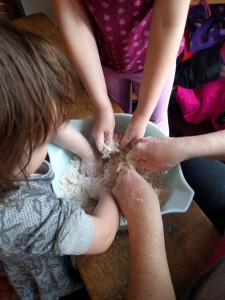
Many hands… making scones.
Blueberry scones, which we baked, and ate after lunch while we played Clue. And then I spent an hour or so doing work, putting up the new 49th Shelf page for this week (and its beautiful!). Then because we have to leave the house at some point because if we don’t, everybody goes bananas and also because our library books were due, we braved the cold and trekked to Lillian H. Smith down on College. At which we found the very best books, and (another miracle!) Harriet even got an Avengers comic she hadn’t read yet. (My best books of this library haul so far are The Cats of Mrs. Calamari and What Pete Ate, by Maira Kalman, which is so so good.)
The miracles didn’t stop there though. For dinner, I made black bean corn fritters from our Anna Jones cookbook, which were guaranteed to make the children cry, I thought (because once I’d even made them cry with tuna casserole), and while Iris just ate spoonfuls of ketchup, Harriet ate three fritters and proclaimed them quite tasty even though they contained spinach. I nearly died.
And then we were finished dinner, and dessert was pears that were delectable and perfect, and Stuart’s day suffered a blip in loveliness because he had to give Iris a bath and she wouldn’t stop screaming, but Harriet and I read library books, and then Iris was calmed down and clean, and we brushed teeth, and sat down to read stories—I picked the terrifically gruesome The Juniper Tree from the Grimms books, and we had to trust it would all work out like in the last fairy tale we read where somebody got decapitated (and it did). Then we read poems from Alligator Pie and another chapter from Voyage of the Dawn Treader, and that was the last we heard of our kids.
Miracles continued: I drew a bath and it was perfect temperature, and I stayed in for ages and ages and it never got cold, and I managed to finish reading Escape Plans, by Teri Vlassopoulos, which I thought was wonderful and can’t wait to tell you all about. And now I here I am and I should have been sensible again and gone to bed, but I wanted to write all this down, to add to my collection (“Albert collected good days the way other people collected coins, or sets of postcards.”– Behind the Scenes at the Museum). Remarkable, really, none of it at all, but that’s just the point, I think, of small miracles.
It’s like Edmund said in Voyage of the Dawn Treader tonight: “There’s nothing particularly exciting about a round world when you’re there.” But sometimes it’s nice to stop and take notice.
April 1, 2016
You Are One, by Sara O’Leary and Karen Klaassen

If you’re a friend of mine with a baby turning one this year, do NOT buy your wee one You Are One, by Sara O’Leary and Karen Klassen. Do not buy a copy of this delicious new book, because I’m going to be buying it for you. It’s the latest from O’Leary, who we fell in love with via the Henry books (When You Were Small) and last year’s This Is Sadie.
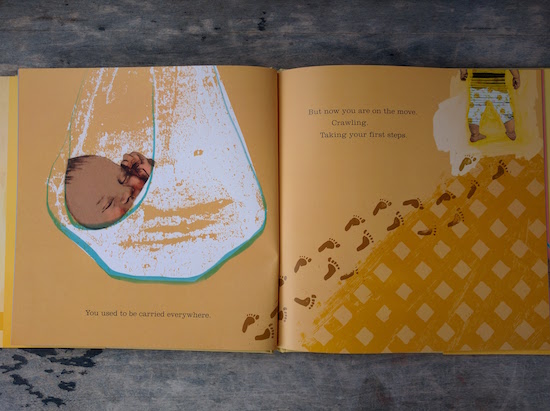
It’s the most perfect celebration of the milestones that mark that mind-blowing phenomenon that is a baby’s first year. A year in which a person starts out like a “pickled piglet” (in the words of Lorrie Moore) and is transformed into an actual human being with a personality, likes and dislikes, a sense of humour and sense of fun.
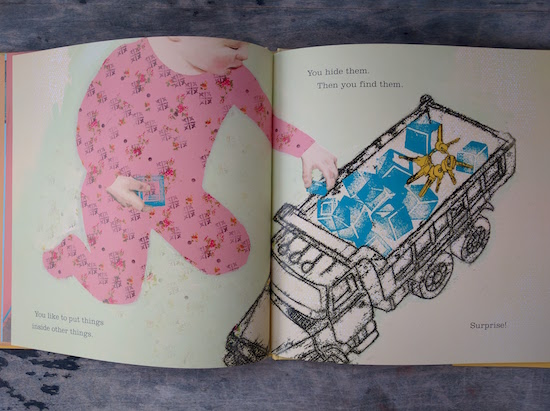
O’Leary has zeroed in on perfect details: babies liking to put things in things (and hiding the keys); the appeal of an empty box, not to mention that baby in the mirror; and talking in sentences (but not necessarily with words).
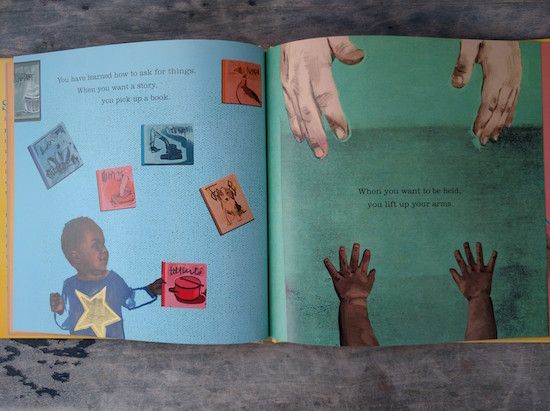
Klassen’s illustrations are stylish. interestedly textured, and feature a variety of images guaranteed to delight babies and the people who love them (i.e. check out the pudgy hands up above—and I love the racial diversity too). This book really will make the perfect for one-year-olds and their parents, and here’s the best thing: it’s the first in a series. Watch for You Are Two and You Are Three in the months ahead.
March 31, 2016
Catching up with The M Word
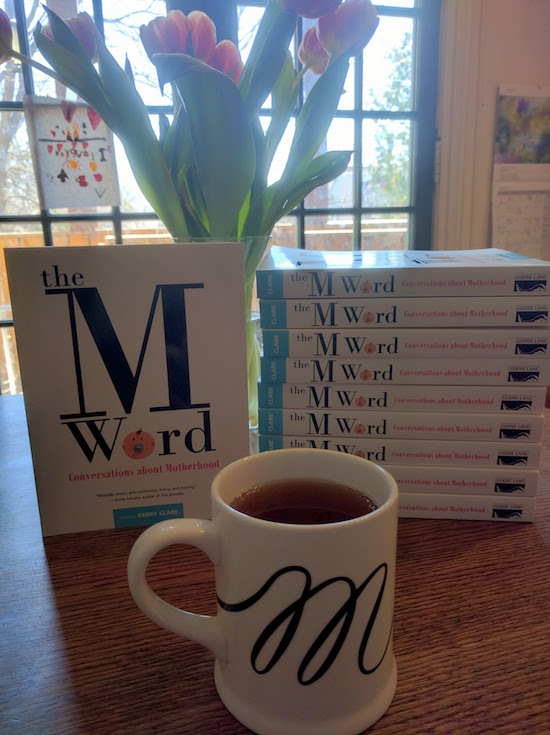
This month marks two years since The M Word was published, and now we’re counting down to Mother’s Day, so it’s kind of The M Word‘s season. And I’m so excited to let you know that over the next month, we’ll be catching up with contributors with short essays that give a sense of where these women are now. The amazing thing about the book (and about motherhood in general) is how the experiences are so fluid, ever-changing, so that each of these essays ended up standing for nothing more than a moment in time. And while there is nothing insignificant about a moment in time, it’s part of what most motherhood conversations get so wrong, everything meant to be emblematic of something bigger instead of standing for itself. By which I mean that it’s hard to get a sense of the big picture when the picture is ever-changing. So it’s that change that we’ll be looking at over the next month, as well as what stays the same, and what we got wrong in our essays, and what we got right, and how the experience of articulating our stories changed the stories themselves. It all kicks off on Monday with Kerry Ryan, who makes a startling confession about her essay (which was about her decision whether or not to get pregnant and have a baby at all). It’s SO GOOD and you’re going to love it.
And do you want to buy The M Word? I’ve heard tell that it’s the perfect book club selection, makes a great gift for new moms, and would make a great Mother’s Day present for anybody with a uterus. Or even anybody without one. Order it from your favourite bookseller online or in the real world. And also, I’ll be at Book City Danforth for Authors for Indies on April 30. Hope to see you there!
March 29, 2016
Someone put a photo of a craft I did on Pinterest

I suppose I was expecting something more transformative. You know, that I’d turn into Gwyneth Paltrow, or be a mermaid, and have organized spice jars at the very least, but there was none of that. At the end of it all, I was still only me, and I still had to empty potties and make lunches and try to stuff my weird three-years-post-c-section stomach inside a humble pair of pants every morning. My kids didn’t care what had happened—to them, I was still their mom. My husband was happy for me, but it didn’t exactly reframe his perception of my place in the world (i.e. put me behind the frame of a recycled vintage window from a farmhouse or something made out of birch twigs). And all of that was kind of a blessing, really, even if it didn’t seem so at the time, because these are the things that kept me real.
 It’s easy to lose touch of what really matters when you live much of your life online, to be duped into aspiring to LIKES and followers above all things. It’s not hard to become the sort of person who screams at small children for knocking the table and upsetting the oh-so-carefully placed scattering sea salt over avocado toast, interrupting the flow of twitter threads, or casting a shadow over a teacup just as you’re about to Instagram it. It’s terribly frustrating to have your five year old go into hysterics because you’re adamant about refusing to Instagram their artwork, which is actually a toilet paper roll tube scotched taped to the phone bill. “Do it, Mommy! Instagram it,” they insist, no matter how patiently you explain that aesthetically it’s just not consistent with your brand, even if the paper phone bills suggests a vintage vibe that you’ve been trying to cultivate. You tell them, “Honey, you don’t even know what an Instagram is. It’s a noun, not a verb, and it comes with a whole lot of impedimenta, with ramifications you’ve not even begun to glimpse at your age.” Serious adult matters. You start to explain about the new algorithm, and requiring followers to turn on notifications, and by the time you’ve stopped speaking, the child has put himself to bed. So there is that. It’s easy to get thrown off course.
 But some of it matters, it does, so you really can’t blame me for carrying myself differently after the fact: holding my head a bit higher, swinging my hair from side to side. People started commenting on my glow, and that wasn’t all due to goddess bowls and kale smoothies. I started thinking a whole lot more than usual about doing handstands on beaches and antique birdcages. About wicker. I wanted to install a chair that hung from the ceiling, fill the floor with throw cushions, and wear glasses in order to look serious. My hair in a bun secured with two pencils. Or chopsticks. Wooden floors with well-worn paint. Creative ideas for nail art.
It’s different now, from when I used to pursue these things for leisure. The stakes are higher and I claim it on my taxes. I’ve published an e-book, twelve pages long but who’s counting? I’ve got a social media strategies e-course available on my blog, and the testimonials are amazing. And for a long time I’ve been grappling with an advanced case of Imposter Syndrome (in both lungs, no less), carrying on as best I could, but nonetheless afflicted. But no more. I once was blind, but now I see. And what exactly do I see?
Only that somebody went and put a photo of a goddamn craft I did on mother-rucking Pinterest.
 A craft. On Pinterest. Me! Me, who tried to glue a cotton ball to a pinecone on Sunday in order to make an Easter Bunny on my mother’s porch, but the glue wouldn’t stick so I turned the whole thing into a game of, “Can You Throw A Sticky Pinecone Into Traffic?” (and I could, in case you were wondering). Me who invented the party game, “Disappointing Pass the Parcel,” the parcel packed with citrus fruit (and the one at the end received a lemon). At every birthday party my children have ever had, we’ve tied pipe cleaners stuck with styrofoam balls to cheap plastic headbands, which has suited every party theme that I can think of (Aliens! Insects! DIY Radio Transmitters!). I honestly thought I’d gone as far in my life as I was meant to go.
But this. Saved to a page called Library Craft Ideas 3. I once made a dollhouse out of a shoebox and now it’s up there for the whole world to see, alongside peg dolls, repurposed lightbulb air balloons, and a rocket made from a paper towel roll. Egg cartons spiders, FTW.
I’ve published a book, created actual humans inside my body, and wrote a letter to the Prime Minister in 1988 imploring him to save the pandas, but none of that means anything in light of my latest achievement unlocked. Somebody put a photo of a goddamn craft I did on Pinterest, which makes me officially the person I always wanted to be.
March 28, 2016
Ice Diaries, by Jean McNeil
 To me a paradox is a comforting thing, with its suggestion of the unknowability of universe and therefore possibilities well beyond our narrow expectations of experience, ideas surpassing our rigid understanding of black and white, hot and cold, fire and ice. To me it’s comforting too that a single thing can be two things at once, that all the easy answers are the wrong ones, because any of us who bother to think already know that this is the case. And if you’re the kind of person who also has these proclivities, than you too will probably be fascinated to spend a while lost inside Ice Diaries, the Antarctic memoir by the Governor General’s Award-nominated author Jean McNeil.
It’s a memoir freely acknowledged by its author to be a creation, about a continent without terra firma, a huge expanse of space in which there is nowhere to go, where everything is white but so much of the year is darkness. The Antarctic is a place where few people ever go, but those who do are compelled to return. A place of toughness and fragility. Inhabited by scientists, except that McNeil is a writer send along on their expedition. A Canadian, who has lived in Britain for more than twenty years. In this 400+ page book, the paradoxes abound.
For me this was a slow read, structured similarly to McNeil’s journey to the Antarctic by sea, an experience she says she was grateful for, because the Antarctic is not to be simply arrived at, but instead acclimatized to, otherwise the effect is much too jarring. We also find ourselves in the opening chapter in the Falkland Islands, a stepping-off point to the Antarctic, and this is two years after her Antarctic journey. Because while it’s the fashion to begin a story in the beginning, most of us don’t realize we’re there until the middle—time is not so tidy. Which is also the reason that a narrative strand of Ice Diaries is concerned with McNeil’s violent childhood in the Maritimes, as well as a summer during her teen years during which women were being stalked and murdered in her small town and McNeil met her father for the first time, experiences that become conflated. And while these passages seem a bit extraneous to the Antarctic chapters, it is interesting to consider the ways in which they’re linked. And so too how McNeil’s early life may contribute to the claustrophobia and dread she feels at the end of her Arctic sojourn when the sun begins to disappear and McNeil fears she may never get away from there.
McNeil is a tremendous writer who brings the Antarctic landscape to life (! another paradox for a place with so little life) with the deftness of her prose, and her memoir is rich with fascinating details—such as that one must remember to apply sunscreen under one’s chin as the reflection of sun off the snow can cause third degree burns. This journey through the topography of the continent at the bottom of the world is one through the topography of her consciousness, and both emerge from the story known and still unknown at once.






