May 19, 2026
Immortality is Perhaps Unreasonable
I wrote this last Wednesday, and it appears in my latest ENTHUSIASMS newsletter. You can subscribe to ENTHUSIASMS here!
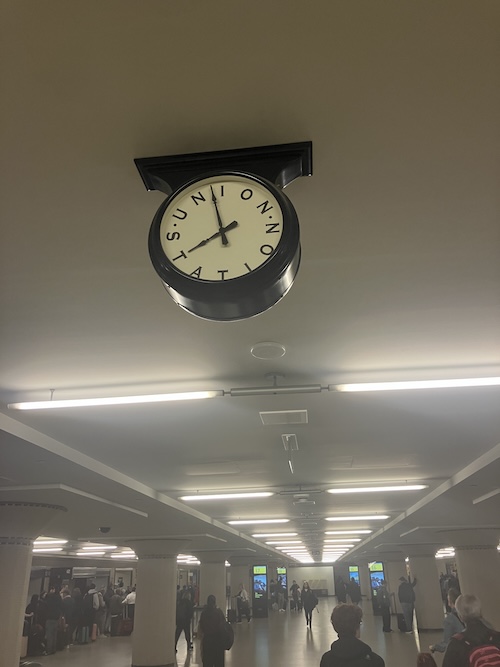
I’m writing this message on a train, somewhere between Belleville and Kingston, en-route to the first of two sold-out events this week which will cap off my spring of abundant book promotion (which started here). Which is the way I’m choosing to frame things, even though I’m relatively sure that my presence is not the reason why these events have proven popular, but I’m pleased to be hitched to success however I can manage it; one mustn’t quibble. And I’ve had a very good time this spring, almost all of my events well-attended (or well-enough), every one of them fun and inspiring, opportunities to connect, a good use of my time.
And I’ve been thinking a lot about publishing a book and what it means, and what we can expect expect from the experience, concluding that immortality is perhaps unreasonable. If it sounds like I’m being facetious, I’m not.
In his most recent book, Time Management for Mortals, Oliver Burkeman wrote about reading and rivers in a way that shifted so many things for me, about holding on, and letting go, about relinquishing control, and being free. And what he wrote was that we must think of our to-be-read piles as a river of reading rolling by that we can dip into, instead of a more imposing project that requires completion. There is no completion, there is no arrival. We’ll never do it all, and so accepting that—and that this singular moment in time is what actually matters, what you’re doing now instead of what you’ve done or what you still need to do—is to release the weight of the world from our shoulders.
I’ve been thinking about the books I’ve written in a similar way, accepting the transience of it all. Which came about when I was perusing my blog archives from 20 years ago and found reviews of books I loved and had thought deeply about at the time and which I can no longer remember having read or even knowing about at all. And accepting the same about my own books—that many people will never ever read them, and that even those who do and love them might not hold my books forever—is actually fine, and I don’t have to beat myself up for my books’ ephemerality, because all books are ephemeral (all THINGS are ephemeral), even the SERIOUS LITERARY BOOKS written by the pen of men, or the runaway bestsellers that years later turn up as boxes upon boxes at library book sales.
And maybe this is an easier fact to accept when it’s accompanied by a feeling that my novel has had a warm welcome into the world, that it’s found its way into the hands of readers through avenues outside my control, that I don’t necessarily need to orchestrate everything, that when I say I’m willing to let it go, I actually realize that this isn’t synonymous with “let it disappear.”
I used to celebrate my book birthdays. I used to bake a chocolate pie in honour of my first novel. And at a certain point this ritual stopped being meaningful to me, and I realized that it was me trying to cling to some intangible thing, and eventually I stopped clinging.







A very wise and beautiful post, Kerry.
THANK YOU!