September 14, 2026
Queen Mab, by Emily McBride
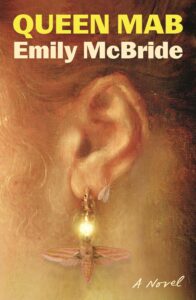
Queen Mab is Madeleine, so-called by her husband. She’s a Canadian academic, adopted to an English mother and a Quebecois father, who has moved to her mother’s homeland to study the Modernists and Victorians. She’s married young and is surprised and not surprised to find herself pregnant in the middle of her graduate studies: “It was what I had wanted, but immediately I no longer wanted it. I was only twenty-three. What had I been thinking?”
I’ve read changeling stories before, among many other novels about postpartum rupture, but Emily McBride’s debut novel, Queen Mab, was a fresh take on the subject, underlined by its deep intertextuality—there are five pages of sources for the allusions woven most inconspicuously into the body of the novel. It is through reading that Madeleine understands the world, and so she does, even when her brain chemistry means that she’s misreading and supposing that her baby has been replaced by some kind of double. She recalls leaving a window open in the hospital room the night before her daughter was transferred to the NICU, something something about foxes, a street cat called Greymalkin. She’s sleep deprived and isolated, cut off from who she’d been before the baby came, and her own unknown origins only compound the confusion, her sense of being wholly untethered from the chain of things that keep the planets in alignment.
In a lesser work, the changeling story would be a metaphor, a cutesy reduction of Madeleine’s situation, but in Queen Mab, the literary allusions enhance the story, and provide a vivid sense of how she interprets her reality. The reader follows her deeper and deeper into her detachment, Madeleine’s husband and parents unable to reach her, their helplessness apparent on the story’s margins, but Madeleine’s point of view stays fixed and front and centre, the story’s shift from first to third person narration just another way in which she gets away from herself.
Luminous, literary, intelligent, and surprising, Queen Mab was captivating, and disturbing in the best possible way.






