August 4, 2026
The Valley of the Vengeful Ghosts, by Kim Fu
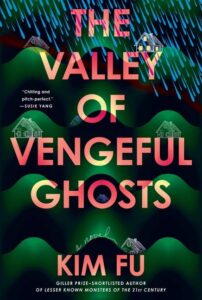
There is something wonderfully inscrutable about Kim Fu’s The Valley of the Vengeful Ghosts, in the way that the metaphors aren’t metaphors. After the death of her mother, Eleanor follows her final wish and uses her inheritance to buy a house, the only house she can afford, a model home on the site of a cursed development that turns out to be shoddily constructed, the rain pouring in, the shower draining into the chandelier in the hallways. That the house is haunted turns out to be the least of the trouble, the ghosts being figments of Eleanor’s imagination, including people who are actually alive, the clients that Eleanor counsels through her work as a therapist for an online platform.
Things were not supposed to be like this. Eleanor’s story alludes to an assault during her graduate studies, a faculty member who was never held accountable, how Eleanor’s mother stepped in and wholly took over the management of her life as she lived in the aftermath of trauma, and became trapped in a depression and helplessness from which she’s never recovered, a kind of ghost (of) herself—though far from vengeful.
As the rains fall and the water rises, Eleanor’s model home become more and more permeable, the novel heading for an inevitable climax that manages to be surprising, to offer just the appropriate amount of grace. A lesser work would make all this a statement on real estate, capitalism, mental illness, loneliness, trauma, or some other such thing, but Fu’s novel manages to have created a novel that is firmly about itself.







In my pile! Looking forward to it.