June 19, 2026
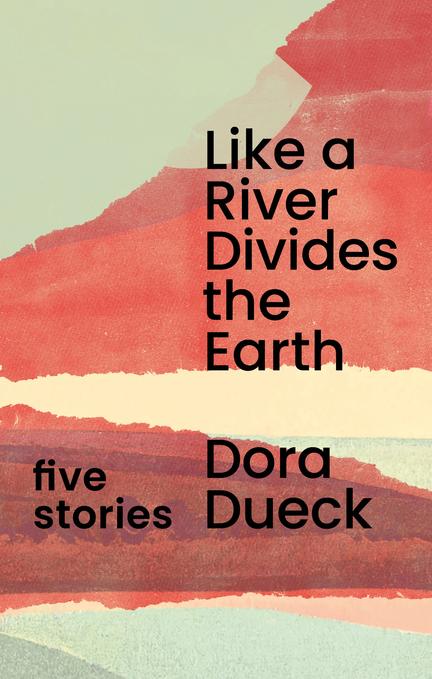
Like a River Divides the Earth, by Dora Dueck
I was intending just to read the first page when I picked up Like a River Divides the Earth last week, looking for a taste of what expect from this book, one of my most anticipated reads of the season, but then I started reading—”I was fourteen before I saw my father’s face. The ruins, I mean, the face behind the mask. Holes instead of a nose. Dark holes in a pink crater of pulled-tight skin running from cheekbone to cheekbone, though the tip had been spared and stood there by itself, pale and hideous, as if too stubborn or stupid to quit when abandoned, Nostrils like tiny arches. And where his left eye should have been, he had a crater too.”—and that was it, really, for the next 56 pages, the first story, “Mask,” which unfolded like a novel, rich and detailed, taking place over decades and continents. Just like the four stories that follow in the collection, it was absolutely exquisite.
Long short stories are not always my jam, but when the writing, plotting and characterization are as rich as Dueck’s, the reading is easy, even when the subject matter is heavy and hard. The stories are various, which means each one feels like a wonderful dive into its own universe, stories with wide scopes, most of them hearkening to and from a pivotal moment in which a lifetime is riven in two, as per the collection’s title.
In “Mask,” it was that moment when the daughter accidentally sees her WW1 veteran father bare-faced, his gruesome injuries on display, and how she never tells her mother what she’s seen, not understanding the dynamics of her parents’ complicated relationship but knowing that saying nothing was safer. In “Blue,” it’s a somewhat (maybe?) innocuous gesture within a Golden Girls’ style house-sharing relationship between four older women that makes the drowning death of one of them even harder to fathom; in “Her Own Self,” a bereaved mother’s feeble act of vengeance haunts her for decades to come; “The Ragatta” is a curiously framed story from the point of view of a grief counsellor whose one visit from a woman lingers in the mind; and finally the title story, one of the two in this collection about Mennonite history (both are set among communities hoping to escape Soviet Russia in 1929/1930), this one about a man betrayed by a love, by his neighbours, and forced to survive the unimaginable who is rankled by notions of history as an abstract distant thing.
Getting lost inside these stories is a transcendent experience. Dora Dueck is a marvel.






