May 7, 2025
A Mouth Full of Salt, by Reem Gaafar
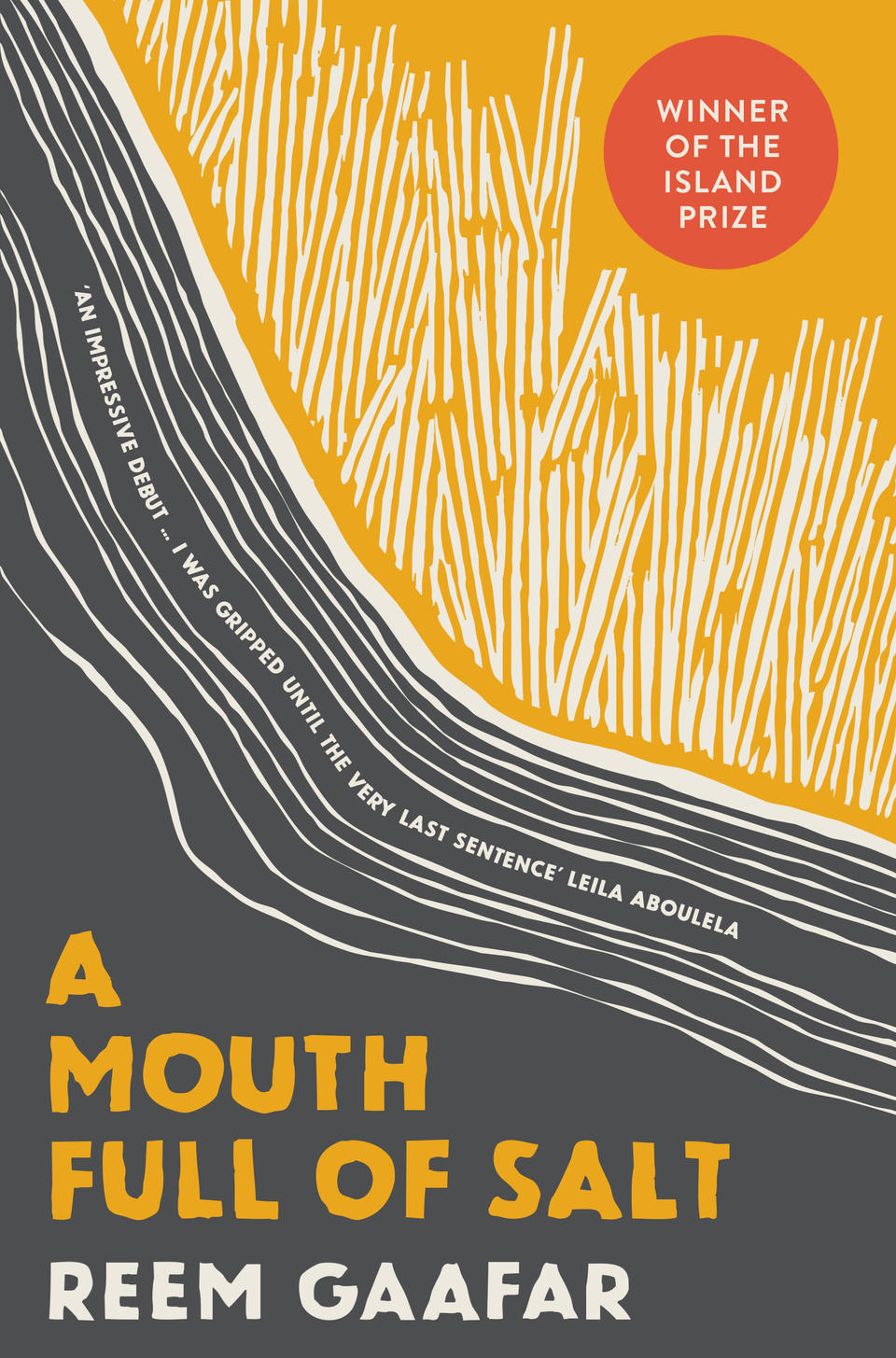
Reem Gaafar’s debut novel, A Mouth Full of Salt, 2023 winner of the Island Prize for a debut novel from Africa (and the first book by a Sudanese writer to be recognized by the prize) grips the reader from its opening line, “Until a body was actually found, they referred to him as ‘missing.'” The body in question is that of a young boy presumed drowned in the Nile, a too frequent incident among the people from his village: “The Nile was a trap that attracted, ensnared, and buried all at once. It took from them as much as it gave.” Which what happened to Fatima’s brother after all, years earlier, a tragedy from which her mother has never recovered, leaving her a little outside the local community of woman, and this Fatima can relate to. She too is also set apart from her peers, although this is by her determination to pursue her education, as opposed to her good friend Sawsan, whose wedding is approaching.
A Mouth Full of Salt moves between Fatima’s perspective and that of Sulafa, the mother of the missing boy, whose been relegated in her household after her failure to have more children, and whose husband’s second wife is currently pregnant with twins. As the villagers keep watch for the boy’s body to resurface, other catastrophes beset the village one-by-one: farm animals are struck by an illness, and die on mass; fires take down gardens and orchards. Villagers are talking about prophecies, worry about a curse, and soon that something has gone very wrong for these people are altogether undeniable.
Like Sudan itself, this novel is cut in two, and in its second half, readers begin to understand how the nation’s history is at the root of what’s happening in the village. From the 1990s, we’re taken back to 1943 and to Nyamakeem, from the country’s south, who has fallen in love with Hassan, a northerner, an Arab. Such unions are rare and frowned upon, and Hassan is rejected by his family. The two of them attempt to build a life together in Khartoum all the same, raising their son, but when Hassan eventually stops coming home to them, Nyamakeem has no choice but to go back to his home village and his family to find out what happened.
How the lives of the women in this novel intersect is the crux of a taut and measured story. Gaafar, who now lives in Ontario, and is also a physician, has crafted a beautiful and compelling novel about women attempting to break free from the limits of their power.
May 6, 2025
Gleanings
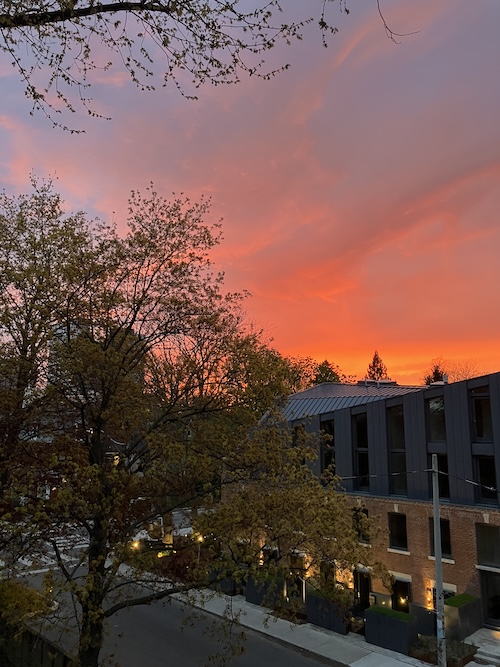
- Yesterday, enroute to the opera, we paused on the walkway leading off the ferry to watch 3 seals sunning themselves on rocks. It was a low tide. The ferry was right on time. On the muddy shore, a pair of geese with their goslings dozed at the edge of the water.
- It’s not just about choosing between glass half empty and glass half full perspectives: I think it really matters that we not turn our grimmest anecdata into the dominant narrative.
- My kink is making salad dressing with the last of the mustard in the jar, or a cup of tea in the jar to use up the dregs of the honey. These are small but satisfying actions, that ensure precious resources literally don’t go down the drain.
- The fringe tree and wisteria –– les pièces de résistance –– are the last to awaken, with a spectacle of long white streamers and violet blooms so beautiful that it’s a wonder we’re in Toronto and not Monet’s garden. The only thing now left are the anemones, and they won’t appear until late Summer when the whole garden is so verdant and alive that it’s hard to imagine that all of this beauty was ever underground. I watch it all unfold like a piece of music that gradually thickens and intensifies as instruments enter one by one.
- The digital sphere is horizontal, when what people crave is the vertical or deep engagement. As artists we are all about the vertical. I can’t help but think about how we all keep being fed this stuff we don’t really want.
- I met a friend on the way in (a friend from the outside world, not the pool) who told me that the pool wasn’t too crowded, and her beautiful child told me that water was great, and they were both right.
- This isn’t a story about church. Heaven knows, I’m not the one to tell that story, at least not today. This is a story, maybe, about grief and love. About life, and death, which, I suppose, is really what all stories are about.
- “To what purpose?” It’s probably just a fancy way to say “why??” but it has the advantage of *feeling* new. So when I find myself NOT throwing something away (like instructions for something we no longer own), I ask myself this question. And when the answer is “for collage or another art project” I ask again, for a couple of reasons. First, “interesting” instructions appear with some regularity, so all I have to do is either wait or check the recycle bin. And second, I haven’t made a collage since the pandemic lockdowns.
- While I’m always excited to read Lindsay’s work, I’m especially intrigued by this particular book, as it deals with a dynamic that hits close to home—the challenge of trying to make art while navigating the foggy, panicked, exhausting days of early motherhood. Though my kids are older now, and finding the time and energy to write no longer feels quite so impossible, the difficulties of balancing creative and care work never totally go away
- I only cried once, but it was almost from happiness. Or maybe it was from sadness. Or maybe both. The thing about grief, made visible, is that it’s made up of all the things a human can feel.
- My almost-might-have-been-brilliant career foundered on the dreaded shoals of non-confidence, from within and without. I cannot tell you how many times my manuscripts have apparently gone missing in large Ontario publishing houses. I am the freaking Queen of the Lost Manuscripts. This is not a business for the faint of heart or thin of hide and by then, I possessed both. What, I ask, would Pierre Berton do?
- On this spring morning in Wheatley, with the woods flush with snow-white Trilliums beginning to bloom, the park looked and smelled like hope and joy to me.
- I feel strongly that we can’t solve gendered polarization online. The online world is a tricky place for all of us, on the left or right, because we are unable and unwilling to step into the one another’s spheres, and what we see from the “other side” often entrenches us even further in our beliefs.
- The bear is a bear; the bear is Grendel, embodiment of our oldest and deepest fears; the bear is cancer; the bear is nature. They are all, in their own way, wild – and the wilderness is not somewhere else, separate, held back or “conserved” within inside the arbitrary boundaries of a park.
May 5, 2025
The Cost of a Hostage, by Iona Whishaw
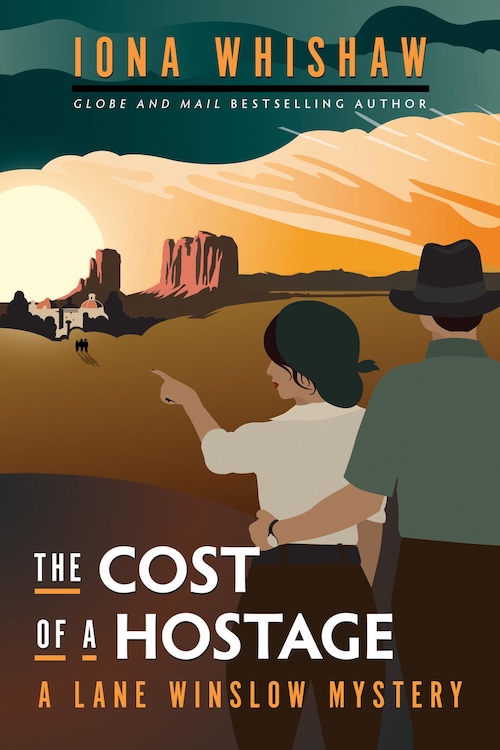
For the last few years, I’ve looked forward to a new Lane Winslow mystery novel in the spring like I’ve looked worked to forsythia blooms and cherry blossoms, and just like spring herself, author Iona Whishaw has never failed me. The Cost of a Hostage is the twelfth instalment in her series about the brilliant polyglot whose wits are only matched by her beauty and whose desire for a quiet life in the small community of Kings Cove, outside Nelson, BC, is thwarted by her tendency to stumble upon dead bodies and wander into crimes in progress. Thankfully, however, nobody is better equipped to solve these crimes, much to the chagrin of local Police Inspector Frederick Darling, who eventually becomes Lane’s husband. Which means he often finds himself in fixes like the one that kicks of this latest novel: Darling’s brother has gone missing in Mexico, and has perhaps been kidnapped; is there any possibility that Darling can get to Mexico without convincing his dear wife that she’ll be just fine staying at home? The answer is, of course, no, and so off they go, which Darling is not exactly sorry for. Lane Winslow is surprisingly useful to have around, and besides he likes her company. Their marriage is a rare and beautiful thing in the late 1940s, an arrangement of equality, both partners ardent in their admiration and respect for each other’s keen intelligence (though Darling would admit that Lane’s is the keener one).
Anyway, staying home might not have been so quiet either, after all. When a small boy is kidnapped in Nelson, the circumstances are curious, and Ames and Terrell, running the Nelson Police Department in their boss’s absence, have their hands full solving the crime, especially once their chief suspects turns up dead in the local ferry’s paddle-wheel.
Once again, Whishaw brings her readers a story with fascinating moral complexity and a healthy dose of feminism and progressive values. And yes, just enough peril that you’ll be totally gripped.






