September 17, 2012
Funny September
For me, this time of year is a kind of bookish rapture. The Eden Mills Writers’ Festival, Word on the Street Toronto, and the Victoria College Book Sale are what my Septembers are usually built upon, allowing me to bring home ample inspiration, sunshine memories, and new piles to add to my to-be-read stack. But this year is a bit funny, as my sister had the nerve to put her wedding right in the thick of it, and so now we’re going to be on other side of the country instead of at Word on the Street, and we gave Eden Mills a miss in order to save funds for that trip across the country. Which is all right actually, because my sister’s wedding is going to be wonderful, and I have so many books in my stack that I’m grateful to be put a timezone away from the Vic Book Sale, but it’s been overwhelming getting work done in time for before I go. So this is why you get to read about why I’m really tired, instead of reading about my brilliant time at Eden Mills. But I promise, I’ll be back to all three next year, and it will be a fine reminder to wish my lovely sister a happy anniversary.
September 14, 2012
NW by Zadie Smith
 I don’t remember exactly where or when I purchased White Teeth by Zadie Smith, but I know that it was sometime during that wonderful summer of 2001, when I worked on King Street East and spent my lunch hours in Little York Books and Nicholas Hoare. When I spent the money I was supposed to be saving for my tuition on books instead, stacks and stacks. I bought White Teeth in paperback, and I don’t remember how I heard about it, but I know that it changed my life, my relationship to literature. For the first time, I realized that literature existed beyond survey course syllabi, that great books were being written in the here and now, and by people not much older than I was.
Ever after, a new Zadie Smith book has been an event, except perhaps The Autograph Man, which I don’t remember. A Zadie Smith book is one that I have to get in hardback, and so it was with great pleasure that I handed over 30 plus dollars last week at Book City for a copy of her latest, NW. Her first novel since On Beauty from 2005, her first book since the essay collection Changing My Mind in 2010.
From that book, the essay “Rereading Barthes and Nabokov”: “The house rules of a novel, the laying down of the author’s particular terms–all of this is what interests me. This is where my pleasure is.”
The house rules of NW are difficult to discern upon first encounter. This author’s terms are particularly demanding. And yet, when I had to reread the novel’s rather Woolfish first section “Visitation” in an effort to orient myself to Smith’s geography, it was with pleasure, to immerse myself in the text again to understand how Smith has “record[ed] the atoms as they fall upon the mind in the order in which they fall” (so said Woolf herself). A deep, tangled, engaging book, NW has a surface accessibility, streets smooth enough to glide along, but then think too hard and you’re tripped up, pulled down into the Underground. So much going on here (most of it, actually) underneath the surface.
The first section of the book is structured conventionally, a first chapter followed by a second. The narrative itself is loose and elastic, unstuck, unhinged, words played with and pushed into shapes (both literal and figurative). It’s the story of Leah Hanwell who is lying in a hammock in her back garden in North-West London, a nice garden with an apple tree, but it’s still a council flat and not far from the troubled housing estate where Leah had been raised. She hears a phrase on the radio, “I am the sole author of the dictionary that defines me,” and thinks about writing it on the back of her magazine. Her reverie is interrupted by a knock at the door, a manic young woman in a headscarf who’s clutching a utility bill; “I live here,” the girl says, around the corner. She says her mother has been taken to the hospital and she needs money for a cab to get there. She and Leah share a cup of tea in the kitchen, not such a collision of worlds after all. The girl remembers Leah from high school, came through a few years later. Leah gives her 30 pounds and sees her off.
The girl reappears throughout the rest of the section, by chance (because they’re neighbours after all), but Leah becomes obsessed with her. The girl who never paid back the money, who ripped off Leah just as her husband had predicted. Leah, the ginger-haired girl of Irish origin is married to Michel, French by way of Africa, who is determined to progress in his new country, to make his way trading stocks on the internet in the evening. He wants a better life for his children, the children Leah doesn’t want to have. When she discovers she is pregnant, she has an abortion, and Michel has no idea. “Why must love ‘move forward’? Which way is forward?”
The way forward is clear for Felix Cooper in the novel’s second section, its chapters labelled by postcode. Geography is central to Felix’s experience (on the Tube, “Felix established a private space of his own, opening his legs wide and slouching”), the world is not his for the taking and so he has to define his territory. As he moves through the city, his identity is fluid, based on the perceptions of others. Things are looking good for Felix– he has moved away from the estate where he grew up, he’s got work apprenticing with a mechanics, and he’s got a girl who convinces him that anything is possible. He wants a hot car to impress her. He wants to cut ties his past, his mother, his brother, his struggles with addiction, and bad relationships, including one with a creepy Miss Havisham type he just can’t seem to quit. It becomes apparent, however, that however much Felix desires to change his life, he’s forever turning in circles, living out the same scenes and postcodes over and over again.
Next, we meet Natalie Blake, whom we’ve encountered already in the book’s first section, Leah’s friend since childhood. Natalie’s section comprises 185 short paragraphs, numbered. The way forward for Natalie is focussed, fast, propelling her out of the community she came from to academic success in university, a law degree, a successful career, lots of money and marriage and motherhood. We’ve seen Natalie and her husband Frank in their back garden through the eyes of Leah, a world away, barely human in all their polish. And here we are shown beneath the sheen, that Natalie is even more dissatisfied with her own life than Leah is, that her social mobility has left her foundationless, with a life built on aspirations. There is a cost to being the sole author of the dictionary that defines one, or maybe the point is that for some authorship is only an illusory purpose, and how much is missed by years spent becoming rather than simply being.
The pieces of this novel do not fit together neatly, and its characters’ lives are similarly chaotic, sordid, their emotions messy and complex. While I have outlined various pieces of the novel’s plot, to focus on plot too much is to miss the point. NW is a story about city life, about people in proximity and lives rubbing up against one another, roughly and otherwise. It is a novel of impressions, falling atoms and all that, rather than plot. It will also most likely be an entirely different novel each time you read it, as frustrating and challenging as it is illuminating and rich. Noise and melody. And yes, a novel that’s tearing down the house and remaking all the rules.
The pleasure was all mine.
September 14, 2012
It goes on and on.
 My review of Cordelia Strube’s new novel Milosz appears in the National Post this weekend. As I wrote, “At its heart, which is huge, Milosz is about progeny, about what tethers us to the world and to each other. ” You can the review in its entirety here.

September 11, 2012
The Comics
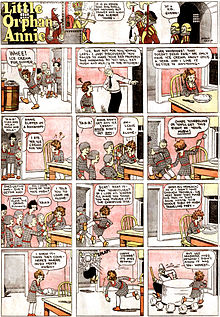 It’s true that from a very young age, I read the entire Saturday paper cover-to-cover, if by “the entire Saturday paper” you mean the Toronto Star comics supplement in all its glorious colour. I loved Blondie and Beetle Bailey, Family Circus and For Better or For Worse, The Better Half and Spiderman. I liked Broom Hilda, Dennis the Menace, Hi & Lois, and Hagar the Horrible, though I was confused by Little Orphan Annie because it wasn’t like the movie at all. I was depressed by Jon Arbuckle and Cathy, but read their strips anyway, and all the others I didn’t really understand– Ernie, and Mother Goose and Grimm, Shoe, and many others. In fact, it’s likely that I didn’t understand any of the comics, really, but it didn’t stop me from poring over them every Saturday morning, lying on the living room carpet in my pajamas. There was something in their colours and cartoonishness that made clear that this was my part of the paper; the comics were an invitation and an introduction to the pleasures of newspaper reading.
I do love newspapers, inky ones. When we lived in England, we used to buy so many weekend papers that getting them read was our chief occupation. And these days, we subscribe to the ever-shrinking Saturday Globe & Mail, and it’s still one of my favourite parts of Saturday morning, Tabatha Southey, tea, book reviews and croissants.
Lately Harriet’s got her own part of the paper, and she starts shouting for it as soon as I bring the paper in: “Comics! Comics!” Which is kind of funny because The Globe & Mail comics are mostly terrible, but Harriet doesn’t know and doesn’t care. She sees the cartoon pictures, and she thinks they’re for her. And so she makes us read the whole section aloud, some comics over and over. I don’t know if there has ever been a family so intent on Drabble. Sometimes the comics are even less terrible then you’d think, and when that happens, we’re always kind of amazed.
And thankfully, when the comics are too unfunny, we supplement Harriet’s hunger for them with regular trips to our local kids’ comics shop.
September 11, 2012
The Art and Business of Blogging: Fall 2012
 I teach The Art and Business of Blogging at the University of Toronto School of Continuing Studies, and the next session starts on October 2, running for 9 weeks. Here’s the syllabus from last year, if you want an idea of what we’ll be working on. I’m looking forward to it and hoping for a big class of enthusiastic and inquisitive students. Please do spread the word!
September 10, 2012
When this is all over…
 The latest in a series of strange objects I’ve found in the road, and actually on the same block as the “another Belfast man doing well” post-it. The story behind this one is even harder to discern, however. It’s actually a broken piece of plaster, painted on one side with a message etched in Sharpie with dubious grammar. I have this feeling it’s leftover from frosh week, as we live close to the university, and in that context, it makes total sense to me. I remember hating frosh week and hating so much about university as an institution, how adulthood was still so elusive, and how the bright spots in my world were a handful of kindred spirits. I probably would have written such a note to any of them, probably not on a piece of broken plaster, but perhaps it was the only surface available. I love how this broken piece of plaster manages to express the same love and longing of The Beach Boys’ Wouldn’t It Be Nice. Though I wonder how it ended up in the road, if the longing was unrequited, and the plaque’s recipient had had plans to get an apartment with another person altogether…
September 9, 2012
Sweet Tooth by Ian McEwan
 I kept getting lost in Ian McEwan’s latest novel Sweet Tooth, and not necessarily in a good way. It is 1972, and after obtaining a substandard degree in mathematics from Cambridge, Serena Frome is recruited to MI5. Her pretty blonde head is just skimming the glass ceiling as she sits down to undertake her entry-level job, mainly filing. At one point, she and a colleague are assigned an undercover job posing as cleaning ladies in order to be… actual cleaning ladies, tidying up a safe house. McEwan shows the systemic discrimination against women in the civil service at the time, and also paints a broad picture of the social and political background– miners’ strikes, coal shortages, political strife, violence in Ireland and terrorism at home.
The two things about Serena Frome are that she is pretty and she likes to read. She reads novels, nothing too challenging or avant-garde. “And I suppose I was, in my mindless way, looking for something, a version of myself, a heroine I could slip inside as one might a pair of old shoes.” She tells us, “Novels without female characters were a lifeless desert.” Her favourite authors are also my own, Margaret Drabble, Elizabeth Bowen. She read Doris Lessing, Iris Murdoch, speedily, skimming surfaces, absorbing whole paragraphs in a glance.
Serena’s good looks and knowledge of contemporary literature are put to use when she’s taken off her desk and assigned to Sweet Tooth, a secret project designed to foster literature that’s anti-communist in its nature. Serena is sent to Brighton to meet a promising young writer called Tom Haley and to sign him on, though he’s made to think his funding is coming from an unremarkable arts body instead of MI5. Naturally, the two fall in love, and Serena is forced to keep up the plot, though she’s not sure how long she’ll be able to perpetuate her story. Amidst all this is paragraph-upon-paragraph of indecipherable spy business, as well as huge chunks of Haley’s stories, which make reading the novel disorienting and frustrating at times.
Doubly frustrating was the character of Serena, who was drawn as such an idiot that I wondered if and why McEwan was so determined to insult his female readers (or just the ones who read like she and I do). What kind of narrator begins a sentence with, “With a pearly pink painted nail I tapped lightly on the door…”? Solopsistic to the point of blindness, frivolous and stupid, Serena was most uncompelling. So too was the novel’s plot which hinged on implausibilities and unbelievable conclusions. Several times, I wasn’t really sure if Sweet Tooth was worth sticking with.
Sweet Tooth has received widely mixed reviews, and your own take will probably depend on how you interpret the novel’s final chapter which reveals a whole new layer of depth to the narrative (and the sort of trickery McEwan displayed at the end of Atonement). On one level, the trickery is slightly annoying, and yet suddenly the reader understands why Serena Frome is such a lacklustre, two-dimensional character, and why the novel twists and turns with such amateurism. The whole project suddenly makes sense, and that’s interesting, even redeeming, but it doesn’t change the fact that the reader had to endure such a crummy book to get the point.
I read once that a reader’s first Ian McEwen novel is always her best, and that’s been the case with me. I will never forget how captivated I was by Saturday, how I had to skip ahead to the end to discover how it all turned out because otherwise, I might have gone into cardiac arrest. I’ve enjoyed others since, but there’s always been something lacking, as was the case here. There is so much to like about Sweet Tooth, the parallels between espionage and fiction-writing (“In this work, the line between what people imagine and what’s actually the case can get very blurred. You imagine things– and you can make them come true”), its insights on story-building, depiction of a post-swinging London, and a marvelous character called Shirley Shilling (“whose alliterative name in the dependable old currency caught something of her plump lop-sided smile and old-fashioned taste for fun”).
In the end, I am glad I persevered with the novel, but this was a book too clever for its boots. I do wish Ian McEwan could pull off a more substantial literary feat than the old, “Look Ma, no hands!”.
September 7, 2012
First Day
 I’ve been struggling all week with Ian McEwan, been hard at work on a couple of wonderful projects, and occupied by playschool prep and a dinner party. I did do a short interview with Kyo Maclear at 49thShelf, so I have something to show for my week at least. And Harriet started playschool this morning, and we’re so proud of her. Drop-off went without a hitch, and I think she’s going to have a wonderful time.
September 5, 2012
All the Anxious Girls on Earth by Zsuzsi Gartner
 Last week, I couldn’t focus, and suffered that “couldn’t get into it” reading affliction that you hear about so often. I don’t know if the problem was the books’ or mine, but regardless, there was no hope until I turned to my to-be-read/not-new-releases shelf and picked up All the Anxious Girls on Earth by Zsuzsi Gartner (whose Better Living Through Plastic Explosives had been so admired by both me and Giller Prize judges last year). And suddenly, the world was steady again.
Except, of course, that it most definitely wasn’t. As with her second, Gartner’s first book of short stories is rife with explosions, decay and unsteady earth beneath our feet. It’s that same dystopian Vancouver which looks suspiciously like reality (and sometimes it’s also Toronto). There is weirdness (a woman swims in her mother’s womb with a fetus who’s a brother long ago stillborn) , and humour (another woman programs a film festival and has to content with terrible would-be filmmakers showing up at her door– “I made that film about the dude who goes through all this bad shit and then wakes up and finds out it was all just a dream… Just watch it backwards.”), and violence (when the woman who threatens to set herself on fire if her film isn’t programmed [“Her eyes were a living room of despair, full of mismatched furniture and candles stuck in Chianti bottles, dripping all over the place, a syringe under the wicker chair, a Ouija board on the coffee table.”] follows through with her threat).
It’s possible that short stories were just what I needed, albeit good ones meticulously curated into a seamless collection. A book to sink in and out of, which was about all the attention I could muster at the time. And the vision, the writing! “Lewis worked in a place that looked like a cheese shop but sold soap. A cosmetic deli.” Sentences that jumped off the page, treasures themselves. I also appreciated the many connections between All the Anxious Girls and Better Living, the evolution of Gartner’s preoccupations, how the latter is an extension of the former and they illuminate each other. I’m fascinated in particular with Gartner’s treatment of terrorism, an idea whose definition took on radically new proportions in the time between her books. How has a changing world changed what she’s writing about?
Yesterday, the Giller Prize longlist was revealed, and though people are careful to be polite about these things, the list bowled me over with its unremarkableness. And yes, excellence means different things to different people, and what this prize is all about will change every year depending on the jury in question. But I was disappointed by this list because it’s been a stunning year for Canadian literature and not one of the books I’ve loved best made it into the spotlight. There are a few exceptions, but for the most part, I’ll never read any of the nominated books, and no amount of acclaim will ever change that. How glad I am that I know my own mind (and the terrible books that knowledge will same me from!). Though it occurs to me, as it did last year, that perhaps I live too deeply in my own bookish bubble to pay much attention to prize lists anyway. I’m buying books all the time, so I’m not who Giller is trying to woo. Further, I’ve got so many books to be read that I’d be reading into the next year or two with what’s lined up already, so in a way, prize lists are just a distraction. Perhaps it’s a blessing that a list like this is so incredibly easy to tune out.
The point of all this being that there is such tremendous pressure to keep on top of new releases, to read even the books that don’t interest one much. And that tuning out from that buzz can be such a liberation. If any of the Giller longlisted titles are truly for the ages, then I look forward to getting around to them in a decade or so, when it will be like the discovery of something quite precious.
- Check out my Anxious Girls reading list here.






