May 28, 2012
Harriet turns 3

 Harriet turned three this weekend, and highlights included a fire station tour as part of Doors Open Toronto, much fun with good food and sunshine, and a fantastic party yesterday with ten friends, their siblings and moms and dads. We had a wonderful time, and the party met with my definition of party success, which was that Harriet didn’t cry. Or at least not until after everyone had left, and she was sad because, “There’s only one kid now. I want my friends!” But during the party itself, she had the most wonderful time, dancing, running, laughing, cupcaking, pinning tails in hilarious manners, and delighting in her wonderful pals. A terrific celebration of a girl who’s just as good. And now we’re all a bit tired…
May 25, 2012
New book by Sheree Fitch: Night Sky Wheel Ride
 A new book by Sheree Fitch is a very important event in our house, and so we were overjoyed to get our copy of Night Sky Wheel Ride yesterday. It’s the story of a Ferris wheel ride against a night sky and the dark sea, a brother and sister ecstatic at finally being big enough to ride. “Are we big enough this year, Mama?/ Are we brave enough, Brother?/ Sister, are you ready to fly?” Fitch’s free verse is delicious to recite, full of twists and turns that melt “sticky quick on the tips of our tongues.” Rhymes and repetition replicate the Ferris wheel’s momentum, and apart from the people down below who are “dancing jelly beans”, the poem’s imagery stays pretty literal because when you’re dealing with a Ferris wheel, metaphors aren’t entirely necessary. The illustrations, however, tell an altogether different story, Yayo taking cues from the language and pushing the story even further with a furious whimsy, turning everything into absolutely nothing like it seems. His Ferris wheel is an apple tree, a rowboat, a washing machine’s spin cycle, a bird perch.”Can you hear the mermaids murmur/beluga whales sing/ feel the whirling stir/ of every little humming phosphorescent thing?”
The story takes on a special poignancy when you learn the story behind it.

May 23, 2012
On not being part of the problem
 I spend a ridiculous amount of time being frustrated at the way women (artists in particular) are misrepresented and unrepresented in the media and in the world. It is not even the lack of appreciation for women’s work that bothers me as much as the perpetual lack of acknowledgement by so many critical voices and outlets that women artists actually exist.
So accordingly, I find myself particularly attuned to issues of diversity in my own editing work, whether at 49thShelf, or in another editing project I’m undertaking at the moment. (I wonder: is this attunement a womanly thing? Does it take one to know one?). And it’s hard, it really is. The people I know and the people I like tend to be like me, and it’s so easy to look around this bubble I inhabit and forget it’s not the world. It takes a lot of trouble to reach outside my own limits, my own contacts. It also makes me uncomfortable to consider that a writer might think I was approaching him/her for reasons of diversity– this just seems offensive. Though I suppose that if a male editor got in touch with me one day and said, “Hey, I was just looking over my contributors and realized I’d forgotten about women and this is a problem,” I’d be more than happy to help fill the gap. I’d also probably think that the editor was a pretty classy guy.
But not being part of the problem extends past my work as editor. Though I realize that the problems I’m writing about here are very much systemic, I am willing to take some responsibility for having been being part of that system sometimes. For being that woman writer whom editors approach and never hear back from, of being nervous, intimidated, not brave enough to take myself and my work very seriously, to ask for what I deserve. I am willing to take some responsibility for the number of times I haven’t been brave at all.
But for a while, this has been changing. For an even longer while, pretending not to be scared has been my very best counter to fear, but lately genuine fearlessness has been easier to come by. A huge part of this is being a part of an incredible group of women writers, friends and mentors among them who bolster me. It was after one of our gatherings last winter that I got the nerve up to respond to an editor who was giving me an opportunity I wasn’t sure I could measure up to, that I had the confidence to take myself as seriously as this editor obviously did for having approached me in the first place. If things are going to change, these mentorships and support systems are the best chance there is. It also helped to have read Tina Fey’s Bossypants, which sounds inane, I realize, but there’s that line, “I don’t fucking care if you don’t like it”: seriously, my life has been remarkably better since I got it stuck in my head.
Eventually being brave, which is the same thing as taking responsibility– it becomes a kind of habit, a reflex. It’s the thing you’ve got to do to not be part of the problem. And it works, this whole not being walked over thing, in a way that’s kind of remarkable. It’s a delightful combination of not taking any shit and not giving a shit, and maybe it’s something you’ve got to wait until your 30s to learn, or else perhaps I am just a late bloomer, but the world opens up when it happens. And then you’ve got the strength, the power, the articulateness to continue take on the parts of the problem that weren’t you and which still remain.
May 22, 2012
Night Street by Kristel Thornell
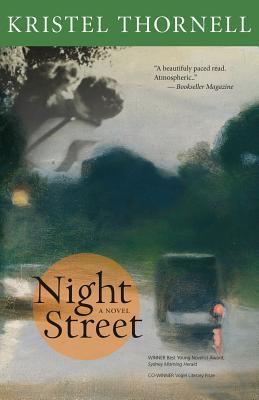 I often wonder about the nature of the fictionalized biography, the kind of which Kristel Thornell has created in her first novel Night Street, which is based on the life of Australian artist Clarice Beckett. Though I realize any biography contains its own fair share of fiction, the blatant fictionalization makes me uneasy, it makes me seize on something that isn’t so and could lead to me going around in public spouting lies quite unaware. And then I wonder about my own wonderings, if they have any basis in a novel whose fiction is inspired by a real-life person I’ve never heard of. Do I put my wonderings away then? Does it even matter what is fact and fiction in a book that wholly creates everything I’ve ever known about this artist called Clarice Beckett? It’s kind of interesting to consider. Even more so when I think that this book was marketed to me as being an Australian literary award-winner, the Vogel Literary Award no less. Which I’ve never heard of either, but I take it as authority, and isn’t it funny how we do that? And I like it actually that I come to this book with no preconceptions at all.
I wanted to read Night Street because I’ve been dying for a novel, and also because we don’t get to read enough Australian writers in Canada (and when we do, I generally appreciate them. At the moment I’m thinking of Helen Garner). Thornell has apparently chosen to fictionalize most elements of Clarice Beckett’s life because Beckett was elusive by nature anyway, not terribly well known, and because Thornell wanted to blur the edges of her work as Beckett did with her own paintings, one of which is displayed on the novel’s front cover.
And when I read this book, I kept thinking of Katherine Mansfield, mostly because I read so little literature from Australia that New Zealand’s Mansfield is all I can come up with, also because Thornell’s treatment of Beckett’s life reminded me of Janice Kulyk Keefer’s Thieves, and because both Mansfield and Beckett came to tuberculotic fates, though that and approximate geography are about all they have in common.
Thornell’s Clarice Beckett (and I still have to make the distinction! I just can’t let it go) was not a woman of tumultuous passions, being wholly devoted to her art from a very young age. Painting was it from the very beginning, and so the decision to live at a remove from the rest of the world was never a difficult one to make. Her family’s reservations about her choices don’t bother her, she racks up rejected proposals without compunction, she builds a portable painter’s studio and wheels it out onto the beach and paints and paints as the rain falls down (which, as you might see, leads to the fate which befalls her). She has a couple of love affairs, but even these fail to permeate her focus, and her feelings towards her lovers are more aesthetic than erotic.
So it’s not so much Beckett’s edges that are blurry in this novel, but Beckett herself, whose remove from the world is also a remove from the book. She’s an unknown quantity. There is no friction driving the novel forward, which at times is frustrating, and yet the singularity of Beckett’s vision is the novel’s chief appeal. Everything she sees is in terms of tone, of light and colour. “Tone came in first. Apt and beautiful, the word tone for describing the stages of intensity of light and shade, gradations in luminosity being indeed every bit as subtle and sliding at the moods of a voice. ” Every person she speaks to, she’s peering past them, over their shoulders because landscape is the point always. “A distance off, the child, until then seated, unfolded, elongated and became kinetic: a small figure running away from the beach. Clarice noticed in herself a growing interest in the human form; perhaps physical love did that to you.”
A problem I often have with books about art is that I find myself unable to see what the text is describing, but this was not the case with Night Street. Thornell brings her images to life on the page, and uses language in way that is just as intriguing (“Silence flattered him like a high-class suit, a generously positioned lamp”). And it was refreshing to read a book that doesn’t rely on the same plot-points to turn on– pull between self and society, love or art, home or the world. For Thornell’s Clarice Beckett, it was only about art always, and Thornell has created a convincing portrayal of a woman so absorbed.
May 21, 2012
Show Me a Story: Why Picture Books Matter
 Last Sunday, I had a the rare pleasure of walking into a bookshop, browsing awhile, and buying a book I had only just discovered. That book was Leonard Marcus’s Show Me a Story: Why Picture Books Matter, 21 Conversations with 21 of the World’s Most Celebrated Illustrators, which I bought not just for its cover art (a Mo Willems book for me!), but because the illustrators interviewed included Quentin Blake, John Burningham, Eric Carle, James Marshall, Robert McCloskey, Lois Ehlert, Helen Oxenbury, Maurice Sendak, Peter Sis, Rosemary Well, William Steig, and Willems himself, among others. The book was wonderful. I was amazed to learn that Oxenbury and Burningham are married, that Tana Hoban and Russell were siblings, Steig was incredibly grumpy, Blake said he could only draw automobiles that were falling apart, that George and Martha were inspired by Frog and Toad (but of course!). That Sendak was a mentor to so many others, and that picture book illustration was such an old boys’ network. I loved learning about how many illustrators had a background in graphic design, reading their ideas about fonts in picture books, how much of a role technology had– being able to do books in full colour changed everything. And now it’s a big deal when an illustrator wants to hold back a bit, do some pages in black and white. I also love that as I’m still a picture book novice, I can read a book like this and discover so many new authors and illustrators– the book is in alphabetical order, and first up was Mitsumasa Anno with whom I fell in love as soon as I hit the library.
“One of the most important things is to laugh with your children and to let them see you think they’re being funny when they’re trying to be. It gives children enormous pleasure to think they’ve made you laugh. They feel they’ve reached one of the nicest parts of you.” –Helen Oxenbury

May 17, 2012
Picture books in which animals are put in jail
This is something I’ve been thinking about for some time. It is by no means a comprehensive list.
 Curious George by Margret and HA Rey: Early Curious George was not only an avid cigar smoker, but ends up in jail for making prank calls to the fire department. Being a monkey, he is able to escape from jail with relative ease when a prison guard stands on one end of George’s cot whilst chasing him and lifts the other end up to the window. He floats away in a balloon. Later, he stars in a movie.
Veronica by Roger Duvoisin: Veronica is a hippo who hates to blend into her herd (whose collective noun is actually “bloat”, but this isn’t part of the text). She gets around her camoflage by escaping to the city, but the gets hauled away for holding up traffic. The jail, unfortunately, barely contains her (speaking of bloat), and they have to bust down the doors to get her out of the place after a sympathetic little old lady comes to her aid and wins her freedom.
 Chouchou by Francoise: Chouchou is a little French donkey who leads a simple but pleasant life having tourists pose with her for photographs. One day while provoked, however, she bites a young customer and is thrown in jail. She is only freed once the local children attest to her gentleness, demonstrating to officials that she’s indeed a harmless creature. She is freed in time to officiate at her photographer-owner’s wedding.
May 16, 2012
People Who Disappear by Alex Leslie
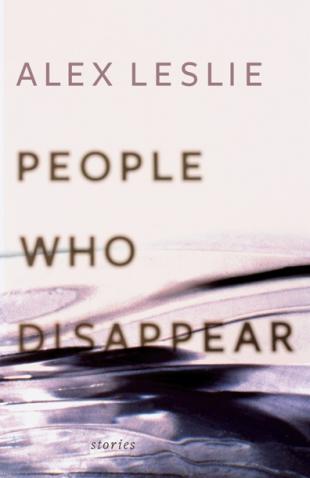 Twice last week I tried to read People Who Disappear, the short story collection by Alex Leslie, but couldn’t get past page 20. Not because there was anything wrong with the book, but instead because it seemed a bit heavy, and I suspected it would require an emotional investment I might not be ready to give. The third time I was ready though, it finally took, and the first story “The Coast is a Road” was so absolutely perfect. I read the ending over and over in disbelief that the story had led where it had. The story of of two young women, one a free-spirited journalist travelling in search of stories and the other her lover who trails along after her: “A tin can rattling, small tin rabbit jumping, tied to your bumper.” Together they travel through northern British Columbia, skirting disaster at every turn, tracing the limits of their commitment to one another, and the story is fabulously full of plot, jarring images– the horses! the horses! Seriously, have you read it yet?
This is a story collection populated with people who do disappear, with fractured lines, with miscommunication, gaps and questions. Closest family ties tend to be with strange uncles, or dubious fathers. Lovers are not wholly known to one another, test each other’s limits. The roads these characters travel are off often the map, literally and metaphorically: “There were so many, a person could spend their life driving around and around these invisible roads.”
Something I’ve noticed recently in reading reviews of short story collections is that very rarely do reviewers reach any consensus about what stories are the strongest or weakest of the bunch. And I’m beginning to think that as subjective is everything, the stories in a collection are in particular. The best stories here are the ones I liked the best, like “The Coast is a Road”, and also “Face”, its trap of nostalgia. My husband is not Canadian so he did not get it at all when I read to him the line that evoked my entire childhood:
“He went down in the pits again, taking his best friend, who played hockey by himself against his garage door every night, sending hollow metallic bursts down the block, so everyone knew at the same moment when his sweat got its first chill and he went inside; then we knew it was night.”
And of course, check out this writing. Clearly, this story’s appeal is its language as much as the personal connections I’ve made with its plot details.
In “Like-Mind”, a woman agrees to help an old friend whom she knows is unstable to drive around Vancouver picking up freecycle items for his new apartment, and she knows that becoming involved with him again is ill-advised, but he has no one else. It is inevitable that their history will be repeated. “People Who Are Michael” is a series of descriptions of videos uploaded to the Youtube channel of a Bieber-ish pop sensation who’s cruising for a crash. “Wire Boy” and “The Bodies of Others” are stories of childhood outcasts, and a young narrator is also at the heart of “Long Way From Nowhere”, the story of a girl who rides the invisible roads with a man who tells authorities he’s her father, but clearly they both have something to hide. She finally escapes him to run away to a community of environmental activists who live in houses in the trees, and this story is like the collection’s first story– as substantial as a novel and as surprising in its turns. I also enjoyed “Two-Handed Things” about two women whose relationship’s cracks are exposed but unremarked upon when one fractures her arm and becomes wholly dependent on the other.
Leslie’s stories are firmly rooted in their place, coastal and northern British Columbia with its ferry boats, extreme weather, and Vancouverosity. To those for whom these places and things are familiar, I imagine this book might feel a bit like home. And to people like me for whom it isn’t, the sense of it all is evoked just the same. It’s a really wonderful collection.
May 15, 2012
I'll be shindigging tomorrow
 The Short Story Shindig takes place tomorrow evening at Type Books with three great writers and three great books– Heather Birrell’s Mad Hope, Daniel Griffin’s Stopping for Strangers, and Carrie Snyder’s The Juliet Stories. And I’m hosting the event, which I’m very excited about. You couldn’t ask for a better line-up. I hope to see you there.
May 15, 2012
Malarky Giveaway. Because you really have to read it.
 I have this problem wherever books are being sold, I always think it’s kind of rude not to buy one. So this is how I ended up in possession of a spare copy of Anakana Schofield’s Malarky after attending her book launch tonight. Her reading was wonderful, the novel’s opening and its most terrible, hilarious, devastating sex-scene. I love this book so very much, and I’m not the only one– over here, the book is celebrated by the likes of Lynn Coady, Annabel Lyon, Jenny Diski and ME (which is the best crowd I’ve ever hung out in). Malarky has been chosen as one of Barnes and Noble’s Summer 2012 Discover Great New Writers selections.
“If Hagar Shipley met Stella Gibbons…” is how I called it in my review. “Malarky is a journey beyond the limits of love, an equally sad and hilarious portrait of motherhood.” I finished with, “This is a book that will leave you demanding more of everything else you read.” And it has.
So now I’d like to send you a copy. Leave a comment below before Saturday for a chance to picked in a draw, postage paid by me because I want you to read it this much. And yes, of course, the book is autographed.
UPDATE: And the winner is Julia, whose comment number was randomly selected by a toddler from a sunhat. And now the rest of you should track down copies of your own. You won’t be sorry.






