July 4, 2011
The books keep coming.
 In theory, I am making excellent progress at moving through my books-to-be-read shelf. I’m just about finished the Ds, having completing Joan Didion’s Salvatore this afternoon (and it’s so good. I don’t suppose anyone who ever invaded Iraq ever read it). But the problem is that the books keep coming faster than I can read them. And I’m not even talking about the new books I buy (which, according to my unstraightforward filing system, reside on another shelf altogether). It’s the books that keep finding their way into my life, and because they can be had for a quarter, or a loonie, or because they’re even free, I can’t help but bring them home with me.
Like tonight, when we walked past BMV and I found these two gems in the bargain bin. (I would also go on to find five bummis wraps outside someone’s house, which is very good, because the velcro is all shot in ours.) The one on the bottom is The Penguin Classic Baby Name Book. I am not pregnant, as ever, but the book is irresistible– conventional baby name book structure, except it lists which characters in literature have had these names, which include Bradamante and Britomart. The entry for Harriet begins, “Used by authors almost exclusively for secondary characters in the eighteenth and nineteenth centuries…” Will make for some fascinating thumbing, I think. And if I ever have another daughter, I can name her Cunegonde.
The other book is Can Any Mother Help Me? about a group of English women who set up a writing co-op in the 1930s through which to take stock of their domestic lives. I got it for a dollar, and it’s a gorgeous hardback, pristine, with the loveliest endpapers, and I think I’m really going to enjoy it. As much as I’m going to enjoy Barbara Gowdy’s Fallen Angels, which I found on a curb last week, Lorna Jackson’s A Game to Play on the Tracks, which I bought as a library discard for a quarter, The Eatons by Rod McQueen, which was also found curbside, and Olive Kittridge, by Elizabeth Stout, which I bought at a yard sale for a quarter.
July 4, 2011
A story that would not be illuminated
“This was a shopping center that embodied the future for which El Salvador was presumably being saved, and I wrote it down dutifully, this being the kind of “colour” I knew how to interpret, the kind of inductive irony, the detail that was supposed to illuminate the story. As I wrote it down I realized that I was no longer much interested in this kind of irony, that this was a story that would not be illuminated by such details, that this was a story that would perhaps not be illuminated at all, that this was perhaps even less a “story” than a true noche obscura [dark night]. As I waited to cross back over the Boulevard de los Heroes to the Camino Real I noticed soliders herding a young civilian into a van, their guns at the boy’s back, and I walked straight ahead, not wanting to see anything at all.” –Joan Didion, Salvador
July 3, 2011
Best morning ever
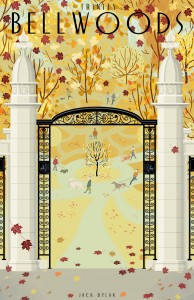 Our friends Jennie and Deep have a new house within the vicinity of Trinity Bellwoods Park, so that was where we met them this morning for a splendid picnic brunch. It was a brilliant walk in the sunshine, from our house all the way down to Clafouti for the best croissants in Toronto. We had teas and coffees, and sat on a blanket under a tree, and marvelled at the goodness of life in general, in particular on a day like today. And then Harriet went to the playground and the wading pool, while Jennie and I dashed across the street for a browse in Type Books. I bought Should I Share My Ice Cream? by Mo Willems and It Must Be Tall As A Lighthouse by Tabatha Southey. Jennie bought the Jack Dylan Trinity Bellwoods poster (at right). Then back to the park where we splashed around with Harriet in the pool. She was eventually bribed out of the pool with the promise of ice cream, which dripped until she was covered in it, and by then we were home. And then Harriet slept for three hours, which made this probably the very best day on record. Not a bad way to cap off a weekend of patio sitting, bbqs, and reading a big fat summer book. More about that book later…
July 2, 2011
A Day in the Life of a Smiling Woman by Margaret Drabble
 All right, please forgive me, but I’d like to take the short story off its pedestal for just a moment or two. Not to demean it in any way, but rather to point out the utter banality of proclaiming a writer “a master of the short-story form”. If only because I don’t think there is any such thing as “the short story form”, which is of all forms is probably the most elastic. Think about what Ann Beattie has in common with Alice Munro, I guess. Or closer to home, even Sarah Selecky and Jessica Westhead’s stories are altogether different creatures. There is such diversity in short stories, which is the underlying flaw in any argument against them as a form, but it also means that many of us are sputtering critical banality when we try to talk about them in general.
But then, here is another thing…
Margaret Drabble’s complete short stories A Day in the Life of a Smiling Woman were written by a writer who has never been called a master of the short story form, mostly because most people don’t know she ever wrote short stories, because she only wrote a handful of them, and because she had been altogether occupied attempting to become master of the novel instead. (And can I just say that more than most contemporary novelists, she has probably come very close?)
But yet there are stories here which are masterful, because this is Margaret Drabble after all and she is so, so good. So the conclusion I take from this is that the short story form isn’t necessarily one requiring fervent devotion, the way some would like us to think it is– I’m referring to the pedastal. The conclusion is that anyone is capable of writing an excellent short story… as long as anyone happens to be Margaret Drabble.
The stories here, which are organized in chronological order, represent the same kind of trajectory evident in the progression of Drabble’s novels. Early stories are very focussed on the individual, interior and immediate, and were very fashionable in a way that hasn’t aged terribly well (but their quality remains evident). Her middle stories become more political with a strong feminist bent, and then the later ones are concerned with the limits of fiction, with stretching these limits, and also with history, and science and questioning. A reader seeking something conventional from later-Drabble will come away disappointed, but with an understanding of what she is trying (though not always managing) to achieve), the reader can appreciate these works’ greatness.
It is difficult to talk about a collection like this, which represents the work of five decades and was never intended to be discussed as a whole. Except to say that it’s a wonderful overview of (and perhaps introduction to?) Margaret Drabble’s work, and a must-read for any of her devotees. That a few of the early stories have a certain unsteadiness, but then the other assume the assurance of writers who, if she has not necessarily mastered the short-story form, has certainly managed to master the story in general.
July 1, 2011
The Vicious Circle Reads: Everytime We Say Goodbye by Jamie Zeppa
 There were just four of us at the most recent meeting of The Vicious Circle, held in splendid east-end backyard digs last Wednesday. And one of us had absolutely nothing good to say about Jamie Zeppa’s Every Time We Say Goodbye, and nothing bad to say about it either because she couldn’t be bothered, it wasn’t even worth the effort to hate. The book had done nothing for the fiction ennui she’d been suffering from of late, and so she would not contribute much to our conversation. However, two of us were partial to the book’s beginning, the story of Grace who has a child out of wedlock and must put her life together enough to demonstrate that she’s capable of taking care of him. They liked her free spirit. And then the fourth of us confessed that she did not like Grace’s story at all, that she’d read the first part of novel afraid she’d dislike the novel entire. Because Grace’s “free spirit” was just a way to avoid investing her with actual, complicating human qualities so that she could function as a device for the plot the author had envisioned. (We had this with last month’s book too– these ethereal female characters so that authors don’t even have to bother making them human.)
We were all in agreement that the ending of the book should have been chopped right off– the cult  storyline. That the tidy ending was too much, and that the precocious young protagonist was annoying. That perhaps 2/3 of the novel could have been chopped off altogether (editor, where art thou?) and what we would have ended up with is the story of the young boy, the charismatic misfit who learns he’s adopted and acts out, but perhaps he always would have. And nature vs. nurture questions that fascinate, and perhaps the only genuinely complicated character in the book, Dean Turner who’s portrayal as a 14 year old boy about to fall off the rails rang so true. (The fourth of our group kept her mouth shut). This part of the novel demonstrating that Jamie Zeppa can really write.
This is a first novel, but unlike others we’ve read, it’s not Zeppa’s first book, and she’s got years of writing experience and life experience behind her, and this shows in the best part of the book. The structure of the novel itself was faulty, but the parts that were sound are indicative of a writer whose next book could be better, of a writer who’s a member of the “one to watch” club.
And then we started in on the ribaldry again, broke out the pie, and sat there talking and talking until we were talking in the dark, and it was finally time to go home…






