September 22, 2020
Gleanings
- There’s safety in a bowl of spaghetti
- A mistake-free performance could only happen if it were so unambitious as to be, frankly, boring.
- Now that we know how precious cheese is, don’t let it go to waste!
- Christmas, Halloween, birthdays galore, our house was that home where you knew you could bring your best friend’s cousin to and she’d just fit in.
- A message from the past to the present: be careful how you move between the cedars and firs.
- I aspire to read more books that I actually end up reading.
- Even knowing all of this, it wasn’t until I read Fangirl that I realized that I could tell the world how much I loved fanfiction
- I’m not against protesting, not one whit. I am opposed to perversity and spite.
- I do not need a pandemic to let me know I’m mortal.
- My grandmother wasn’t even born a Zorn, but a Wolf. She came by her name too.
- Somewhere along the line, I internalized the messages that I was broken and in need of fixing at the same time as not being able to rely on anyone but myself to meet my needs.
- Because I do a lot of my seeing with a camera, I often see things at least twice.
- Knowing what to remove, what to take down, what to edit out is as essential to completion as invention itself.
- That sense of accomplishment follows me throughout the day, which is important when so much of regular life is temporary.
Do you like reading good things online and want to make sure you don’t miss a “Gleanings” post? Then sign up to receive “Gleanings” delivered to your inbox each week(ish). And if you’ve read something excellent that you think we ought to check out, share the link in a comment below.
September 21, 2020
Looking forward to Waiting for a Star to Fall
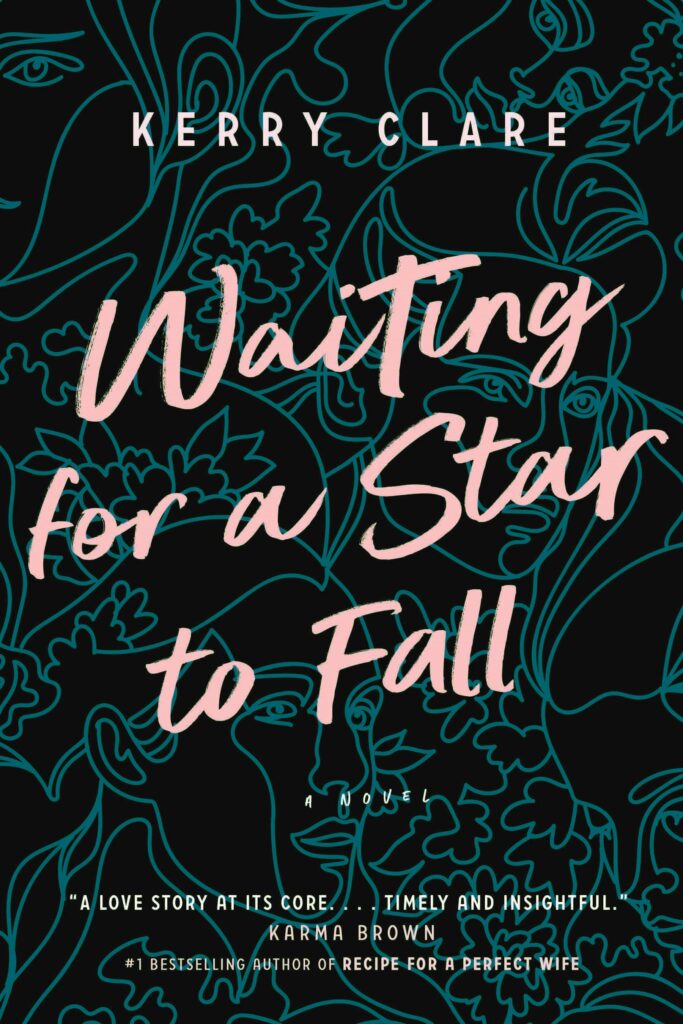
36 days until Waiting for a Star to Fall arrives on bookstore shelves!
I’m very happy that the novel has appeared on Fall book previews at CBC Books, the Toronto Star, and this weekend at the Globe & Mail.
I’ve been looking forward to this book for a very long time now, and it’s nice to know that I’m not the only one.
September 18, 2020
How to Do Self-Promotion
“There is nothing wrong with self-promotion!” someone tweeted at me a few weeks ago, an attempt at encouragement that demonstrated that they don’t know me very well, because clearly, I already know this . If I could afford to buy billboards for my selfies, I probably would. I really do hope that you will pre-order my new book (coming October 27 from Doubleday Canada!), is what I’m saying, but also that all self-promotion is not good self-promotion. There is a certain kind of grace required.
This all started because I have the best part time job ever, and I work with the best people , who fill my life with goodness and have been so supportive of my work for the past nearly-ten years. And my job involves getting excited about Canadian books, which is the greatest pleasure, and comes pretty naturally to me. But I am careful not to use this particular platform to promote my own work. I have other platforms after all, and it would be more than a little gauche. For me to include my book on the site’s Fiction Preview, for example, a project I care very much about and work hard on compiling.
So I didn’t, and my friend/colleague Kiley didn’t notice (it was a very busy summer!) until my book ended up on the Toronto Star and CBC Books’ Fall Previews the other weekend. And then she tweeted from the 49thShelf account about my forthcoming book, and how I hadn’t included it on our list. I replied that it’s kind of tacky to put your own book on your own list, and that it is to be hoped instead that somebody else might be anticipating my book, someone who isn’t even me—a gamble that had paid off (phew!) because at least two media outlets were.
Um, and yes, props to my fantastic publicist at PRH, of course. I suppose it’s easier to be kind of laissez faire when you have such people in your corner. It’s not all karma, is what I’m saying. But some of it actually is.
And what I mean by this is that the best way I know to do self-promotion is to create the space, instead of focusing on my own book specifically. This is a long-term goal, of course. You don’t start this six weeks before your pub date. Instead, you use whatever platforms you have—both digitally and in the actual world—with the intention of creating meaningful conversation, in my case about books and reading in general. Supporting a culture of literature in the places I hang out in, connecting with others who do so. And this culture matters. As Virginia Woolf wrote 95 years ago of the importance of readers in her essay “How Should One Read a Book?”—“The standards we raise and the judgments we pass steal into the air and become part of the atmosphere which writers breathe as they work.”
So how to create this space? Maybe you have a book blog. Maybe you interview writers on Youtube. Maybe you started an online literary magazine. Maybe you post about the books you love on Facebook. Maybe you run a reading series. Maybe you post photos of your library haul on Instagram. Maybe you talk about books exuberantly to the people you encounter in your everyday life. Maybe you support independent bookstores/ Maybe you read conspicuously in public. Maybe you do things to support the spaces that were created by other people, attending literary events, buying books, reading book reviews. Maybe you listen to books podcasts, and then tell other people about the books podcasts. Maybe you write Goodreads reviews, and leave reviews on Amazon—although even typing this makes me nauseous because nothing associated with Amazon is good for anybody, so if these are your tactics, perhaps think of one more.
The point of this space you’re creating is still not to promote your own book. Forget about your own book, for now. This is not about you. The point of this space you’re creating is to make more room in the world for books and readers, and even just a little tiny bit more space means something significant. And you’re benefiting from this space, because you are a reader, and you live in the world, and you’ve done your part to make the world a little closer to the kind of world you want to see—where books and reading matter.
And then, yes, because there is more space, there will also be more room for you and your book. Because you’re steeped in the atmosphere of books and reading, it will not seem so awkward to make your own book a part of the conversation. And because you’ve cultivated connections and built relationships, you won’t be the only person talking about your book either, which is the kind of promotion that really matters, which is really just living the dream.
But first, you have to make that space. Talk about and share the books you really love. You are not in competition with other writers—a world where people love and value books is good for everyone, even if the books they’re loving and valuing aren’t yours. There is room enough for everyone, especially if you’re making space. The success of any writer can be a success for all writers.
Of course, feel free to take all this with a grain of salt because modest success is all I’ve ever known anyway. I’m a blogger after all, inherently on the margins. But still.
When you hear someone asking for a book recommendation, resist the urge to suggest your own book (because of course you’re going to suggest your own book). Not because there is anything wrong with self-promotion, but because it’s just too easy and obvious to create any meaningful connection. You really do have to go the long way around, but it’s worth it. Because it’s real.
September 16, 2020
The Smallest Lights in the Universe, by Sara Seager
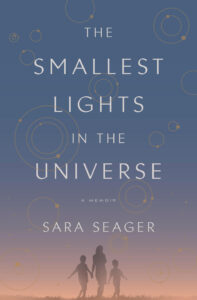
Space made news this week with the discovery of possible life on Venus, and what was most exciting for me about this development was that on the team of researchers who’d made this discovery was Dr. Sara Seager, MIT Astrophysicist and author of Smallest Lights in the Universe, which I was reading last week. Can you imagine discovering alien lifeforms and releasing an emotionally powerful memoir all in the same season?
But then Sara Seager doesn’t do anything in an ordinary fashion, as the reader discovers. She write about her unconventional childhood growing up in Toronto, how her passion for astronomy grew, how she found her way to marriage and family, and how she endured the loss of her husband, who had kept their domestic life afloat while Seager had her head in the outer-reaches of space, developing theories of exoplanets that had seemed like fiction when she began her work in the 1990s. She writes too about her recent diagnosis on the autism spectrum, and her singular point of view in this regard is what makes her memoir so fascinating. When her first husband was interested in her, she writes, she initially rejected his advances, because she just wasn’t that into people, and her strongest feeling toward her fellow humans was “tolerance. I also loved the straightforwardness with which she writes about motherhood, which she was never ambivalent about, but which was hard to balance with a busy career, and even moreso after she became a solo parent. These kinds of ideas have been expressed so many times, but Seager manages to do so devoid of the usual cliches and with a fresh and interesting perspective. Further, her quest to learn what can be discovered in the outer reaches of the universe, her belief in other possibilities, in different worlds, is the kind of perspective than seems urgently necessary now, when we need curiosity and imagination more than ever.
September 15, 2020
Gleanings
- It’s been one, very small, dull-silver lining of the pandemic: My children have been roaming the neighbourhood, without me.
- There is something bewitching about keeping a record of the little details in life, those things that probably culminate in patterns, and may otherwise go unnoticed.
- Most everyone I know is tired of hearing that I am a librarian’s daughter. Especially the non-readers. What can I say? I’m lucky.
- These are the people on whose doorstep I can arrive with no notice. These are the texts I’ll reply to as soon as I see them, and the phone calls I’ll answer even if I’m in tears and letting other calls go straight to message.
- Ever since I got my fancy-pants bundt pan, I have been making one cake with more frequency than any other.
- With hints of autumn in the air and tickling the leaves, it felt like this might be our last chance to meet in the park.
- And that all these lessons take at least two decades to absorb.
- Imagine not knowing what hummus is, it seems impossible!
- The world needs a lot of things right now, but it also needs places for us to exercise that muscle of infinite reception. Libraries, for example. Schools. Art galleries.
- Despite the obvious challenges ahead, sitting in Daddy’s chair I found myself in the cradle of his infinite love, which is perfect, non?
- How to revise your novel: part 5
- A quiet novella is a kiss of death if you think of literary ambition as a living thing.
- You know, I prefer the kitchen to the living room, really. The kitchen is all about the promise of cooking something up … and the living room? It’s about winding down.
- Begin with endlessly sorting your bookshelves. Keep, donate, keep, donate….
- it’s not a photograph until it’s printed
Do you like reading good things online and want to make sure you don’t miss a “Gleanings” post? Then sign up to receive “Gleanings” delivered to your inbox each week(ish). And if you’ve read something excellent that you think we ought to check out, share the link in a comment below.
September 14, 2020
An Epiphany
I had an epiphany back in the summer when I watched in a man sitting on an ATV on the side of a rural road taking a moment to smoke a cigarette, and it was that he is allowed to like the things he likes as much as I am allowed to like the things I like, even if I think the things he likes are really stupid. Things like ATVs, and cigarettes, and ugly shirts, which sounds harmless enough, but, I guess, what if he also likes guns and conspiracy theories and racist stand-up comedians, and even in drawing these inferences, I’m revealing that I am kind of an asshole who deals in stereotypes? Possible the guy on the ATV was a pansexual vegan who’d just spent last week on Twitter railing against gender reveal parties and forest fires? And oh my goodness, as much as I hate gender reveal parties (with all my heart, I promise), I must confess that people hating on gender reveal parties is just as annoying. Possibly I am a bit sensitive about this because I once got a bit miffed at someone on social media who claimed that parents who referred to their children as sons or daughters were being abusive, and I guess I just feel like the whole problem is that imposing your own notions of gender onto other people is totally annoying (oh, HELLO, that lady who wrote those books about the boy wizard) even if you know you’re right, but everybody knows they’re right, which is the problem, and maybe what we all need to be interrogating right now, even though all these ideas might cause my poor brain to explode, but we need to figure out how to live together amidst all that tension—and also solve climate change.
September 10, 2020
Songs for the End of the World, by Saleema Nawaz

When Saleema Nawaz’s Songs for the End of the World was published as an e-book in May, I wasn’t ready for it. I couldn’t do it. A book about a novel coronavirus that sweeps across the world in 2020, beginning in China, and then exploding in New York City. Fiction as uncanny as all-get-out (the novel was written between 2013 and 2019—um, and it includes in its cast of characters a novelist whose book about a pandemic is proving eerily similar to real life events—I KNOW!) but I was having enough trouble facing such things in the world. Plus I don’t have an e-reader…
It was with great hope that I was planning to read the book when it came out in print in August. Hoping the world might seem more recognizable then, Nawaz’s story of a pandemic not quite so close to home, or perhaps that I would be able to put some distance between it and my own situation. And I am so glad that all this transpired, because I liked this novel so much, found it utterly absorbing, and rich.
I suppose it’s not so uncanny how prescient the book seems (it’s Nawaz’s third, following short story collection Mother Superior and the novel Bone and Bread) considering Nawaz based her own pandemic on disease models and intervention strategies. (She was also able to intuit that after a handful of days of quarantine, a person would inevitably order a treadmill.) In a Q&A at the end of the book, she goes into interesting detail about her process, and also writes about how while she didn’t necessarily set out to counter typical disaster narratives, she wanted to “explore…how the stories we tell can influence our behaviour in the real world, for better or for worse.”
(This reminded me of my favourite line from Ali Smith’s Autumn: “…whoever makes up the story makes up the world.” )
What’s most absorbing about the novel is not the pandemic plot, however. First, it is the sentences. “Calamity began, as usual, on an ordinary day. The city roiled with the amplified impatience of a million insomniacs, sleeping children breathed polluted air, low-level exploitation crept across neighbourhoods with insectile persistence, and a thousand everyday kindnesses failed to rise to the surface of consciousness.” How is that for an opener?
And second is the characters, beginning with Elliott, the first responder in Manhattan; Owen, a novelist whose novel appears belatedly on bestseller lists when the pandemic starts; Stu, an indie rockstar whose bandmate and wife, Emma, is pregnant; Sarah, a single mother, who contemplates her future with her child; Keelan, a philosopher whose on work on disasters has resonance for an audience that’s desperate for hope. Moving back and forth between the contemporary moment and pivotal events from the characters’ pasts (young Emma aboard a years-long sea voyage with her eccentric family as her mother freaks out about Y2K), Nawaz has each character singularly navigating the pandemic crisis, but also shows the ways in which these characters’ lives are intertwined in an intricate web, sometimes in ways the characters themselves aren’t even aware of.
She conjures the world in this book, perhaps more specifically than she ever intended, and therein lies the novel’s power. That it’s not the end of the world too—such a lazy cliche. Life and love continue on.
September 9, 2020
Field Notes From An Unintentional Birder, by Julia Zarankin

There are book reviews, and then there are those reviews of books a reader has been waiting a decade for, ever since the first time the reviewer met the book’s author and was presented with an essay collection by Anne Fadiman as a hostess gift. My friendship with Julia Zarankin was forged over the essay form—though she also introduced me to Wallace Stegner. We contain multitudes. And I’ve been wanted to read a book by her since our very first conversation—she was so smart, kind and hilarious. She was working on a collection of essays at the time about being multilingual. Had not long ago abandoned academia for a different kind of life, and she’d recently taken up…birding? It still seemed unlikely then, not yet a fundamental part of her identity. And a couple of years after we became friends, I had the privilege of her contributing a beautiful piece to my anthology The M Word, the final essay in the book.
As Julia’s passion for birding grew and grew, and she began to disappear every spring for migration season.
But now her book is here, Field Notes From An Unintentional Birder, which I loved as much as I loved any of Anne Fadiman’s essay collections, which is saying everything. And I began to think, as I was reading this book, that in her field notes on birding, Zarankin had also written field notes on blogging—all about paying attention, being patient and persistent, not fearing making mistakes, feeling the exhilaration of unbridled passion—and then I realized that what the book was was a field guide to life.
What a terrifically woven collection this so, so much more than the sum of its parts, each of which is wholly impressive. Through the lens of birding, Zarankin writes gorgeously about finding herself in her mid-thirties, divorced and having left her career. So what now? And it’s through birding that she finds the answers, to this, and to other questions, including how to stay in love, how to be brave, how to be comfortable in her own skin, to understand her own history as a migratory creature, how to live in the moment, and how to have purpose. How to be.
Those answers, of course, are not straightforward. Seeing birds does not lead to satisfaction, but instead a yearning for more of them. It means reconciling herself to the birds she’s missed, or those she might never see. But she learns too the pleasures of living in the moment, of being instead of always striving (though an urge to birdsplain is one that’s hard to shake).
The book has general appeal because birding, like blogging, is life—but I also love the details for birding life that Zarankin shares with such exuberance. She shows the peculiarities of the avian world, and the people who are part of it, in perfect, vivid detail.
September 9, 2020
Seven, by Farzana Doctor
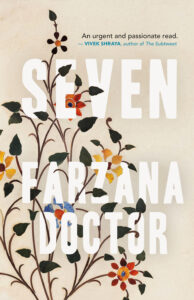
A remarkable balance is required to create a novel about Female Genital Mutilation (FGM) that is also a pleasure to read, but Farzana Doctor pulls it off with Seven, a book that is also about marriage, family, motherhood, sexuality, and rediscovering one’s self and purpose at mid-life.
Sharifa has left her job as a teacher in New York City, and travels with her husband and daughter to India, her birthplace, where her husband will be working during his sabbatical. Other than homeschooling her daughter, however, Sharifa isn’t sure how she will spend her time in India, until she decides to partake in a research project to learn the story of her great-great-grandfather, a wealthy philanthropist who was married three times—and in his second marriage was possibly divorced?
Her marriage has just gone through a rocky patch, and so restoring that relationship is also in the forefront of Sharifa’s mind, as she becomes reacquainted with her aunts and cousins, and then realizes that her cousin’s online activism against FGM practices in their Muslim community (“khatna”) strikes much closer to home than she’d ever imagined. Turns out this archaic practice might not be talked about, but it still takes place today.
The different threads of this novel are woven powerfully. and culminate in a terrifically moving story, in particular a scene where Sharifa and other members of their community (including Sharifa’s excellent husband) gather together to publicly protest khatna, disrupting a long-held taboo. There are moments where this novel of ideas becomes much more driven by those ideas than the story itself, but I forgave these , because the book was so enveloping, and Sharifa’s awakening as to her own history was poignant and absorbing, ultimately hopeful and galvanizing. I loved having her voice in my head.
I also loved the historical thread of Sharifa’s great-great-grandfather, and its resonance in the contemporary story line, and how it all comes together so satisfying in the end.
But then the very end, oh my gosh, it destroyed me. The hardest, bravest literary choice, considering the world we live in, and how tidy endings make us too comfortable. I liked this book a lot throughout, but the leap Doctor takes in her book’s epilogue is so awesome and necessary, underlining the urgency of her message—and about how the pleasure we might take in reading this book (while we do) is actually far from the point.
September 8, 2020
Gleanings
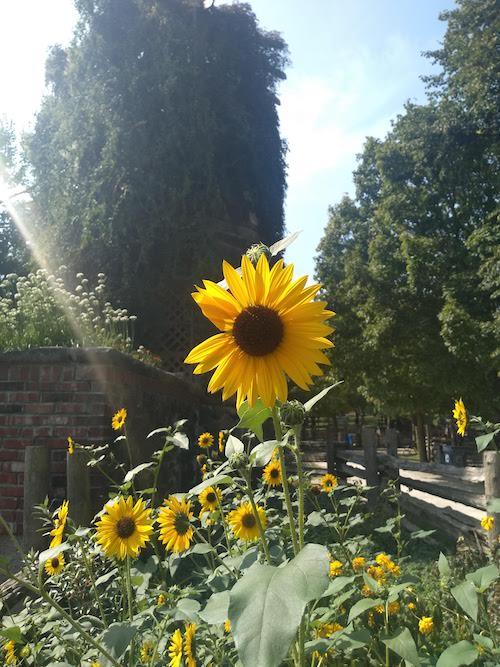
- Hold on to this moment, I remind myself. And I do.
- Dearest book lovers, we are in great peril.
- My point is that both books are solid and substantive. They require attention and care. I’m grateful that the writers shared their extensive knowledge with me.
- how necessary it is to have these two books situated cheek by jowl on the shelf
- I know I’ve said this before, but I think it’s worth repeating that keeping up with other people’s blogs has been a great source of intellectual stimulation and comfort for me over the past few months, so thanks as always to everyone whose bookish thoughts help make the internet a better place.
- I swam and thought of my grandchildren in this damaged beautiful world and when I came out to dry myself off, my face was wet with what might have been the lake and might have been tears.
- Did I clean out the tupperware cupboard like I was going to? No. Did I throw out all my day planners from when I was a stage manager in the 1980s? Yes, but it took a lot of energy. Did I write some words? FUCK YES.
- Making myself read (or otherwise experience) all of Shakespeare in a year was a way of getting myself out of a reading comfort zone.
- Historically significant times are not exactly the most restful to be living in.
- This ability to acknowledge that we hold multiple truths simultaneously, it’s learned through life experience and growing up, and time spent as a human being.
- Every time I blow the fluff off a dandelion I think of grateful bees.
- I am so glad I still keep a blog / website / or whatever the heck you prefer to call my little space here on the Internet. Do I have a heartwarming story for you today…
- I would never have become a writer if it had ever depended on my prowess typing.
- Living in Northumberland County, so very rich in agricultural lands, finding abundance is dead-easy.
- But of course, really, we all need to slowly, carefully, gently, humbly, grandly, and with great compassion, care for our own dear little crumbly old souls.
Do you like reading good things online and want to make sure you don’t miss a “Gleanings” post? Then sign up to receive “Gleanings” delivered to your inbox each week(ish). And if you’ve read something excellent that you think we ought to check out, share the link in a comment below.