October 22, 2020
Perfect October Reads
The Searcher, by Tana French
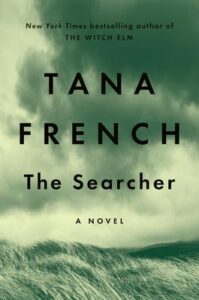
What a gift is any new book by Tana French, and The Searcher is no exception. Set in rural Ireland where a retired Chicago cop has come to make a new life after escaping his old one for reasons he really doesn’t want to get into…but then a kid shows up urging him to pursue a local mystery.
This is a quiet, thoughtful kind of thriller, not heavy on plot at all, but propelled by the most terrific tension. I loved her previous novel, The Witch Elm, but it was kind of baggy. The Searcher is a more satisfying read, rich and soulful, and really hard to put down, and enlivened with a moral ambiguity that’s unfailingly interesting.
Mexican Gothic, by Silvia Moreno-Garcia
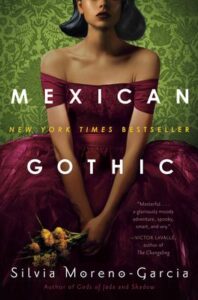
And believe the hype about the bestselling Mexican Gothic. Spooky haunted house book in the 19th century English tradition, terrifying and absolutely delicious, and with a great critique of colonialism and racism. Moreno-Garcia’s Noemí Taboada is the heroine of your wildest dreams, cigarette-smoking, convertible-driving, as clever as she is gutsy, and determined to save her cousin Catalina who’s been having terrifying visions since arriving at her new husband’s strange family home, built on top of a fateful silver mine—but the strange and deadly force at work in the house is determined to stop either of them from leaving. You’ll be having disturbing dreams until you’ve made it through this one, so you should probably just clear your calendar.
October 21, 2020
Taking Stock
I am not super into memes, but I’m currently in a mindset that requires a bit of grounding and also anything Pip Lincolne does, I want to do too.

Finding: That once again, publishing a book is making me feel vulnerable like nothing else. It’s TERRIBLE. At least I know what it is this time. A combination of “Why is everybody looking at me?” and “Why isn’t everybody looking at me?” at once. Shawna’s post yesterday spoke to me.
Wishing: For Covid infection rates to go down.
Cooking: So in love with Smitten Kitchen’s Spaghetti and Meatballs, and the carrot white bean burgers, both of which we had this weekend. I don’t know what I am making for dinner tonight…
Making: Hatching plans to knit a baby blanket for a friend. I suppose the only thing I’m actually making right now is a new draft to my novel that has been long in-progress, but it feels very good to be doing that now. And also: plans for next year’s garden.
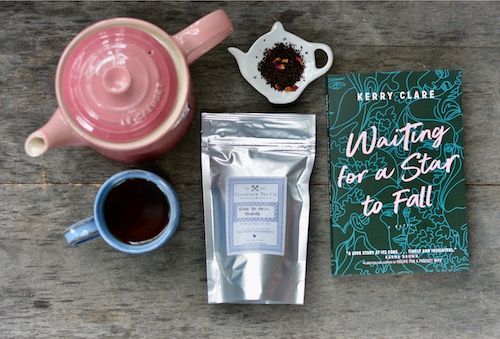
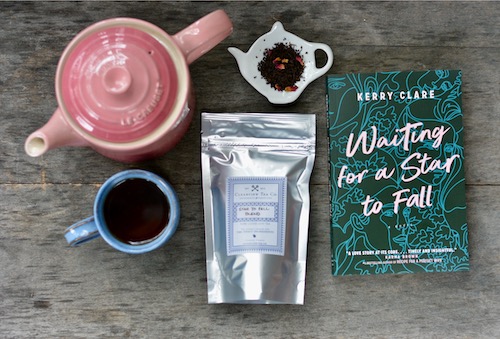
Sipping: Star to Fall blend tea!
Reading: Big Friendship, by Aminatou Sow and Ann Friedman

Looking: At the leaves turning yellow outside my kitchen door.
Listening: All I want to do is listen to songs that were played on Top 40 radio during the year I was 20, like “I’ll Be,” by Edwin McCain. It’s ALL EAGLE-EYE CHERRY ALL THE TIME OVER HERE. I think this is what happens to people once they turn 40. (And Taylor Swift’s folklore, obviously.)
Wishing: For the polls to be right.
Enjoying: The Storygirls Podcast!
Liking: How wonderful it is to take my children to school every day
Loving: The Searcher, by Tana French and Mexican Gothic, by Silvia Moreno-Garcia, both atmospheric reads that I’ll be writing about tomorrow.
Buying: Choco-Sol Halloween Chocolate after reading the latest edition of Five Minutes for the Planet

Watching: Season 4 of Schitt’s Creek which I am watching very slowly, because I watch TV about once every three weeks. Whatever the opposite of bingeing is—abstaining?—is my approach.

Hoping: That people buy my book, and then we get to celebrate that plus a new US president the following week
Needing: A new US president. It is not fair that such a stupid man has caused me to be scared and worried for four years.
Wearing: My Desserts and Skirts zebra tunic, OBVIOUSLY. The tunic I wore until it had holes and then purchased a replacement.

Noticing: That my anxiety towards illness is going to be what my kids talk to their future therapists about.
Sorting: The porch and garden for winter. Cleaned away a lot of clutter, and purchased a pretty pot of fall flowers for beside the door.
Getting: Used to the ease of my children having their extracurricular activities (Girl Guides and piano lessons) online and so much less running around.
Craving: Indian takeout for lunch!
Coveting: The Gladstone Press edition of Wuthering Heights

Feeling: A bit lugubrious (thankfully temporary), but also grateful for so much
October 20, 2020
Gleanings
I am so happy today as I read through the blogs on my Blog Reader. So many people who’ve taken my course this year have updated their blogs this week. Some of my faves (Elizabeth!) updated theirs twice. Such a pleasure to see all the good people out there in the world making good work and sharing their ideas. And this reader sure appreciates it.
- Sure enough, the more I thought about birds, the more they began appearing in everything I read.
- However if, like me, you don’t think/respond well when put on the spot, or if you’re a people-pleaser and your go-to response is agreement, consider adopting a personal pause.
- When you start prioritizing your writing time, the people around you might not like it very much. (They won’t like it at all.)
- Words are like seeds and when healthy ones are sown, those seeds grow into something greater.
- And then the word Heal comes to me and everything settled. That’s what this time is. Calm. Quiet. Light, is what I imagine for the winter.
- Reading: Pachinko and Persuasion.
- I’m always torn between, hey look everyone it’s me over here, and also trying to fade into the woodwork.
- I am not very good at being nocturnal. While I love the moon, and the stars, and the uncanny call of the owl behind my house, I must admit that my mood often sinks with the sun.
- When it’s light out, the trees brilliant gold and deep orange, the house finches busy at the work of opening maple seeds, I am ready for anything. But when the weight settles, I pick up my quilt and stitch free-hand spirals into the sashing between the log-cabin blocks.
- We’d always end up among the trees, in their shade, in their splendour.
- The first thing I don’t like about this book is that she (Gertrude Elizabeth Blood), calls herself Lady Colin Campbell
- Fortunately, not all best laid plans automatically go awry, either. We didn’t get to meet as we’d anticipated, but we did get to meet in ways we’ve come to expect and enjoy…
- The perfect time to eat it simply never came. Note to self: It never will.
- I unfold each scrap of paper before I throw it in the recycle bin, just in case I find a note. Because even in our era of emails and texts, Doug wrote me notes. I haven’t found one in his winter clothing yet, but I might, and I’ll savour it and save it.
- October is Breast Cancer Awareness month and, for me, it is doubly so.
- I used to think that the ache would disappear, that the hurt would fade but seventeen years later I’ve learned that grief is a journey without a real destination.
- Rioux makes the case that the book is important to all readers as a story that explores female identity in ways that still continue to matter.
- WE USED TO HAVE A ROOF OVER OUR HEADS, moan the butter sticks. WHAT HAPPENED TO OUR ROOF. The shelf is fine, I tell them. You’re safe on the shelf. NOOOOO they whine oh butter. Have you considered meditation?
- And so this sign in all its simplistic splendour really spoke to me as something that was, if not completely attainable at the time, at least something to strive toward. Simplify, it said. OK! I said. Let’s give it a shot.
October 18, 2020
How I Made My Children Readers: My ONE Magic Secret
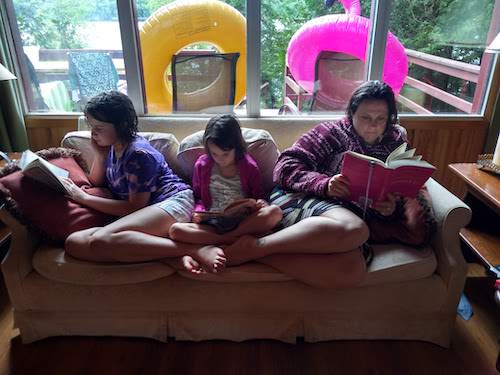
Okay, as everybody knows, my children are readers because LUCK and because they happened to be born with those inclinations, and because they are fortunate that reading comes easily for their brains. LUCK also that neither of them decided to hate reading out of spite, because their mom was just way too into it. (I was anticipating this. Have done my best—and no doubt failed—not to be too much about the whole reading thing, and give them space to develop their own tastes and connection to reading that was not just an extension of mine.) This is probably 75% of the formula.
In addition, books and reading are an essential part of our family culture, they see me and their dad reading all the time, I’ve surrounded them with excellent books since before they were born, and it’s rare that they’ve ever taken a journey that didn’t end at a bookshop (and then ice cream).
But my magic secret to raising readers is none of these. My magic secret is much less wholesome, is sexist and outdated, and is available in digest form at your local grocery store. My magic secret to raising readers is ARCHIE COMICS.
And here’s why.
1 ) I buy them at the grocery store checkout, along with milk and cheese and breakfast cereal, underlining the point that reading materials can be staples, sundries just as essential as toilet paper and dish soap. They’re always appreciated, and special enough to turn up in Christmas stockings, but they’re kind of viewed there the way that socks in the stockings are. Nice to have, but ubiquitous.
2) Ubiquitous, which is to say accessible. They’re cheap. Can be taken for granted. Unremarkable. They’re just always around.
3) Being so accessible, they’re also disposable. They’re the books my children bring to the table at lunchtime because nobody cares if they get splattered with soup. Nobody has to be precious with a book like this.
4) These are also stories that ask little of their readers. They don’t require a lot of attention or brain power. They’re perfect for if you’re really tired. My daughter likes to read one as a palette cleanser after reading something intense or demanding before bed. They’re not edifying. In short, they are basically literary candy. Unlimited literary candy. And unlimited candy is basically every kid’s dream. (Just don’t tell them that they’re building literacy as a lifelong habit!)
5) I bought two comics last week when we were waiting in the drug store for our flu shots. Archie comics pass the time, and because they’re broken up into pieces, you can read them at three minute intervals or for ages and ages. Picking them up and putting them down is easy , and so they’re really easy to integrate into the course of one’s day. SEVERAL TIMES.
And because they’re so ubiquitous, there’s usually a small pile of them within arm’s reach anyway. Nobody has to go out of their way, which is just the way literacy training ought to be.
October 16, 2020
Petra, by Shaena Lambert
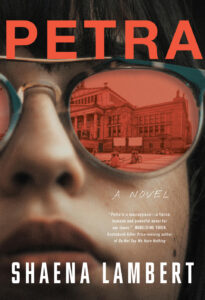
I keep imagining the opportunity to interview Shaena Lambert, and the inevitable question: “So why HAVE you chosen to tell the story of Petra Kelly, German Activist and leading force in the creation of The Green Party in the 1980s?” Though I think I already know the answer, and it’s mainly to do with the expansive possibilities of fiction, and how it can shine a light into dark corners that no archive could hope to illuminate. The limits of nonfiction too for a figure whose mythology was almost as important as the facts of her character. And yet that forty years after her fame and three decades after her death that she’s become an unknown, another woman cast aside under the pounding waves of history. So what does it mean then for me to be encountering Petra Kelly for the first time through Lambert’s fictional lens as I have done while reading her novel Petra? It’s destabilizing, a fictional biography, though perhaps in a way that Petra Kelly herself might have appreciated. Or so I can speculate…
While Petra herself was real, all the other characters in the book are invented, or created as composites of actual figures. The story told from the point of view of a Manfred Schwartz, once Petra’s lover, and then her colleague in government as the Greens are elected to office in 1983 on a rising tide of popularity. Manfred never really gets over Petra, but then Lambert’s Petra is the type you don’t. A German who grew up in America in the 1960s and brings that same idealism to the divided Germany in what would turn out to be the last days of the Cold War—but nobody knew that then. Idealistic, uncompromising, seeing the world and its issues as interconnected as her Marxist colleagues never would.
Defying expectation at every turn, Kelly falls in love with an ex-NATO General, a love story with a sorry end. Which also might be part of the reason why Lambert imagines up the figure of Kelly’s General lover from scratch in her novel, for the unfathomability of his actions. Fiction permitting the author more latitude for the fathoming, imagining this figure who’d grown up in Nazi German, fought for the Germans in World War Two, the atrocities that he would have been party to, and how a person lives with that.
The novel takes the form of a historical record created by Manfred, who is still under Petra’s spell after all these years, and is trying to make sense of what happened between them and of her character in general. A proxy for the author herself, I suppose, and the answer the question I was pondering at the beginning of this review comes with a line near the end of the book, delivered by Manfred’s wife: “Maybe you simply can’t make sense of it all…I mean, maybe it—the past—doesn’t take the form of a thesis.” Which is where the art comes in, the role of literature, to make a sense out of something that doesn’t make sense at all.
By the end of the book, Petra has become a full-fledged spy novel, as we learn who among the Greens had been acting as Soviet agents, this information offering some illumination to Manfred about what had gone on decades before. Petra herself, however, remains somewhat in the shadows, the reader feeling the same frustration experienced by Manfred at how elusive her true nature remains, at how many of her secrets would die with her.
But that she is known through this book, if not actually understood, doesn’t lessen the novel’s impact, and in fact makes it all the more engaging, and in accordance with what actually happens in the world.
October 14, 2020
STAR TO FALL Tea Blend
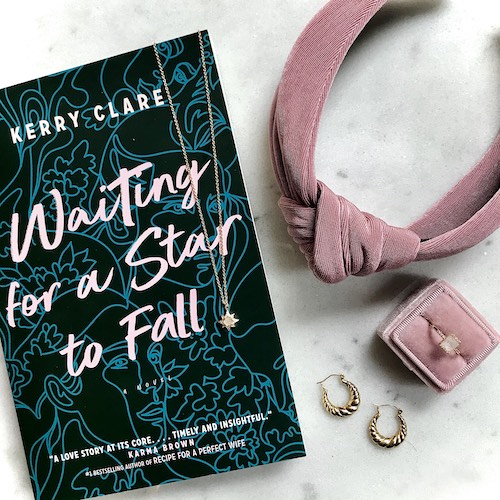
The OFFICIAL tea blend of WAITING FOR A STAR TO FALL is now for sale from Clearview Tea. An organic black tea blend featuring vanilla, bergamot and rose petals, the tea is the perfect complement to my novel—and it’s delicious. Thanks so much to Clearview Tea for this fun partnership.
October 13, 2020
Gleanings
- To me, the thrust of the novel seems rather to be “how many intended kindnesses can lead to mistakes.”
- One of the silver linings of Covid, is seeing how imaginative and resourceful people can be in times of challenge.
- Poetry has the capacity to lead us through our lives, giving us courage to step over the thresholds, to push the creaky gate on the hinges that are our own bodies thinking, remembering…
- When you feel yourself getting defensive, when you have an urge to argue with what you’re hearing, why not take that as an invitation?
- I’m still here – which is exactly where I want to be.
- This is nature. This is life. Perhaps, in some ways, we’re not so different to a Chinook.
- What I want is the complexity and powerful possibilities that a poem or poetic language can give us.
October 12, 2020
What the Trees Were Doing

We called them Sad Covid Walks, but only in hindsight. At the time we were walking, they were everything we had, during those months when traffic was deserted and the only ads in the transit shelters were telling us all to stay home.
We had a circuit through and around the university campus, a walk we took once a week to track the progress of spring. Two secret copses—one at the school of mining, the other at the faculty of forestry—and then the tiny Zoo Woods beside Sidney Smith Hall. Which at first were barren of anything green, just a trillium here and there, and then the season came on like a deluge. Never have I been more grateful for spring.
A woman in my blogging course last month wrote about that waiting, and watching the naked trees with an attention she’d never experienced before. About how as the leaves fall away again, she is trying to hold onto the promise of winter trees instead of sadness as the seasons change again.
We’ve taken such comfort from trees this year. Retracing our steps today even though we really didn’t want to, even though anything that was full-on in Covid spring, we’ve developed an aversion to (except for ice cream).
But I wanted to see what those trees were doing, to give thanks for the ways they have saved us, and the ways they persist, oblivious to everything, from the sad people looking up, to the pigeons in their boughs.
To their majesty, their steadfastness, and the admirable way they keep reaching for the sun.
October 8, 2020
You Get to Frame Your Own Picture

You don’t have to read the books on the shortlist. You don’t have to watch the debates. The world won’t end if you don’t know the latest numbers, unless you work for Public Health. Your timeline isn’t neutral. Neither are your Google searches. You are allowed to not be interested. You are permitted to sit this one out.
What gets to be important? Did anyone catch the sunset last night? I’m thinking about a person who doesn’t have their head in the sand, and how they have absolutely no idea what’s going on underground.
Who’s been keeping up with the cloud formations? Do you know how little bearing the stock market has on most people’s lives? The way the patch of sunshine travels across my kitchen table, which is a story I’m tracking. It’s important to pay attention.
A long time ago, you got to design your own internet, with the assistance of your aunt who’d send your forwarded jokes. She was a curator then, although we didn’t call it that, but the rest was up to you, the sites you bookmarked. I had a Google reader, and a list of blogs and websites that I’d check in with everyday.
But then Google killed their Reader–it’s harder to drive advertising with users who navigate the internet on their own say-so. And now it’s Facebook who decides what we should see, what we will watch, what we read, and what we’re thinking. And while at least newspapers and journalists control the narrative with some degree of responsibility and a sense of the importance of their role, it’s still never been the entire story. Always, there’s something else going on outside the frame. And something else is almost everything.
This week, I’ve been listening to the “You’re Wrong About” Podcast, after at least two people recommended it online. While various overwhelming calamities have been occupying the minds of many, I’ve been all wrapped up in the courtship of Charles and Diana, and I’m not sure why this matters any less than all the other kinds of other soap operas going on concurrently.
The other night, I was reading to my children from Madeleine L’Engle’s A Ring of Endless Light, and it referenced “Cartesian,” but my daughter thought I meant “Khardashian,” but it didn’t matter anyway, since she doesn’t really know anything about one or the other.
I think therefore I am?
This is the book where Grandfather, anticipating Twitter in 1980 (when the book was published), says to Vicky, “Maybe instant information isn’t good for us. We can’t absorb it.” And I think about this all the time, about how there is nothing “natural” about the news cycle. It’s as organic as the economy. And the idea that we have a duty to pay it our attention, to centre our experience of the universe around it. Like its a fire we’re all drawn to, but it’s not, and who profits?
Ten years ago, I started working at 49thShelf, which means that for a decade, people have been sending me lists of books and authors. In the beginning, most of the time those authors were white, and around 2012 people started calling this out. Why were so many of them men as well, and there were people who got angry about this, people who didn’t see race or gender, but just focused on excellence, and it was just a coincidence that all their favourite books were written by white men.
In 2020, very few people would dare submit a list that includes only a handful of old white guys, and not just because doing so would make me go YIKES!, but also because it’s just really boring. Because it betrays the narrow limits of a reader’s experience, and most of us don’t like to brag about those, and all this is relevant because it shows how arbitrary is the way that things are framed, among them literature, and “the canon,” and how I used to take those all-white-guy lists for granted.
The way I used to see them and think I was looking at everything.
October 7, 2020
A Bite of the Apple, by Lennie Goodings
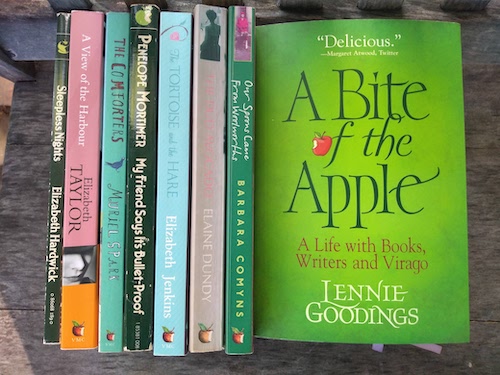
This book is everything. A memoir of Lennie Goodings’ 40 years in feminist publishing. The story of legendary Virago Press, which has meant a lot to me and so many other readers. A story of 40 years of feminism too, with fractious debate, changing trends, so much learning and thinking and growing. As a huge fan of mid century British women writers, my own stack of Virago books belies the press’s growing focus on intersectionality, and Goodings writes about that necessary change, her own growth and awareness, and missteps she made on the road to doing better. (It is refreshing to read about an older UK feminist who has not devolved into a raging bigot.)
In a moment of extreme division and polarization, this memoir is a balm. Goodings writes about taking inspiration from Virago author Grace Paley who called herself “a somewhat combative pacifist and cooperative anarchist.” Goodings continues, “Somewhere between these two options—fuck the patriarchy or keep plugging away for what you know is right— is how most women find themselves responding to sexism and inequality we need rage and inspiration we need realism and practical solutions and we need to know our histories literary and otherwise.” There is also the part about about how Decca Mitford and Maya Angelou were devoted friends and did a mean rendition of “Maxwell’s Silver Hammer”—WHAT???
And most of all, this is a book about books, celebrating the goodness of reading and the connections books forge. I loved it it. Turns out Goodings is Canadian too, and emigrated to England in the mid ’70s. Her book is out this month in Canada, published by the good people at Biblioasis.