November 19, 2020
Two Trees Make a Forest, by Jessica J. Lee

Yesterday, just the day after I’d finished reading it, Jessica J. Lee’s second memoir, Two Trees Make a Forest: In Search of My Family’s Past Among Taiwan’s Mountains and Coasts, was awarded the Hilary Weston Writers’ Trust Non-Fiction Prize. Lee is also author of Turning: A Year in the Water, a book that literally changed my life (after reading about her breaking ice with a hammer to swim in the dead of winter, how can I ever not just plunge into summer water ever again? There are no more excuses…) and which is distinguished by being one of the few books I’ve ever gotten rid of to regret. I have lots of books and live in an apartment, so I pass along most of my books once I’ve finished with them, but it turned out that I wasn’t finished with Turning after all. One of these days I’ll be replacing my copy, but in the meantime, there is Two Trees… which I’m never giving up. I learned my lesson the first time.
Lee’s work is an entrancing blend of nature writing and memoir, her stories grafted onto the landscape in a way that illuminates everything. And she’s got an eye for metaphor, or maybe it’s obvious. The book begins with the idea of “island,” which in English is defined by its relationship to water, but in Chinese (a civilization grown inland from the sea) the character for island includes a bird sitting on a mountain. Taiwan, from which her mother came (her parents fleeing there from mainland China after World War Two, an island that had always seemed particularly remote and distant to Lee, who felt more connected to her father’s culture in the United Kingdom, and was unsure of her own relationship to Taiwan and its culture.
The book braids together the story of Lee’s grandparents, which she discovers from a letter written by her grandfather and recordings she’d made of her grandmother before she died, along with a travelogue of Lee’s own discovery of Taiwan during trips during her 20s and 30s (including one with her mother, and another longer stay to improve her Mandarin), and the natural landscape of Taiwan, with mountains, and forests, rivers and coast. The land is fraught, prone to earthquakes and landslides, exacerbated by deforestation in Taiwan during its period of martial law until the 1990s. (In those years, Lee writes, conservation was suspect. Binoculars could be a tool of espionage…)
I know always nothing nothing about Taiwan, and its complicated history. I knew a bit about the Sino-Japanese War of 1937, which prompted a ceasefire in China’s civil war between the Communists and Nationalists and pushed mass populations westward and the Japanese invaded, because I’d read Janie Chang’s The Library of Legends in the spring. I’d been accustomed lately to thinking of Taiwan as “the good guys,” and had no idea about its oppressive history throughout the second half of the 20th century, its own kind fraughtness in addition to the earthquakes and landslides.
Lee’s eye for detail, her beautiful prose, and broad depth of knowledge (underlined by her remarkable curiosity) about the natural world make Two Trees Make a Forest a remarkable read. Her ability to see and weave patterns from disparate materials make the story surprising and engaging, and results in a book with considerable depth, a book fascinating in its specificity but also rich with general knowledge.
This is a book for anyone who ever wondered where they belong, who feels detached from stories of family, who revels in natural spaces and the stories they tell, and the incredible illuminations these spaces can grant us as we yearn for connection in the world.
November 18, 2020
I’ve Had the Time of My Life

Brooke had never seen an abortion in a movie before, and it was surprising, because Dirty Dancing was over thirty years old. So it should have been a throwback, but it was something very new: the character who wants an abortion. There is no other alternative, it doesn’t even make her sad, and she doesn’t change her mind at the last minute, or have a miscarriage as a convenient trick to avoid being an agent in her own destiny. She isn’t even sorry… [And] it seemed symbolic that no one had to live in shame. You could be a fallen woman, and then get up on a stage and dance. This was a huge revelation for Brooke, who had never even considered the possibility, the number of ways a script could go.” —Waiting for a Star to Fall
I introduced my children to Dirty Dancing this summer, and decided that maybe modern parents overthink things too much.
There had been a brief period after the movie’s 1987 release when I’d been forbidden to see Dirty Dancing, though this was mostly a theoretical forbidding since we didn’t have VCR to watch it on. But in the next couple of years, I somehow managed to see it anyway, most likely at a sleepover. I don’t remember my impression of the movie at all, except that the title itself was pretty suggestive, which is why the movie had been judged as unsuitable for my audience, I supposed. And really, it was the soundtrack that loomed largest in my life, my first introduction to the Ronettes, You Don’t Own Me, and Eric Carmen, plus Patrick Swayze actually singing. (Is there anything that man couldn’t do? I am on the record as declaring his autobiography as excellent.) There was also a second soundtrack to Dirty Dancing, with the “Do You Love Me ?” and the Kellerman’s Anthem, but I never had that one.
And now: the million dollar question. How old were you when you realized that Penny was having an abortion? What Billy was talking about regarding the guy with a rusty knife and folding table? What it meant that Penny was knocked up by Robbie the Creep?
The other million dollar question: Why were all the parents totally okay with their nine year old daughters watching this movie over and over again? And could they have known what a gift this movie was to those girls, once we’d worked out the puzzle of what all these different pieces were about—or were they just too busy sitting around worrying about Michael Dukakis and the end of the Cold War?
A movie where a girl has sex and doesn’t die. Where another girl has an abortion and doesn’t die, and is even going to go on to have children if she wants to. Where the woman who has an abortion is treated by a medical authority with kindness and care. Where a girl who has been bonking Patrick Swayze and everybody knows it has absolutely no compunction about dancing with him at the end of her holiday to a mega-smash hit by Jennifer Warnes and some guy who used to be in the Righteous Brothers?
(Later on, the Righteous Brothers would be a big deal when Patrick Swayze was in Ghost, and it makes me wonder if Swayze ever felt he was haunted by the Righteous Brothers?)
Dirty Dancing is on my mind right now because Clementine Ford celebrated the movie in one of her Instagram Deep Dives this weekend (SO GOOD!) and THAT sent to me to the Dirty Dancing episode of the podcast Why Are Dads?, by Sarah Marshall (who’s also co-host of You’re Wrong About, a podcast that isn’t about Dirty Dancing, but lately has had some TOP NOTCH Princess Diana content…)
And because the movie features prominently in my new novel, Waiting for a Star to Fall, and is a point upon which the entire plot turns. If Brooke hadn’t watched Dirty Dancing that afternoon with her roommate Lauren, her life (and the ending of the book) would have gone in a wholly different direction.
Which is why I showed it to my kids in July. Deciding not to think too much about whether or not it was “appropriate.” They’re seven and eleven and talk about abortion around the dinner table more often than other kids their age, because I’m their mother, so I knew the Penny story-line wouldn’t come out of left-field. We’d rented a cottage for a week with nobody else around and only a DVD player for diversions, so I blew the dust off my Dirty Dancing DVD and packed it along with Mary Poppins and The Incredibles.
I wanted them to see it. This iconic summer film, uncanny scenes about a family of four stuck in a cabin while it rains (“Remind me not to get married at Niagara Falls.” “So, you’re go to Acapulco. It will be fine.”) The Schumachers (Sidney and Sylvia?), and the stolen wallets, and the soundtrack, of course, and the romance, and the class dynamics, and the dancing, and the log, and the lake, and lifts. The lifts!
And yes, to know the murderous legacy of illegal abortion, and one of the many ways that abortion becomes part of a person’s life, and how it doesn’t always have to be the point on which the entire plot turns—except that if not for the abortion, Baby wouldn’t have had to dance with Johnny at the Sheldrake, so yes, it’s irrevocably woven into the script, but it’s not everything, is what I mean. A piece of a larger narrative, always.
I want these to be the things my daughters take for granted, just like I did.
November 17, 2020
Gleanings
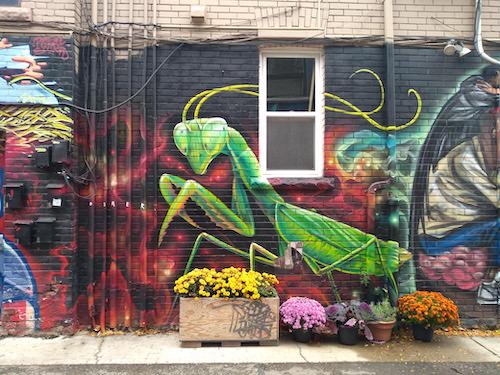
- Gardening, I’ve learned, is an act of faith, hope and imagination.
- How do you wish to proceed? I know I don’t want to argue with the world. I want to learn to speak differently. I want to make a humble effort.
- I’ll be making this a lot, just for the pure joy of it (cinnamon buns as an act of self care) and how happy it makes the people around me- and it’s easily doubled if you want one for yourself and one to share.
- I don’t pray, that is not me. I ask my parents to pull some strings, wherever they are. If anyone can do it they can. I let the idea of a funeral suck me in occasionally but then I force it to go away. This can’t be where it ends.
- On Halloween we had a Hunter’s Blue Moon, something not seen since 1944. Think about it. In 1944, the world was still in the midst of a World War, the second in thirty years. D-Day had taken place, the Nazi forces were being driven back through the USSR, and slowly, Hitler’s War Machine was beginning to falter.
- What if the freedom and curiosity and occasional exhilaration I experience when I’m writing on my blog, for that matter, is also about finding my own way, using the tools that feel natural in my hands, making this site a self-portrait in words rather than a shelter from the uncongenial demands of “real” academic writing? What if feeling some comfort, pleasure, and ease in a particular kind of work means that it fits, and that’s a good thing?
- The work of these textiles reminds me of the word painstaking.
- The artist uses thousands of beads and semi-precious stones (agate, garnet, smokey quartz, lapis lazuli and pearls, to name a few) to create the appearance of mould on her decaying lemons, cherries, oranges and grapes.
- What if the world of books were one big dinner party? Or perhaps I mean some other metaphor—perhaps holding hands?
- “I like a sip of tea from time to time.”
- That’s how it goes. Things ebb and flow, they get worse and better — but there’s always a little crack of hope.
- On Saturday, we used up the last of our orchard-picked apples by making loads of my Chunky Caramel Apple Jam. It tastes like apple pie, with a kick! And serves just as well on a cheeseboard as it does on toast or loaded in a danish or dolloped in a thumbprint cookie!
Do you like reading good things online and want to make sure you don’t miss a “Gleanings” post? Then sign up to receive “Gleanings” delivered to your inbox each week(ish). And if you’ve read something excellent that you think we ought to check out, share the link in a comment below.
November 16, 2020
Normalize THIS

Something I struggle with is how to express my discomfort with people being eternally scolding in their politics and on social media without being scolding myself, which is pretty much impossible, and so this is why it’s great to have a blog, because here’s a place to put these sentiments but no algorithm is going to send anybody to read them and therefore my blatant hypocrisy will be less of an issue.
But seriously! If I read one more post demanding we normalize something, my head is likely to explode. STOP YELLING AT ME.
And do you know what very ambitious but in fact still a far more achievable goal than demanding that everybody you encounter accept your point of view?
Deciding to give absolutely no fucks about what what anybody thinks of you.
None. Nada. (And it helps to be at least 40.)
Normalize your existence by unabashedly existing. Everybody else can suck it.
November 13, 2020
More Stars…
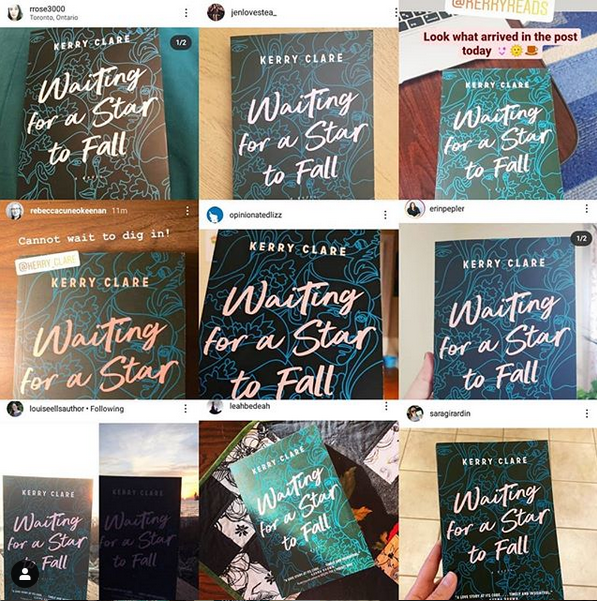
- “What sets Clare’s novel apart from a lot of the media discourse around the #MeToo movement is that Clare sets the story at a point where Brooke herself is still ambivalent about her feelings for Derek.”
- Under-the-radar books at Frolic
- “Waiting for a Star to Fall is funny and heartbreaking and infuriating all at once.”
November 12, 2020
Monogamy, by Sue Miller

Sue Miller is one of those ubiquitous American older woman writers I know nothing specific about, occupying the same part of my brain that Anita Shreve does, very 1990s’ Oprah’s Book Club. I read and reviewed her The Senator’s Wife in 2008, early on my book blogging career, although I don’t remember anything about the book or my review, but looking back, I’m proud of the young reviewer who provided the following insight: “Revelation more often does come in a glance, in a breeze, the turn of a head and the expression on one’s face. The sort of thing you can hardly put your finger on, and certainly cannot explain.”
I became interested in her latest novel Monogamy after reading Richard Russo’s review in The New York Times, and I bought the book with my ticket to the Book Drunkard Festival (tonight!). Reading the novel over the last couple of days, and it was one of those books I was disappointed to get to the end of. It was wonderful. Why have I not been reading everything Sue Miller has ever written in the years since The Senator’s Wife? (And why was I waiting for permission from Richard Russo to find her work interesting?)
The novel presents as realism, so real that certain moments are excruciating in that way (it seems) that only real life can be. Misunderstandings, and miscommunications, secrets brought to the surface, words that should never have been said but can’t be taken back. And heartbreak, and heartache, the devastation of grief, the unease of a life’s foundation beginning to crumble.
The ways in which characters are never truly known to each, or—even worse—the inexpressible things we know about the people we love and wish we didn’t.
But in a way, the novel is not realism at all, at least not in a literary sense. Beginning, middle and end. Climax and denouement. Central protagonist and secondary characters. A narrative line you could draw on the page.
When if you started to draw the narrative of Monogamy, the lines would turn to swirls intersecting with swirls, an abstract creation, a web. Strange and dazzling.
At the centre of the web, purportedly, is Graham, a man of large character and appetites, a character whose absence we understand after his sudden death because we’ve been following his point of view intermittently through the first third of book. But the centre shifts as the story proceeds, from character to character—Graham’s first wife, his son and his wife, and Graham’s daughter with his second wife, Annie, and it is is Annie to whom this story mostly belongs. But not entirely—from the other characters, we learn perspectives (including perspectives about Annie herself) that Annie has no idea about. And perhaps it’s the reader who is the centre of the novel after all.
They are recognizable, so many of these moments. “The sort of thing you can hardly put your finger on, and certainly cannot explain.” This is a novel about marriage, and family, and gender, and art-making, and generation gaps, and mother-rage, and friendship, and aging, and widowhood, and independence. About loyalty and betrayal, and love and forgiveness…but never is the story one-dimensional enough to be about just one of these. A many sided object catching the light in different places every time, strange and dazzling, like I said. Like life itself is.
Which is just an illusion, of course. Miller writes about Graham once explaining that the appeal of fiction is that it suggests our lives have shape after all, sequence and consequence, and that there is meaning in the randomness, the unfathomableness. And that this book manages to critique art as life, and then be art as life at once, and my mind is spinning, and what a testament to the novel is that.
November 11, 2020
Poppies
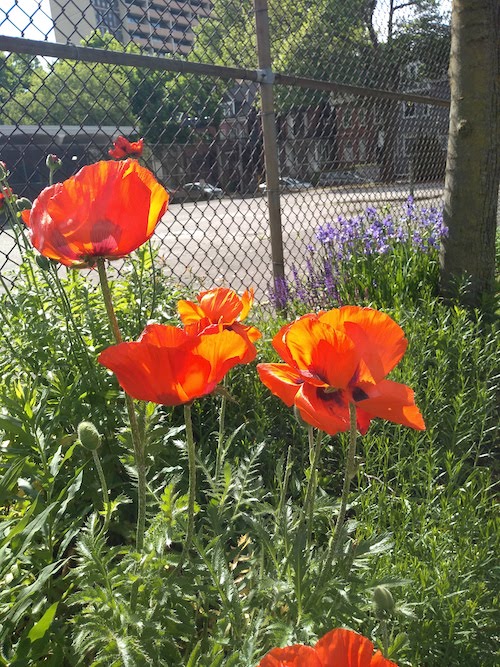
As most people don’t care about in the slightest, for good reason, I have complicated feelings about Remembrance Day. Sometimes I feel like the messaging and symbolism are manipulative, an idea whose simplicity belies it’s true complexity. My grandfathers were proud of their service in WW2, but it was also them who taught me (in addition to “Don’t tattoo anchors on your forearm”) that what a waste is war. The trauma for the people who fight our wars and their families is often insurmountable, and these people do not receive sufficient support. War is bad for everyone, and while I understand that it can’t be obliterated altogether, I am sure there would be less of it if we didn’t have a massive industry that relies on its existence. The most amazing way I can think of to honour those we’ve lost in wars is to stop sending more people to be traumatized or die, instead of glorifying the waste of human life as sacrifice. One other way is to resist fascism in all its forms—my grandfathers (Canadian Navy), maternal grandmother (WW2 nurse), and paternal grandmother (held down the home front while her husband was away for years) were my OG anti-fascists and may their righteousness be our guiding light.
November 10, 2020
Gleanings

- I think of the form as endlessly open and capacious, willing to accept experiments, bars of music, instructions for grafting, soup recipes, the history of Ukrainian embroidery, the life cycle of a blue mussel, meditations on mortality, dissertations on historical events, dream diaries, and colour wheels. Anything else? Whatever a writer needs.
- I can’t imagine a more invigorating way to begin each day.
- When I posted it on FB, a friend commented that it looked like an Arthurian castle. It is a post-industrial castle.
- “The word diptych comes from the Greek root “dis,” meaning “two,” and “ptykhe,” meaning “fold.”
- Today, I’m focusing on people who are achieving impossible things for people they don’t know.
- Minor missteps aside, Self Care ends up as a surpassingly dark comedy about a consumerist society that continues to elevate an artificial ideal of women in the place of authentic experience or humanity.
- And sometimes you also need to curl up in a ball and take care of yourself. Here are some comfort read suggestions if that’s where you’re at right now.
- The company manufactured cutlery, scissors, cabinets, and other goods. And as it turns out, elegant folding trays so a small boy and the man he became can enjoy breakfast in bed.
- When expectations are low one really appreciates the little things; a blue sky (that always feels like a gift from the universe) and the homemade slice of cake your friend bakes you.
- True-blue, life-long friends make this life so worth living – having people around that love us for who we are, care about us, make us giggle, and make a point to reach out to us.
- I try to do the best I can, with the information and resources I have. I’m often wrong; I am thankful for so many second chances.
Do you like reading good things online and want to make sure you don’t miss a “Gleanings” post? Then sign up to receive “Gleanings” delivered to your inbox each week(ish). And if you’ve read something excellent that you think we ought to check out, share the link in a comment below.
November 6, 2020
Has Women’s Fiction Helped to Save Us?

Almost four years ago exactly, against the background of a horrifying US election outcome and a world I didn’t recognize, I wrote a blog post entitled “How Women’s Fiction Can Save Us All.”

Which was more than a little bit self-serving, of course, considering my debut novel, Mitzi Bytes, was coming out the following spring.

So it was kind of like your mechanic telling you how replacing your muffler kills fascists, or the real estate agent explaining how buying a town-home is the only sure route out of an authoritarian disaster. My post was totally ridiculous, over-earnest and embarrassing, but those were heady times and also—and here’s the pivotal thing—I wasn’t wrong.

And just how wrong I wasn’t occurred to me this morning as I scrolled through bestselling author Emily Giffin’s Instagram stories, which have been my go-to through this strange uncertain week while American votes are counted. All week long, Giffin has been unwavering in her confidence that America—and her home state of Georgia in particular—would deliver the Biden/Harris ticket a victory.

For months, Giffin’s feed has been decidedly political, anti-Trump sentiments, pro-LGBTQ and Black Lives Matter. Amidst snapshots of Charles and Diana, and Brad Pitt and Jennifer Aniston, of course—Giffin’s Insta is a world onto itself. But no matter the followers who threatened to unfollow and or to boycott her novels, Giffin has been insisting on making it political most of the time.

(It only underlines my thesis too that Stacey Abrams— whose fight against voter suppression since losing her Governor race in 2018 deserves huge credit for turning Georgia blue—includes “romance novelist” among her many other accomplishments.)

And Giffin has been taking her politics offline as well. Her 2018 novel All We Ever Wanted was a powerful exploration of toxic masculinity and the ways in which privileged white women are culpable in perpetuating it.

It joined other novels like Jodi Picoult’s A Spark of Light, also published in 2018, delving into the personal stories behind the polarized issue of abortion. 2018 was also the year Tayari Jones published An American Marriage, which would go on to win the 2019 Women’s Prize for Fiction, painting plain the reality of being a Black man (and a Black wife) in America.

And these books were not anomalies. Candice Carty-Williams’ Queenie was billed as a Black Bridget Jones when it came out in 2019, but where Bridget was sliding down fireman’s poles (and more power to her!) Queenie was writing about US police shootings. Chick-lit queen Jennifer Weiner’s 2019 novel Mrs. Everything takes on more than a half-century of American misogyny and missed opportunities for women to succeed.

Celeste Ng’s smash hit 2017 novel Little Fires Everywhere is a devastating indictment of race, class and privilege and the outsized role they play in a very unequal America.
And Meg Wolitzer’s Female Persuasion, and Brit Bennett’s The Vanishing Half, Such a Fun Age, by Kiley Reid, Miracle Creek, by Angie Kim, and so many more.
In Canada, novelists Marissa Stapley and Karma Brown have penned fierce and furious feminist bestsellers with The Last Resort and Recipe for a Perfect Wife.

In further signs of progress since my post four years ago, the commercial fiction landscape in Canada has evolved beyond being a boring monolith of white writers, with the success of books like Uzma Jalaluddin’s Ayesha at Last and Farah Heron’s The Chai Factor, both of which manage to tackle racism and anti-Muslim hate in the context of love stories (no mean feat!). And even better, underlining that “diverse stories” (I hate that phrase) aren’t just a flash in the pan—both of these authors have new novels coming out next year.

And more commercial novels by Canadian authors of colour? Check out Jane Igharo, Roselle Lim, Jennifer Hillier, crime novelist Ausma Zehanat Khan, and YA novelist SK Ali, among others. The very existence of books centring the experiences of characters of colour is a political act, and many of these authors don’t shy away from more overt politics either, as they write plots that are also romantic, compelling, and great.

(Um, and yes, I have a new book out again, a novel about power and politics and the myths we create about ordinary men and leadership, and what we do about men who might not be monsters but whose behaviour is not okay.)
This week I listened to the CBC Pop Culture podcast Pop Chat, which considered the pop culture response to US politics over the last four years, determining that the output (mainly bad Saturday Night Live sketches) had been fairly disappointing, films like Get Out and Parasite aside. (They didn’t even mention Demi Lovato’s “Commander in Chief” though! I love that song!)
The consensus being that a US president who sucks all the air out of the atmosphere as the 45th did (DID. I’m doing past tense. I’m going there. It’s been too long. I AM READY), who is so over-the-top and in defiance of credulity and reality, whose entire construct of the world seems to be a fiction—well, what are artists meant to do with that?
But the women who write commercial fiction have done a lot, responding to the moment and truly rising to the occasion.
These books—part of a genre that so rarely gets the respect it deserves—are one terrific legacy of this terrible, awful time. When people look back at these works published during the second half of the last decade—at the questions these authors have been grappling with, the issues confronted head-on, the taboos finally broken, voices being heard, stories that are finally being told—I hope it’s going to seem obvious that the patriarchy was on its final legs, quaking in its ugly boots.
And good riddance.
November 5, 2020
Fake It So Real, by Susan Sanford Blades

One day I’m going to write a list of all my CanLit aversions (among them, the notion of “CanLit” at all), and near the top of the rankings will be Alice Munro as a lazy and meaningless cultural shorthand. Sometimes, though, the comparison fits, and Susan Sanford Blades’ debut, Fake It So Real, is a case where the comparison might be apt.
First, because the book is a novel/story collection hybrid ala Lives of Girls and Women, moving between first and third-person narration. The city of Victoria setting too, and the book’s complicated and messy depiction of motherhood and womanhood, women who chafe at the limits of “wife” and transgress them. Alice Munro, but make it punk? Beginning in the 1980s, as Gwen gets together with a charismatic musician and has kids before he blows out of their life altogether. She struggles to keep it together and mainly doesn’t, unable to quit drinking and wracked with social anxiety. This is not a story of happily ever after, but instead one of hardscrabble and losing, fucking up over and over again. Which doesn’t make for the most compelling argument to read this book, I realize, but it’s also just really really good, crafted with care and precision.
I felt this way when I fell in love with Leona Theis’s If Sylvie Had Nine Lives in September, a book whose effort never shows, whose seams and joints are invisible. It just works, and as a reader, it’s such a pleasure to submit to a book that’s so well constructed. To let it take you where it goes, and this one goes through the decades as Gwen’s daughters, Sara and Meg, make their own way into the world, try to account for their parents’ failures, attempt to make their own families in different ways, inevitably failing to live up to ideals, as one might expect, but I appreciate the way that Blades interrogates motherhood while not evoking the usual cliches. Her characters’ experiences are singular and interesting, and rich and fraught with complication.
Fake It So Real manages to be not a glorification of counterculture or a condemnation of it either. This is not a book that comes with an agenda, except to tell a story of love and family that is achingly real.





