April 28, 2025
Magnolia
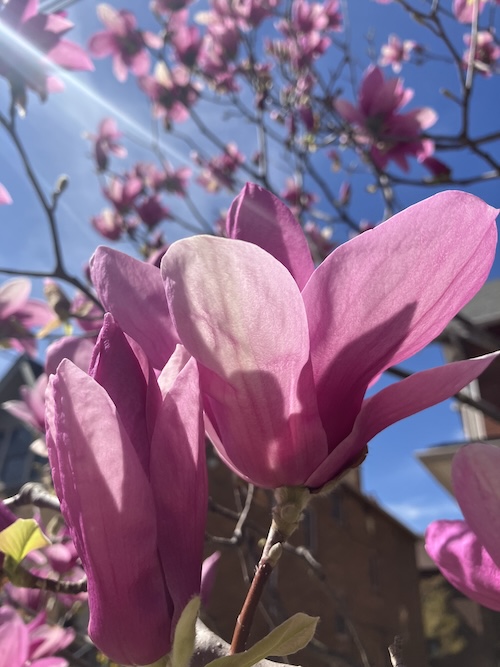
Every year since my children started school, which is 13 years now, I’ve spent the winter walking past this magnolia tree with the line from Barbara Reid’s Picture a Tree running through my head: “Every winter tree holds spring sleeping like a baby.” Every year, the people with the gift of this tree in their garden decorate the tree with baubles at Christmas, and leave the decorations up long after the holidays are over, which I don’t mind a bit, because there’s something about silver reflecting a rare sunbeam against a blue sky amidst February’s gloom, which the kind of thing that gets me through winter. The buds on this tree are a promise, one I’m counting on, and every year it happens. I remember going out of our way during the two springs my children’s schools were closed on account of the pandemic just so we wouldn’t miss it, en-route to pick up take-out, which was pretty much life’s highlight at that point. In addition to spring.
Things bloom, which has never stopped being a miracle. What a thing to share the world with trees that make flowers like this, how extravagant and just wild.
April 24, 2025
Restaurant Kid, by Rachel Phan
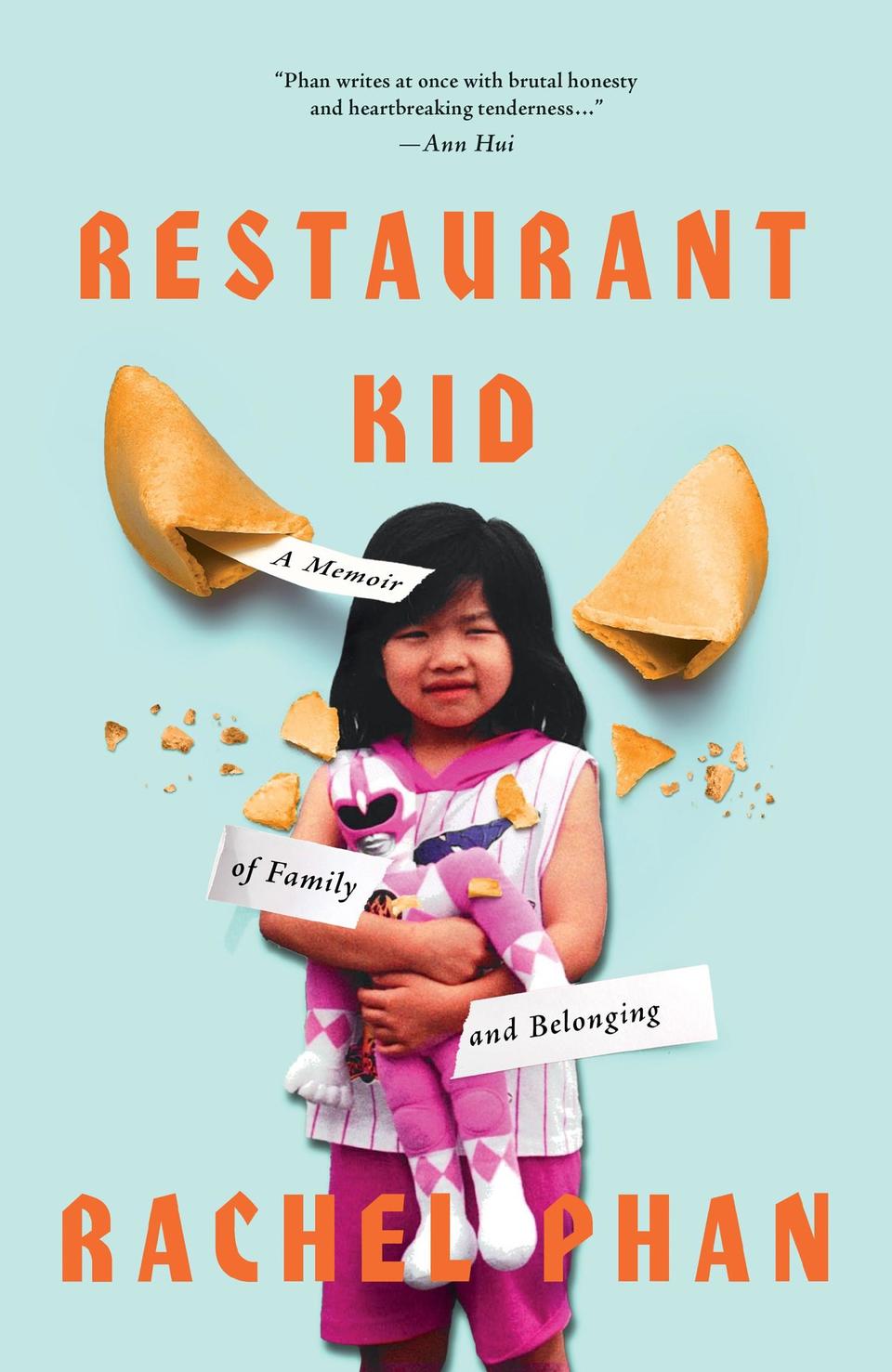
I was expecting…less?…from Rachel Phan’s memoir, Restaurant Kid. The story of growing up Chinese in a small town in Ontario, the experience of having the family business be the centre of domestic life, what it’s like having immigrant parents who give everything to their jobs in order to make enough money to give their children the kind of life they couldn’t have imagined growing up in in wartime Vietnam. I wasn’t expecting a memoir quite so intimate, so personal, and all-encompassing, but then I realized that this was the point—that where she came from would define everything for Phan. How she felt about her Chinese identity as a child in a community where racism was ordinary, how her parents were too busy to give her the attention she desired from them and so sought it elsewhere, how stereotypes of Asian woman would be part of her early sexual experiences, how her parents’ story would underline her own relationship with money and finances, and more. Restaurant Kid is capacious enough to hold Phan’s anger and resentment at some of her parents’ choices, but also her extraordinary love for them, and the sacrifices they made to give their children a life in Canada. I loved the whole book, but a particular highlight is the epic trip she takes to Vietnam with her parents once she’s in her 30s and her parents can afford to take time away from the business (which her brother runs now, a complicated inheritance, as most inheritances are). In Vietnam, she has the opportunity to see a different side of her parents, being at ease in their native tongue, at home and familiar even in this place that holds so many traumatic memories, and her ability to hold them and love in them in all their messiness and complexity is so extraordinarily moving. Which a rich and brilliant book.
April 18, 2025
The Float Test, by Lynn Steger Strong
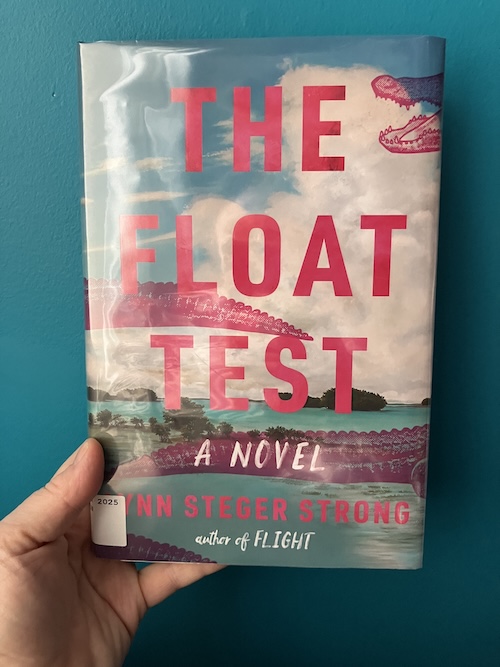
I don’t know if The Corrections started it, but for a long time now, all books about unhappy families have been alike in a similar way. Grown children returned to the nest, long simmering secrets and resentments, neuroses and addictions, third person narratives moving between different perspectives, the inevitable blow-up, but THE FLOAT TEST felt like something different. It felt like more of a narrative tangle, a knot. The narrator is Jude whose mother has just died, a difficult and demanding woman, and part of the narrative trajectory is Jude and her three siblings unpacking their relationship with her, the cutting edge of her affection and attention. Although Jude does not make herself the centre of the story, that place belonging to her older sister Fred, whose story Jude “imagines herself into,” portraying moments and incidents she would not be party too. Which is interesting, because Fred is the storyteller in the family, a novelist who has helped herself to bits and pieces of other people’s lives, her family included, scattering these throughout her fiction, and also something has happened between Fred and Jude that isn’t clear. And the backdrop to all of this is Florida, where the family comes from, and to where Fred and Jude both have been loathe to return, where the vultures are circling, the hottest summer ever so everyone is dripping with sweat, and swimming is the only respite—the novel’s title comes from the test that Jude and her siblings were never able to pass because their talent has always been for striving, moving, winning, instead of stopping, floating, being. And there is something suspended about the narrative too, all of the siblings stranded in the in-between in various ways, except for these absolutely wrenching moments that hit on the complicated nature of love, how it can be riddled with pain, the impossible gnarl that is family and history and that place from which we come.
April 17, 2025
I like the way the world waits for you
I’ve had a hard season, one whose heaviness I didn’t wholly recognize until the weight was gone. And throughout it all, my Thursday mornings with Singing Mamas have been one essential thing that kept me going, the sacredness of that space, the songs, that light. About three weeks ago, it occurred to me that this this was the first time I’d been attending the group and really felt genuinely joyous, as opposed to joy that was instead a brief respite from darkness and pain (which is not to say that such respite didn’t mean everything).
It’s curious to be showing up and know that I look the same, and that gorgeous light is just the same, and all those songs are just the same, but everything is different.
I like the way the world waits for you, that it’s possible to meet us where we’re at.
I’m very sleepy today after a later-than-usual night last night picking up my kid at her semi-formal, which happened to be her first school dance. She should have had her first school dance in 2021 as part of her Grade 6 graduation, and all such festivities were cancelled that year, along with so many other things, on account of the pandemic, and so it felt extra special that she had such a good time last night. Her younger sister is now the same age she was that year, when her class’s end of the year school trip was also cancelled (don’t worry—she’s had plenty of end-of-the-year trips since then!) and just yesterday we received the permission form for her sister’s trip, and it feels extra special to have this finally happening, the sort of thing I could possibly have been compelled to take for granted, but now I never will. We’re all so excited for her. (I feel like I’ll be tripping over pandemic losses and trauma for the rest of my forever.)
But still, I’m sleepy, and so when I went swimming today, I got in the medium lane and went so slow. Slow and easy, slow and easy, and I like this about swimming too, how it can meet you where you’re at. Just like the light in the room where we sing.
April 16, 2025
She’s a Lamb!, by Meredith Hambrock
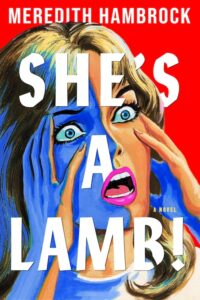
Jessamyn St. Germain is bound for greatness, and her confidence is unshakable. Even though the discerning reader will swiftly note the gap between her self-perception and how the world receives her in Meredith Hambrock’s second novel, SHE’S A LAMB! (the title taken from a lyric in THE SOUND OF MUSIC’S “How Do You Solve a Problem Like Maria,” “She’s a darling! She’s a demon! She’s a lamb!”).
Instead of receiving a role in a regional production of the famous Rodgers & Hammerstein musical, Jessamyn is offered the job of childminder for the show’s youngest actors, an offer she suffers with indignation until it occurs to her that it’s an opportunity in disguise, that surely the director has little faith in the actress playing Maria and needs to keep Jessamyn nearby so she can step into the role when the time arises and finally have her moment in the spotlight.
SHE’S A LAMB! has been compared to the novel MY YEAR OF REST AND RELAXATION for its portrayal of a heroine so stuck up on in her own head that she’s disconnected from the world around her, although I liked Hambrock’s novel so much more for its character’s fierce and ferocious need and desire. There is no such thing as rest or relaxation for Jessamyn, whose singular pursuit of her goals leads her down dangerous paths and is going to end up with a body count.
On one level, SHE’S A LAMB! is a very dark comedy of the absurd in which Jessamyn is willing to do anything to make her dream come true—and get rid of anyone in her path in the meantime. With remarkable restraint, Hambrock leans away any possibility of redemption and focuses her narrative just as narrowly as Jessamyn herself has on her own possibilities. The result is hilarious, ridiculous, creepy and chilling at once.
And chilling most of all for the parts of it that seem most familiar. While Jessamyn never doubts herself, she knows that everybody else around her wonders about their own talent, their own potential, their own destiny. ‘”You don’t know,'” she tells the actress playing Maria, the role she covets, undermining her confidence. ‘”You wish. You hope. But you don’t know. You can’t know. You can never know.”‘
It’s a terrifying message that will ring true for anyone who ever wanted to be anything.
April 14, 2025
Back for More!
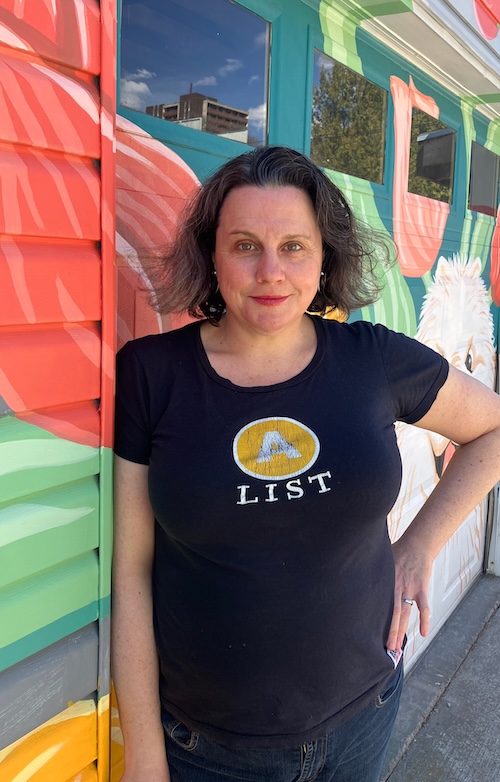
The hardest working shirt in my drawer is the House of Anansi 45th anniversary tee that I’ve been wearing since 2012, including through an entire pregnancy, which means it’s stretched and misshapen and these days mainly gets worn to bed, but it’s a great shirt, and now that I’m a House of Anansi author (hooray!), I’m awfully glad that I held onto it. I’ve always been partial to House of Anansi, especially since they moved their office into a former pickle factory, which absolutely on par with my sensibilities.
Definitely Thriving, my fourth novel (!), will arrive in the North America in March 17. It’s a novel I started writing in 2021 when the world was bleak and scary and I was desperate for a diversion. It’s an ode to friendship, community, and unsuitable attachments, in addition to being a tribute to Barbara Pym, with my protagonist, Clemence Lathbury, imagined as a modern day Pym heroine. The story begins when Clemence blows up her marriage and returns to her hometown determined to redeem herself by building a sensible life from scratch. Not for her will be the scrapes and schemes of a Bridget Jones-era heroine, instead she resolves to be a stalwart, one of the excellent women of Pym’s mid-century novels. But no woman is an island, and soon Clemence is tied up in all kinds of neighbourhood shenanigans, and drama ensues. There’s a book shop, a church jumble sale, and a one-eyed cat named Bailey who is actually a real cat belonging to my friend Erin. I’m so excited for readers to meet Clemence and her people (and the cat).
If you’ve been paying attention, you will know I struggled a lot after the publication of my previous novel, and that this whole newsletter/podcast project was born out of my desire to climb out of the creative low in which I’d found myself at that point. I’m interested in what it will be like now to head into publication with the new awareness I’ve acquired since working through some of these issues (who knew that my literary success does not actually hedge on making everybody love me, or that loving me is actually an unreasonable thing to ask of everybody) and avoiding the trap of imagining that now that I’ve got no expectations, this is the moment where all the success I’ve been hoping for will finally unfold.
All along I’ve been looking for redemption. It took me ten years after completing my Creative Writing Masters Degree to finally publish my first novel—and here, I imagined, was the moment where the magic would begin. But that novel was not a success. And then I got a second chance—aha, my heroic sophomore book! But that book didn’t do well either, and neither did my next book, and I started to understand that maybe the story wasn’t going to go like that. That in publishing there’s never a happy-ever-after (alas, the one good thing about never having achieved great success is that at least no one expects the impossible task of replicating it! Phew!). I even started to wonder what the point was in publishing books after all, because it certainly wasn’t doing anything like making me happy or feel good about myself. When I wasn’t sure I’d be able to publish another novel, I started to consider a possible upside to not having my self-esteem decimated every couple of years.
But oooh boy, I’m back for more. And I’m even grateful and lucky to be able to say that, I know, and I’m looking forward to sharing this novel with you, and I’m also anticipating an interesting experiment in releasing a book and not losing my mind.
Is it possible? I will keep you posted!
This post was first published in my Enthusiasms Newsletter. If you’re not signed up yet, please subscribe!
April 11, 2025
Ripper: The Making of Pierre Poilievre, by Mark Bourrie
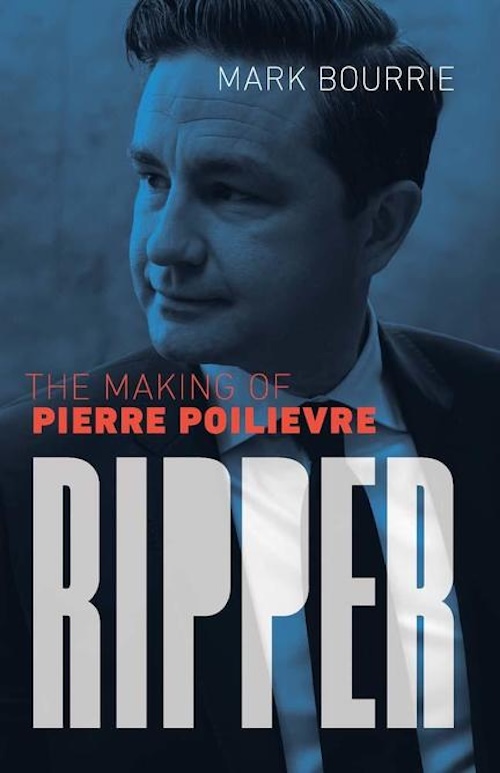
Imagine releasing a book about current events in 2025, the challenge of telling a story with everything so unstable and with no indication of how that story is going to end. RIPPER, Mark Bourrie’s new biography of Pierre Poilievre, the leader of the federal Conservative Party, is current right up until the beginning of February, which is less remarkable for a book that I’m reading in April than absolutely incredible. Although the one advantage that Bourrie had was that, while the world is unstable, ever-changing, plotted with twists and surprises, his biographical subject is much easier to pin down. The thesis of RIPPER is that Poilievre is the same person he’s always been, ever since he was Grade 9 student vying for a spot on the executive of Preston Manning’s riding association, attending seminars at the Fraser Institute, and—like many teens—being outraged about the capital gains tax.
Bourrie writes in his introduction: “Is he a bad person? I’m reluctant to make that claim. I think he’s an angry teenager in the body of a grown man. That makes him a stellar opposition politician. It is a bad combination in a prime minister.”
RIPPER is not just about one man, but also about the place he comes from, Alberta, which has always played an out-sized role in Canadian politics compared to other provinces, and Bourrie tells the story of Alberta’s booms and busts, its sense of grievance, and why The Reform Party would emerge from there in the 1990s to remake Canadian politics. Through his story he shows that someone like Poilievre—whose politics and character would have seemed strange and fringe as he came of age—has had mainstream opinion shift in his favour over the last 25 years, through the fall of traditional media, the rise of partisan pseudo-media, a decline in standards of living that suggests there might be something to his claim of Canada being broken (although this decline is a global one), a data-driven approach to courting voters (which lends itself to dirty tricks), and an attack-dog style to politics that’s embodied by Poilievre himself and the people he surrounds himself with.
Bourrie’s narrative voice is personable, engaging and authentic—he makes clear in his introduction that he is not anti-conservative, but that he’s opposed to what Conservatism has become, employing American-style tactics and unafraid of undermining democracy, wholeheartedly embracing the protesters who occupied downtown Ottawa for weeks in February 2022 whose plans were to overthrow the government. Bourrie’s story is fast paced, and gripping, and—with real restraint—not petty (not a word about Poilievre’s remarkable SHE’S ALL THAT-style makeover once he’d become Conservative leader). The book’s depth and focus—as with so many other books I’ve read lately which are most current in their approach—is most clarifying, helping me connect the dots in the chaos of our moment and recent history, making some kind of sense of it. (This is the kind of understanding that inoculates one against becoming a conspiracy theory nut-job).
Imagine releasing a book about current events in 2025, the challenge of telling a story with everything so unstable and with no indication of how that story is going to end. And then, imagine—even worse—not even trying.
Kudos to Mark Bourrie and his publisher Biblioasis for meeting this moment.
And everybody else: read this book. (And also read Catherine Tsalikis’s biography of Chrystia Freeland, who you might remember as the person who orchestrated any and every hope of the Liberal Party doing well in our upcoming federal election.)
April 8, 2025
25 Years of Dar Williams; or I am the One Who Will Remember Everything

In the 1990s, interesting culture circulated via scenes, and zines, underground movements, and pre-internet online communities, and I didn’t know about any of it. Everything I learned about culture in the 1990s I learned from the movie Reality Bites and from pop-culture phenomena my best friend brought home to us from her all-girls summer camp, so I only knew about Lisa Loeb, smoking, the Gap, Ani DiFranco, and flared jeans, and imagined that was enough to built a life upon. Until the internet arrived in 1997 or so, expanding my universe infinitely, though not quite at the start when the internet was still fundamentally unorganized, the only really worthwhile thing I could think of to do there was to log onto random chat rooms and start talking to strangers.
I can’t remember now how I located these chat rooms, how I would have vetted them to discern if they’d be delivering me a salubrious experience, but I was also 19, and not all that discerning. My username was HitMeBaby1MoreTime, so you can probably tell. I actually didn’t get up to this kind of activity all that often, because meeting strangers on the internet was still perceived as fairly embarrassing in mainstream culture, for good reason too, because every time I did so, I’d end up talking about sex, but sometimes life was boring so what else were we to do?
Anyway, I met someone, a philosophy major who lived in the wilds of Iowa and we fell in love, as you do over text when you’re 19 years old and full of angst and longing, and we confessed such longing, and he mailed me a copy of Still Life With Woodpecker, which I thought was oh so romantic, and we exchanged photographs, and I knew that our love was different and extraordinary, though tried to be cool about it in a Tom Robbins fashion, and I kept listening to the Dave Matthews band’s “Lover Lay Down,” and he started emailing me less, and I started making out with my co-workers, and it was 1999, the year with the greatest soundtrack, and soon our undying love died and that was mostly fine.
But I wouldn’t let it go, and the internet enabled me not to do so (the internet is the opposite of closure) and there were search engines by then, so I could keep tabs on the guy, just to see that was he was out there and what he was up to, and he was friends with this woman who had a blog and wrote about music, in addition to writing stories in which he was a character, and it was from her that I first heard of Dar Williams, who had a song called “Iowa,” which brought it all full circle. And by this time, in addition to search engines, we also had Napster, so I could go listen to that song called “Iowa” myself, and unlike anything by Ani DiFranco, whose songs I never liked as much as much I wanted to like them, that song, and all Dar Williams’ music, felt like it had been directly tapped into my soul.
I’ve never been as sad and yearning as I was when I was in my early 20s, so much unrequited love and undelivered feelings, which swirled around my bloodstream in a crazy-making fashion, but Dar Williams felt like a channel for it. She had a sense of humour too, and I appreciated that, that she didn’t take herself too seriously all the time, but that she also knew the tragedy of wanting, and also of February, which could sometimes be so long that it lasted into March, and people who didn’t know how much I adored them.
I didn’t have Napster at home, only at the office where I was a section editor of our college newspaper, so I bought Dar Williams’ CDs (and of course I bought her CDs; I was always buying CDs; a CD was a piece of the world and I could hold it in my hand). Mortal City was my favourite, and I listened to it over and over in my final year at university, 2001/02, a funny year spent in the shadow of a terrorist attack whose ramifications would still be going on by the time I was entering my late 40s (and beyond?), and also on the cusp of the rest of my life. “Once I had everything, I gave it up/ For the shoulder of your driveway and the words I’ve never felt/ And so for you, I came this far across the tracks/ Ten miles above the limit and with no seatbelt, and I’d do it again.”
In 2002, after going through some real things, I took my CDs away with me to England, a huge book of them, taking up most of the space in my backpack, and a few months after I got there, I fell in love with a boy who loved me back and was my match in all the best ways. On Saturdays, we’d wander around the city centre, and flip through CDs together, even though our tastes weren’t identical. Dar Williams released The Beauty of the Rain in 2003, her first new release since I’d become a fan, and once again it felt like we were in sync, with songs like “Farewell to the Old Me,” and “The Mercy of the Fallen,” and songs of love that was actually requited: “I Have Lost My Dreams” and “The One Who Knows.”
I went to see Dar Williams in Sheffield that year, which was about an hour on the train from Nottingham, where I was living at the time. I can’t remember how I’d even heard about the show, or from where I got the wherewithal to plan the journey—I didn’t have the internet at home or work, and would visit the library a couple of times a week to use it—but maybe it was easier to be proactive before I’d come to take for having access to the world in my pocket via a smartphone. I went to that concert all by myself, and I can’t fathom it now—having no phone and navigating a strange city and taking the train home again in the darkness. My boyfriend didn’t come with me, and it’s possible I didn’t even mind that much, because our lives were not so connected then, I’d been independent enough to move across the world on my own, and my love of Dar Williams had always been something of a solitary pursuit anyway. Apart from the blogger who didn’t know I existed who’d been a friend of my internet boyfriend, I didn’t know anyone else who was a fan.
In 2005, my non-internet boyfriend and I got married, and moved back to Toronto, and I enrolled in Grad School, which, much like my early 20s, was more full of hardship and longing than I’d been hoping for, and Dar Williams released her album, My Better Self, which was the last Dar Williams album I’d get deep enough into that I would know every song, and I listened to it when I was sad about school, which it turned out I wasn’t very good at, though I think it was there that I learned the word “hegemony,” which Dar Williams rhymed with “enemy” on a song on the album. I loved her song “Teen for God” and this was a real Bush-era album, really. I loved her cover of “Comfortably Numb.”
In 2009, I went to see Dar Williams at The Mod Club when she was touring her album “Promised Land,” and my husband came with me, now ashamed for having left me to make my own way to Sheffield back in 2003. It was a fun show, and I was pregnant, just a few months away from becoming a mother. She returned to Toronto in 2011, and I had this idea that I’d gone to see her then too, but I can’t find any evidence that this ever happened. She released “In the Time of the Gods” in 2012, and the stories in her songs had drifted far enough that I couldn’t quite catch them anymore, couldn’t hold them and feel them as viscerally as I’d felt the stories she’d written in her own 20s and released on her albums in the 1990s. I did particularly appreciate one line from her song “I Am the One Who Will Remember Everything,” however, as my own life was wrapped up on the wonder and experiences of my own small child “Oh come over here, kid we’ve got all these books to read,/ With the turtles and frogs, cats and dogs who civilize the centuries,/ And in a world that’s angry, cruel and furious,/ There’s this monkey who’s just curious,/ Floating high above a park with bright balloons.”
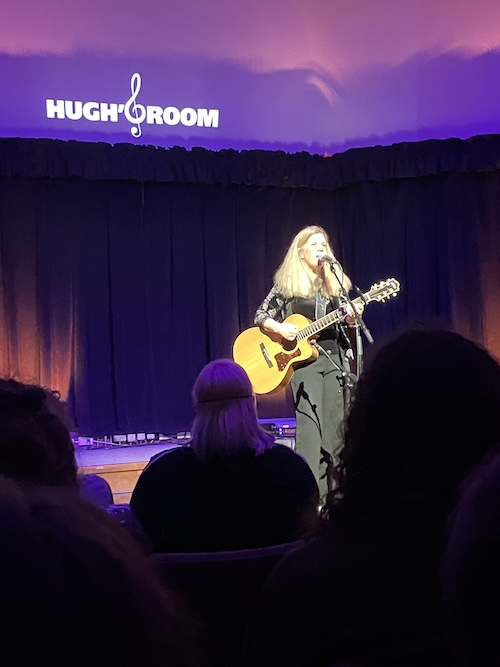
Last Saturday I went to see Dar Williams again at Hugh’s Room’s new location on Broadview Avenue. And once again, my husband came with me, in atonement for Sheffield more than 20 years ago now, and we had a great time, and were surprised that almost everyone else in the audience was old. I sat beside a woman called Barb who lives in my hometown, directly across from my high school, and it felt a bit like a Dar Williams song, as did reflecting on how I came to love her music like I do. I listened to those songs, and felt like I was listening to my history, especially “As Cool as I Am” and “Iowa,” which we sang along to at her encouragement, and all the people whom I’d ever been came in on the chorus.
April 7, 2025
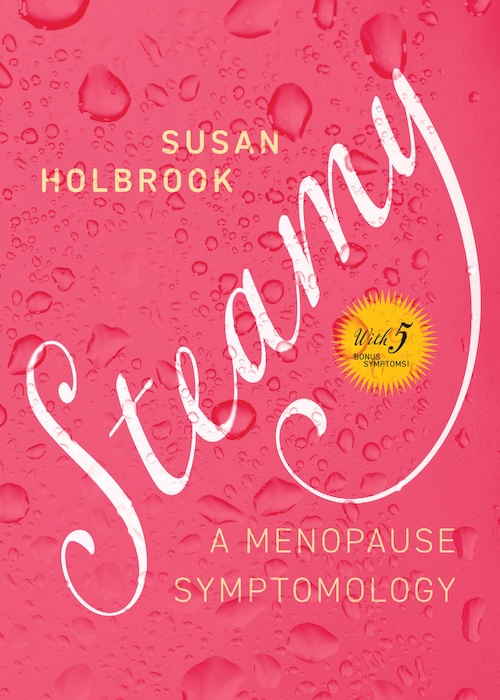
Steamy: A Menopause Symptomology, by Susan Holbrook
My first child was born in 2009, which was the year that Susan Holbook published her collection JOY IS SO EXHAUSTING, a book bursting with life and bodily fluids. I felt so seen by her epic poem “Nursery,” twelve pages documenting breastfeeding from side to side: “Left: Now that you’ve started solids, applesauce in your eyebrows, I’ve become a course. Right: Spider on the plastic space mobile, walking the perimeter of the yellow crescent moon. Left: Dollop. Right: Now it’s on Saturn’s rings; if it fell off, it would drop right into my mouth. Left: I take 2%, you take hindmilk. Right: Fingers shrimp their way through the afghan holes. Left: I have hindmilk.”
And now that I am 46, constantly itchy and getting my period every nineteen days, signalling the beginning of my perimenopausal journey, Holbrook has delivered STEAMY: A MENOPAUSE SYMTOMOLOGY, a poetic memoir that’s hilarious and searing at once. The baby from “Nursery” is all grown up now (see Symptom 29, “Dry Eyes,” in which the grown child is dropped off at university, and the poet does not cry. “For most of my life you could count on me to descend into blubbery convulsions at a filmic dog death or an airport farewell or, of course, a real dog death. I would readily cry for sad or happy reasons any old time. Now you can rarely squeeze a sob out of me. Maybe I’ve used up all my tears along with my eggs.”) and the poet is contending with other changes (see Symptom 3, “Cessation of Menses”: “I’m not sure why I never went to the doctor./ Maybe because I was so relieved each time my tsunami ended that I didn’t want to think about it again until three weeks later when I ruined the *other* side of the couch cushion”).
Like the symptoms of menopause themselves, Holbrook’s symptoms can go off on a tangent and sometimes end up being about raccoons or the time she broke her arm at age 11, which I don’t mind in the slightest because, like menopause, this book is full of twists and surprises, and, unlike menopause, it’s also very funny and rich with meaning (see Symptom 33, “Reduced Libido” for former, which is mostly about her grandpa, and Symptom 30, “Panic Disorder,” for the latter, “A year later my heart dances with the daffodils. I found a drug that muffles my panic but not my joy.”).